
Far below the waves, in crushing black water where sunlight never reaches, life gets seriously weird. Down there, evolution seems to throw out the rulebook and start improvising, creating animals that look more like nightmares, science fiction props, or half-finished ideas than anything we recognize from the surface.
What fascinates me most is that we keep sending better robots, cameras, and subs into the deep, and yet every few months some new, baffling creature shows up in the footage and scientists go, in very polite language, “We have no idea what’s going on here.” These nine deep sea creatures are the ones that make even seasoned researchers stop, rewind the video, and wonder if the ocean is trolling us.
The Ghostly Vampire Squid From Hell
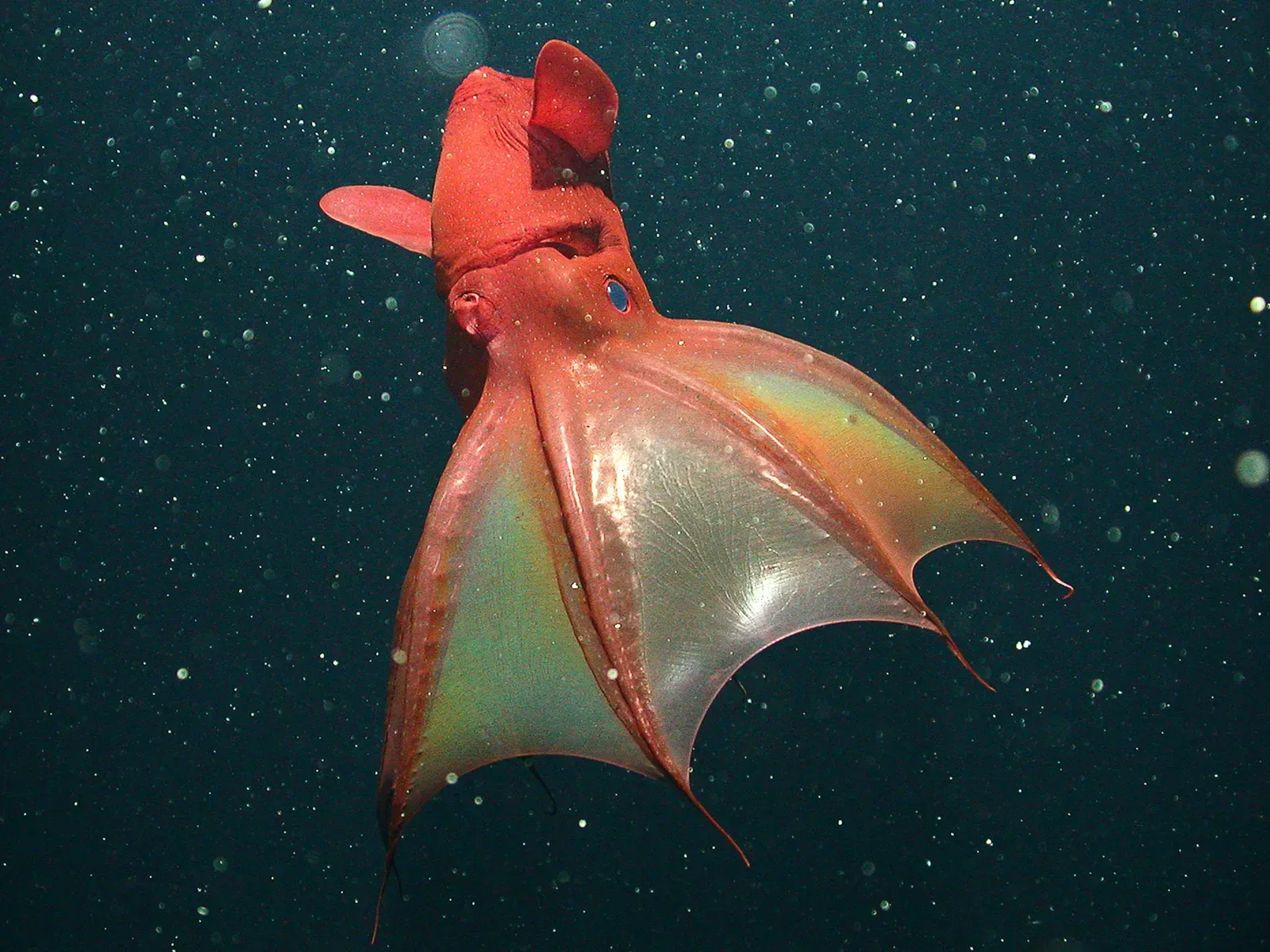
The vampire squid sounds like a creature invented by a teenager who really likes horror movies, but it’s very real and seriously strange. It lives in the oxygen minimum zones of the deep sea, where the water has so little oxygen that most animals would suffocate, yet this squid glides around like it’s on a relaxed evening stroll. Its body is a dark reddish-black, with huge blue eyes and a cloak-like webbing between its arms that makes it look like it’s wearing a cape.
Despite the dramatic appearance, it’s not actually a bloodthirsty predator. Instead, it feeds on “marine snow” – a constant drizzle of dead organisms, poop, and organic bits falling from above. It gathers these with sticky filaments, like a drifting goth catching dust with invisible strings. It doesn’t quite fit into what scientists expect from squids: it has traits of both squids and octopuses and hasn’t really changed much for tens of millions of years, making it feel like a living fossil that somehow found a way to thrive in one of the harshest parts of the ocean.
The Terrifying but Tiny Anglerfish
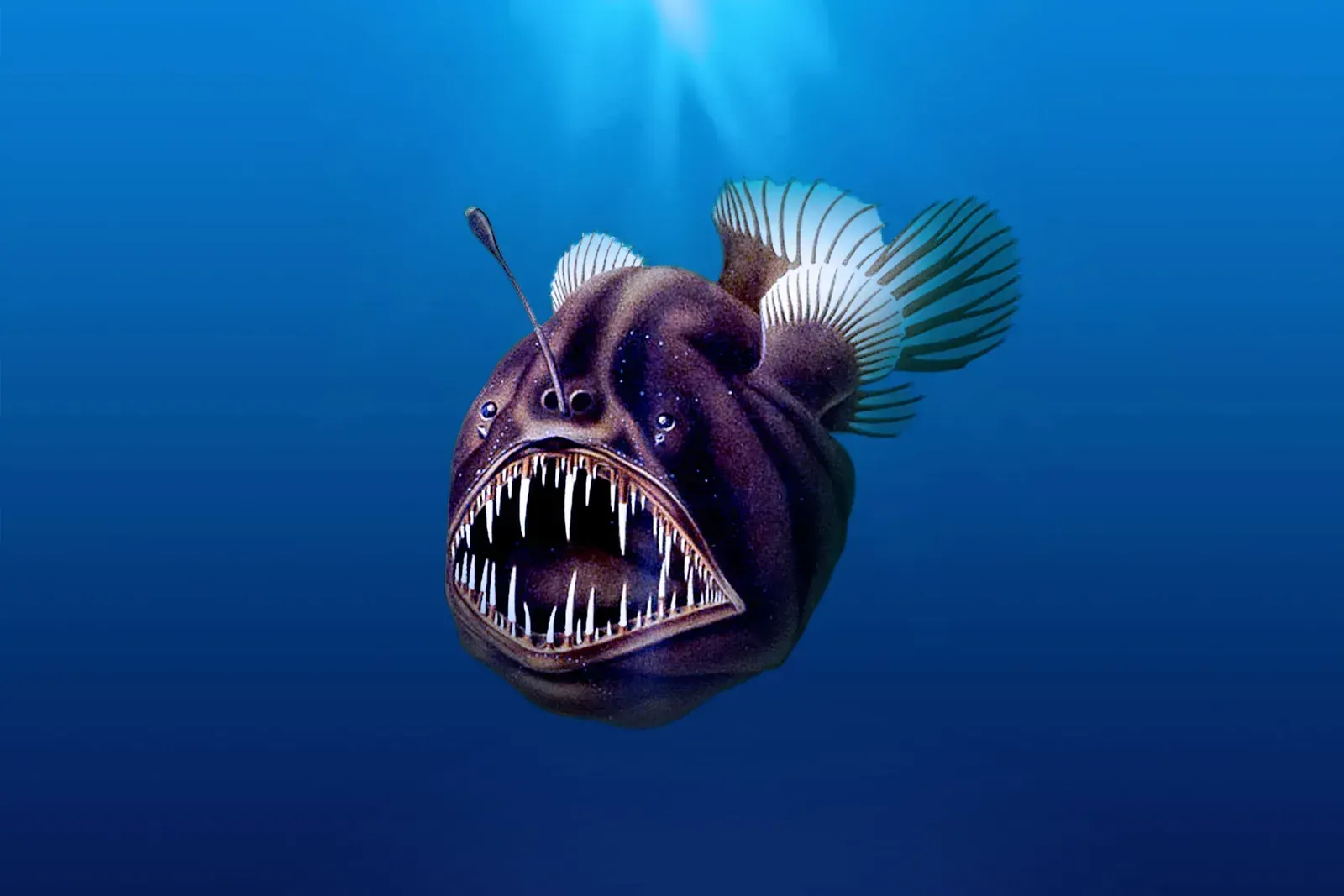
If you’ve ever seen that glowing lure in a deep sea documentary, that’s usually an anglerfish making an appearance like the villain in a horror game. These fish live in almost total darkness, so instead of chasing prey, they carry a built-in fishing rod on their heads with a glowing tip powered by bioluminescent bacteria. Small fish and other animals see a strange light in the blackness, come close to investigate, and then vanish into a mouth full of needle teeth.
As disturbing as that is, their love life is somehow even weirder. In many species, the male is tiny compared with the female, almost like a toy model version. When he finds a female, he bites into her and eventually fuses with her body, losing his eyes and many organs until he becomes basically a permanent, living sperm source attached to her. This parasitic partnership is still not fully understood, and it flips the usual ideas of what “mate for life” means completely upside down.
The Transparent, Brain-Revealing Barreleye Fish
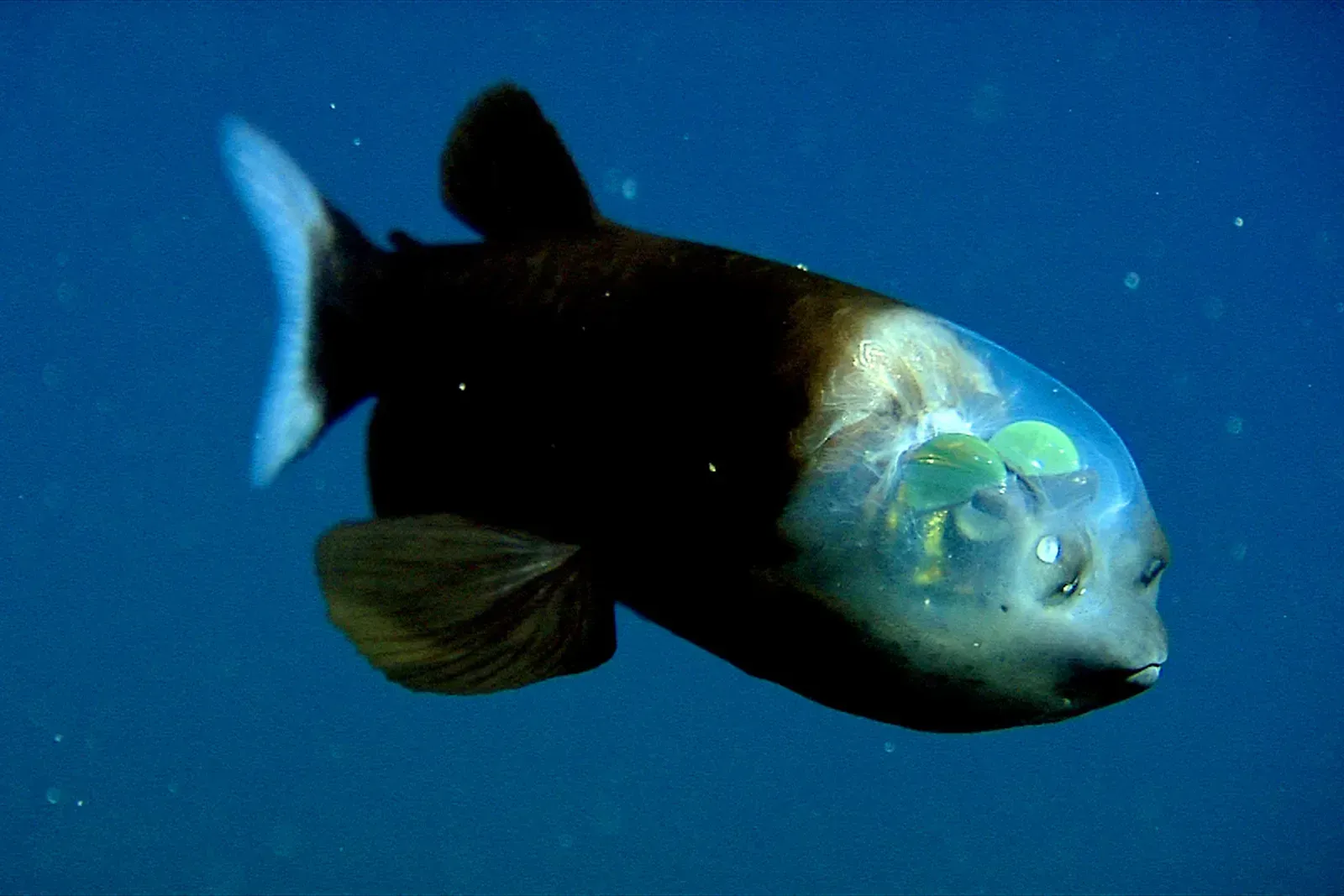
The barreleye fish looks like someone tried to design a fish in a transparent phone case. Its head is literally see-through, a clear dome filled with fluid where you can see its barrel-shaped eyes pointing upward inside its skull. At first, scientists even misinterpreted how its eyes worked, thinking they pointed forward like most fish, until better images revealed they actually rotate inside the transparent head to track prey above.
It hangs almost motionless in the deep, like a ghostly drone, watching for small animals silhouetted against the faint light far above. What’s wild is that this extreme design solves several problems at once: the see-through head lets more light reach the eyes, and the rotatable eyes allow precise tracking in near-total darkness. Even today, researchers are still piecing together how this strange combination evolved, because it seems like something an engineer might dream up, not slow, random evolution over ages.
The Frilled Shark, A Living Sea Serpent
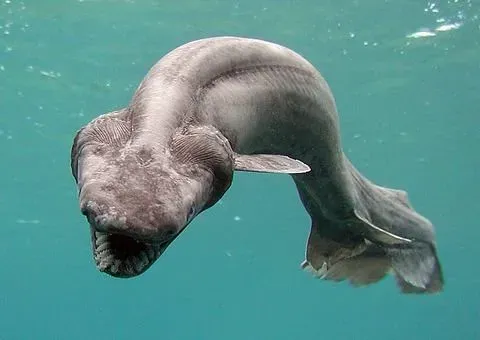
The frilled shark looks less like a modern shark and more like a myth that accidentally came to life. Its long, eel-like body, frilled gill slits, and curved, needle-sharp teeth make it look like a sea serpent from old sailor stories. It lives deep down, far below where people swim, which is probably a good thing if you’re at all attached to sleeping peacefully.
What really puzzles scientists is how primitive and ancient this shark appears. It has features that resemble sharks from millions of years ago, and it may carry its young for an unusually long time, possibly up to a couple of years or more, which is dramatically longer than what most people imagine for fish. It’s as if the species refused to update its design while still managing to hang on in the planet’s harshest waters, leaving researchers wondering what hidden advantages this “old school” body plan secretly offers.
The Giant Squid, The Former Sea Monster
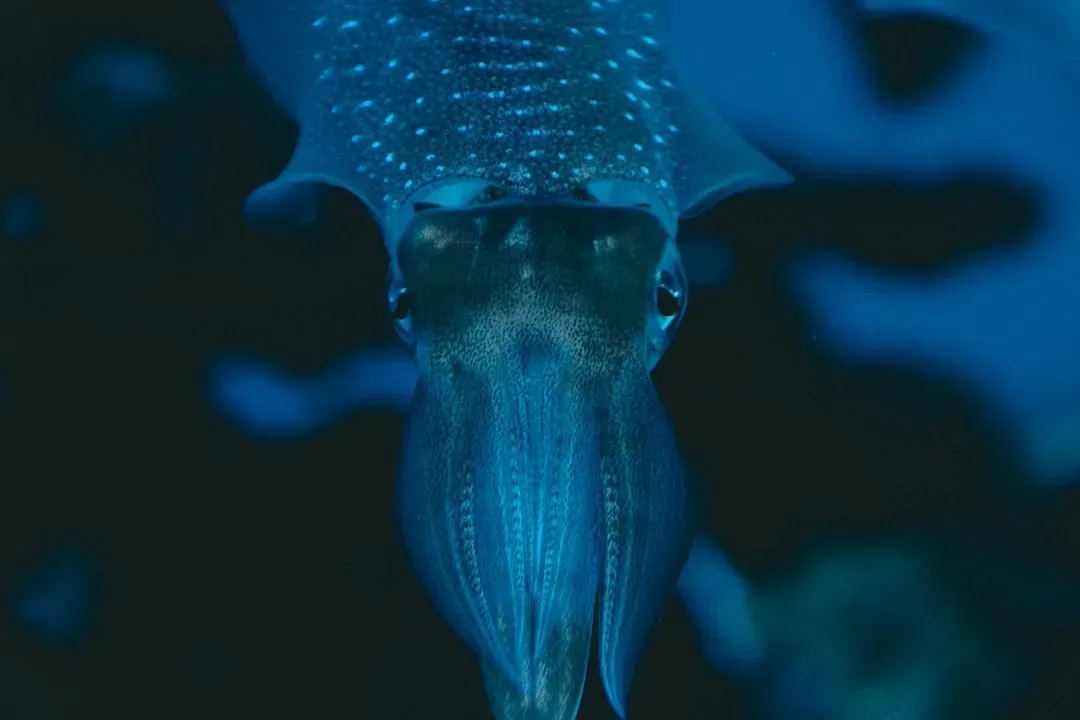
For centuries, sailors told stories of colossal tentacled beings dragging ships under, and everyone assumed they were exaggerating or hallucinating. Then science started finding giant squid carcasses washing ashore, with eyes the size of dinner plates and tentacles stretching longer than a bus. These animals live so deep that seeing them alive used to be almost impossible; the first clear video of a giant squid in its natural habitat only came in the last couple of decades.
Even now, a lot about them is a mystery: how they hunt, how they mate, how big they truly get at their maximum size. They seem to be powerful, streamlined predators, but we mostly know them from stranded bodies and fleeting glimpses in camera footage. There’s something humbling about knowing that such massive, intelligent-looking animals can live on the same planet as us and still remain largely beyond our understanding, like real-world dragons that prefer to stay off-camera.
The Blobfish, Sad Meme Turned Deep Sea Survivor
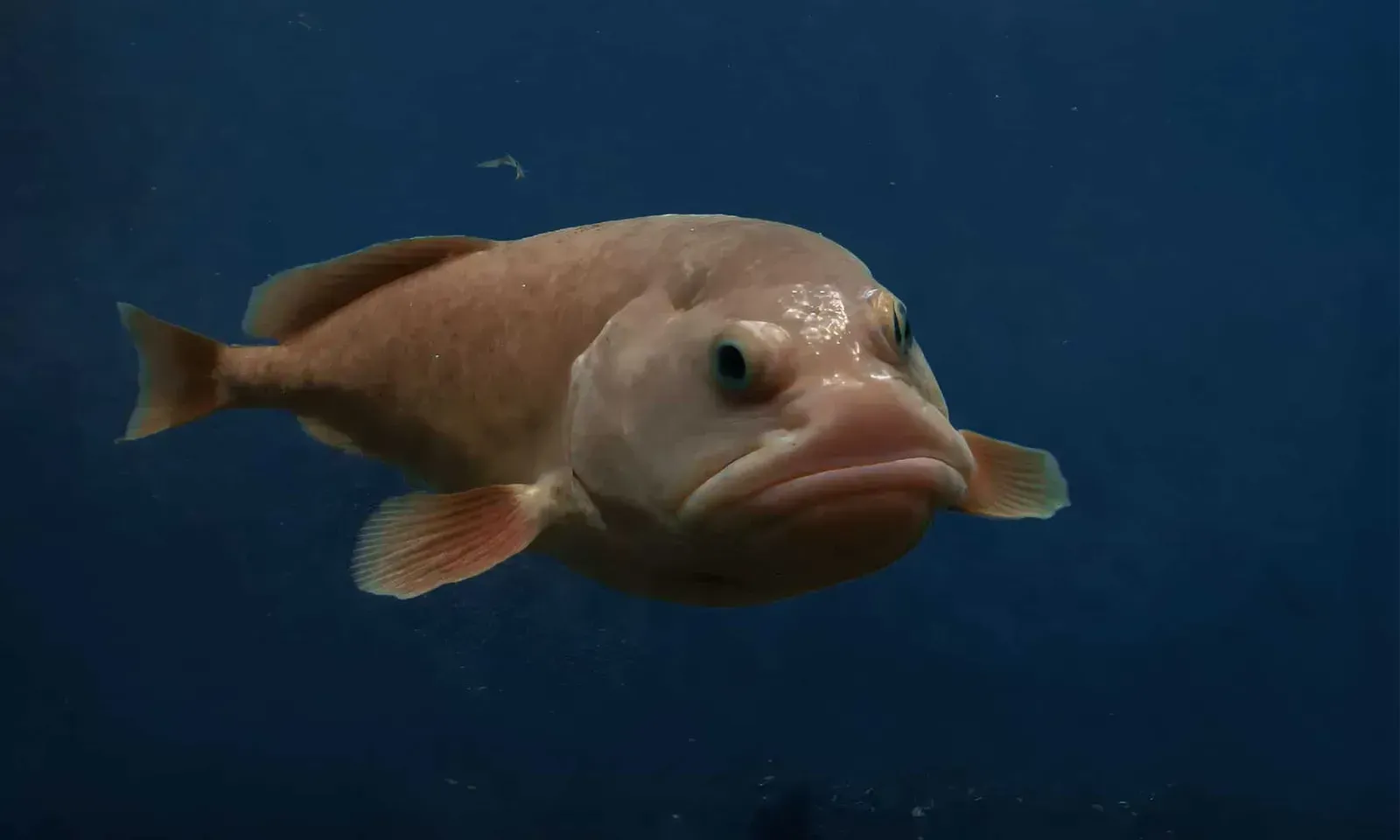
The blobfish became internet-famous as the “ugliest animal,” with that sad, sagging face and melted look. But that image is extremely misleading, because those photos show a blobfish pulled up to the surface, way outside its natural pressure zone. Down at its normal depth, where the pressure is crushing, it likely looks more like a fairly ordinary fish, just softer and less bony than we’re used to.
Its body is built like a water balloon rather than a solid sculpture, with very little muscle or skeleton, which makes perfect sense when the entire ocean is squeezing you. Instead of fighting pressure with rigid structures, it simply goes with it, letting the deep sea environment shape its body. That “miserable” face is really just our misunderstanding, a creature adapted beautifully to a world we barely survive in, turned into a meme because we yanked it into the wrong reality.
The Gulper Eel With the Impossible Mouth
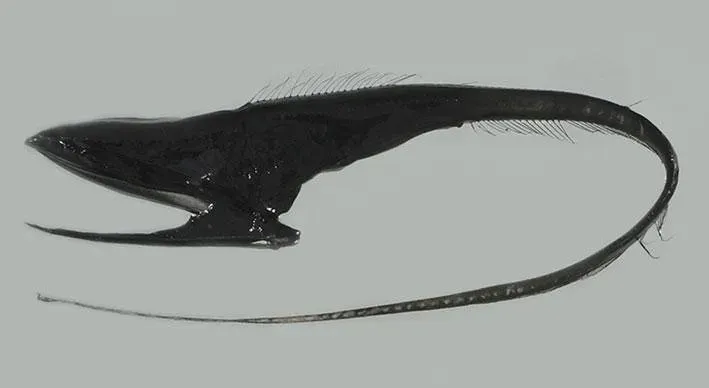
The gulper eel looks like someone stretched a normal eel and then added a comically oversized jaw. Its mouth is so huge compared with its thin body that it seems physically impossible, like it should tip forward and somersault every time it opens wide. This stretchy jaw lets it swallow prey nearly as big as itself, which is a survival trick in a place where meals are rare and you eat whatever you can catch, no matter the shape.
What adds to the mystery is its strange tail, which often ends in a glowing, bioluminescent structure that may be used as a lure. Picture a living fishing rod with a shape-shifting sack attached to the front, drifting silently in endless night. We still know very little about how often it feeds, what its daily life looks like, or how exactly such an extreme body evolved. It feels like something a child might draw in the margins of a notebook that turned out to work perfectly in real life.
The Comb Jelly That Makes Its Own Light Show
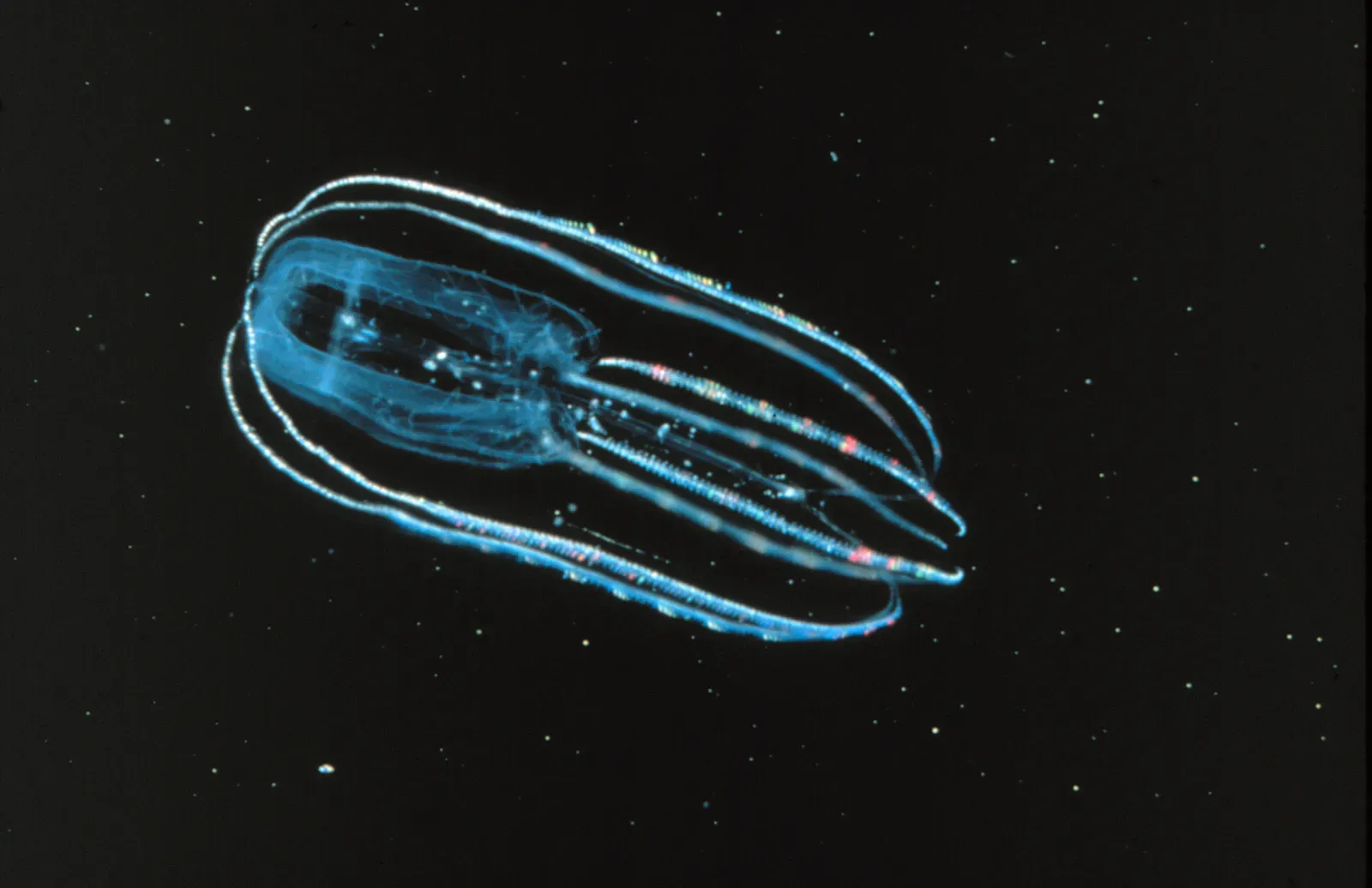
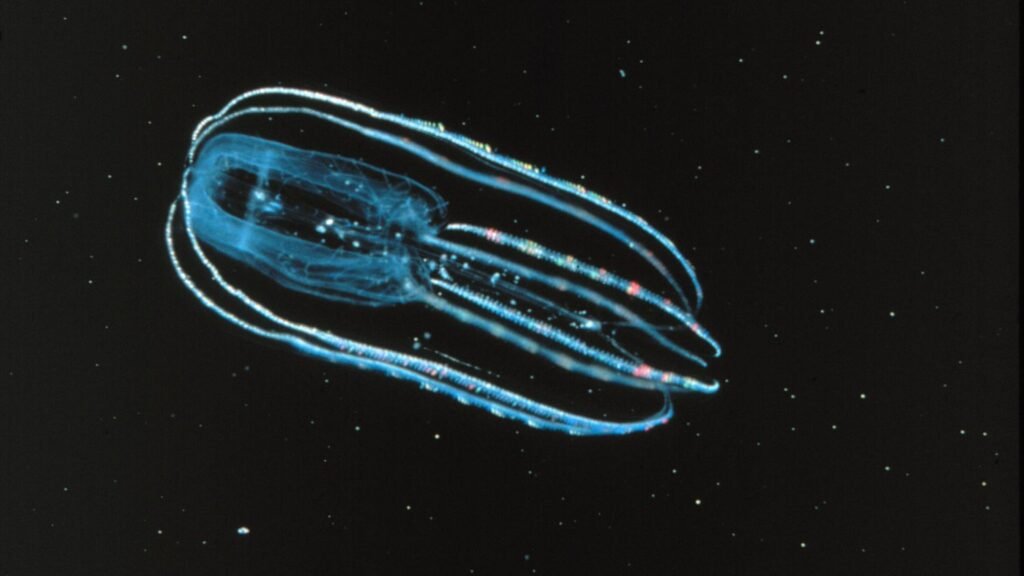
Comb jellies, or ctenophores, are delicate, transparent animals that look like floating, pulsing glass lanterns. Unlike jellyfish, they move using rows of tiny hair-like structures called cilia, which beat in precise patterns like shimmering ribbons along their bodies. When light hits them, those cilia scatter it into rainbow patterns, and many species also produce their own faint glow in the darkness, creating a slow-motion light show in the deep.
What really scrambles the brain is where these creatures fit on the tree of life. Some research suggests comb jellies might be among the earliest branching animal groups on Earth, possibly even older than sponges, which would completely reshape our picture of how complex life started. That would mean nervous systems and certain body plans might have evolved, disappeared, or transformed in ways that are still being debated. For something that looks so peaceful and fragile, it carries massive questions about the origins of all animals, including us.
The Deep-Sea Dragonfish With Invisible Teeth
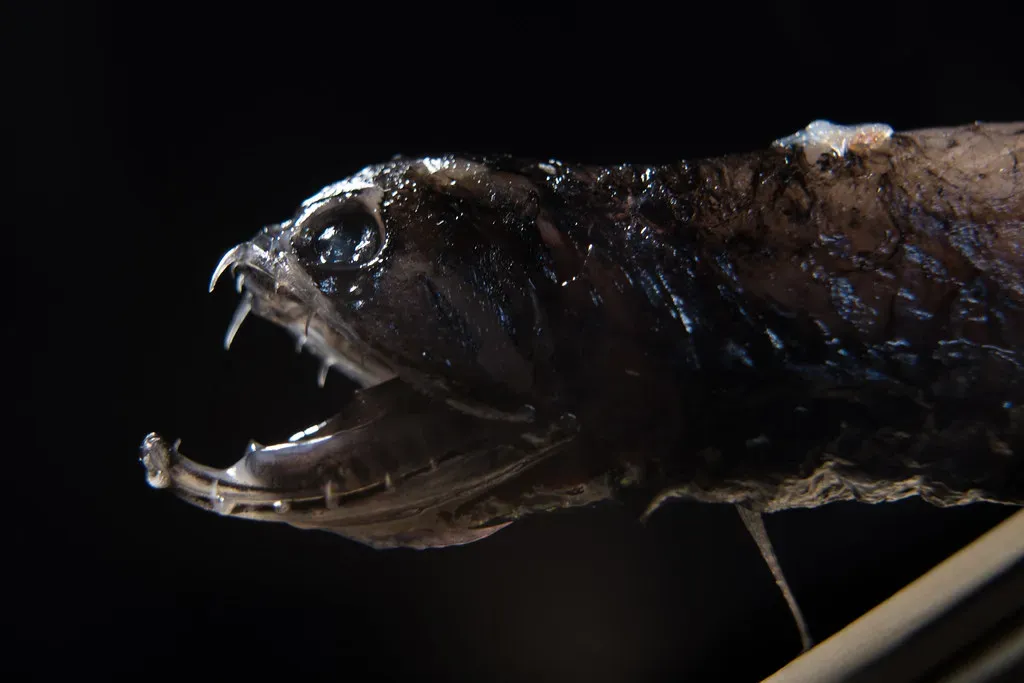
The deep-sea dragonfish is a sleek, sinister predator that looks built for stealth attacks in total darkness. Its long, thin body is often pitch black, and it has oversized jaws lined with teeth that are almost perfectly transparent, making them nearly invisible when the mouth is closed. That transparency reduces reflections and gives it a serious advantage when ambushing prey that never sees the danger coming.
Some dragonfish species also have a built-in flashlight under their eyes that emits red light, which most deep sea animals cannot see. It’s like having night-vision goggles in a world where everyone else is blind to that wavelength, allowing the dragonfish to spot and stalk victims without giving away its presence. Scientists are still studying the strange chemistry behind its light and the structure of those glass-like teeth, trying to understand how nature accidentally engineered such advanced stealth tech in a pitch-black ocean.
The deep sea is often described as unexplored, but that word doesn’t really capture it; it’s more like a parallel universe on the same planet. These creatures, with their transparent heads, living lures, fused mates, and impossible jaws, don’t just challenge what we expect from animals, they challenge what we think evolution is capable of. Every time we point a new camera or sub into the abyss, we’re reminded that our idea of “normal life” is based on a tiny, well-lit corner of Earth.
What makes this even more striking is how little we still know: huge parts of the ocean floor remain completely unsurveyed, and many scientists quietly suspect that some of the strangest life forms alive today haven’t even been seen yet. It’s a bit like knowing there’s a locked room in your own house that you’ve never opened and might contain anything. With every new deep sea discovery, the line between science and what would once have been called fantasy gets thinner, and it’s hard not to wonder what other impossible creatures are still hiding in the dark.