Long before spacecraft, supercomputers, and space telescopes, humans were already mapping the sky with a level of precision that still makes astronomers pause. Across continents, ancient civilizations aligned stone temples with solstices, tracked invisible planetary cycles, and predicted eclipses using nothing more than naked eyes, persistent observation, and ingenious mathematics. For centuries, their achievements were dismissed as myth, accident, or primitive trial and error. Today, a very different picture is emerging: these were sophisticated sky-watchers, running long-term observational projects that sometimes spanned generations. The deeper we look, the clearer it becomes that our modern space age is built on foundations laid by people who read the night sky as carefully as we read data on a screen.
The Hidden Geometry of the Sky: Ancient Mesopotamia
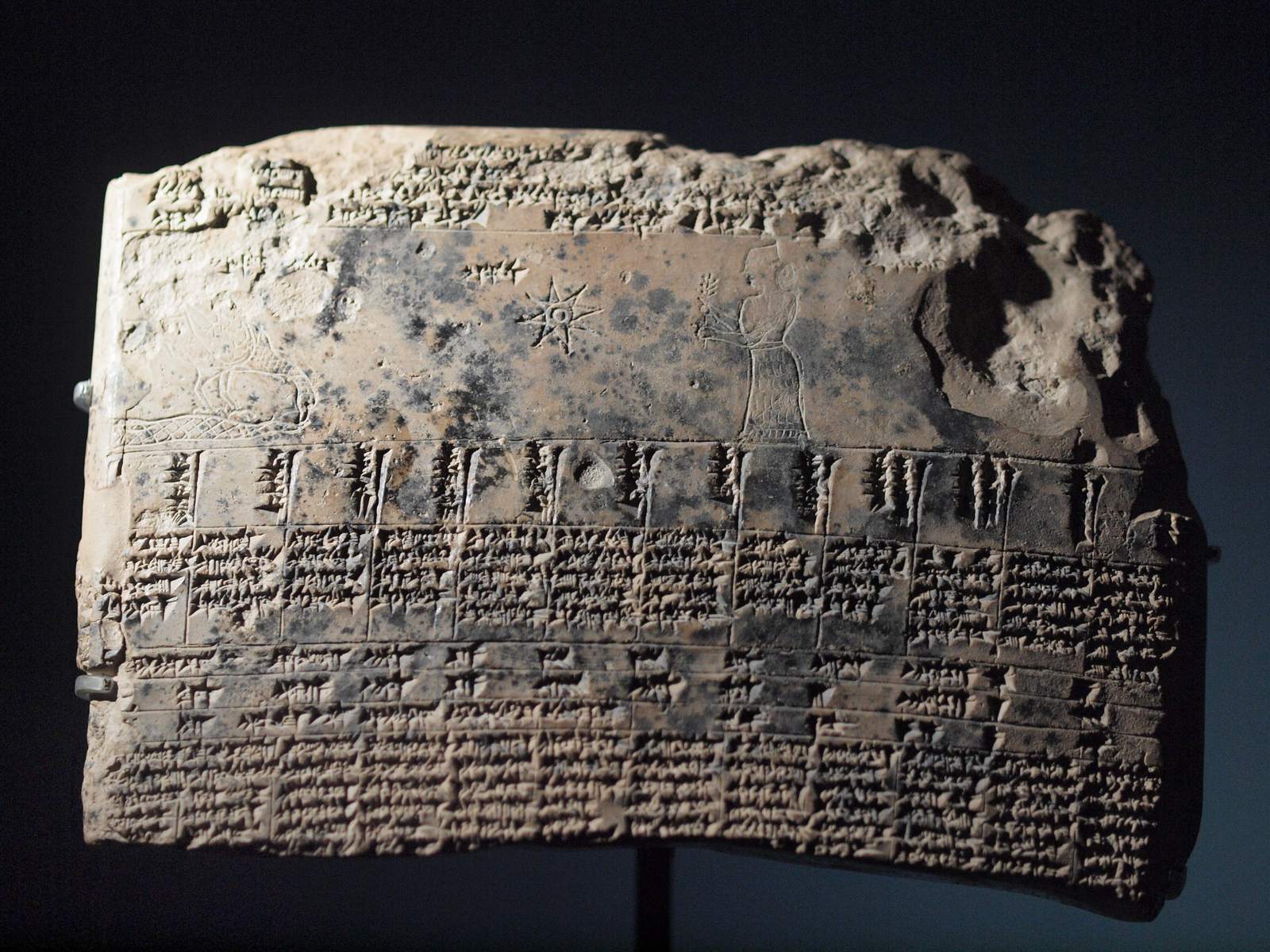
It can be shocking to realize that some of the earliest known professional astronomers worked not in observatories with domes and telescopes, but in temple complexes along the Tigris and Euphrates. In ancient Mesopotamia, scribes tracked the positions of the Moon and planets on clay tablets, documenting regularities in their motions over centuries. These records were not casual notes; they were systematic logs that allowed priests and scholars to forecast lunar eclipses and recognize repeating planetary patterns. The famous Venus tablets, found in the library at Nineveh but originating from Babylon, for example, catalogued the appearances and disappearances of Venus with an almost obsessive level of detail.
Mesopotamian scholars also developed early forms of mathematical astronomy, using arithmetic techniques to estimate future positions of celestial bodies. Their sexagesimal, or base-sixty, number system still echoes in our sixty-second minute and three-hundred-sixty-degree circle. They treated the sky as a predictable machine, one whose gears could be understood through long-term observation and careful calculation. That mindset, seeing the cosmos as rule-bound rather than purely mystical, was a quiet revolution that would echo through later Greek and Islamic astronomy.
Stone Calendars and Solar Drama: Ancient Egypt
Stand between the paws of the Great Sphinx at dawn around the spring equinox, and you are participating in a cosmic alignment that has been argued over for decades. While some claims about Egyptian sky knowledge overshoot the evidence, there is no question that Egyptian builders were masters at orienting monuments to the cardinal directions and to key solar events. Many temples, including at Karnak and Abu Simbel, are aligned so that sunlight penetrates inner sanctuaries on specific days, often tied to agricultural or religious calendars. The rising of Sirius just before dawn in late summer was used as a celestial marker for the Nile flood, anchoring their civil calendar to a reliably repeating event in the sky.
Egyptian astronomer-priests also divided the night into intervals using so-called decans, groups of stars that rose in sequence across the year. This stellar clock let them estimate time at night and track seasonal shifts well enough to support large-scale agriculture. Their star ceilings, painted inside tombs, were not just decorative; they were sky maps encoding constellations and observed patterns. Without lenses or electronics, they essentially turned the entire Nile Valley into a calibrated instrument, syncing human life to cycles of light and water.
The Mathematical Skies of Ancient Greece

When people think of ancient astronomy, names like Aristarchus, Hipparchus, and Ptolemy tend to surface quickly, and for good reason. Greek astronomers built geometric models of the cosmos that, although wrong in many details, were astonishingly successful at predicting motions of the Sun, Moon, and planets. Hipparchus, working in the second century BCE, compared stellar measurements over time and deduced the slow wobble of Earth’s axis, known now as precession, a phenomenon that takes nearly twenty-six thousand years to complete one cycle. The ability to spot such a subtle drift speaks to relentless attention to positional accuracy.
Greek scholars invented instruments such as the armillary sphere and the predecessor of the astrolabe to visualize and calculate sky positions. Perhaps the most famous relic of this tradition is the Antikythera mechanism, a complex geared device recovered from a shipwreck, which modeled the motions of the Sun, Moon, and possibly planets. Even without modern optics, they turned abstract geometry into a working predictive engine for the heavens. Their approach – testing models against observation and refining them mathematically – remains a philosophical ancestor of how astronomers operate today.
Earth-Centered Observatories: Classical China

In ancient China, astronomy was not a niche hobby; it was a state-level affair woven into governance, timekeeping, and the Mandate of Heaven itself. Court astronomers in successive dynasties compiled star catalogues, recorded supernovae, and logged comets and eclipses with a meticulousness that still makes modern historians grateful. A bright stellar explosion recorded in the year 1054, for example, matches what we now know as the Crab Nebula, giving astrophysicists a precise historical anchor for studying stellar death. For imperial rulers, accurate predictions of eclipses were not optional; errors could be interpreted as cosmic disfavor.
Chinese astronomers built large-scale instruments – stone gnomons for tracking the Sun’s height, sighting tubes for measuring stellar positions, and later elaborate armillary spheres. They divided the sky into distinct regions with named asterisms, maintaining sky atlases that evolved across centuries. Their records show awareness of long-term cycles, including the pattern of Jupiter’s motion and eclipse seasons. These observations, passed down through dynastic archives, give modern science a rare continuous record of the sky stretching across millennia, all crafted without a single electronic sensor.
Pyramids, Planets, and Precision: The Maya and Their Neighbors
If any civilization can shake a modern reader’s confidence in the uniqueness of contemporary astronomy, it might be the Maya. In Mesoamerica, the Maya, along with neighbors such as the Zapotec and later Aztec, tracked planetary cycles with a precision that is hard to overstate. The Dresden Codex, one of the few surviving Maya books, includes Venus tables that capture the planet’s cycle of appearances so accurately that they remain impressive even under modern scrutiny. These cycles were woven into ritual calendars that guided politics, warfare, and agriculture.
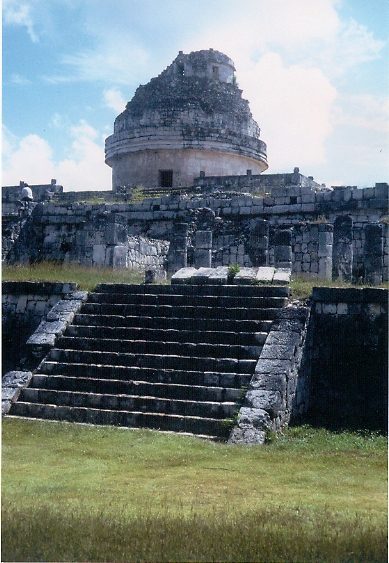
Maya architects built observatory-like structures, such as El Caracol at Chichén Itzá, whose windows frame key risings of Venus and the Sun. Many pyramids and plazas are aligned to solstices, equinoxes, or specific horizon points where celestial bodies rise or set. When you stand atop one of these structures at dawn and watch the Sun emerge exactly along a stairway or between two temple corners, you are seeing ancient data encoded in stone. Their achievements show that rigorous sky-watching does not require metal instruments – only patience, communal memory, and a willingness to embed astronomy into the very layout of cities.
Desert Stone Computers: The Nabataeans, Persians, and Other Sky-Watchers

Some of the most intriguing ancient sky stories come from places that do not always make the headline lists. In the deserts of the Near East, the Nabataeans – famous today for Petra – aligned tombs and temples with solstices and equinoxes, so that sunlight traced dramatic paths across carved facades on key dates. Farther east, in ancient Persia, Zoroastrian fire temples and later Islamic observatories extended older traditions of observing stars and planets systematically. These cultures treated the interplay of light, shadow, and architecture almost like an analog computer for tracking the year.
Across Central Asia and the broader Middle East, stone circles, standing pillars, and carefully oriented sanctuaries hint at a regional network of sky knowledge, much of it still under study. While modern popular culture often fixates on a few famous sites, archaeologists are uncovering more evidence that many communities kept their own version of a night-sky ledger. Alignments to the Pleiades, to bright stars like Aldebaran, or to lunar standstill positions appear again and again. What emerges is less a single story and more a mosaic of local traditions, each turning the landscape into a quiet, enduring observatory.
Cosmos in Stone and Story: Indigenous Astronomy Around the World

Ancient astronomy is not confined to ruined cities and half-buried temples; it lives on in oral traditions that stretch back beyond written records. In Australia, Aboriginal sky knowledge encodes seasonal changes, animal behavior, and navigation cues in constellations and dark nebulae, such as the famous Emu in the Sky formed by the Milky Way’s dust lanes. In the Americas, many Indigenous nations use star patterns for timing ceremonies, planting, and travel, sometimes aligning earthworks and mounds to solstices or bright stars. These are observation-based systems, refined over many generations of looking up and remembering what the sky does.
In parts of Africa, traditional communities have long used the appearances of specific stars to mark rainy seasons or migratory patterns, acting as an environmental early-warning system before satellite data existed. Polynesian navigators crossed vast stretches of ocean using star paths, wave patterns, and wind, effectively treating the sky as a living map. What ties these traditions together is an understanding that astronomy is not separate from daily life; it is a survival tool, a moral guide, and a cultural anchor. Recognizing these systems as astronomy in their own right challenges our assumptions about who counts as a scientist.
Why It Matters: Ancient Sky-Watchers and Modern Science
It might be tempting to treat all this as charming historical trivia, but that would miss the real weight of what ancient astronomy offers. Modern researchers use old eclipse records from China, Babylon, and the medieval Islamic world to study subtle changes in Earth’s rotation, because those carefully documented events provide time stamps that stretch back far beyond our instrument era. Historical sightings of supernovae and comets help astrophysicists reconstruct stellar lifecycles and orbital dynamics. In other words, ancient observers became, without knowing it, collaborators in twenty-first-century science.
There is also a philosophical punch here. The fact that people with no electronics could detect planetary cycles lasting many years, or the precession of the equinoxes, forces us to reevaluate what persistence and careful measurement can achieve. When we compare their methods – naked-eye observations, repeated over seasons and logged in stone or clay – to modern datasets collected by space telescopes, the continuity is striking. Both are about patient accumulation of evidence and a refusal to accept that the sky is chaotic. Remembering that continuity can keep today’s science grounded, reminding us that data is not a purely digital invention; it started with someone simply looking up, night after night, and caring enough to write it down.
The Future Landscape: New Technologies Meet Old Skies
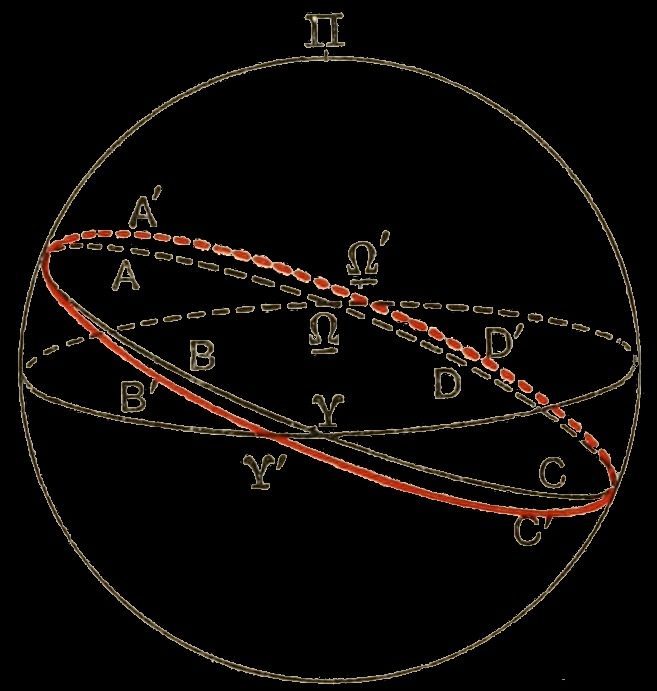
What happens when cutting-edge tools are turned back toward these ancient sky traditions? Satellite-based LiDAR is uncovering lost city layouts in the Americas and Southeast Asia, revealing patterns of alignment that were invisible under jungle canopies. High-resolution 3D scans of monuments, from Egyptian temples to Mesoamerican pyramids, allow researchers to simulate sunlight and starlight across thousands of years, checking how alignments behaved as Earth’s tilt and precession slowly shifted. This digital time travel can confirm whether a structure truly targeted a solstice sunrise or a particular star, or whether the alignment was more symbolic than precise.
At the same time, collaborations between astronomers, archaeologists, and Indigenous knowledge holders are reshaping research questions. Instead of asking only whether a building points at a specific star, teams are asking how a community’s stories, rituals, and agricultural rhythms fit with its observed sky patterns. Future observatories and planetarium programs are beginning to incorporate these perspectives, turning what used to be side notes into central parts of the narrative. The global implication is subtle but profound: as we search for life on other worlds and map exoplanet systems, we also have a chance to rethink what counts as sophisticated astronomy here on Earth, past and present.
How You Can Engage: Looking Up With New Eyes
Connecting with this deep history of sky-watching does not require a plane ticket to an archaeological site or a degree in astrophysics. A simple first step is to learn which stars and planets are visible from your own backyard or local park during different seasons, and to notice how their positions shift over weeks. Many public observatories, science museums, and planetariums now host events that highlight ancient and Indigenous sky knowledge alongside modern cosmology, and attending those can be a powerful way to see continuity rather than division between past and present. Supporting efforts to preserve dark skies, whether through local lighting ordinances or joining advocacy groups, protects the very canvas that made all this ancient astronomy possible.
You can also seek out research projects and organizations that work respectfully with descendant communities to document and safeguard astronomical heritage. That might mean donating to heritage-conservation efforts, sharing accurate stories on social media instead of sensational myths, or simply listening when knowledge-keepers explain their sky traditions on their own terms. Even choosing to step outside on a clear night, leaving your phone in your pocket for a few minutes, and tracing a single constellation can be an act of quiet alignment with thousands of years of human curiosity. In a world saturated with screens, remembering that some of our most profound measurements came from people lying on their backs under the same stars may be one of the simplest, most powerful shifts in perspective available to us.
Suhail Ahmed is a passionate digital professional and nature enthusiast with over 8 years of experience in content strategy, SEO, web development, and digital operations. Alongside his freelance journey, Suhail actively contributes to nature and wildlife platforms like Discover Wildlife, where he channels his curiosity for the planet into engaging, educational storytelling.
With a strong background in managing digital ecosystems — from ecommerce stores and WordPress websites to social media and automation — Suhail merges technical precision with creative insight. His content reflects a rare balance: SEO-friendly yet deeply human, data-informed yet emotionally resonant.
Driven by a love for discovery and storytelling, Suhail believes in using digital platforms to amplify causes that matter — especially those protecting Earth’s biodiversity and inspiring sustainable living. Whether he’s managing online projects or crafting wildlife content, his goal remains the same: to inform, inspire, and leave a positive digital footprint.