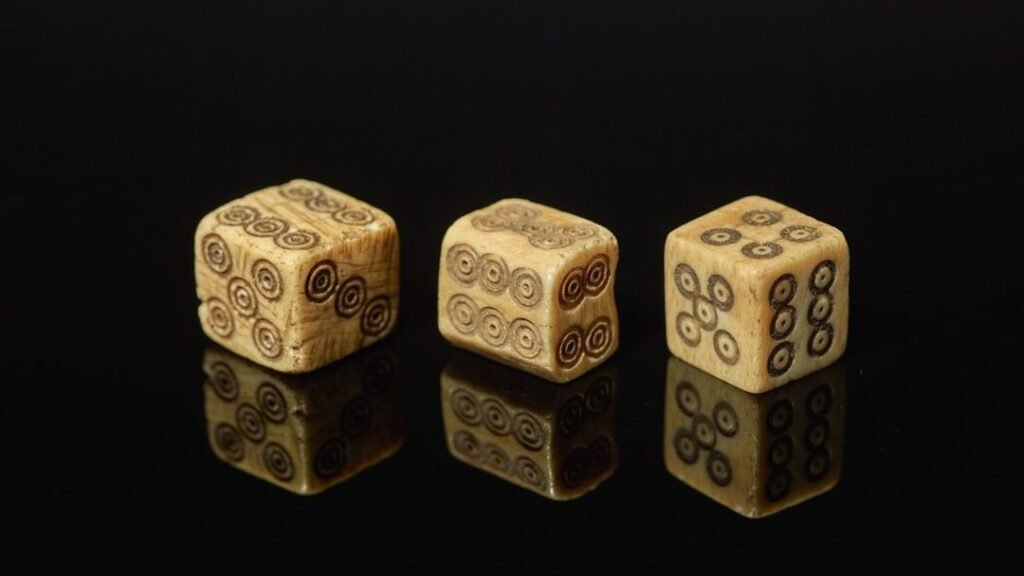

Every museum, every dig site, every ancient ruin whispers tales from civilizations long gone. Some stories we understand. Others remain stubbornly silent. There are objects scattered across this planet that baffle even the brightest minds, artifacts that seem to defy the timelines we’ve constructed about human history.
These aren’t your everyday pottery shards or rusty swords. I’m talking about mechanisms that shouldn’t exist, manuscripts that nobody can read, structures built by people who supposedly lacked the know how. You ever wonder what our ancestors were really capable of? So let’s get started.
The Antikythera Mechanism: An Ancient Computer Lost at Sea
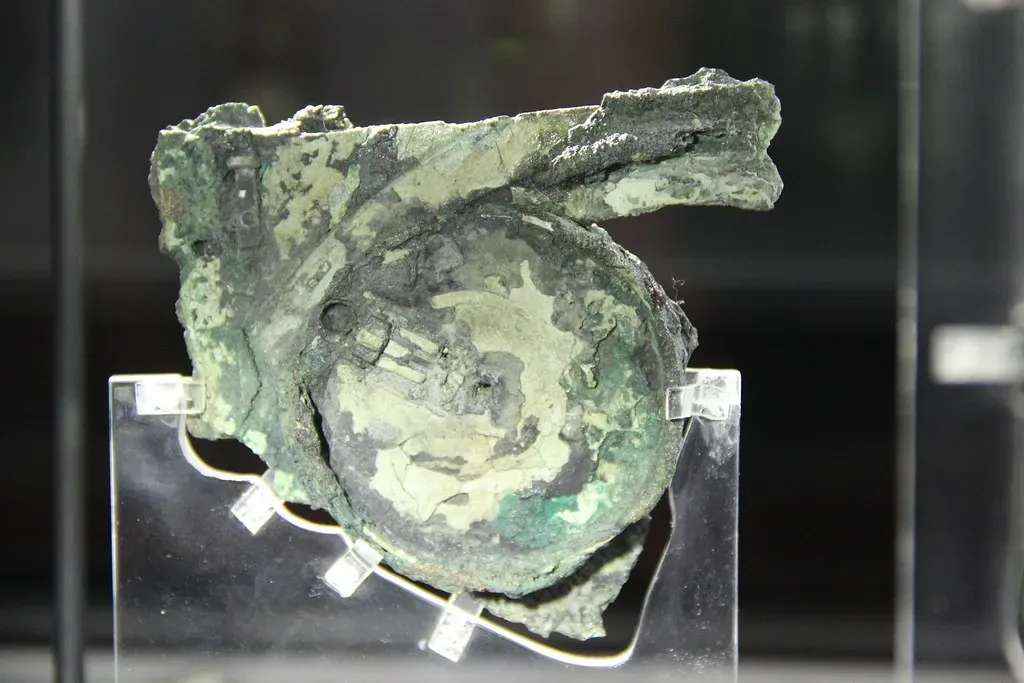
Discovered in a shipwreck off the coast of the Greek island Antikythera, the Antikythera Mechanism is often considered the world’s first analog computer. Dating to around 150 BCE, this intricate set of bronze gears can predict eclipses, track planetary movements, and even model the Olympic Games’ schedule. Picture divers in the early 1900s pulling corroded lumps from the Mediterranean seabed, having no idea they’d just found something that would rewrite technological history.
Technological artifacts approaching its complexity and workmanship did not appear again until the 14th century AD, when mechanical astronomical clocks began to be built in Western Europe. That’s over a millennium of silence. X-ray studies published in 2022 confirmed it could even model the irregular orbits of the moon – a feat thought impossible for its era. Honestly, finding this device is like discovering a smartphone in a Viking burial mound.
The Voynich Manuscript: A Book That Defies Translation
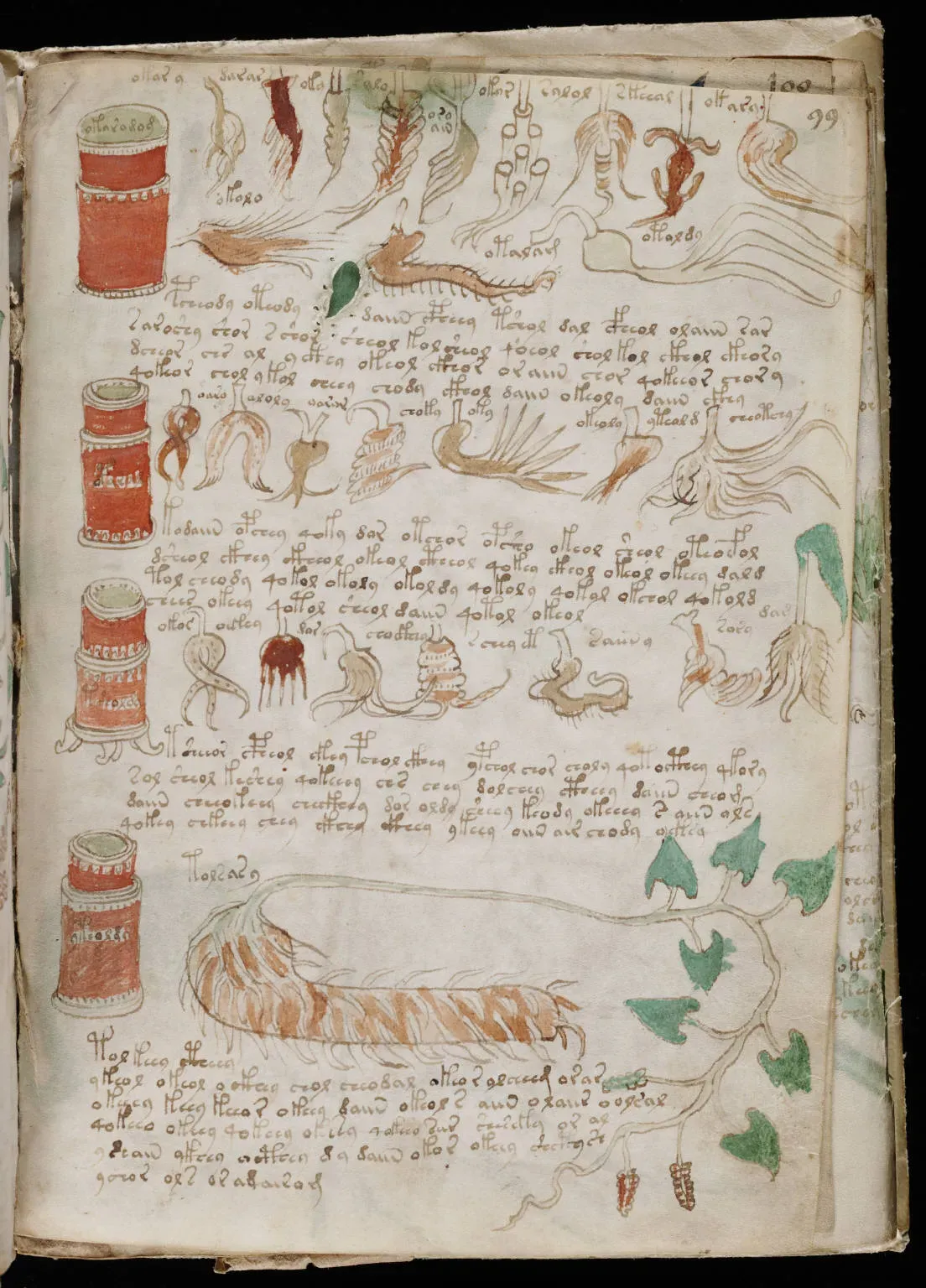
The Voynich manuscript is an illustrated codex, hand-written in an unknown script referred to as Voynichese, with vellum carbon-dated to the early 15th century. For decades, top codebreakers have thrown themselves at this mystery. The manuscript has been studied by both professional and amateur cryptographers, including American and British codebreakers from both World War I and World War II, but figures like Prescott Currier, William Friedman, Elizebeth Friedman, and John Tiltman were unsuccessful.
The manuscript’s pages are crowded with intricate drawings of plants and herbs, diagrams of stars and planets, and even some racy doodles of nude women bathing. Yet the plants don’t match any known species. The origins, authorship, and purpose of the manuscript are still debated, with scholars lacking the translation and context needed to properly entertain or eliminate any possibilities. Maybe it’s an elaborate joke from the Middle Ages. Or maybe someone actually knew something we’ve forgotten.
Göbekli Tepe: The Temple That Should Not Exist
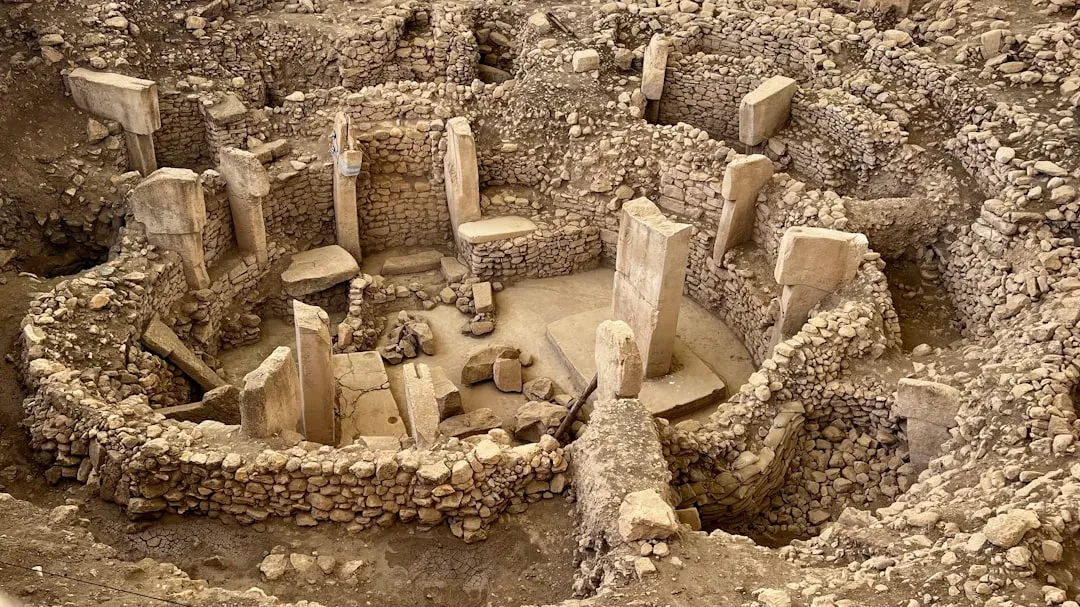
Gobekli Tepe, located in southeastern Turkey, is considered the world’s oldest known temple, dating to around 9600 BCE. Let’s be real here. This place predates agriculture, pottery, writing, and basically everything we thought necessary for civilization. The Neolithic site is two times older than Stonehenge and contains a series of elaborate circular enclosures constructed of massive T-shaped limestone columns.
Many of the pillars feature intricate carvings of abstract symbols and wild animals, including lions, foxes, gazelles and birds. Its towering stone pillars, many adorned with intricate animal carvings, indicate a surprisingly sophisticated society long before the rise of farming, yet the true function of this vast ceremonial site is unknown – was it a temple, a gathering place, or something else entirely, with builders and their motivations remaining among archaeology’s greatest mysteries. Hunter gatherers built this. Think about that for a second.
The Nazca Lines: Giant Drawings Etched in Desert Stone
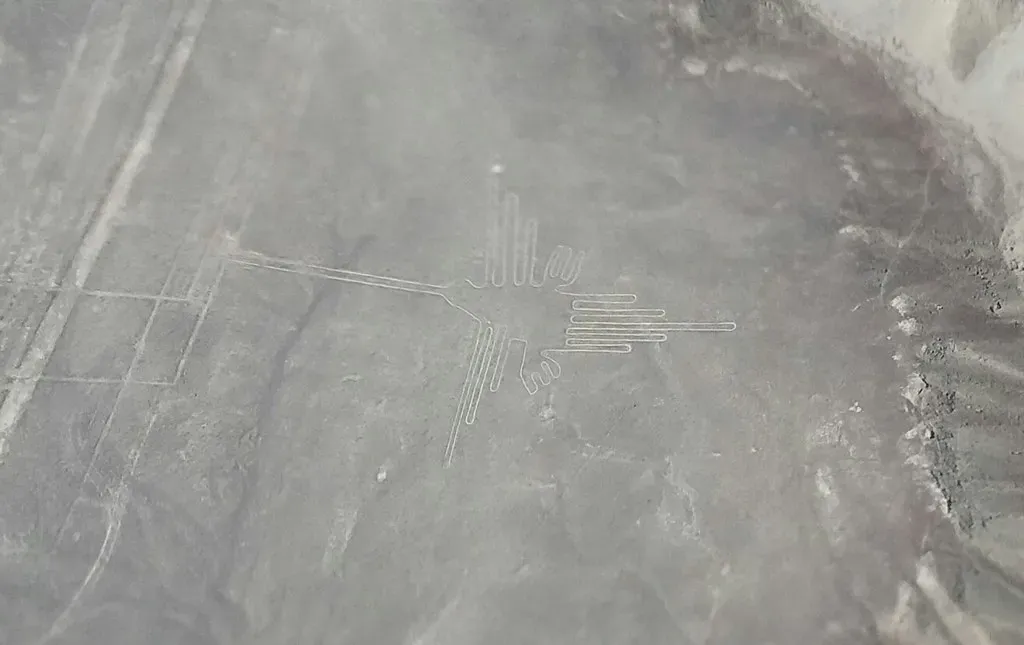
The Nazca Lines stretch across Peru’s arid plains, forming massive shapes of animals, plants, and intricate geometric patterns, visible only from high above. Created by the Nazca culture between 500 BCE and 500 CE, the lines are best viewed from the air, raising questions about their purpose and meaning. Why would anyone create art they couldn’t fully see themselves?
Theories abound, from astronomical calendars to communication with deities – or even ancient aliens. I know it sounds crazy, but here’s the thing. The precision in scale and alignment achieved without modern tools defies easy explanation. Maybe they served as pathways for rituals, or maybe the Nazca people were simply exceptional surveyors with reasons we can’t quite grasp from our modern perspective.
The Baghdad Battery: Ancient Electricity or Something Else
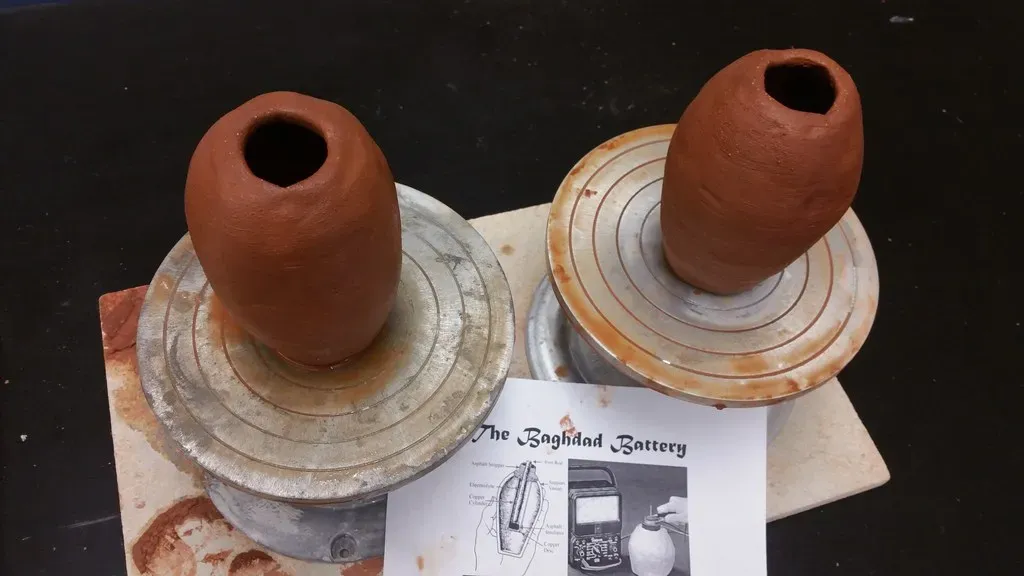
Unearthed near Baghdad, Iraq, this 2,000 year old artifact consists of a clay jar with a copper cylinder and an iron rod inside, and many believe it may have functioned as a galvanic cell or primitive battery capable of producing a small electric charge. Found during the 1930s, these jars sat in museums for years before anyone realized their potential significance.
While the true purpose of the Baghdad Battery remains uncertain, the possibility that it was used to generate electricity challenges our understanding of ancient technological capabilities. Some researchers think it might have been used for electroplating gold onto other metals. Others dismiss the whole battery theory entirely. The debate rages on, and honestly, nobody seems completely certain either way.
The Phaistos Disc: A Spiral of Indecipherable Symbols
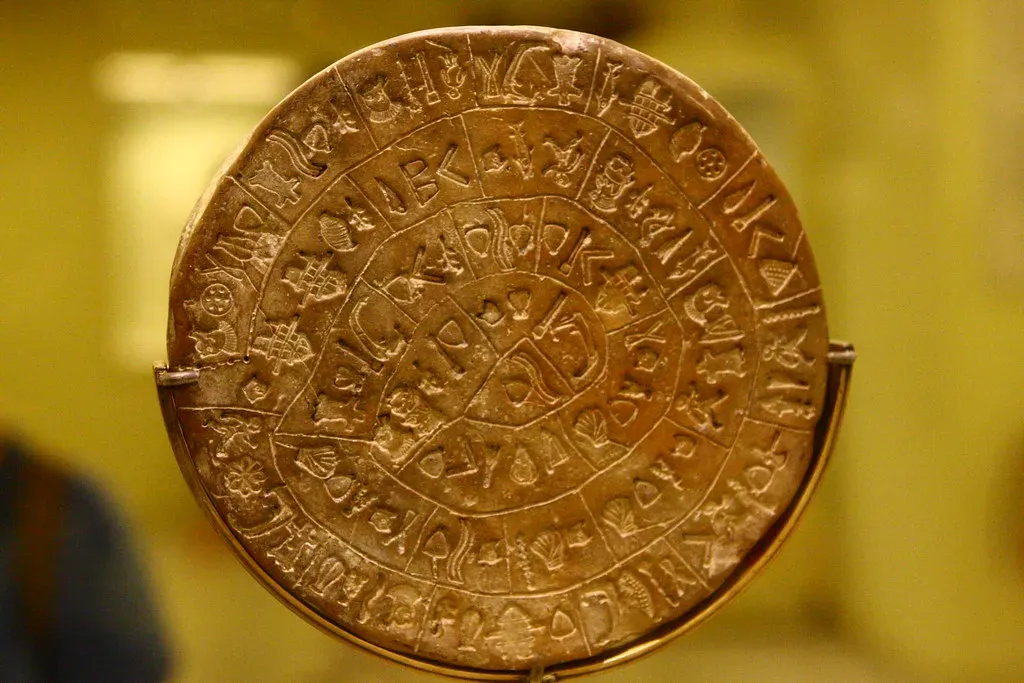
Unearthed in 1908 on Crete, the Phaistos Disc is a fired clay object inscribed with spiraling, stamped symbols, and scholars have struggled for decades to decipher its meaning. It’s roughly the size of your palm, covered on both sides with mysterious characters pressed into the clay before firing.
The disc’s purpose and meaning remain unknown, despite numerous attempts at decipherment, with some theories suggesting it could be a form of writing or a religious artifact. Here’s what makes it particularly weird – the symbols were stamped using individual seals, which suggests a kind of movable type printing system thousands of years before Gutenberg. Was it a prayer? A game board? A record of some kind? Your guess is genuinely as good as anyone’s.
The Stone Spheres of Costa Rica: Perfect Orbs from the Past
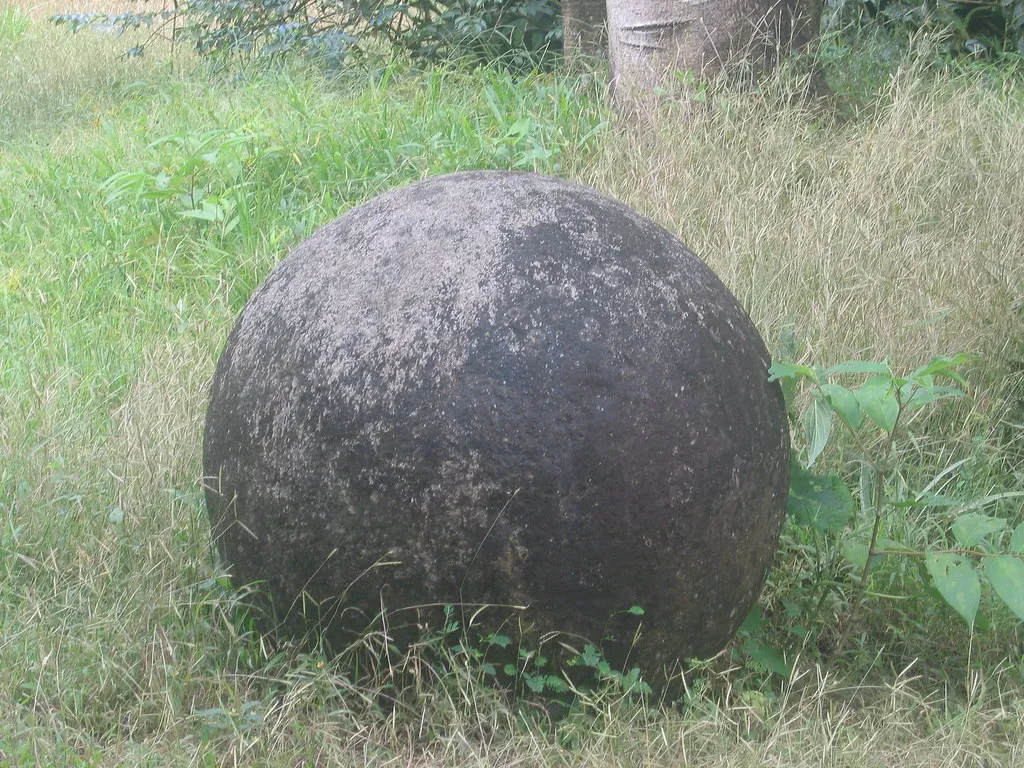
Hundreds of perfectly round stone spheres, some weighing up to 15 tons, have puzzled archaeologists since their discovery in the 1930s, scattered across Costa Rica’s Diquís Delta. The people who carved the stones into their perfectly spherical shapes likely did so using other small stones. That’s patience on a level most of us can’t imagine.
The artifacts, dated between 600 and 1000 CE, are attributed to the Diquís culture, an ancient civilization that vanished long before the Spanish conquest. Many are arranged in clusters, alignments, and geometric patterns, leading some to speculate on their potential astronomical or ceremonial significance. Sadly, many spheres were damaged or moved before archaeologists could properly study their original positions.
The Plain of Jars: Thousands of Mysterious Stone Containers
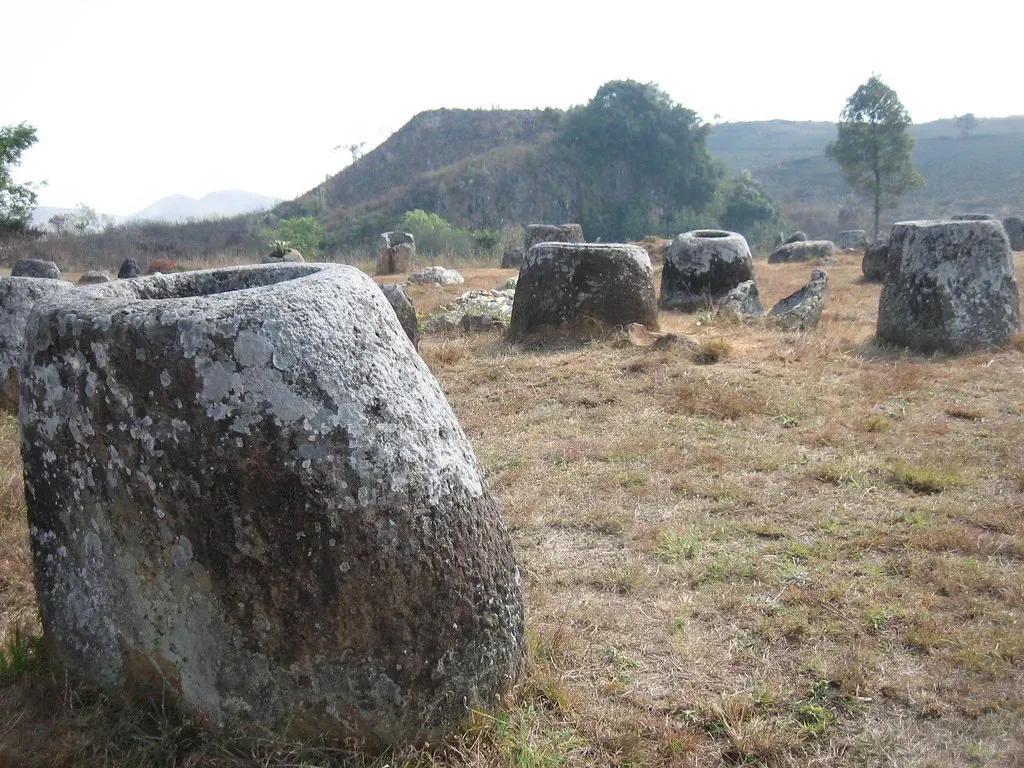
The Plain of Jars in the Xieng Khouang plain of Laos is one of the most enigmatic sights on Earth, with thousands of megalithic stone jars scattered across nearly one hundred sites deep in the mountains of northern Laos. The site is made up of at least 3,000 giant stone jars up to 3 metres tall and weighing several tonnes.
It is assumed that Plain of Jars’ people used iron chisels to manufacture them although no conclusive evidence for this exists, and little is known of the people who carved the huge containers with the jars themselves giving little clue as to their origins or purpose. Were they used for burials? Storage? Fermentation of some ancient brew? The answer remains locked somewhere in the mountains, waiting for someone clever enough to decode it.
The Copper Scroll: A Treasure Map That Leads Nowhere
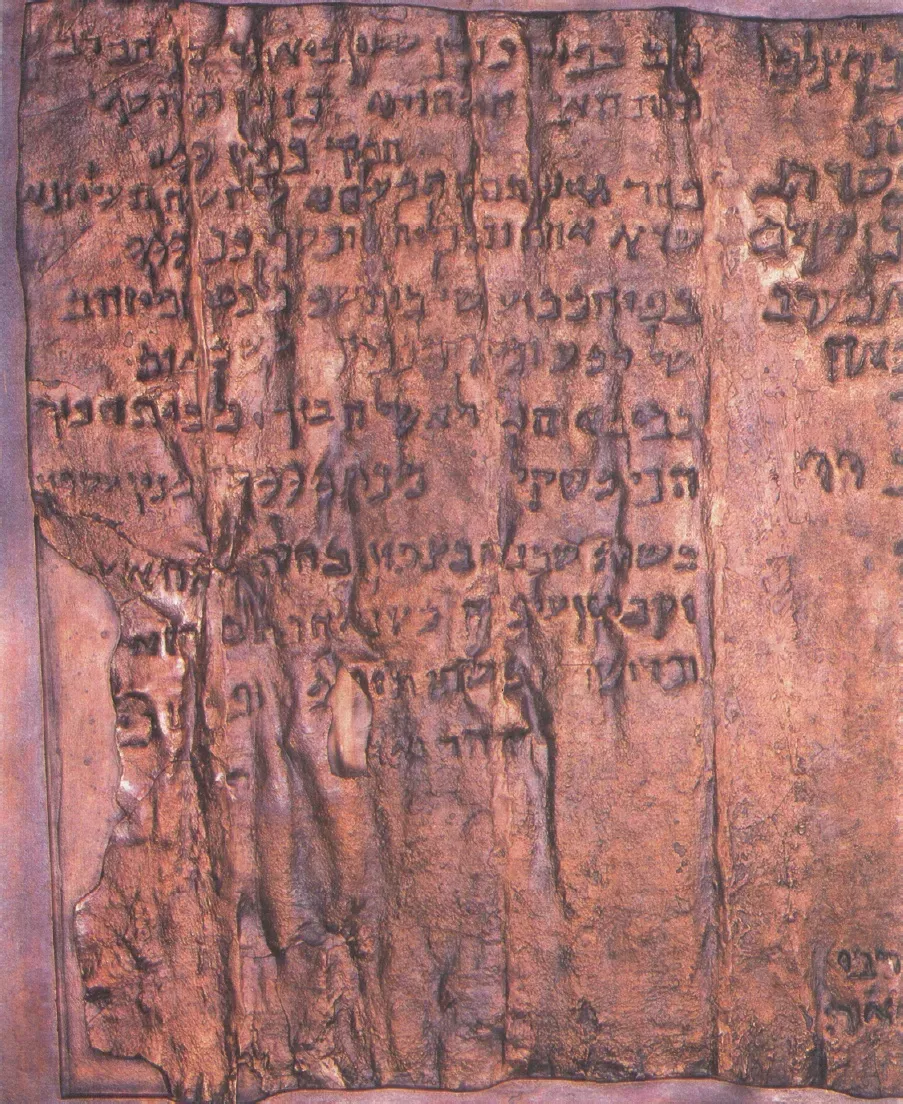
Among the famed Dead Sea Scrolls, the Copper Scroll stands apart as it is inscribed on thin metal and details a list of supposed hidden treasures. Unlike its parchment companions discussing religious texts, this one reads like an inventory. Gold here, silver there, specific locations noted in ancient Hebrew.
The locations and treasure described remain undiscovered, and the scroll’s cryptic language only deepens the enigma, leaving historians to wonder whether it was a real inventory or a symbolic text. Treasure hunters have searched for decades. Nothing. Maybe the treasures were already looted centuries ago. Or maybe the whole thing was fiction to begin with, a tantalizing riddle carved into metal.
Conclusion: The Mysteries That Keep Us Digging

These nine artifacts represent something profound about human history. They’re reminders that the past wasn’t simple, and our ancestors weren’t primitive. They built computers from bronze gears, encoded knowledge in undecipherable scripts, and moved stones weighing dozens of tons for reasons that made perfect sense to them.
What I find most fascinating is how these objects challenge our comfortable narratives about progress. We like to think innovation moves in a straight line, always forward, always improving. These artifacts suggest otherwise. Knowledge gets lost. Civilizations vanish. Techniques are forgotten.
Maybe that’s what makes these mysteries so compelling. They’re not just puzzles about the past – they’re warnings about the fragility of human achievement. What do you think these ancient builders were trying to tell us? Share your thoughts in the comments.
Hi, I’m Andrew, and I come from India. Experienced content specialist with a passion for writing. My forte includes health and wellness, Travel, Animals, and Nature. A nature nomad, I am obsessed with mountains and love high-altitude trekking. I have been on several Himalayan treks in India including the Everest Base Camp in Nepal, a profound experience.