

Nature has a way of humbling us. Just when we think we’ve mapped, measured, and modeled the world into submission, something strange happens in the sky, the sea, or even under our feet that simply refuses to fit neatly into our equations. Some of these mysteries are new, revealed only thanks to modern instruments; others have been puzzling people for centuries. Yet in 2026, with all our satellites, supercomputers, and sensors, they’re still not fully understood.
What makes these unexplained phenomena so gripping isn’t just that we don’t know the full story, but that each one hints at deeper rules of the universe we haven’t cracked yet. They’re like half-finished sentences from nature, daring us to fill in the blanks. Below are eight of the most intriguing natural mysteries that continue to keep researchers awake at night, rewriting theories, and, honestly, just staring in awe.
1. Fast Radio Bursts: Cosmic Whispers From the Deep Universe
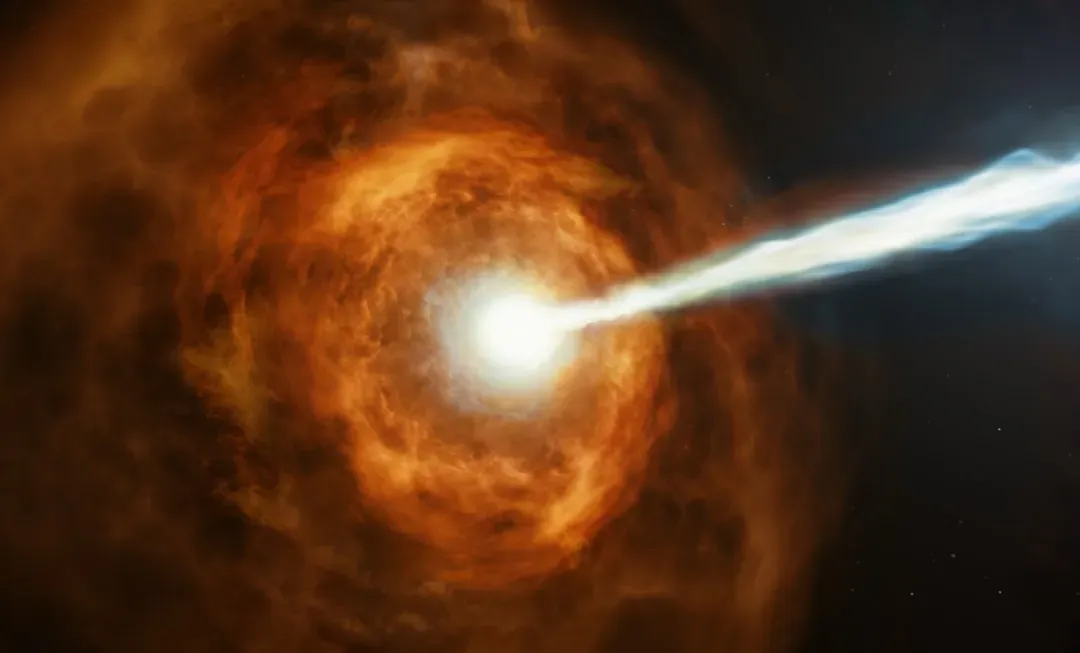
Imagine a signal that lasts less than the blink of an eye yet releases as much energy as the Sun does in days. That’s a fast radio burst, or FRB, and they’re coming from far beyond our galaxy. First noticed in the early two thousands, these ultra-short, ultra-bright radio pulses appeared as one-off glitches in data, and for a while, some scientists literally wondered if they were errors in the telescopes themselves.
We now know that they’re real, and some even repeat, but their true origin is still up for debate. The leading suspects include highly magnetized neutron stars, collisions between compact objects, or exotic processes we haven’t fully grasped yet. The strange part is that different FRBs behave differently: some never repeat, others fire off bursts over and over like cosmic Morse code. Every time observatories catch a new one and trace it back to a distant galaxy, we get a little more information – yet the final explanation still feels just out of reach.
2. Ball Lightning: Floating Fire That Defies Explanation
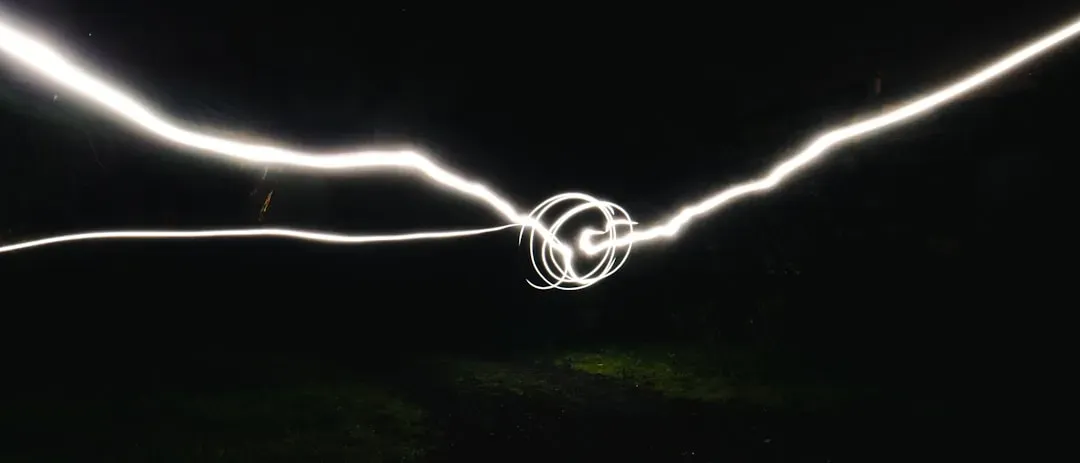
For centuries, people have reported glowing orbs of light floating during thunderstorms, drifting through the air, sometimes even entering houses or passing through windows. This phenomenon, known as ball lightning, sounds like something from a ghost story, and for a long time many scientists doubted it was real at all. But multiple independent observations, video evidence, and even a few accidental scientific recordings have made it hard to dismiss.
What makes ball lightning so baffling is that it doesn’t behave like ordinary lightning, which is brief and straightforward. These glowing spheres can last several seconds, change direction, and sometimes vanish silently or explode with a bang. There are various theories involving plasma, vaporized materials from the ground, or complex electromagnetic effects, but no single model convincingly explains all the reported behavior. It’s like nature is showing us a strange kind of fire we don’t know how to describe yet.
3. The Taos Hum and Other Mysterious Low-Frequency Sounds
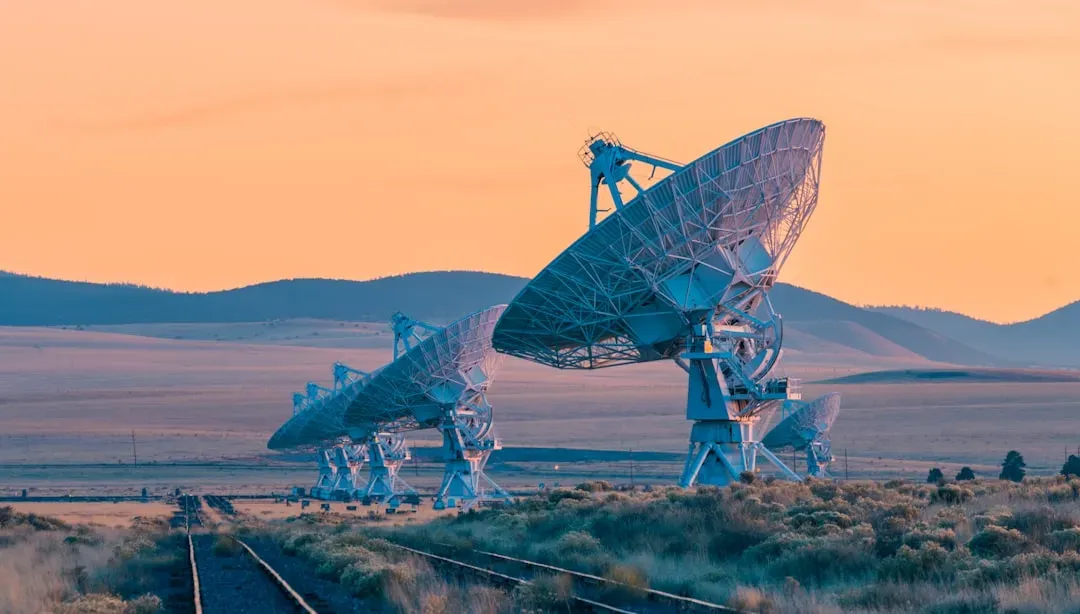
In some parts of the world, people report a low, persistent hum that only a fraction of the population can hear. One of the most famous is the so-called Taos Hum in New Mexico: a faint, droning noise described as a distant engine idling, but with no obvious source. Similar hums have been reported in places from the United Kingdom to Canada and Australia, often driving sensitive listeners to distraction while others in the same room hear nothing at all.
Scientists have tried to link these hums to things like industrial machinery, distant traffic, geological activity, or even waves in the atmosphere and oceans that create inaudible vibrations. Yet in many cases, careful investigations find no single, consistent cause, and the hum can persist for years. Some studies suggest that for a portion of people, the brain may be amplifying or interpreting subtle low-frequency noise in unusual ways. The uncomfortable truth is that we still don’t have a simple, general explanation; the hum remains an uneasy mix of physics, environment, and human perception.
4. Dark Matter and Dark Energy: The Invisible Majority of the Universe
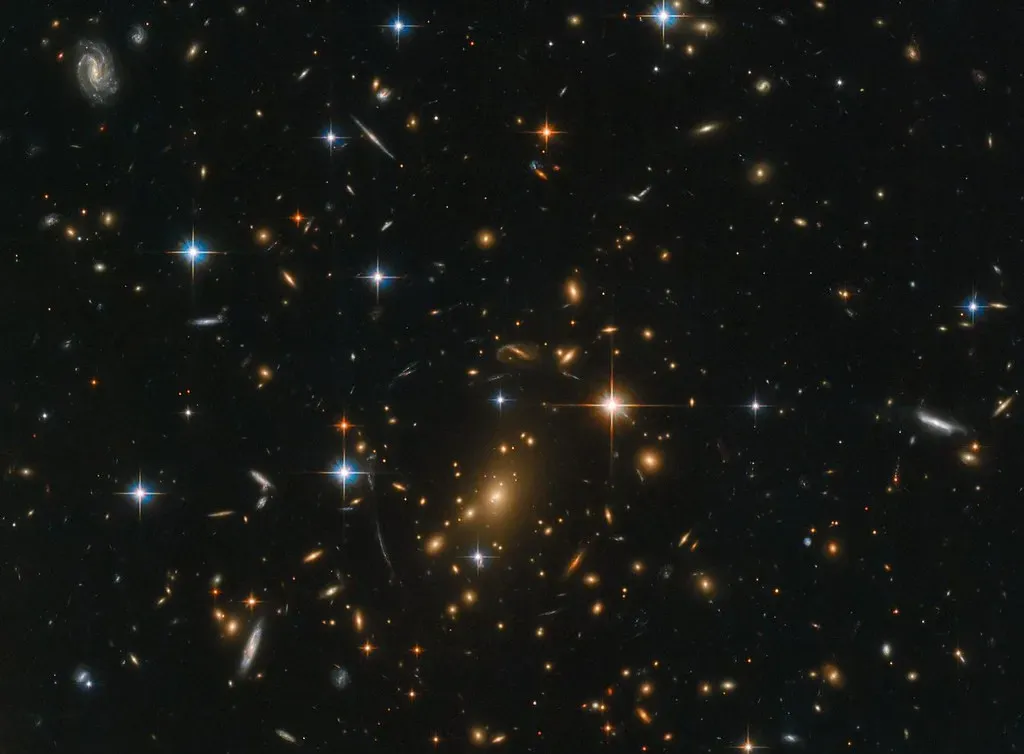
When astronomers measured how galaxies rotate and how the universe expands, they ran into a rude surprise: the visible stuff – stars, gas, dust, planets – doesn’t add up. Galaxies spin too fast to be held together by the mass we can see, and the expansion of the universe is speeding up rather than slowing down. To account for this, scientists propose that most of the universe is made up of two mysterious components: dark matter and dark energy.
Dark matter seems to act like an invisible scaffolding, providing extra gravity, while dark energy appears to push space itself apart. Together they’re thought to make up the vast majority of the cosmos, yet we still don’t know what they actually are. Particle detectors buried deep underground, satellites mapping the sky, and huge telescopes all search for clues, but so far the direct evidence has been maddeningly elusive. It’s as if we’re trying to understand a house by studying a few pieces of furniture, while the walls and foundation remain completely invisible.
5. Spontaneous Animal Mass Die-Offs

Every so often, news surfaces of thousands of fish washing up on a beach, birds falling from the sky, or antelopes suddenly dying across huge areas with no clear warning. While we can explain many of these events after investigation – disease, toxins, temperature shifts, or hypoxia in the water – there are still mass die-offs where the cause remains murky or controversial. The sheer scale can be shocking, with large percentages of a local population disappearing in days.
Scientists piece together clues like detectives: checking for pathogens, analyzing toxins, examining weather data, and studying stress factors linked to climate change and human activity. Yet in some cases, there’s no single smoking gun, just a tangle of contributing pressures that push species over the edge without a straightforward explanation. These events worry ecologists because they suggest fragile tipping points in ecosystems that we barely understand. When thousands of healthy-looking animals die almost at once, it feels like nature flashing a warning sign in a language we still can’t fully read.
6. The Wow! Signal and Other Strange Cosmic Radio Blips
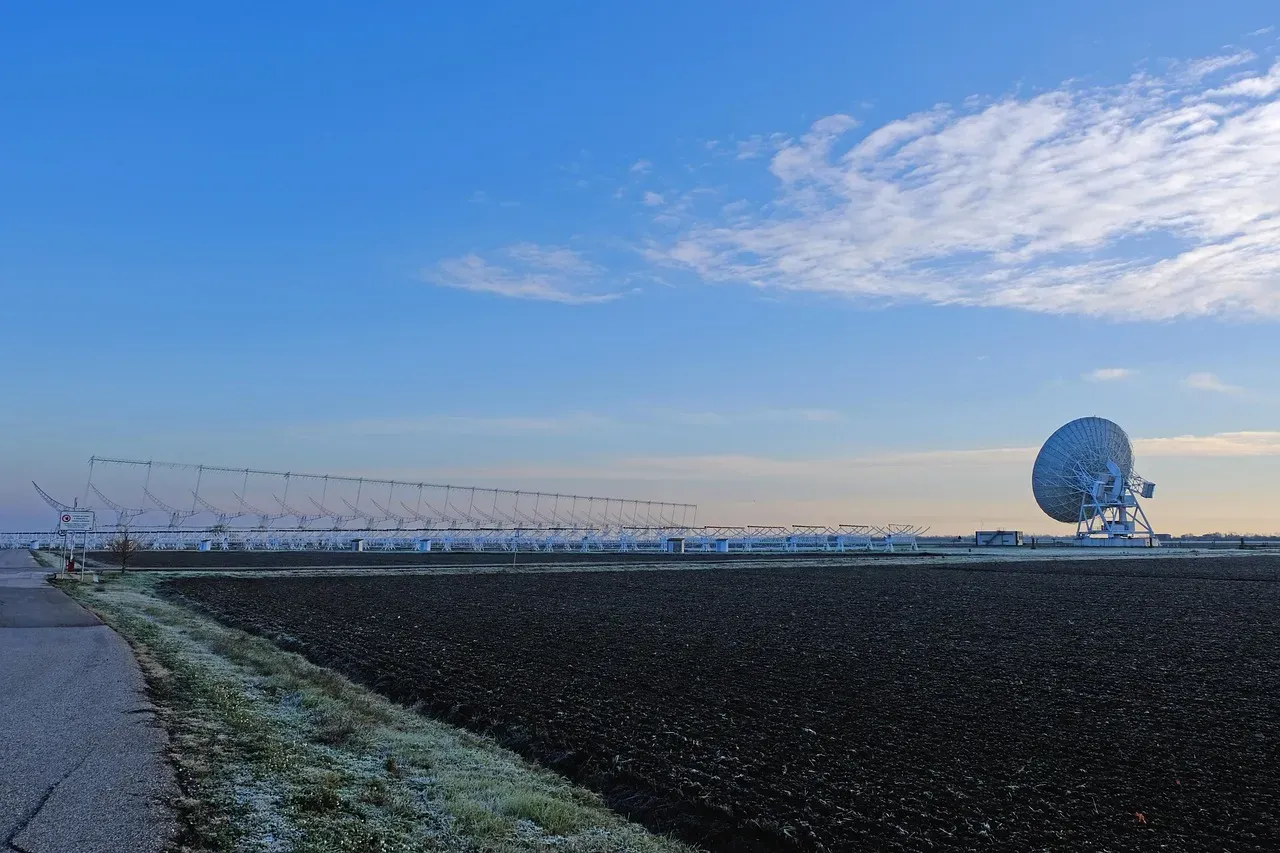
In the late nineteen seventies, a short, strong radio signal from space briefly lit up a detector tuned to search for extraterrestrial transmissions. It matched the kind of narrow, focused signal that some researchers had suggested might indicate an intelligent source, and it came from a region of the sky without a known natural explanation. Repeated attempts to find it again failed, and to this day, that single blip – now famous as a puzzling radio event – has never been fully explained.
Since then, radio telescopes have picked up other odd bursts and unusual patterns, many of which turned out to be mundane things like equipment interference or pulsars. But a few signals still defy easy categorization, lurking in that uncomfortable gray zone between known astrophysical processes and “we just don’t know yet.” Most scientists lean heavily toward natural causes, but the fact that we can’t recreate or relocate some of these events keeps the door cracked open to more exotic ideas. Until we detect a similar signal with enough detail to analyze properly, the mystery stays stubbornly alive.
7. Rogue Waves: Walls of Water That Should Not Exist

For a long time, stories from sailors about massive, seemingly random waves towering above the rest of the sea sounded like exaggeration. Then satellite data and offshore instruments confirmed that so-called rogue waves – enormous, isolated waves much taller than surrounding swells – are very real. Some can rise as high as a multi-story building, appearing suddenly and smashing into ships or platforms with devastating force.
Traditional wave theories treated the ocean’s surface as a kind of average of many overlapping waves, which made waves of that size seem statistically almost impossible. Newer models involving nonlinear effects, focusing of energy, and complex interactions between currents and wind patterns do a better job of accounting for them, but predicting exactly when and where a rogue wave will appear remains extremely difficult. It’s a reminder that even with all our equations, the ocean still keeps surprises hidden in its shifting, restless surface. To this day, mariners know that somewhere out there, a monster wave can still appear out of an otherwise ordinary sea.
8. The Mpemba Effect: When Hot Water Freezes Faster Than Cold

On the surface, it sounds like a bad joke: under certain conditions, hot water can freeze faster than cold water. Yet experiments have repeatedly suggested that this can happen, and the idea itself has been around in various forms since long before modern physics. The phenomenon is now commonly called the Mpemba effect, after a student from Tanzania who noticed it in the nineteen sixties while making ice cream and insisted on testing it scientifically.
Over the years, researchers have proposed explanations involving evaporation, convection, dissolved gases, supercooling, and even subtle properties of hydrogen bonding in water. The twist is that not every experiment sees the effect, and it seems to depend heavily on the exact setup: container shape, impurities, cooling rate, and more. This makes it frustrating to pin down and difficult to model consistently. Water is probably the most studied substance on Earth, and yet this simple everyday observation still refuses to settle into a neat, universal rule.
Living With the Unknown in a Measured World

Looking at these eight mysteries side by side, a pattern starts to emerge: the more we measure, the more we realize how much we don’t fully grasp. From invisible cosmic ingredients shaping galaxies to strange sounds in quiet towns, nature keeps slipping out of the nets we cast around it. Even with better technology and mountains of data, there are still gaps, contradictions, and loose threads that refuse to be tied up.
What’s most striking is that these unanswered questions are not signs of failure, but proof that our curiosity is still alive and kicking. They push scientists to build new instruments, challenge old assumptions, and sometimes admit that a simple “we don’t know yet” is the most honest answer. In a world that loves quick explanations, that might be the most unsettling mystery of all: are we ready to live with the unknown a little longer?