
Every so often, nature throws something at us that feels like it belongs in a science fiction movie rather than in a textbook. For all our satellites, quantum theories, and supercomputers, there are still events on this planet that scientists can describe, measure, and model… but not fully explain. They sit in that uncomfortable space between “we kind of get it” and “we honestly have no idea.”
That gap is exactly where things get exciting. It’s where curiosity lives. It’s where careers are made, assumptions are broken, and entire fields of study get rewritten. Below are eight of the strangest, most persistent natural mysteries that continue to bother, fascinate, and inspire researchers right now. Some might be solved in the next decade; others may outlast us all.
1. Ball Lightning: Floating Orbs of Fire That Shouldn’t Exist
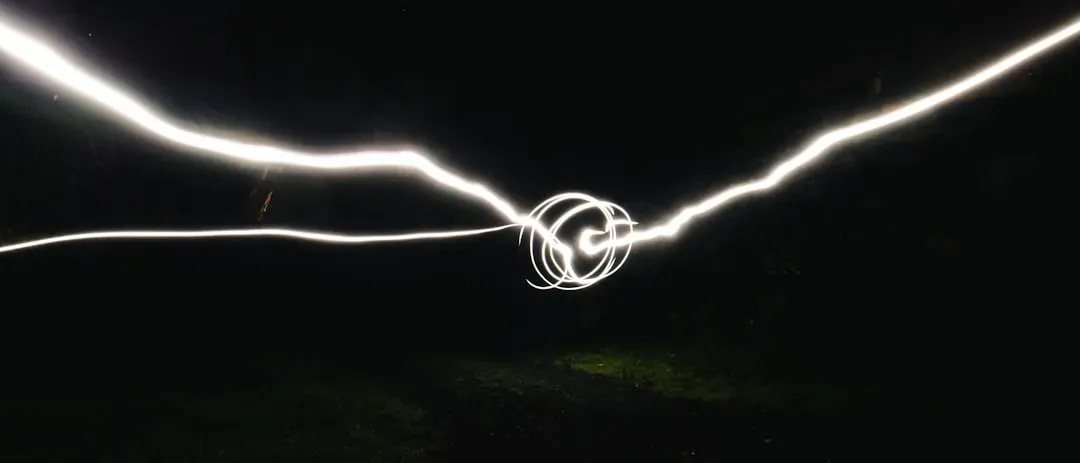
Imagine standing at your window during a storm and seeing a glowing orb of white-blue light drift silently across your living room, hover for a few seconds, then vanish with a sharp pop. That’s how many people describe ball lightning, a rare, floating sphere of light sometimes seen during thunderstorms. It has been reported for centuries across different continents, yet there’s still no agreed-upon explanation for what it really is.
Some scientists think ball lightning might be superheated plasma or burning vaporized silicon from soil struck by lightning. Others propose exotic electromagnetic structures, like self-contained microwaves trapped in a kind of invisible bubble. The big problem is that it is almost impossible to study in the wild: it appears randomly, lasts only seconds, and is incredibly rare. Lab recreations have produced ball-like glows, but none quite match what witnesses have described. Until researchers can reliably create and measure it, ball lightning will stay in the awkward space between “folk tale” and “physics problem.”
2. The Taos Hum and Other Global Hum Mysteries

In towns like Taos in New Mexico, Bristol in the United Kingdom, and Largs in Scotland, some residents report a persistent, low-frequency hum that only a fraction of people can hear. It’s described as a slow diesel engine idling somewhere in the distance, even when there’s nothing around. For the people who hear it, the sound can be maddening, disturbing sleep and causing headaches and anxiety. Strangely, sound engineers and investigators often measure nothing unusual.
Scientists have proposed plenty of potential sources: distant industrial machinery, traffic reverberating through the ground, underground geological processes, even subtle vibrations from ocean waves coupling with the atmosphere. There’s also the possibility that in some cases, the hum is generated internally by the ear or nervous system rather than from outside. But there’s no single explanation that neatly fits all reported “hum towns” around the world. That patchwork of partial answers makes the global hum one of the eerier unsolved acoustic puzzles on the planet.
3. Fast Radio Bursts: Cosmic Signals From the Deep Unknown
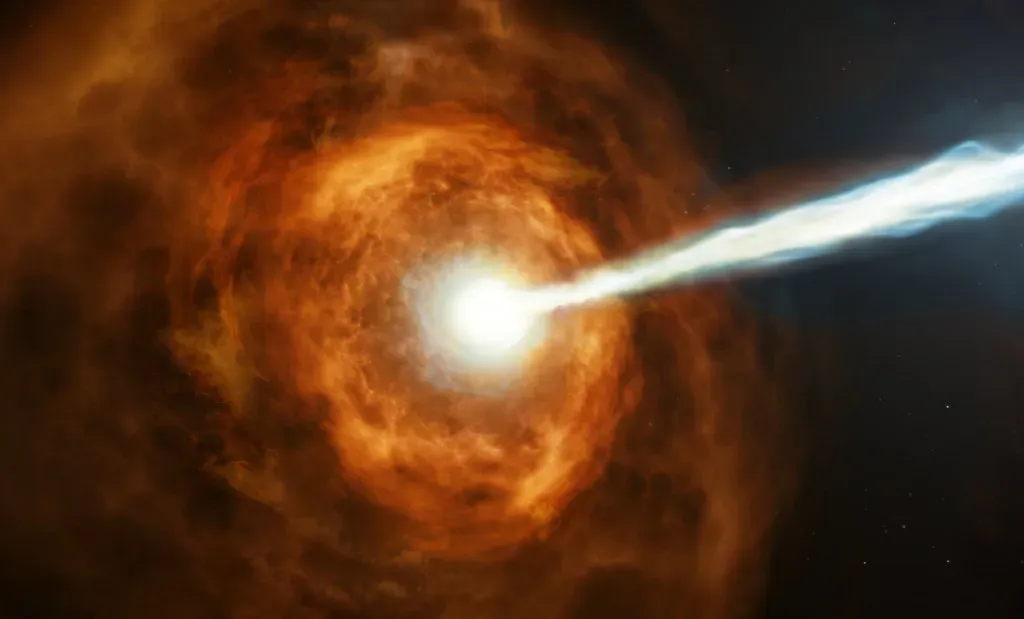
Fast radio bursts, or FRBs, are ultra-brief but incredibly powerful flashes of radio energy coming from deep space. Each one lasts just a blink – thousandths of a second – yet in that instant can release more energy than the Sun emits in days. The first FRB was noticed in archived data in the early 2000s, and since then, dedicated radio telescopes have found hundreds more scattered across the sky. We know they’re real, we know they’re out there, but their exact cause is still up for debate.
Most astronomers suspect that FRBs come from extreme objects like magnetars, which are highly magnetized neutron stars, or from violent cosmic events like stellar collapses. The fact that some FRBs repeat while others seem to fire only once complicates the story. It suggests there may be more than one mechanism behind them. Despite improvements in pinpointing their locations and linking a few to distant galaxies, there’s still no definitive model that explains all of their behavior. For now, they remain the universe’s strange, staccato Morse code, sending messages we can detect but not quite decipher.
4. Dark Matter: The Invisible Mass Holding Galaxies Together
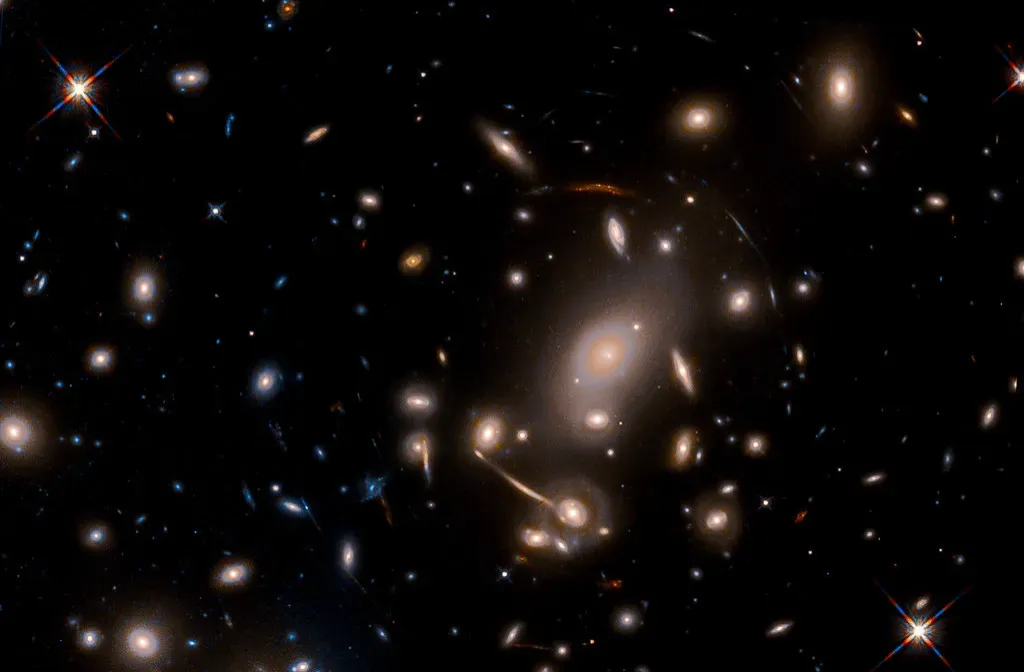
When astronomers look at how galaxies spin, there’s a glaring problem: they rotate so fast that, based on visible matter alone, they should fly apart. Yet they don’t. The best explanation is that there’s a huge amount of unseen mass – dark matter – providing the extra gravity needed to hold everything together. By many estimates, this mysterious stuff makes up most of the matter in the universe, far outweighing stars, planets, gas, and dust.
The catch is that dark matter does not emit light, reflect it, or interact with it in any obvious way. We only detect it through its gravitational effects, like the way it bends light from distant galaxies or shapes the large-scale structure of the cosmos. For decades, physicists have been hunting for dark matter particles in underground detectors, particle accelerators, and space-based experiments. So far, nothing conclusive has turned up. It’s possible that dark matter is made of unknown particles, or that our theory of gravity itself needs an upgrade. Until one of those ideas breaks through, dark matter is a ghost we’re sure is there but still cannot see or touch.
5. Dark Energy: The Force Pushing the Universe Apart Faster
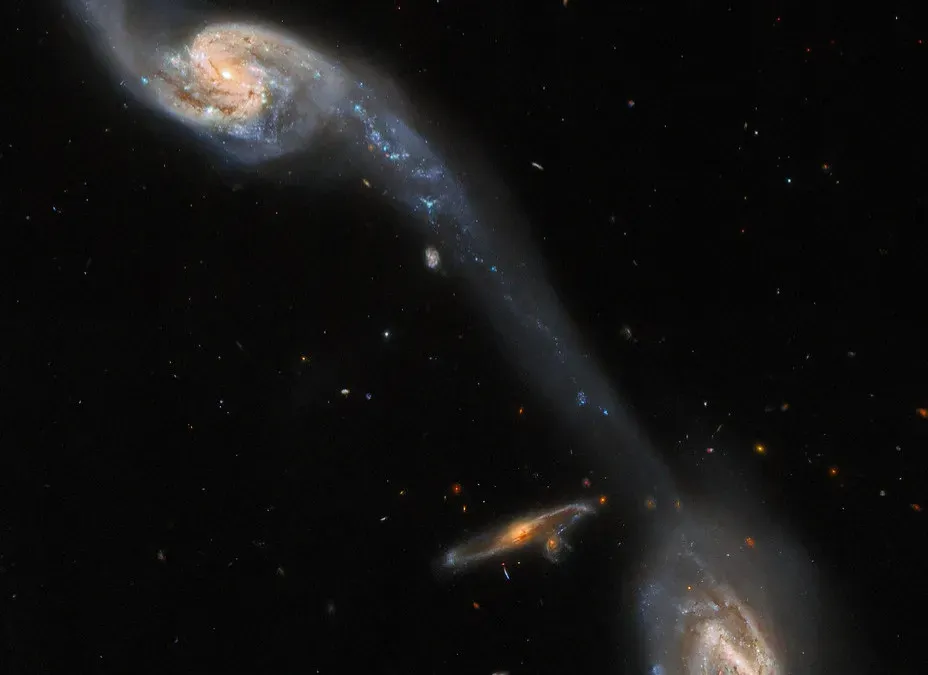
As if invisible mass weren’t enough, the universe has another weird secret: its expansion is accelerating. Galaxies are not just drifting apart; they’re speeding away from each other at a growing rate. To account for this, cosmologists use the concept of dark energy, a kind of energy built into the fabric of space that acts like a repulsive force on cosmic scales. Roughly about two thirds of the total energy content of the universe is thought to be this invisible, unmeasurable something.
Unlike dark matter, which at least behaves like “normal” mass when it comes to gravity, dark energy doesn’t act like anything we see in everyday physics. We infer its existence from observations of distant supernovae, the cosmic microwave background, and galaxy surveys, all of which point to a universe whose expansion is speeding up. Beyond that, though, we’re largely in the dark. Some theories describe dark energy as a constant property of space itself, while others suggest it might change over time. Either way, it’s hard not to feel like we’re trying to describe an animal from its shadow alone, with no clear view of the creature making it.
6. Rogue Waves: Monster Walls of Water From Calm Seas

For centuries, sailors told stories of freak waves that rose out of relatively calm seas like moving cliffs, smashing ships in a single, devastating hit. These rogue waves were often dismissed as exaggerations or sea legends. But in the late twentieth and early twenty-first centuries, satellites and offshore instruments finally confirmed they are very real: walls of water that can tower more than twice as high as surrounding waves and appear seemingly out of nowhere.
Rogue waves do not fit neatly into traditional wave models based on average wind and weather conditions. Some form when waves from different storms align and combine their energies, a bit like several small ripples stacking into one massive surge. Others may be amplified by underwater topography or strong ocean currents. Even with these ideas, predicting exactly when and where a rogue wave will strike is still beyond our reach. That unpredictability makes them not just a scientific puzzle but a serious threat for ships and offshore platforms, hiding in plain sight on otherwise ordinary-looking seas.
7. Earthquake Lights: Strange Glows Before the Ground Breaks

There are long-standing reports of mysterious lights appearing in the sky around the time of major earthquakes: flickering glows, bright flashes, even arcs or spheres of light near fault lines. These so-called earthquake lights have been described near significant quakes in places like Japan, Italy, China, and the Americas. For a long time, geologists weren’t sure whether to believe these accounts, but in recent decades, more photographs and video recordings have added weight to the claims.
One leading idea is that stress in the Earth’s crust before or during a quake may generate electric charges in certain types of rock. Those charges could then travel to the surface and ionize the air, creating brief light displays. Others suggest that the lights might be related to local electromagnetic disturbances or even to how human vision responds under extreme stress. The challenge is that major earthquakes are hard enough to predict, and coordinated observations of the sky at exactly the right time are rare. Until scientists can consistently measure and reproduce the conditions that cause these glows, earthquake lights will remain part geology, part ghost story.
8. The Great Silence: Why We Haven’t Found Other Civilizations
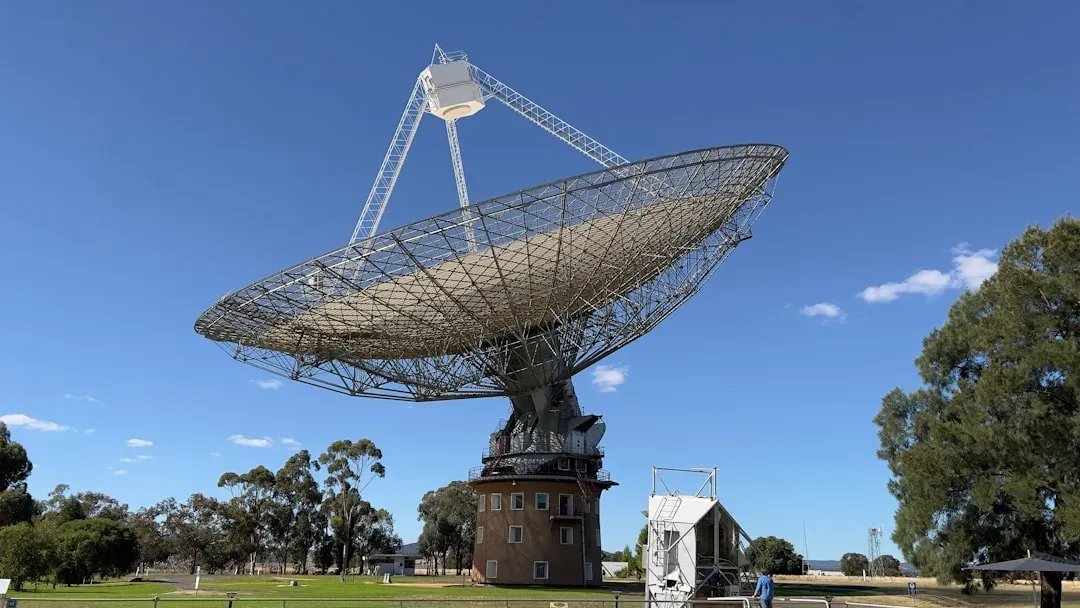
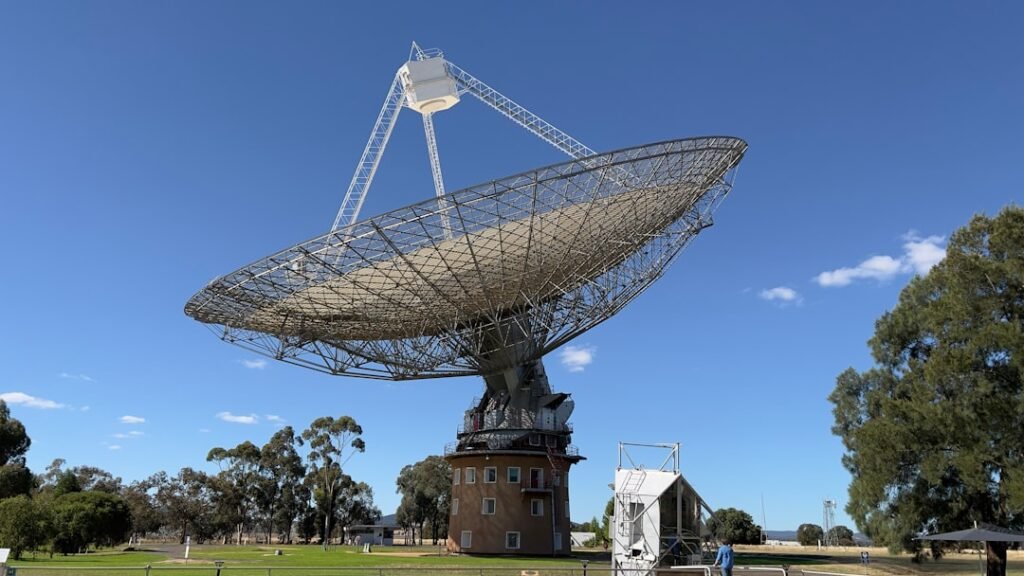
Given the vastness of the universe, with billions of galaxies and countless planets, it feels almost absurd to imagine we’re alone. Yet so far, every search for signs of advanced extraterrestrial civilizations, especially through radio telescopes, has turned up nothing but static and natural signals. This conflict between high probability and zero evidence is often called the Fermi paradox, and it’s one of the deepest open questions in modern science.
There are many possible answers, and none are fully satisfying. Maybe technological civilizations are extremely rare, or they don’t last long enough to overlap in time. Perhaps they use communication methods we don’t recognize, or they simply have no interest in contacting anyone. There’s also the unsettling possibility that space is full of life, but something regularly wipes out societies that become too visible or too powerful. Until we have a confirmed detection – of a signal, an unmistakably artificial object, or even microbial life on another world – the silence will keep pressing on us. Are we early, are we alone, or are we just not listening in the right way?
Conclusion: Living With Questions in a Measured Universe
These mysteries highlight a strange truth about our age: we live in a world of detailed measurements and confident predictions, yet some of the most basic questions about the cosmos, the Earth, and even the sounds in our own towns remain unanswered. It’s tempting to see that as a failure of science, but it’s really the opposite. The fact that we can identify these anomalies, measure them, and admit we don’t fully understand them is exactly what keeps the scientific process alive and honest.
From glowing orbs in thunderstorms to the silent pull of unseen matter and energy, each of these phenomena is a reminder that reality is still bigger and stranger than our best theories. Somewhere in these gaps, future breakthroughs are waiting – maybe from a new telescope, a better sensor, or a young researcher who just refuses to let a puzzle go. When you think about the world around you now, which mystery do you secretly hope we never fully solve?