
Some ideas from modern science sound less like serious research and more like something a novelist would dream up at three in the morning. Yet behind these wild-sounding concepts are equations, experiments, and decades of careful testing. The result is a strange mix: the world turns out to be much weirder than common sense suggests, but also far more understandable than pure fantasy.
When I first learned about some of these theories, I honestly thought someone was joking. How can time slow down, particles be in two places at once, or the universe create matter out of “nothing”? Still, the deeper I went, the more I realized that what feels like magic is often just reality seen with sharper tools. Let’s walk through eight theories that sound like spells from a sci‑fi book, but are, in fact, part of the best-tested science we have.
Quantum Superposition: One Particle, Many Possibilities
Imagine flipping a coin and having it land in a state that’s both heads and tails at the same time until you peek at it. That’s roughly what quantum superposition says happens to particles like electrons and photons. They don’t just have one clear position or one path; instead, they exist in a blend of possibilities described by a mathematical wave.
This isn’t just a philosophical idea; it’s the backbone of technologies like quantum computing. In a quantum computer, tiny units of information called qubits can be in multiple states at once, allowing them to explore many solutions in parallel. When we finally measure a superposed system, it “collapses” into a definite outcome, but until then, nature plays out as if many options are alive at once.
Time Dilation: When Time Really Does Slow Down
The idea that time can tick at different speeds for different people sounds like the plot twist of a time-travel movie, but it’s a direct prediction of Einstein’s theory of relativity. If you move very fast or linger near something extremely massive, like a black hole, your time runs slower compared to someone far away and at rest. This isn’t something we see in daily life because the effects are tiny at ordinary speeds and gravity levels.
Still, we’ve measured it with ridiculous precision using atomic clocks on airplanes, satellites, and even at different heights on Earth. Without correcting for time dilation, GPS systems would drift so badly that your navigation app would quickly become useless. So when your phone maps your route correctly, you’re casually benefiting from the fact that time itself is elastic.
Quantum Entanglement: Spooky Connections Across Space
Quantum entanglement says that two particles can become linked so deeply that what happens to one is instantly related to what happens to the other, no matter how far apart they are. Change the state of one particle, and the other responds in a way that seems coordinated, even if it’s on the other side of the galaxy. It sounds like a telepathic link, the kind of thing that should be impossible if information can’t travel faster than light.
Yet experiments over many decades have repeatedly confirmed entanglement, closing loophole after loophole. While this doesn’t let us send actual messages faster than light, it does give us tools for things like ultra-secure quantum communication and powerful new sensing techniques. In a way, entanglement shows that separateness is partly an illusion: once particles interact, they can stay weirdly tied together by the mathematics of quantum mechanics.
Black Holes: Gravity So Strong Not Even Light Escapes
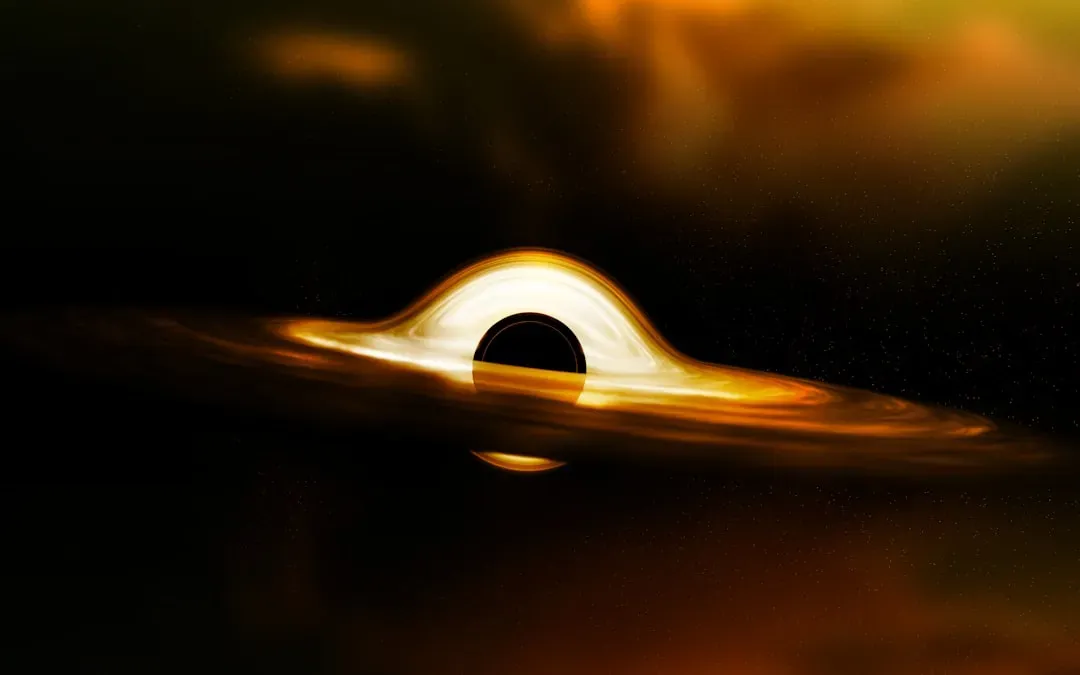
Black holes sound like cosmic monsters: regions of space where gravity is so intense that nothing, not even light, can get away once it crosses a certain boundary. For a long time, they were treated more like speculative ideas than obvious realities. Now, we’ve seen the effects of black holes so clearly that they’re considered standard parts of the universe, lurking in the centers of galaxies and in the remnants of massive stars.
In 2019 and 2022, international collaborations produced images of the shadow of black holes using radio telescopes spread across the Earth, creating a “planet-sized” observatory. Those fuzzy orange rings were a striking confirmation of predictions made by general relativity a century earlier. Even more mind-bending, black holes are now thought to play a crucial role in shaping galaxies, regulating star formation with their powerful jets and winds, turning what once sounded like pure nightmare fuel into a key piece of cosmic architecture.
Quantum Tunneling: Passing Through Barriers Without Breaking Them
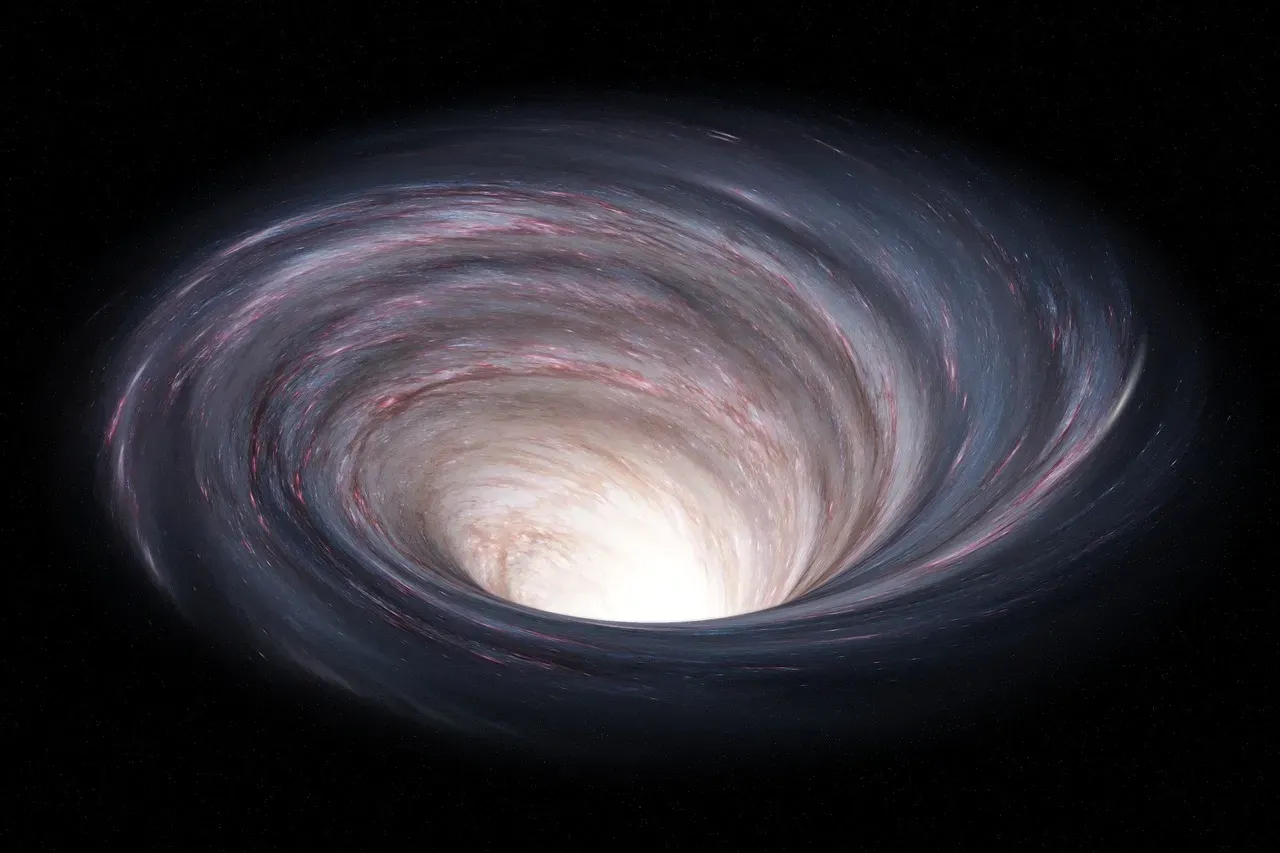
Quantum tunneling is the idea that a particle can slip through a barrier it seemingly doesn’t have enough energy to cross, a bit like watching someone walk straight through a locked wall. Classically, if you don’t have enough energy, you bounce back; quantum mechanically, there’s a small chance you simply appear on the other side. The mathematics behind this is solid, but the image it paints is bizarre and counterintuitive.
This effect is not just a curiosity; without tunneling, stars like our Sun wouldn’t shine the way they do. The nuclear reactions that power them rely on particles sneaking through energy barriers they couldn’t overcome in a purely classical world. On Earth, tunneling underpins technologies such as scanning tunneling microscopes, which can image individual atoms by exploiting electrons’ ability to “tunnel” across tiny gaps.
Cosmic Inflation: The Universe’s Blink-of-an-Eye Growth Spurt
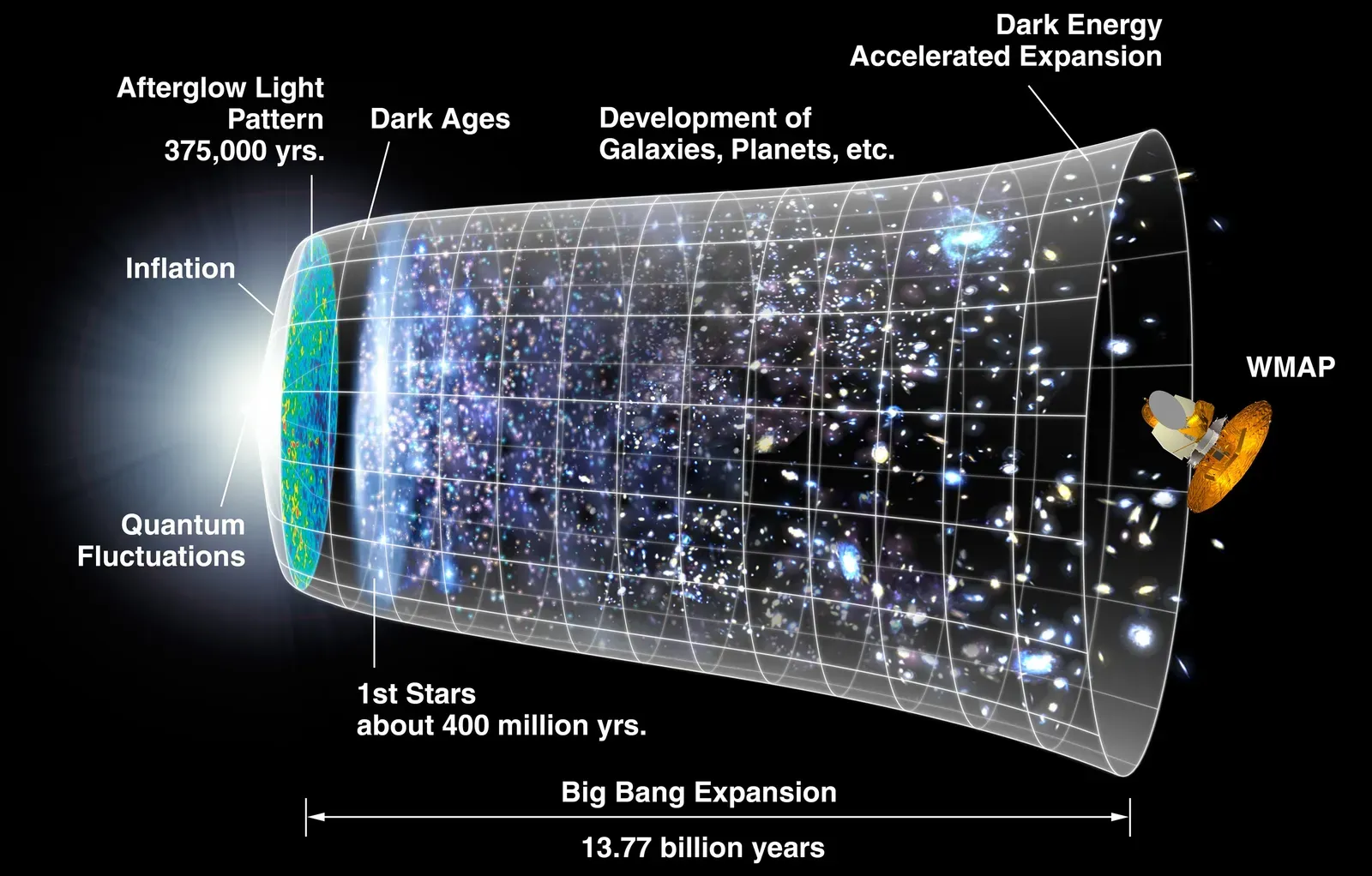
Cosmic inflation proposes that, in a fraction of a second after the Big Bang, the universe expanded faster than any explosion we can imagine. Space itself stretched so violently that something smaller than an atom ballooned to macroscopic scales in a time far shorter than a blink. It sounds like pure fantasy, as if someone hit a cosmic “instant growth” button.
Yet inflation helps explain why the universe looks so uniform on large scales and why tiny quantum fluctuations in the early universe later grew into galaxies. Observations of the cosmic microwave background, the faint afterglow of the Big Bang, line up impressively well with predictions from inflationary models. While details are still debated, the general idea that the early universe underwent an absurdly rapid expansion has gone from wild conjecture to one of the leading explanations in cosmology.
Wave–Particle Duality: Light and Matter as Shape-Shifters
Wave–particle duality tells us that light and matter can behave like particles in some experiments and like waves in others. It’s as if a single actor can be both a crisp point and a spread-out ripple, depending on how you look. When we send light through two narrow slits, it creates an interference pattern like water waves; yet when we detect individual photons, they arrive like tiny bullets.
Electrons, atoms, and even large molecules have shown similar dual behavior in carefully designed experiments. Instead of choosing whether something is a wave or a particle, modern physics treats them as quantum objects that don’t fit neatly into our everyday categories. It’s unsettling at first, but also strangely liberating: reality, at its most basic level, doesn’t care about the mental boxes we like to use.
Vacuum Fluctuations: “Empty” Space that Isn’t Empty
We usually imagine empty space as truly nothing, a clean slate with no stuff in it at all. Quantum field theory paints a far stranger picture: even the vacuum seethes with fleeting pairs of particles and antiparticles that pop into existence and then annihilate. These vacuum fluctuations don’t break any conservation laws; they just borrow energy for a very short time, like a quantum-scale bounce.
The effects of this ghostly activity have been measured in real experiments, such as tiny shifts in atomic energy levels and forces that appear between very close metal plates. On cosmic scales, something like vacuum energy is also tied to dark energy, the mysterious driver behind the accelerating expansion of the universe. What sounds like magical nothingness is, in fact, a restless stage on which fields and particles are constantly in motion, even when we think “nothing” is there.
A World Stranger and Truer Than Fiction

Each of these theories bends intuition in its own way, from time stretching at different rates to particles sharing hidden links across space. At first glance, they feel like plot devices designed to shock or entertain, but they’re supported by instruments, experiments, and equations that have survived intense scrutiny. The universe, it turns out, doesn’t feel any obligation to behave in a way that matches our gut instincts.
If anything, the history of science shows that reality keeps outpacing our imagination, forcing us to revise what we consider “normal” again and again. The magic here isn’t in breaking the rules; it’s in discovering what the real rules have been all along and how beautifully strange they are. Which of these realities surprised you the most?