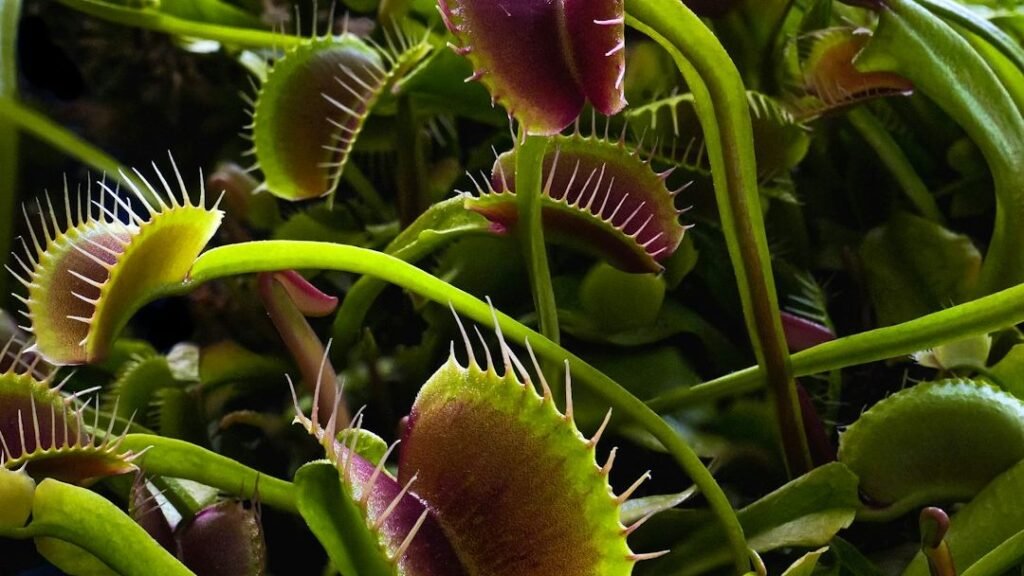

You probably think you know plants. They grow, they photosynthesize, they sit there quietly doing their thing. Right? Well, brace yourself, because the plant kingdom is hiding some of the most jaw-dropping, logic-bending abilities in all of nature. We’re talking about plants that count, remember, resurrect themselves from the dead, and communicate through underground networks that function like a living internet.
Far from passive greenery, many plant species have evolved extraordinary biological abilities: they move, hunt, survive in near-death states, and communicate across vast underground networks. Honestly, once you learn what some of these species are capable of, you’ll never look at a garden the same way again. So let’s dive right in.
1. Venus Flytrap (Dionaea muscipula) – The Plant That Can Count
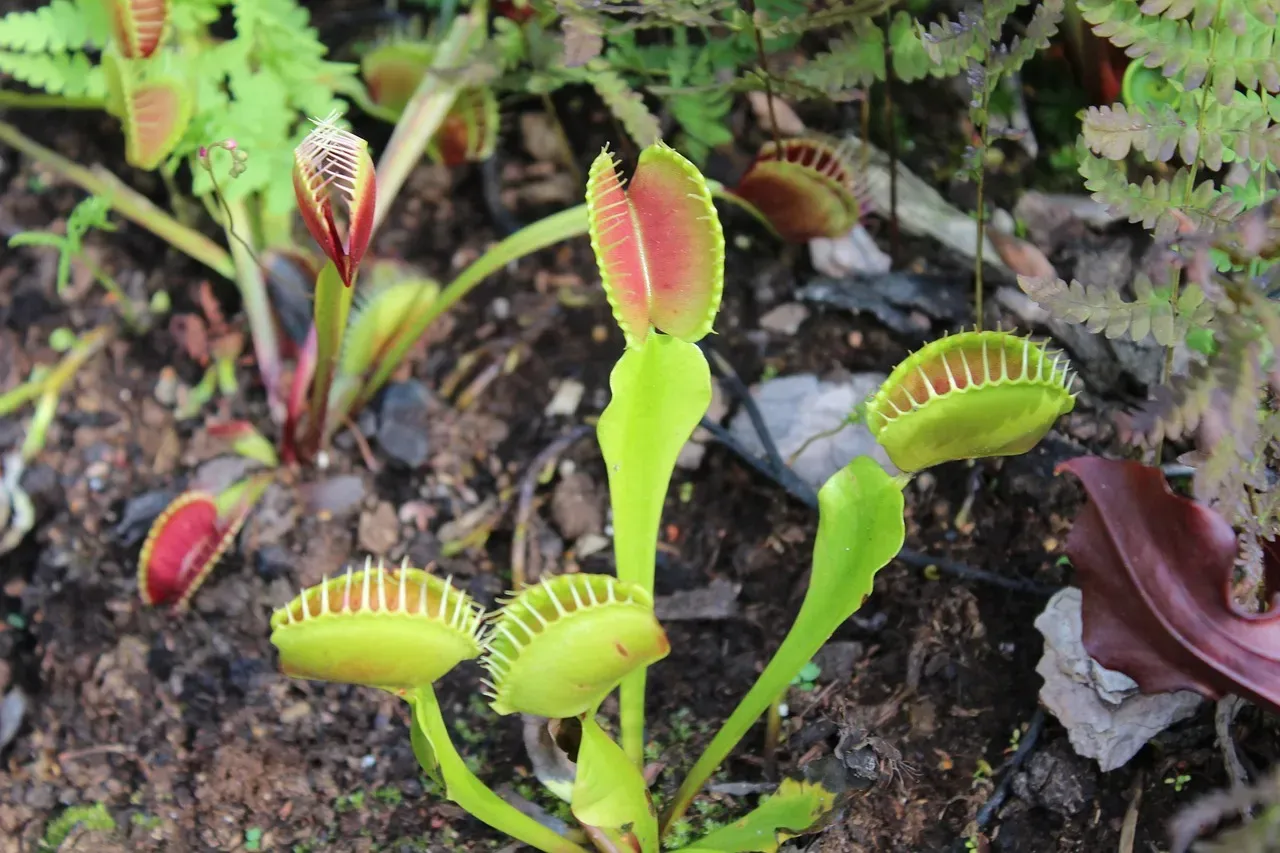
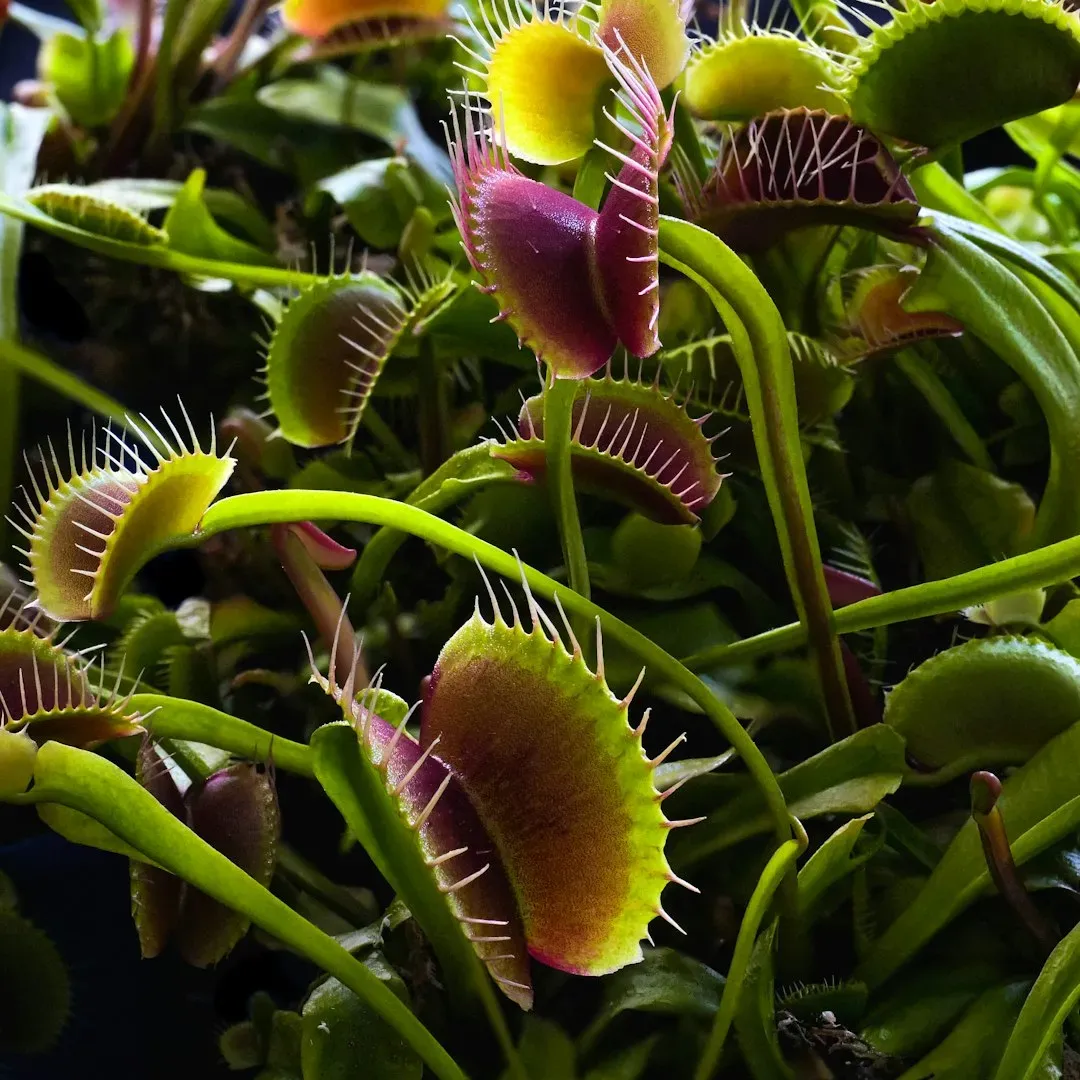
Most people know the Venus flytrap as that snappy little carnivore from the plant store. What most people don’t know is that this plant is doing something far more extraordinary under the surface. It’s actually counting. The Venus flytrap counts, up to five in fact. Touch two hairs within a 20-second window, and the trap shuts. Touch five, and digestion begins. That’s not instinct. That’s biology behaving like arithmetic.
The plant counts in order to save energy. It needed to figure out how to tell the difference between a non-prey stimulus, like raindrops or debris, and a morsel worthy of digestion. Scientists have linked signal memory to calcium dynamics using transgenic Dionaea expressing a calcium sensor. Stimulation of a sensory hair caused an increase in cytosolic calcium concentration starting in the sensory hair and spreading to the leaf blade. A second stimulus increased calcium concentration to an even higher level, meeting a threshold that correlates to leaf blade closure. It’s essentially a biological computer running on chemical signals, not electricity.
2. Mimosa Pudica – The Shy Plant With a Memory
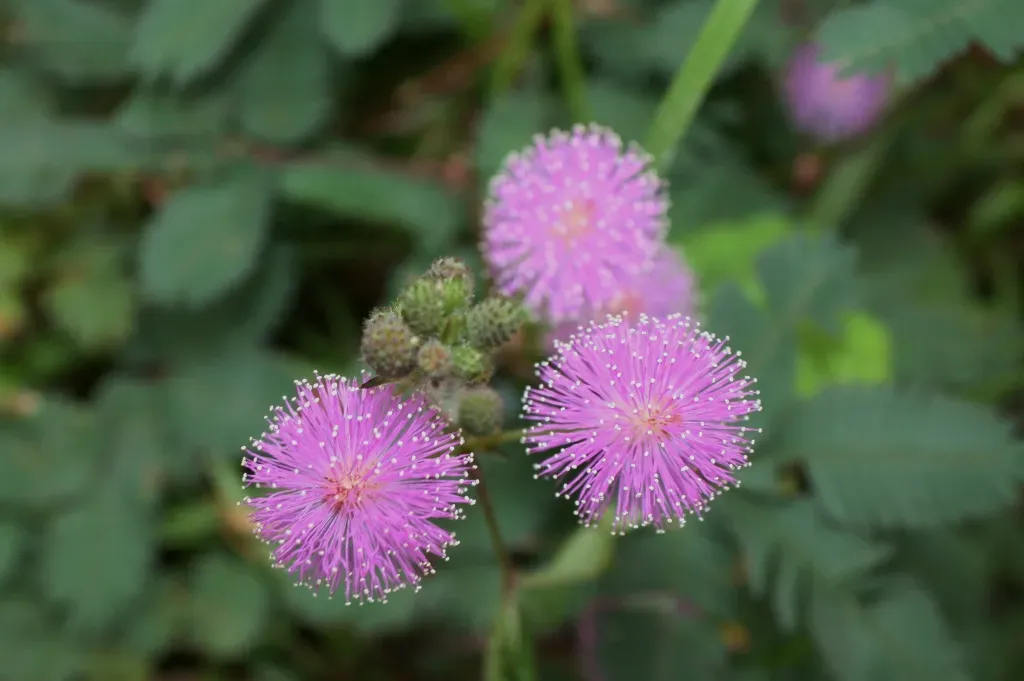
Here’s a plant that seems almost embarrassed to exist. Touch its leaves and they fold inward immediately, as if recoiling from your fingertip. The sensitive plant, or Mimosa pudica, is known for its rapid leaf-folding response to touch, a response thought to protect the plant from herbivores and environmental stress. It’s dramatic, it’s fast, and it looks like something straight out of science fiction.
What makes Mimosa pudica genuinely startling, though, is evidence of memory. In 2014, Monica Gagliano of the University of Western Australia conducted a series of experiments to test Mimosa pudica’s long and short-term memory. She dropped water on the plants in high and low-light conditions. The mimosa stopped closing its leaves when it learned that the stimulus had no negative consequences, and it learned this behavior in a matter of seconds. This learned behavior lasted several weeks. Long after the stimulus had stopped and environmental conditions changed, the mimosa’s memory appeared to remain. A plant with a memory. Let that sink in.
3. Selaginella Lepidophylla – The Resurrection Plant
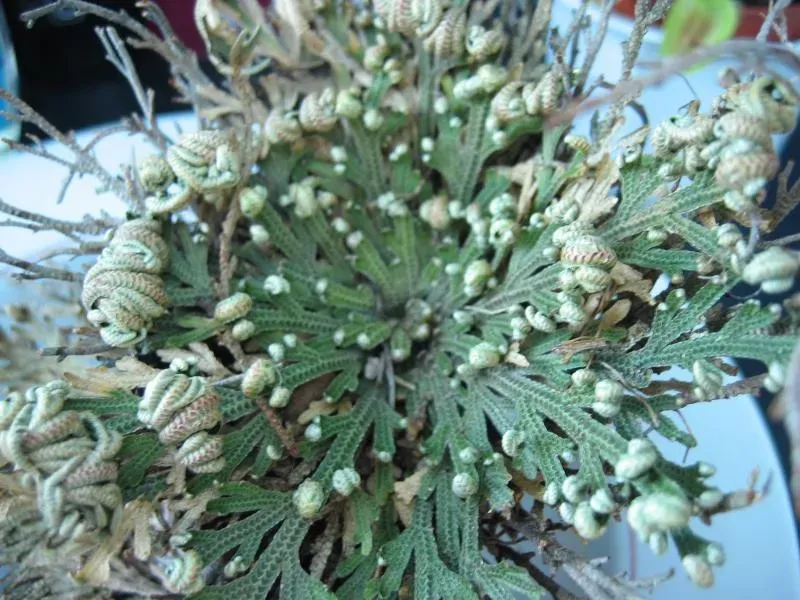
I know it sounds crazy, but this one might be the most mind-bending entry on the list. Selaginella lepidophylla is a true resurrection plant that can revive and regain metabolic function after a period of extreme desiccation. Think of it like a creature that dies, dries out completely, then simply comes back to life when you add water. It can survive for up to several years and lose up to 95% of its moisture content without suffering damage.
The plant enters a dormant state in the absence of water, avoiding tissue and cell damage during drying by synthesizing trehalose, a crystallized sugar that acts as a compatible solute. Dissolved salts become concentrated in plant tissues as water evaporates, and the trehalose produced by the plant acts in place of the evaporating water, preventing salts from causing damage. Once water is restored to plant tissues, the sugar crystals dissolve and the plant’s metabolism, until then paralyzed, reactivates. Leaves that seemed dead turn green and open. It’s not a miracle. It’s molecular engineering at its finest.
4. Welwitschia Mirabilis – The Desert Ancient That Refuses to Die
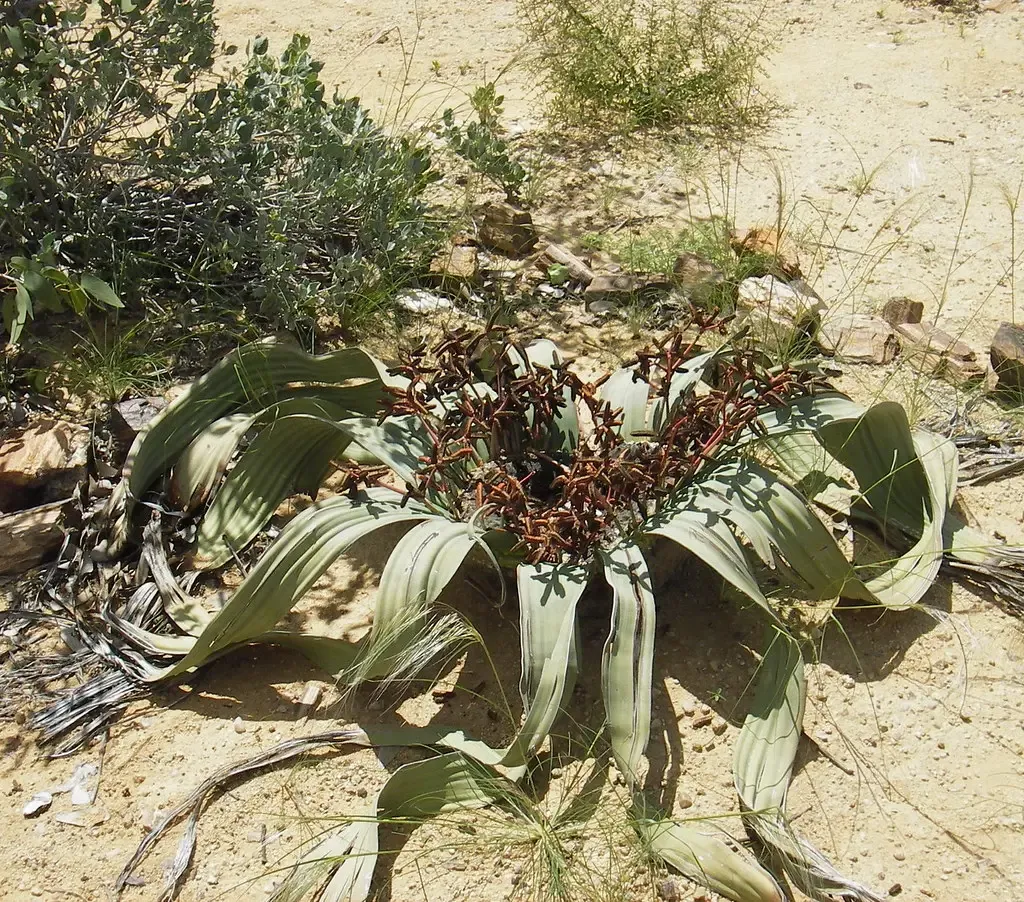
The Welwitschia mirabilis is one of those plants that seems to exist outside the normal rules of biology entirely. Despite its bizarre appearance, having just two leaves that grow continuously over centuries, Welwitschia is a model of biological efficiency and drought survival. Two leaves. That’s it. Two leaves for a thousand years or more. Some Welwitschia plants are estimated to be over 1,500 years old.
It captures water not through rainfall, but from fog that rolls in from the Atlantic Ocean. Specialized leaf structures condense and absorb moisture, while its deep taproots draw water from far below the surface. Their ability to persist in harsh, unstable climates offers important clues for understanding resilience in the face of climate change. To put that in perspective, this plant was already ancient when some medieval cathedrals were being built. It just kept growing its same two leaves, completely unfazed.
5. Eucalyptus – The Tree That Weaponizes Fire
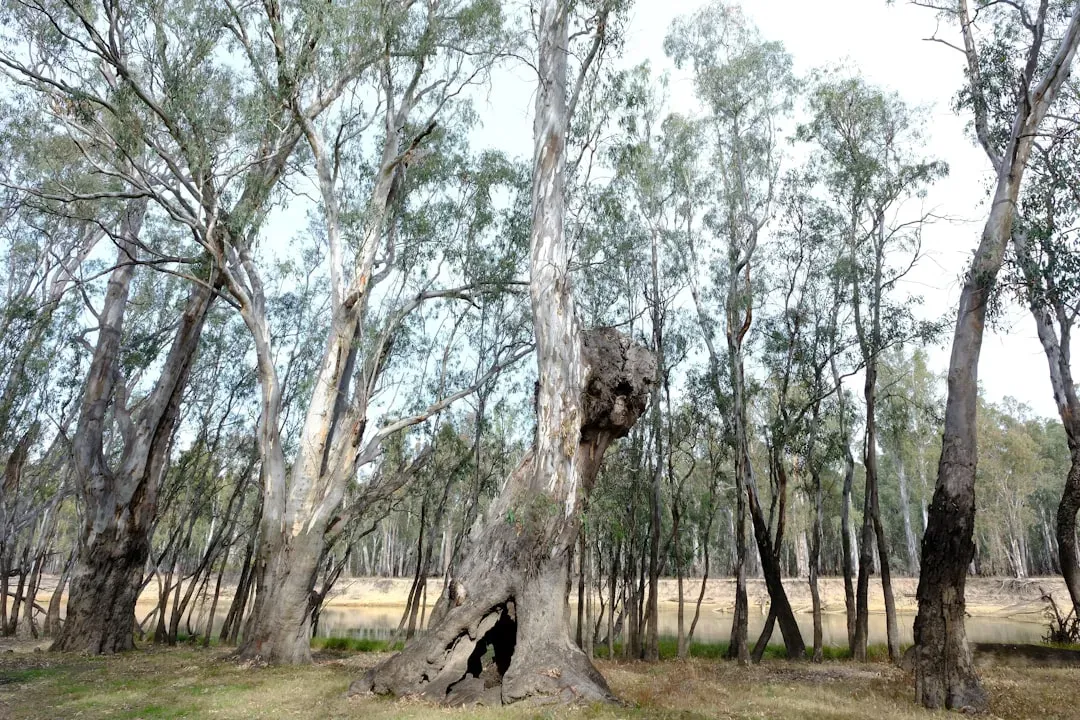
Most living things treat fire as the ultimate enemy. Eucalyptus treats it like a business opportunity. In Australia’s fire-prone landscapes, Eucalyptus trees have taken an unusual evolutionary gamble: embracing fire. The leaves of this tree produce a lot of flammable oil and create enormous energy when burned. Although fire is a disaster for most plants, Eucalyptus trees use this tragedy to spread their seeds. When Eucalyptus burns, it rains seeds. These trees can resist fire and their burned shell is restored instead of being destroyed.
Think about what that strategy actually means. The Eucalyptus doesn’t just survive fire, it has evolved to need it, to depend on it for reproduction. It’s like a plant that built its entire survival strategy around an event that kills everything else around it. It essentially cleared the competition by engineering its own inferno. That’s not adaptation. That’s a calculated biological power move spanning millions of years of evolution.
6. Trees and the Wood Wide Web – Underground Communication Networks
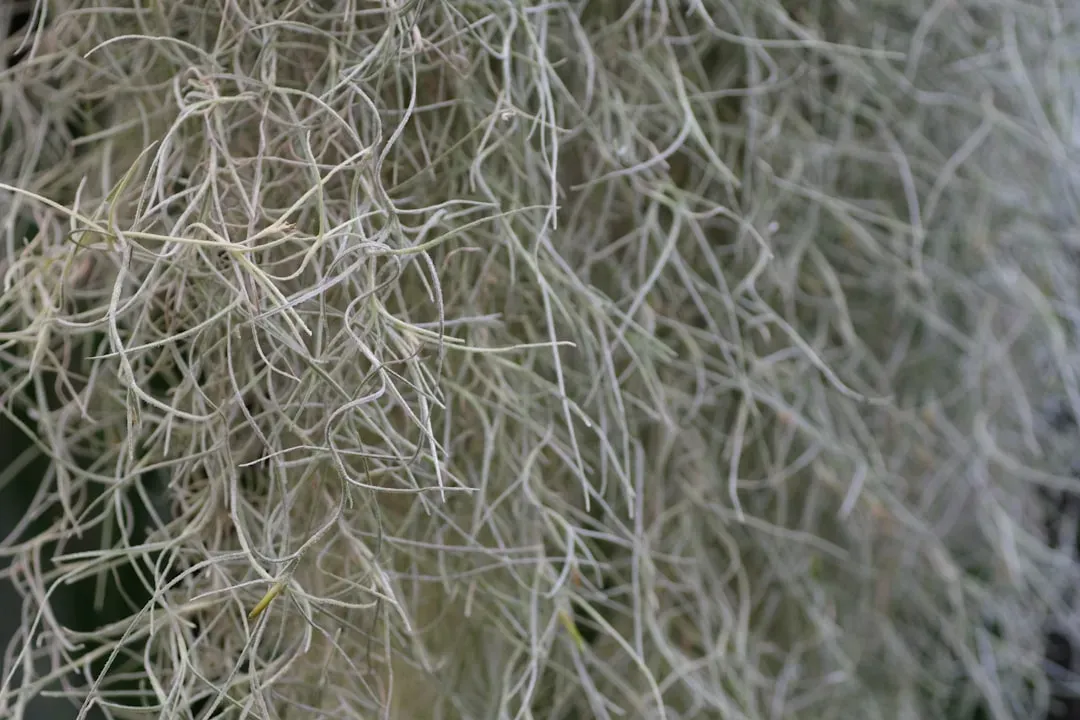
If you thought plants lived isolated, silent lives, this one will reshape your entire understanding of forests. Many plant species are connected via mycorrhizal networks, a symbiotic association between plant roots and fungi. Through these fungal threads, trees and plants exchange nutrients, water, and chemical signals. Scientists have nicknamed this system the “Wood Wide Web,” and it functions remarkably like a biological internet.
Forests function through vast underground fungal networks that connect plant root systems across hundreds of acres. These mycorrhizal networks enable remarkable communication and resource sharing, allowing older trees to send carbon and nutrients to support seedlings, and plants to warn neighbors about insect attacks through chemical signals. This mutualistic system challenges long-held notions of competition in forests. Instead, plants are shown to engage in complex cooperative behaviors, suggesting a new model of ecological intelligence. A forest isn’t just a collection of trees. It’s a single, vast, whispering organism.
7. Corpse Flower (Amorphophallus Titanum) – The Thermogenic Impersonator
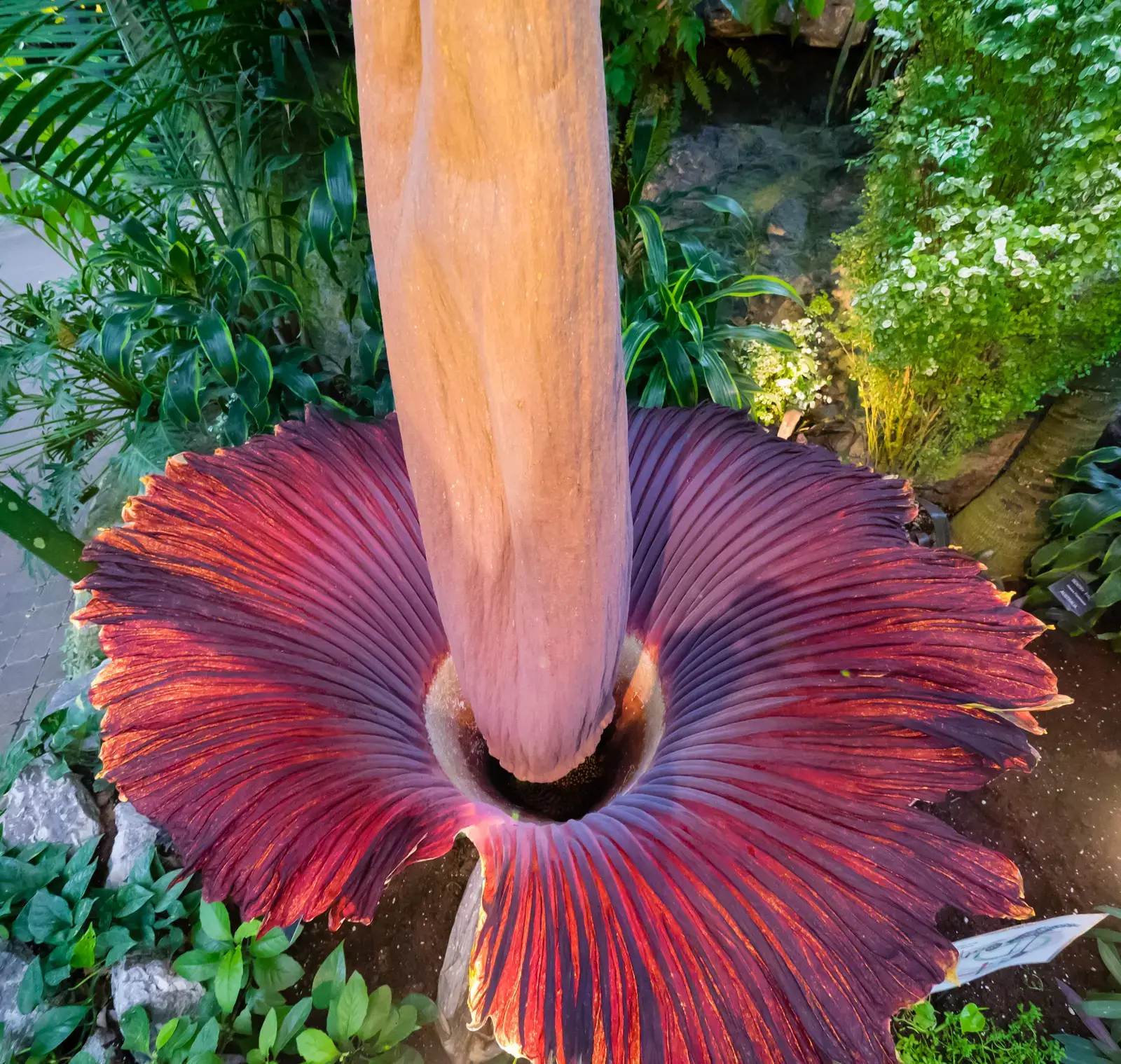
The corpse flower already gets plenty of attention for its legendary stench. What gets far less attention is the jaw-dropping biological feat happening beneath that smell. The corpse flower can elevate its temperature to 98 degrees Fahrenheit, matching human body temperature, to volatilize its distinctive odor and attract pollinators from greater distances. This thermogenesis requires extraordinary energy expenditure, with oxygen consumption rates comparable to hummingbirds during flight. A plant generating heat comparable to a warm-blooded animal. That’s not supposed to happen.
Titan arum is a remarkable species that is enormous, has a very interesting blooming process, but is still probably most well known for its foul smell. Originally endemic to western Sumatra, it is often cultivated in botanical gardens, with crowds arriving to watch and smell the rapid blooming process. The flowers of this plant are very short-lived, within less than a day the flower blooms and then collapses, hopefully having been pollinated. It uses its entire extraordinary energy arsenal for a single, fleeting window of opportunity, then goes dark again for years. There’s something almost poetic about that kind of biological commitment.
8. Lithops – The Living Stones That Became Rock
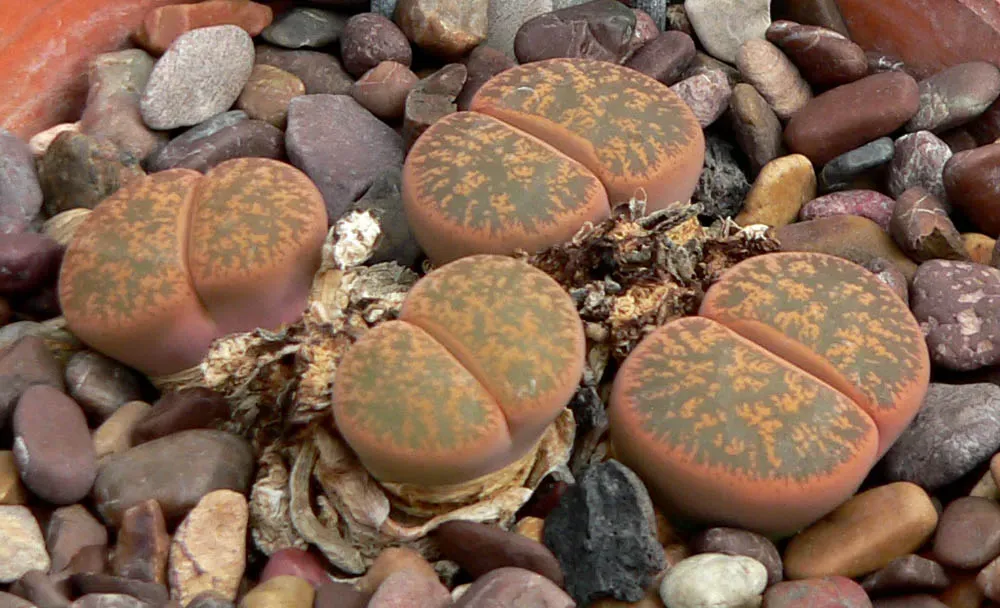
Evolution has gifted most plants with the ability to grow toward light, to flower brilliantly, to attract pollinators with color. Lithops took a completely different route. Some plants can mimic the appearance of rocks or other organisms to avoid detection by predators. The lithops, also known as “living stones,” blend seamlessly with their surroundings in arid regions. They don’t hide behind camouflage. They become the camouflage. Sitting there among actual stones, looking utterly indistinguishable from the geology around them.
Their camouflage helps conserve water and prevents herbivores from eating them. These tiny succulents, native to southern Africa, have spent millions of years perfecting an illusion so convincing that even skilled botanists can walk right past a cluster of them without noticing a thing. In striking contrast to animals, where the risk of mortality typically increases and fertility decreases with age, perennial plants show only minimal signs of senescence, with some species even going in the opposite direction: decreased mortality and increased fecundity with age. Lithops embody this principle beautifully, thriving quietly, invisibly, for decades in one of the harshest environments on the planet.
Conclusion
The plant kingdom is so much stranger, so much richer, and so much more capable than the world gives it credit for. From a tiny desert spikemoss that cheats death with crystallized sugar, to towering trees sharing nutrients through an underground fungal internet, to a carnivorous plant that literally counts its prey before deciding whether to digest it, nature keeps proving that biology has no ceiling.
What unites all eight of these species is the same essential truth: survival demands ingenuity, and plants have had hundreds of millions of years to get very, very good at it. The botanical world operates with sophisticated intelligence that rivals some animal behaviors, and these aren’t isolated curiosities. They represent fundamental survival strategies developed over millions of years of evolution.
The next time you walk past a houseplant or stroll through a forest, take a moment to wonder what it’s actually doing. It might be counting. It might be talking to its neighbors. It might be patiently waiting for rain so it can come back to life. Which of these eight plant species surprised you the most? Tell us in the comments below.