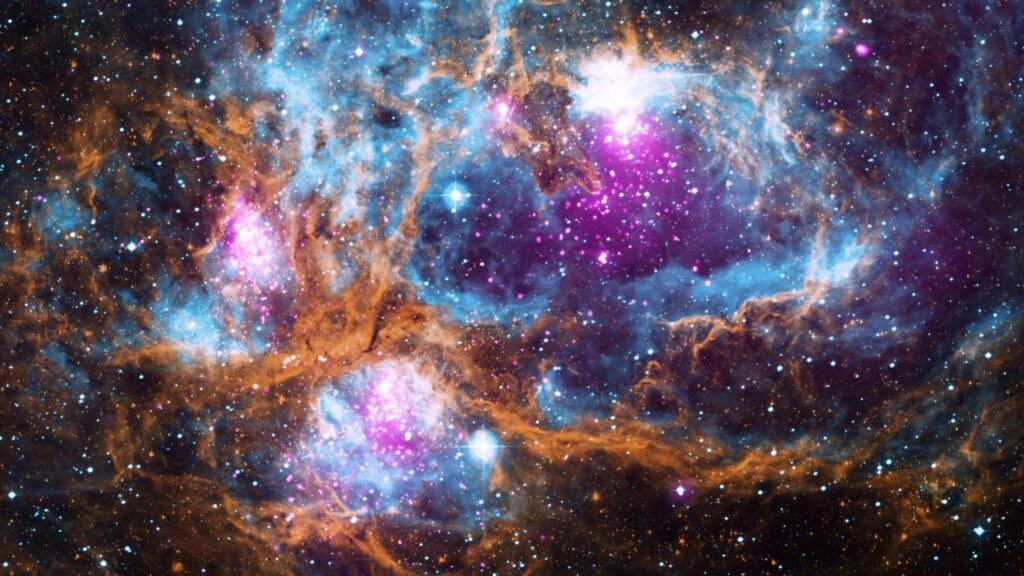
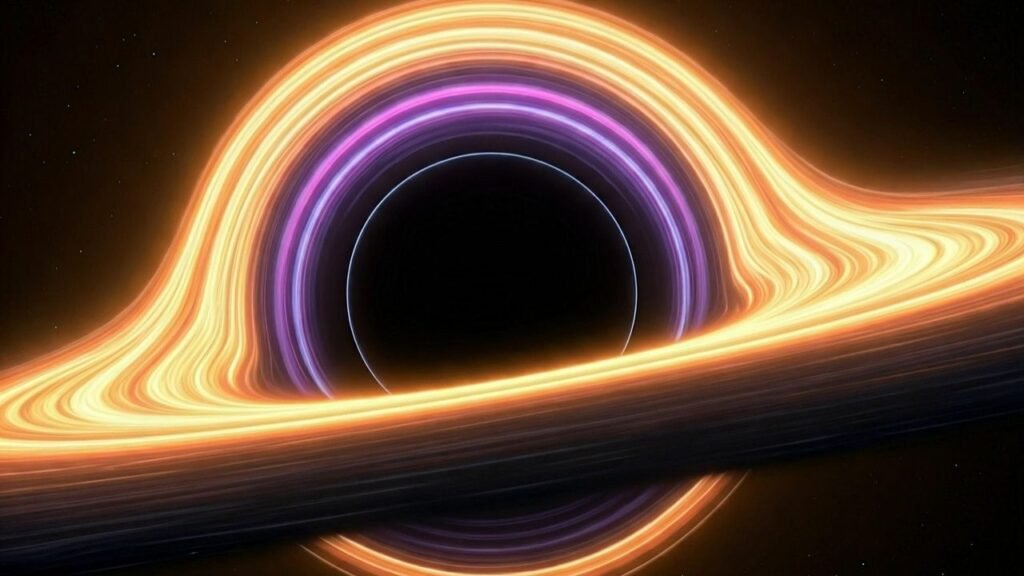
If you think scientists have everything figured out, the universe has a dark sense of humor. For every problem we’ve solved, another one pops up, stranger and slipperier than the last. Some of these puzzles sit right at the edge of what humans can even imagine, like trying to describe a new color or explain a dream to someone who’s never slept.
What makes these mysteries so gripping isn’t just that we don’t know the answers. It’s that each one hints that reality might be radically different from how it feels in everyday life. From the nature of consciousness to the shape of the cosmos, these questions keep some of the smartest people on Earth awake at night. Let’s walk straight into the weirdness.
1. What Is Consciousness, Really?
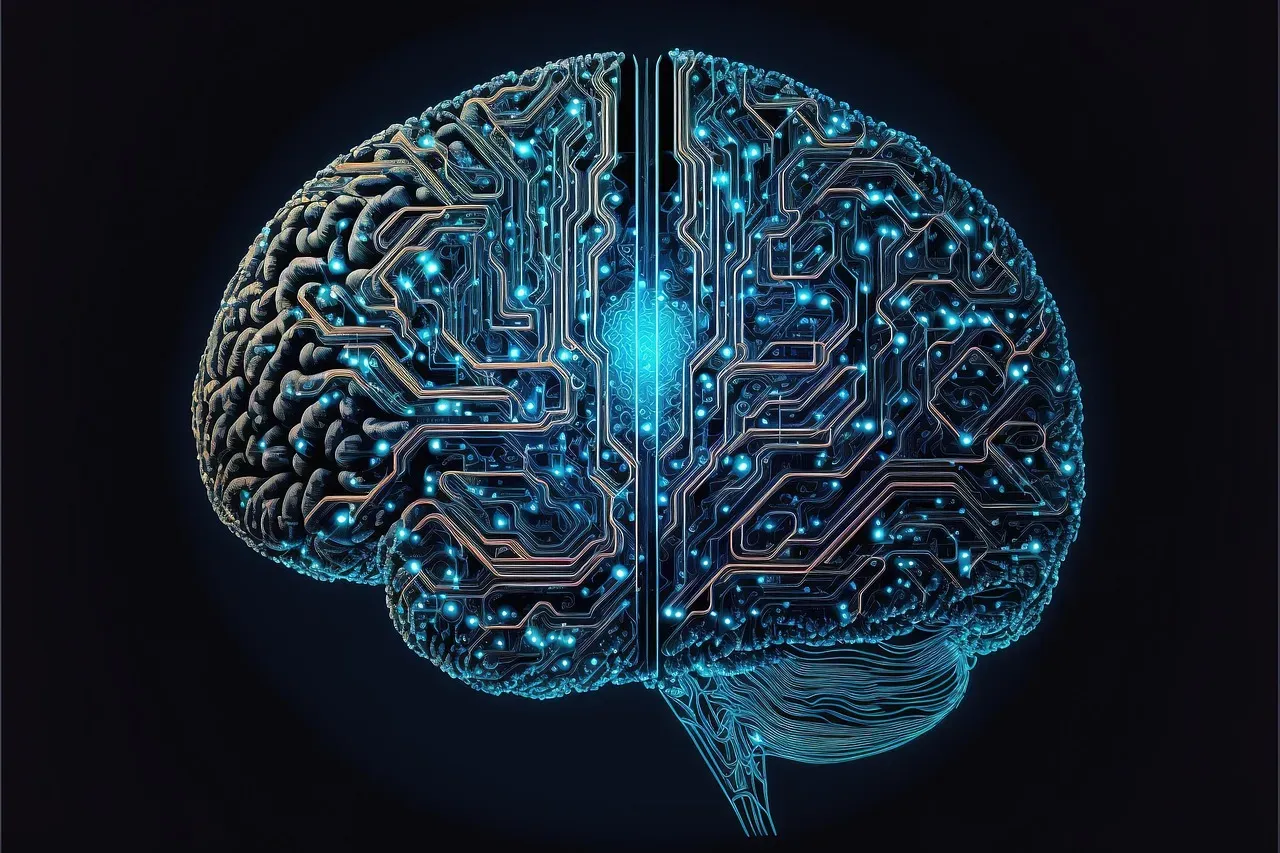
Here’s a slightly unsettling thought: science can describe your brain in incredible detail, but it still can’t explain why it feels like something to be you. Neurons fire, chemicals swirl, brain regions light up in scanners – and somehow, out of all that biological machinery, a first-person experience appears. That inner movie of thoughts, emotions, memories, and sensations is what we call consciousness, and right now, we don’t have a widely accepted theory that explains how it arises.
Researchers study brain damage, anesthesia, psychedelics, sleep, and artificial intelligence to poke at this mystery from different angles. Some theories say consciousness emerges when information in the brain becomes highly integrated; others suggest it’s a fundamental property of the universe, like space or time. I remember staring at a hospital heart monitor once, thinking how we can track every beat and chemical level, but not the actual feeling of fear in the person attached to it. Until we can bridge that inner experience with outer measurement, consciousness stays one of the strangest open puzzles we have.
2. Why Does Time Only Flow One Way?

In your daily life, time feels brutally simple: it marches from past to future, no rewinds, no do-overs. Ice melts, glasses shatter, people age – and somehow we just know which direction is forward. But the basic laws of physics, especially at the microscopic level, are weirdly symmetric. They don’t really care if you run them forwards or backwards in time. So why does everything we experience seem to move in only one direction?
One popular idea ties this “arrow of time” to entropy, a fancy word for disorder. The universe started in an extremely low-entropy, highly ordered state and has been sliding into higher disorder ever since – like a perfectly stacked bookshelf slowly turning into a chaotic pile. But that just pushes the question back: why did the universe begin in such an improbably ordered state? I sometimes think about this when I see an old photo of myself and feel that bittersweet tug – you can walk back to the place, but never to the moment. Physics can describe the motion of atoms beautifully, but the direction of time, the part that makes life feel like a story, is still not fully understood.
3. What Is Most of the Universe Actually Made Of?
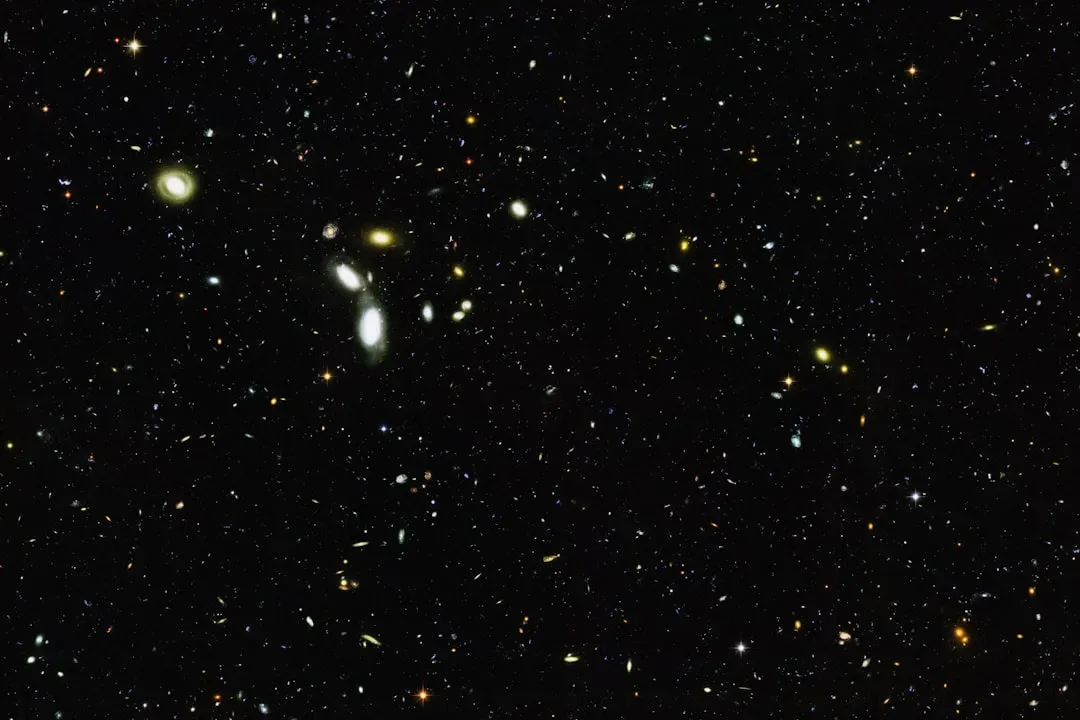
Look around you: everything you can see, touch, burn, freeze, or eat is made of ordinary matter – atoms, particles we’ve studied for decades. But astronomers have gathered overwhelming evidence that this familiar stuff is just a tiny slice of reality. Most of the universe seems to be made up of two mysterious ingredients called dark matter and dark energy, which is a bit like realizing your entire life you’ve been reading only the footnotes of a book and ignoring the actual chapters.
Dark matter appears to be some kind of invisible mass that doesn’t emit light but tugs on galaxies through gravity, keeping them from flying apart. Dark energy, on the other hand, seems to be driving the accelerated expansion of the universe, stretching space itself faster and faster. Together, they make up the vast majority of the cosmic budget, yet we still don’t know what either of them actually is. Scientists have built giant underground detectors, launched satellites, and smashed particles together at insane energies, hoping for a clue. So far, it’s like trying to identify an animal only from its footprints and the strange sounds it leaves behind in the night.
4. How Did Life First Spark From Non-Life?

At some point on the early Earth, roughly a few billion years ago, lifeless chemistry turned into the first living systems. That transition from a soup of molecules to a self-replicating, evolving organism is one of the biggest unsolved puzzles in all of science. We have great theories for how life changes once it exists – evolution by natural selection explains an enormous amount – but the first step, from non-life to life, is still maddeningly murky.
Researchers have made progress by creating building blocks of life in the lab, like simple RNA strands or membrane-like bubbles that resemble primitive cells. They debate whether life started in deep-sea hydrothermal vents, shallow warm ponds, icy environments, or even inside mineral surfaces that acted like scaffolding. I remember doing a basic school experiment growing crystals in a jar, watching order emerge out of nowhere, and thinking it felt almost alive. The real origin of life is far more complicated, but the same feeling hangs over it: somewhere, somehow, chemistry crossed an invisible line and started caring about survival, and we still don’t know the exact path it took.
5. Are We Alone in the Universe?
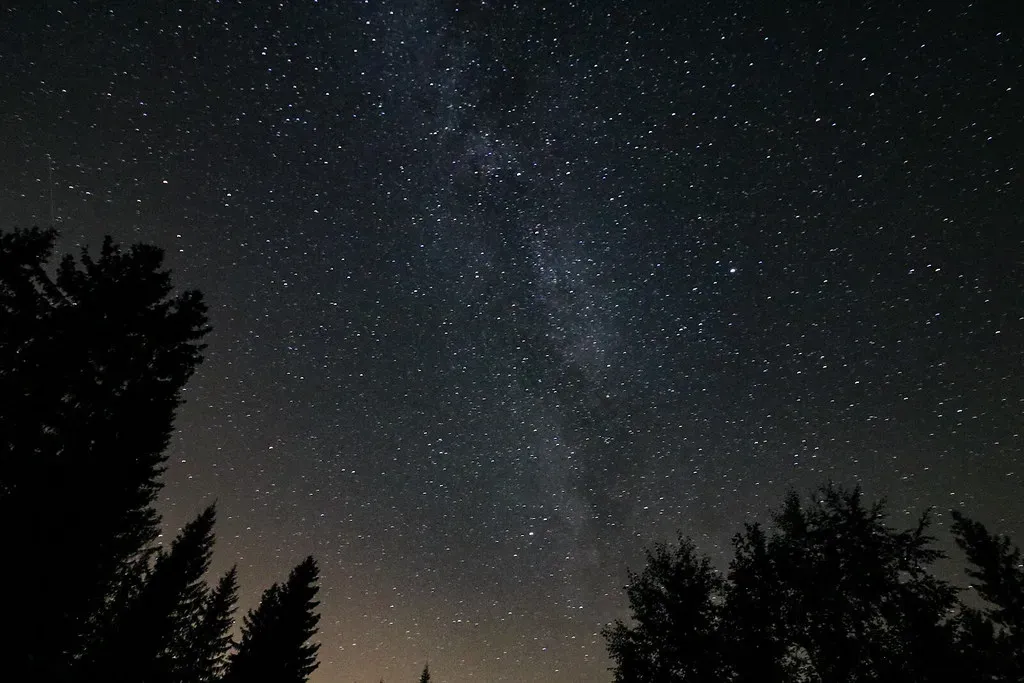
When you stare at the night sky, it’s hard not to wonder if someone, somewhere, might be looking back. There are mind-boggling numbers of stars and planets in our galaxy alone, and telescopes over the last decade have revealed that rocky, Earth-sized planets are not rare at all. Statistically, it feels almost impossible that life happened only once, on a tiny blue dot circling an ordinary star in a quiet corner of a typical galaxy.
And yet, despite decades of listening for signals, scanning exoplanets for biosignatures, and sending out our own robotic scouts, we have no confirmed evidence of extraterrestrial life, not even microbes. This tension between “it should be everywhere” and “we see nothing” is often called the Fermi paradox, and it gets weirder the more we learn. Maybe life is common but intelligent civilizations burn out quickly; maybe advanced beings are deliberately quiet; maybe we’re too early or too primitive to notice what’s already out there. Sometimes when I’m walking through a crowded city at night, full of lights and noise, it hits me how silent space really is – at least, from our point of view.
6. Why Do Quantum Particles Behave So Strangely?
At the smallest scales of nature, the world stops behaving like anything our instincts prepared us for. Quantum particles can exist in multiple states at once, seem to influence each other instantly across vast distances, and behave like waves and particles depending on how we look at them. We have equations that predict these bizarre behaviors with astonishing accuracy, but understanding what they actually mean for reality is another story entirely.
There are several competing interpretations of quantum mechanics, from the idea that particles don’t have definite properties until measured, to the notion of countless parallel worlds branching off with every quantum event. None of them have been universally accepted, and all of them challenge our common sense. I still remember the first time I read about an experiment where just observing which path a particle takes changes the outcome; it felt less like physics and more like a magic trick. Quantum theory works incredibly well in practice – powering everything from lasers to modern electronics – yet at a deep conceptual level, it remains one of the most unsettling open questions in science.
7. What Happened Before the Big Bang – If “Before” Even Exists?
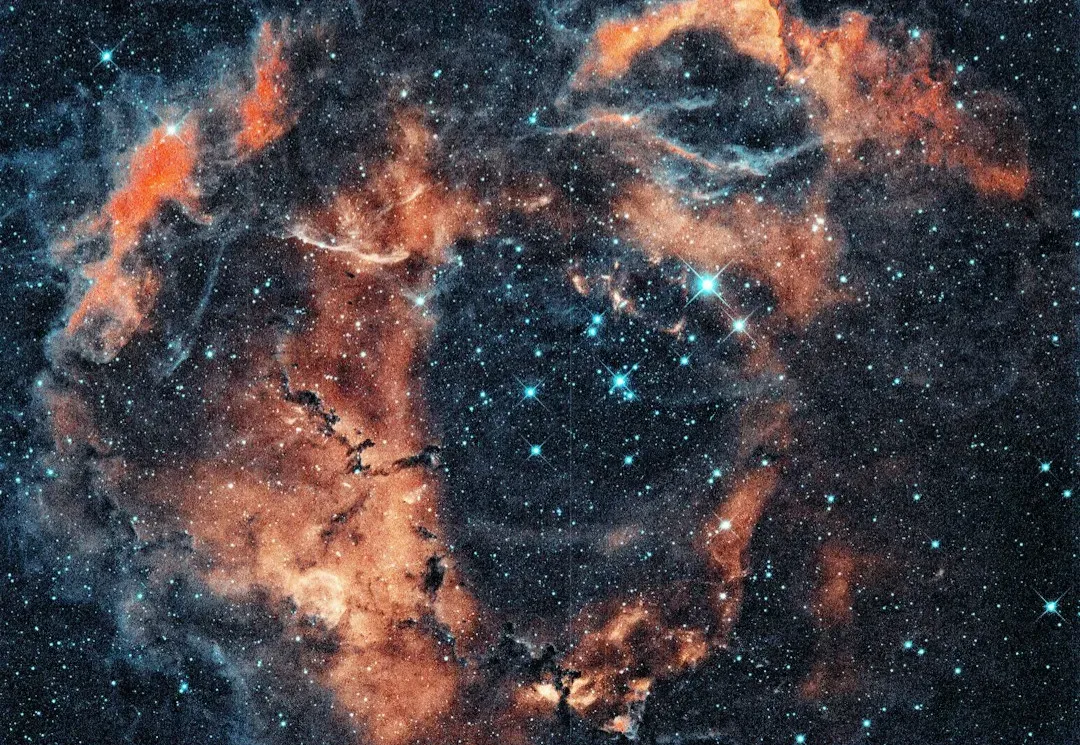
The Big Bang model describes how the universe expanded from a hot, dense state to the vast cosmos we see today. The evidence for this expansion is solid: galaxies are racing away from each other, and space is filled with faint relic radiation from the early universe. But when you ask what happened at time zero, or what came before, you crash straight into a wall where our current theories break down. At the tiniest scales and highest energies, our understanding of gravity and quantum mechanics refuses to play nicely together.
Some ideas suggest the Big Bang might have been a bounce from a previous contracting universe, others imagine a multiverse where our universe is just one bubble among many, and some argue that asking “before” the Big Bang is like asking what’s north of the North Pole – the question itself might not make sense. I find this particular puzzle both frustrating and strangely comforting. It reminds me of trying to remember my earliest childhood memory and realizing there’s a fuzzy edge where my story just fades into blankness. The universe seems to have a similar hazy boundary, and until we unify our theories, what exactly happened at the beginning will remain out of reach.
8. Where Are All the Missing Pieces of Physics?

On one hand, modern physics has a beautifully successful framework called the Standard Model that explains a huge range of particles and forces. On the other hand, we know for a fact that it’s incomplete. It doesn’t explain dark matter, dark energy, gravity at the quantum level, or why the known particles have the masses and properties they do. It’s like having an elegant jigsaw puzzle with a crisp, detailed picture in the center and glaring, jagged holes around the edges.
For decades, many physicists hoped that high-energy experiments, such as those at the Large Hadron Collider, would reveal new particles or symmetries that point the way to a deeper theory, sometimes called “new physics.” While we did find the Higgs boson, which was a huge milestone, a lot of other expected discoveries never showed up. This has forced researchers to rethink old assumptions and get more creative, from searching for ultra-light hidden particles to testing gravity at tiny distances. Personally, I like that we’re in a slightly awkward, uncertain phase – it feels honest. We have powerful tools and brilliant math, but nature is clearly holding something back, and that gap between what we know and what we can’t explain yet is where the most exciting puzzles live.
These eight mysteries are reminders that even in 2026, with all our technology and data and confidence, we’re still stumbling around in a universe that refuses to be fully tamed. The more we learn, the more cracks we see in our neat stories, and those cracks are exactly where the light gets in. Which of these puzzles do you secretly hope we never fully solve, just so the universe can keep a little of its magic?
Hi, I’m Andrew, and I come from India. Experienced content specialist with a passion for writing. My forte includes health and wellness, Travel, Animals, and Nature. A nature nomad, I am obsessed with mountains and love high-altitude trekking. I have been on several Himalayan treks in India including the Everest Base Camp in Nepal, a profound experience.