
Your brain is running roughly a thousand background processes right now, and you have absolutely no idea. It is quietly managing your heartbeat, filtering irrelevant sounds, consolidating memories, and – here is the wild part – possibly growing brand-new neurons as you read this sentence. For centuries, scientists treated the human brain like a fixed, finished machine. We now know that picture was spectacularly wrong.
The discoveries pouring out of neuroscience labs in the last few years are not just impressive. Some of them genuinely rewrite what we thought we understood about human potential, aging, disease, and the connection between mind and body. Let’s dive in.
Your Brain Never Stops Building Itself
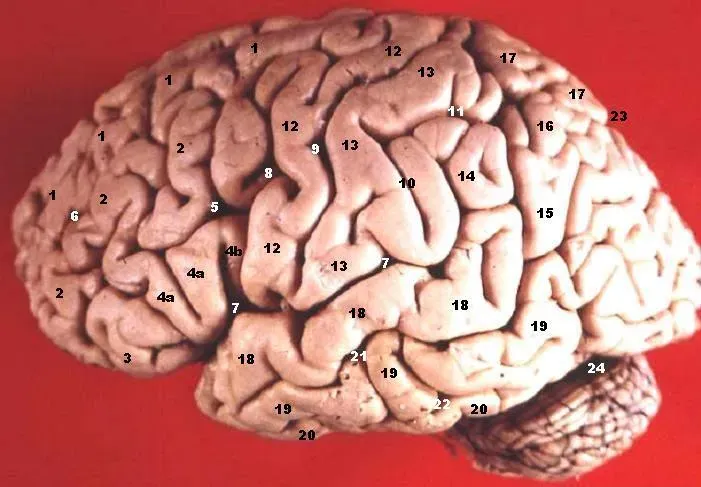
Dep’t. of Cellular Biology & Anatomy, Louisiana State University Health Sciences Center Shreveport, CC BY 2.5)
For most of the 20th century, science operated under a fairly gloomy assumption: you are born with all the neurons you will ever have, and from there, it is mostly downhill. Honestly, that belief held its grip on neuroscience for decades, and it shaped how people thought about brain injuries, aging, and recovery. For most of the 20th century, scientists believed the adult brain was fixed. That belief was spectacularly wrong.
Neuroscientists long believed that you are born with all of the neurons you will ever have. Evidence had slowly accumulated to suggest that adults can form new neurons, a process called neurogenesis. Researchers then discovered newly formed neurons and the precursor cells that birthed them in the brains of adults, some as old as age 78. Think about what that means for a moment. A 78-year-old brain, still building. Neuroplasticity, the brain’s capacity to reorganize itself by forming new neural connections, is central to modern neuroscience. Once believed to occur only during early development, research now shows that plasticity continues throughout the lifespan, supporting learning, memory, and recovery from injury or disease.
Your Brain Has Five Distinct Life Stages – Not One Long Decline
Here is something that might surprise you: the popular idea that your brain “peaks in your mid-20s” and then slowly crumbles is not just oversimplified, it is wrong. A massive lifespan study rewrote one of the most persistent myths in neuroscience – that the brain “peaks in your mid-20s.” Instead, researchers identified five major stages of brain-network organization, with transitions around ages 9, 32, 66, and 83. That is not a decline curve. That is a series of strategic reinventions.
Around age nine, synaptic pruning improves efficiency. In the early twenties, the prefrontal cortex matures, strengthening impulse control. By the thirties, networks stabilize, while later decades show compensatory rewiring that supports resilience despite neuron loss. It is a bit like how a city does not simply age and decay – it demolishes old roads, builds new highways, and reroutes traffic in smarter patterns. This moves the conversation from “decline” to adaptive re-architecting. Your older brain is not failing. It is evolving.
Your Brain Cleans Itself While You Sleep

Sleep is not just rest. It turns out that while you are unconscious and dreaming, your brain is running a remarkable biological cleanup program that you never consciously activate. The glymphatic system is a recently discovered fluid clearance pathway in the brain that plays a central role in removing metabolic waste through the exchange of cerebrospinal fluid and interstitial fluid. It is especially active during sleep and influenced by circadian rhythms, vascular pulsatility, and astrocytic aquaporin-4 channels.
Sleep represents the most potent physiological enhancer of glymphatic activity. During slow-wave sleep, the interstitial spaces expand substantially, which supports fluid exchange and metabolic clearance. Here is what makes this genuinely alarming: clinical data suggest that sleep deprivation affects not only memory consolidation but also reduces glymphatic clearance of amyloid-beta and tau proteins, accelerating neurodegenerative pathology. Skipping sleep is not just making you tired. It is literally leaving your brain dirty – and over years, that buildup is linked to Alzheimer’s disease.
Your Brain Can Distinguish Between Imagination and Reality
When you imagine biting into a lemon right now, something happens in your brain that is remarkably close to actually tasting one. The neural activity patterns overlap more than you would ever expect. So how does your brain actually know the difference between something real and something you are just picturing? When you imagine an apple, your brain activity is not that different from when you actually see an apple. Scientists discovered a “reality signal” generated by a region of the brain called the fusiform gyrus, which is then evaluated by another region to determine whether something is real or imagined.
This is not a small finding. It fundamentally changes how we understand perception, hallucination, dreams, and even conditions like schizophrenia. Think of the fusiform gyrus as a kind of internal fact-checker, one that runs continuously in the background, tagging your experiences as “real” or “not real.” The human brain has 86 billion neurons connected by roughly 100 trillion synapses, making it one of the most complex objects in the known universe. Each year neuroscientists make fascinating, important and downright strange discoveries about how this resilient structure works. And yet, even within that staggering complexity, a single targeted region quietly keeps your sense of reality intact.
Your Gut Is Talking to Your Brain Constantly
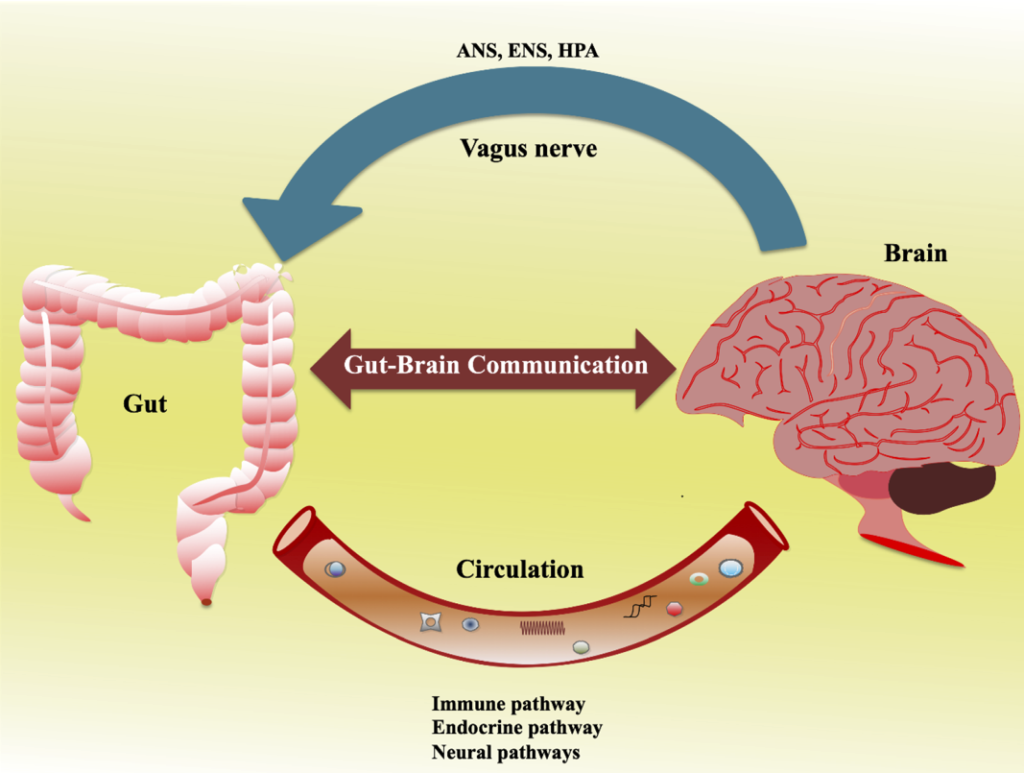
You have probably heard the phrase “gut feeling.” Turns out, that is barely metaphorical. If you have ever “gone with your gut” to make a decision or felt “butterflies in your stomach” when nervous, you are likely getting signals from an unexpected source: your second brain. Hidden in the walls of the digestive system, this “brain in your gut” is revolutionizing medicine’s understanding of the links between digestion, mood, health and even the way you think. Scientists call this little brain the enteric nervous system.
Through direct signals from the vagus nerve, which connects the brain and the gut, as well as through molecules secreted into the bloodstream from gut microbes and immune cells that traffic from the gut to the rest of the body, the brain and the digestive tract are in constant communication. What is genuinely shocking is the scale of the influence flowing upward – from gut to brain. Recent studies have underscored the role of the gut microbiome in conditions such as Parkinson’s disease, with evidence indicating that gut dysfunction and pathological features can precede motor symptoms by decades. Your belly may be warning your brain about disease long before your doctor can detect it.
Neurons Follow Multiple Learning Rules at the Same Time
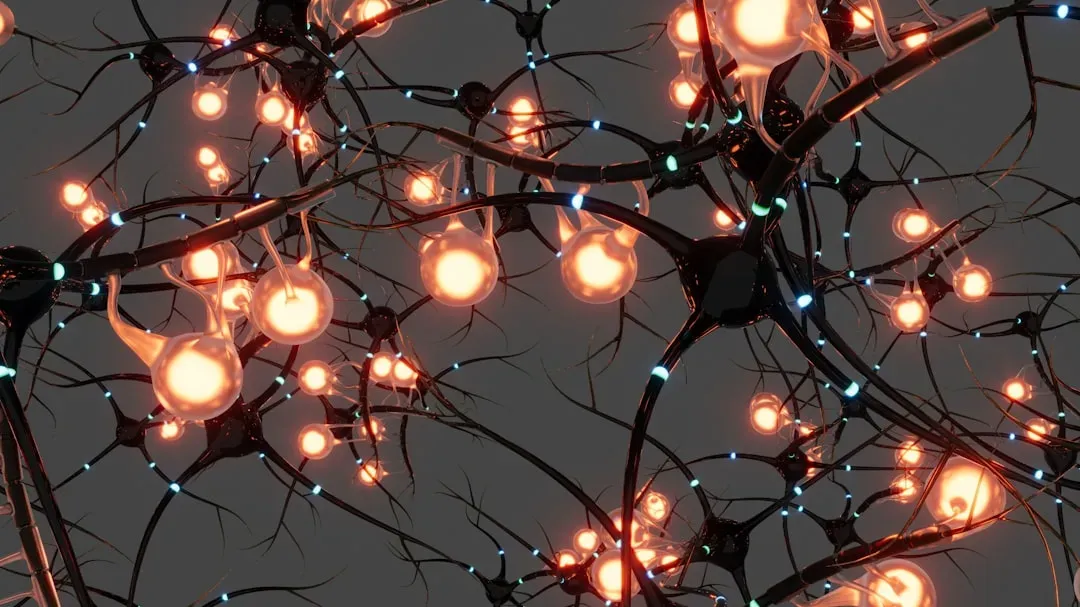
For a long time, neuroscientists thought every neuron in a network played by the same general rulebook. When something is learned, synapses strengthen or weaken following a common pattern. Simple, clean, understandable. In an intricately coordinated process, new information causes certain synapses to get stronger while others grow weaker. Neuroscientists who have closely studied these alterations, known as “synaptic plasticity,” have identified numerous molecular processes causing such plasticity. Yet an understanding of the “rules” selecting which synapses undergo this process remained unknown.
Neuroscientists have carefully studied how synapses only have access to their own “local” information, yet collectively they help shape broad new learned behaviors, a conundrum labeled as the “credit assignment problem.” The issue is analogous to individual ants that work on specific tasks without knowledge of the goals of the entire colony. The recent breakthrough? Finding that neurons follow multiple rules at once took the researchers by surprise. The cutting-edge methods used in the study allowed them to visualize the inputs and outputs of changes in neurons as they were happening. Your brain, it turns out, is far more creative in how it learns than we ever gave it credit for.
Exercise Physically Reshapes Your Brain

I know it sounds almost too simple, but exercise is one of the most powerful tools you have for directly altering the physical structure of your brain. Not in some vague, feel-good way – literally reshaping it. Aerobic exercise increases the production of neurotrophic factors, such as brain-derived neurotrophic factor (BDNF), insulin-like growth factor 1 (IGF-1), and vascular endothelial growth factor (VEGF). These are growth proteins that strengthen neurons, encourage new connections, and help existing brain structures survive longer.
Aerobic activity increases levels of brain-derived neurotrophic factor, or BDNF, which supports neuron survival and strengthens synaptic connections. Regular exercise is consistently linked to better learning, memory and overall brain health. The evidence keeps getting stronger. A study involved about 2,000 people in their 60s and 70s who were all fairly sedentary at the beginning. Half of these people spent two years getting aerobic exercise at the gym, eating a Mediterranean diet, watching their blood pressure and taking part in demanding cognitive training. At the end of the study, the people in the intensive program did better on tests of thinking and memory. Their scores were actually as good as those from people a year or two younger than they were. Moving your body is, quite literally, making you smarter.
Brain-Computer Interfaces Are Decoding Thought Into Language
This one sounds like science fiction. It is not. For people living with paralysis or ALS, the ability to communicate can be devastatingly limited, even when the mind remains fully intact, fully alive, and full of things to say. For people with paralysis or ALS, the brain often forms intact speech plans – they simply cannot move the muscles to speak. A 2024 to 2025 trial showed that a high-density brain-computer interface could decode those speech intentions at roughly 32 words per minute with remarkable accuracy.
Some major scientific highlights include the highest resolution three-dimensional map of human brain tissue ever created and a brain-computer interface that can convert brain waves into speech with minimal training. The implications stretch beyond medicine into territory that challenges our deepest assumptions about the mind. Machine learning programs are being fed enormous quantities of brain activity data, and these AI systems are getting surprisingly good at spotting patterns and interpreting the brain signals linked to specific thoughts, intentions, or what we see and hear. Your thoughts, once the most private thing in existence, can now – under specific conditions – be read.
Conclusion: The Brain Is Still Full of Surprises
Honestly, what strikes me most about all of this is not any single discovery – it is the pattern. Every time science assumed the brain had limits, it turned out to be wrong. Adult neurons? Growing. Aging? A series of upgrades, not just losses. Sleep? A night shift for your brain’s cleaning crew. Even the gut – something we barely associated with thinking – turns out to be whispering to your brain around the clock.
Recent human brain studies reveal a structure that is not fixed but constantly changing, rewiring itself in response to learning, injury, and age. Advances in imaging, genetics, and artificial intelligence have pushed brain science forward at a pace unseen before. These discoveries offer a deeper look into how the brain develops, adapts, and sometimes fails – reshaping medicine, psychology, and everyday understanding of the mind.
We are living in the most exciting era of brain science in human history. The hidden powers of the brain are no longer quite so hidden. The question now is what you plan to do with that knowledge. What will you do differently, knowing your brain can change, clean, rebuild, and rewire at virtually any age? Tell us in the comments – your thoughts are worth more than you might think.