
You think you know this planet? Think again. For all our scientific advances, satellites, and drilling equipment, Earth still manages to keep secrets hidden in plain sight. Strange rocks that slide across deserts by themselves. Caves filled with crystals the size of houses. Lakes that glow pink like bubblegum.
The natural world isn’t just beautiful or functional. It’s downright bizarre in ways that make you question what’s actually possible. These geological oddities scattered across our planet aren’t just random curiosities. They’re reminders that beneath our feet and across distant landscapes, there are forces at work that still baffle even the brightest minds. So let’s dive in.
The Sailing Stones of Death Valley
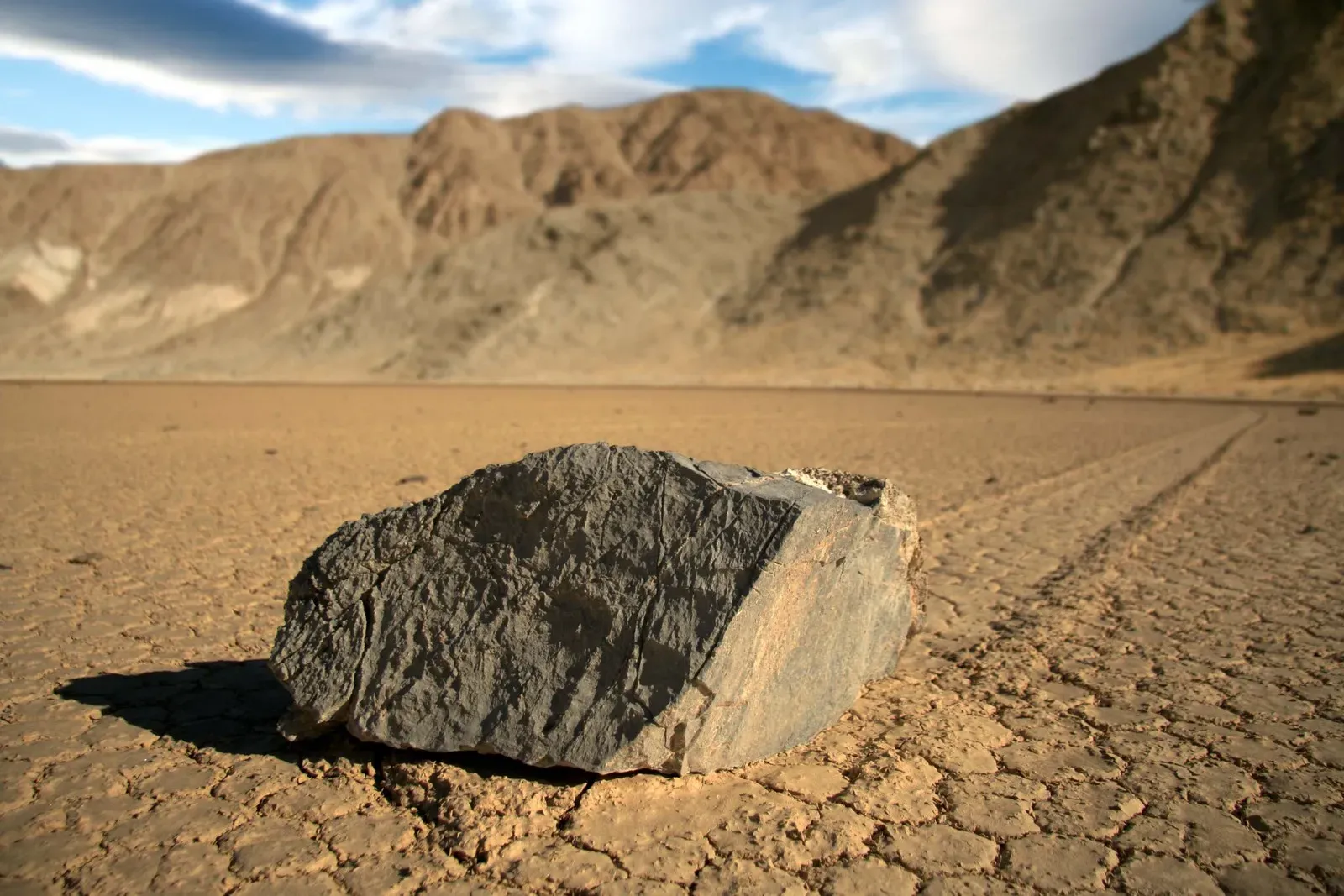
Picture massive rocks, some weighing hundreds of pounds, gliding across the desert floor of Death Valley’s Racetrack Playa, leaving behind long trails that stretch for hundreds of feet. No humans pushing them. No animals dragging them. Just stones that apparently decided to go for a stroll.
Scientists puzzled over this for years until time-lapse photography finally caught the movement in action. Turns out, it takes a perfect storm of conditions. Thin sheets of ice form overnight, strong winds kick up during the day, and the rocks essentially surf across the frozen surface. Still, witnessing this phenomenon firsthand remains incredibly rare. The tracks left behind are eerily straight or curved in ways that seem almost deliberate, making you wonder if nature has a sense of humor.
Giant Crystals in Mexico’s Hidden Cave
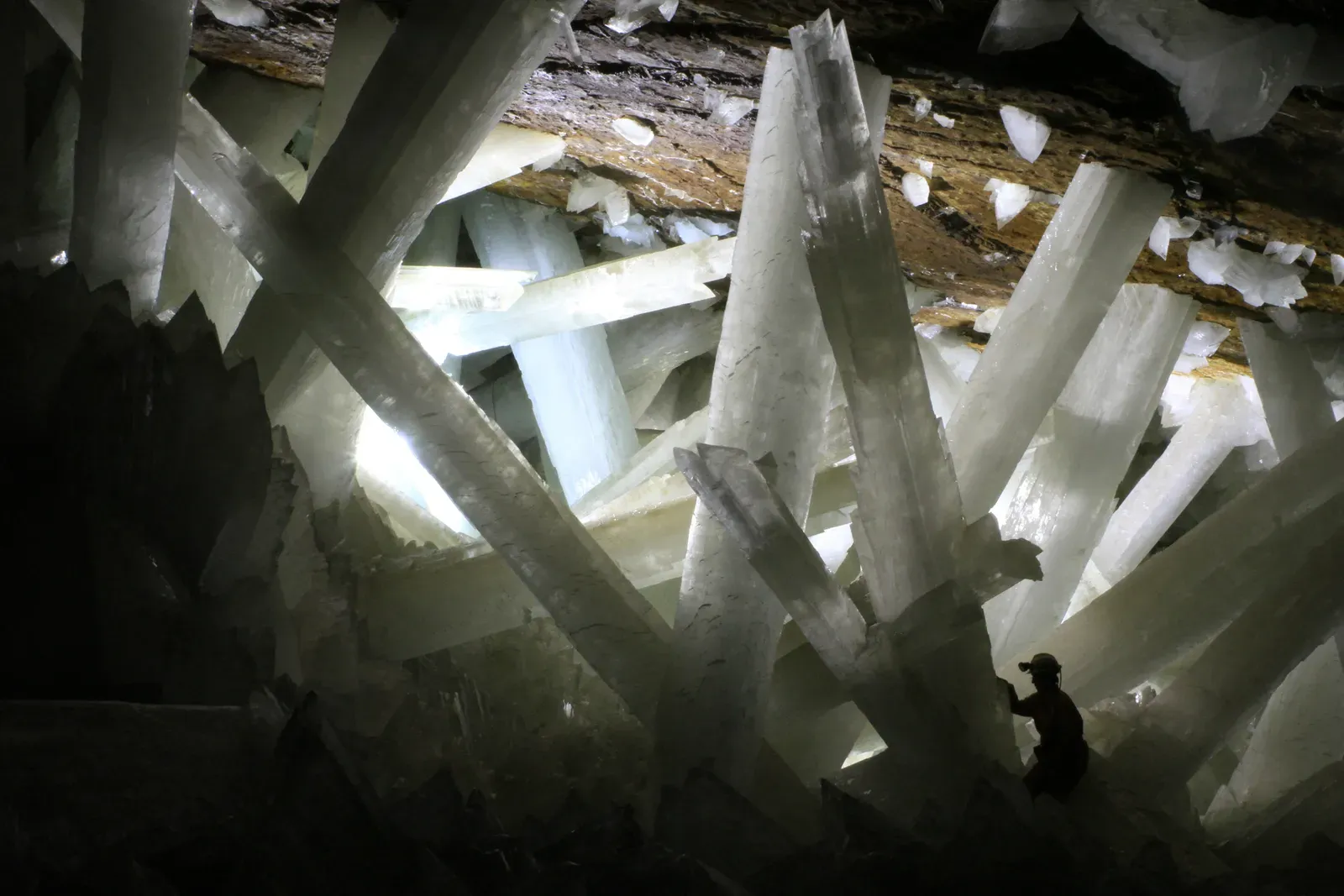
Deep beneath the ground in Naica, Mexico, lies a cave containing otherworldly crystals that can reach sizes larger than houses, growing at incredibly slow rates over as long as a million years. These aren’t your typical crystals you’d find in a gift shop. These are massive gypsum formations that tower more than two stories tall.
The Cave of the Crystals remained undiscovered until miners stumbled upon it in 2000. Researchers speculate that microscopic pockets of liquid within these giant crystals might hold microbes, potentially life forms isolated from the outside world for millennia. The cave itself is so hot and humid that visitors can only survive inside for minutes at a time, even with special cooling equipment. It’s like stepping into another planet, one that happens to be right beneath our feet.
Blood Falls in Antarctica
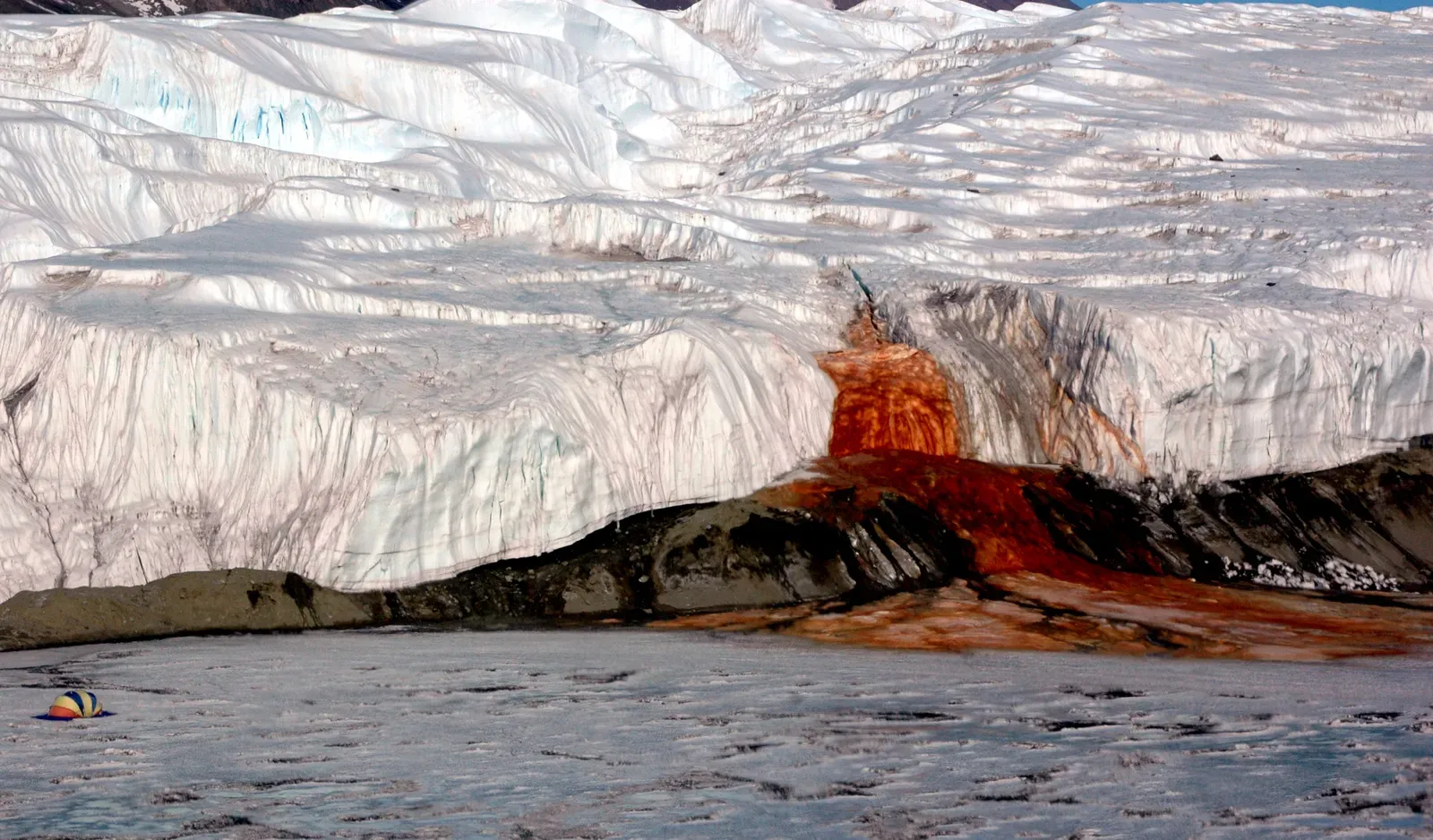
At Antarctica’s Taylor Glacier, a startling outflow of iron-rich salty water creates what appears to be a cascade of blood streaming from the ice. The visual is striking, almost haunting against the pristine white landscape.
This water flows from an underground reservoir beneath the glacier, believed to have been sealed off from the outside world for millions of years, kept liquid due to geothermal heating from Earth’s interior. When the highly saline, iron-rich water meets oxygen in the air, it oxidizes and turns deep red. The reservoir beneath hosts a unique community of microorganisms that have adapted to survive in complete darkness, extreme cold, and incredibly high salinity. It’s a window into how life might exist in similarly extreme environments elsewhere in the universe.
The Eye of the Sahara
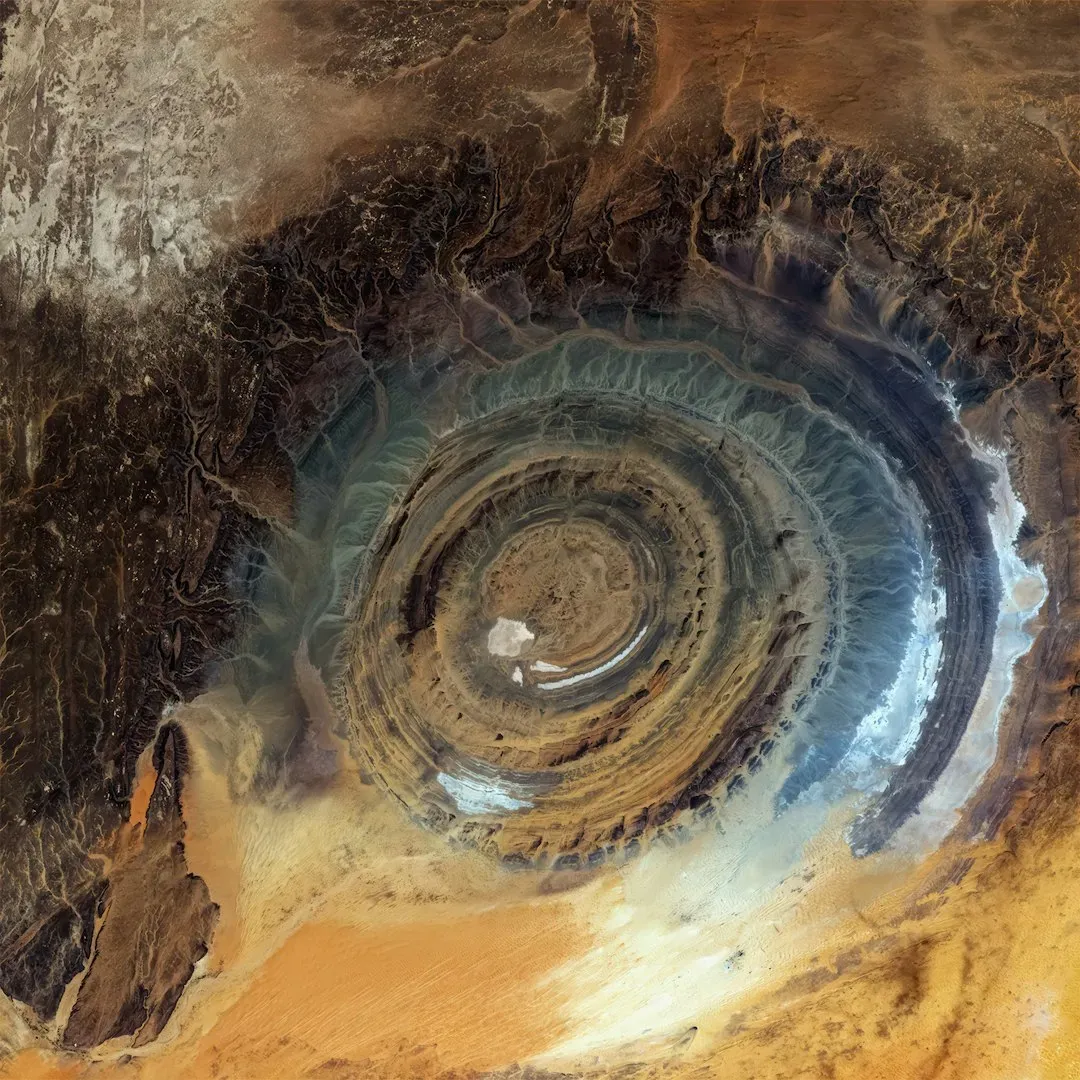
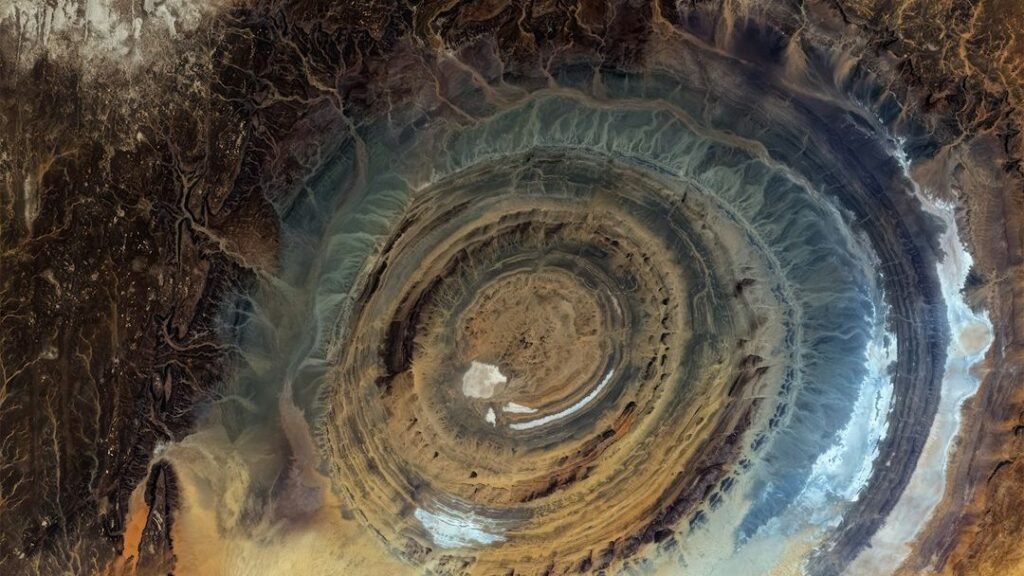
The Richat Structure, also known as the Eye of the Sahara, is a 28-mile-wide site of huge concentric circles found in the western African nation of Mauritania. From space, it looks like a massive bull’s eye carved into the desert, so perfectly circular it was initially used as a landmark by early astronauts.
Geologists initially thought the site was created by an asteroid impact, but there isn’t enough melted rock among the rings to support this theory, and similarly there’s no evidence to suggest a volcanic eruption. More recently, geologists have proposed that the Eye of the Sahara could be an eroded, collapsed geological dome formed some 100 million years ago when the supercontinent Pangea broke up, bolstered by ancient rocks found on the surface which originated as much as 125 miles beneath Earth’s crust. Yet mysteries remain, and some enthusiasts still whisper about Atlantis. Let’s be real, it’s just really cool erosion.
Fairy Circles of Namibia
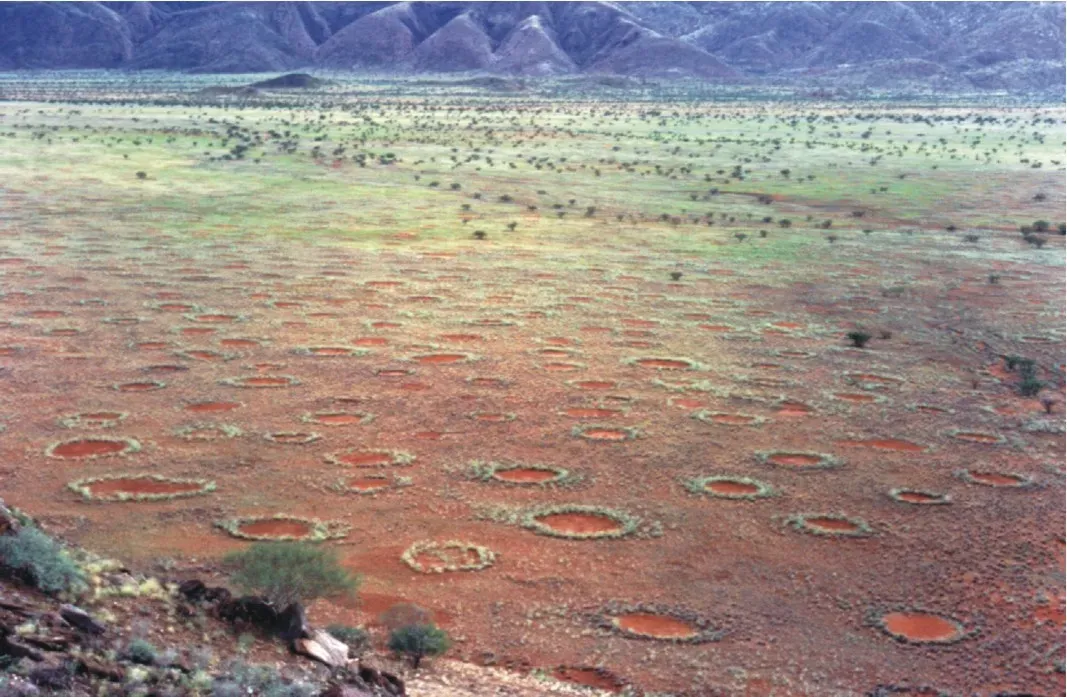
In the Namib Desert of southern Africa, circular patches of barren earth surrounded by rings of tall grasses appear across the landscape, typically between 6 and 30 feet in diameter and evenly spaced, sometimes covering hundreds of acres. They look disturbingly organized, like someone went out there with a compass and drew perfect circles in the sand.
While no theory fully explains the origins of fairy circles, a study has linked them to ecohydrological feedback. One popular theory is that the circles are created by termites which burrow beneath the surface and create underground tunnels that allow water to spread evenly throughout the area. Others believe it’s a self-organizing pattern created by plants competing for scarce water resources. Honestly, the fact that we’re still debating this in modern times makes these circles even more fascinating. Nature clearly hasn’t run out of tricks.
Blue Flames at Kawah Ijen
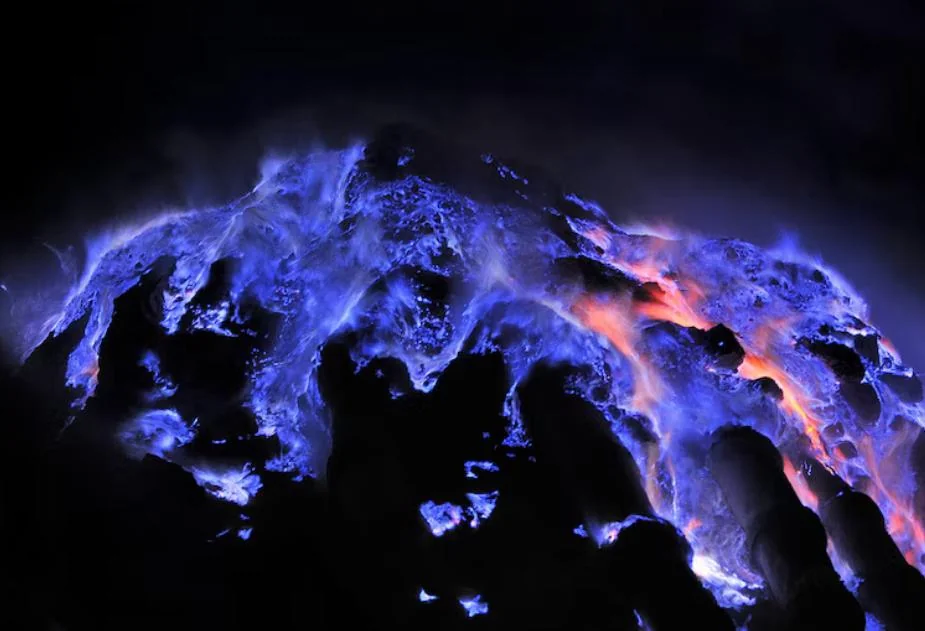
At the Kawah Ijen volcano in Indonesia, electric-blue flames appear to flow like lava at night, caused by the combustion of sulfuric gases which ignite upon exposure to air and heat, with resulting flames that can reach up to five meters high. It looks like something from a science fiction movie, yet it’s completely natural.
The phenomenon occurs because sulfuric gases spew from the volcano’s many fumaroles at temperatures of up to 600 degrees Celsius, and upon contact with air the hot gases produce an intense blue flame of temperatures exceeding 360 degrees Celsius. This isn’t actual blue lava, despite what it looks like. Still, the spectacle draws photographers and adventurous travelers willing to hike up an active volcano in the middle of the night. The sight is both beautiful and terrifying, a reminder that Earth’s internal chemistry can create displays more dramatic than any fireworks show.
Tessellated Pavement of Tasmania
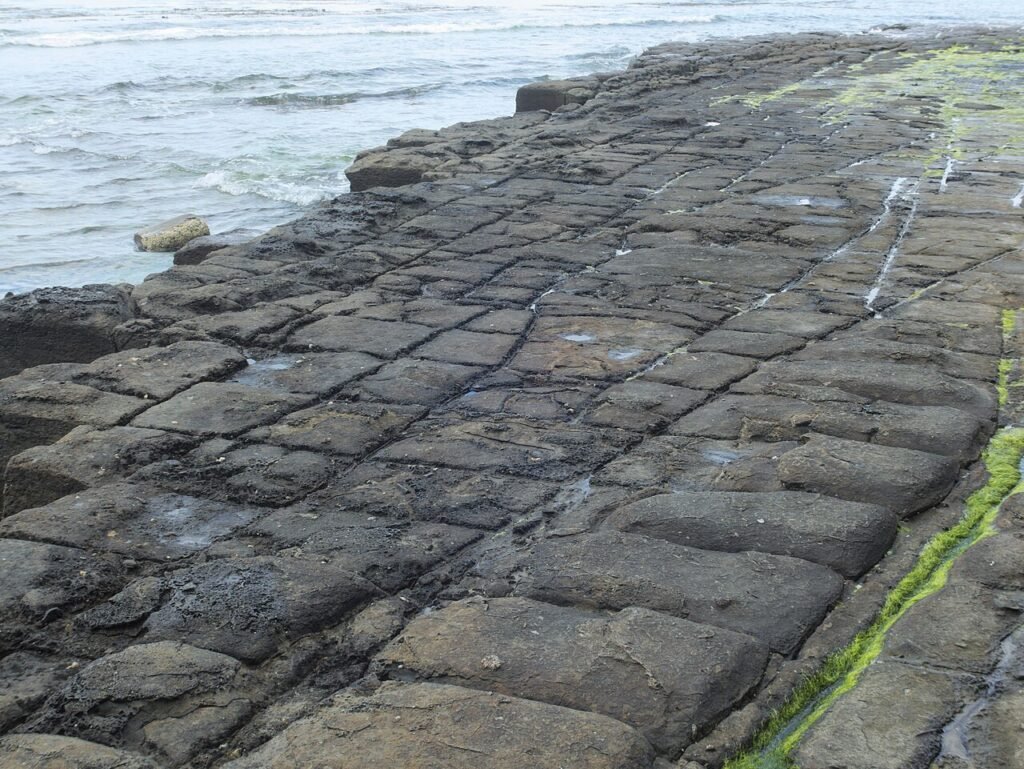
The unusual grid of the Tessellated Pavement at Eaglehawk Neck, Tasmania might make you wonder if it’s completely unnatural, but this rare geological feature formed when underlying siltstone cracked in blocks resembling tiles, possibly between 60 million and 160 million years ago. It genuinely looks like someone laid down an enormous stone patio right at the ocean’s edge.
When seawater covers the platform, sand and wave action erodes the rock, with the surface of the stone eroding faster between the rims of the tiles than on the rims themselves. This creates a three-dimensional effect where some tiles sit higher than others, forming shallow pools and ridges. The precision is almost unsettling. You walk across it half-expecting to find tool marks, but it’s all just patient geological processes doing what they do best: creating accidental art.
The Natural Nuclear Reactor of Oklo
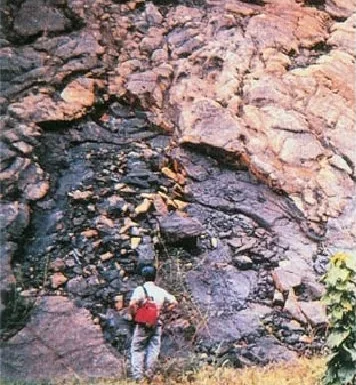
Here’s the thing that blows my mind more than almost anything else on this list. The Oklo mine in the West African nation of Gabon was once home to a natural nuclear reactor that apparently spontaneously turned on 2 billion years ago running on uranium fuel, lasting about 150,000 years with an average power output of 100 kilowatts.
Yes, you read that correctly. A natural nuclear reactor. Not built by humans, but assembled by geological processes. It happened because uranium deposits reached critical mass under just the right conditions, with groundwater acting as a moderator. The reactor would turn on and off in cycles as water boiled away and then seeped back in. When French scientists discovered unusual uranium isotope ratios in the 1970s, they initially feared someone had stolen nuclear material. Instead, they’d found evidence of Earth’s own atomic age, billions of years before we figured out how to split the atom ourselves.
Conclusion
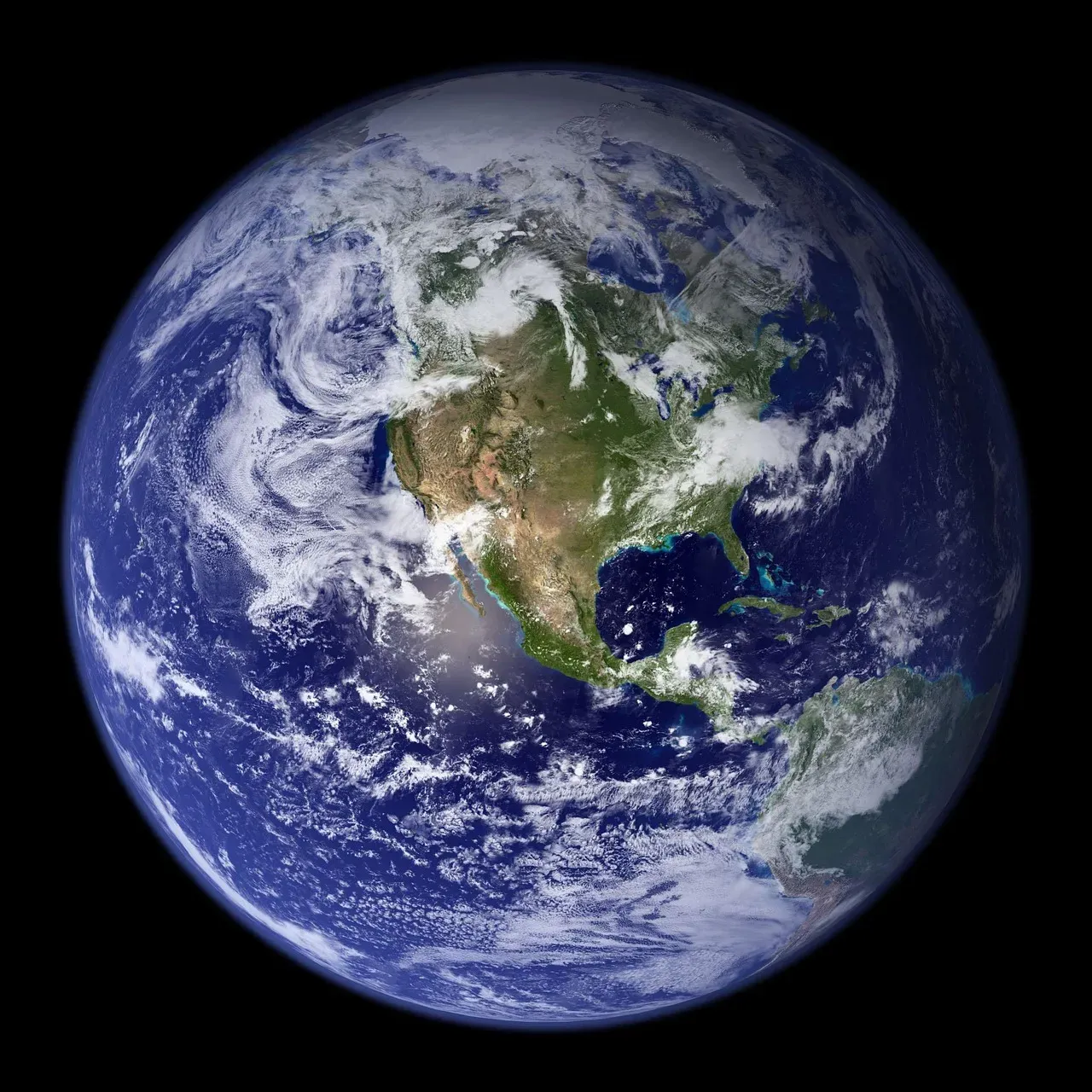
Earth doesn’t need our help to be extraordinary. These geological oddities scattered across continents remind us that for all our technology and understanding, this planet still holds mysteries in deserts, ice fields, caves, and volcanic slopes. Some of these phenomena took millions of years to form. Others happen in fleeting moments caught only by chance.
What strikes me most is how many of these features were only recently explained, or in some cases, still aren’t fully understood. Deep inside Earth, two massive hot rock structures have been quietly shaping the planet’s magnetic field for millions of years, and scientists discovered that these formations influence the movement of liquid iron in Earth’s core. We’re still learning about the planet beneath our feet.
So next time you think Earth has given up all its secrets, remember the rocks that sail across deserts and the caves filled with house-sized crystals. Our planet is still full of surprises. Which one would you want to see first?