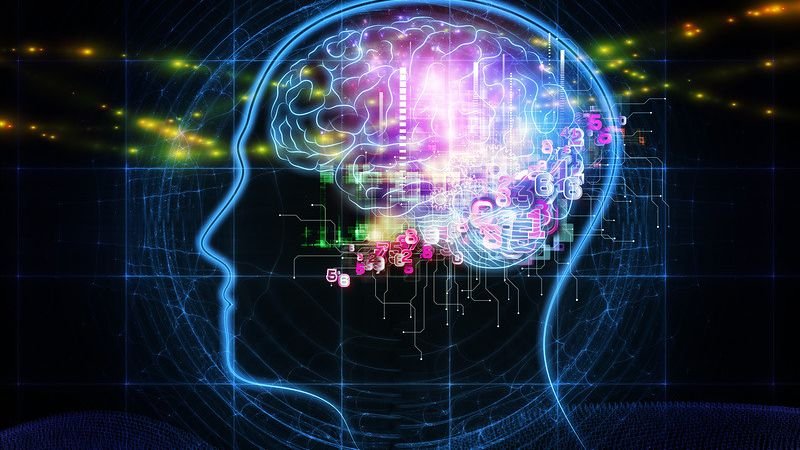

Have you ever looked up at the night sky and wondered if the universe itself might be aware, thinking, or conscious in some way? It sounds like something out of a science fiction novel. Yet here’s the thing: a growing number of philosophers and scientists are taking this idea seriously. Cosmopsychism is the theory that consciousness isn’t just something happening inside your skull, but a fundamental feature woven into the very fabric of the cosmos. Think about that for a second. Every particle, every galaxy, every moment might be part of one vast, interconnected conscious experience. Now, before you dismiss this as mysticism or wishful thinking, consider what modern research is revealing. Stick around, because what you’re about to discover might completely shift how you see your place in the universe.
The Universe Itself Might Be Conscious
Cosmopsychism claims that the cosmos as a whole is the fundamental level of reality and that it instantiates consciousness. Let’s be real, this is a radical departure from how most of us think about the world. You’ve probably been taught that consciousness emerges from complex brains, right? That neurons firing create your thoughts, feelings, and sense of self. Cosmopsychism flips that on its head.
Human consciousness, for example, merely derives from a larger cosmic consciousness. Instead of thinking of the universe as a dead, mechanical system where consciousness accidentally appeared in biological creatures, imagine it the other way around. The entire cosmos is conscious, and your individual awareness is like a wave in an infinite ocean. You’re not separate from the universe experiencing itself; you’re a localized expression of it. It could be that the consciousness of the universe is a gigantic mess that doesn’t add up to anything coherent enough to ground cognition. Honestly, I find this both humbling and weirdly comforting.
It’s Different From Regular Panpsychism
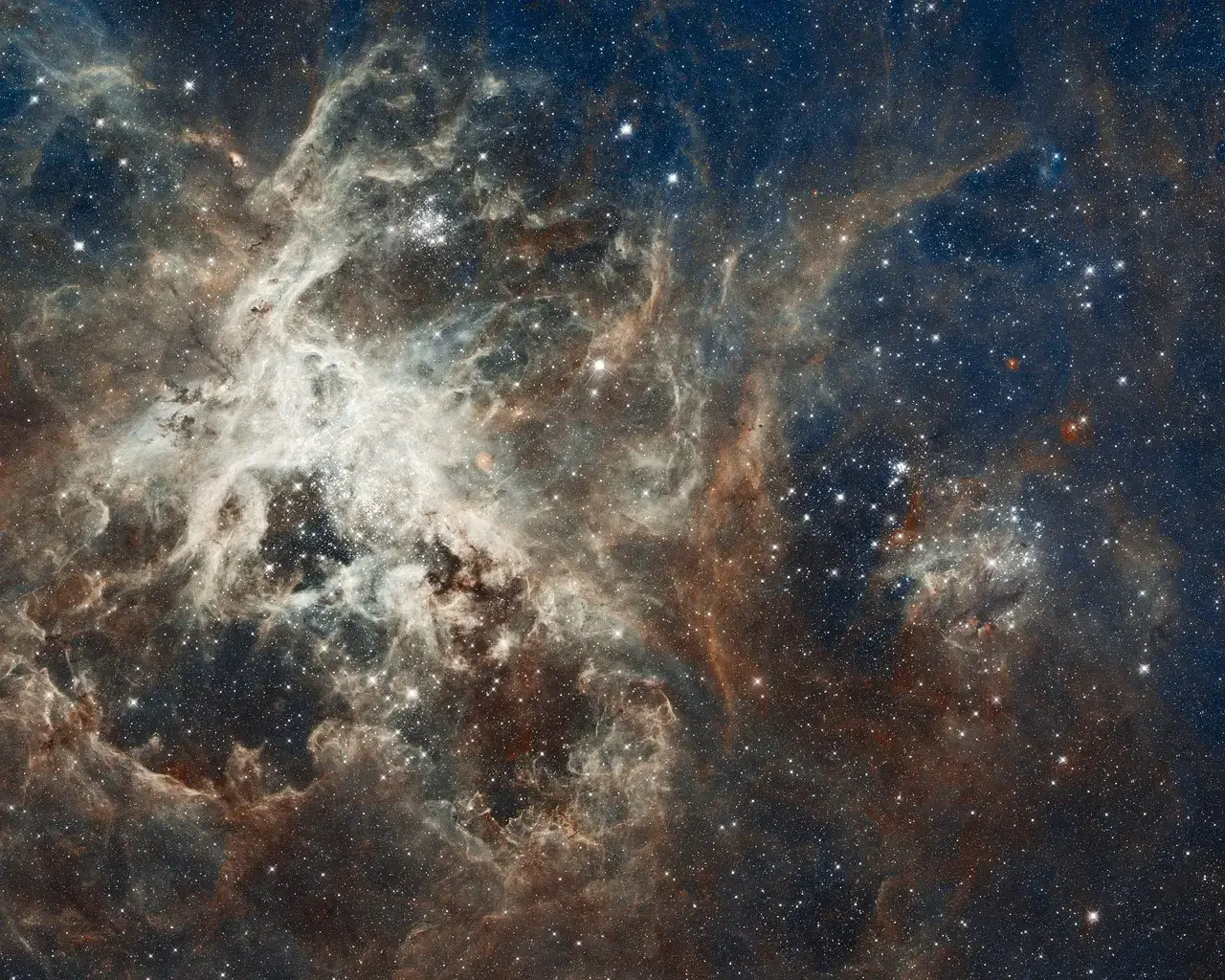
You might have heard of panpsychism, the idea that everything has some form of consciousness. Cosmopsychism takes a different approach. They differ on that point from panpsychists, who usually claim that the smallest level of reality is fundamental and instantiates consciousness. Traditional panpsychism works from the bottom up, suggesting that even elementary particles like electrons or quarks possess tiny bits of consciousness.
Cosmopsychism works top-down instead. It’s hard to say for sure, but think of it like this: panpsychism is like saying a house is made of conscious bricks, while cosmopsychism says the entire neighborhood is conscious first, and individual houses derive their awareness from that larger whole. Cosmopsychism hypothesizes that the cosmos is a unified object that is ontologically prior to its parts. The whole is more fundamental than the pieces. This solves some tricky philosophical problems that plague bottom-up theories, particularly the notorious combination problem of how little conscious particles somehow join together to create your rich, unified experience of reading these words right now.
It Addresses the Hard Problem of Consciousness

Scientists can tell you which parts of your brain light up when you see red or taste chocolate. What they can’t explain is why those physical processes feel like anything at all. Cosmopsychism is seen to be a compelling solution to the hard problem of consciousness (accounting for subjective, or phenomenal, experience) by a growing minority of scholars. This is what philosophers call the hard problem.
The strength of the novel cosmopsychist paradigm presented lies in the bridging of the explanatory gap by proposing a comprehensible causal mechanism for the formation of phenomenal states that is deeply rooted in the foundations of the universe. Rather than trying to conjure consciousness out of unconscious matter, cosmopsychism starts with consciousness as fundamental. Your brain doesn’t create awareness; it modulates, filters, and focuses a field of consciousness that was already there. Let me put it this way: your brain is more like a radio receiver tuning into a signal than a generator creating music from scratch. The signal was always broadcasting.
There’s a Ubiquitous Field of Consciousness
A novel variant of cosmopsychism relies on the central idea that the universe is imbued with a ubiquitous field of consciousness (UFC). This is where things get really interesting. Imagine consciousness not as isolated pockets inside individual brains, but as a field permeating all of space, similar to electromagnetic or gravitational fields. This field is understood as a foundational dual-aspect component of the cosmos, the extrinsic appearance of which is physical in nature and the intrinsic manifestation of which is phenomenological in nature.
Here’s the kicker: This approach argues that the organizational characteristics of the neural correlates of consciousness are indicative of the brain’s interaction with and modulation of the UFC. Your thoughts aren’t produced by your neurons alone. They arise when your brain engages with this universal consciousness field. It’s like tuning a guitar string to resonate at a particular frequency. The resonance creates your specific stream of conscious experience, distinct from mine, yet both emerging from the same underlying medium.
It’s Not the Same as Believing the Universe Is God
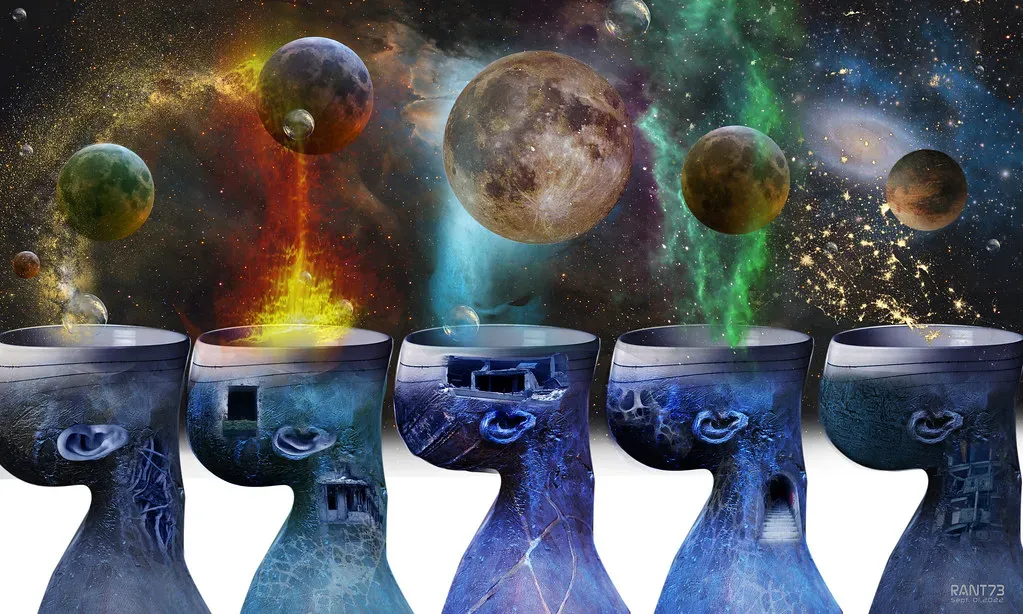
Cosmopsychism is not to be confused with pantheism: the view that the universe is God. This distinction is crucial. When you hear that the universe is conscious, you might immediately think of some divine, omniscient being with intentions and plans. That’s not what most cosmopsychists are proposing. Just as the micropsychist holds that electrons have experience but not thought, so the cosmopsychist holds that the universe has some kind of experience, but may refrain from attributing thought or agency to the universe.
The cosmic consciousness might have subjective experience without goals, beliefs, desires, or anything resembling human-like thought. It’s possibly just a vast experiential happening, without direction or purpose. However, philosopher Philip Goff has explored an interesting variation. Philip Goff develops a form of cosmopsychism according to which the universe is a value-responding agent, in order to try to account for the fine-tuning of the laws of physics for life. This version suggests the cosmos might respond to value in some way, though even this doesn’t make it God in any traditional sense.
Ancient Eastern Philosophies Already Explored This

Panpsychism is one of the oldest philosophical theories and has been ascribed, in some form, to philosophers including Thales, Plato, Spinoza, Leibniz, Schopenhauer, William James, Alfred North Whitehead, and Bertrand Russell. What’s fascinating is that cosmopsychism isn’t some newfangled Western invention. Advaita Vedānta is a form of idealism in Indian philosophy which has been argued to be considered a form of panpsychism or cosmopsychism.
Eastern traditions have explored cosmic consciousness for millennia. Advaita Vedanta, certain Buddhist schools, and various mystical traditions have long maintained that individual consciousness is ultimately not separate from a universal awareness. The Bhagavad Gita discusses a cosmic consciousness underlying all existence. Modern cosmopsychism is essentially rediscovering and reformulating these ancient insights using contemporary philosophical frameworks and scientific language. I think it’s pretty remarkable how wisdom traditions from thousands of years ago align with cutting-edge philosophy today.
It Could Explain Quantum Mysteries
Quantum mechanics is notoriously weird. Particles exist in multiple states simultaneously until observed. Entangled particles influence each other instantly across vast distances. The neural correlates of consciousness bear on quantum coherence since a rigorous description of the observed features, such as macroscopic pattern formation and second-order phase transitions, requires the formalism of quantum physics. Some researchers see potential connections between quantum phenomena and consciousness.
If consciousness is fundamental to the universe, perhaps quantum weirdness reflects this deeper reality. When a particle’s wave function collapses upon observation, maybe that’s consciousness playing a role at the most basic level. The zero-point field is involved in the orchestration of coherent neural activity patterns and the brain produces an individual stream of consciousness by periodically modifying it. The zero-point field is a quantum phenomenon, a sea of fluctuating energy at the vacuum level. If the brain interfaces with this field as a medium of consciousness, quantum mechanics and awareness might be intimately connected. This is speculative territory, for sure, but it opens up intriguing research directions.
Your Individual Self Might Be Less Separate Than You Think

Here’s where cosmopsychism gets personal and maybe a bit unsettling. Continuist panpsychism argues that while human consciousness is informationally bounded (causally and functionally distinct), it is likely phenomenally unbounded (part of a single, continuous field of experience). Your sense of being a distinct, isolated self might be somewhat illusory. The intuition that our minds are separate phenomenal fields is an illusion caused by our informational isolation.
You process different information than others, you have different memories and sensory inputs, so you feel separate. Phenomenally, though, your consciousness might not have sharp boundaries. The universe consists of a single continuous field of consciousness, with individual subjects existing as informationally dense regions within it. You’re like a whirlpool in a river, a temporary pattern in the flow, distinct in form but not separate from the water. This challenges so much of how we think about identity, free will, and our relationship to others. If we’re all patterns in one universal consciousness, what does that mean for ethics, for connection, for meaning? It’s mind-bending stuff.
Conclusion
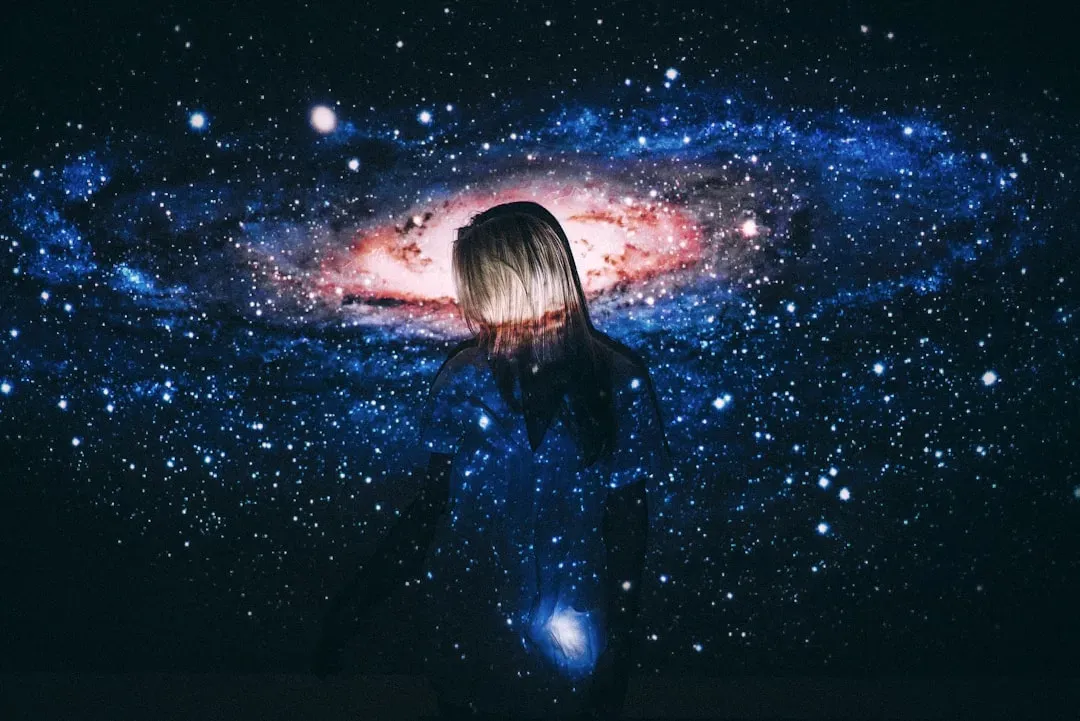
Cosmopsychism invites you to fundamentally reimagine your place in reality. You’re not a fleeting accident of evolution stumbling around on a tiny rock in an indifferent cosmos. You might be the universe experiencing itself from one particular vantage point, consciousness recognizing itself through your eyes. The theory bridges ancient spiritual insights with contemporary philosophy, offering fresh perspectives on consciousness, quantum mechanics, and the nature of existence itself. Whether or not cosmopsychism turns out to be correct, engaging with these ideas expands how we think about mind and matter.
It challenges the materialist assumption that consciousness is just an epiphenomenon of complex computation. It suggests interconnectedness at the deepest level. So next time you gaze at the stars or feel a moment of deep awareness, remember: you might not be looking at the universe. The universe might be looking through you. What do you think about this radical vision of consciousness? Does it resonate with your own experiences, or does it seem too far out? Tell us in the comments.