
Time feels simple on the surface: clocks tick, days pass, birthdays sneak up on us faster every year. But once you look closely, time stops behaving like a quiet background and starts acting more like a wild character in a science fiction story. Over the past century and a half, a handful of discoveries have shattered our everyday intuition and forced us to rethink what time really is, how it flows, and whether it even “flows” at all.
Some of these breakthroughs came from chalkboards and blackboards, others from particle accelerators, GPS satellites, atomic clocks, and even from staring at the faint afterglow of the Big Bang. Taken together, they paint a picture of time that’s stranger, more elastic, and more connected to the universe than most of us were ever taught in school. Let’s walk through eight extraordinary turning points that changed everything.
Einstein’s Special Relativity: Time Is Not the Same for Everyone
Imagine two people looking at the same clock and disagreeing about how fast it’s ticking – and both being right. That’s essentially what special relativity revealed in 1905: time is not absolute, it depends on how fast you’re moving. If you speed through space close to the speed of light, your time actually slows down relative to someone who stays still, so a fast-moving astronaut ages more slowly than a friend who remains on Earth.
This effect isn’t just theory; it has been measured many times with high-speed particles and ultra-precise clocks flown on planes and rockets. Even particles in accelerators “live” longer when they move faster, simply because their internal clocks tick more slowly. Special relativity demolished the old idea of a universal ticking clock shared by the whole cosmos and replaced it with a reality where every observer carries their own personal time, woven together with space into a four‑dimensional fabric we now call spacetime.
General Relativity: Gravity Bends Time Itself
As if time depending on speed wasn’t enough of a shock, Einstein went further a decade later and showed that gravity changes time too. In general relativity, mass and energy curve spacetime, and that curvature tells objects how to move. One mind‑bending consequence is that clocks in stronger gravitational fields tick more slowly than clocks in weaker ones, so a clock on the ground runs a little slower than one in a plane at cruising altitude.
This isn’t an obscure nuance; the GPS on your phone literally wouldn’t work without correcting for gravitational time dilation. Satellites orbiting Earth experience slightly weaker gravity and higher speeds, so their onboard atomic clocks drift relative to clocks on the ground. Engineers have to adjust for both effects or your location would quickly be off by kilometers. General relativity turned gravity from a mysterious pull into a geometric warping of spacetime, making time itself elastic and sensitive to where you are in the universe.
Atomic Clocks: Time Becomes a Physical Quantity We Can Measure to Extremes
The invention of atomic clocks in the mid‑twentieth century transformed time from a human convention into a physical quantity we can probe with astonishing precision. Instead of relying on pendulums or quartz crystals, atomic clocks use the natural frequency of atoms – often cesium or ytterbium – flipping between energy levels as a kind of ultra‑stable metronome. Modern optical atomic clocks are so accurate that they’d lose or gain less than a second over billions of years.
This precision did more than just improve our timekeeping; it turned time into a laboratory tool. With such sensitive clocks, scientists can detect relativistic time dilation over vertical distances as small as a few centimeters, simply by lifting one clock above another. In other words, you can actually measure that time runs a tiny bit faster at the top of a staircase than at the bottom. Atomic clocks anchored our second to the behavior of atoms and made it possible to test the fabric of spacetime on a tabletop.
The Arrow of Time and Entropy: Why the Past and Future Feel Different
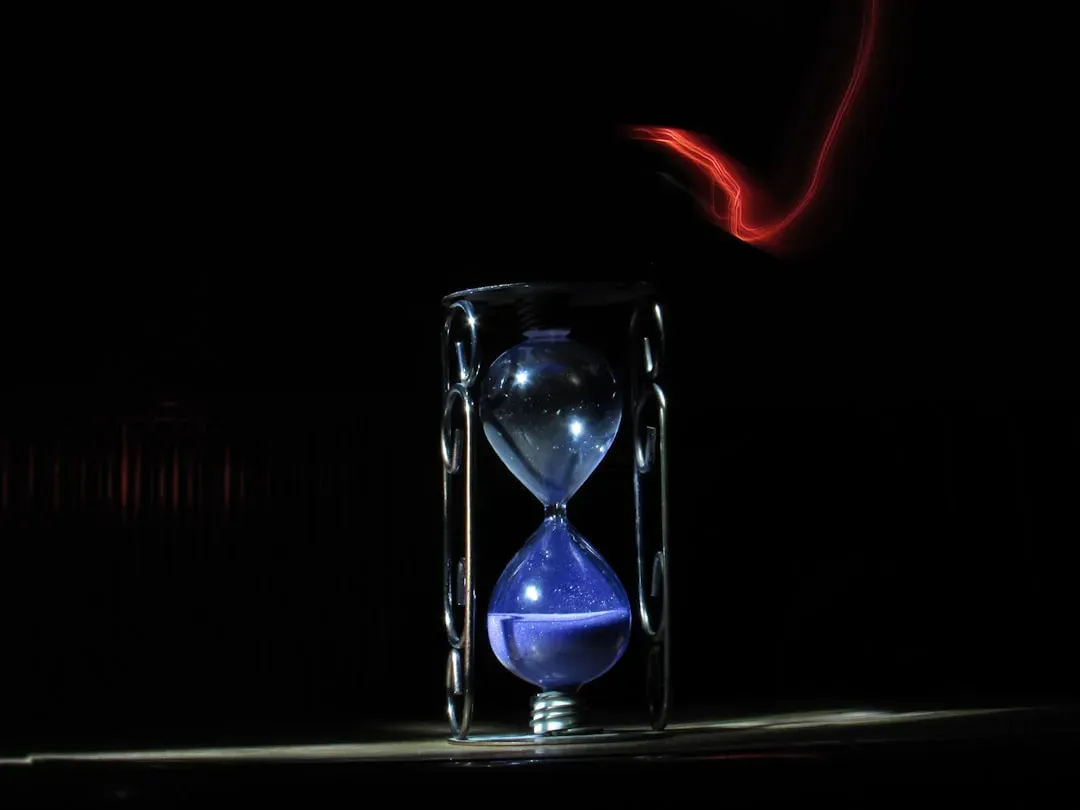
Most fundamental laws of physics don’t care which way time runs; run the equations forward or backward and they look almost the same. Yet our everyday experience screams that time has a direction – eggs scramble but never unscramble, smoke disperses rather than refocusing into a neat cigarette. The concept of entropy from thermodynamics explained this puzzle by tying the arrow of time to the tendency of systems to move from order toward disorder.
Roughly speaking, there are many more disordered arrangements than ordered ones, so as systems evolve, they overwhelmingly drift toward higher entropy states. This statistical bias gives time an apparent one‑way direction, from a low‑entropy past to a higher‑entropy future. It also raises a staggering question: why was the early universe in such a low‑entropy, highly ordered state that allowed this arrow of time to exist at all? That simple idea – that time’s flow is rooted in probability and disorder – changed how physicists and philosophers talk about memory, aging, and even the meaning of “before” and “after.”
Cosmic Expansion and the Big Bang: Time Has a Beginning (As Far as We Know)
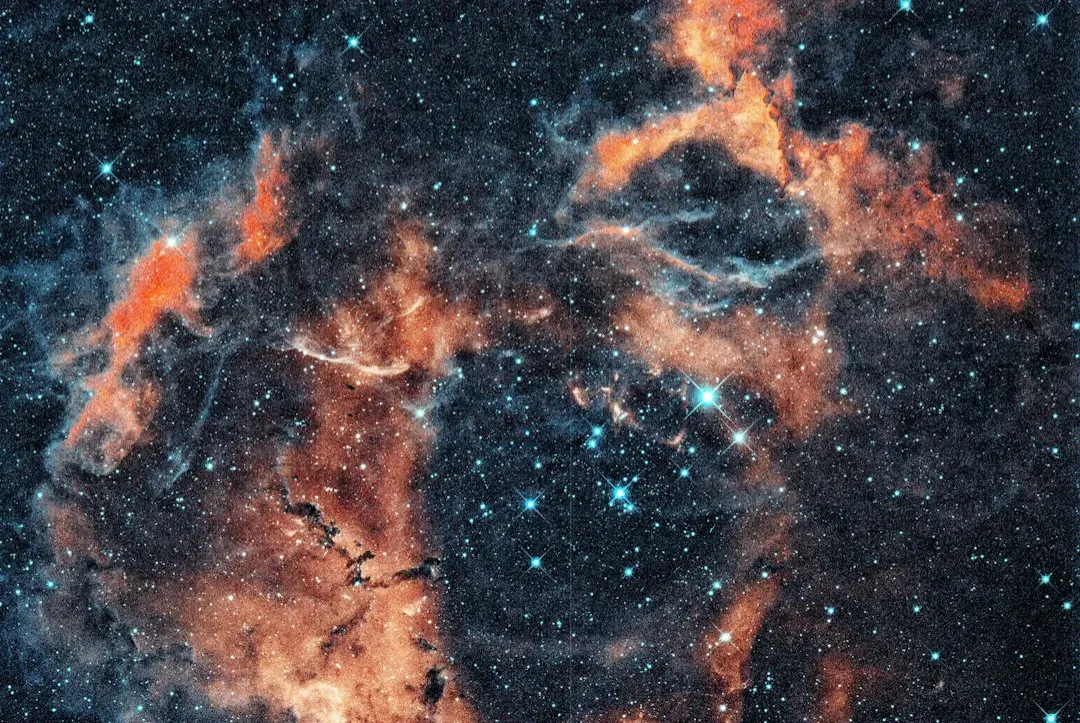
For a long time, many scientists assumed the universe was static and eternal, with no beginning and no end. Observations in the twentieth century turned that assumption upside down. When astronomers discovered that distant galaxies are receding from us and from each other, it suggested that space itself is expanding. Run that expansion backward, and you arrive at a hot, dense early state – what we now call the Big Bang.
The discovery of the cosmic microwave background radiation, a faint afterglow from that early era, cemented this picture and gave us a kind of baby photo of the universe. In this framework, time as we know it emerges with the onset of cosmic expansion around thirteen to fourteen billion years ago. Asking what happened “before” the Big Bang may not even make sense in our current theories, similar to asking what is north of the North Pole. The idea that time might have a beginning completely reshaped cosmology and our place in the story of the universe.
Quantum Entanglement: Time, Causality, and Spooky Connections
Quantum mechanics brought another layer of weirdness to by introducing entanglement, where particles become mysteriously linked so that measuring one instantly influences the description of the other, no matter how far apart they are. This effect has been repeatedly confirmed in experiments that close more and more loopholes, leaving very little room for classical explanations. While entanglement doesn’t let you send messages faster than light, it does challenge simple notions of cause and effect unfolding in neat temporal order.
Some interpretations of quantum mechanics treat time almost symmetrically, where what happens in the future can influence the way we describe the past in a probabilistic sense. Others attempt to rebuild spacetime itself from fundamental quantum correlations, suggesting that entanglement might be more basic than space and time. For me, reading about these ideas felt like discovering that the sturdy timeline I learned in school was more like a patchwork quilt sewn together from invisible, nonlocal threads. Quantum entanglement turned time into a more fragile, context‑dependent concept than most of us would ever guess.
Time Crystals and Exotic Phases: When Time Becomes a Kind of Structure
In the last decade, physicists have created something that sounds like it escaped from a fantasy novel: time crystals. These are systems that, when driven periodically, settle into a state that repeats in time with a rhythm different from the driving force, breaking what’s called time‑translation symmetry. It’s a bit like tapping a table steadily and having a glass on it respond with its own distinct, stable beat forever, without using up energy in the usual way.
Time crystals are not perpetual motion machines, but they are a new phase of matter where order emerges in time rather than just in space, the way atoms in a regular crystal form a repeating lattice. Their realization in trapped ions and solid‑state systems showed that time can organize itself in unexpected patterns, much like matter does. This discovery hinted that time is not just a passive stage where events happen but can itself participate in the structure and phases of physical systems, opening the door to strange new forms of dynamics and possibly future quantum technologies.
Time Reversal Experiments and the Limits of Rewinding Reality
Recent experiments in quantum systems and complex materials have tried to explore what it really means to reverse time, at least in a controlled, limited sense. By carefully designing interactions and then applying a kind of “mirror” evolution, researchers have managed to partially reconstruct earlier states of certain quantum systems, almost like pressing a microscopic rewind button. In one famous case, a quantum computer was used to evolve a simple state forward and then apply an algorithm that effectively reversed that evolution under idealized conditions.
These demonstrations don’t violate the arrow of time in everyday life, because they require exquisite control and work only on carefully isolated systems for short durations. Still, they highlight a deep tension: the underlying equations of quantum mechanics allow for time‑reversed evolution, yet large‑scale processes relentlessly march toward disorder. That contrast underscores how fragile our sense of time’s one‑way flow really is, resting not on absolute impossibility but on overwhelming improbability. Time, it turns out, is less like a rigid railroad track and more like a river where molecules can occasionally swirl backward even while the current as a whole rushes downstream.
Conclusion: Living Inside a Stranger Kind of Time
Put all these discoveries together and the familiar idea of time – a single, universal river flowing at a constant rate – simply doesn’t survive. Time runs at different speeds depending on motion and gravity, seems to have begun with the universe, points from order to disorder, and turns out to be entangled with space, information, and even the way matter organizes itself. The deeper physicists dig, the more time looks like a construct that emerges from deeper rules rather than a basic ingredient of reality.
I still check my watch and grumble when a meeting runs long, but somewhere in the back of my mind there’s this quieter awareness that the seconds I’m counting are part of a much stranger story. We’re walking around inside a universe where time is flexible, layered, and maybe not even fundamental, yet we experience it as the most intimate thing we know. In a world this weird, the real question might be: which part of time will surprise us next?