

Some of the strangest mysteries in science aren’t hiding in black holes or distant galaxies. They’re sitting right in your kitchen, your bedroom, your memories, and even behind your eyes. We walk past them, live inside them, and rely on them every single day, and yet researchers are still scratching their heads about how they really work at the deepest level.
We like to imagine science as a neat, completed puzzle: every piece locked in, no surprises left. But reality is messier and much more fun. From the way we fall asleep, to why a song gets stuck in your head, to how we actually make conscious choices, there are gaps, contradictions, and open questions that even the smartest people in the world still argue about. Let’s dive into eight everyday phenomena that remain stubbornly, sometimes infuriatingly, mysterious.
The Enigma of Human Consciousness

What exactly is happening when you say “I” and feel like a single, unified self? That simple, familiar feeling is one of the hardest problems in modern science. We can scan brains, track electrical activity, and map regions linked to language, sight, or movement, yet the raw experience of being you – the color red, the ache of heartbreak, the taste of coffee – does not neatly translate into brain diagrams.
Neuroscientists know that consciousness is strongly tied to brain activity, but the bridge between neurons firing and subjective experience is still missing. Some theories see consciousness as an emergent property of complex information processing, while others flirt with more radical ideas that consciousness might be a basic feature of the universe, like space and time. What we don’t have is a widely accepted test that can explain why certain patterns of activity feel like something, and others do not. That gap, often called the “hard problem” of consciousness, is still very much unsolved.
Why We Sleep and Dream the Way We Do

Most of us see sleep as a nightly shutdown, but from an evolutionary standpoint, it’s downright risky. For hours every night, we’re immobile, vulnerable, and not hunting, building, or reproducing. Scientists agree that sleep is essential, but the full story of why we sleep the way we do – with cycles, dreaming, and such a strong daily rhythm – is still surprisingly murky. There are well-supported ideas that sleep helps with memory consolidation, emotional regulation, and cellular repair, but no single theory captures everything.
Dreaming is even stranger. During rapid eye movement sleep, the brain becomes highly active, yet our bodies are largely paralyzed and we drift through bizarre, emotional narratives that often make no logical sense. Some researchers think dreams help us process threats, rehearse social situations, or integrate fragmented memories, while others see them as more of a side effect of a brain that refuses to ever fully shut off. Even with decades of sleep labs and brain scans, there’s no consensus on why your sleeping mind insists on generating whole movies every night.
The Placebo Effect and the Power of Expectation

You take a sugar pill, you’re told it will help, and somehow your pain eases or your mood lifts. The placebo effect is so strong that every serious clinical trial has to account for it, yet how it really works is still not fully nailed down. It isn’t just “imaginary” improvement; researchers have measured real changes in brain activity, hormone levels, and immune responses triggered purely by expectation and belief.
The tricky part is that the placebo response varies dramatically from person to person and condition to condition, and we don’t have a complete model that predicts when it will happen and how strong it will be. There’s also the nocebo effect, where negative expectations can make symptoms worse. It’s as if belief acts like a dimmer switch on the body’s own systems, but we’re still figuring out which circuits it’s actually controlling. The uncomfortable truth is that our minds can influence our bodies in ways that don’t fit neatly into simple “mind versus matter” categories.
Déjà Vu and the Feeling of Repeated Moments

That eerie sensation that you’ve lived through this exact moment before can feel almost supernatural in the instant it hits. Déjà vu is surprisingly common; a large portion of people report experiencing it at least a few times in their lives, especially when they’re younger. Despite this, there’s no single, agreed-upon explanation for what’s really going on in the brain when it strikes.
One leading idea is that déjà vu happens when the brain’s memory circuits briefly misfire, making a new situation feel like a remembered one. Another suggests a timing glitch between different processing pathways, so that one part of the brain gets information a fraction of a second earlier, then flags the later signal as familiar. There are also connections to temporal lobe activity, since some people with specific forms of epilepsy report intense déjà vu during seizures. For everyday, healthy brains, though, we’re still left with educated guesses rather than a clear, tested mechanism.
Earworms: Why Songs Get Stuck in Your Head

A few seconds of a tune on the radio and suddenly it’s looping in your head for hours, sometimes days. These stubborn musical fragments, often called earworms, are a nearly universal experience, yet scientists still don’t fully understand why certain melodies burrow into our minds while others slip away. Patterns keep showing up: catchy rhythms, repetitive melodies, and simple, predictable structures seem to stick more easily.
Researchers think earworms might be linked to the brain’s tendency to complete patterns, like a mental itch that demands scratching, but the full circuitry and purpose, if there is one, are still unclear. Interestingly, earworms often appear when we’re doing low-effort tasks, like showering or walking, as if the brain pulls out a tune to fill idle space. Some studies suggest that chewing gum or fully engaging in another task can disrupt the cycle, but there’s no guaranteed fix. For now, the soundtrack in your head is still operating on rules we only partly understand.
The Quirks of Human Memory
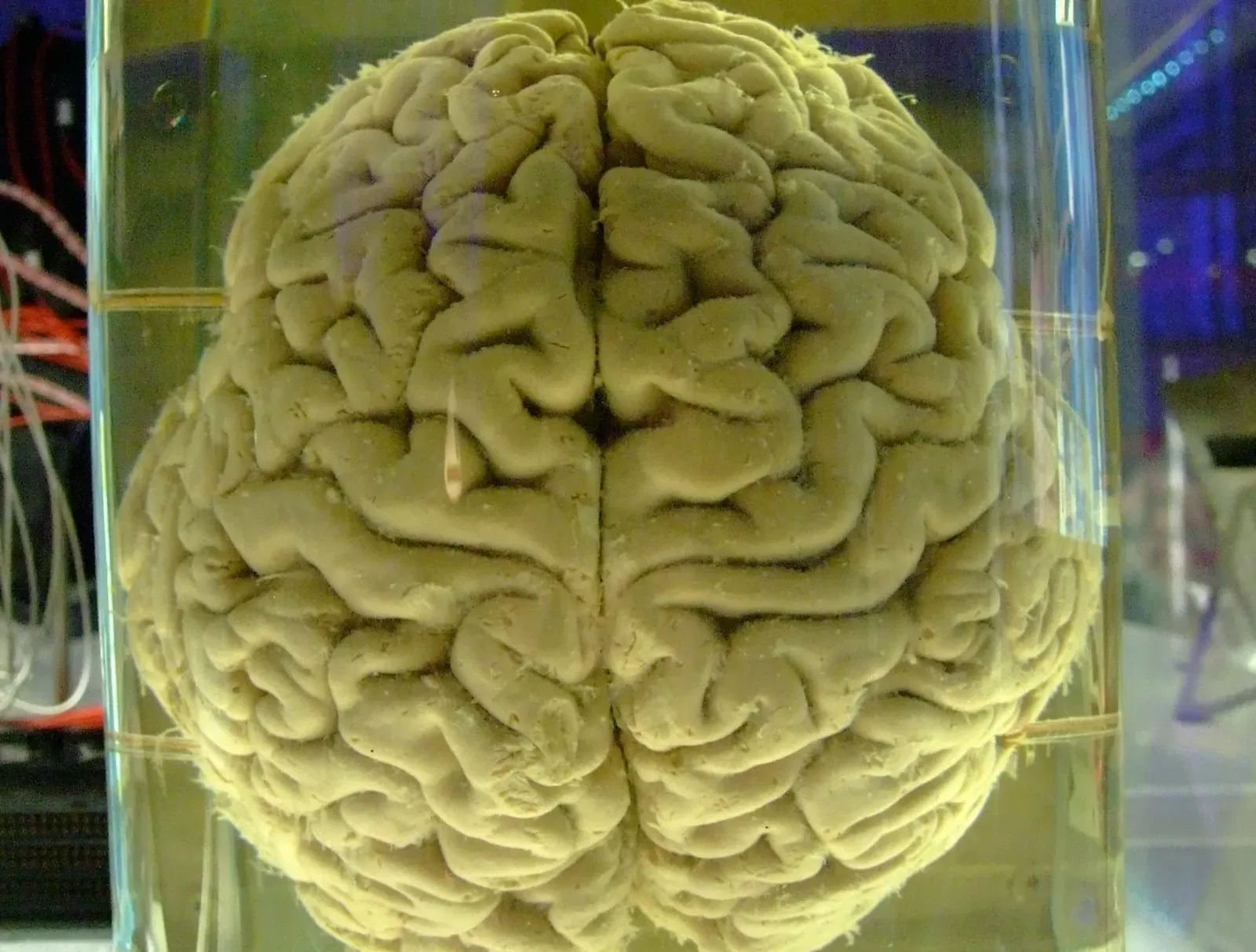
We like to think of memory as a kind of mental video recorder, faithfully storing what really happened. In reality, memory behaves more like a storyteller that edits, reshapes, and sometimes flat-out invents details every time we recall something. Experiments have repeatedly shown that people can form strong memories for events that didn’t occur, or become convinced of details that were never there, especially when suggestions or leading questions are involved.
Scientists have mapped out some of the basic machinery: how short-term memories are stabilized, how certain brain regions are involved in encoding and retrieval, and how sleep supports consolidation. But why memories are so flexible, and why our brains treat accuracy and usefulness so differently, remains an open question. It’s possible that a system optimized for survival would prioritize adapting stories to guide future behavior over preserving an exact historical record. That trade-off, though, raises uncomfortable questions about how much we can trust even our most vivid recollections.
The Mystery of Free Will and Decision-Making
When you choose what to eat for lunch or decide to text someone back, it feels like you’re consciously steering the ship. Yet when neuroscientists measure brain activity, they often find that the brain shows signs of an upcoming decision before a person becomes consciously aware of making it. This has led to heated debates about whether free will is real in the way we intuitively think it is, or whether our sense of deciding is more of a delayed commentary on choices already set in motion.
Some researchers argue that unconscious brain processes do most of the work, with conscious thought stepping in only at the end to approve, veto, or reinterpret the outcome. Others claim that the existing experiments oversimplify things and that complex decisions unfold in ways we’re not yet able to measure properly. Philosophers have jumped in too, asking whether free will might still exist in a more nuanced, compatibility-with-physics sense rather than a totally unconstrained one. For everyday life, we still act as if we own our choices, even while science keeps poking holes in that comforting story.
Why Time Feels So Different Depending on the Moment

Ten minutes in a boring meeting can feel like an hour, while an hour with someone you love can disappear in what feels like seconds. Our inner sense of time is wildly elastic, and science does not yet have a single, complete explanation for why it stretches and compresses the way it does. Emotions, attention, novelty, and even body temperature all appear to influence how we experience time passing.
One pattern that shows up again and again is that novel experiences seem to slow down time in the moment and make periods feel fuller in hindsight. That might be why childhood summers feel endless in memory, while adult years seem to vanish. There are also odd distortions in extreme situations, like accidents, where people report a kind of time dilation, as if their minds sampled more frames per second. Researchers can build models and measure some of these effects, but the full recipe behind the subjective flow of time is still a work in progress.
Living With Open Questions

It’s tempting to see these gaps in understanding as failures, but they’re also what make everyday life feel rich and strangely magical. The fact that something as ordinary as a nap, a song, a memory, or a passing moment in a grocery store can still baffle world-class researchers is a reminder that mystery isn’t hiding somewhere far away. It’s right here, woven into the fabric of what it means to be human.
As tools improve and theories evolve, some of these puzzles will almost certainly shrink, and a few may even crack wide open. But new questions will immediately take their place, because that’s what happens whenever we look closely enough. So the next time you wake from a vivid dream, hum a tune you can’t shake, or feel time bend around a powerful moment, it might be worth pausing just a second. Isn’t it strangely reassuring to know that even the experts still don’t have all the answers?