

Walk through a city, scroll your phone, hop on a train, and you’re moving through a living museum of hidden wildlife ideas. Engineers, chemists, and designers have spent decades quietly borrowing from beetles, birds, sharks, and trees to solve very human problems: cutting energy use, reducing noise, even making trains faster and safer. This field, known as biomimicry, sits at the crossroads of biology and technology, turning evolution’s hard-won tricks into blueprints for devices and materials we now take for granted. Yet most of us never realize that the hook on a child’s shoe or the pattern on a swimsuit started as a survival strategy in the wild. Once you see it, you can’t unsee it: is not just background scenery, it is a research and development lab that has been running experiments for billions of years.
The Hook-and-Loop Revolution: Burdock Seeds and Velcro
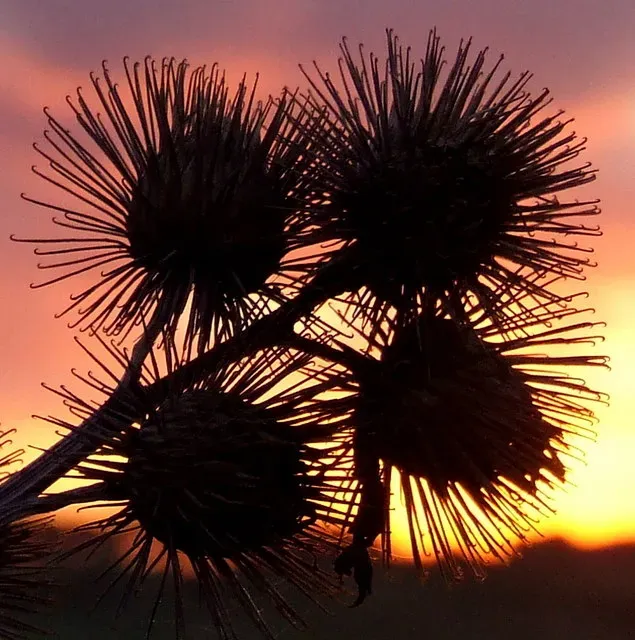
It started with an annoying problem: a Swiss engineer out walking his dog in the 1940s kept coming home covered in stubborn burrs. Instead of just brushing them off, he examined the burdock seeds under a microscope and noticed tiny hooks that latched onto the loops of fur and fabric. That simple mechanical trick, honed by plants to hitch a ride on passing animals, became the model for the hook-and-loop fastener we now know as Velcro. What began as a moment of curiosity about a nuisance weed turned into a global fastening system found on shoes, jackets, blood pressure cuffs, and spacecraft.
Scientifically, Velcro is a masterclass in passive adhesion: no glue, no magnets, just geometry and materials. The hook side is typically made from stiff nylon or polyester, while the loop side uses softer fibers that can flex and recover after repeated use. In lab tests, high-quality hook-and-loop systems can be opened and closed thousands of times before performance noticeably declines, which is why they’re trusted in demanding environments like aircraft interiors. The burdock plant, of course, never filed a patent, but that humble weed quietly rewired how we think about simple, reusable closures.
Faster Trains from a Hunting Bird: The Kingfisher and Bullet Trains
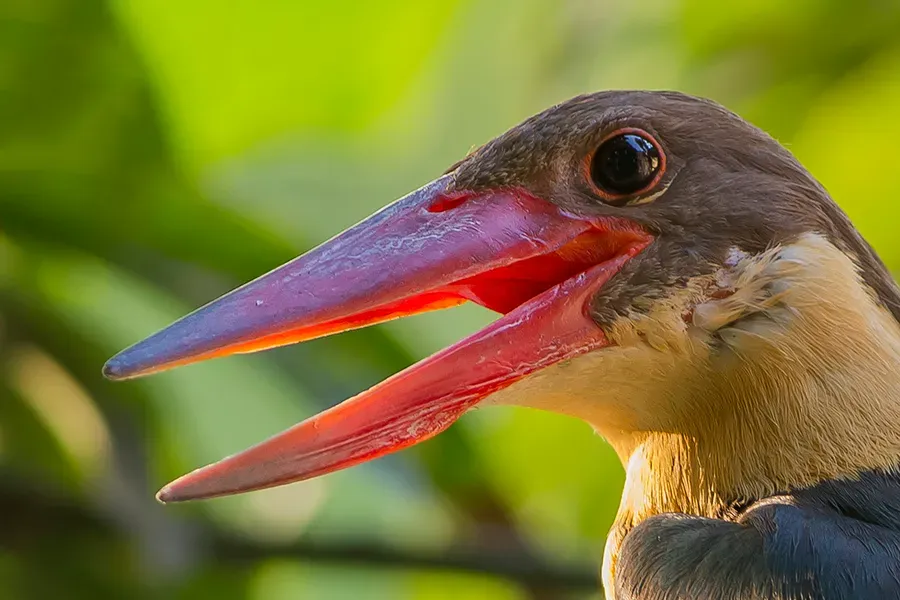
When Japan’s Shinkansen rail system pushed for higher speeds in the late twentieth century, engineers ran into a surprising obstacle: noise. Every time a train shot out of a tunnel, there was a loud sonic boom as compressed air rushed outward, disturbing nearby communities and wildlife. One engineer, who happened to be a birdwatcher, noticed how a kingfisher plunges into water at high speed with barely a splash thanks to its long, tapered beak. That observation led to a radical idea: reshape the train’s nose to mimic the bird’s streamlined profile.
The redesigned Shinkansen nose reduced air pressure waves, cutting tunnel boom and improving energy efficiency at the same time. Measured over long distances, the trains used significantly less electricity while running faster than their older counterparts, an almost counterintuitive outcome for high-speed travel. Aerodynamically, the kingfisher-inspired shape reduces drag, allowing smoother air flow much like the bird’s beak lets water part cleanly as it dives. For commuters, the payoff shows up as quieter rides, fewer complaints from communities near tunnels, and a rail system that became an icon of biomimetic design. A single bird’s hunting strategy helped reshape an entire nation’s transport infrastructure.
Sticking Without Glue: Gecko Toes and Smart Adhesives
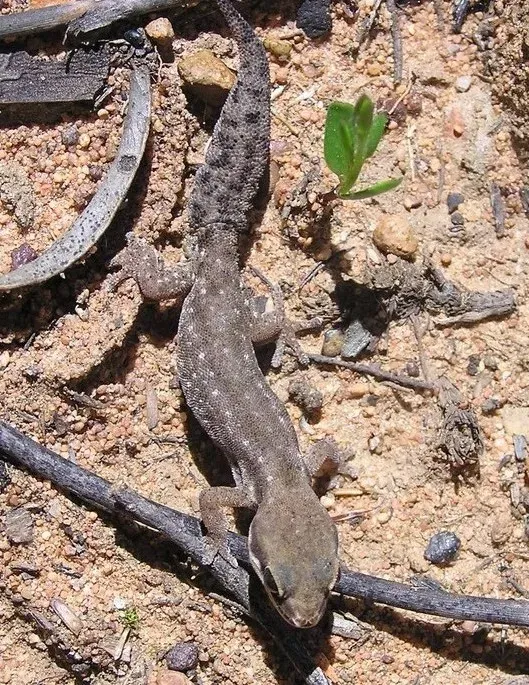
If you have ever watched a gecko casually stroll across a wall or ceiling, it feels almost like science fiction in slow motion. For years, scientists puzzled over how these small reptiles could cling so effortlessly to slick glass or painted surfaces without leaving any residue behind. High-resolution imaging finally revealed the secret: each gecko toe is covered in millions of microscopic hairs, and each of those splits into even finer structures that exploit weak intermolecular forces between surfaces. Instead of relying on suction or sticky secretions, geckos lean on physics at the nanoscale.
Inspired by this, engineers have created dry adhesives that can hold surprisingly heavy loads yet release cleanly with a gentle peel, much like a gecko lifting its toes. These materials show up in climbing robots, space tools designed to operate in vacuum where traditional suction fails, and experimental medical devices that need to grip delicate tissues without damage. Some prototypes can be reused thousands of times with minimal loss of strength, a stark contrast to disposable tape or glue. For everyday life, you can already find gecko-inspired hooks and pads that stick to walls without nails, though consumer versions are still catching up to the sophistication seen in research labs. ’s wall-climber is quietly teaching us how to hold on without leaving a mark.
Grip from Whiskers and Paws: Cat Tongues, Climbing Gear, and Brushes
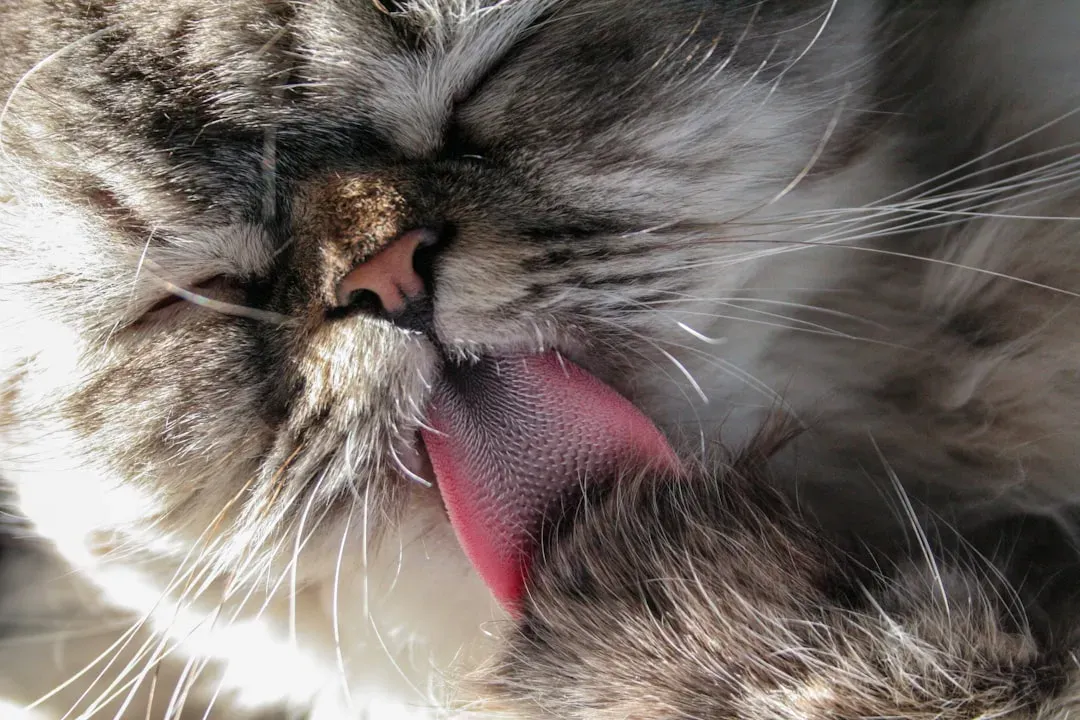
If you live with a cat, you already know their tongue feels like miniature sandpaper. That scratchy texture comes from rigid, hook-shaped structures called papillae that help groom fur, pull out loose hairs, and even move water efficiently when they drink. High-speed footage and 3D scans of feline tongues revealed that these papillae act like tiny combs and scoops, bending and springing back to shape during grooming. Engineers quickly realized that this natural design could reshape tools that need to detangle, clean, or grip fibers without tearing them apart.
Today, cat tongue–inspired brushes and grooming tools use similar backward-facing, flexible hooks to glide through hair and fur with less force than traditional bristles. Some industrial cleaning brushes and textile handling systems borrow the same principle to move fibers or remove debris while reducing damage. That same attention to micro-structure is influencing designs for gloves and climbing aids that need both grip and gentle contact, echoing the careful balance cats maintain when clinging to surfaces or carrying fragile prey. I still think about this every time I run my hand over a new brush in a store; the ones that feel oddly efficient often hide a small dose of feline engineering in their bristle design.
Self-Cleaning Surfaces: Lotus Leaves and Dirt-Repellent Coatings
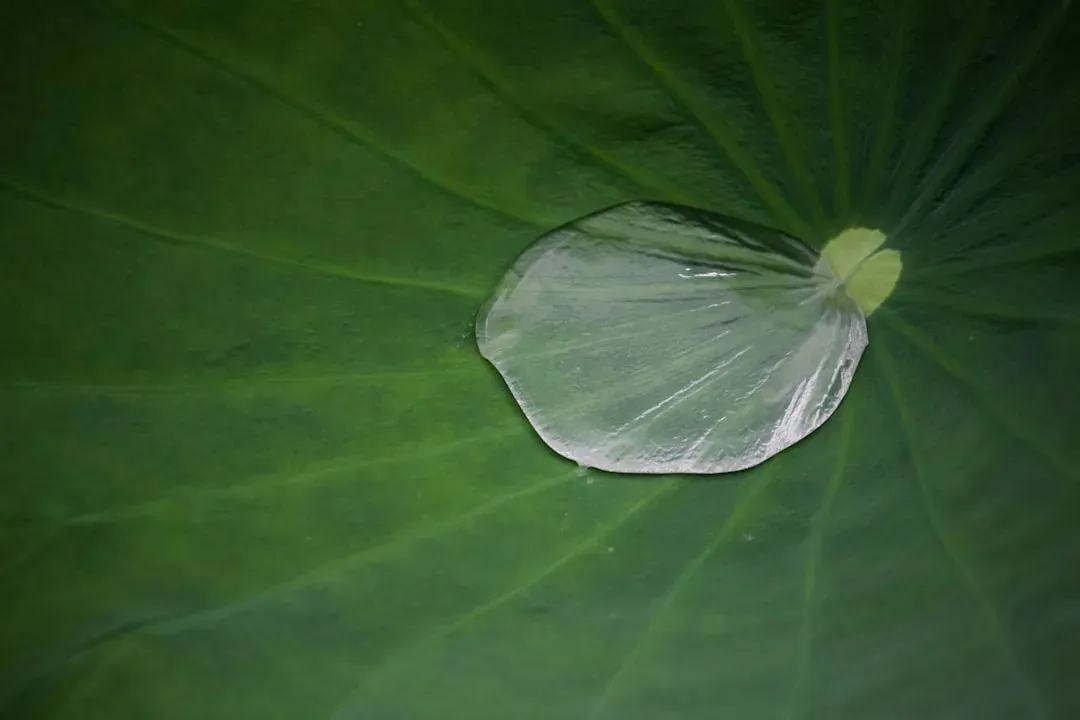
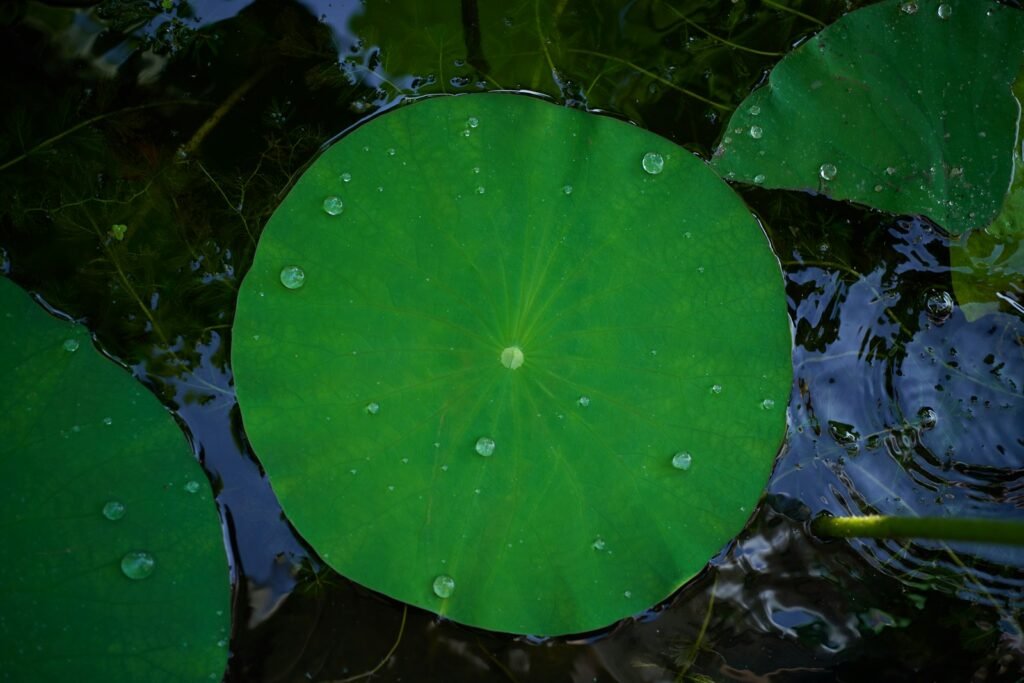
Lotus plants grow in muddy, stagnant water, yet their leaves stay remarkably clean and bright. For centuries this was treated as a poetic symbol of purity; only recently did scientists discover the physics behind the effect. Lotus leaves are covered with microscopic bumps and a thin waxy coating that makes water bead up dramatically instead of spreading out. As droplets roll off, they pick up dirt particles, tiny pollutants, and even microorganisms, sweeping them away without the plant lifting a single cell in effort.
This lotus effect has inspired a wave of self-cleaning materials used in everything from building facades to stain-resistant textiles. Hydrophobic paints and glass coatings reduce the need for frequent washing, which means lower water use and fewer harsh cleaning chemicals entering waterways. Some solar panels now use lotus-inspired textures or films so that raindrops clean dust from their surfaces, helping maintain energy output in dusty environments. In consumer products, you see the idea in water-repellent jackets and sprays that make fabrics shrug off spills. It’s a subtle but powerful reminder that sometimes the greenest technology is simply learning how a leaf stays spotless in a swamp.
Silent Flight and Quieter Machines: Owl Wings and Noise Control
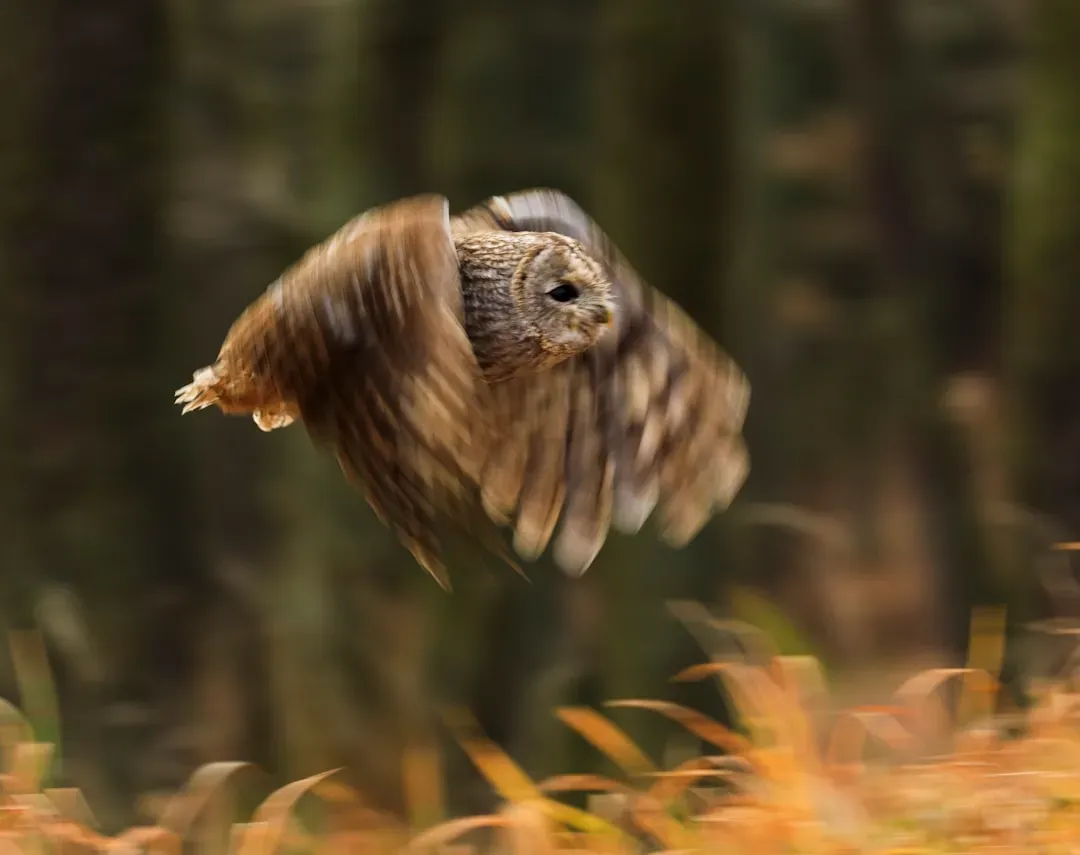
Owls are built for stealth; their survival depends on approaching prey without a whisper of warning. When researchers recorded owl flight in specialized acoustic facilities, they found it was dramatically quieter than that of other birds of similar size. The reason lies in the feathers: owls have serrated leading edges, a soft, velvety surface, and fringed trailing edges that together break up air turbulence and dampen sound. In engineering terms, their wings are flying noise filters.
This discovery has pushed designers to rethink how we manage noise in everything from wind turbines to airplane wings and even household fans. Turbine blades with owl-inspired serrations can reduce noise levels while maintaining or improving energy output, a crucial factor for public acceptance of wind farms near residential areas. Some experimental aircraft components apply similar textures to cut the roar around wing edges and landing gear. Even quiet office fans and laptop coolers borrow from this playbook, using carefully shaped blades and edges to push air without the usual whine. By listening closely to an animal designed not to be heard, we gain tools to make our machines less intrusive in daily life.
Energy Savings in the Air: Termite Mounds and Climate-Controlled Buildings
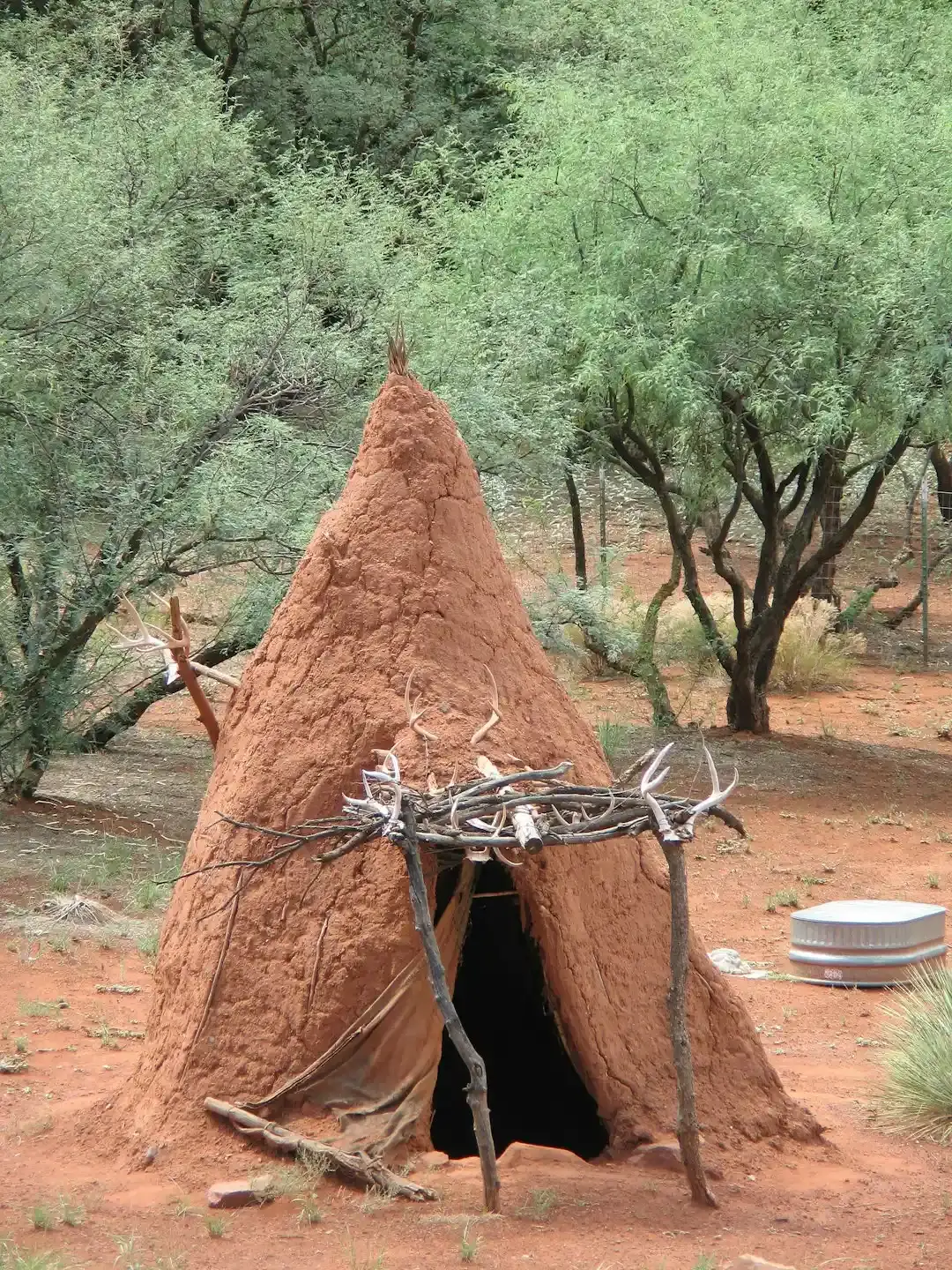
In parts of Africa and Australia, termite mounds rise taller than people, sculpted from soil and saliva into complex ventilation systems. Inside, termites maintain surprisingly stable temperatures and humidity despite large swings in the outside climate. For years, these structures were dismissed as odd piles of dirt; detailed field measurements later revealed a subtle choreography of air flow, convection, and porous walls that support this stability. Essentially, termites built passive climate control long before humans invented air conditioners.
Architects and engineers have begun to apply these principles to large buildings, using carefully placed vents, chimneys, and thermal mass to reduce reliance on mechanical cooling. Some office complexes modeled on termite mound airflow patterns have slashed their energy use for heating and cooling compared to conventional glass-and-steel towers. Design features include thick, insulating walls, strategic shading, and ventilation shafts that encourage warm air to rise and escape, pulling in cooler air at ground level. For rapidly warming cities, these low-energy strategies are more than clever tricks; they offer a blueprint for comfortable buildings that don’t lock us into perpetual air-conditioning demand. The tiniest builders on the savanna are quietly influencing skylines far from their home turf.
Everyday Textures from Sharks and Butterflies: Drag and Color Without Pigment
Run your fingers along a shark’s skin and you’ll feel tiny, tooth-like scales called dermal denticles, each shaped to channel water smoothly along the body. These microstructures reduce drag and discourage algae and parasites from sticking, giving sharks a speed and cleanliness edge in the ocean. Engineers translated this into ribbed and textured materials for swimsuits, ship hulls, and even aircraft surfaces to cut down resistance and biofouling. While some high-end sharkskin swimsuits were eventually restricted in competition because of their performance boost, the underlying idea has spread into quieter, more efficient transport systems.
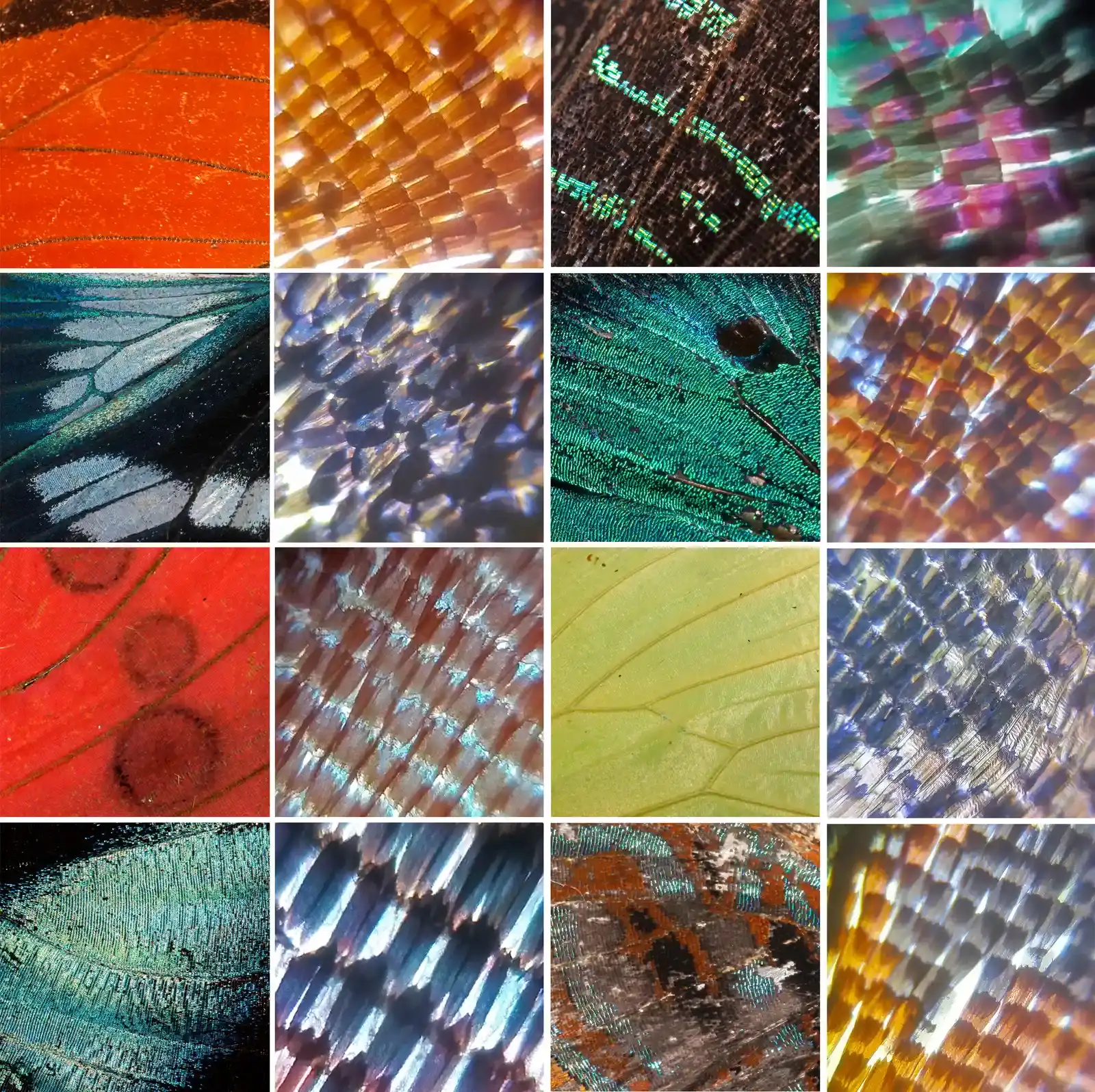
Meanwhile, the shimmering blues of morpho butterflies and some bird feathers are not due to pigments but to nanoscale structures that bend and scatter light. This structural color has inspired screens, security features, and paints that reflect vivid hues without relying on chemical dyes that can fade or pollute. Researchers are experimenting with butterfly-inspired coatings for cars and buildings that could reflect heat more efficiently or change color with angle, all using physical structure instead of added chemicals. These -derived textures show up everywhere once you start looking: the back of your credit card, the anti-counterfeiting strip on a banknote, or the oddly slick feel of a “performance” fabric. From ocean predators to forest insects, surface design is quietly becoming one of ’s most copied tricks.
Why It Matters: Biomimicry as a Different Kind of Innovation Engine
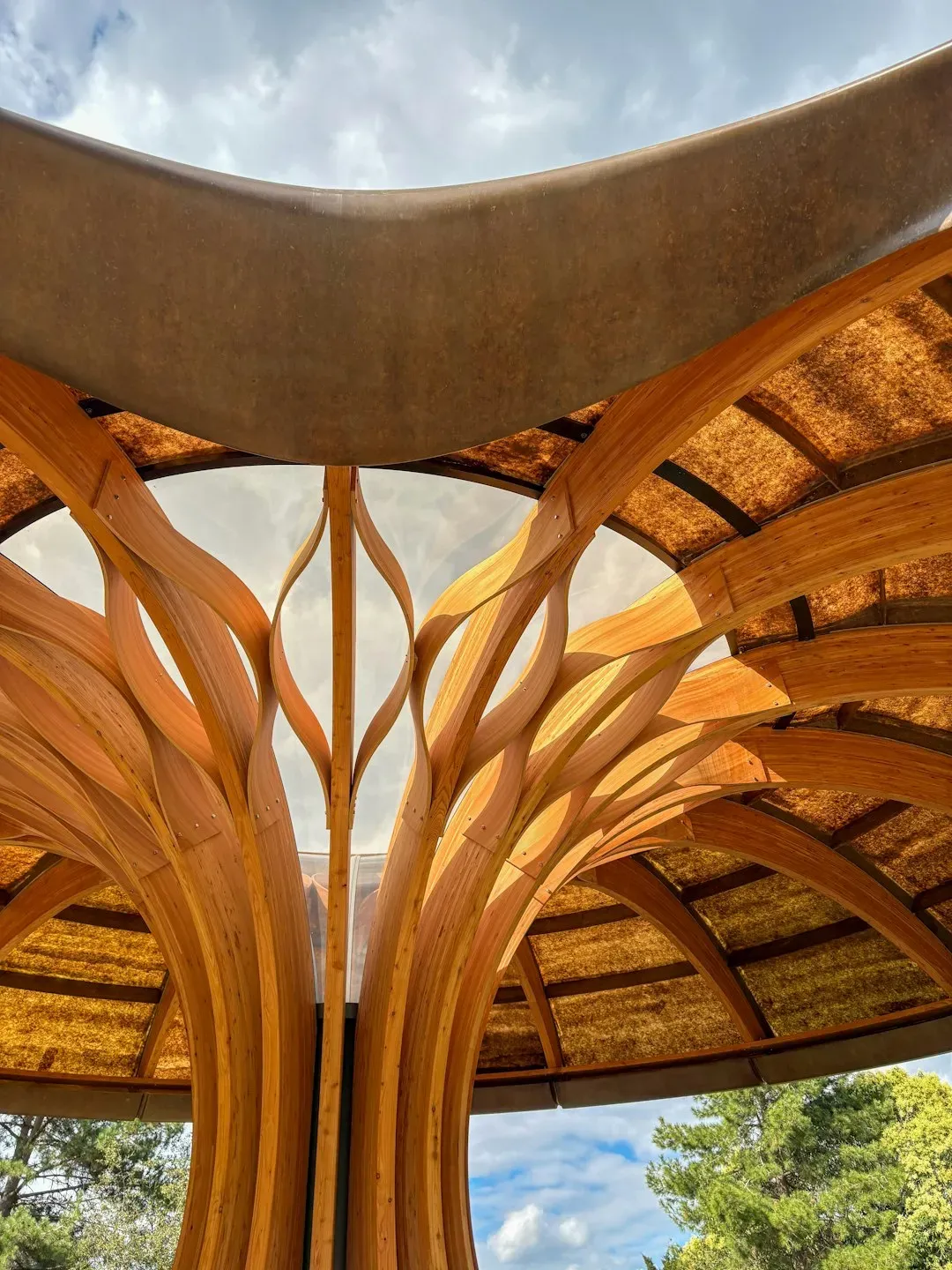
At first glance, these stories sound like clever anecdotes about creative engineers spotting patterns in the wild. But step back, and a deeper pattern emerges: offers not just individual solutions but a fundamentally different way of approaching design. Instead of forcing materials to obey through brute force and energy, biomimicry nudges us to work with existing physics and chemistry, often at micro or nano scales. That tends to produce technologies that are more energy efficient, lower in waste, and surprisingly resilient, because they echo strategies refined over countless generations of natural selection.
Compared with traditional trial-and-error engineering, starting with biology reframes the questions we ask. Instead of “How can we build a stronger glue?” we might ask “How does a gecko climb without glue?” or “How does a seed hitch a ride without motors or fuel?” Those questions open doors to designs that are not obvious from human experience alone. On a broader level, embracing as mentor pushes science and industry to value biodiversity as a library of ideas rather than just a backdrop or resource mine. Losing a species then becomes not only an ecological tragedy but also the quiet deletion of a chapter from the world’s greatest engineering manual.
The Future Landscape: From Novel Gadgets to -Integrated Cities
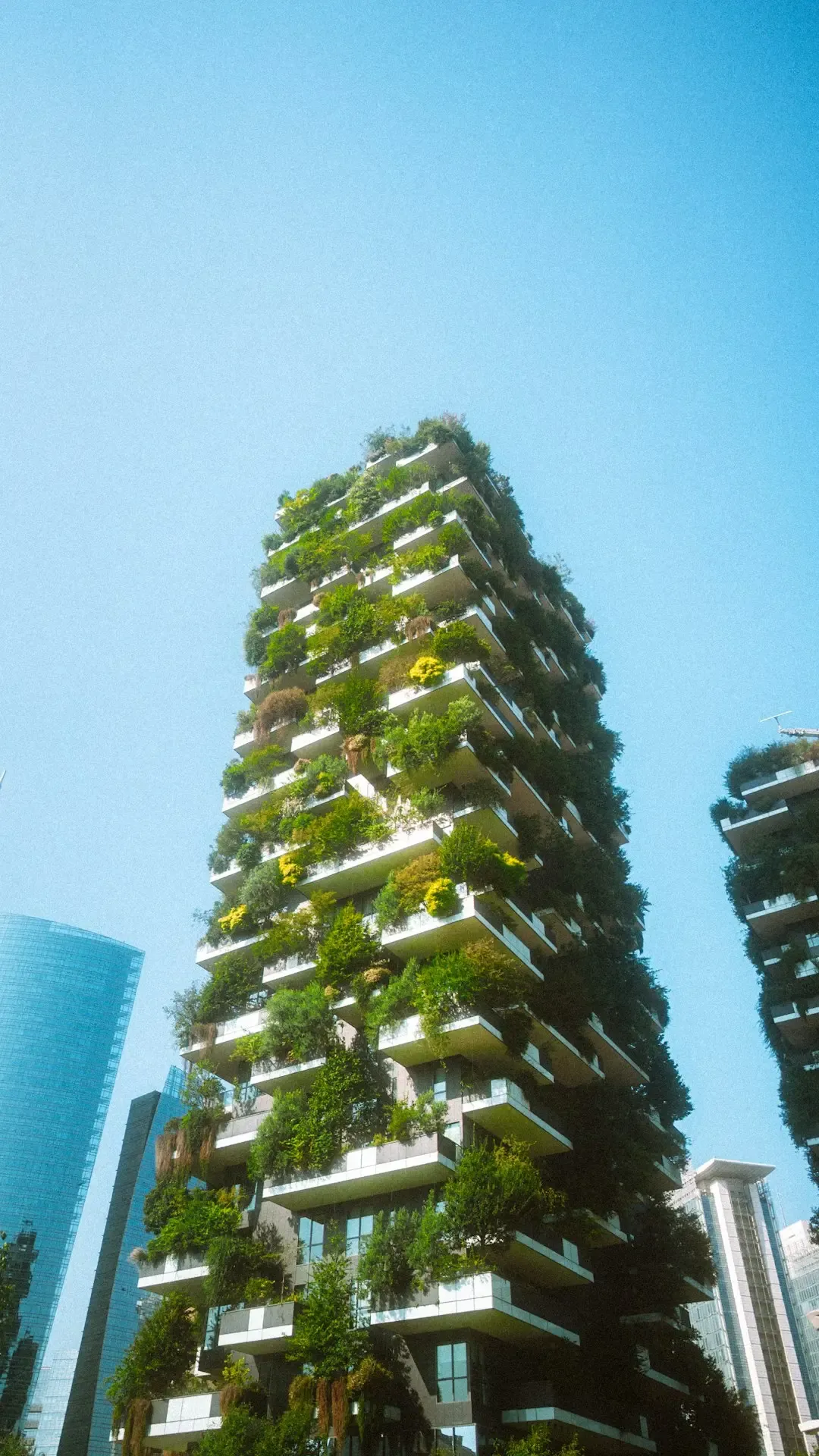
Looking ahead, the most radical impact of -inspired design may not be in eye-catching gadgets but in how entire systems operate. Urban planners are already testing “sponge city” concepts that mimic forests and wetlands, using permeable pavements and green roofs to absorb stormwater instead of just shunting it into drains. Material scientists are exploring spider silk–inspired fibers that could deliver high strength with low environmental impact, and coral reef–like structures for coastal defenses that grow and adapt rather than crumble. Some startups are developing enzyme-based plastics that break down like natural leaf litter, guided by how fungi and bacteria recycle organic matter.
There are real challenges: translating delicate biological structures into mass-produced, affordable products is not easy, and testing durability in messy real-world conditions takes time. Intellectual property questions also arise when the “inventor” is a bird, insect, or plant and the human contribution lies in translation and manufacturing. Yet the potential upside is enormous: buildings that regulate their own temperatures like termite mounds, machines that move through water and air with the grace of fish and birds, and infrastructure that heals itself like bone. If we take biomimicry seriously, our cities in a few decades could feel less like concrete fortresses and more like living, breathing ecosystems we happen to inhabit.
How You Can Engage: Seeing the Wild Ideas Behind the Everyday
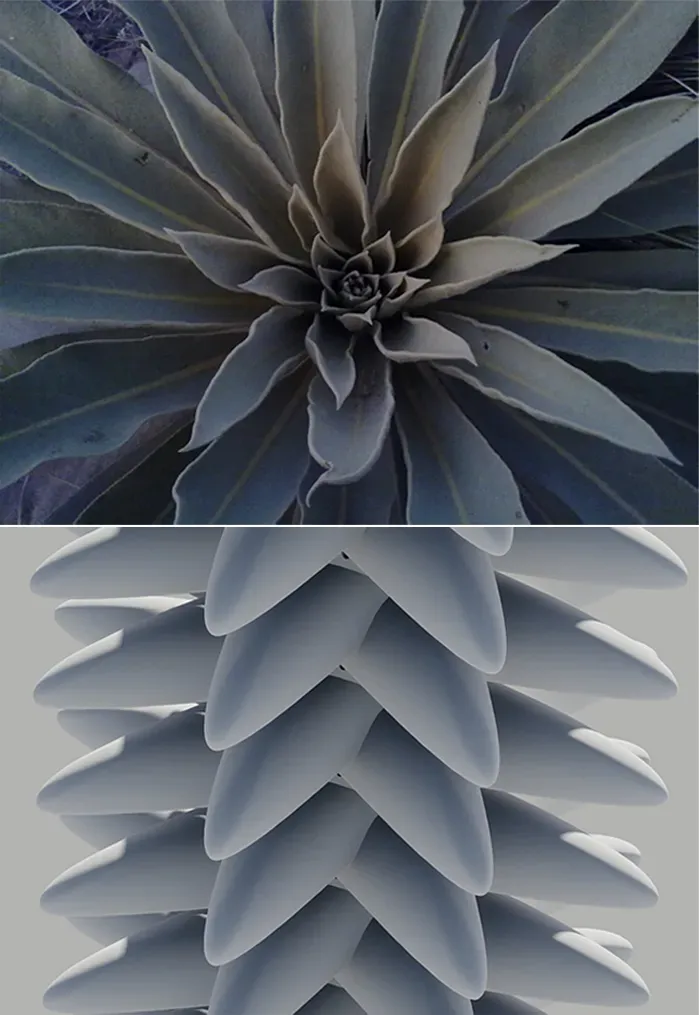
Biomimicry might seem like something that happens far away in research labs and design studios, but ordinary choices help steer which ideas take off. When you choose long-lasting, repairable products over cheap disposables, you are indirectly favoring the kind of efficient, resilient design excels at. Reading about and supporting conservation projects means more habitats protected, and with them more species and strategies that scientists can learn from in the future. Even just paying attention – asking what natural pattern a product might be copying – changes how you relate to both technology and the living world.
- Look up one -inspired product you already own, like a rain jacket, sports gear, or cleaning tool, and learn what organism it mimics.
- Support local or national conservation efforts that preserve habitats, since every ecosystem is a potential library of design ideas.
- Encourage schools and community centers to host talks or exhibits on biomimicry, so kids grow up seeing as a teacher, not just scenery.
The next time a burr sticks to your sock or a raindrop rolls down a window in a perfect bead, treat it as a tiny design lesson. Somewhere, an engineer may already be turning that same observation into the next generation of quiet trains, cleaner buildings, or smarter gadgets. Paying attention is the first step toward taking part in that unfolding conversation between wild places and human invention.
Suhail Ahmed is a passionate digital professional and nature enthusiast with over 8 years of experience in content strategy, SEO, web development, and digital operations. Alongside his freelance journey, Suhail actively contributes to nature and wildlife platforms like Discover Wildlife, where he channels his curiosity for the planet into engaging, educational storytelling.
With a strong background in managing digital ecosystems — from ecommerce stores and WordPress websites to social media and automation — Suhail merges technical precision with creative insight. His content reflects a rare balance: SEO-friendly yet deeply human, data-informed yet emotionally resonant.
Driven by a love for discovery and storytelling, Suhail believes in using digital platforms to amplify causes that matter — especially those protecting Earth’s biodiversity and inspiring sustainable living. Whether he’s managing online projects or crafting wildlife content, his goal remains the same: to inform, inspire, and leave a positive digital footprint.


