
You would think that by 2026, with satellites orbiting the Earth, AI-powered supercomputers crunching data around the clock, and science advancing at a pace our grandparents could never have dreamed of, we would have figured out most of nature’s big secrets. Think again. Our planet and the cosmos around it are still pulling off tricks that leave the world’s brightest scientists completely speechless.
From storm systems that seem to rage on forever to walls of ocean water appearing out of absolute nowhere, these phenomena are not myths or folklore. They are real, they are documented, and honestly, the fact that we still cannot fully explain them is both humbling and wildly exciting. Let’s dive in.
1. The Catatumbo Lightning: The Storm That Never Stops
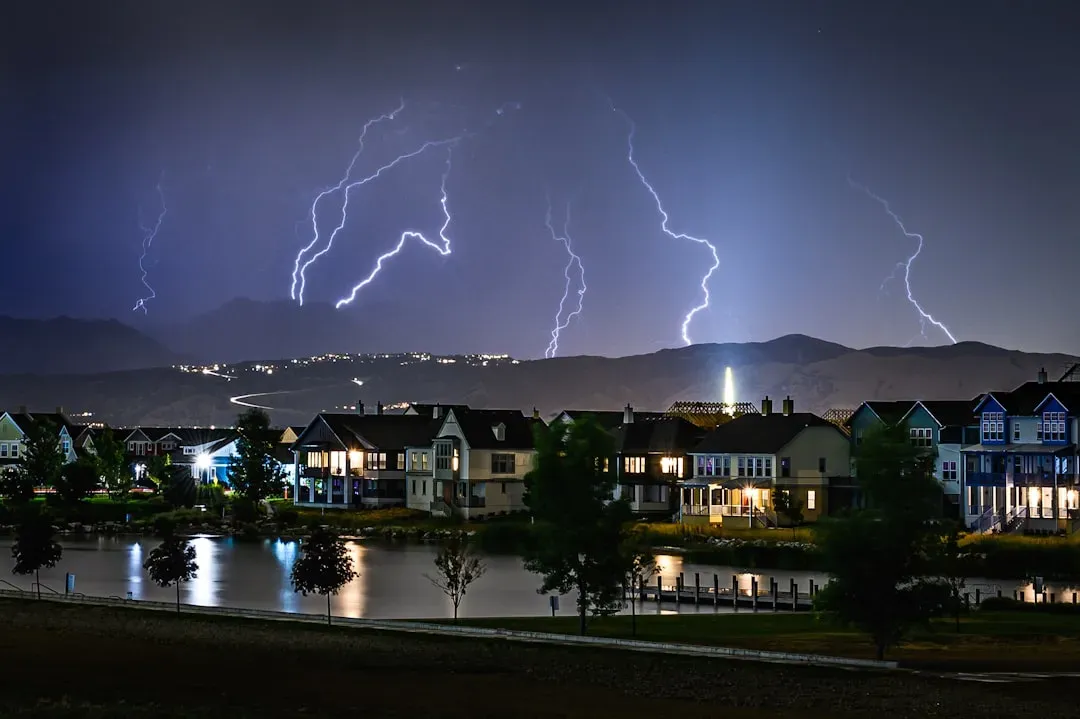
Imagine standing on the shore of a lake in Venezuela and watching the sky above you explode in light, night after night after night, for most of the year. That is not an exaggeration. The lightning is so consistent, occurring roughly 300 days a year at the same time and in the same area where the Catatumbo River meets Lake Maracaibo, that it has earned its own proper name: Catatumbo Lightning. Usually beginning about an hour after sunset, it strikes up to 28 times per minute for nine hours straight, and can be so continuous that it temporarily turns night into day.
With over 1.2 million strikes occurring each year, Lake Maracaibo sees more lightning than any other place in the world, at 250 flashes per square kilometer per year. Scientists generally understand the topography that feeds the storms, where warm Caribbean air gets trapped by surrounding mountain ridges and collides with cool Andean winds. Yet here is the thing that keeps researchers scratching their heads: the lightning disappeared entirely for three months in 2010 due to drought, leading to fears it had disappeared forever, yet it returned, and a 2016 study found it is possible to forecast Catatumbo Lightning months in advance, something which is impossible to do anywhere else in the world. That level of predictability in an otherwise chaotic natural system is, to put it plainly, extraordinary.
2. Rogue Waves: Monster Walls of Water from Nowhere

Rogue, freak, or killer waves have been part of marine folklore for centuries, but have only been accepted as real by scientists over the past few decades. Sailors who reported these terrifying walls of water were once dismissed as exaggerating. Then, on New Year’s Day in 1995, everything changed. A laser attached to the Draupner gas platform in the North Sea measured the height of the waves. Most were big at the time due to a weather system that had just moved through, the tallest around 39 feet high. But one measured a whopping 84 feet from trough to crest.
Rogues are those waves greater than twice the size of surrounding waves, very unpredictable, and often coming unexpectedly from directions other than prevailing wind and waves. More recently, in November 2020, off the coast of Ucluelet, British Columbia, a rogue wave appeared that shook the very foundations of ocean science. The wave soared an astonishing 58 feet above sea level and was nearly three times the height of the surrounding waves. What causes rogue waves to form remains a contentious topic, with theories ranging from constructive interference to ocean current dynamics, and their unpredictable nature poses a significant challenge to marine navigation and safety.
3. Earthquake Lights: Glows That Should Not Exist
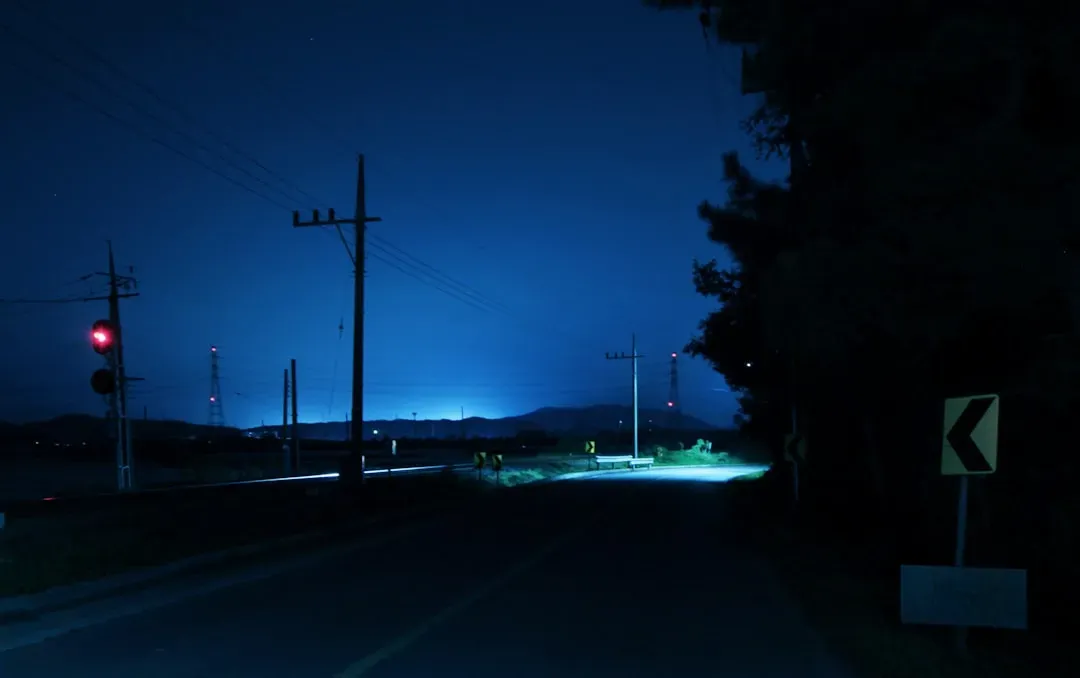
Here is something that sounds like it belongs in a science fiction novel. These mysterious luminescent phenomena have been reported to sometimes occur before or during an earthquake, typically appearing as bright flashes in the sky, and in some cases have been observed weeks ahead of the actual earthquakes. Think about that for a second. Lights in the sky, appearing sometimes weeks before a major earthquake, giving a kind of eerie, unsolicited warning that something massive is about to happen underground. That should not be possible according to our standard models of geology.
For centuries, these lights have confounded scientists, but one possible explanation is that they are caused by earthquake-induced stress, which releases electrical charges from certain types of rocks. These charges then travel up into the atmosphere where they interact with the air and produce light. A similar explanation has also been offered for the equally mysterious lightning associated with volcanic eruptions. Regardless, the debate surrounding these occurrences still remains charged, with some researchers even questioning their actual existence. Honest uncertainty is still the best answer science can give on this one.
4. The Hessdalen Lights: Norway’s Unexplained Glowing Orbs
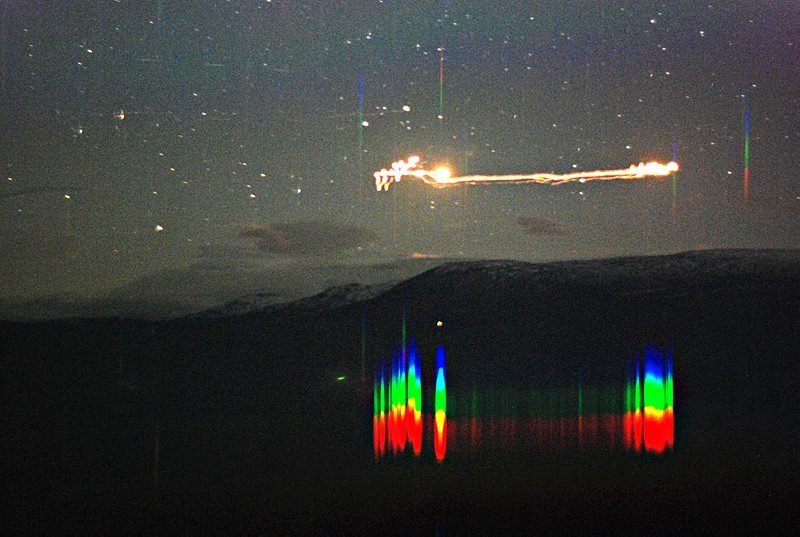
In the remote valley of Hessdalen, Norway, mysterious lights dance across the sky, captivating locals and scientists alike. Known as the Hessdalen Lights, these unexplained phenomena manifest as floating orbs of light, changing colors and intensity, and unlike other light anomalies, they are relatively frequent, with sightings recorded several times a year. Scientists from across the globe have set up monitoring equipment, launched research projects, and spent years trying to pin down an explanation. So far? No luck.
One theory suggests they are caused by natural gas pockets in the valley that ignite upon contact with air, creating glowing orbs. Another theory proposes the lights might be a product of piezoelectric effects, where pressure on certain crystals generates electricity. Additionally, some researchers speculate that the valley’s unique geological formations might influence the Earth’s magnetic field, creating conditions for unusual electrical discharges responsible for the lights. However, none of these theories have been definitively proven, leaving the Hessdalen Lights a captivating mystery. I think what makes this one so intriguing is precisely how regular and observable the lights are, yet science still cannot land on a single explanation.
5. The Boiling River of the Amazon: Heat Without a Source
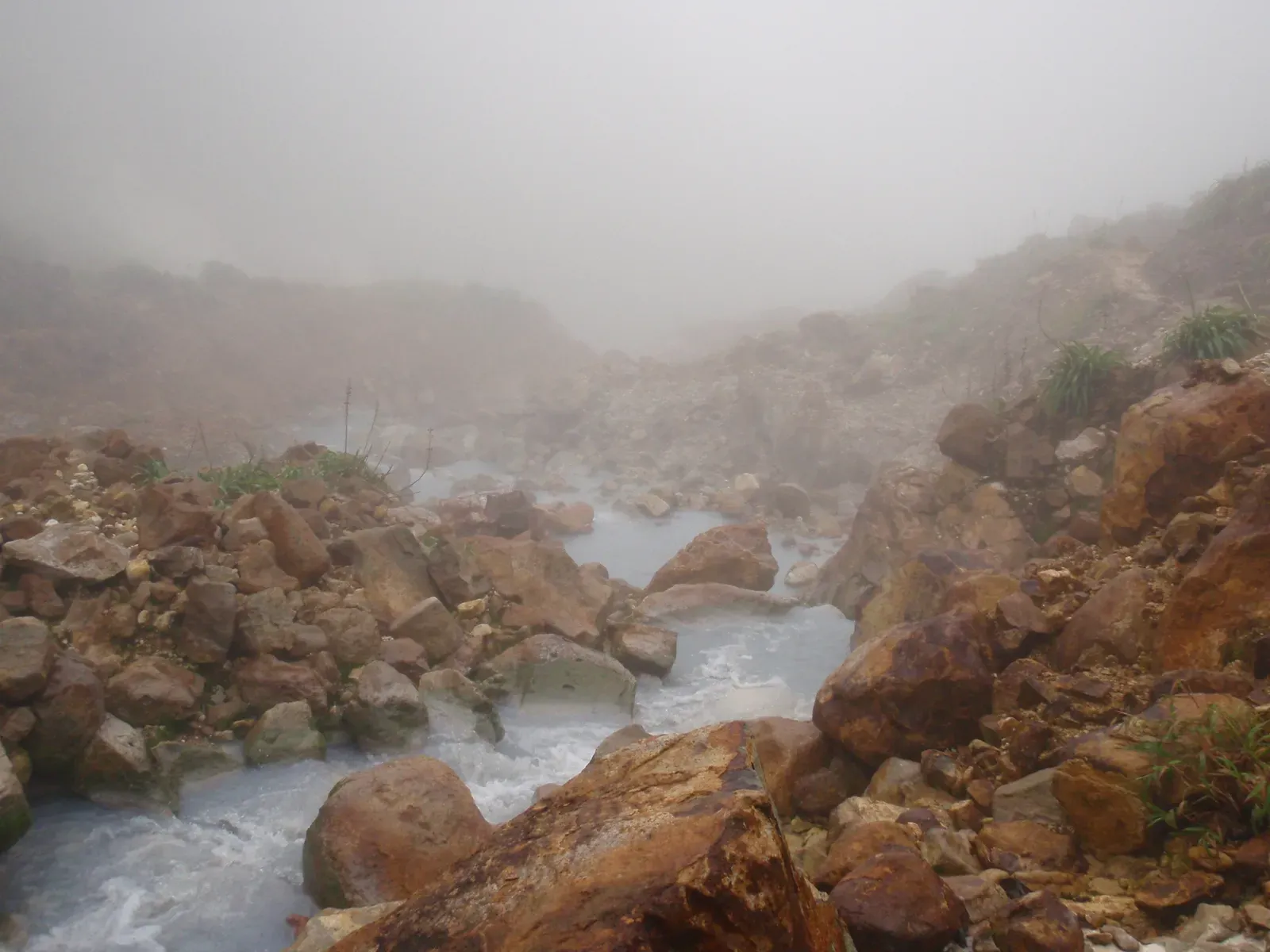
Deep in the Peruvian Amazon lies a natural wonder that defies the ordinary: a boiling river. Known locally as Shanay-timpishka, which means “boiled with the heat of the sun,” this river heats up to temperatures as high as 204.8 degrees Fahrenheit. Stretching for nearly four miles, it is not volcanic activity but the geothermal heat from deep beneath the Earth’s crust that warms its waters. That distinction matters enormously. Geothermal features of this type normally only appear near active volcanic zones. This river is nowhere near one.
The discovery of the boiling river was met with skepticism by scientists until it was thoroughly documented by geoscientist Andrés Ruzo. The water is so hot that it can cook any animal that falls into it, a characteristic that has woven the river into local mythology as a place of power and healing. The bigger puzzle here is the sheer scale and intensity of the heat source, which remains poorly understood. Think of it like finding a kitchen oven buried in the middle of a rainforest with no wiring going in and no obvious power supply. Something is generating enormous heat down there, and we are not quite sure what.
6. Ball Lightning: The Floating Fireball Nobody Can Explain
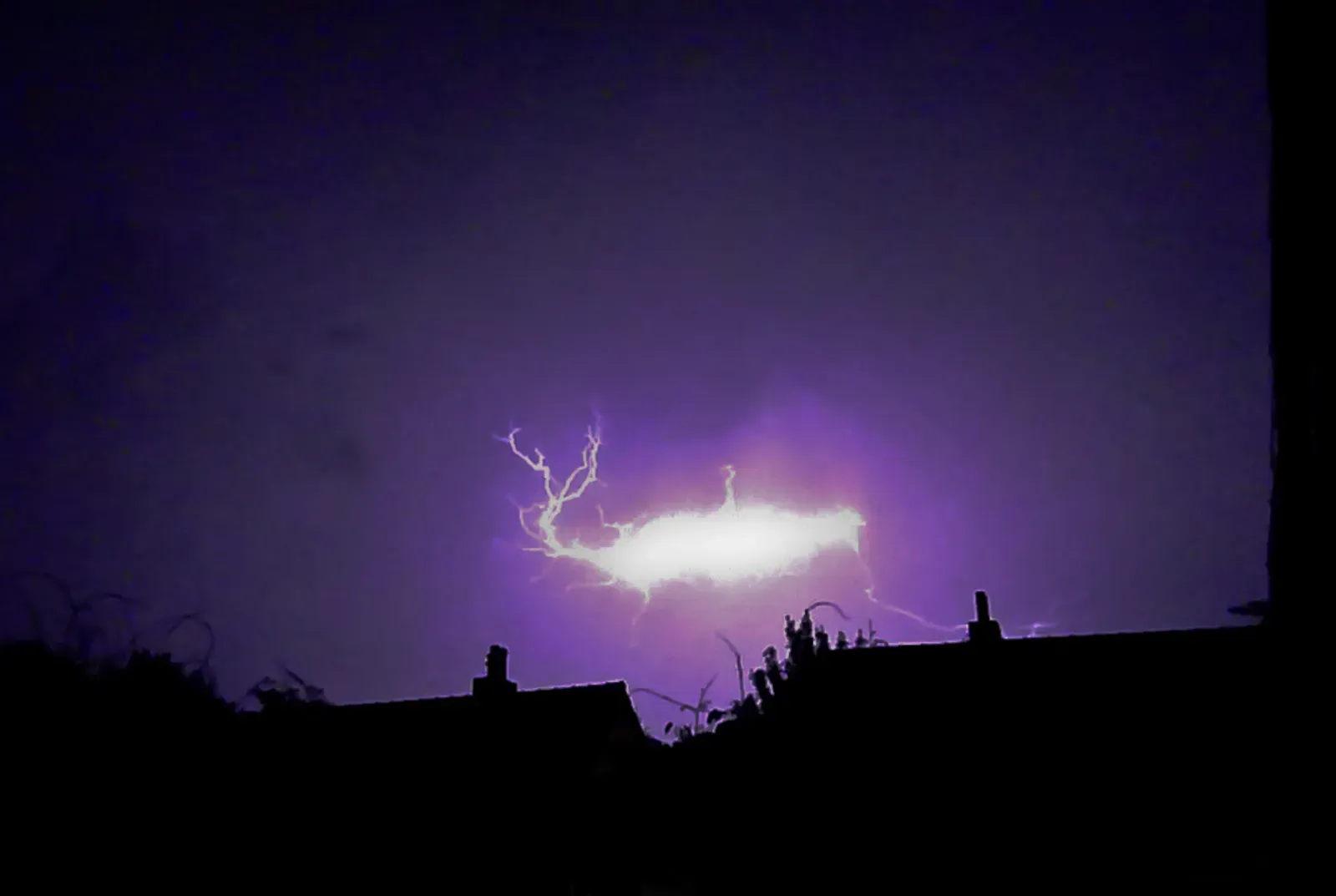
Imagine a calm evening suddenly interrupted by a glowing sphere of electricity floating eerily across the sky. That is ball lightning, an elusive weather phenomenon that has puzzled scientists for centuries. Witnesses describe it as a floating orb of light, varying in size from a golf ball to a beach ball, sometimes accompanied by a hissing noise. There are thousands of eyewitness accounts dating back hundreds of years. People have described it entering buildings through closed windows and moving silently through rooms. It sounds almost paranormal. Yet multiple scientists have witnessed it firsthand.
Unlike the familiar forked lightning, ball lightning appears as a glowing sphere of plasma, ranging from the size of a grapefruit to a basketball. These erratic fireballs can travel through the air, sometimes even entering buildings, and can persist for much longer than regular lightning, from fractions of a second to several seconds. Unlike a fleeting flash, ball lightning’s presence allows witnesses to describe its behavior in detail, further fueling the mystery. According to a study published in the Nature journal, ball lightning has been sporadically documented throughout history, yet remains scientifically unexplained. That is a remarkable admission for something so widely seen.
7. Tabby’s Star: The Star That Dims Without Reason
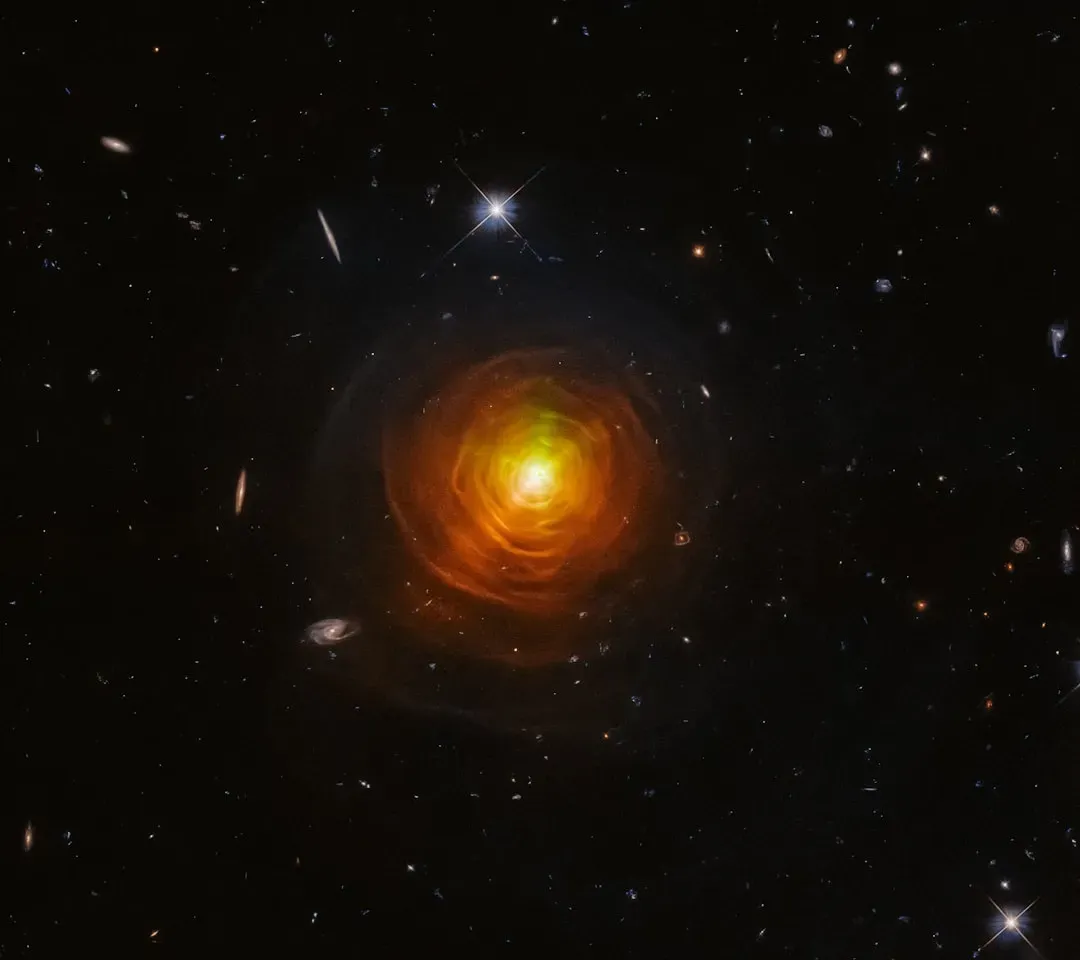
Let’s be real, outer space is full of weird things, but Tabby’s Star might be the strangest of all. Located 1,470 light-years away in the constellation Cygnus, this F-type star exhibits the most bizarre behavior astronomers have ever recorded. Unlike typical planetary transits that block less than one percent of starlight, Tabby’s Star dims by up to 22 percent in completely unpredictable patterns. The erratic brightness drops lack any consistent timing, and some evidence suggests the star has been gradually dimming over the past century.
KIC 8462852, nicknamed Tabby’s Star after its discoverer Tabetha Boyajian, is one of over 150,000 stars observed by the Kepler space telescope. What is so unique about Tabby’s Star is how often and drastically its light dips. Stars are usually observed for dips in light that indicate planets are passing in front of them. Tabby’s Star is so strange because its light drops by up to 20 percent at a time, a massive amount compared to other stars we have observed. Explanations for this strange light activity vary greatly, from large clusters of planets passing by, which is very unlikely, to great buildups of dust and debris, not normal for a star of Tabby’s age, to aliens, the most interesting theory of all. It is hard to say for sure which is correct, because none of them fits perfectly.
8. Bioluminescent Waves: Oceans That Glow in the Dark
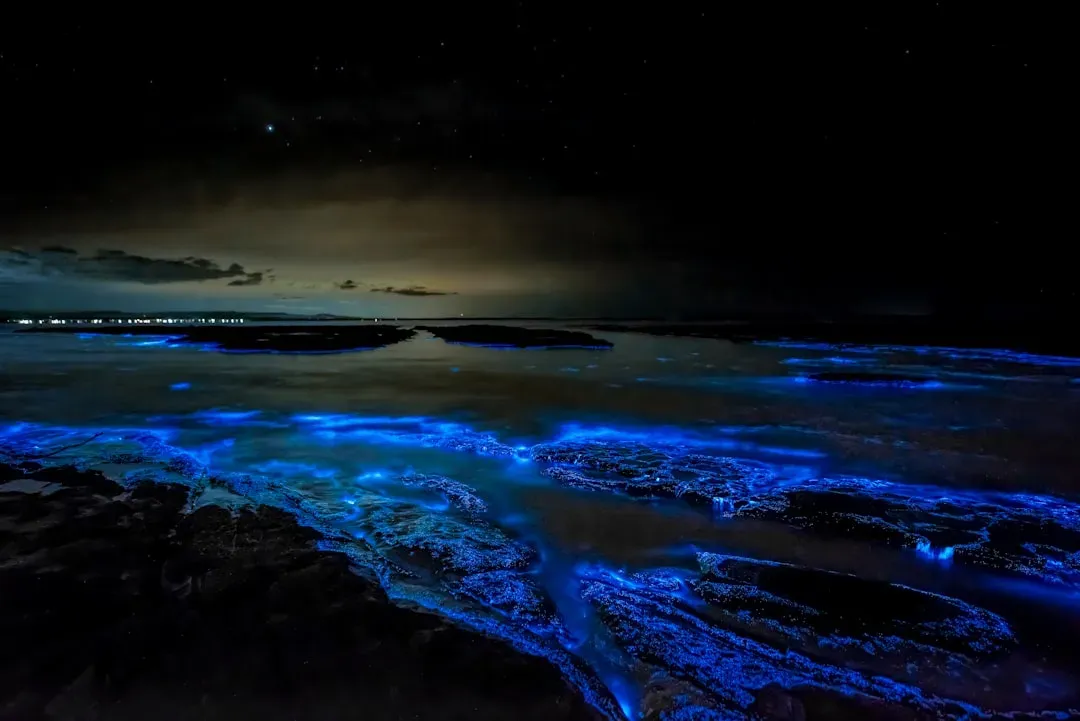
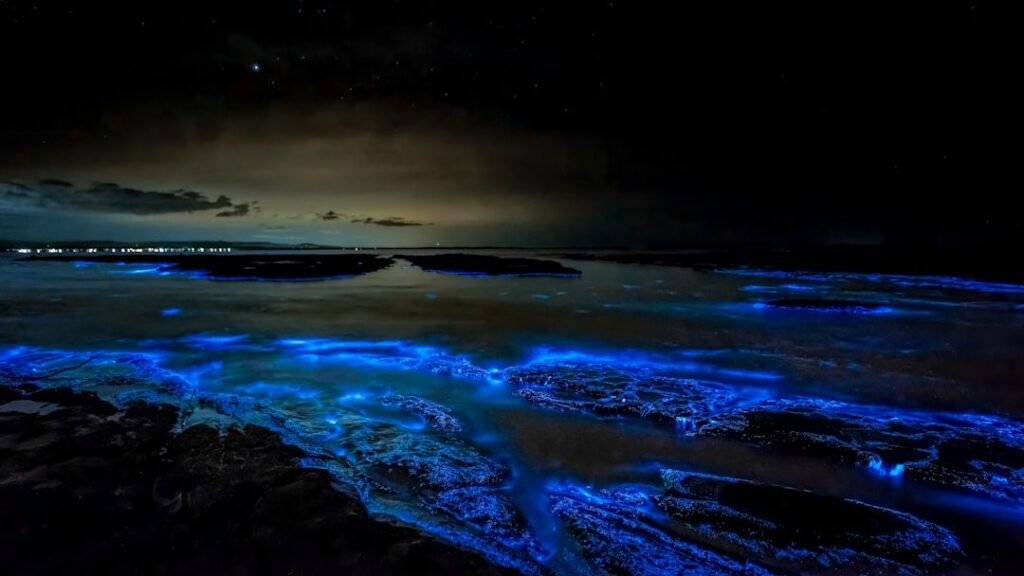
In the serene nights of the Maldives, the shores become a canvas for one of the most enchanting natural phenomena: bioluminescent waves. These glowing waves, resembling a starry sky beneath the ocean’s surface, are the result of bioluminescent phytoplankton, microscopic marine organisms that emit light when disturbed by ocean waves or swimmers. The phenomenon transforms the beaches into a mesmerizing spectacle of sparkling blue lights, creating an otherworldly experience for spectators. Standing on those shores, it genuinely looks like the ocean has swallowed a galaxy.
The light these organisms produce is a form of chemiluminescence, which occurs through a biochemical reaction within the phytoplankton. When agitated by motion, they emit a dazzling blue glow, which is thought to serve as a defense mechanism against predators, confusing or deterring them from making a meal of the light-emitting plankton. While scientists broadly understand the biochemical reaction behind bioluminescence, the full ecological picture, including why certain blooms are so dramatically visible and why the phenomenon varies so wildly across different coastlines and seasons, still holds many open questions. This natural phenomenon is caused by phytoplankton in the water that gives off light when agitated by the movement of waves and currents, and these microorganisms can be seen at beaches in the Maldives, Puerto Rico, the Everglades, and many more places around the world.
Conclusion: The Beauty of Not Knowing
There is something deeply reassuring about the fact that nature still has secrets. In a world where it often feels like everything has been mapped, explained, and categorized, these eight phenomena are a powerful reminder that we are still, in many ways, standing at the edge of the unknown.
Whether it is a storm that has raged for centuries, a wall of water that appears from a calm sea, or a star that dims without explanation, each of these mysteries pushes science forward in ways that neat and tidy answers never could. The gaps in our knowledge are not failures. They are invitations.
Perhaps the most exciting discoveries of the next century will not come from outer space or from deep inside a laboratory. They might come from standing on a Venezuelan shoreline at midnight, watching the sky erupt in endless light, and finally asking the right question. Which of these eight phenomena do you find most baffling? Drop your thoughts in the comments below.