
Every so often, science advances not with a neat, carefully planned study, but with an experiment so strange it sounds like the setup for a joke. These are the moments when researchers lock themselves in dark rooms, chase ghostly particles, strap volunteers into unsettling devices, or deliberately break the rules of common sense just to see what cracks open underneath. This article dives into eight such experiments that began as unsettling curiosities and ended up rewriting the rules of space, time, matter, and even our own minds. Some of them were accidents, some were controversial, and a few were dismissed as nonsense before being proven right. All of them remind us that reality is much weirder – and far less stable – than it looks from the comfort of everyday life.
Einstein’s “Spooky” Challenge: The EPR Paradox and Quantum Entanglement

In the mid‑1930s, Albert Einstein and his colleagues Boris Podolsky and Nathan Rosen tried to show that quantum mechanics had to be incomplete by proposing what became known as the EPR paradox. They imagined a pair of particles created together and then separated by a huge distance, yet somehow still linked so that measuring one instantly determined the state of the other. To Einstein, this implied an impossible “spooky action at a distance” that seemed to violate the speed of light limit and basic ideas of locality. He believed the thought experiment would force physicists to accept that there were hidden variables underlying quantum behavior that the theory had missed.
What makes this bizarre scenario so important is that later physicists figured out how to actually test it in real experiments. In the 1960s, John Bell translated the paradox into a concrete inequality that could be checked using entangled photons, and from the 1970s onward, labs around the world began to do exactly that. Time after time, the results showed that quantum mechanics’ strange predictions were right and that no simple local hidden‑variable picture could explain the data. Today, the same “spookiness” that Einstein disliked is being harnessed to build quantum computers and ultra‑secure communication systems. The experiment that started as a philosophical challenge has become one of the foundations of a new technology industry.
The Double‑Slit Experiment: When Particles Refuse to Choose
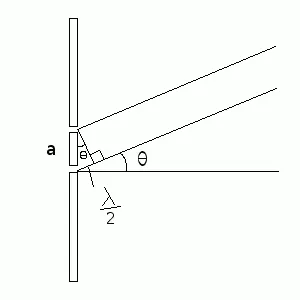
If you want one experiment that punches a hole straight through common sense, the double‑slit experiment is it. When light or electrons are fired at a barrier with two narrow slits and then recorded on a screen behind it, they form an interference pattern, like waves overlapping in a pond. That makes some sense if you think of them as smeared‑out waves, but the twist comes when you send particles through one at a time. Even then, over time, a wave‑like interference pattern appears, as if each individual particle somehow traveled through both slits at once and interfered with itself.
Things get even stranger when you try to “watch” which slit the particle actually goes through. The moment you add a detector to check its path, the interference pattern collapses and the particles behave like tiny bullets choosing one slit or the other. It is almost as if the act of measurement reaches back and changes the way the particle behaves, forcing it to commit to a single history. This deeply unsettling result has driven decades of debate about whether reality exists in a definite state before we look, or whether probability waves are more fundamental than solid objects. Modern versions of the experiment now use single photons, atoms, even complex molecules, but the basic mystery stubbornly remains: the universe, at its smallest scales, refuses to behave like anything our everyday intuition prepares us for.
Schrödinger’s Cat and Real‑World Quantum Zombies
Erwin Schrödinger originally described his famous cat as a kind of dark joke, poking fun at how absurd quantum rules sound when scaled up to everyday life. In his scenario, a cat in a sealed box is linked to a quantum event, like the decay of a radioactive atom, such that until the box is opened the cat must be treated as both alive and dead. The point was to highlight a paradox, not to suggest anyone should try this with real animals. But over the past few decades, experimental physicists have essentially tried to build the closest thing they can to a Schrödinger’s cat – just with photons, ions, or superconducting circuits instead of fur and whiskers.
By carefully isolating tiny systems from their environment, researchers have created “cat states” where a single system is in a superposition of macroscopically distinct configurations at the same time. Superconducting loops can hold currents flowing clockwise and counterclockwise simultaneously, while tiny mechanical resonators can vibrate in multiple patterns at once. These experiments show that quantum weirdness does not magically vanish at larger scales; it is just incredibly fragile and easy to destroy through interaction with the environment, a process known as decoherence. The work has shifted Schrödinger’s cat from an armchair paradox into a working lab tool for quantum computing and precision measurements. The line between the microscopic and the macroscopic, once thought to be sharp, now looks more like a fog bank we are slowly learning to navigate.
Flipping the Brain’s Map of the World: Upside‑Down Vision Goggles
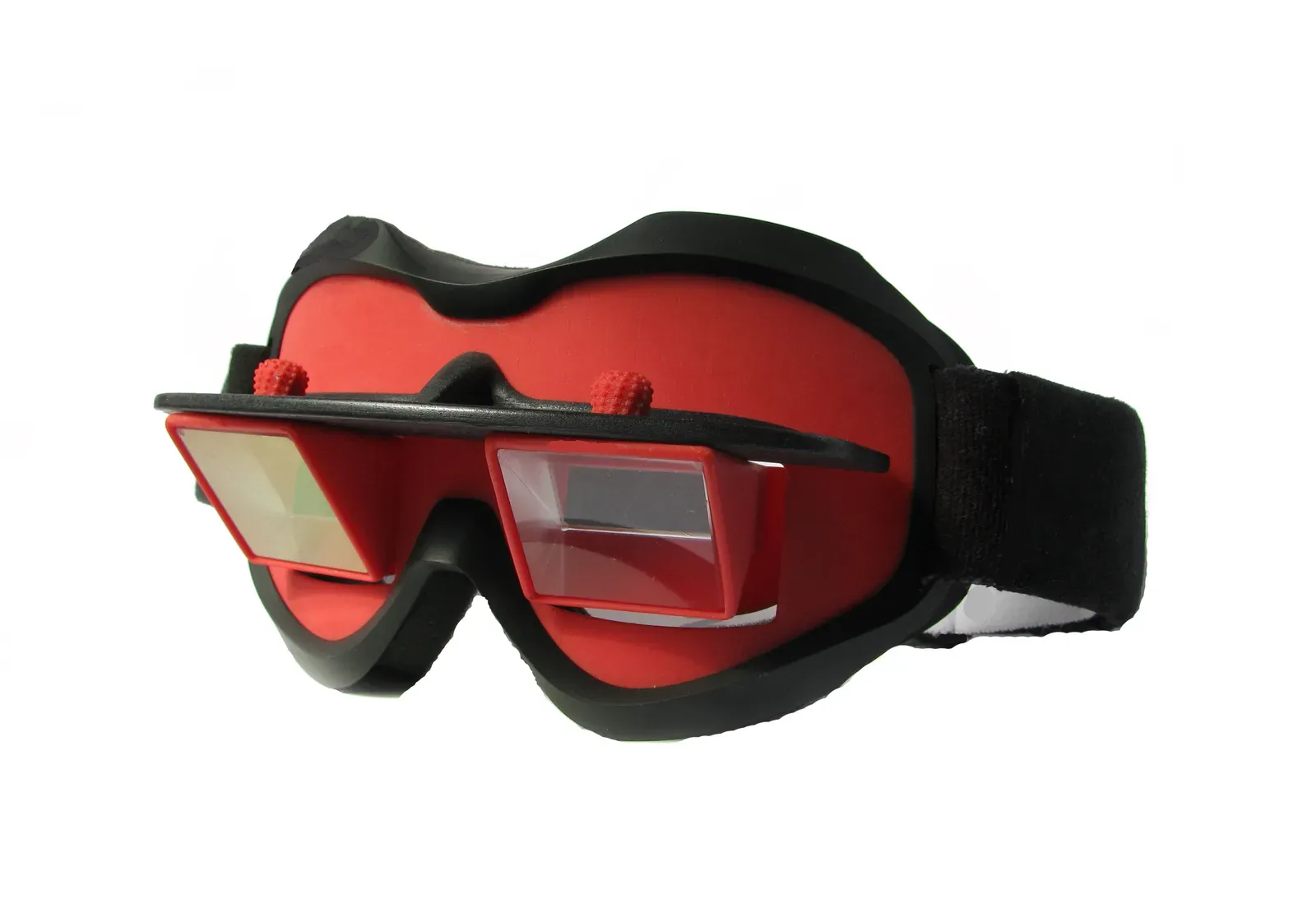
One of the strangest experiments in psychology started with a simple, disorienting idea: what if you forced people to live with the world literally turned upside down? In the mid‑twentieth century, researchers gave volunteers special goggles or prism glasses that inverted their visual field so that up appeared down and left appeared right. At first, people wearing them stumbled, misreached, and felt profoundly nauseated, as if reality had suddenly betrayed them. Everyday tasks like pouring water or walking down stairs became bizarrely difficult and sometimes dangerous.
The shock came a few days in, when many volunteers reported that the world had “flipped back” and once again looked normal, even though the glasses were still in place. Their brains had reorganized visual and motor processing to reinterpret the distorted information as a stable, coherent scene. When the glasses were finally removed, people often went through another period of confusion while their brains recalibrated yet again. These experiments revealed how much of what we call “seeing reality” is actually the brain’s best guess, continuously remapped from messy sensory input. That same plasticity is now being used in vision therapy, virtual reality training, and rehabilitation after stroke or injury, where carefully controlled distortions help retrain damaged systems.
The Placebo Switcheroo: Sham Surgeries That Change Lives

It is one thing to show that a sugar pill can ease pain because someone believes it will help; it is quite another to show that fake surgery can produce real relief. In several controversial trials, especially in orthopedics and neurology, patients were randomly assigned either to a genuine operation or to a sham procedure where they were anesthetized and cut, but the surgeon did not actually perform the intended intervention. Ethically, this is only allowed in very tightly controlled circumstances where the benefit of knowing whether a procedure works outweighs the risks. The results have sometimes been shocking: in a few high‑profile studies, patients who received the sham surgery improved just as much as those who got the real thing.
These findings have forced medicine to confront how powerful expectation, ritual, and context can be in shaping outcomes. They suggest that in some cases, what heals is not just the mechanical fix, but the entire experience of being treated – right down to the smell of the operating room and the confidence of the surgeon’s voice. On a practical level, sham‑controlled trials have led to the abandonment or rethinking of certain widely used but ineffective procedures, saving patients from unnecessary risks and healthcare systems from enormous costs. On a deeper level, they blur the line between mind and body, reminding us that beliefs and narratives can trigger measurable changes in pain pathways, immune responses, and even motor function. For all our emphasis on high‑tech interventions, part of medicine’s power still lies in the strange alchemy between expectation and physiology.
Time Travel for Particles: Neutrino Anomalies and the Speed of Light Scare
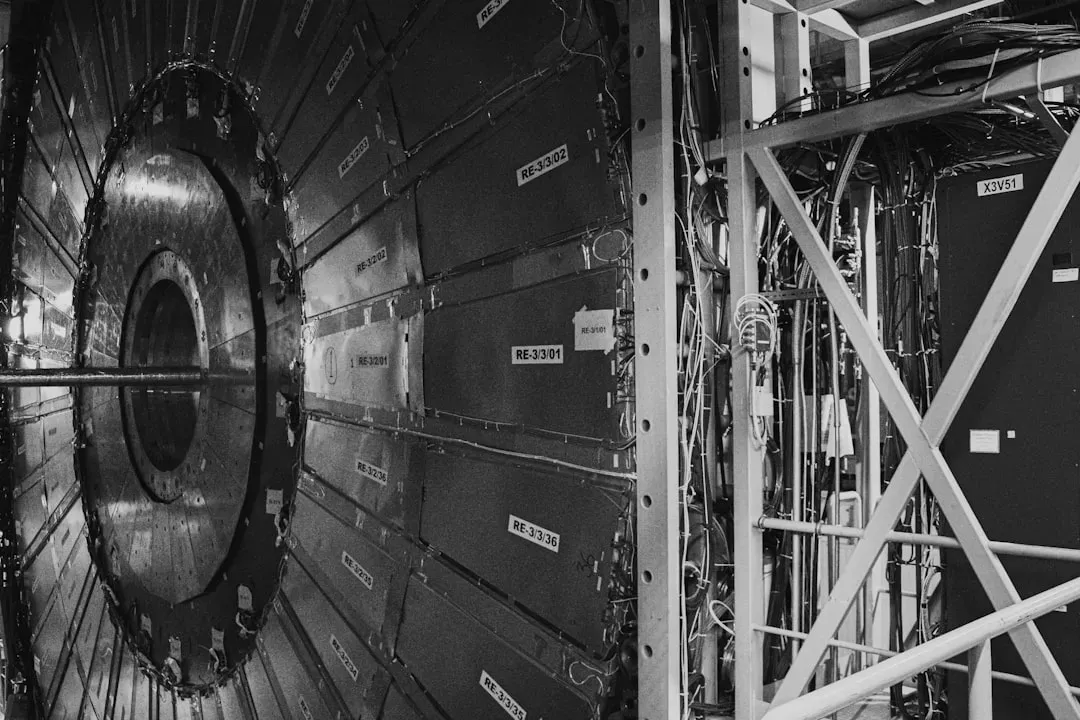
For a brief, chaotic moment in the early 2010s, it looked as if a group of physicists in Italy might have broken one of the most fundamental speed limits in the universe. The OPERA experiment, which fired beams of elusive neutrinos from CERN in Switzerland to a detector deep under Italy’s Gran Sasso mountain, reported that the particles appeared to be arriving slightly earlier than light would. The difference was tiny, but if true, it would have upended Einstein’s special relativity and opened the door to all sorts of sci‑fi scenarios, from time travel paradoxes to causality violations. The team, clearly uneasy, went public precisely because they could not find the error and wanted the world to help check.
As other labs rushed to replicate the result, the story took a humbler, almost mundane turn: the culprit turned out to be a faulty connection in the experiment’s timing system, essentially a loose cable. Once corrected, the neutrinos behaved as expected and stayed comfortably within the cosmic speed limit. On the surface, that sounds like an embarrassment, but it is also a textbook example of how science polices itself, especially when the claims are extraordinary. The whole episode pushed researchers to refine long‑baseline neutrino experiments and timing methods that are now being used for precision studies of neutrino masses and oscillations. Even though faster‑than‑light particles vanished, the scare left behind better tools and a clearer appreciation of how fragile world‑shaking claims really are.
Life in Extreme Slow Motion: Cryonics Experiments on Cells and Tissues
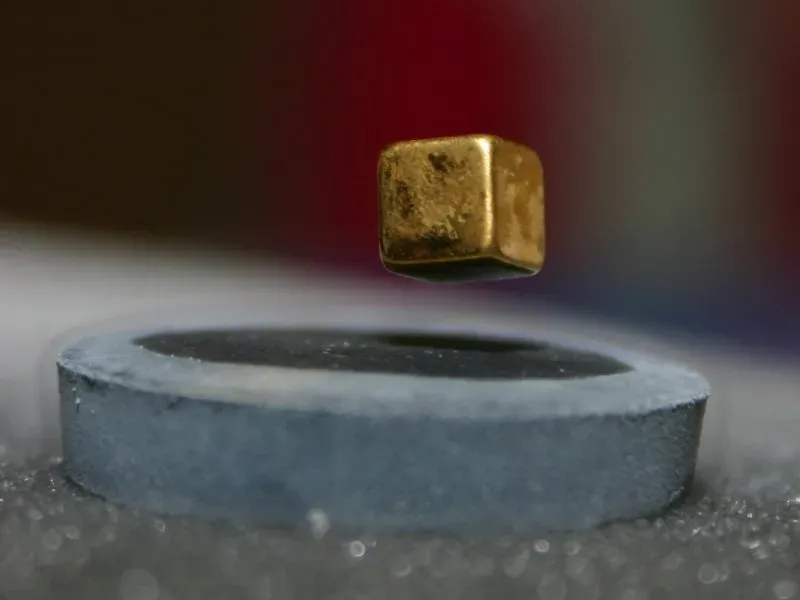
The idea of freezing life to cheat death sounds like something ripped from a pulp science‑fiction magazine, but serious cryobiology experiments have been quietly reshaping how we think about the boundary between alive and dead. Starting in the twentieth century, researchers learned how to cool sperm, eggs, and embryos to extremely low temperatures with the help of cryoprotective chemicals, then thaw them later with surprisingly good survival. The key turned out to be managing how water inside cells freezes, because uncontrolled ice crystals slice through delicate structures like microscopic knives. By tweaking cooling rates and solutions, scientists could shift from ice formation to a glass‑like state called vitrification, where tissues are suspended in an amorphous solid.
While full‑body cryonics for humans remains speculative and deeply controversial, pieces of the underlying science are now routine in fertility clinics, organ preservation research, and even conservation biology. Human embryos and eggs can be stored for years and then brought back to development, and experiments are pushing the limits of how long organs can be kept viable before transplant. Perhaps the strangest implication is that “dead or alive” is not always a simple on‑off switch; at certain temperatures and conditions, systems can be paused in a kind of limbo. That realization forces uncomfortable questions about identity, continuity, and whether future technologies might revive states we currently consider irreversible. Even if the dream of waking centuries in the future never materializes, the bizarre experiments behind it are quietly changing everyday medicine.
What These Experiments Really Did to Our Idea of “Reality”
Looked at together, these eight experiments did more than just produce odd data points; they carved away at comforting assumptions we did not realize we were leaning on. Quantum tests like the double‑slit and Bell‑style entanglement experiments attacked the idea that objects have definite properties independent of measurement and that influences cannot jump across space in ways our classical intuition forbids. Brain‑bending studies with inversion goggles and placebo surgeries showed that perception and healing are not simple readings of the world but active constructions, stitched together from expectation, context, and fragile neural maps. Even the neutrino timing scare and cryonics research forced us to reconsider supposedly firm borders – between sublight and superluminal speeds, between alive and dead, between error and discovery.
Compared to earlier centuries, when science often painted reality as a clockwork machine running on rigid laws, these results feel more like a funhouse mirror filled with probabilities, feedback loops, and negotiated boundaries. Modern interpretations in physics embrace nonlocal correlations and the primacy of information, while neuroscience leans into predictive processing models where the brain constantly guesses and corrects. Culturally, these weird findings have seeped into everything from movies and literature to debates about consciousness and free will. They have also made the practice of science itself more self‑aware, with stronger safeguards against self‑deception and a deeper respect for how our tools and questions shape what we see. Reality, in this view, is not less real, but far stranger, more relational, and more dependent on the ways we choose to interrogate it.
Staying Curious in a World This Strange
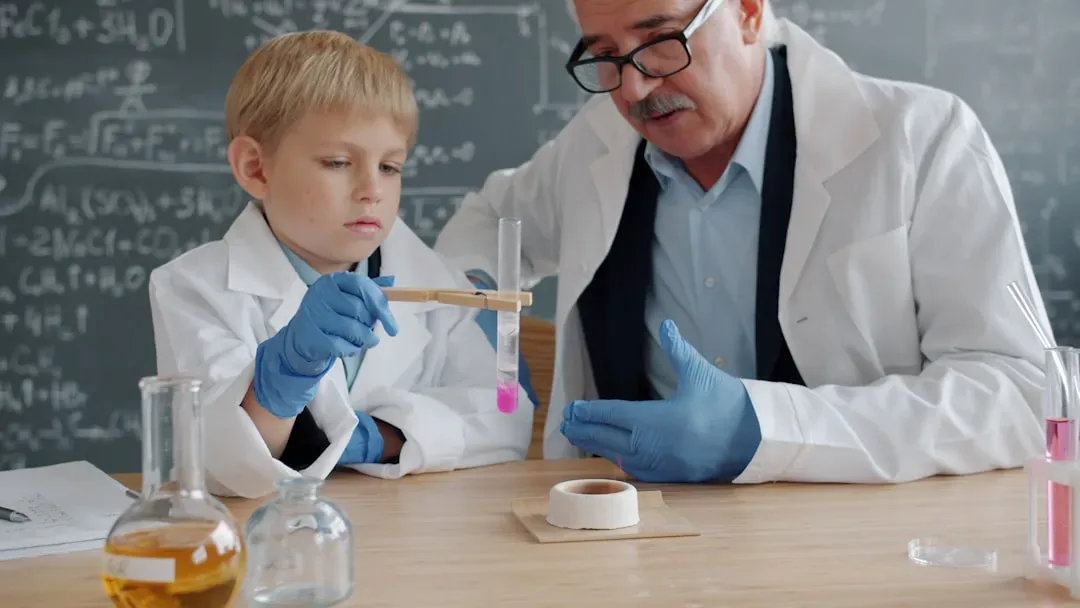
Reading about these experiments, it is tempting to file them away as exotic outliers, the scientific equivalent of roadside attractions. But the technologies you use every day – GPS, MRI scanners, modern anesthetics, digital communication – are built on the same willingness to follow weird clues wherever they lead. One of the simplest ways to engage with this strangeness is to cultivate a habit of asking what hidden assumptions are baked into your own sense of reality. When something feels obviously true, like “seeing is believing” or “surgery is always more powerful than suggestion,” that is exactly when it is worth looking for the experiment that tried to break it.
You do not need a lab to participate in that spirit of inquiry; you can dive into open course materials, visit science museums, join local astronomy clubs, or follow preprint servers and institutional blogs that unpack new research in plain language. The more you explore, the more you start to see patterns in how bold ideas get tested, fail, and sometimes transform entire fields. In a universe where particles can be in two places at once and the brain can flip the world upside down and back again, a bit of stubborn curiosity is one of the most rational attitudes you can adopt. The next bizarre experiment that rewrites reality is already underway somewhere – what assumptions of yours might it overturn?
Suhail Ahmed is a passionate digital professional and nature enthusiast with over 8 years of experience in content strategy, SEO, web development, and digital operations. Alongside his freelance journey, Suhail actively contributes to nature and wildlife platforms like Discover Wildlife, where he channels his curiosity for the planet into engaging, educational storytelling.
With a strong background in managing digital ecosystems — from ecommerce stores and WordPress websites to social media and automation — Suhail merges technical precision with creative insight. His content reflects a rare balance: SEO-friendly yet deeply human, data-informed yet emotionally resonant.
Driven by a love for discovery and storytelling, Suhail believes in using digital platforms to amplify causes that matter — especially those protecting Earth’s biodiversity and inspiring sustainable living. Whether he’s managing online projects or crafting wildlife content, his goal remains the same: to inform, inspire, and leave a positive digital footprint.