
The deep sea feels less like part of our planet and more like a glitch in reality. Down there, sunlight never arrives, pressure can crush steel, and temperatures can swing from near freezing to boiling-hot vents in a heartbeat. Yet somehow, life not only survives in this darkness, it gets weirder, wilder, and more inventive with every kilometer down.
Scientists estimate that the vast majority of species living in the deep ocean still haven’t been discovered. Every dive with a modern submersible seems to add a new twist to what we thought life could be. The eight creatures below aren’t just strange for the sake of it; they force us to rethink basic ideas about vision, aging, energy, even what a “body” is supposed to look like. Some of them honestly feel like creatures that slipped out of a science-fiction sketchbook and forgot to go back.
1. Anglerfish – The Living Lantern of the Abyss
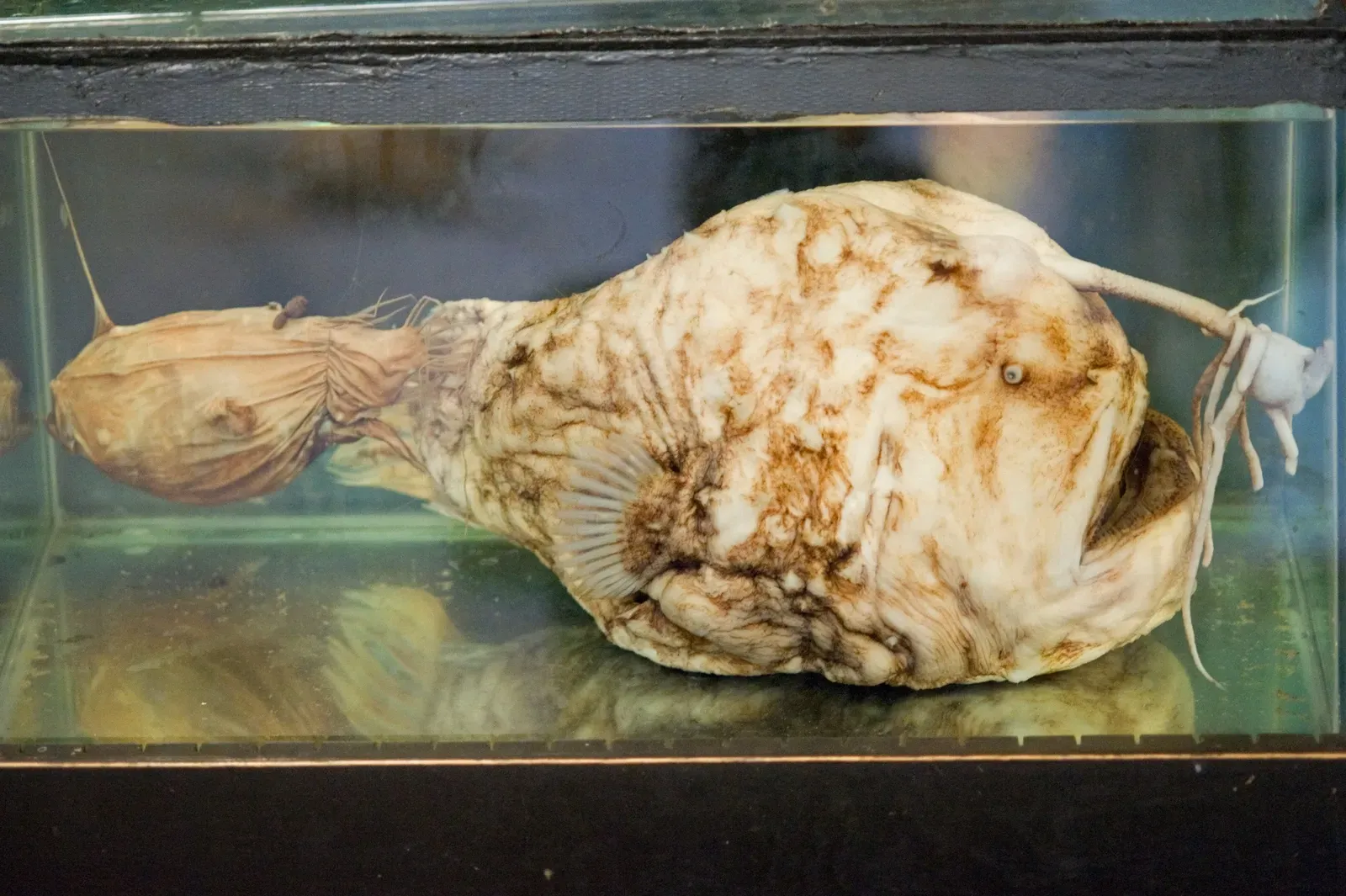
Imagine existing in a world so dark that carrying your own headlamp becomes a matter of life or death. That’s the anglerfish: a small, often scraggly-looking predator with a glowing lure jutting out from its forehead like a fishing rod. In females of many species, this lure is full of bioluminescent bacteria that produce cold light in a place where no sunlight ever reaches.
The truly shocking part is the anglerfish love life. In several deep-sea species, the tiny males fuse permanently into the much larger female’s body, sharing her bloodstream and gradually losing their own organs until they become little more than reproductive appendages. It sounds like horror-movie body fusion, but biologically it solves a huge problem: in the vast emptiness of the deep ocean, running into another anglerfish is rare. Instead of relying on chance, evolution basically stapled the partners together.
2. Blobfish – The Internet’s “Ugliest” Fish That Isn’t Really Ugly
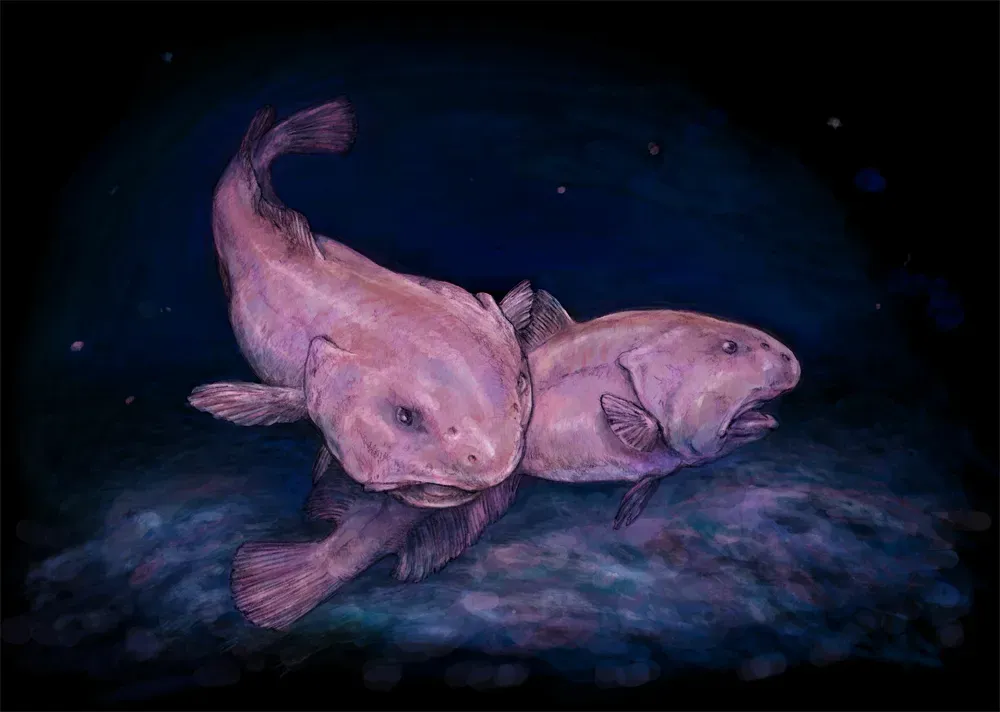
On the surface, the blobfish became famous as the poster child for sea ugliness: a droopy, sagging face that looks like a wax statue left in a hot car. But that meme version is wildly misleading. In its natural habitat, hundreds or even thousands of meters down, the blobfish doesn’t look like a sad cartoon. It looks like a fairly normal, compact fish adapted to extreme pressure.
The iconic “blob” shape only appears when the fish is hauled rapidly to the surface. Down deep, immense pressure compresses its gelatinous body into a stable shape. Up here, removed from that pressure, its low-density tissue expands and slumps. What looks like a design mistake is actually genius engineering: instead of hard bones and heavy muscles, it uses a squishy body that floats effortlessly without wasting energy on swimming bladders. It’s like the ocean’s version of a beanbag chair – silly-looking to us, but incredibly efficient where it lives.
3. Vampire Squid – A Misunderstood “Bloodsucker” of the Dark
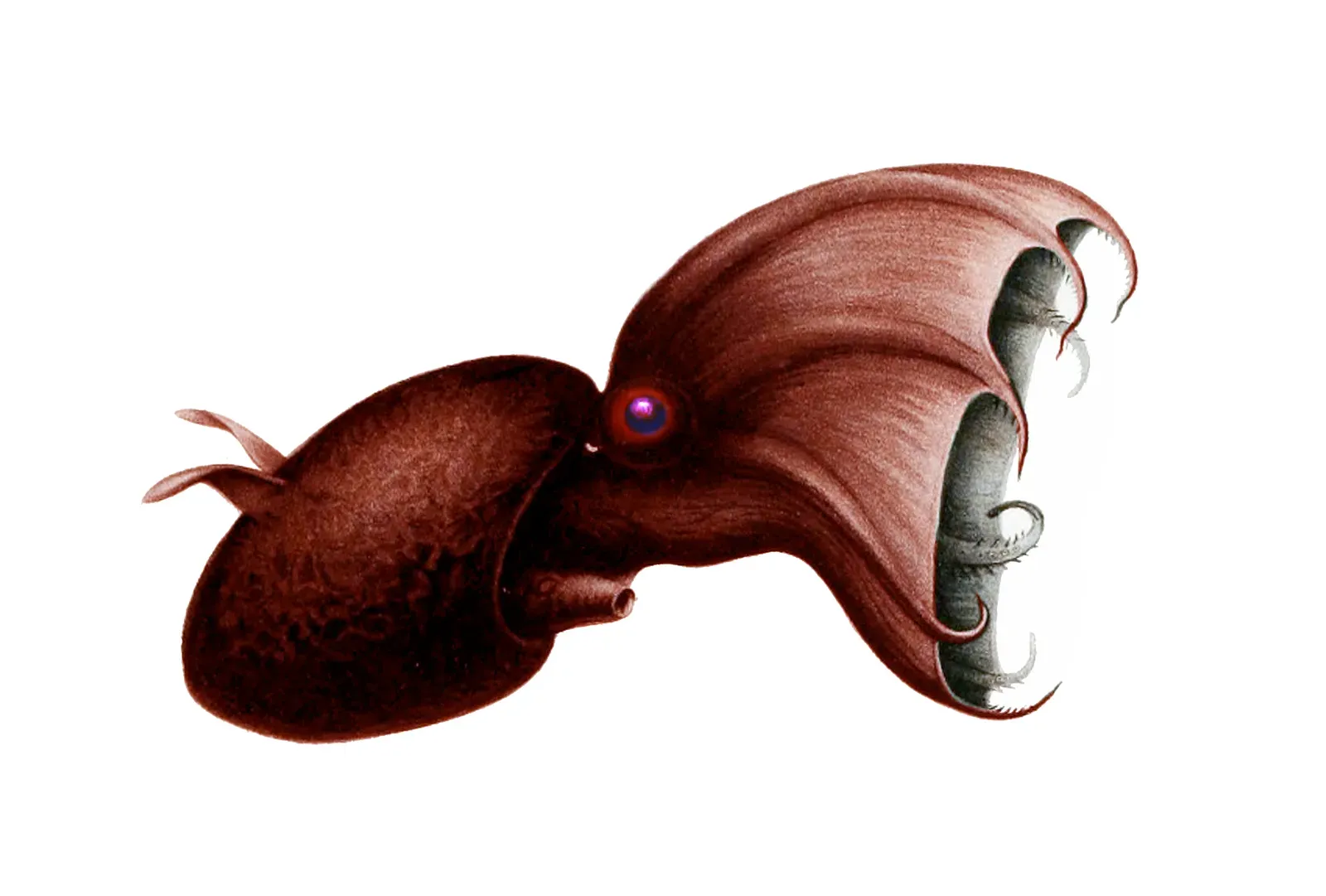
With its deep red color, cloak-like webbing and intimidating name, the vampire squid sounds like something that should be attacking submarines. Reality is much stranger and a lot more gentle. Despite the dramatic appearance, the vampire squid doesn’t suck blood or even act like a typical predator. It mostly feeds on “marine snow” – a polite term for tiny particles of dead plankton, poop, and other drifting debris falling from the surface.
What makes it mind-bending is how it manages life in the low-oxygen twilight zone where many animals would suffocate. Its blood carries oxygen extremely efficiently, and its metabolism runs in low-power mode, like a phone on battery saver. When threatened, it doesn’t jet away at top speed; it turns itself inside out, wrapping its webbing over its body to create a spiny-looking ball. Instead of terrifying, it’s more like an anxious goth introvert in squid form, surviving by staying weirdly calm in an environment that would panic almost any other animal.
4. Giant Squid – The Once-Mythical Monster We Barely Know
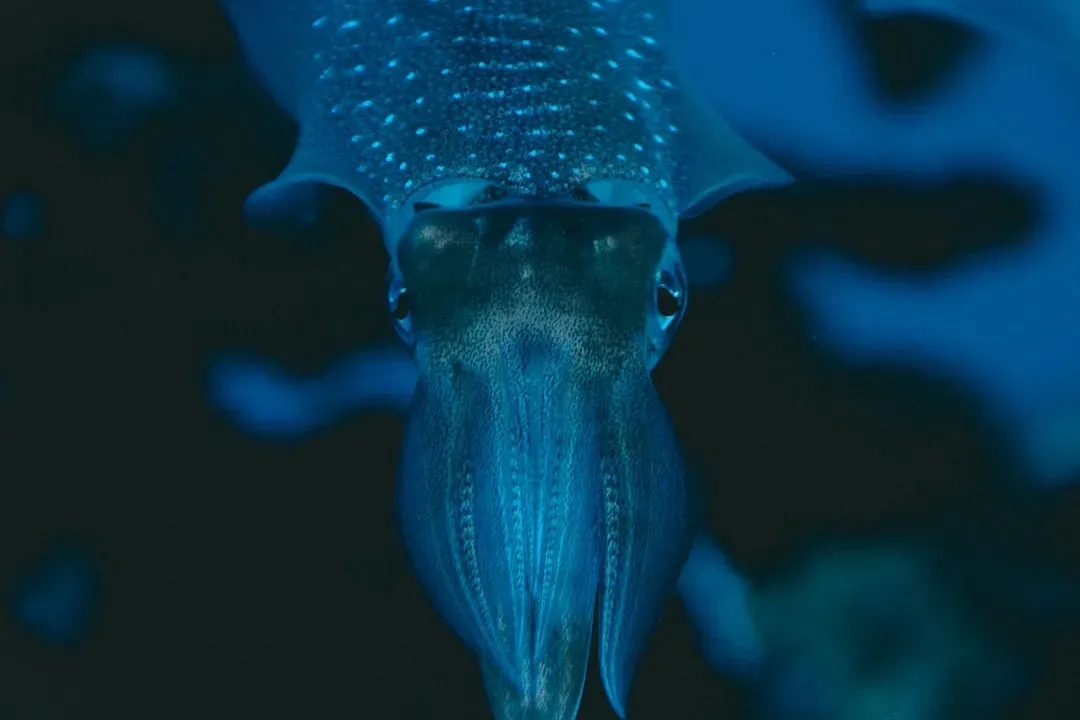
For centuries, sailors talked about ship-crushing tentacled monsters, and everyone assumed they were exaggerating. Then we started pulling up dead giant squids from the depths: eyes the size of dinner plates, tentacles longer than a car, beaks that could slice through flesh with terrifying efficiency. Even now, living giant squids are rarely seen; most of what we know comes from bodies washed ashore or caught accidentally in nets.
The sheer size of these animals forces uncomfortable questions about how energy and ecosystems work in the deep sea. How does a predator that big find enough food in a place so poor in resources? Their huge eyes seem built to capture every tiny glimmer of light, including the faint bioluminescence of distant prey or predators, hinting at a world where the main language is flashes and glows. For all our technology in 2026, each rare deep-sea video of a giant squid still feels like glimpsing a living myth slip out of the dark and then vanish again as if it never existed.
5. Yeti Crab – The Hairy Gardener of Hydrothermal Vents
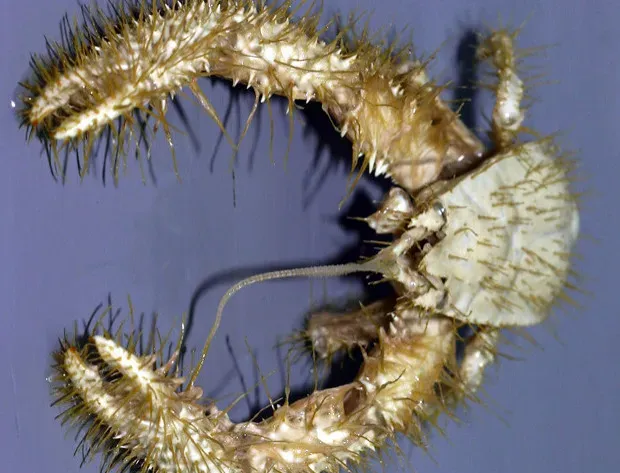
Down near hydrothermal vents, where scalding, mineral-rich water gushes from the seafloor, lives a creature that looks like a cross between a crab and a shaggy toy. The yeti crab, discovered in the twenty-first century, has long, silky, pale “hairs” on its claws. At first glance it seems almost comical, like nature tried to design a plush monster and then abandoned the project halfway through.
Those hairs, though, are coated in bacteria that the crab appears to farm and eat. In a place with no sunlight and no regular plants, it essentially grows its own food on its body, fertilized by the vent’s chemicals. Instead of the familiar food chain fueled by sunlight, this entire ecosystem runs on chemistry: microbes use the vent fluids as an energy source, and animals like the yeti crab move in to harvest them. It’s one of the clearest reminders that life doesn’t actually need sunshine to thrive – just a steady source of usable energy, however alien it seems to us.
6. Barreleye Fish – The Transparent-Headed Stargazer
![6. Barreleye Fish – The Transparent-Headed Stargazer ([https://archive.oceanexplorer.noaa.gov/explorations/24skq-ak-seamounts/gallery/gallery.html#Exploring Pelagic Biodiversity of the Gulf of Alaska and the Impact of Its Seamounts], Public domain)](https://nvmwebsites-budwg5g9avh3epea.z03.azurefd.net/dws/ac0cc58f29e58e34beebc900d05e77df.webp)
Exploring Pelagic Biodiversity of the Gulf of Alaska and the Impact of Its Seamounts], Public domain)
The barreleye fish is one of those animals that, when you first see it, you assume the image has been edited. Its head is literally transparent, like a glass bubble, and inside that bubble are two bright green, barrel-shaped eyes. Photos can be so surreal that even people used to weird deep-sea life have to double-check they’re real. But deep-sea cameras and submersibles have confirmed this odd design again and again.
Those tubular eyes can rotate upward to scan for prey silhouettes against what little light filters down, or forward when it needs to look where it’s going. The transparent head protects the eyes while still letting light in, a bit like a built-in dive helmet. It’s such an alien-looking solution that it challenges our instincts about what a “face” is supposed to look like. Somewhere along the way, evolution discarded normal fish facial rules and went with: clear skull, rotating night-vision tubes, maximum weirdness, high efficiency.
7. Deep-Sea Hatchetfish – Living Mirrors in the Midnight Zone
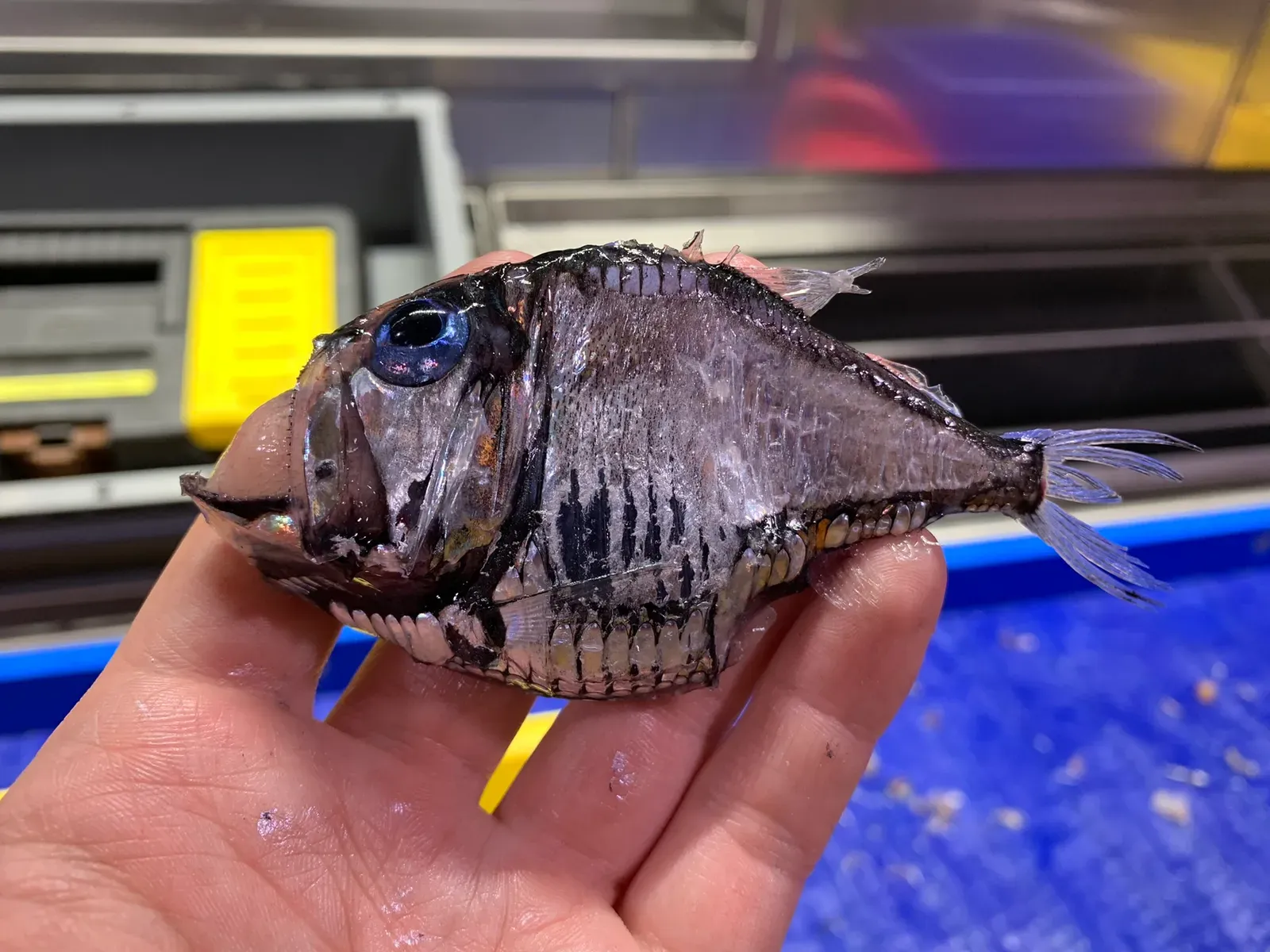
The deep-sea hatchetfish looks delicate and almost metallic, with a thin, flattened body that seems more like a piece of hardware than an animal. Its sides are covered with reflective scales that act like tiny mirrors, bouncing back the faint ambient light in a way that makes it almost invisible from many angles. In a realm where being seen often means being eaten, invisibility is a powerful survival trick.
But it doesn’t stop there. Along its underside, the hatchetfish sports rows of tiny light organs it can control, brightening or dimming them to match the light coming from above. This camouflage trick, called counter-illumination, breaks up its silhouette so predators looking up from below see nothing but a faint continuation of the dim surface glow. In a world that’s always on the edge of total darkness, this fish has basically hacked the lighting system to disappear, a reminder that in nature, stealth often beats size or strength.
8. Tardigrades – The Indestructible Tiny Survivors That Shrug at Extremes
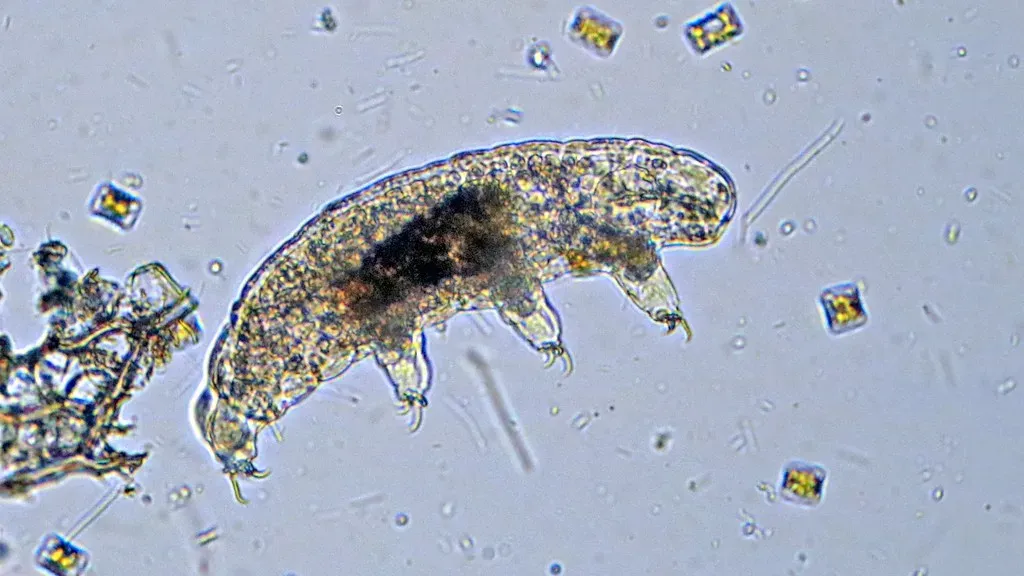
Tardigrades, often called water bears, aren’t exclusive to the deep sea, but some species live in marine sediments even at great depths. They’re microscopic, chubby, eight-legged animals that look strangely adorable under a microscope. Don’t be fooled by the cuteness, though. Tardigrades are among the toughest creatures we know of, able to survive conditions that would destroy almost any other animal.
They can endure crushing pressures, extreme temperatures, high doses of radiation, and long periods without food or water by curling into a dried-out form called a tun. In this state, their metabolism slows to nearly nothing, and they can sit there for years until conditions improve. Finding such hardy micro-animals in deep ocean environments forces us to rethink the boundaries of habitable conditions, not just on Earth but possibly on icy moons or other planets. If something so small can handle this much abuse, how many more “impossible” life forms might be waiting in places we’ve always written off as dead?
Conclusion – A Planet Stranger Than Fiction
The deeper we look into the ocean, the more it behaves like a mirror reflecting our own ignorance back at us. Creatures with glowing lures, see-through heads, fused partners, and built-in gardens don’t just make for cool photos. They quietly demolish our comfortable ideas about what life needs to look like and how it’s supposed to function. Standing on a beach, it’s tempting to think we’ve got Earth mostly figured out; a few hours of deep-sea footage is enough to prove we’re barely getting started.
What’s most unsettling – and weirdly comforting – is realizing that life is far more flexible, creative, and stubborn than we once believed. If animals can thrive in toxic vents, endless darkness, insane pressures, and near-starvation zones, then our definition of “habitable” has been far too narrow. Somewhere out beyond the reach of our lights, new species are drifting, crawling, and glowing in ways we haven’t even imagined yet. When you picture Earth, do you think of the continents first – or will you now see that vast, black ocean full of creatures rewriting the rules of life?