
Earth looks calm from space, a blue marble quietly spinning in the dark. Up close, though, it’s full of places that feel like the rules broke down halfway through creation. Some of them spit lava where there should be ice, some sing like giant stone organs, and others seem to be older than the continents themselves. Even with supercomputers, satellites, and labs full of clever people, a few of these places still refuse to give up their deepest secrets.
I still remember standing at the edge of a volcanic crater for the first time and feeling something I didn’t expect: not fear, not awe exactly, but the eerie sense that the ground beneath my feet had a mind of its own. That feeling never really went away, and these eight baffling geological wonders crank it up to the maximum. We know a lot about them – but not enough, and that gap between what we can measure and what we can explain is where the real magic lives.
The African Cracks That Could Split a Continent in Two
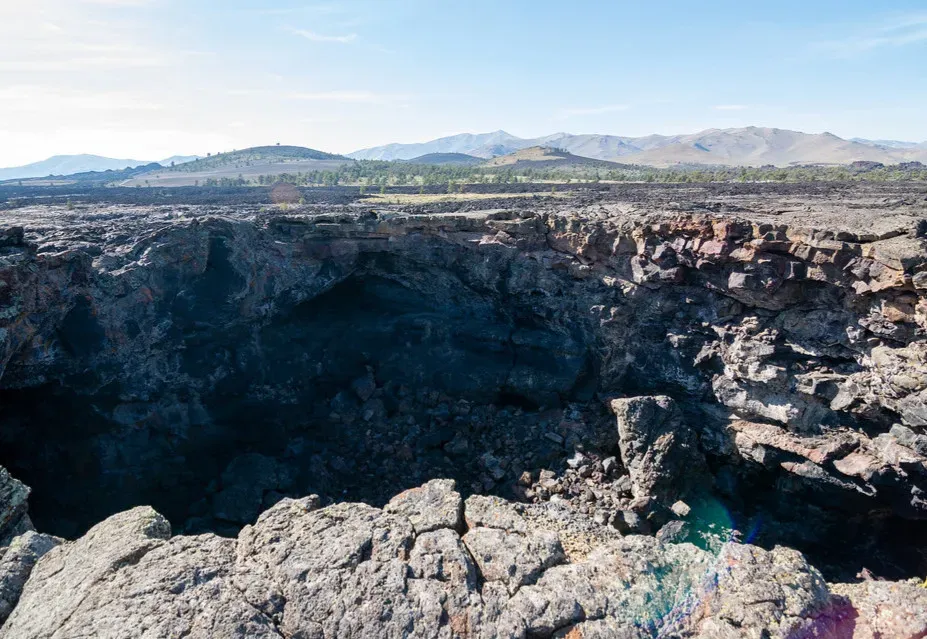
Imagine waking up one morning in Kenya to find a massive crack opening in the ground, long enough to swallow a highway. That actually happened in 2018 in the Great Rift Valley, part of a gigantic scar where Africa is slowly tearing itself apart. Geologists agree that the African continent is splitting into two large plates, and that in many millions of years there will be a new ocean where land stands today. The baffling part is how uneven, jumpy, and unpredictable that process is, and why some sections rip open dramatically while others stretch almost silently.
Satellite data shows the East African Rift is moving, but the pace varies wildly, like a zipper being pulled in tiny jerks instead of one smooth motion. Scientists still debate why magma rises in some segments of the rift and not others, and how deep, plume-like upwellings of hot mantle are really shaped down below. No one can say exactly when a full ocean basin will form, or which fault will rip open next, despite decades of measurements. It’s like watching a slow-motion breakup where nobody can predict which argument finally ends the relationship.
The Yonaguni “Pyramid” That Blurs Nature and Lost Civilization
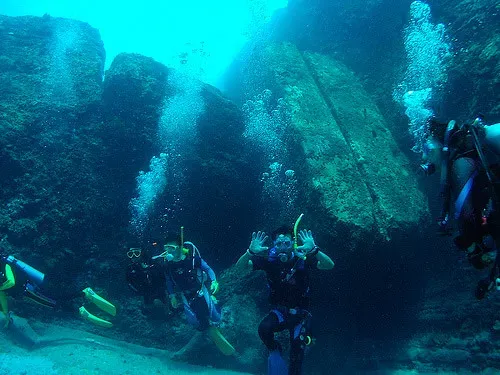
Off the coast of Yonaguni Island in Japan, underwater divers found something that looks almost too perfect to be natural: stepped terraces, sharp angles, and what appear to be flat platforms the size of buildings. Some people swear it’s the remains of an ancient city sunk by rising seas, others argue it’s just sandstone fractured and eroded in a very lucky (or unlucky) pattern. The truth is, even among serious geologists, there isn’t full agreement about how much is natural and whether people might have modified parts of it thousands of years ago.
The rock itself is a type of sandstone and mudstone that can break in neat, angular blocks, which does explain a lot of the geometry. But there are still odd features – like what seem to be stair-like steps repeated over wide areas – that keep the debate alive. Dating the structure precisely is incredibly difficult underwater, and there are no clear artifacts sitting neatly on top saying “yes, humans lived here.” So the Yonaguni formation sits in a strange gray area where geology and archaeology overlap, and where our brains keep trying to find patterns in stone that might not be there at all.
The Tunguska Blast Crater That’s Missing Its Meteorite
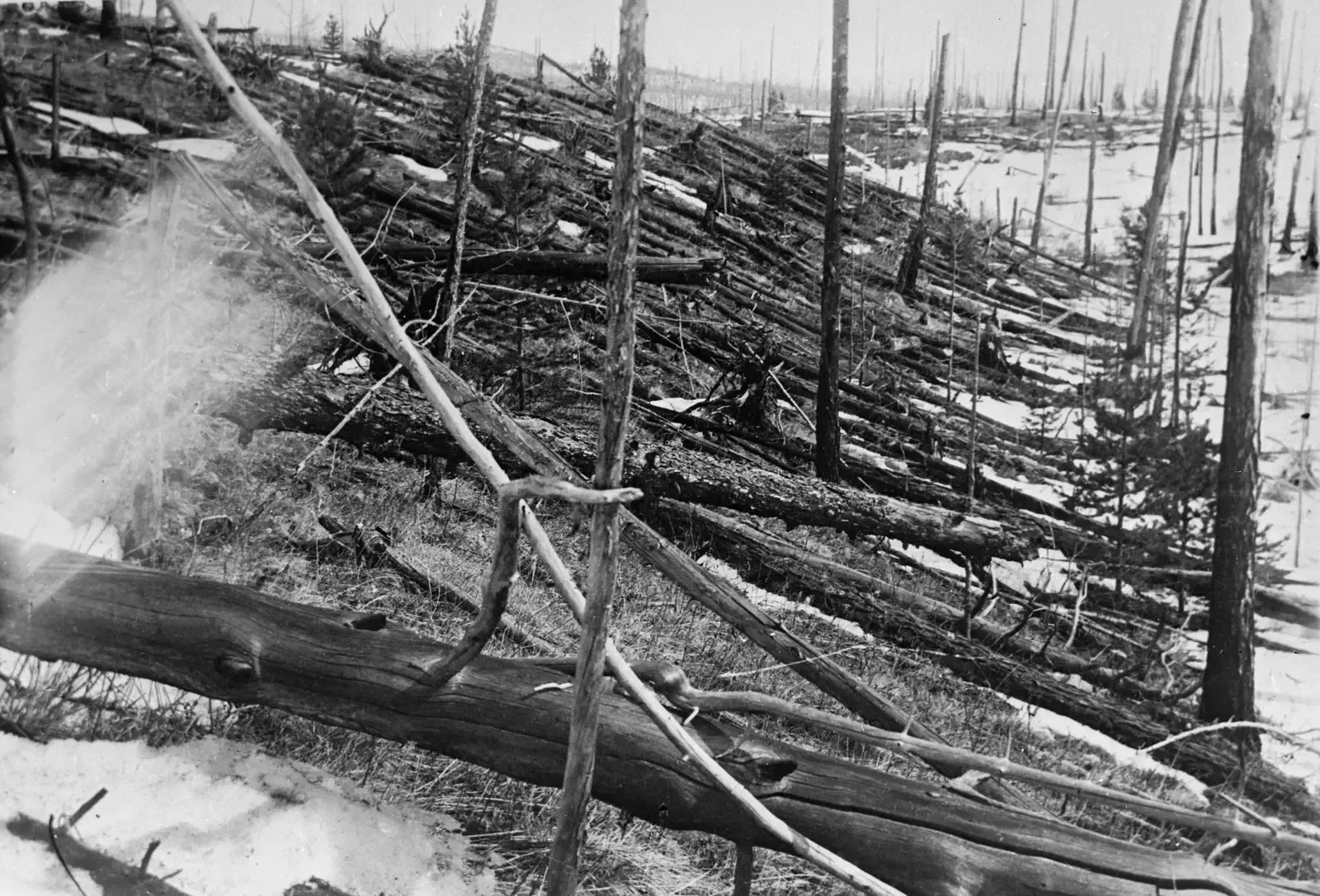
In the summer of 1908, a massive explosion flattened trees over a huge area of Siberian forest near the Tunguska River. The blast was powerful enough to knock people off their feet dozens of kilometers away, and yet, over a century later, there is still no agreed-upon smoking gun. The prevailing theory is an incoming space rock – likely an asteroid or icy comet – blew apart in the atmosphere before hitting the ground, creating an airburst. But for such an immense event, the lack of a clear crater or large chunks of meteorite has kept the mystery alive.
Researchers have found microscopic particles and chemical traces that point to a space origin, and computer models support the airburst idea. Still, the exact size, composition, and breakup altitude of the object are not nailed down, even with modern simulations. A few fringe ideas – secret explosions, exotic physics, or mini black holes – get floated from time to time, but they don’t match the evidence as well as a mundane space rock. What’s unsettling is that we know events like Tunguska can happen again, and we still can’t perfectly reconstruct what happened the last time Earth got hit this hard.
The Devil’s Kettle Waterfall That Swallows a River
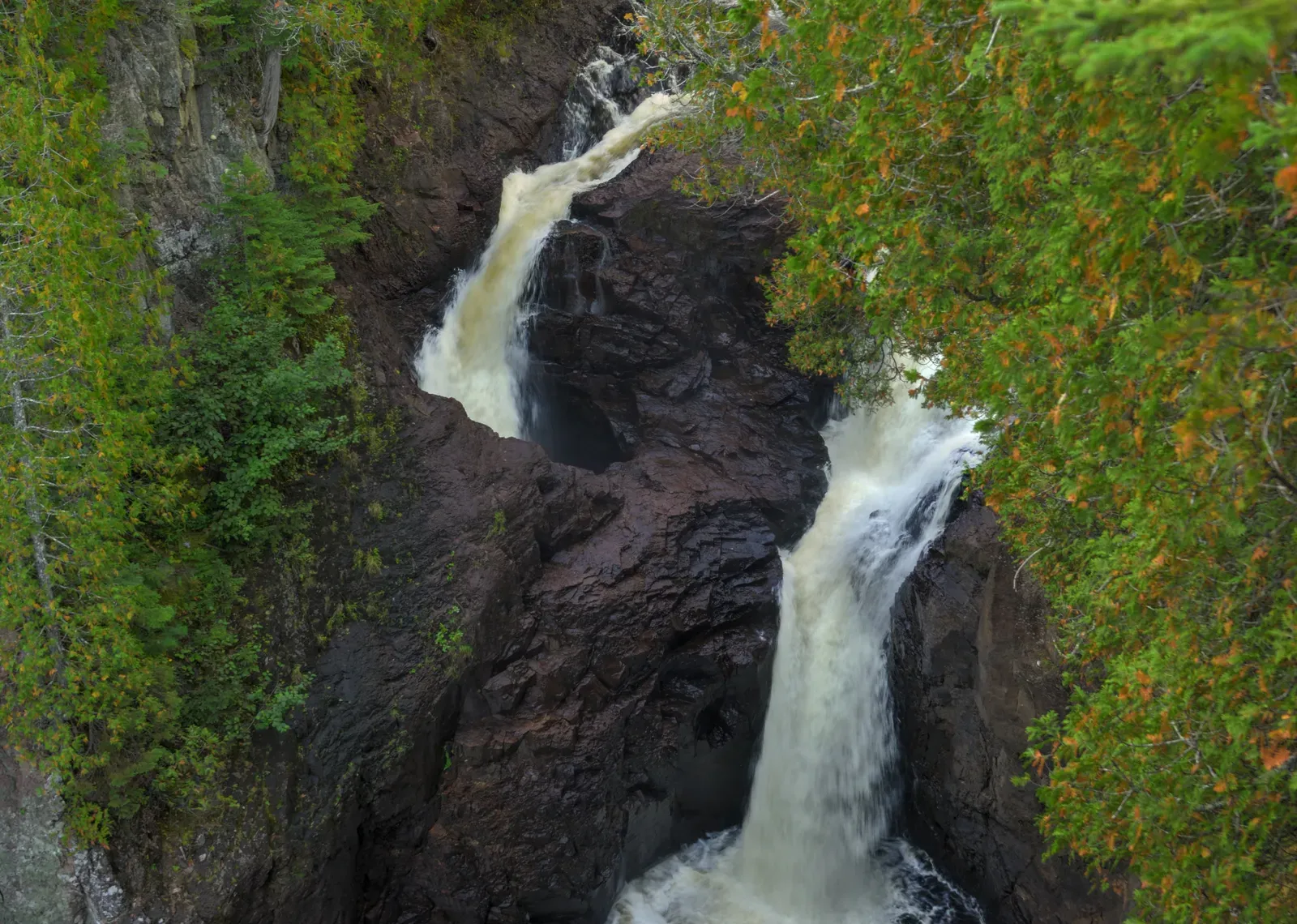
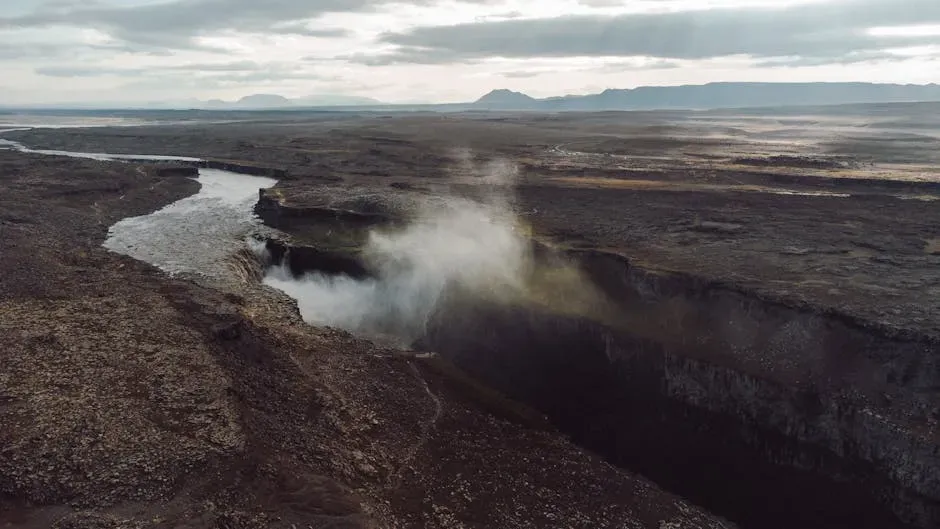
In Minnesota’s Judge C. R. Magney State Park, there’s a waterfall that looks like a magic trick in slow motion. The Brule River splits in two: one side falls normally, the other disappears into a deep, dark hole in the rock called the Devil’s Kettle. For years people were tossing in dye, ping-pong balls, even logs, hoping to see where the water came back out downstream. Nothing obvious emerged, which made it feel like the river was draining into some kind of geological trapdoor.
More recent measurements suggest that the river’s full volume does show up lower down, meaning the “vanished” water probably reappears through hidden cracks and underground channels in the rock. But no one has visually traced the full path, and the exact plumbing system beneath the falls is still murky. The bedrock is tough and not the kind that usually forms big caves, which only deepens the puzzle of where such a large volume of water can squeeze through. It’s one of those cases where the numbers add up, but the physical picture is still a blur.
The Nummulite “Coin” Rocks of the Great Pyramids
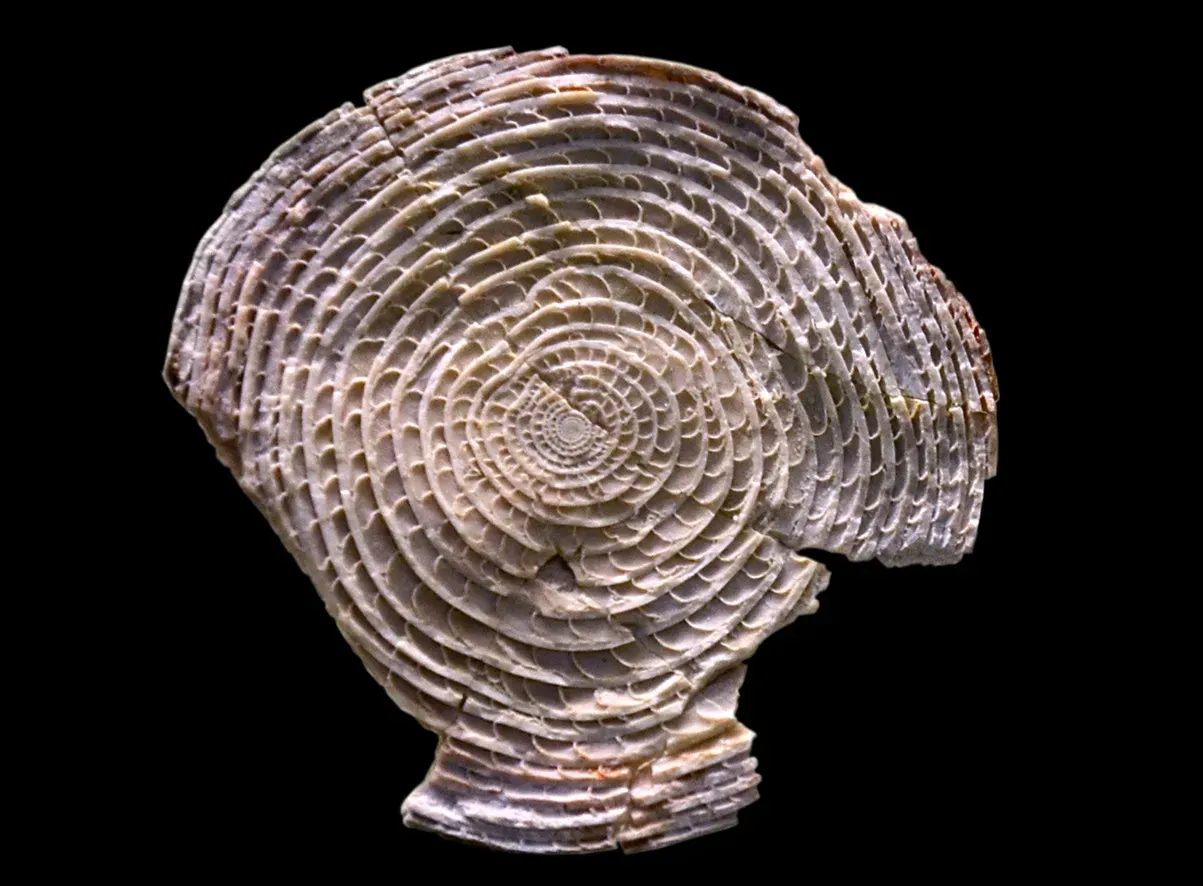
If you could zoom in on some of the limestone blocks used to build Egypt’s Great Pyramids, you’d find them packed with what look like fossil coins. These are nummulites, the remains of ancient single-celled organisms that built spiral shells the size of small discs. They lived tens of millions of years ago in warm, shallow seas, and their shells piled up layer after layer until they helped make entire rock formations. What baffles scientists is how these tiny creatures became so abundant and widespread that they effectively turned into coastline-building machines.
We understand the basics: favorable conditions, lots of calcium in the water, and a long, stable period of time. But the sheer scale of some nummulite deposits still raises questions about how their ecosystems functioned, how they responded to climate shifts, and why they eventually vanished. There’s also the strange twist that some of humanity’s most famous monuments are literally built out of the compressed remains of microscopic life. It’s a reminder that geology is often just very old biology hiding in plain sight, and that we still don’t fully grasp the long ecological stories written into stone.
The “Sailing Stones” That Creep Across Death Valley
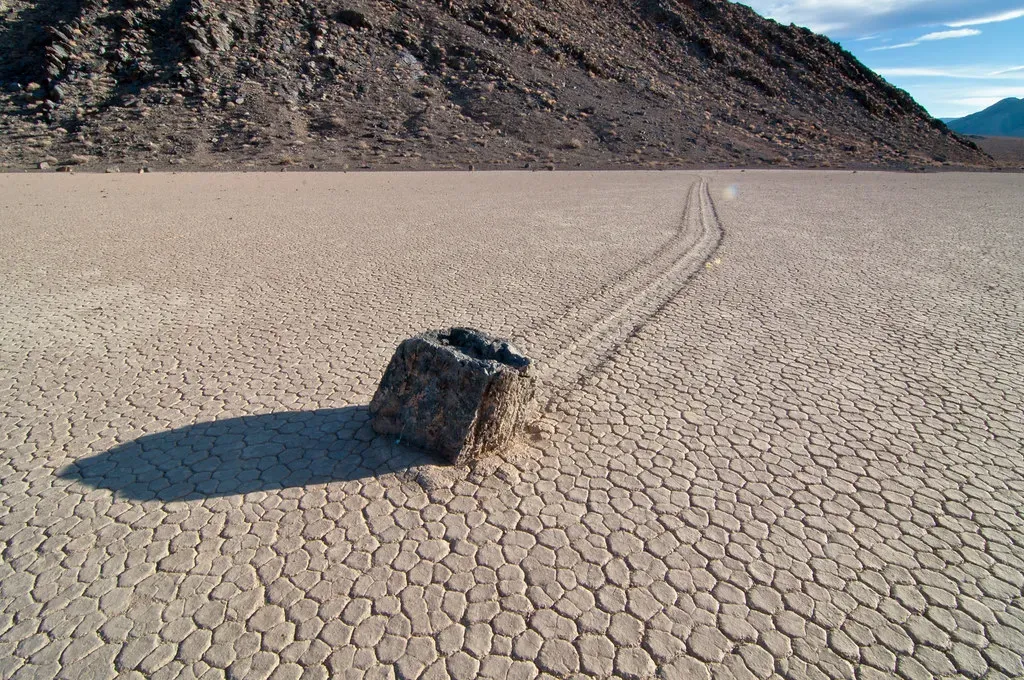
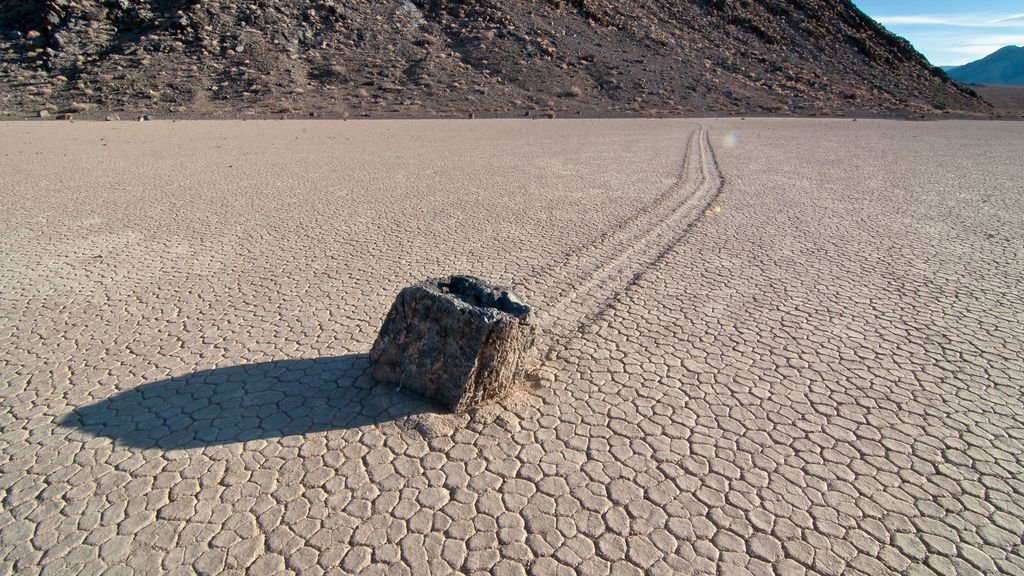
On the dry lakebed of Racetrack Playa in Death Valley, large rocks leave long, winding trails in the mud as if they’ve been dragged by an invisible hand. For decades, no one had ever seen them move, and wild theories flourished: magnetic forces, pranksters, even secret animals nudging them along at night. Modern research finally caught some of the motion on camera and tied it to a weird combo of thin ice, water, and wind that lets rocks glide slowly when conditions line up just right. But even with this explanation, there are still odd details that don’t fully line up in every case.
The necessary conditions – almost perfectly flat ground, just the right amount of water to form a slick layer, and thin panes of ice pushed by gentle winds – don’t happen very often. That’s why the rocks can sit still for years or decades, then move a surprising distance in a short window of time. Some tracks curve, split, or cross in ways that are tricky to model exactly, and not all rock sizes behave quite the same. It’s a partial mystery solved, but not entirely tamed, like a card trick where you know some of the method but still can’t catch every move.
The Siberian “Gates to Hell” That Are Growing Too Fast
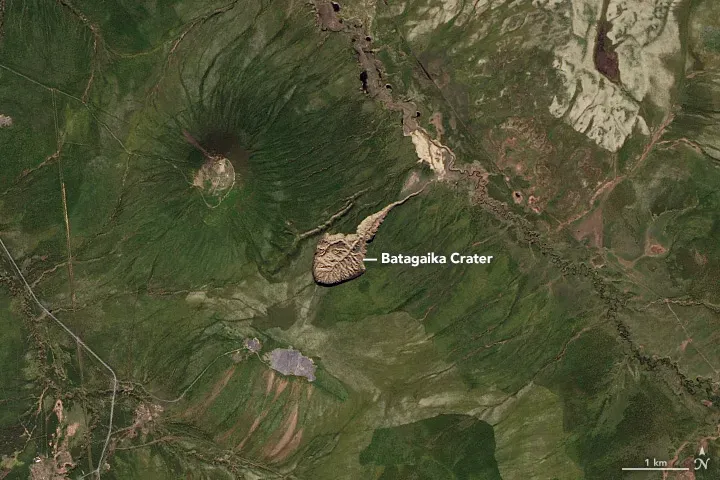
In remote northern Siberia, there is a gigantic, expanding depression in the ground called the Batagaika crater, often nicknamed a gate to the underworld. It’s not a crater from an impact but a megaslide of thawing permafrost, where long-frozen soils and ice are collapsing and slumping away. As the climate warms, this gash in the landscape has been growing wider and deeper at a pace that has shocked researchers tracking it over time. The unsettling part is how complex and self-accelerating the whole process appears to be.
As the permafrost melts, buried ice turns to water, the ground loses strength, and more material breaks free, exposing even more frozen soil to warm air and sun. This feedback loop makes the crater a real-time laboratory for watching climate-linked landscape change, but also a nightmare to predict. Ancient plant material and even animal remains are being exposed and decomposing, releasing long-stored carbon into the atmosphere. Scientists can estimate growth rates and emissions, but the exact future shape, speed, and broader impact of places like Batagaika remain deeply uncertain.
The Deep Mantle Blobs That May Rewrite Plate Tectonics
Far beneath our feet, deeper than any drill can reach, seismic waves reveal two enormous, strangely shaped regions at the base of Earth’s mantle – one under Africa and one under the Pacific. These zones are often described as giant blobs or piles of hot, dense material that don’t behave like the surrounding rock. Some models suggest they might be the roots of so-called superplumes that drive massive volcanic hotspots, while others hint they could be leftovers from ancient slabs or even fragments of early Earth. The truth is, no one can see them directly, and that makes them one of the planet’s biggest blind spots.
Their exact composition, temperature, and role in controlling plate movements are still fiercely debated in the geoscience community. If they are hotter and chemically different, they might explain why certain regions get powerful, long-lived volcanism while others don’t. They could also help set the rhythm of supercontinents coming together and breaking apart over hundreds of millions of years. Yet every new model seems to open more questions than it answers, as if the planet’s core is keeping a few crucial secrets to itself.
From vanishing rivers to moving stones, from splitting continents to hidden blobs deep below, Earth keeps reminding us that we’re still beginners at reading its language. We can measure, map, and model, but some stories in the rocks remain stubbornly half-told, daring us to keep asking better questions. Which of these mysteries would you most want to stand next to in person, just to feel the ground and see if your instincts match the science?