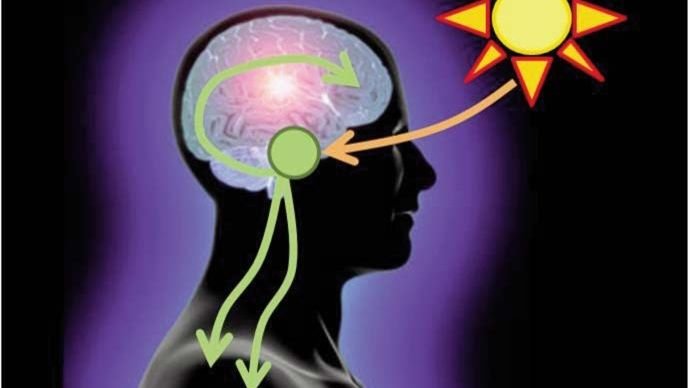

You think your five senses give you a pretty solid grip on reality. You see colors, hear music, smell coffee in the morning, and feel the warmth of the sun on your skin. Honestly, it feels like enough. But what if you found out that your perception of the world is actually just a tiny sliver of what’s really out there?
Your senses are limited to what you can see, smell, hear, taste, and feel, and by the capacity of information they provide. While these senses work well enough for navigating daily life, some animals have entirely different perceptions, often possessing the same basic senses as you but at intensities and sensitivities that are almost incomprehensible. The deeper you look into the animal kingdom, the more humbling it becomes. So let’s dive in, because what you’re about to discover will genuinely change how you see the natural world.
1. The Shark: An Electric Sixth Sense You Can’t Even Fathom
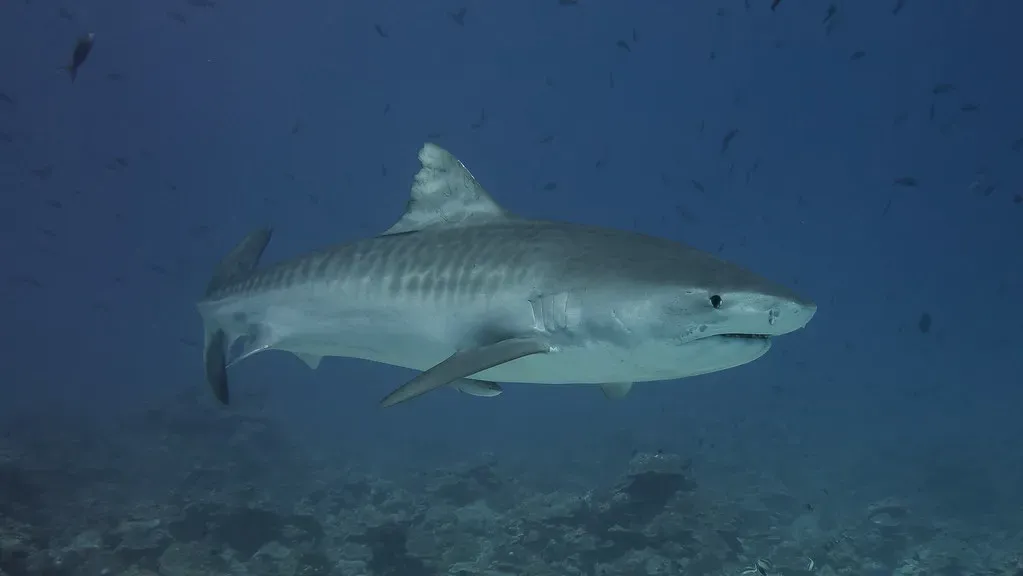
Let’s be real – you probably already think sharks are terrifying. But knowing what they can actually sense makes them even more extraordinary. Sharks are finely tuned predators with one of the most sophisticated sensory systems in the animal kingdom, possessing tiny, gel-filled organs called the ampullae of Lorenzini, which allow them to detect the faint electrical signals given off by living creatures.
This means a shark can sense the heartbeat of a fish hiding beneath the sand, long before it ever sees or smells it. Great white sharks rely on this electroreception more than their eyesight, and even in murky waters, they can locate their next meal with impressive accuracy. Scientists have observed sharks detecting electrical fields as weak as one-billionth of a volt per centimeter, essentially picking up the bioelectric signals of their prey from meters away. Think of it like having a personal radar system built directly into your face. Remarkable doesn’t even begin to cover it.
2. The Bat: Painting the World in Sound
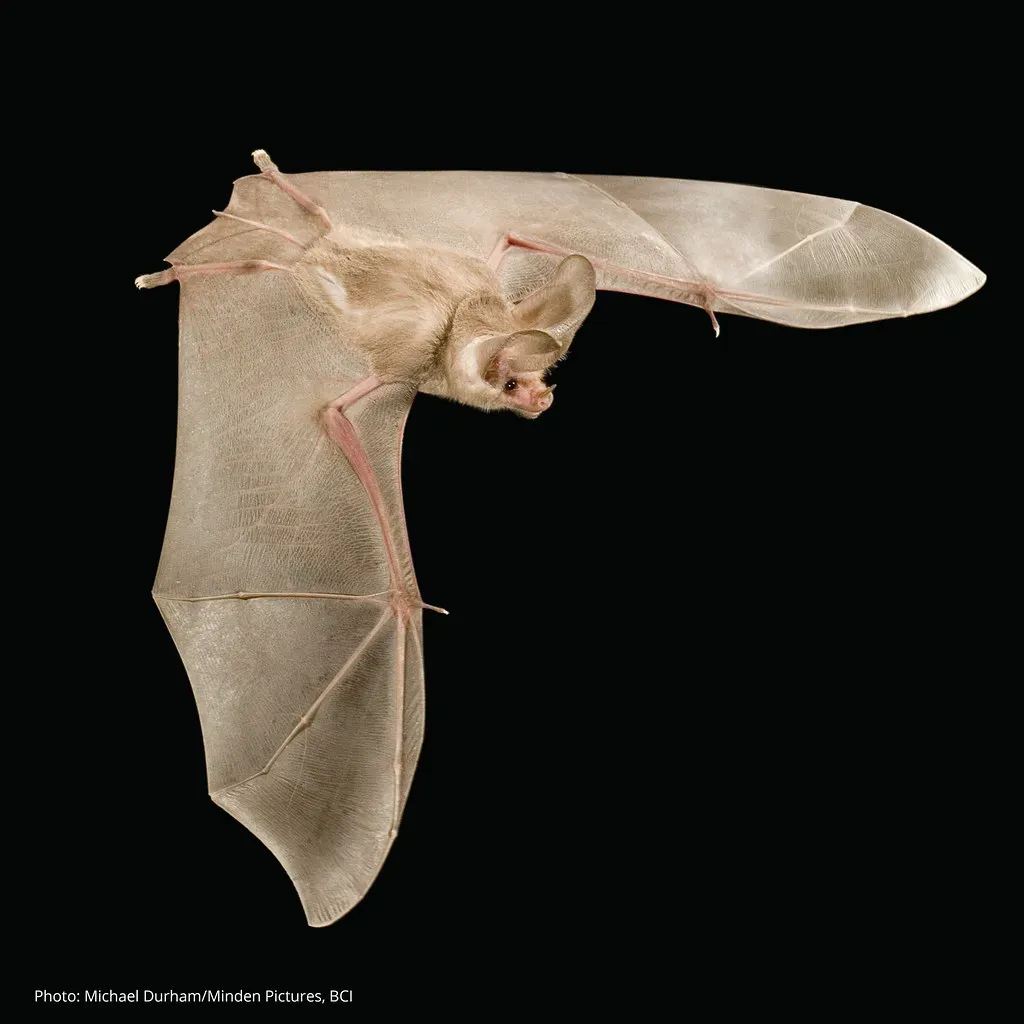
You navigate by sight. Bats navigate by sound, and they do it so brilliantly it almost feels unfair. Most of the over 1,400 bat species use echolocation to navigate and hunt in darkness, emitting high-frequency sounds well beyond human hearing and interpreting the returning echoes to create detailed mental maps of their surroundings. This remarkable system allows bats to detect objects as thin as a human hair in complete darkness and distinguish between different insect species based solely on their wing-beat patterns.
The precision of bat echolocation is so refined that they can detect differences in surface texture and identify prey items as small as mosquitoes while flying at speeds up to 60 miles per hour. Their brains contain specialized neural pathways dedicated to processing these echoes, allowing for rapid interpretation of complex acoustic information. Some bat species have even evolved specialized nose structures, like leaf-nosed bats, that help focus their sound emissions for even greater precision. Imagine closing your eyes and being able to “see” the entire room around you just by clicking your tongue. That’s essentially what bats do every single night.
3. The Mantis Shrimp: Seeing Colors That Don’t Exist in Your World
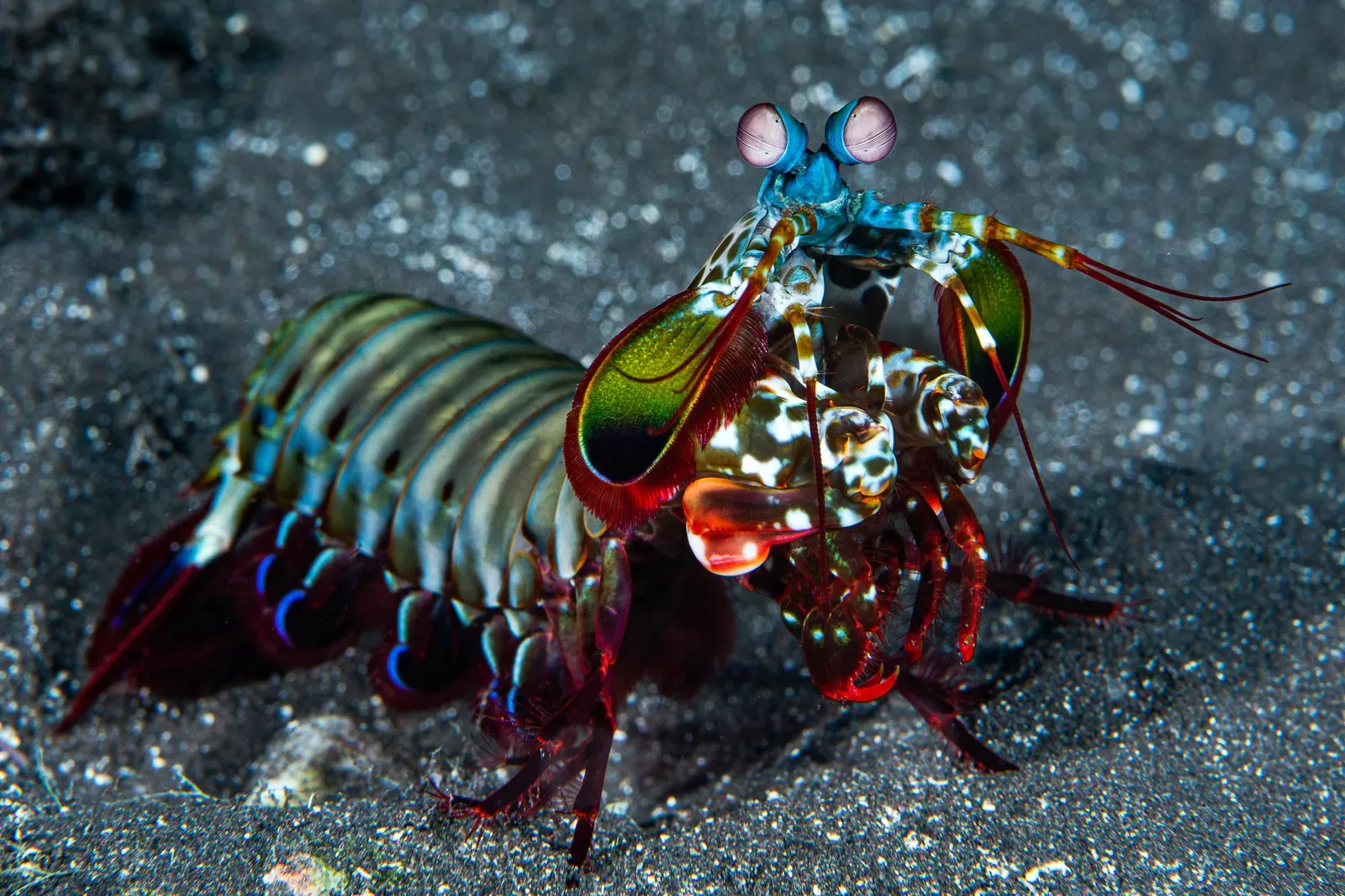
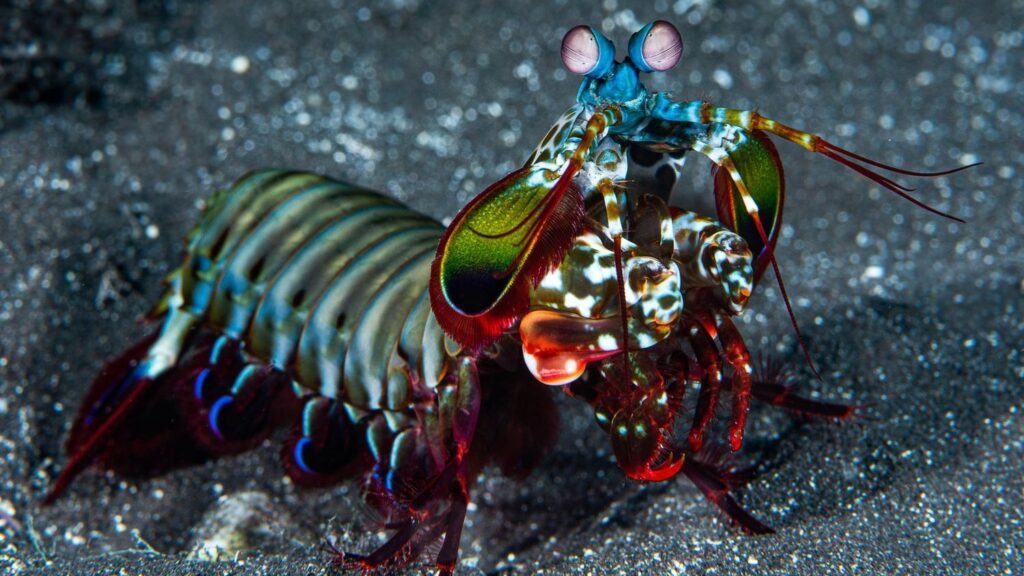
You see the world through three types of color receptors. You’re probably quite proud of that. Well, here’s the thing – the mantis shrimp would find your color vision laughably basic. The mantis shrimp, a small marine predator, possesses one of the most sophisticated visual systems known to science. While you have three types of photoreceptor cells for color vision, mantis shrimp can have up to 16 types, allowing them to perceive polarized light and ultraviolet wavelengths.
This ability not only helps them detect prey and predators in the complex reef environment but also appears to enable forms of communication invisible to other animals. Scientists still don’t fully understand how the shrimp’s brain processes such an overwhelming amount of visual information or how it translates this data into precise hunting and social behavior. The mantis shrimp’s eyes remain one of the most baffling mysteries in the natural world. Honestly, trying to imagine what the mantis shrimp “sees” is like trying to imagine a new color entirely. Your brain simply doesn’t have the wiring for it.
4. The Pit Viper: Hunting With a Built-In Thermal Camera
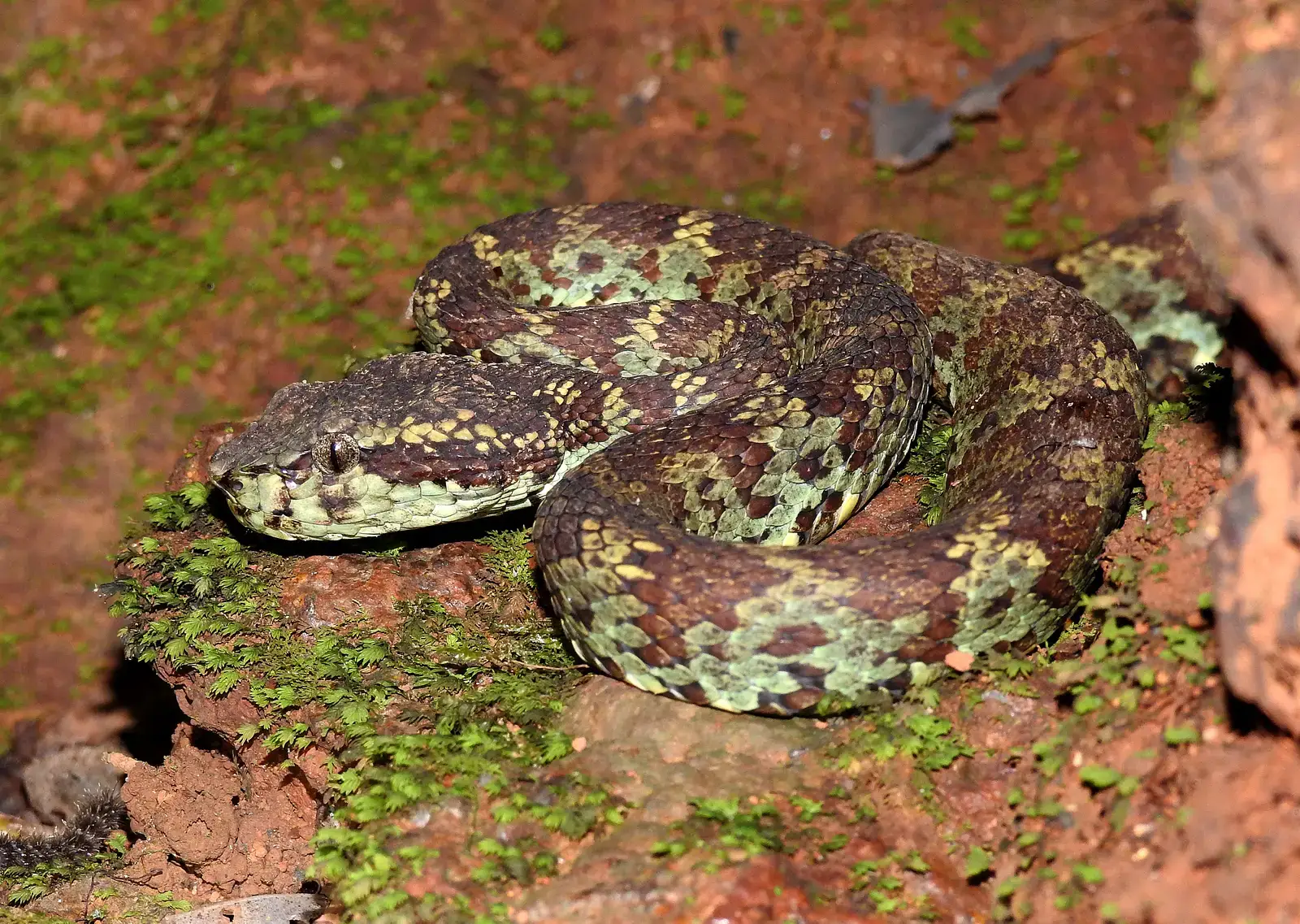
Picture this: total darkness, no flashlight, no night-vision goggles. You’re completely blind. For a pit viper, that’s just Tuesday. Certain species of snake have holes below their eyes called pit organs, which house receptors that can detect heat emitted up to a metre away. This heat is mapped over the snake’s visual representation of its surroundings to create a multi-dimensional image, allowing it to pinpoint prey in all light levels.
The pit organs contain thousands of temperature-sensitive receptors that can detect temperature differences as small as 0.003 degrees Celsius and can create a thermal image that overlays with their visual perception. This sensory system is so sophisticated that pit vipers can strike with precision at warm targets in complete darkness. The neural pathways from these pit organs connect to the same brain regions that process visual information, creating an integrated thermal-visual representation of the world. This adaptation gives these snakes an extraordinary advantage when hunting mammals and birds, particularly at night when their prey’s body heat stands out sharply against cooler surroundings.
5. The Elephant: Hearing Through Its Feet
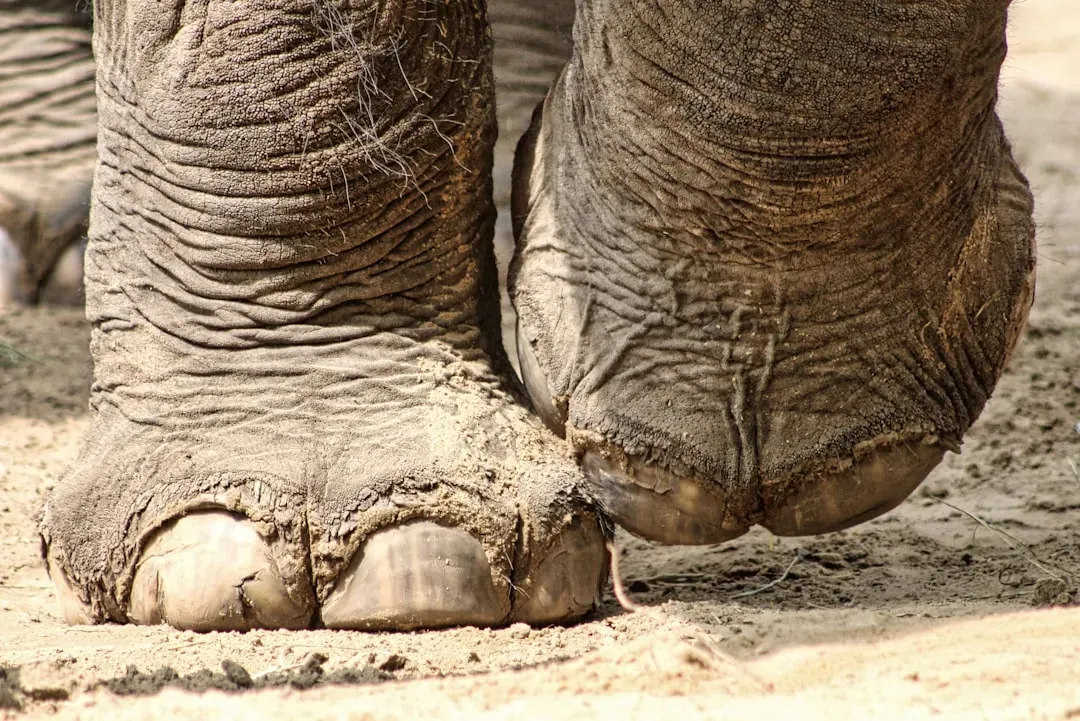
You probably hear with your ears. Obvious, right? Elephants hear with their feet too, and what they can perceive this way is genuinely mind-blowing. African elephants communicate using incredibly low rumbling sounds that cannot be heard by the human ear. These rumbles are carried through the air as sound waves and also through the ground as seismic waves, and the elephants feel these seismic vibrations by using their trunk and their feet. Concentrated at the tip of their trunks and on the heels and toes of their feet are very sensitive receptor cells called Pacinian corpuscles.
Scientists believe these cells are the way elephants can sense faint vibrations, and this seismic wave detection can enable elephants to “hear” other elephants at a great distance or through very dense vegetation. Now layer that on top of their nose. According to biological studies, African bush elephants got double the smell-sensing genes from their ancestors during species division, and elephants top the charts based on the number of smell genes with 1,948, while cows and dogs take the second and third spots. They’re essentially walking sensory powerhouses, and yet we’re out here proud of remembering where we parked the car.
6. The Star-Nosed Mole: The Fastest Forager on Earth, Armed With 22 Tentacles
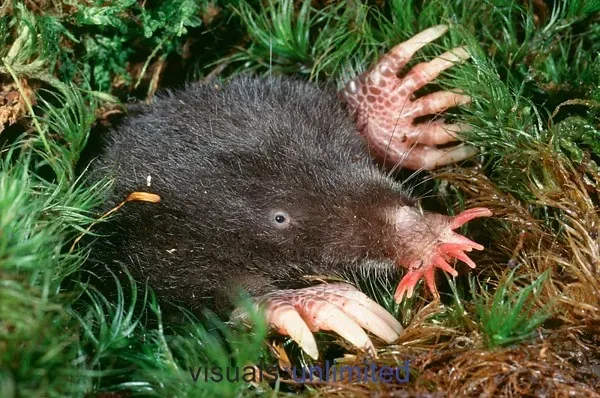
You have never seen a nose quite like this one. The star-nosed mole has an extraordinary, almost alien-looking snout that functions less like a nose and more like a supercomputer for touch. The star-nosed mole possesses one of the most unique sensory tools in the animal kingdom. Its nose, fringed with twenty-two pink appendages, is not only bizarre in appearance but performs an impressive function. These tentacle-like structures are covered with over 25,000 sensory receptors known as Eimer’s organs, allowing the mole to detect and interpret even the faintest tactile signals. This hyper-sensitive nose enables the star-nosed mole to identify and devour its prey in under a quarter of a second, making it one of the fastest foragers known.
What’s even more astonishing is that this creature can actually smell underwater. The star-nosed mole can smell underwater by partially exhaling to hold an air bubble on the tip of their nose to absorb surrounding odours before inhaling the bubble and deciphering the scent molecules in it. I know it sounds crazy, but this tiny, nearly blind creature has effectively solved two sensory puzzles that would confound even the best human engineers. It’s a reminder that the animal world is endlessly inventive.
7. The Monarch Butterfly: A Living GPS with a Weather Radar
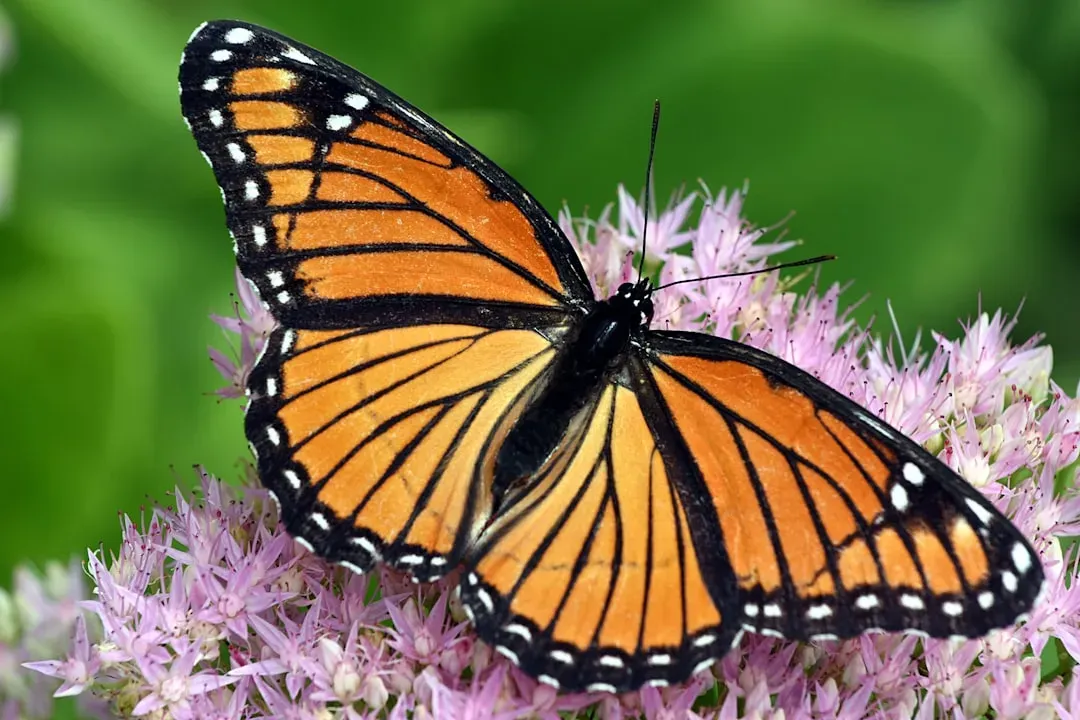
You need Google Maps to drive somewhere new. The monarch butterfly navigates thousands of miles across a continent without a single wrong turn, and it uses senses you simply don’t possess. Monarch butterflies can sense the Earth’s magnetic field, enabling them to navigate an annual pilgrimage from Canada to Mexico, and back again. That alone would be remarkable, but the butterfly’s sensory toolkit doesn’t stop there.
These delicate creatures might look fragile, but their ability to detect barometric pressure changes makes them natural meteorologists. Monarch butterflies alter their migration routes based on upcoming storms, and researchers studying their flight patterns found that these butterflies make subtle course corrections when air pressure drops, sometimes avoiding dangerous weather days in advance. This instinctive ability to sense weather shifts plays a crucial role in their 3,000-mile journey to Mexico each year. Scientists are now studying butterfly sensory organs to develop better storm prediction models, hoping to improve early-warning systems for extreme weather events. A delicate butterfly as the inspiration for disaster technology. You genuinely couldn’t make this up.
8. The Catfish: Tasting the World Through Its Entire Body
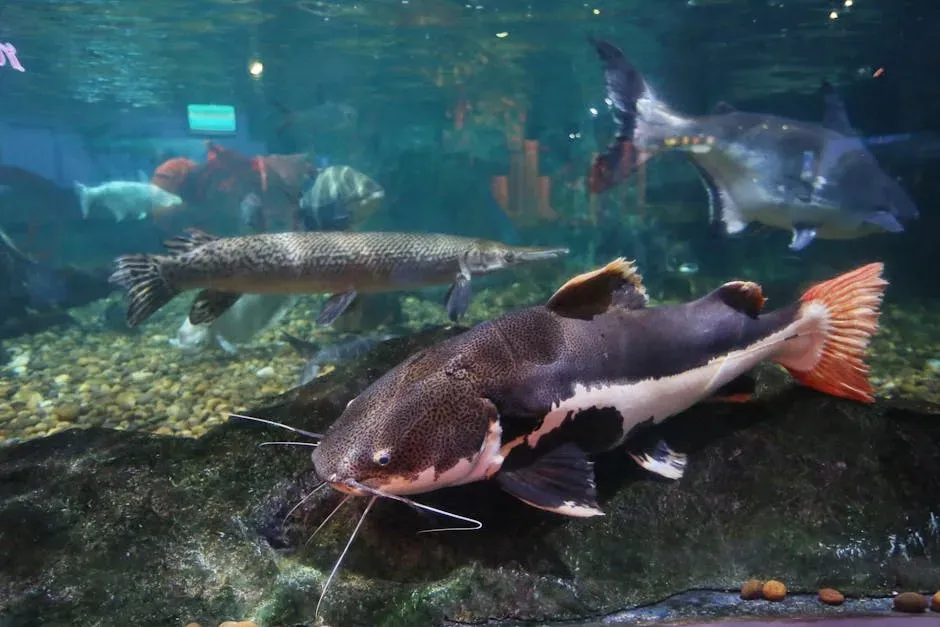
You taste things with your tongue. Fair enough. The catfish tastes the entire world around it – with its whole body. Catfish have evolved a remarkable method of taste detection by having taste buds not just in their mouths, but all over their bodies. This adaptation enables them to taste their surroundings and find food in the murky waters where they often reside. With around 100,000 taste buds, the catfish’s skin is an extraordinary sensory organ, allowing these fish to be effective scavengers.
The catfish has up to 175,000 taste-sensitive cells across its entire body, compared to an average person with only 10,000 taste buds. Along with its four pairs of whiskers, these taste cells help the fish taste its food and locate any prey nearby. Think about walking through your kitchen and tasting every surface you brush against, identifying every ingredient stored in your pantry just by touching it. That’s effectively the catfish’s everyday reality. It’s strange, a bit overwhelming to imagine, and utterly spectacular from an evolutionary standpoint.
Conclusion: The World Is Richer Than You’ll Ever Fully Know
After reading through these eight incredible creatures, it’s hard not to feel a little humbled. Animals possess a remarkable array of sensory capabilities that far exceed human limitations, granting them access to perceptual realms that are entirely invisible to you. Every creature on this list has spent millions of years refining a sensory tool that helps it survive, hunt, communicate, and thrive in ways that no human technology has yet fully replicated.
No creature can harness all of these special senses at once, and each species has adapted to its own ecological niche, evolving the best senses for their specific habitat. That is what makes the natural world so diverse and wonderful. You share this planet with animals that see colors you’ll never see, hear sounds buried deep in the earth, and feel electrical pulses from heartbeats hidden under sand. The world, it turns out, is infinitely richer than your five senses will ever reveal.
So next time you feel like you’ve got a pretty good handle on reality, just remember the catfish tasting the water with its skin, or the bat painting a perfect portrait of a dark cave in pure sound. Which of these incredible creatures surprised you the most? Tell us in the comments!