
Walk under a ladder and bad luck will follow. Break a mirror and seven years of misfortune await. Cross your fingers and good fortune might come your way. These beliefs persist across cultures and generations, defying our rational, scientific age.
You might dismiss as outdated nonsense, yet research shows that roughly one in four Americans considers themselves superstitious. Even skeptics often find themselves unconsciously knocking on wood or avoiding the number thirteen. Scientists have spent decades studying why these irrational beliefs maintain such a grip on the human mind, and their findings reveal fascinating truths about how your brain works.
Your Brain’s Pattern Recognition Goes into Overdrive
Humans evolved to be skilled pattern seeking creatures, and those who excelled at spotting meaningful connections in their environment survived to pass on their genes. This evolutionary advantage comes with an unexpected side effect: your brain sometimes finds patterns where none exist.
Consider what happens when you wear your lucky shirt to an important job interview and actually get the position. Your pattern-seeking brain immediately links these two events, even though countless other factors likely influenced the outcome. The problem in seeking and finding patterns is knowing which ones are meaningful and which ones are not.
This hyperactive pattern detection served our ancestors well when spotting predators or finding food sources could mean the difference between life and death. Natural selection can favour strategies that lead to frequent errors in assessment as long as the occasional correct response carries a large fitness benefit. Better to assume that rustling bush contains a tiger and be wrong ninety-nine times than to ignore it once and become lunch.
Confirmation Bias Reinforces What You Already Believe

When you believe in , you often look for evidence to support them. When your brain unconsciously scans the environment for information that validates what you believe, it ignores everything else. This selective attention creates a powerful feedback loop that strengthens superstitious beliefs over time.
Think about someone who considers thirteen their unlucky number. People tend to experience confirmation bias, a tendency to interpret information that meets our preconceptions. They’ll remember every minor mishap that occurs on the thirteenth but completely forget the ordinary days when nothing bad happened.
People often dismiss these errors by rationalizing or finding excuses (such as ‘it only works if I wear my lucky shirt and eat potato chips’ or ‘one of the main players was injured so this doesn’t count’). Your mind becomes remarkably creative at explaining away contradictory evidence while highlighting anything that seems to support your beliefs.
The Illusion of Control Provides Psychological Comfort
Life feels unpredictable and chaotic, but offer an appealing illusion that you can influence outcomes through specific actions or rituals. In challenging times, superstitious thinking provides an illusion of control over uncontrollable outer circumstances. It can have a soothing effect on one’s anxiety about the unknown and provide a sense of dominance.
This psychological comfort explains why flourish during times of uncertainty. Superstition is also highly prevalent within sport – especially in highly competitive situations. Four out of five professional athletes report engaging with at least one superstitious behaviour prior to performance. Within sport, have been shown to reduce tension and provide a sense of control over unpredictable, chance factors.
Even when you intellectually understand that your lucky charm cannot actually influence external events, the ritual still provides emotional benefits by creating a feeling of agency in situations where you would otherwise feel helpless.
Dual-Process Thinking Creates Mental Shortcuts
Jane Risen, a professor of behavioral science at the University of Chicago Booth in Illinois and a member of the American Psychological Society, has used the so-called dual process model of cognition to explain our belief in . According to Risen (and other renowned authors, such as Daniel Kahneman), humans can think both “fast” and “slow.” The former mode of thinking is snappy and intuitive, while the latter is more rational.
Your fast-thinking system operates automatically and emotionally, generating immediate gut reactions to situations. When you see a black cat cross your path, this system instantly triggers feelings of unease or concern. Your slow-thinking system might rationally analyze the situation and conclude that cats cannot influence luck, but error detection does not automatically involve error correction. In other words, people can realize that their belief is wrong but still act on it.
This explains why even highly educated individuals often engage in superstitious behavior while simultaneously acknowledging its irrationality. The emotional response happens faster than rational analysis can override it.
Anxiety Reduction Through Ritual Behavior

can provide reassurance and can help to reduce anxiety in some people. But while this may well be true, research has shown that actions associated with can also become self-reinforcing – in that the behaviour develops into a habit and failure to perform the ritual can actually result in anxiety.
The psychological mechanism works similarly to a security blanket for adults. When facing stressful situations like exams, job interviews, or medical procedures, performing familiar superstitious rituals can calm your nervous system and reduce cortisol levels. Sometimes can have a soothing effect, relieving anxiety about the unknown and giving people a sense of control over their lives. This may also be the reason why have survived for so long – people have passed them on from generation to generation.
The calming effect becomes particularly powerful when the ritual has been practiced repeatedly over time, creating strong neural pathways that associate the behavior with feelings of safety and comfort.
Social Learning and Cultural Transmission Shape Beliefs

Stuart Vyse did some work on this. There are three basic ways people acquire . One is through being directly taught. So you look at little kids like in kindergarten or first grade, they’re telling each other, “Don’t step on a crack. You’ll break your mother’s back.” I think it’d be hard to come up with that by yourself. That’s taught.
Children absorb superstitious beliefs from their social environment long before they develop critical thinking skills. Parents, peers, and cultural institutions all contribute to transmitting these ideas across generations. Variation in can be explained with ideas of cultural evolution and environmental psychology. Meme, a unit of cultural transmission describes cultural evolution.
Once these beliefs become embedded in childhood, they create lasting neural pathways that influence behavior throughout life. Even when adult reasoning challenges these beliefs, the emotional associations formed in early development often remain intact and continue to influence decision-making processes.
Evolutionary Advantage of False Alarms

Superstitious behaviours, which arise through the incorrect assignment of cause and effect, receive considerable attention in psychology and popular culture. Perhaps owing to their seeming irrationality, however, they receive little attention in evolutionary biology. Here we develop a simple model to define the condition under which natural selection will favour assigning causality between two events. This leads to an intuitive inequality that shows that natural selection can favour strategies that lead to frequent errors in assessment as long as the occasional correct response carries a large fitness benefit.
People are more likely to attribute an event to a superstitious cause if it is unlikely than if it is likely. In other words, the more surprising the event, the more likely it is to evoke a supernatural explanation. This is believed to stem from an effectance motivation – a basic desire to exert control over one’s environment. When no natural cause can explain a situation, attributing an event to a superstitious cause may give people some sense of control and ability to predict what will happen in their environment.
From an evolutionary perspective, it’s better to overreact to potential threats than to ignore real dangers. Your ancestors who mistakenly avoided harmless situations lived longer than those who failed to recognize actual threats. This bias toward false alarms helps explain why superstitious thinking feels so natural and why it emerged independently across human cultures worldwide.
Conclusion
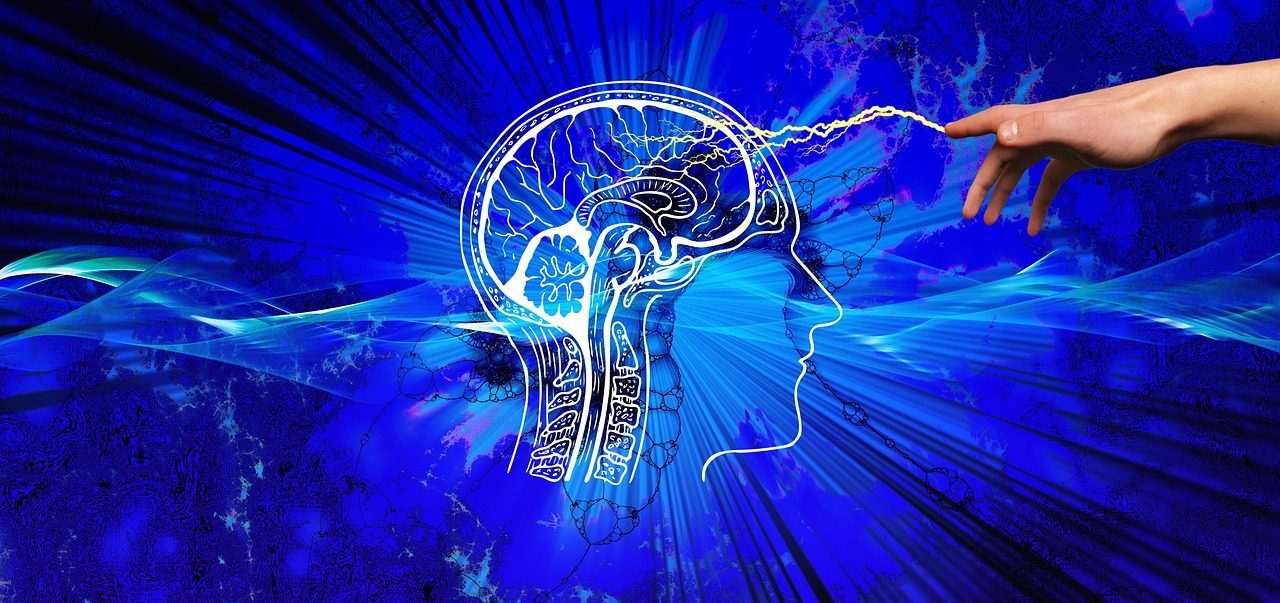
Science reveals that aren’t simply irrational quirks but rather predictable outcomes of how your brain processes information, manages anxiety, and navigates uncertainty. These beliefs emerge from the same cognitive mechanisms that helped humans survive and thrive for millennia.
Understanding the scientific basis of superstitious thinking doesn’t necessarily eliminate these beliefs, but it does provide insight into the fascinating complexity of human psychology. The next time you find yourself knocking on wood or avoiding a particular number, you’ll know exactly why your brain finds such behaviors so compelling. What do you find yourself following, even when you know better?
Hi, I’m Andrew, and I come from India. Experienced content specialist with a passion for writing. My forte includes health and wellness, Travel, Animals, and Nature. A nature nomad, I am obsessed with mountains and love high-altitude trekking. I have been on several Himalayan treks in India including the Everest Base Camp in Nepal, a profound experience.