
Have you ever wondered if your thoughts might be more than just electrical signals bouncing around your brain? The question seems almost absurd at first. Yet, right now, researchers across the globe are uncovering evidence that challenges everything we thought we knew about consciousness. The answer might lie in one of the most mysterious realms of science: quantum mechanics.
You probably know quantum mechanics as that strange physics that governs atoms and particles. Things that can be in two places at once, particles that communicate instantly across vast distances. It sounds like science fiction, doesn’t it? Here’s the wild part. A growing number of scientists now suspect these bizarre quantum effects aren’t just happening in isolated laboratory experiments. They might be happening inside your brain right now, shaping the very essence of what makes you conscious. Let’s dive in.
The Observer Effect Suggests Your Awareness Shapes Reality
Think about this for a moment. Physicists have found that observation of quantum phenomena by a detector or an instrument can change the measured results of this experiment. This phenomenon, known as the observer effect, has puzzled scientists for decades. The measurement itself fundamentally alters what’s being observed, raising a perplexing question: What role does consciousness play in collapsing quantum possibilities into definite states?
Some approaches, like the N-frame model, propose that consciousness of a human observer is a crucial part of quantum observations and that a person’s conscious thoughts can affect how a superposition of states will collapse when observed. Honestly, it’s hard to say for sure where physical measurement ends and conscious awareness begins. How does the quantum somehow connect to our conscious measurements, and does it imprint our measurements in the curvature of spacetime as Sir Roger Penrose has proposed? The implications are staggering. Your very act of observing might not just record reality but actively participate in creating it.
Quantum Entanglement Could Explain How Your Brain Synchronizes
Yet how various circuits throughout the brain align their firing is an enduring mystery, one some theorists suggest might have a solution that involves quantum entanglement. Picture this: millions of neurons firing simultaneously, somehow orchestrated into the unified symphony of your conscious experience. Classical physics struggles to explain this binding problem. Entanglement offers something radically different.
A study from Shanghai University uses mathematical models to suggest that certain fatty structures (which sheath the nerve cell’s axon) could potentially produce quantum entangled biphoton pairs, potentially aiding in synchronization across neurons. Researchers suggest that myelin sheaths, which are protective coatings surrounding the nerve fibers that connect neurons, might interact with infrared photons produced within the brain. Let’s be real, this is speculative. Yet the idea that entangled photons could facilitate instantaneous communication across your neural networks would elegantly solve the puzzle of how disparate brain regions coordinate so seamlessly.
Microtubules Might Be Nature’s Quantum Computers Inside Your Neurons
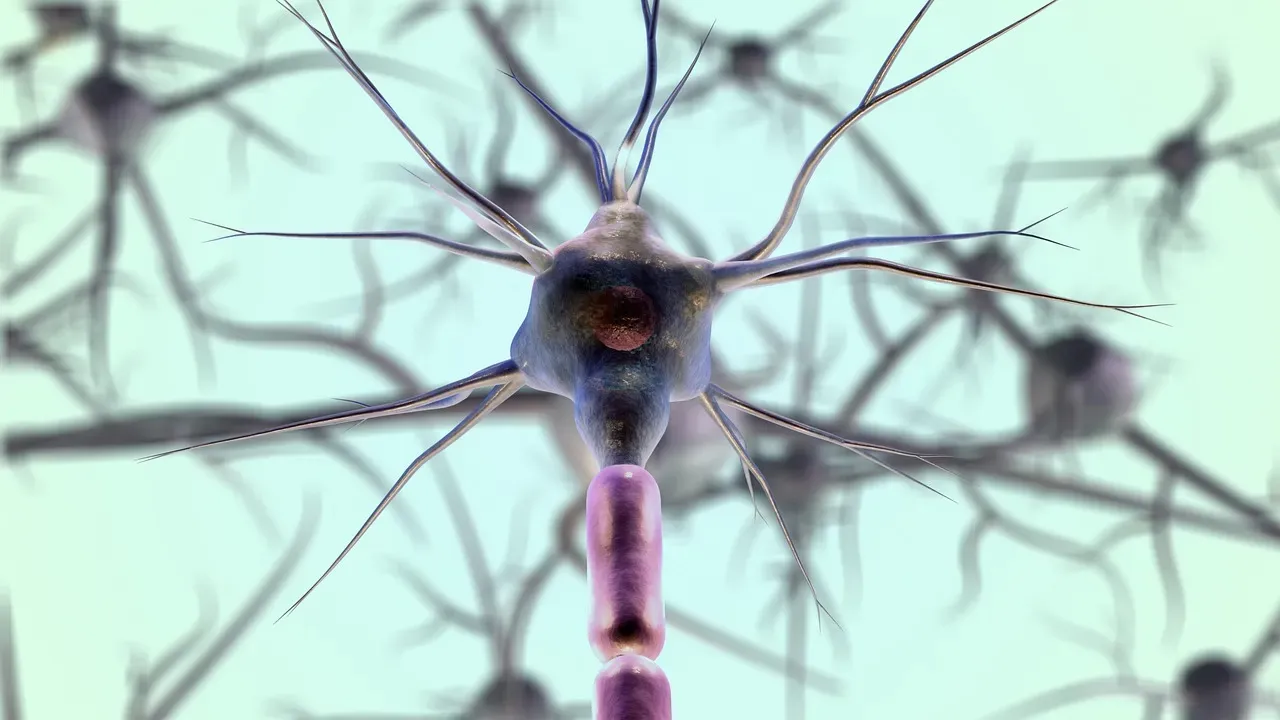
You’ve probably never heard of microtubules. These cylindrical protein structures sit inside your brain cells, performing structural functions. That’s the conventional view, anyway. The theory, called “orchestrated objective reduction” (Orch OR), was first put forward in the mid-1990s by mathematical physicist Sir Roger Penrose and anesthesiologist Stuart Hameroff, who suggested that quantum vibrational computations in microtubules were “orchestrated” by synaptic inputs and memory stored in microtubules.
Here’s what makes this fascinating. The recent discovery of warm temperature quantum vibrations in microtubules inside brain neurons by the research group led by Anirban Bandyopadhyay corroborates the theory and suggests that EEG rhythms also derive from deeper level microtubule vibrations. I know it sounds crazy, but nature has already demonstrated quantum coherence in warm biological systems through photosynthesis. Photosynthesis, the ubiquitous and essential mechanism by which plants produce food from sunlight, has been shown since 2006 to routinely utilize quantum coherence at warm temperatures. If plants can do it, why not brains?
Quantum Superposition May Generate Each Moment of Conscious Experience
Imagine existing in multiple states simultaneously until something forces you to choose. That’s superposition in the quantum realm. Orchestrated objective reduction is a theory postulating that consciousness originates at the quantum level inside neurons, with the mechanism held to be a quantum process called objective reduction that is orchestrated by cellular structures called microtubules. According to this view, your conscious moments aren’t continuous but rather discrete events.
Penrose proposed each OR event is an instant of subjective experience – a moment of conscious awareness, of ‘qualia’ intrinsic to the universe. Thus rather than consciousness causing collapse, collapse causes consciousness, or, is identical to consciousness. Think about that. Every conscious experience you have might be the result of quantum possibilities collapsing into definite states. Higher frequency Orch OR moments involve more tubulins, greater content, and are proposed to have higher experiential intensity. For example, 10 MHz events would require massive numbers of tubulins, such oscillations interfering holographically, resulting in slower cognitive epochs and EEG patterns.
The Brain’s Warm Environment Challenges But Doesn’t Eliminate Quantum Effects
Critics have long argued that the brain is simply too warm and chaotic for delicate quantum states to survive. It’s a reasonable objection. Tegmark estimates the duration of coherence to be on the order of 10^-13 seconds, which is far smaller than the one tenth of a second associated with conscious events. Case closed, right? Not quite.
Hagan, Hameroff, and Tuszynski recalculated decoherence times, accounting for dielectric properties, dipole interactions, and quantum shielding effects. Their revised estimates extended coherence times significantly longer, up to milliseconds or more in their models, sufficient to align with neurophysiological processes. Still, the debate rages on. Evidence has now shown warm quantum coherence in plant photosynthesis, bird brain navigation, our sense of smell, and brain microtubules. Nature appears far more resourceful than we initially suspected. Evolution has had billions of years to solve problems we’re only beginning to understand.
Anesthesia’s Effect on Consciousness Points to Quantum Mechanisms

Here’s something that really makes you think. Anesthetics selectively erase consciousness while leaving non-conscious brain functions intact. How? Work from the laboratory of Roderick G. Eckenhoff suggests that anesthesia, which selectively erases consciousness while sparing non-conscious brain activities, acts via microtubules in brain neurons. The conventional explanation struggles to account for why such structurally diverse molecules all produce the same effect.
Researchers observed different anesthetic effects in mice using different xenon isotopes. The finding suggested a link between quantum processes and the modulation of consciousness. The xenon form with a larger spin value might create larger superpositions, correlating with more complex conscious experiences. The isotopes differ only in their nuclear spin, a quantum property. This hints strongly that consciousness might depend on quantum-level interactions. If quantum effects in microtubules truly underlie consciousness, disrupting those effects should indeed switch consciousness off. That’s exactly what we observe.
Quantum Biology Reveals Life Already Exploits Quantum Phenomena

The argument against quantum consciousness often rests on biological implausibility. Living systems are too messy, the thinking goes, for quantum effects to matter. Yet evidence from quantum biology tells a different story entirely. Quantum effects have been implicated in photosynthesis, a process fundamental to life on earth. They are also possibly at play in other biological processes such as avian migration and olfaction.
Magnetoreception in migratory songbirds, possibly mediated by the radical pair mechanism in the cryptochrome protein, illustrates how quantum effects can influence animal behavior and navigation. Birds use quantum entanglement to navigate across continents. Plants harness quantum coherence to convert sunlight into energy with near-perfect efficiency. Research in quantum biology has shown that life itself may rely on quantum processes. Plants, for instance, use quantum mechanics to enhance photosynthesis, with photons transformed into excitons. If evolution has already weaponized quantum mechanics throughout the living world, why would the brain be exempt? It wouldn’t be the first time humans underestimated nature’s ingenuity.
Conclusion
The intersection of quantum mechanics and consciousness represents one of the most profound frontiers in science. While much remains speculative and fiercely debated, the mounting evidence from quantum biology, neuroscience, and physics suggests we may need to fundamentally rethink what consciousness is and how it arises. From the observer effect potentially linking awareness to reality itself, to microtubules possibly functioning as quantum computers, to the discovery that life routinely exploits quantum phenomena, the pieces of this puzzle are slowly coming together.
What’s certain is that our brains are far stranger and more magnificent than we imagined. Whether consciousness ultimately proves to be quantum in nature or whether these quantum effects play only a supporting role, the investigation itself is reshaping our understanding of mind, matter, and the nature of reality. The answers might challenge your most fundamental assumptions about what it means to be conscious. What do you think? Could your thoughts truly be quantum? Tell us in the comments.