
If you’ve ever stared at the night sky and felt that weird mix of awe and mild existential dread, you’re not alone. Physicists feel that too – except they have equations, billion-dollar experiments, and sleepless nights to go with it. For all our scientific progress, some of the biggest questions about reality itself are still just… hanging there, taunting us.
These aren’t small details or technical footnotes. These are the gaping holes in our understanding of the universe, the “wait, that really shouldn’t work like that” problems that refuse to go away. Some of them might be solved in your lifetime. Others could need entirely new ways of thinking. Either way, once you know about them, it’s hard to stop thinking about them.
1. What Is Dark Matter Actually Made Of?
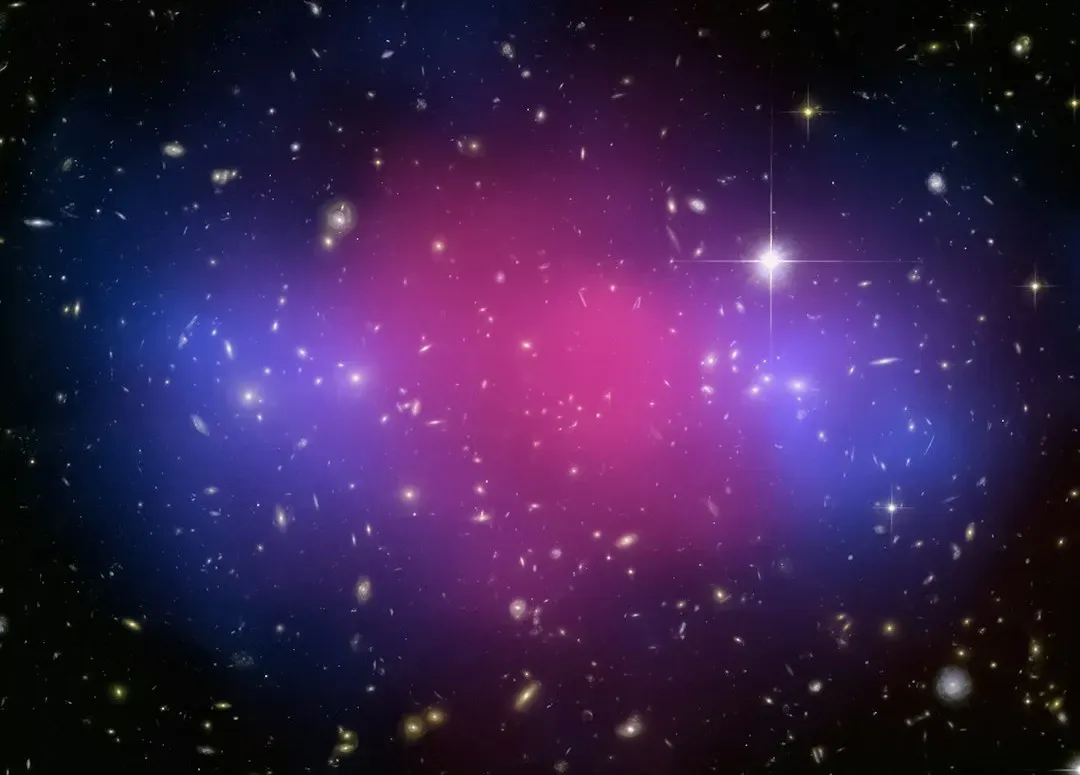
Imagine looking at a galaxy spinning so fast it should fling its stars out into space like kids flying off a badly designed merry-go-round – and yet everything holds together. That’s the cosmic clue that kicked off the dark matter mystery. When astronomers measured how galaxies rotate and how galaxy clusters move, the math only made sense if there was far more mass than what we could see. The invisible stuff, whatever it is, seems to outweigh normal matter by roughly about five to one.
The frustrating part is that we still have no confirmed idea what this stuff is. For years, many scientists bet on WIMPs (weakly interacting massive particles), and huge underground detectors have been patiently waiting for a telltale signal, mostly finding nothing. Other ideas have crept in: axions, sterile neutrinos, or even more exotic candidates that sound like science fiction props. At this point, some researchers are even willing to tweak the laws of gravity themselves instead of adding unseen particles, but those modified gravity ideas struggle to explain all the data at once. Dark matter sits there in the equations like a huge cosmic shrug: clearly doing something, stubbornly refusing to let us see it.
2. Why Is the Universe Expanding Faster and Faster?
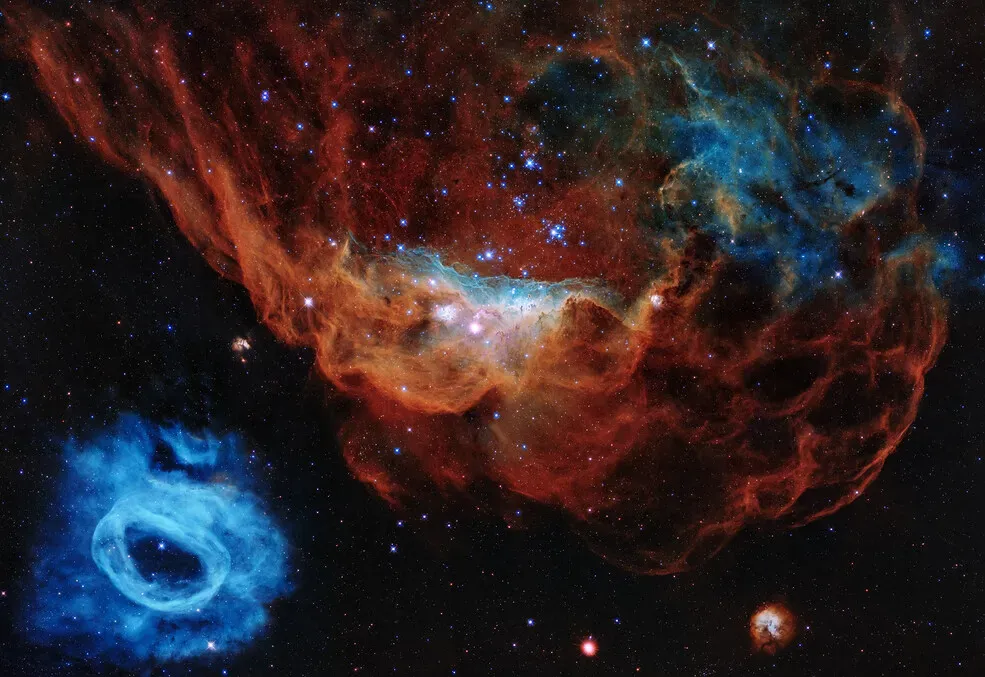
You’d think gravity, being attractive, should gradually slow down the expansion of the universe, like a ball tossed upward that eventually decelerates. Instead, observations of distant supernovae in the late twentieth century showed something completely unexpected and slightly horrifying: the expansion is speeding up. It’s as if you threw a ball into the air and halfway up it just decided to rocket away on its own. This accelerating expansion has been attributed to a mysterious ingredient dubbed dark energy, which appears to make up the majority of the cosmos.
Dark energy might be some kind of energy built into empty space itself, related to what physicists call the cosmological constant. The problem is, when you try to calculate that energy using quantum theory, you get an answer that is absurdly, catastrophically too large – so far off that calling it a mismatch feels like an understatement. Other ideas suggest that maybe gravity changes on the largest scales, or that we’re missing something basic about how spacetime works. The really haunting part is that dark energy isn’t just a side detail; it controls the ultimate fate of the universe, yet right now it’s like having your life steered by a stranger whose face you’ve never seen.
3. How Do We Reconcile Quantum Mechanics with Gravity?
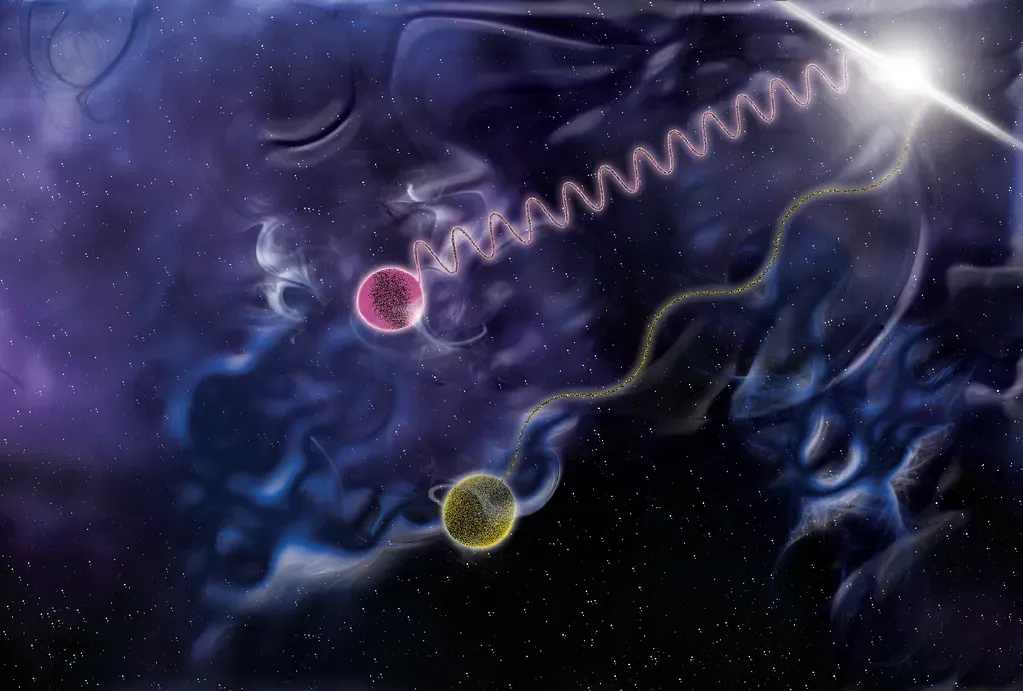
On small scales, quantum mechanics rules with bizarre precision: particles are waves, probabilities replace certainties, and nature behaves like a cosmic casino that somehow always pays out according to the rules. On large scales, Einstein’s general relativity takes over, describing gravity as the curvature of spacetime itself. Both theories are astonishingly accurate in their own realms – they’ve been tested again and again and keep winning. The problem shows up when you try to mash them together in places where both should matter, like inside black holes or at the very beginning of the universe.
When physicists attempt to apply quantum rules to spacetime, the math tends to blow up into infinities that make no sense. Various approaches have been proposed: string theory, with its extra dimensions and vibrating fundamental strings; loop quantum gravity, which suggests spacetime might be made of discrete chunks; and other creative ideas that sound wild even to people used to quantum weirdness. Decades in, there’s still no consensus, no clear experimental smoking gun that says “this is the right path.” It’s like having two brilliant friends who are always right individually but cannot be in the same room without starting an argument nobody can resolve.
4. Why Does Time Only Flow in One Direction?

In everyday life, time feels brutally one-way: glasses shatter but don’t reassemble, you age but never grow younger, and spilled coffee never jumps back into the mug. Yet the fundamental equations of physics – the deep laws that govern particles and forces – mostly don’t care which way time runs. They work just as well forward as backward. That mismatch between reversible laws and irreversible experience is known as the arrow of time, and it’s one of those puzzles that seems simple at first glance and then gets slipperier the more you think about it.
Physicists often connect the arrow of time to entropy, a measure of disorder. The universe started in a state of extremely low entropy and has been increasing in disorder ever since, giving us a direction: past to future. But that raises another question that cuts even deeper: why did the universe begin in such a bizarrely ordered state in the first place? Some ideas point to the structure of spacetime as the universe inflates, others to deeper principles we don’t yet grasp. When you zoom out far enough, the feeling that time just “flows” starts to look less like a given and more like a riddle we haven’t really cracked.
5. What Really Happens Inside a Black Hole?
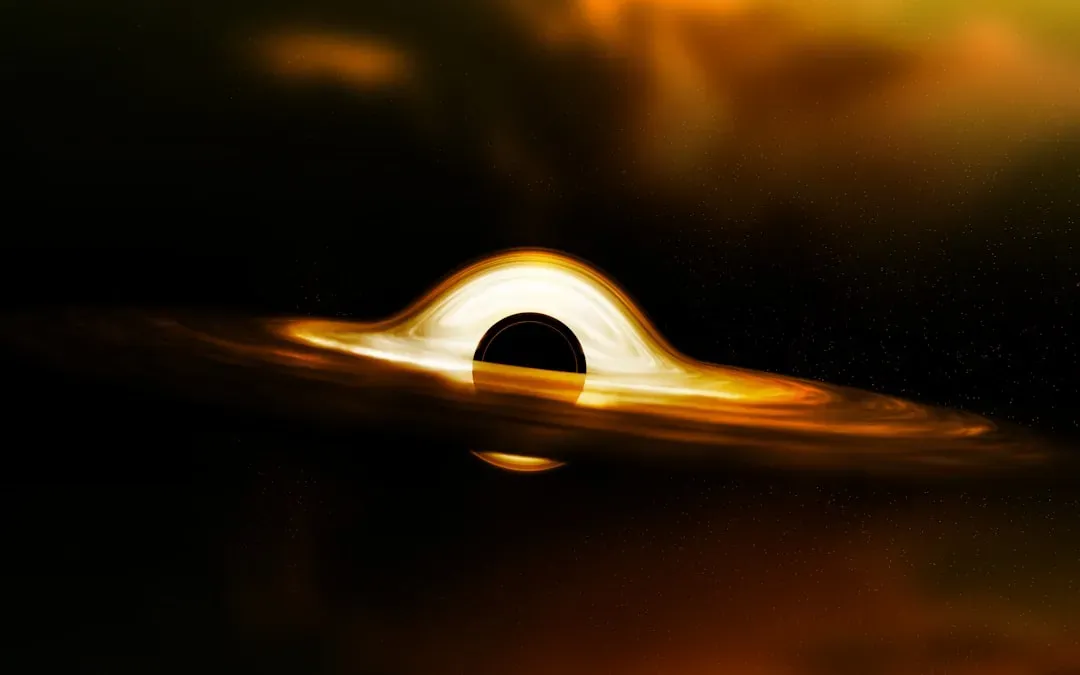
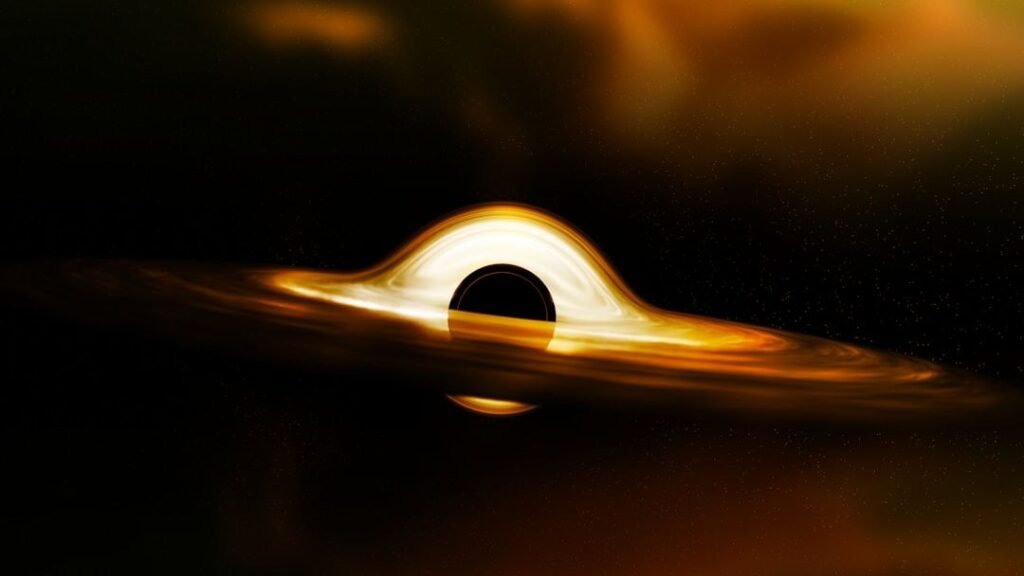
Black holes are like the universe’s “do not enter” signs turned up to maximum. Once something crosses the event horizon, not even light can escape, at least according to classical general relativity. The equations predict that everything falling in gets crushed into an infinitely dense point called a singularity, where spacetime curvature becomes infinite and the theory itself essentially breaks. That’s a big red flag: it usually means our description fails, not that nature literally produces infinities with a straight face.
Things get even weirder when you add quantum mechanics to the mix. Black holes seem to radiate very faint heat, slowly evaporating over incredibly long timescales, which leads to the infamous information paradox. If information about what fell in is truly lost, that clashes painfully with quantum theory, which insists information is always preserved. Different proposals to resolve this – from warped horizons to subtle correlations in the outgoing radiation – are still being argued over. Inside a black hole sits one of the sharpest stress tests for our best theories, and so far, neither side is clearly winning.
6. Why Does the Universe Contain More Matter Than Antimatter?
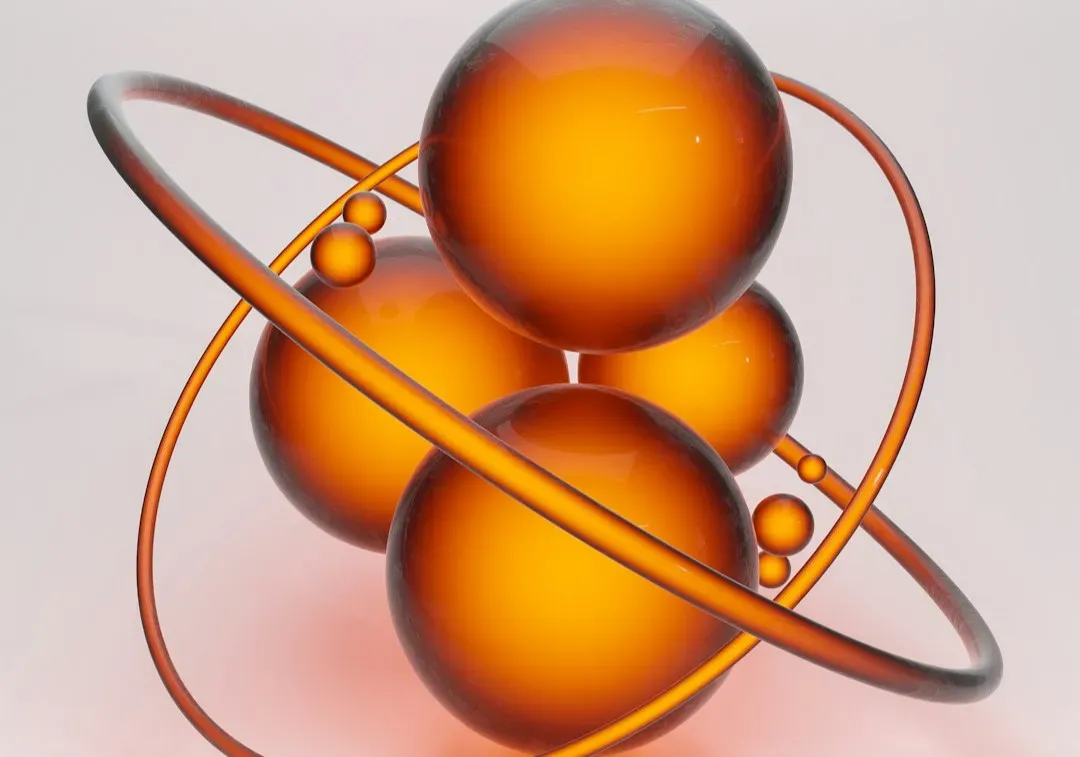
According to our best understanding of the early universe, the Big Bang should have produced matter and antimatter in nearly equal amounts. When those meet, they annihilate into pure energy. If everything had been perfectly symmetric, we’d be left with a smooth bath of radiation and almost no matter at all – no stars, no planets, no you reading this sentence. Yet the universe today is overwhelmingly made of matter, with antimatter appearing only fleetingly in high-energy processes. That imbalance is known as baryon asymmetry, and it’s one of those silent, background mysteries that underpins every familiar thing.
Experiments have seen subtle differences in how matter and antimatter behave, in processes called CP violation, but the effects we’ve measured so far appear far too weak to explain the huge imbalance we see. This suggests that something happened in the early universe that our current theories only partially capture, perhaps involving new particles or interactions that haven’t been discovered yet. Researchers are probing this from multiple angles: smashing particles together in accelerators, watching neutrinos morph from one type to another, and modeling the universe’s first fractions of a second. The fact that existence itself seems to depend on a tiny tilt in the cosmic scales makes this puzzle feel intensely personal, even if the math is anything but.
7. Why Do the Constants of Nature Have the Values They Do?
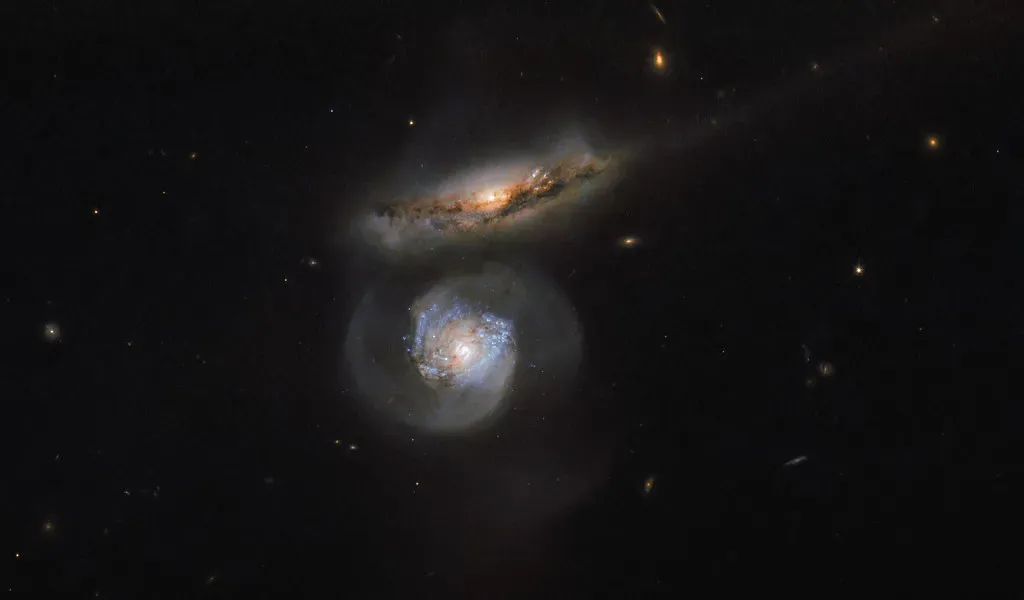
Physics relies on a handful of numbers that we treat as given: the strength of gravity, the mass of the electron, the speed of light, and a small bouquet of others that set the behavior of everything. They’re called fundamental constants, and we plug them into our equations as if they just fell from the sky. Change many of them even slightly, and the universe would be unrecognizable – no stable atoms, no long-lived stars, no complex chemistry. It’s like discovering the universe runs on a very specific recipe, with quantities so oddly tuned that it’s hard not to wonder how this particular menu got chosen.
Some physicists argue that these values might be explained by deeper theories in which what we call “constants” emerge from more basic ingredients. Others lean on the idea of a multiverse, where countless regions of spacetime have different constants, and we just happen to live in one that allows observers to exist. That explanation feels unsatisfying to many, like saying you won the lottery because somewhere, someone had to. For now, we don’t know if there’s a simple, elegant reason behind these numbers or if they’re just brute facts. The question digs at something profoundly human: are we uncovering necessity, or just learning the quirks of our particular cosmic neighborhood?
Conclusion

These open puzzles in physics aren’t just abstract curiosities for specialists with too much chalk dust on their clothes. They sit right at the edge of what we know about reality, quietly shaping our best guesses about where science is heading next. Each mystery – dark matter, dark energy, quantum gravity, the arrow of time, black holes, matter’s dominance, and the tuning of constants – is like a loose thread sticking out of the fabric of our theories, daring someone brave enough to pull.
Maybe the next breakthroughs will come from massive experiments, or from a lone researcher staring at a whiteboard at three in the morning, or from a simple question asked by someone who hasn’t yet learned what’s supposed to be impossible. The uncomfortable truth is that we’re still very much beginners in understanding the universe, no matter how polished our equations look. If these puzzles keep experts awake at night, maybe that’s a sign that we’re asking the right questions, even if the answers are still hiding. Which of these mysteries do you secretly hope we crack first?