
The sky has always had a way of humbling us. Throughout history, people have looked upward and seen things they couldn’t explain – glowing orbs, crimson flashes high above storms, lights that hover for minutes and then vanish without a trace. Most of the time, science eventually catches up and offers a tidy explanation. Sometimes it doesn’t.
What’s striking is just how many of these luminous phenomena remain genuinely unresolved, even with modern sensors, satellite data, and international research teams working on them. These aren’t fringe folklore stories. Some of them have been studied in peer-reviewed journals for decades. Here’s a look at seven unexplained lights in the sky that researchers are still actively trying to understand.
Ball Lightning: The Floating Fireball Nobody Can Fully Explain
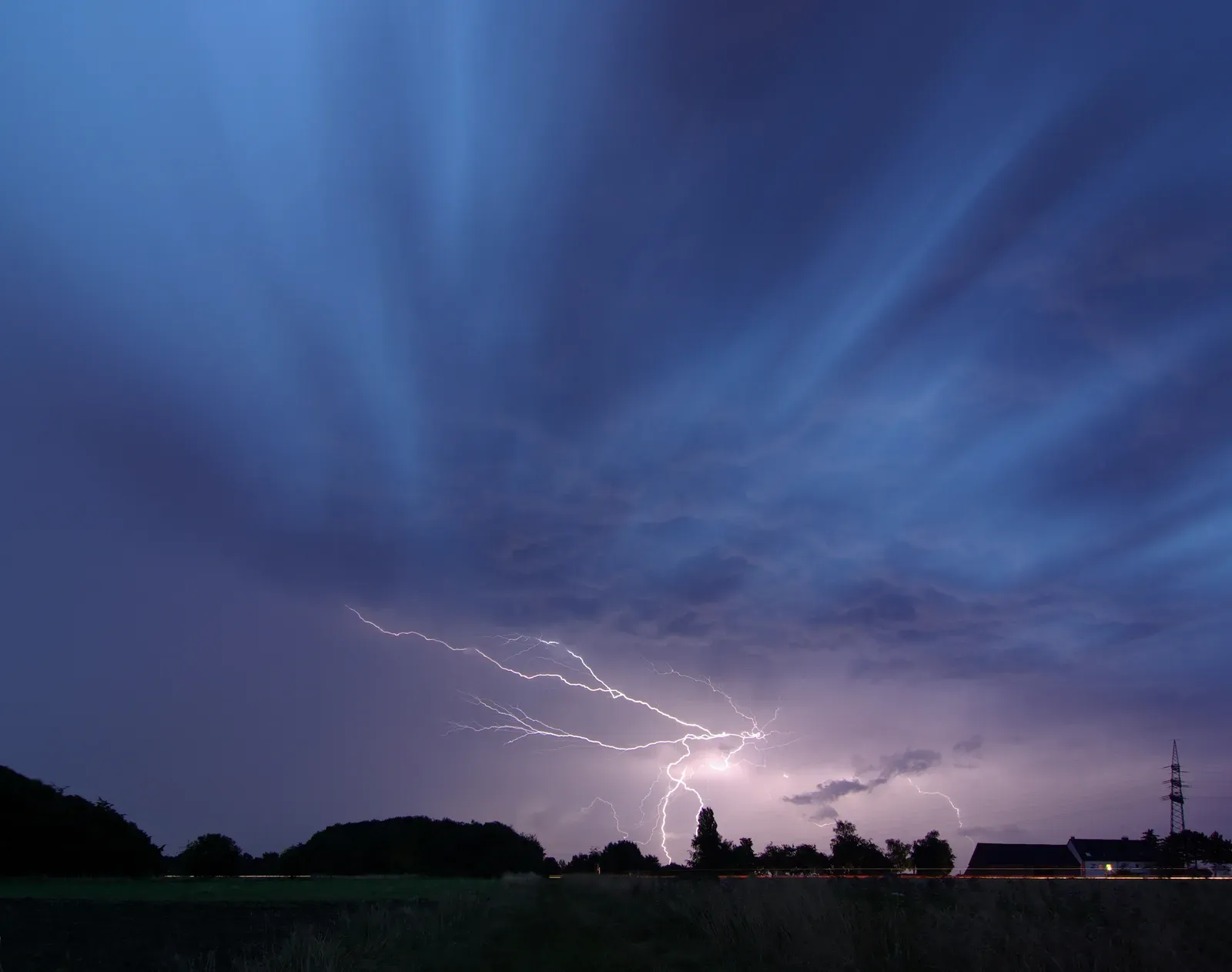
You’ve probably never seen it yourself, but if you ever do, you’re unlikely to forget it. Instances of ball lightning, which take the form of glowing electric orbs in the sky, have captivated and mystified people for centuries. The bizarre phenomenon, also known as globe lightning, usually appears during thunderstorms as a floating sphere that can range in color from blue to orange to yellow, disappearing within a few seconds. It’s one of those phenomena that sounds almost too strange to be real.
Yet the evidence points to its reality. With thousands of eyewitness reports but few instrumental records and no consensus about a theory, ball lightning remains an unsolved problem in atmospheric physics. Researchers from Lanzhou, China’s Northwest Normal University inadvertently captured a ball lightning event in 2012 while filming a thunderstorm. The spectrometer they used detected silicon, iron, and calcium in the ball, all elements present in the local soil, supporting the theory that ball lightning results from a ground strike creating a reaction between oxygen and vaporized elements from the soil.
There is at present no widely accepted explanation for ball lightning. Scientists have proposed over a dozen competing theories, from plasma bubbles to microwave energy to silicon aerosols. Understanding ball lightning could have broader implications in the field of plasma physics and even electromagnetic radiation. The quest to solve the puzzle of ball lightning is more than just satisfying human curiosity.
The Hessdalen Lights: Norway’s Persistent Valley Glow
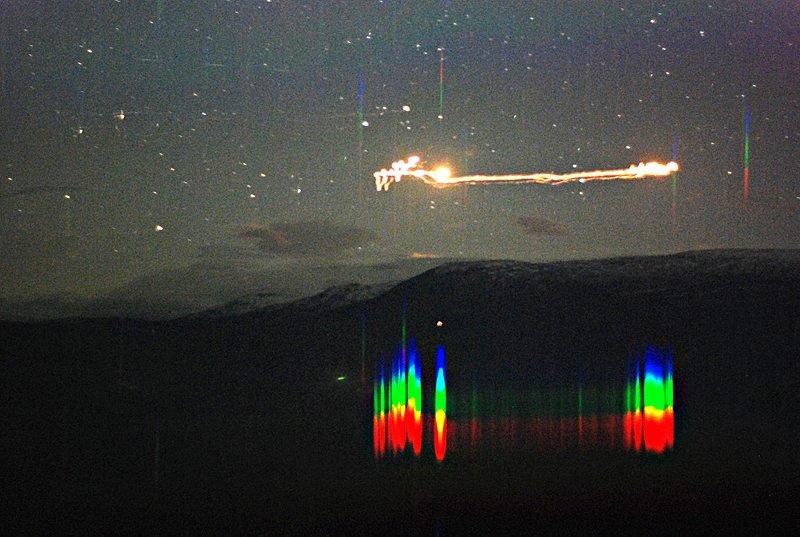
The Hessdalen lights are unidentified lights which have been observed in a 12-kilometre-long stretch of the Hessdalen valley in rural central Norway periodically since at least the 1930s. They appear both by day and by night, and seem to float through and above the valley. They are usually bright white, yellow, or red and can appear above and below the horizon. What makes this particular phenomenon unusual is how thoroughly it’s been studied – and how stubbornly unexplained it remains.
The Blue Box is the world’s first fully autonomous, multi-sensor anomaly detection system, continuously monitoring the Hessdalen sky since 1998. Research teams from Norway, Italy, and beyond have deployed cameras, spectrometers, magnetometers, and radar equipment across the valley. Spectral analysis has suggested the phenomena are composed of ionized gas, not a solid. The dominant chemical elements are hydrogen, oxygen, and nitrogen, but other elements like silicon and metals such as iron, scandium, and titanium suggest dust from the mining valley. Despite all this data, there is no consensus for an explanation of the phenomenon.
Red Sprites and ELVES: The Secret Lightning Zoo Above Storms
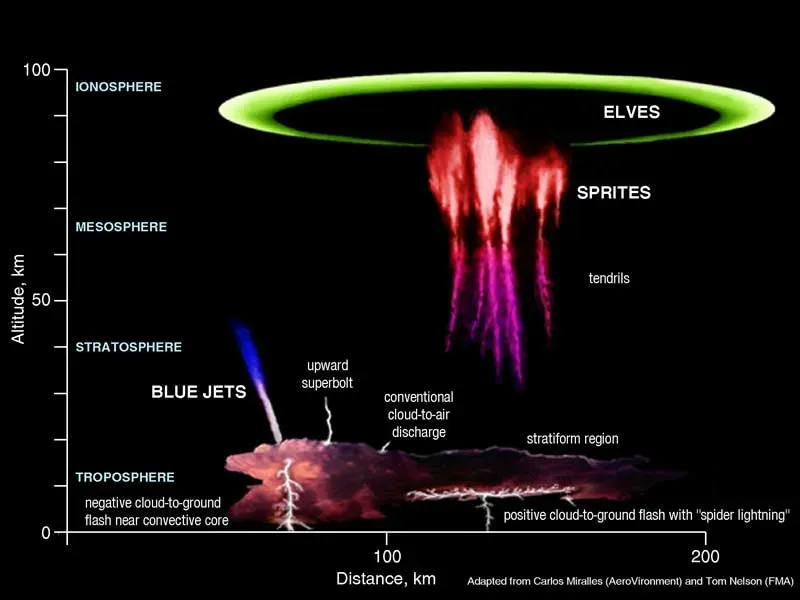
If you’ve never heard of a red sprite, you’re not alone. These are enormous electrical flashes that shoot upward above thunderstorms, invisible to anyone standing beneath the cloud. Sprites appear as luminous red-orange flashes and often occur in clusters above the troposphere at an altitude range of 50 to 90 kilometers. They were first photographed on July 4, 1989, by scientists from the University of Minnesota and have subsequently been captured in video recordings thousands of times.
Alongside sprites exists a full family of related phenomena. ELVES produce large diffuse and expanding ring-shaped glows, up to 400 kilometers in diameter. They occur in the ionosphere 100 kilometers above the ground over thunderstorms. The light is generated by the excitation of nitrogen molecules due to electron collisions energized by the electromagnetic pulse of a discharge from an underlying thunderstorm. What scientists are still working out is how these events affect Earth’s upper atmosphere. The community effort driving TLE research could help answer one of the most pressing questions – how climate change may impact their occurrence. Rising global temperatures will impact thunderstorm intensity and frequency, which are precursors for TLE activity.
The Marfa Lights: Texas’ Desert Mystery That Refuses to Go Away
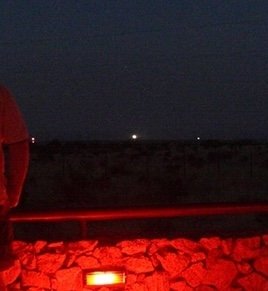
The Marfa Lights, also known as Marfa’s mystery lights or ghost lights, are an unexplained phenomenon observed near Marfa, Texas, where people report seeing glowing orbs of various colors, including white, red, blue, and yellow. The first historical record dates to 1883, when a young cowhand named Robert Reed Ellison saw a flickering light while driving cattle through Paisano Pass, initially assuming it was an Apache campfire. Other settlers told him they often saw the lights, but when they investigated, they found no ashes or other evidence of a campsite.
Researchers have worked hard to pin these lights down. For 20 nights in May 2008, scientists from Texas State University used spectroscopy equipment to observe the lights. They recorded a number of lights that could have been mistaken for lights of unknown origin, but in each case the movements and data could be explained as automobile headlights or small fires. They concluded that due to the rarity of observation of genuine Marfa lights – those with odd behavior not explainable as car lights – more research was necessary. Some events have resisted easy answers. Researchers reported observations of an extremely bright luminous object emitting 10 kilowatts of optical power near Marfa, Texas, which emitted light for more than three hours after a lightning strike, appearing in the same general region known for other Marfa light events.
Fast Blue Optical Transients: The Cosmic Flashes That Outshine Galaxies
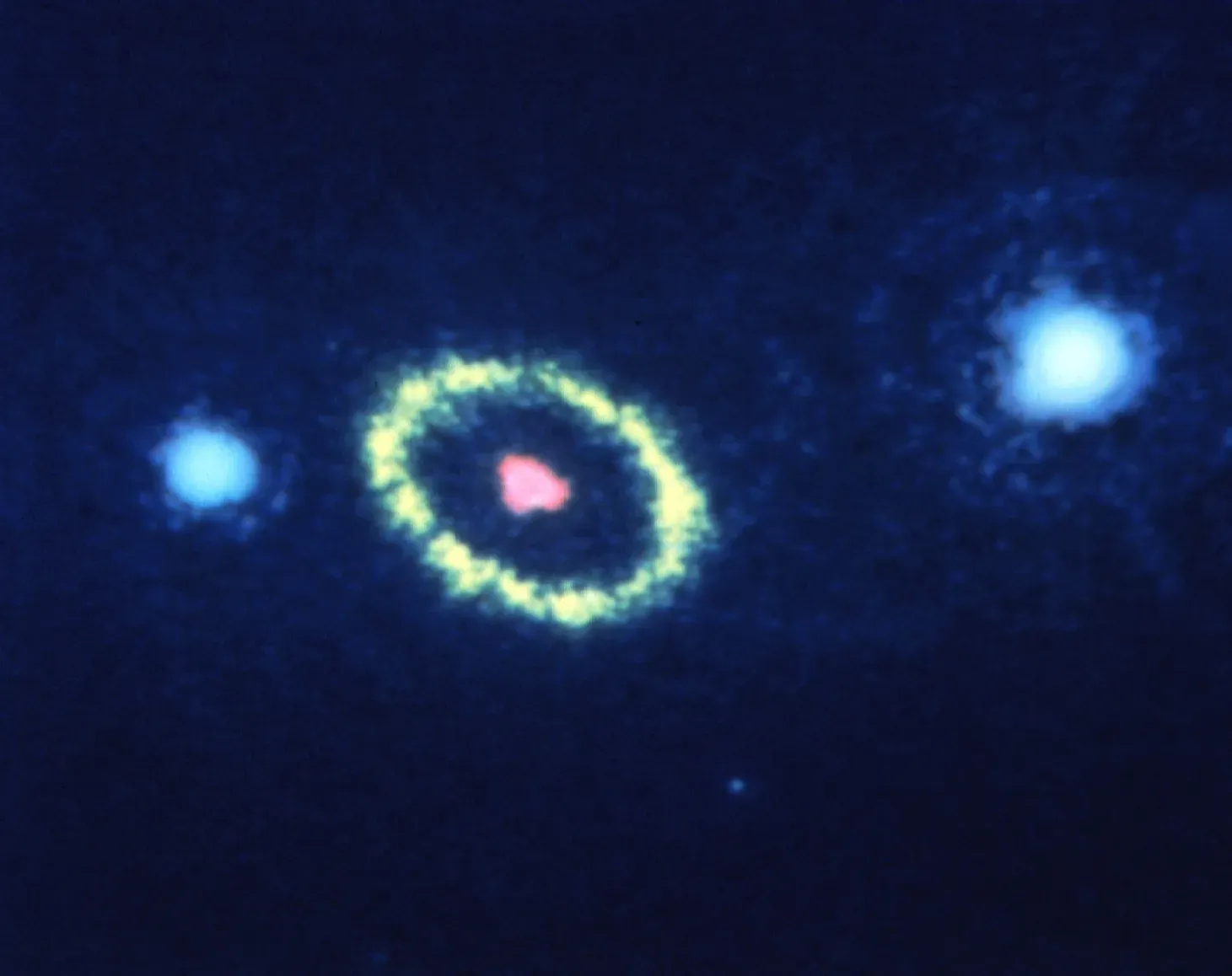
Step back from Earth’s atmosphere for a moment. Out in deep space, there’s a class of phenomena so bright and so fast that they barely give astronomers time to react. Among the more puzzling cosmic phenomena discovered over the past few decades are brief and very bright flashes of blue and ultraviolet light that gradually fade away, leaving behind faint X-ray and radio emissions. With slightly more than a dozen discovered so far, astronomers have debated whether they are produced by an unusual type of supernova or by interstellar gas falling into a black hole.
A major 2025 discovery helped narrow it down considerably. A team led by researchers from the University of California, Berkeley, concluded that these luminous fast blue optical transients are caused by an extreme tidal disruption, where a black hole of up to 100 times the mass of our sun completely shreds its massive star companion. LFBOTs are truly cosmic monsters, powered by the shredding of a massive star by a black hole. Still, this only answers part of the question. Fast optical blue transients are described as “fast” because although they explode at the same outrageous brightness as a superluminous supernova, their light rises and falls not in months but in days. Understanding exactly how and why they form so violently remains an active area of investigation.
Changing-Look Quasars: When Entire Galaxies Blink Without Warning
Some unexplained lights don’t flicker over a valley or a Texas desert. Some are entire galactic cores that switch behavior in ways that simply shouldn’t be possible. A kind of transient discovered in the past decade is called a changing-look quasar. It has the brightness of a normal quasar but rapidly changes its appearance in unexplainable ways. It should take thousands of years for a quasar to switch off and go from brilliantly active to quietly inactive. Yet astronomers have found dozens to hundreds of changing-look quasars that change their appearance by 200 percent in months – changes so large and so quick that they’re not theoretically explainable.
New sky surveys are finally giving researchers the data volume they need to investigate. The Zwicky Transient Facility scans the entire northern sky every two nights and compares each evening’s images with the ones taken two days before. The Vera C. Rubin Observatory in Chile, which came online in 2025, will survey the entire southern sky every three nights, identifying changes within 60 seconds of detection and finding 10 million changes every day. Whether these instruments finally help crack the mystery of changing-look quasars remains to be seen. With such a large amount of data, astronomers can begin to study credible demographics – moving from just finding these wild, unlikely phenomena to figuring out what they are.
Historical Sky Transients Linked to Nuclear Testing: The VASCO Puzzle

This one is genuinely strange – and it comes with hard data. Mysterious lights and reports of unidentified anomalous phenomena in the 1940s and 1950s appear to be somehow linked to nuclear testing. An analysis of archival astronomical observations, combined with eyewitness accounts of UAPs, suggests that the nuclear age left its fingerprints on the astronomical record, before the Space Age even began. The research comes from the VASCO project, which has been painstakingly sifting through decades of old photographic sky surveys.
VASCO researchers analyzed 106,000 transients that appeared like stars in a single exposure between the years 1951 and 1957, disappearing before the next observation. What they found was a striking correlation. The VASCO team found a correlation between the unexplainable lights and nuclear weapons testing, which was nearing its peak during that post-World War II period. In fact, the researchers found these transient objects were 45 percent more likely to show up within one day of an atomic test. Even more strangely, astronomers noted a small but statistically significant link between nuclear weapons testing and reports of unidentified anomalous phenomena. Observation bias is unlikely to be at play, since scientists were not aware of the existence of transients at the time, and the dates of nuclear tests were not known to the people reporting UAPs. What triggered these lights remains genuinely open.
Conclusion: The Sky Still Has Secrets
What unites all seven of these phenomena is something worth sitting with: they’re not dismissed curiosities. They’re subjects of ongoing research, peer-reviewed papers, international collaborations, and dedicated sensor arrays. The Galileo Project led by astrophysicist Avi Loeb of Harvard University has designed and built an array of sensors to scan the sky for aerial phenomena and assess atmospheric anomalies that may not be of terrestrial origin. Serious science is increasingly turning its instruments skyward to look at what it doesn’t yet understand.
Some of these mysteries will likely have clear, satisfying answers within a generation. Others may turn out to be windows into entirely new physics. The atmosphere above you right now is far more electrically complex, chemically active, and visually dynamic than most people ever realize. Science attempts to explain most of these phenomena with meteors, atmospheric plasma, or optical illusions, yet some cases remain outside these explanations. That is why mysterious lights continue to attract the attention of scientists and curious observers alike.
Uncertainty, it turns out, is not a failure of science. It’s where science does its most interesting work.