
Every so often, archaeology drops a bombshell that makes you wonder if you’ve understood human history at all. Not tiny details, like a slightly older village or a new type of pottery, but discoveries that quietly whisper: maybe the story we tell about the past is way too neat, and way too simple.
I still remember the first time I read about a site that was older than the pyramids and built with a level of intention that felt almost out of place for its time. It was like pulling on a loose thread in a sweater: once you tug a little, the entire pattern starts to unravel. The finds below don’t “prove” some secret advanced civilization or lost continent, but they do force an uncomfortable question: what else have we overlooked?
Göbekli Tepe: The 11,000-Year-Old Temple That Shouldn’t Exist
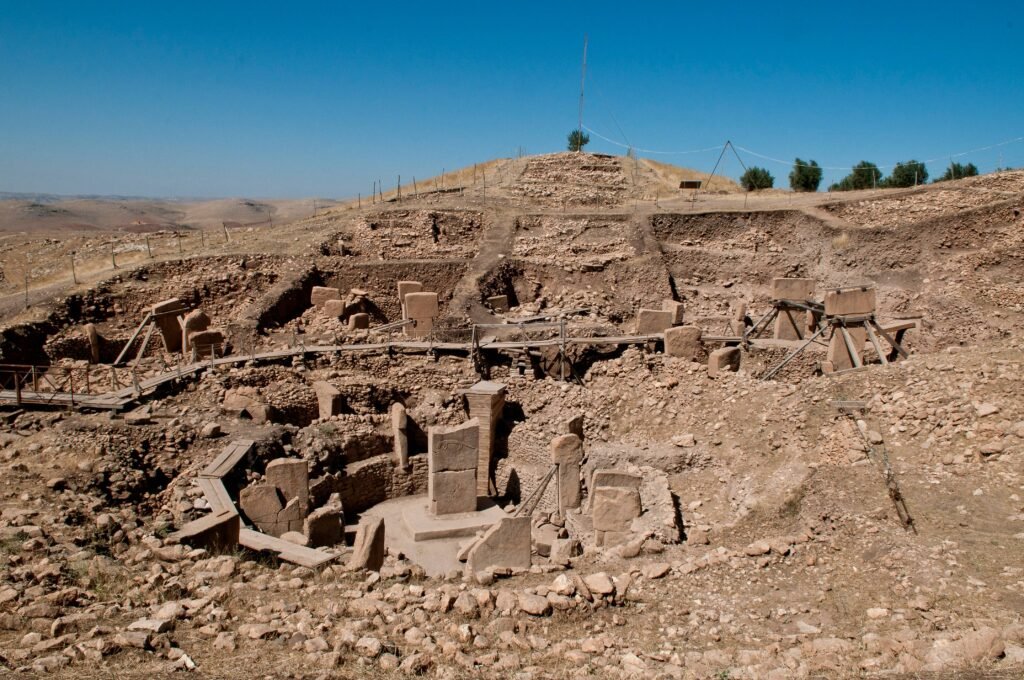
Imagine a monumental stone temple complex older than Stonehenge by several thousand years and older than the pyramids by an even wider margin, built by people who technically shouldn’t have been able to pull it off. That’s Göbekli Tepe in southeastern Turkey, a site dated to roughly about eleven thousand years ago, long before mainstream timelines say cities, organized religion, or complex architecture appeared. Massive T-shaped stone pillars, some weighing many tons, are arranged in circular enclosures and carved with detailed images of animals and abstract symbols.
What makes Göbekli Tepe so unsettling for historians is the context: it appears to have been built by hunter-gatherers, not settled farmers. Our usual story is that agriculture came first, then villages, then temples and organized belief systems. Here, it’s as if the temple came first, and only later did people begin to settle and farm around it. Some researchers have suggested this means shared rituals and sacred spaces might have been the driving force that pushed humans to form stable communities, not just the need for food security. It flips the narrative from “we farmed, so we built temples” to “we built temples, so we had to farm.”
The Antikythera Mechanism: An Ancient Greek Device That Acts Like a Computer
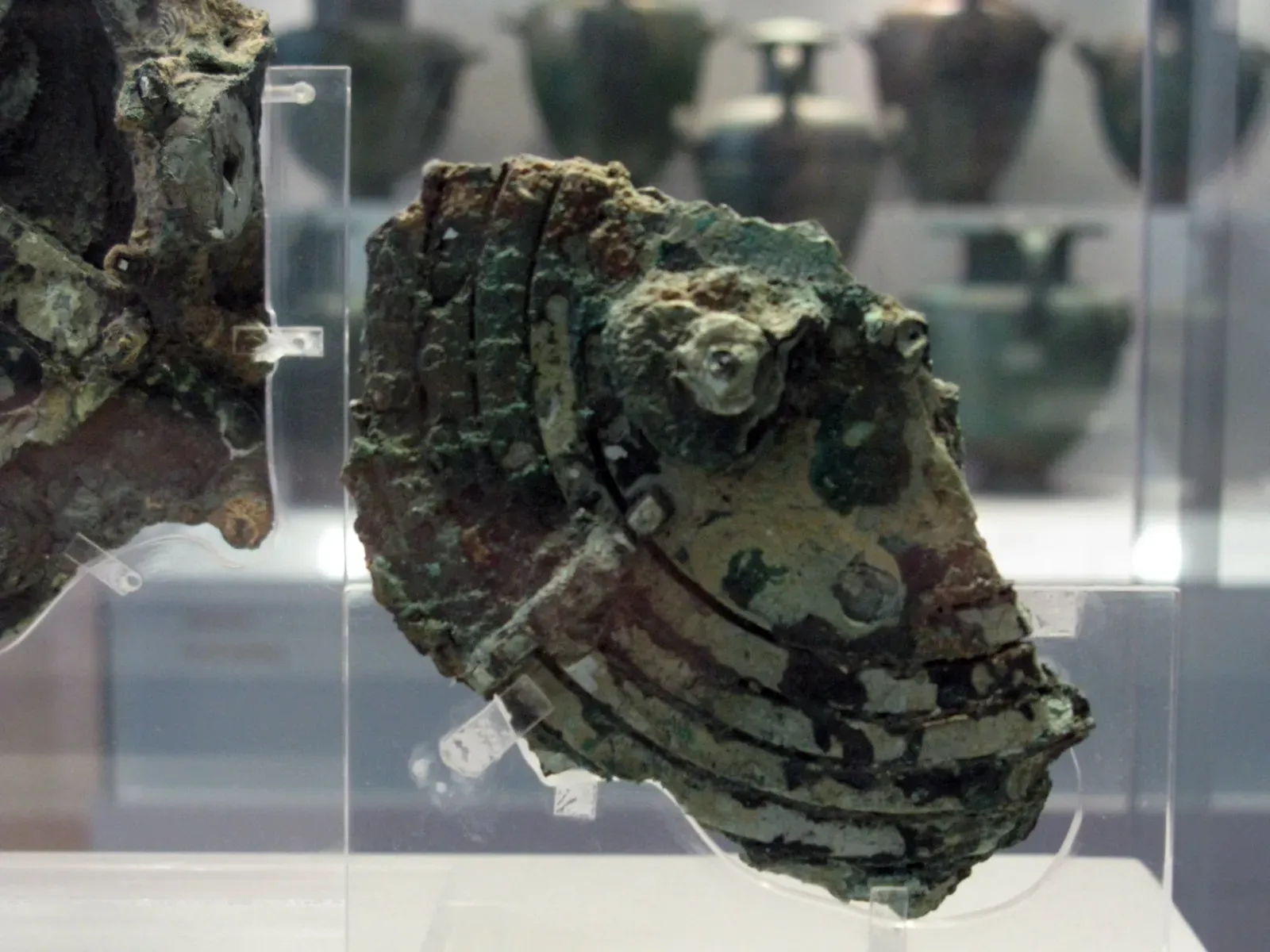
Uploaded by Marcus Cyron, CC BY 2.0)
When sponge divers off the coast of the Greek island Antikythera pulled up a corroded clump of bronze from a Roman-era shipwreck in the early twentieth century, they had no idea it would become one of the most controversial artifacts in ancient studies. The Antikythera Mechanism, as it’s now known, turned out to be a complex gear-driven device that could predict astronomical positions, eclipses, and possibly even track the timing of athletic games. Inside its broken casing were dozens of finely crafted gears, some with interlocking teeth as sophisticated as a precision clock.
According to the traditional timeline, machines at this level of mechanical complexity were not supposed to appear until well over a thousand years later in medieval or early modern Europe. Yet here it is, clearly Hellenistic, clearly functional, and clearly far beyond what we thought artisans were building at the time. It suggests that ancient engineering knowledge was not just clever but deeply advanced – and possibly more widespread than the lone surviving device implies. The real mystery isn’t only how it worked, but why we’ve found just one; it feels like glimpsing a single gear from an entire missing chapter of technological history.
Puma Punku: Stonework So Precise It Fuels Endless Debate
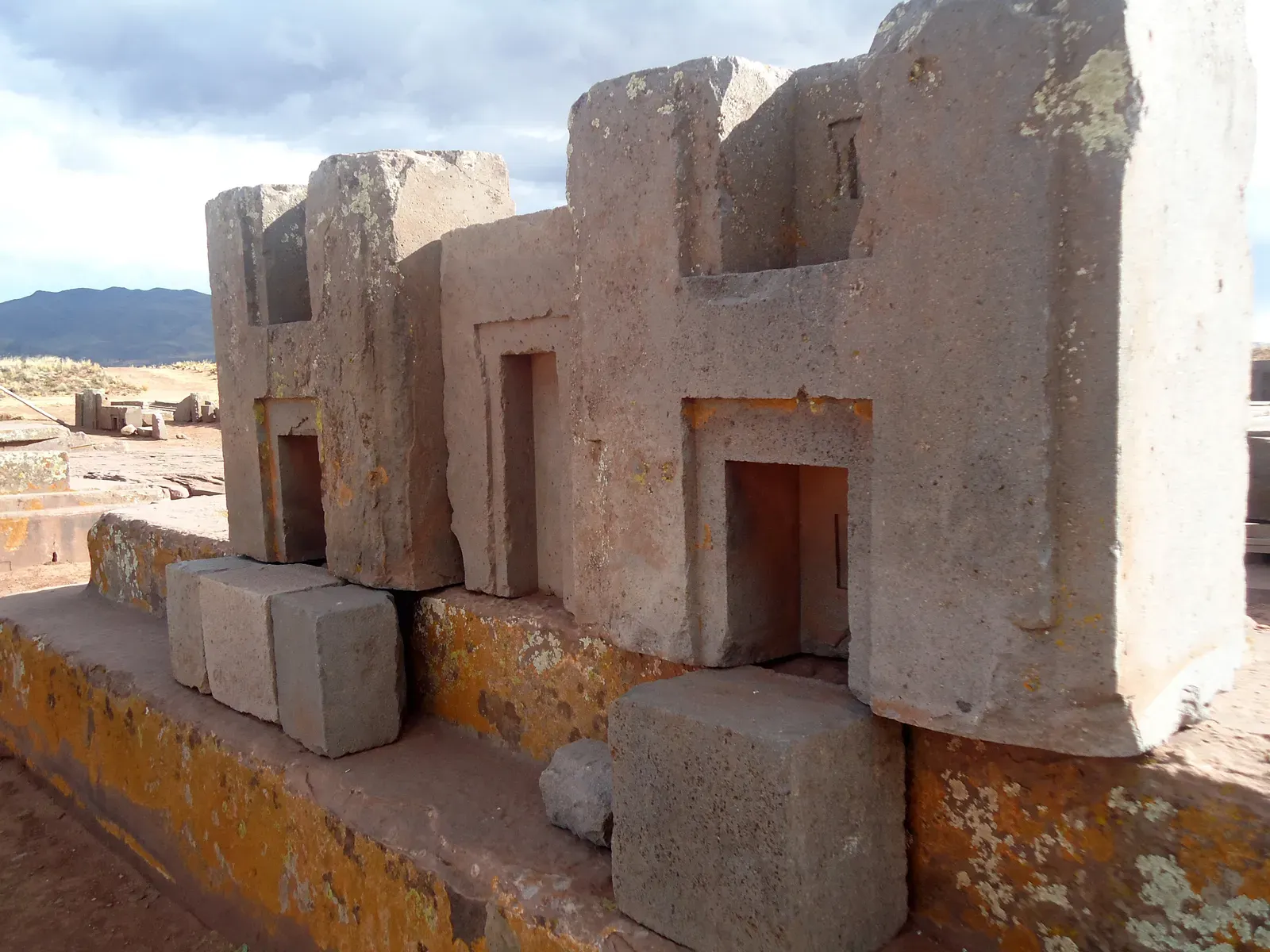
High in the Bolivian Andes, near the better-known site of Tiwanaku, lies Puma Punku, a ruined platform complex built from massive stone blocks. Some of these stones weigh as much as train cars and are carved with incredibly sharp angles, interlocking shapes, and smooth surfaces that seem out of step with the tools we typically associate with pre-Columbian cultures. The famous H-shaped blocks, with their intricate cutouts and internal right angles, have been carefully measured and documented, showing a level of precision that’s hard to ignore.
Conventional archaeology attributes Puma Punku to the Tiwanaku culture, flourishing roughly one and a half millennia ago, but there’s still debate over phases of construction and how exactly these feats were pulled off at high altitude without iron tools, wheels, or pack animals like horses. Experimental work shows that amazing stonework is possible with simple tools and patience, but when you stand in front of those geometric blocks (or even just stare at high-resolution photos), it’s hard not to feel something doesn’t quite line up. The site doesn’t require aliens or fantasy tech to be impressive; its real power lies in how it stretches your sense of what humans can do with limited means and a staggering amount of skill.
The Indus Valley Script: A Writing System That Still Refuses to Speak
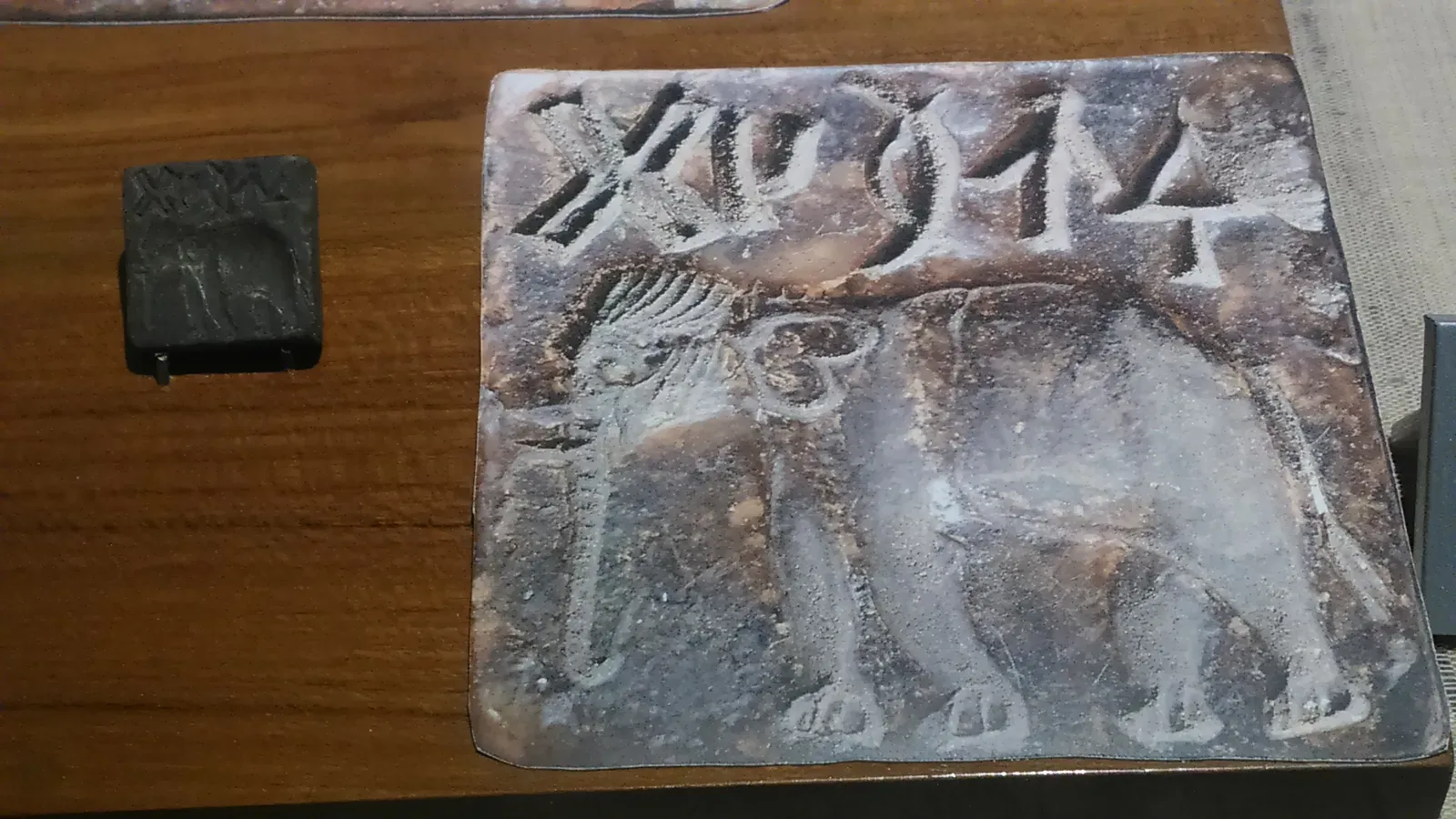
The Indus Valley Civilization, spread across what is now Pakistan and northwest India, built carefully planned cities with grid layouts, drainage systems, standardized weights, and a level of urban organization that rivals early Mesopotamia and Egypt. Yet despite its scale and sophistication, one key piece is missing: we still can’t read their script. Thousands of short inscriptions on seals, pottery, and tablets have been found, but no bilingual “Rosetta Stone” has turned up to unlock their meaning.
Most inscriptions are only a handful of symbols long, which makes statistical analysis and linguistic pattern spotting a nightmare. Some researchers even argue the symbols might be more like a complex system of marks or logos rather than a full writing system, while others insist it represents a language we simply don’t recognize yet. The fact that such a large, complex civilization can remain essentially voiceless is deeply unsettling. It suggests that there might have been entire intellectual traditions, myths, and histories that have vanished not because they were never written down, but because we lost the key to understanding them.
The Baghdad “Battery”: Ancient Power Source or Misunderstood Jar?
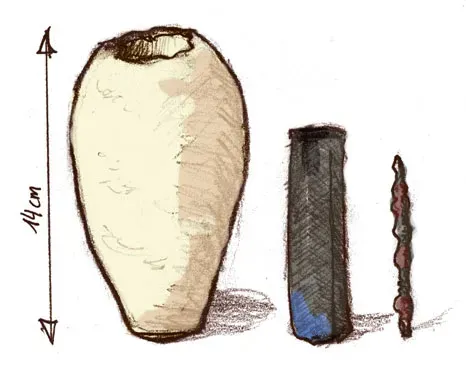
In the mid-twentieth century, archaeologists and museum workers in Iraq drew attention to a curious object: a clay jar containing a copper cylinder and an iron rod, found among artifacts attributed broadly to ancient Mesopotamian and Parthian periods. When modern experimenters filled similar jars with acidic liquids like vinegar or lemon juice, the setup produced a small electrical current, leading to the tantalizing suggestion that these might be ancient batteries. The idea that people two thousand years ago might have harnessed electricity for plating metals or some unknown purpose spread quickly, especially in popular books and documentaries.
However, scholars are divided, and the truth is still murky. Some argue the jar was simply a storage container or part of a mundane object that later got reassembled incorrectly, and that the “battery” interpretation is a modern projection onto incomplete evidence. Others point to experimental replications that do create usable voltage, insisting it’s more than coincidence. The frustrating part is that we lack clear documentation, context, or multiple confirmed examples to settle the debate. Whether or not the Baghdad jar was a real power source, the controversy itself highlights how fragmentary artifacts can completely rewrite – or wildly distort – our sense of ancient capabilities.
The Underwater Ruins off Yonaguni: Natural Formation or Lost Architecture?
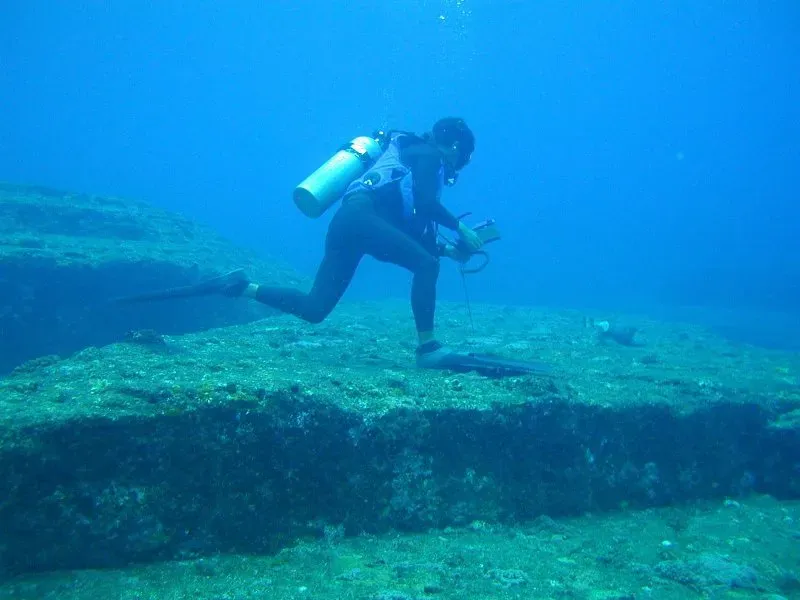
Off the coast of Yonaguni Island in Japan, divers in the late twentieth century encountered a submerged formation that looks eerily like a stepped pyramid or massive terrace complex. Large stone platforms, flat surfaces, sharp-looking edges, and what appear to be carved steps and terraces have fueled ongoing debate. Some observers see straight lines, right angles, and what could be interpreted as pathways or plazas, suggesting the remains of a man-made structure that later sank beneath the waves.
Geologists often counter that natural processes like fracturing, erosion, and sedimentation can easily create surprisingly geometric shapes, especially in certain types of rock. The fact that the site is underwater complicates detailed study and dating, and there is no universally accepted proof of human modification. Yet divers who’ve swum through the structures describe a powerful, almost disorienting sense of standing in an abandoned city. Even if the Yonaguni formation turns out to be entirely natural, the intense debate around it reflects how eager we are to find evidence of older, forgotten coastal cultures that rising seas might have erased from the visible map.
The Nazca Lines: Giant Geoglyphs with a Purpose We Still Guess At
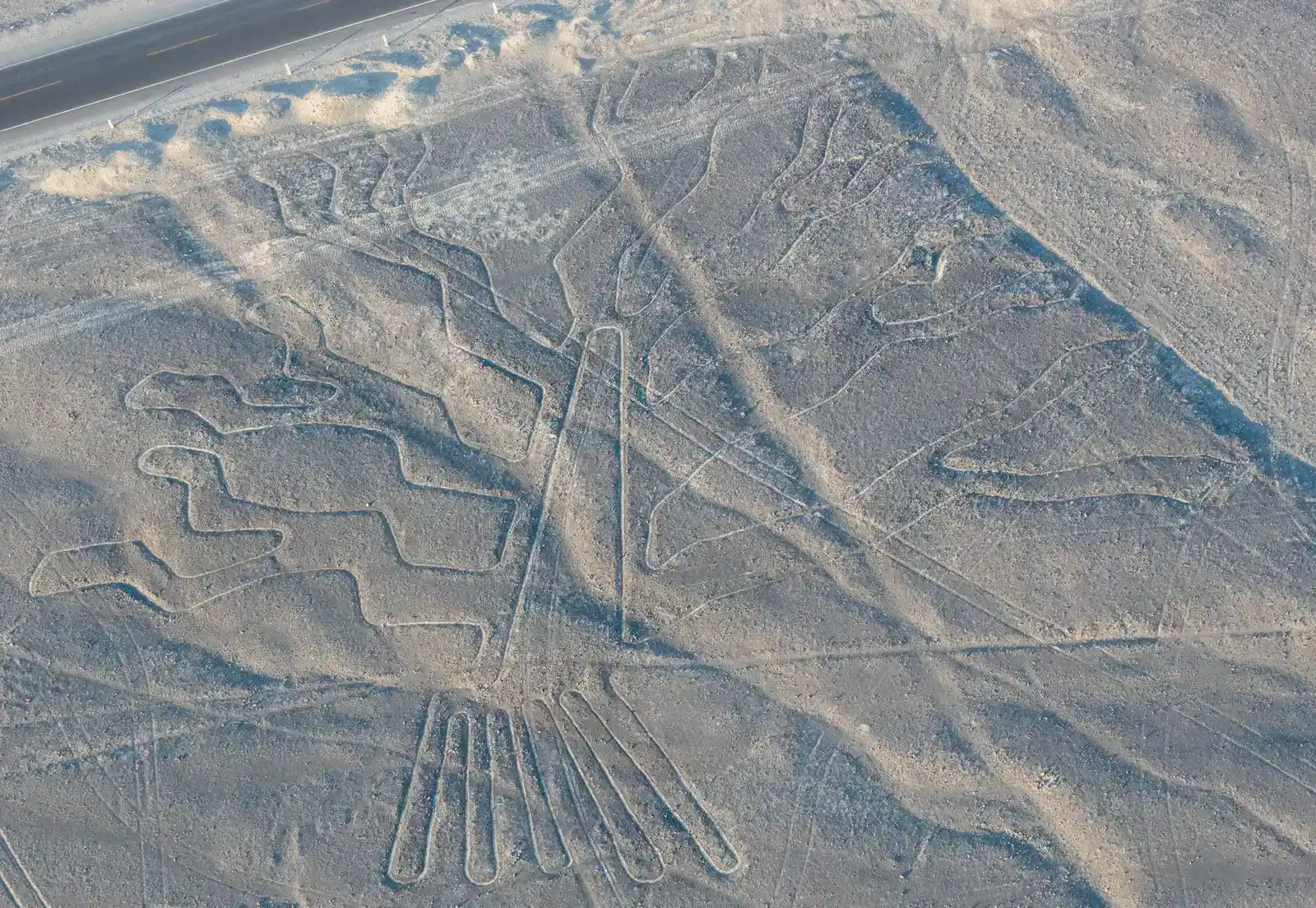
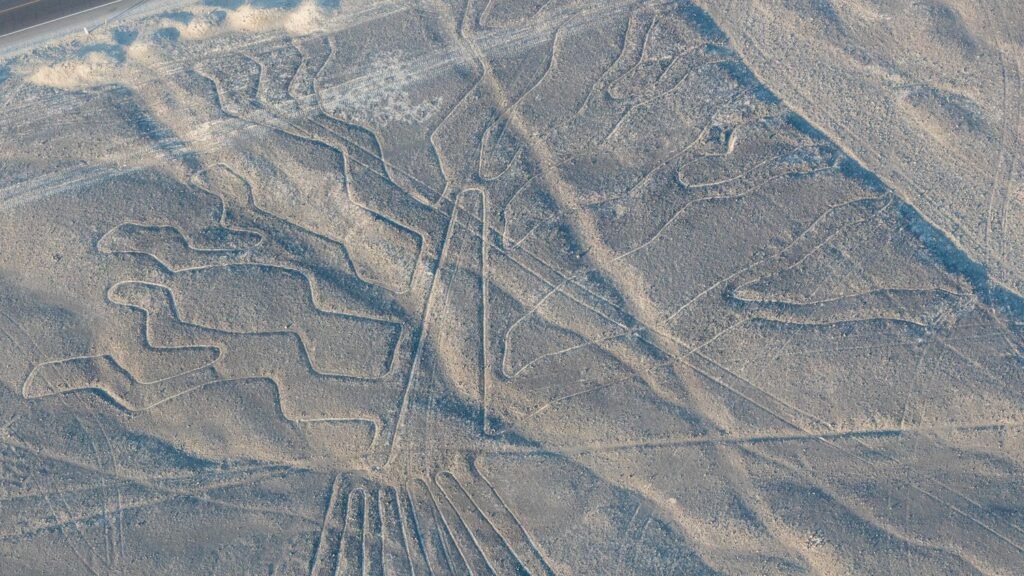
Spread across the desert plains of southern Peru, the Nazca Lines are enormous designs etched into the ground – straight lines stretching for kilometers, geometric shapes, and figures of animals and plants only clearly visible from high above. Created by removing darker stones from the desert surface to reveal lighter earth beneath, they have survived for many centuries in the arid climate. The most widely accepted dates place them in the era of the Nazca culture, roughly between one and two thousand years ago, yet their precise purpose remains a puzzle.
Various theories suggest they were ritual pathways, astronomical markers, offerings to deities, or connected to water and fertility ceremonies, but direct evidence linking specific lines to specific functions is thin. What complicates things further is their scale; they seem designed for observers who could somehow grasp the full picture from an elevated perspective, long before aircraft existed. Standing on the ground among them, you get almost nothing; from the sky, suddenly the desert turns into a canvas. Whether they were meant for gods, for humans on nearby hills, or for some combination of ritual performance and cosmic symbolism, the Nazca Lines remind us that not every monumental project was built to be practical or self-explanatory to later generations.
When the Past Refuses to Fit the Script
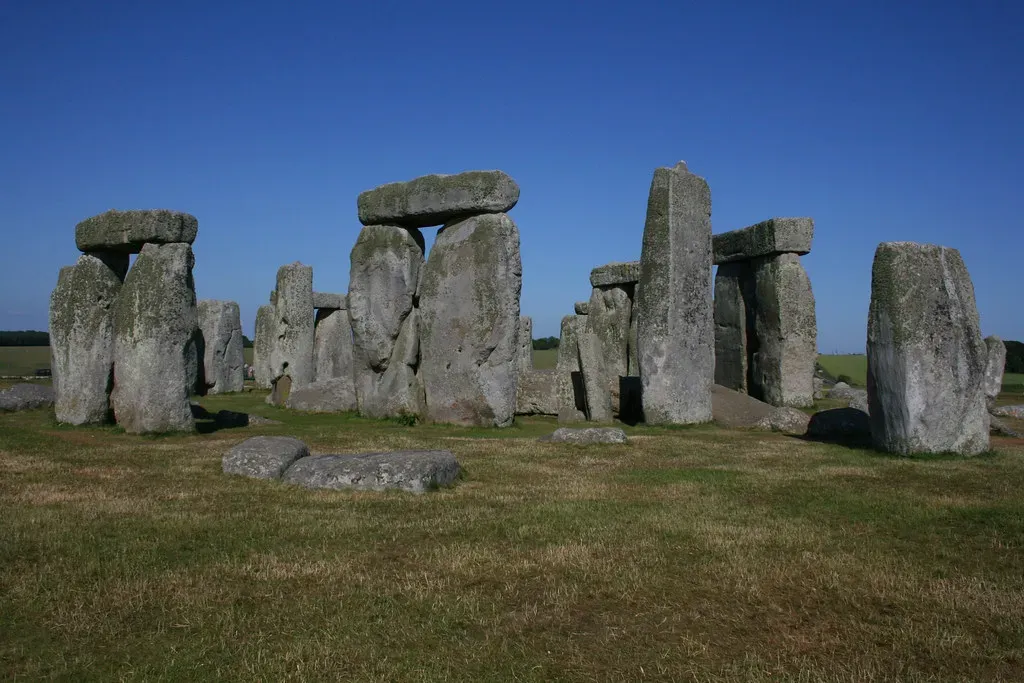
Looking across these discoveries, a pattern quietly emerges: our neat, linear story of human progress keeps bumping into messy, inconvenient facts. Temples appear before farms, precision machines show up earlier than our timelines allow, scripts stay silent, and massive works of art and engineering refuse to reveal their full purpose. None of this proves a hidden global civilization or any of the more dramatic theories often thrown around online, but it does show that our understanding of the past is full of gaps, blind spots, and assumptions that may not hold up forever.
Personally, I find that more exciting than any tidy historical narrative, because it means there is still real mystery left in the world – real questions that a new dig, a new scan, or even a fresh way of looking at old data could finally answer. Maybe, in a hundred years, people will laugh at how limited our current view of ancient history was, the same way we now smile at nineteenth-century maps with huge blank spaces. Until then, we’re left with an uncomfortable but thrilling thought: if this is what we’ve already found, what’s still buried out there, waiting to force us to rewrite the story again?