
What if death is not the end? It sounds like something you’d hear from a philosopher at midnight or read in a spiritual text thousands of years old. Yet in 2026, some of the world’s most rigorous scientists are asking the very same question, not out of mysticism, but out of genuine curiosity backed by labs, brain scanners, and quantum equations.
The territory between life and whatever comes next has long been considered off-limits to serious science. That is changing. From hospital rooms where unconscious patients report impossible memories, to the strange mathematics of parallel universes, science is beginning to knock on the door of one of humanity’s oldest mysteries. You might be surprised by what it finds on the other side. Let’s dive in.
The Near-Death Experience: Your Brain’s Final Broadcast
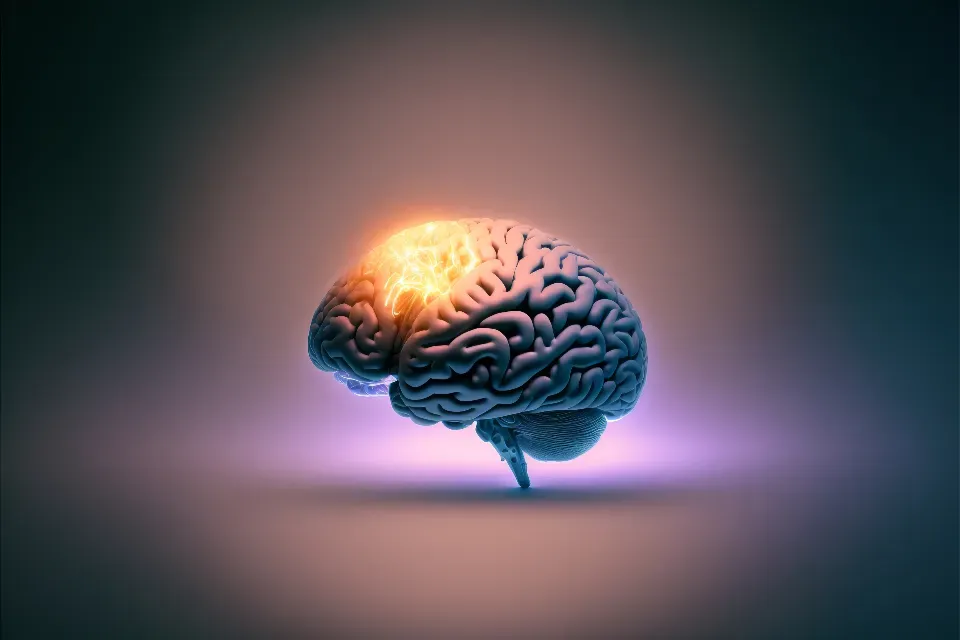
Here’s the thing about near-death experiences. They should not be as consistent as they are. There are hundreds of case reports of NDEs in the scientific literature, and most report a surprisingly similar set of experiences. Survivors often recount sensations of peace and unity, accompanied by a sense of floating and visions of bright lights ahead. If these were random hallucinations, you would expect wildly different stories. Instead, people from different countries, cultures, and belief systems describe nearly identical journeys.
In 2024, researchers at the University of Michigan published groundbreaking findings from their analysis of brain recordings from four dying patients. The patients were on life support and their brain activity was recorded by EEG, tracking electrical activity via electrodes placed on the scalp. Led by Dr. Jimo Borjigin, the team observed that two of the patients exhibited a surge of brain activity shortly after life support was removed. The observed activity surge was in the gamma frequency range, normally associated with consciousness, and it was localized to the junction of the temporal and parietal lobes, key neural regions thought to be involved in conscious processing. Honestly, if that does not raise the hairs on your arms, I don’t know what will.
Quantum Consciousness: Your Mind Might Be More Than Neurons
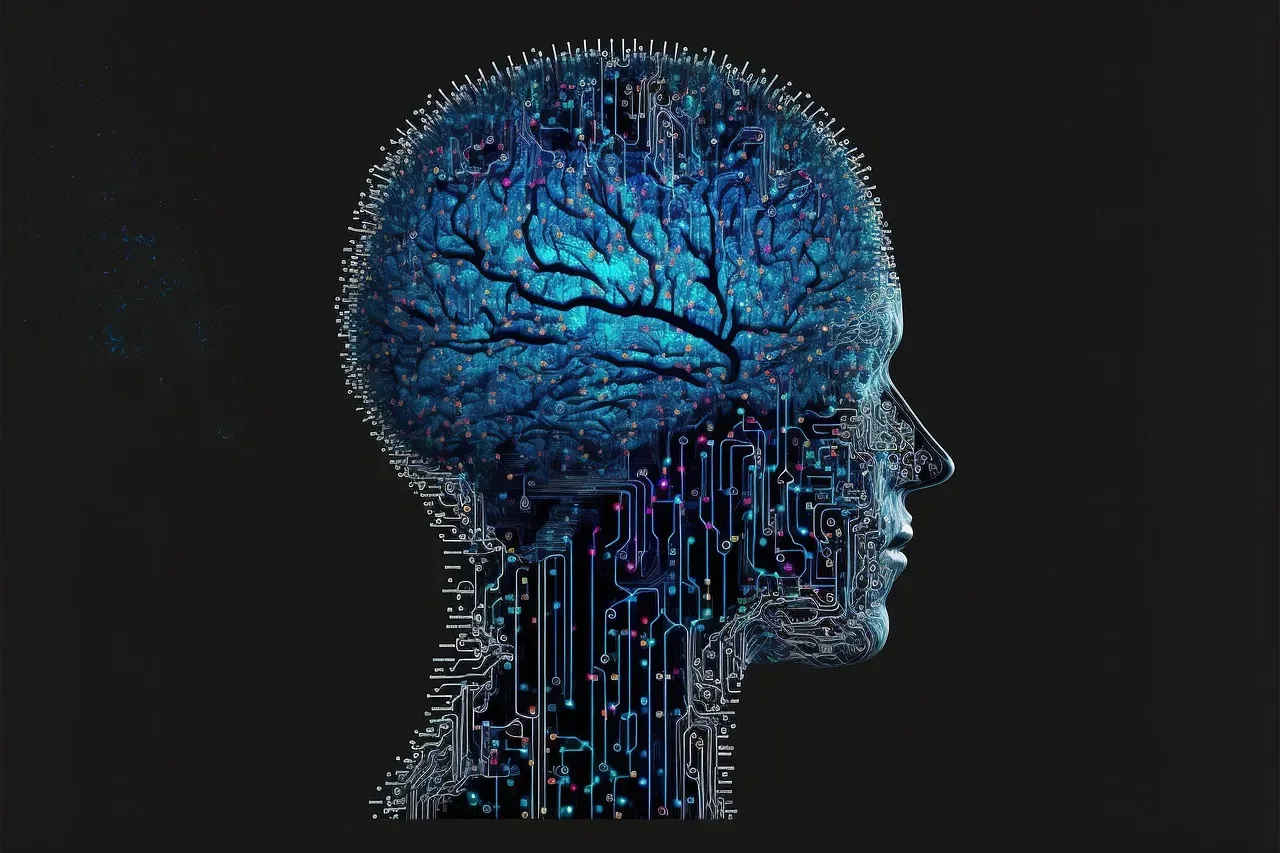
Consciousness resides, according to Dr. Stuart Hameroff and British physicist Sir Roger Penrose, in the microtubules of the brain cells, which are the primary sites of quantum processing. Upon death, this information is released from your body, meaning that your consciousness goes with it. Think of it like this. Your brain may not be the source of who you are, just the container it runs through temporarily, the way a song is not the same thing as the speaker playing it.
The smallest particles in your brain could explain how consciousness survives death. Scientists have found that brain cells contain tiny structures called microtubules, where quantum effects take place. These quantum processes might store your consciousness as information patterns that float back into the universe when you die. There are many prominent scientists who argue that most likely the entity we call consciousness, who you are, is a separate, undiscovered scientific entity. The implications of that idea are staggering, and science has barely begun to process them.
Biocentrism: The Universe Exists Because You Do
Dr. Robert Lanza, a leading scientist in regenerative medicine, introduced the biocentrism theory, which proposes that life and consciousness are not just parts of the universe but essential to its very existence. In his book “Biocentrism: How Life and Consciousness Are the Keys to Understanding the Universe,” Lanza challenges the traditional view that the material world creates consciousness. Instead, he suggests the opposite – that your consciousness shapes the reality you perceive. It’s a radical flip, like discovering the painting makes the artist rather than the other way around.
The theory implies that the death of consciousness simply does not exist. There are an infinite number of universes, and everything that could possibly happen occurs in some universe. Death does not exist in any real sense in these scenarios. All possible universes exist simultaneously, regardless of what happens in any of them. Critics are quick to point out that several physicists have told Forbes that Lanza’s writings look more like works of philosophy rather than science, though the doctor himself states he is healing a glaring rift and applying innovative methods from biotech to physics, while admitting his theory lacks a mathematical basis. Controversial? Absolutely. Worth exploring? Without question.
Quantum Immortality: You Cannot Die From Your Own Point of View
Quantum immortality is a quantum mechanics theory that suggests when someone dies in one reality, their consciousness continues to survive in another one. The idea of quantum immortality emerged from the many-worlds interpretation of quantum mechanics, first proposed by American physicist Hugh Everett III in 1957. In his theory, Everett suggested that the universe constantly splits into multiple realities where all possible outcomes of a quantum event occur. Imagine standing at a crossroads where every possible direction is taken simultaneously by a different version of you. Death in one path simply means your awareness flows to the path where you survived.
The theory of quantum immortality suggests that your consciousness would seamlessly shift to the universe where you survived. According to the many-worlds interpretation of quantum mechanics, consciousness exists in alternate realities. This suggests that you never experience death in the reality you inhabit, because you would survive in a different reality. Still, even proponents of the theory like Max Tegmark acknowledge that the theory is more than likely not true, and perhaps the biggest glaring issue with quantum immortality is its inability to reckon with physical decay and aging. It is a breathtaking idea. Just don’t build your retirement plan around it.
The Simulation Hypothesis: Death as a Software Glitch
The Simulation Hypothesis posits that your reality is not as tangible as it appears but rather a sophisticated computer program designed by an advanced civilization. If true, this theory has profound implications for your understanding of existence, consciousness, and, intriguingly, the afterlife. In a simulated reality, the rules governing life and death may differ significantly from your traditional understanding. The modern articulation of the Simulation Hypothesis is largely attributed to philosopher Nick Bostrom. In his 2003 paper, “Are You Living in a Computer Simulation?”, Bostrom presents a trilemma suggesting that one of three key propositions must be true.
If you’re living inside a simulation, then your death may be nothing more than the moment a character’s program ends, or perhaps is saved and reloaded somewhere else. In 2005, two scientists independently coined the term “connectome” to refer to a map or wiring diagram of every neuronal connection in a brain. By analogy to the human genome, which contains all the information necessary to grow a human being, your connectome in theory contains all the information necessary to wire up a functioning human brain. If the basic premise of neural network modeling is correct, the essence of your mind is contained in its pattern of connectivity. Your connectome, simulated in a computer, could recreate your conscious mind. I know it sounds crazy. But so did the internet once.
The Energy Conservation Theory: You Cannot Simply Disappear
One idea from physics sometimes interpreted as an indication of the afterlife is the law of conservation of energy. It states that in an isolated system, the total energy always remains constant. It means that energy can neither be created nor destroyed. Instead, it can only transform from one form to another. If you view human consciousness as energy, it means that it cannot just die or disappear. Physics does not allow for total annihilation, and your body, including the electrical and chemical energy of your thoughts, is no exception to that rule.
The second law of thermodynamics tells you something fascinating: information cannot disappear forever. Scientists who study entropy point out that everything leaves a permanent mark on the universe, including your thoughts and consciousness. Some physicists suggest your mind operates like an information processor, turning experiences into patterns. These patterns might survive after your body stops working, perhaps converting into different forms of energy or merging back into the universe’s information field. It is not so different from the way starlight still travels through space long after its source has gone dark. You may leave a longer trace than you think.
The Science of Reincarnation: Children Who Remember Another Life

This one tends to make skeptics uncomfortable, and I understand why. Dr. Jim Tucker is best known for continuing the work of Dr. Ian Stevenson, who spent decades investigating cases in which children remembered events, names, and people from what they claimed were previous lives. In his book, Tucker presents evidence from over 2,500 interviews with children. Many of these children remembered specific people, locations, and even causes of death, facts that in some cases could be verified. Some had birthmarks that matched injuries suffered by the deceased individuals they claimed to have been. That last detail is the one that stops you cold when you sit with it.
According to one scientific reading, reincarnation is real and it is all thanks to consciousness being energy on the quantum and subatomic level. The idea is supported by biocentrism, which proposes that consciousness is released into the cosmos by means of sub-atomic particles after death. Some scientists suggest that consciousness is a form of energy contained within your body and released into the universe after death until a new adequate host is found. According to Dr. Tucker, this may suggest that consciousness is not just a byproduct of brain activity, but an independent form of energy. Whether or not that earns the word “proof” from science, the consistency across thousands of independent cases is something that genuinely deserves more attention than it currently gets.
Conclusion
Here’s what we know for certain. You are not going to find a clean, tidy answer to what happens after death on any laboratory whiteboard, at least not yet. Despite many scientific studies, there is still no proof of an afterlife, and understanding consciousness remains a major challenge. Yet the fact that serious physicists, neuroscientists, and medical researchers are now dedicating careers to these questions says something important. The door is no longer closed.
What strikes me most about all seven of these theories is not that they agree with each other. They don’t, not entirely. What strikes me is that each of them, from quantum microtubules to a child in rural Virginia describing a stranger’s past life, points to the same unsettling possibility: that you might be far more than your body. Modern science is increasingly investigating this age-old mystery through the lenses of neuroscience, consciousness studies, and near-death experiences. Whatever is on the other side of the last breath, it is becoming clearer that the question itself is one of the most scientifically fertile of our time.
So, which of these seven theories resonates most with you, and does it change the way you think about the life you’re living right now? Tell us in the comments.