
You ever get that feeling when you realize how little we actually understand about the world around us? I mean, we’ve sent people to the Moon, decoded the human genome, and created machines that can think. Yet despite all this progress, there are questions so mind-boggling that they make even the world’s leading scientists scratch their heads in bewilderment. These aren’t ancient riddles from dusty philosophy books either. We’re talking about mysteries right here in 2026 that challenge everything we think we know about reality.
Let’s be real. The universe has a way of humbling us just when we think we’ve got it all figured out. From invisible forces shaping galaxies to the very nature of our own thoughts, these puzzles refuse to surrender their secrets. So let’s dive in.
Dark Matter: The Invisible Skeleton of Our Universe
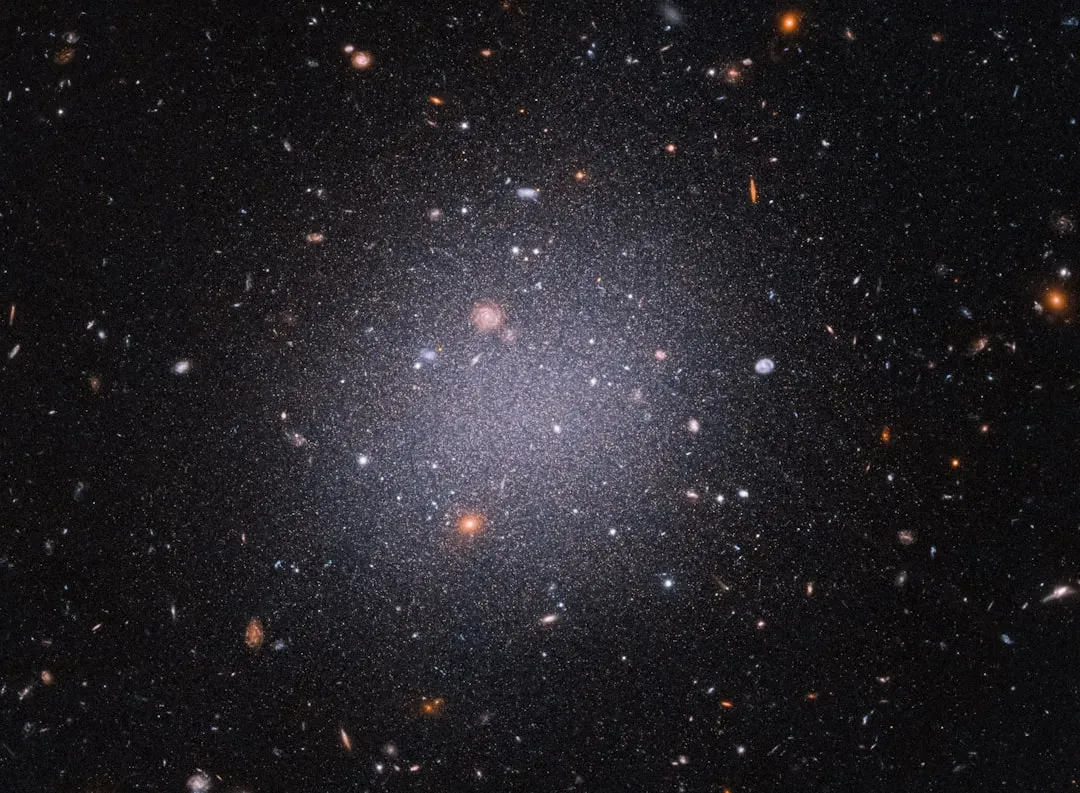
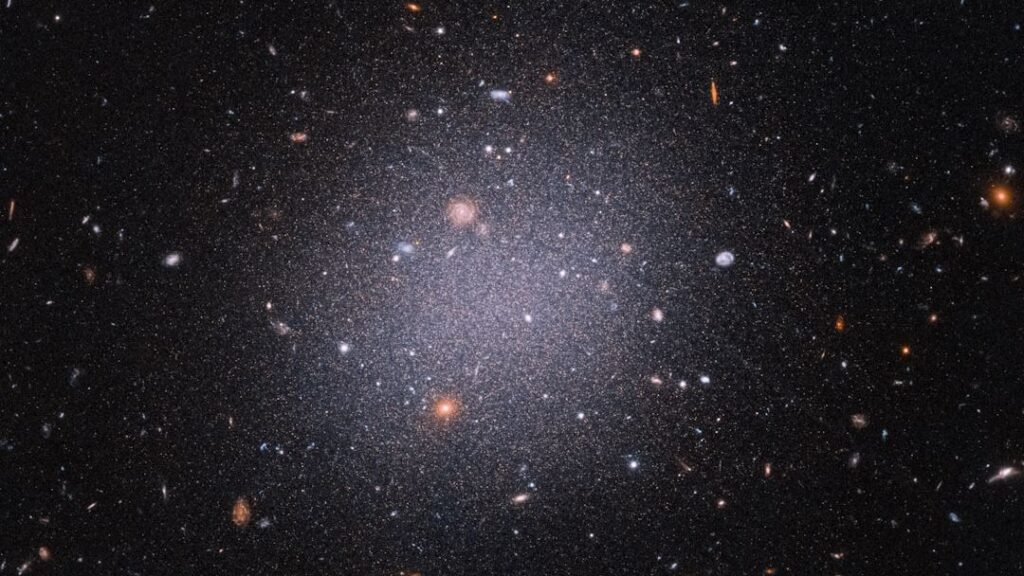
Dark matter makes up most of the mass in galaxies and galaxy clusters, with ordinary matter making up only about five percent of the universe, while dark matter comprises roughly twenty-seven percent. Here’s the kicker though. We can’t see it, touch it, or detect it with any telescope or instrument we’ve built. Dark matter doesn’t interact with the electromagnetic spectrum, including visible light, meaning it doesn’t absorb, reflect, or emit any light.
Scientists know it exists because galaxies spin way too fast. Without some invisible mass holding them together, stars should be flying off into space like water droplets from a spinning wheel. Dark matter has mass, seen through its gravitational influence, with studies showing stars and gas moving as though there’s a lot more mass than we can see pulling them along. Despite decades of searching for dark matter particles through sophisticated underground detectors and particle accelerators, we’ve come up empty-handed. It’s out there, shaping the cosmos, but what it actually is? That remains one of the biggest head-scratchers in physics.
Dark Energy: The Force Pushing Everything Apart
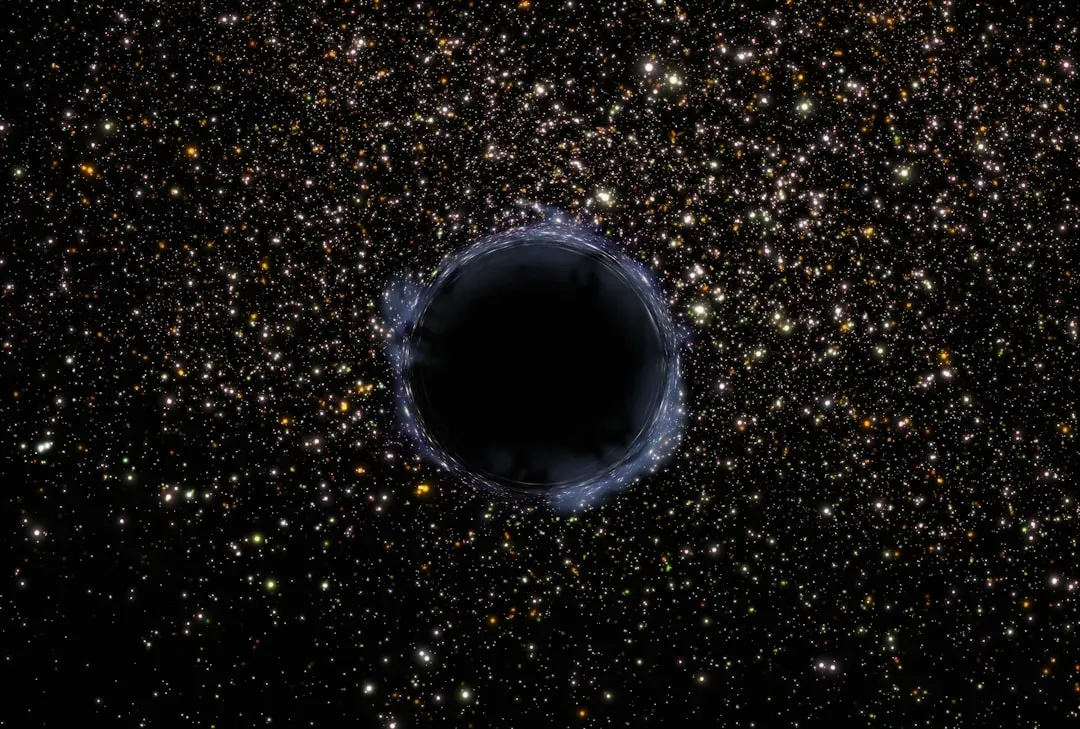
Honestly, if dark matter wasn’t weird enough, dark energy takes the strangeness to a whole new level. Dark energy stands as the most dominant unsolved universe mystery, driving the accelerating expansion of space and overriding gravitational attraction on the largest scales. Think about that for a moment. Not only is the universe expanding, but it’s speeding up. Gravity should be pulling everything back together, slowing things down. Instead, something is pushing galaxies farther apart at an ever-increasing rate.
Cosmic microwave background measurements show dark energy contributes about sixty-eight percent of the total energy content of the universe. That means the vast majority of everything that exists is this mysterious repulsive force we can’t explain. Proposed explanations range from vacuum energy to changes in gravity itself, but none fully fit observations, and mapping its influence precisely may determine whether the universe expands forever or faces an unknown fate. What happens next? Does the universe rip itself apart eventually? Nobody knows for certain.
Consciousness: Why Does Anything Feel Like Anything?

How the brain conjures conscious awareness from the electrical activity of billions of individual nerve cells remains one of the great unanswered questions of life. Each of us knows we’re conscious. We experience colors, taste chocolate, feel pain, and think thoughts. Yet when neuroscientists look at the brain, all they see is neurons firing electrical signals.
In the 1990s, Australian philosopher David Chalmers framed the challenge of distinguishing between the “easy” problems and the “hard” problem of consciousness, with the hard problem being why the carrying out of brain functions is accompanied by experience. Scientists can map which brain regions light up when you see red or feel happy. The accumulation of such correlations does not amount to a theory of consciousness, as we ultimately want to explain why conscious experiences are correlated with brain activity. It’s like trying to explain how a recipe of chemicals and electricity transforms into the feeling of being you. Where does subjective experience come from? The answer remains elusive.
The Origin of Life: From Chemistry to Biology

Life had to start somewhere. At some point in Earth’s history, non-living molecules came together and formed something that could eat, grow, and reproduce. Simple, right? Except nobody has successfully recreated this process in a lab, and we still don’t know exactly how it happened.
The transition from chemistry to biology is one of the most profound mysteries in science. We know life emerged relatively quickly after Earth cooled enough to support liquid water, suggesting it might not be impossibly rare. Some scientists think it started at hydrothermal vents on the ocean floor, where chemicals and heat mixed in just the right way. Others point to clay surfaces or even outer space, with organic molecules hitching rides on meteorites. Here’s the thing though. We can speculate all we want, but without a working model that takes us from simple chemicals to a self-replicating organism, we’re basically guessing. Did it require a lightning strike? A specific mineral catalyst? Pure chance? The first spark of life remains shrouded in mystery.
Quantum Mechanics and Gravity: The Theory of Everything That Doesn’t Exist Yet
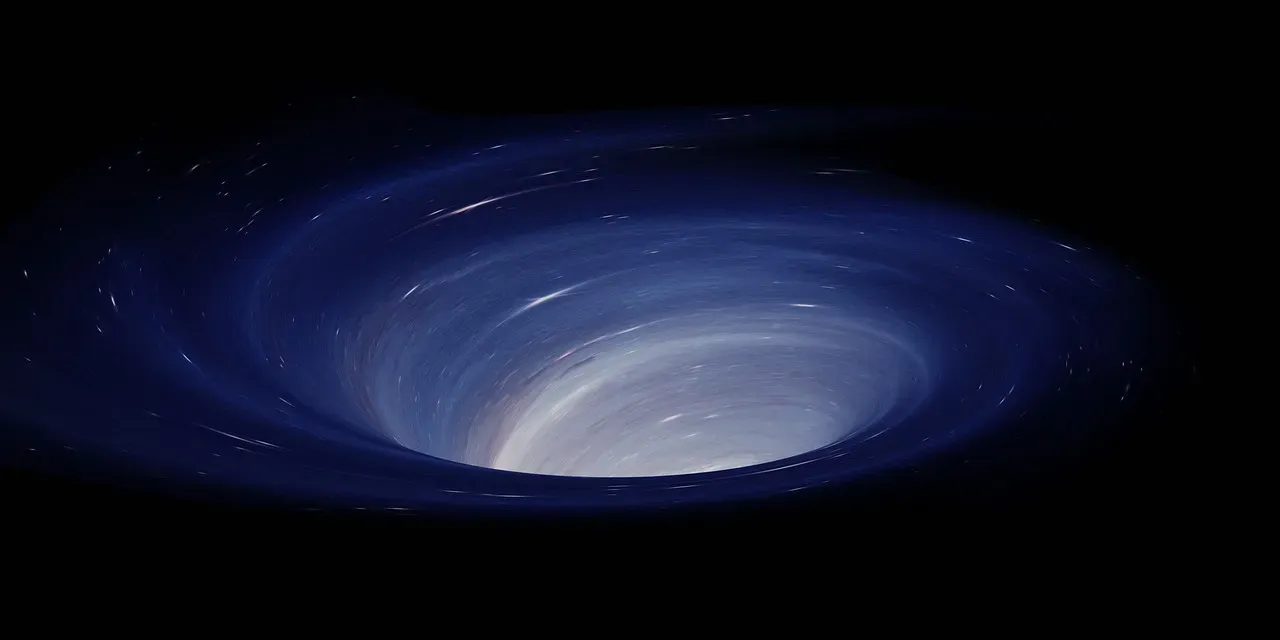
Physics has two amazingly successful theories. General relativity describes gravity and how massive objects bend space and time. Quantum mechanics explains the behavior of tiny particles with stunning precision. There’s just one problem. They contradict each other, and nobody knows how to fix it.
Einstein’s theories work on the largest scale of the universe, but physicists have yet to find a unifying theory of everything. When you try to apply quantum mechanics to gravity or describe a black hole’s interior using both theories simultaneously, the math breaks down completely. String theory promised to unite them but hasn’t delivered testable predictions. Loop quantum gravity offers another approach, yet remains incomplete. For over a century, physics has revolved around four fundamental forces: gravity, electromagnetism, the strong nuclear force, and the weak nuclear force, though in July 2025, researchers at CERN detected anomalies suggesting the presence of a fifth force governing subatomic particles. Could this discovery reshape our understanding of reality? Perhaps, though it will take years to confirm and understand. Until then, we lack a complete picture of how the universe actually works at its deepest level.
The Measurement Problem in Quantum Mechanics
Quantum mechanics tells us that particles exist in multiple states simultaneously until we measure them. An electron can be spinning both up and down at the same time, occupying a fuzzy cloud of possibilities. Then you look at it, and suddenly it picks one state. Why does observation change reality?
This isn’t just philosophical hand-waving. Experiments repeatedly confirm this bizarre behavior. The famous double-slit experiment shows light acting as both a wave and a particle depending on whether we’re watching. Some interpretations suggest the universe splits into multiple realities every time a measurement happens. Others propose consciousness itself collapses the wave function. Still others claim there’s some hidden mechanism we haven’t discovered yet. Each explanation sounds crazier than the last, yet none can be ruled out. Let’s be honest, this is the kind of mystery that makes you question everything you thought was solid and real. The act of measurement seems to fundamentally alter reality, and we genuinely don’t understand why.
Conclusion: The Universe Keeps Its Secrets

Science has achieved astonishing things, transforming our understanding of reality in ways our ancestors couldn’t have imagined. Yet these seven mysteries remind us how much remains unknown. Some space mysteries continue to defy explanation despite decades of observation, simulation, and theoretical debate, challenging core assumptions about gravity, matter, time, and even the origin of the universe itself.
I think that’s actually beautiful in a way. The universe refuses to be completely figured out, keeping us curious and searching. Every answer leads to three new questions. Every breakthrough reveals another layer of complexity. Perhaps consciousness will turn out to be an emergent property of organized energy. Maybe dark matter is something so strange we need entirely new physics to describe it. Or perhaps some mysteries will remain forever just beyond our grasp, tantalizing us from the edge of human understanding.
What do you think? Will future generations solve these riddles, or will they discover even stranger questions we haven’t thought to ask yet? One thing’s certain. The search continues, and that’s what makes being human in 2026 so remarkably exciting.