
Science has always had a way of making you feel both brilliant and completely humbled at the same time. You uncover one answer, and suddenly three new questions appear out of nowhere, each stranger than the last. It’s a bit like peeling an onion, except instead of crying, you’re left wide-eyed and slightly dizzy.
Science has a knack for giving us answers, but sometimes its best trick is leaving us with better questions. In recent years, researchers have stumbled upon baffling signals from deep space, uncovered strange features hiding beneath our oceans, and found clues that hint at life’s secrets on other worlds. The deeper we dig, the weirder reality gets. So let’s take a ride through seven of the most mind-bending scientific mysteries still puzzling the world’s sharpest minds, and consider what they might actually mean for all of us. Let’s dive in.
1. The Dark Matter and Dark Energy Enigma: The Universe’s Invisible Architecture
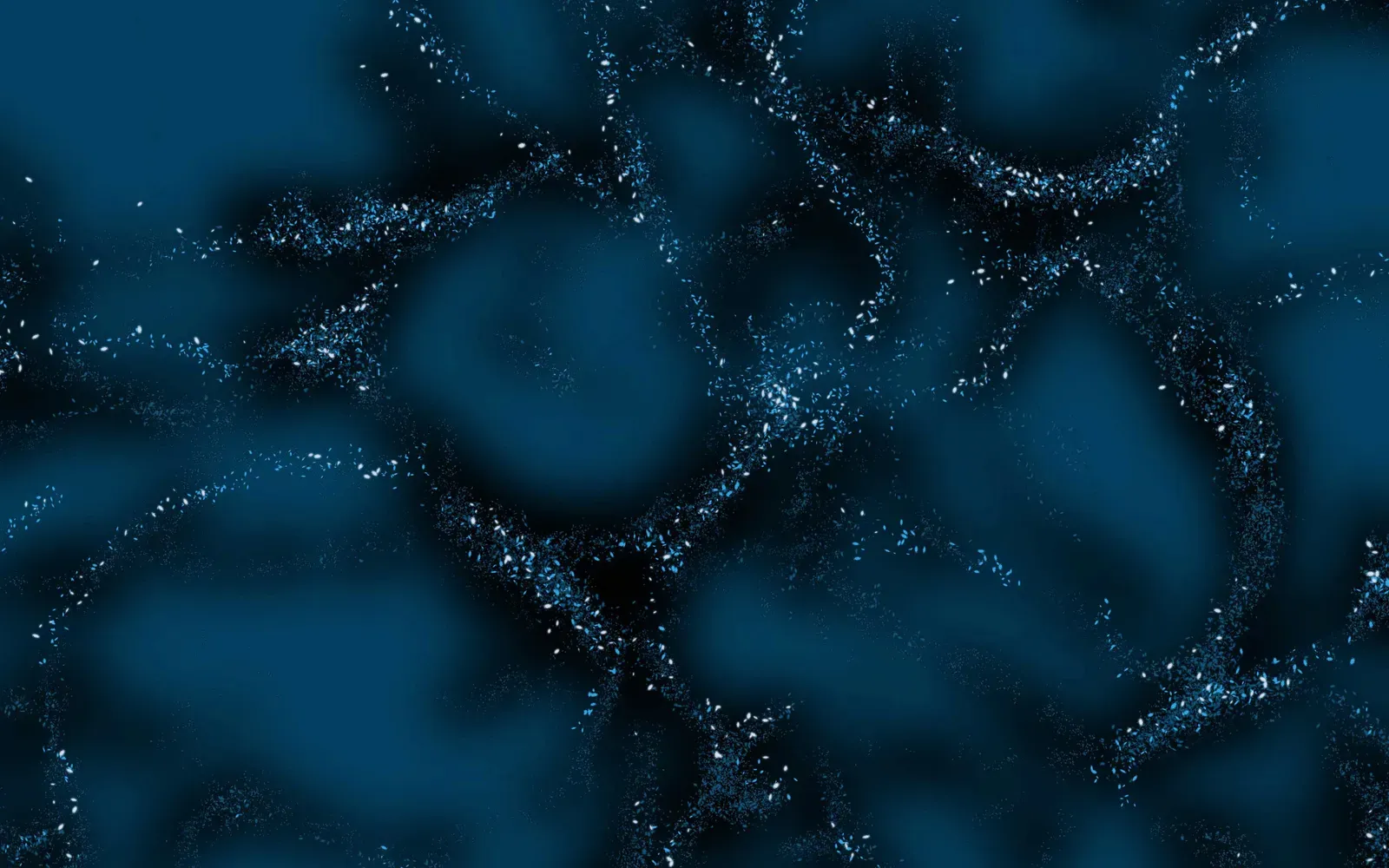
Here’s a genuinely unsettling thought to start with: you can’t see, touch, or detect the vast majority of the universe. Not even close. We know only roughly five percent of the composition of the universe. This five percent is made of the familiar atoms of the periodic table. The mystery is the remaining ninety-five percent, composed of dark matter (roughly twenty-seven percent) and dark energy (roughly sixty-eight percent). Think of it like trying to describe an entire city when you can only see one building on the edge of town.
Dark matter accounts for most of the mass in galaxies and galaxy clusters, shaping their structure on the largest scales. Despite their abundance, neither dark matter nor dark energy emits, absorbs or reflects light, making them nearly impossible to observe directly. Yet their gravitational effects shape galaxies and cosmic structures. Scientists are actively closing in on answers though. Nearly everything in the universe is made of mysterious dark matter and dark energy, yet we can’t see either of them directly. Scientists are developing detectors so sensitive they can spot particle interactions that might occur once in years or even decades. These experiments aim to uncover what shapes galaxies and fuels cosmic expansion. Cracking this mystery could transform our understanding of the laws of nature.
2. The Mystery of Consciousness: Why Is Anyone Home?
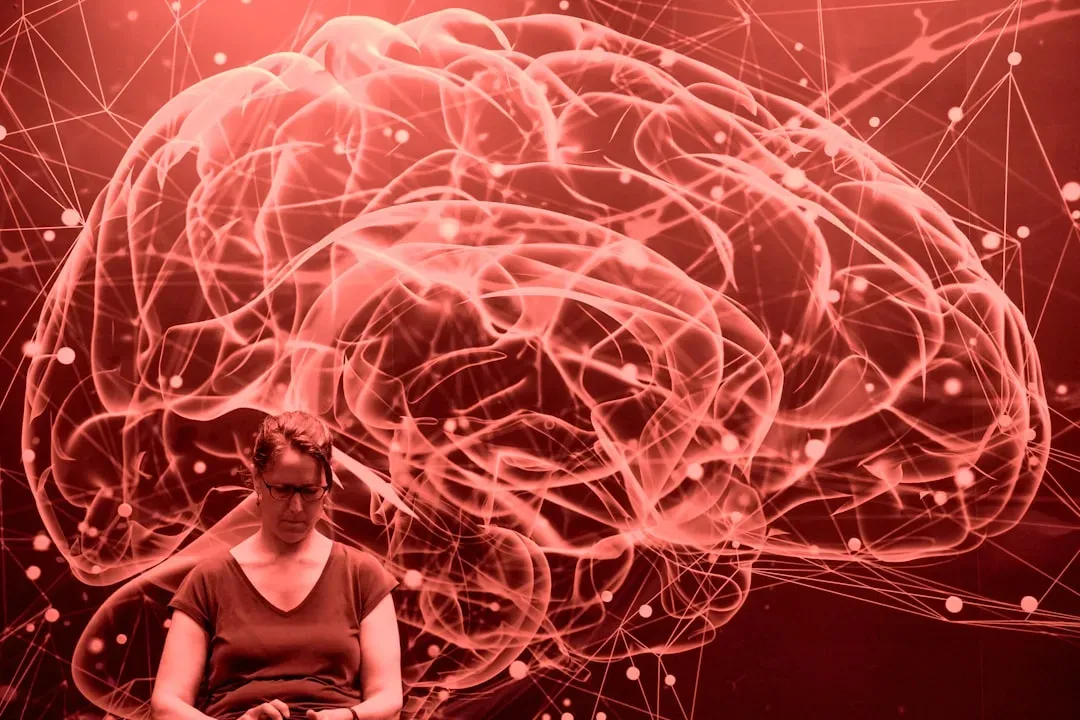
Stop for a second and really think about this. You are aware right now. You’re reading, processing, possibly sipping coffee. Humans know they exist, but how does “knowing” work? Despite all that’s been learned about brain function and the bodily processes it governs, we still don’t understand where the subjective experiences associated with brain functions originate. Honestly, this one keeps philosophers and neuroscientists equally restless.
Scientists still don’t know how the brain turns physical activity into thoughts, feelings, and awareness, but a powerful new tool may help crack the mystery. Researchers at MIT are exploring transcranial focused ultrasound, a noninvasive technology that can precisely stimulate deep regions of the brain that were previously off-limits. In a new roadmap paper, they explain how this method could finally let scientists test cause-and-effect in consciousness research, not just observe correlations. The stakes couldn’t be higher. Understanding consciousness is one of the greatest scientific challenges of the 21st century, made even more urgent by rapid advances in AI and brain-computer interface technologies. Researchers wonder if they could one day determine which patients, animals, or machines are truly conscious.
3. The Hubble Tension: Is the Universe Expanding Faster Than It Should Be?
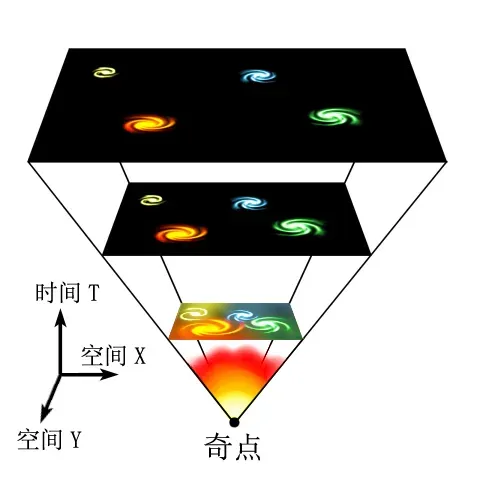
You would think that after a century of cosmology, scientists would at least agree on how fast the universe is expanding. Nope. Fresh analyses in 2025 argue that the Milky Way may sit within a billion-light-year-scale underdensity, about twenty percent less matter than average. That placement could help explain the notorious “Hubble tension,” where local expansion measurements run faster than those inferred from the early universe. It’s the kind of disagreement that makes physicists lose sleep.
By re-examining two decades of baryon acoustic oscillation data, the “frozen-in” sound waves from the Big Bang, researchers showed that a local-void model can reduce the tension dramatically, because galaxies inside a low-density region would recede a bit faster. It’s a mind-bender with huge stakes. If true, some cosmology “anomalies” might be geography, not new physics. In other words, our cosmic neighborhood might just be unusually empty, like a quiet suburb on the outskirts of a city. The standard cosmological model expects near-uniformity on such large scales, and independent galaxy counts and alternative fits still push back. Upcoming surveys and better void mapping will test whether we’re in a special bubble or just seeing statistical mirages.
4. Why Do We Dream? Science Still Doesn’t Really Know

Every single night, your brain spins up elaborate, often completely bizarre stories while your body lies perfectly still. You’ve probably woken up from a dream so vivid it took a moment to realize it wasn’t real. Yet science still can’t fully explain why this happens. Researchers don’t really know why you dream. It may be a way of reflecting on or releasing the stress of everyday life, or even an unconscious way of helping you unravel challenging experiences. It could be a way that your mind protects itself from threats and dangers. It could be a biochemical way for your brain to sort, file, or store information. Perhaps dreams are a way to reconcile your past and present experiences to prepare you for the future.
A 2025 fMRI study by the Max Planck Institute for Human Cognitive and Brain Sciences suggested that dreams are essential for “future proofing” memory and practicing social scenarios. However, the exact mechanism of content generation remains opaque. The continued lack of consensus among researchers highlights a major gap in cognitive science that affects us all. It’s hard to say for sure, but the sheer number of competing theories, ranging from emotional processing to memory consolidation to random neural noise, suggests we’re still very much in the dark. Scientists and sleep experts know when people normally dream, typically during the rapid-eye movement portion of the sleep cycle. You can see when a person is experiencing REM sleep because their eyes zip to and fro and their bodies may twitch and jerk. The brain’s electrical patterns are very active in this phase, just like when you’re awake.
5. The Origin of Life: How Did Something Come From Nothing?
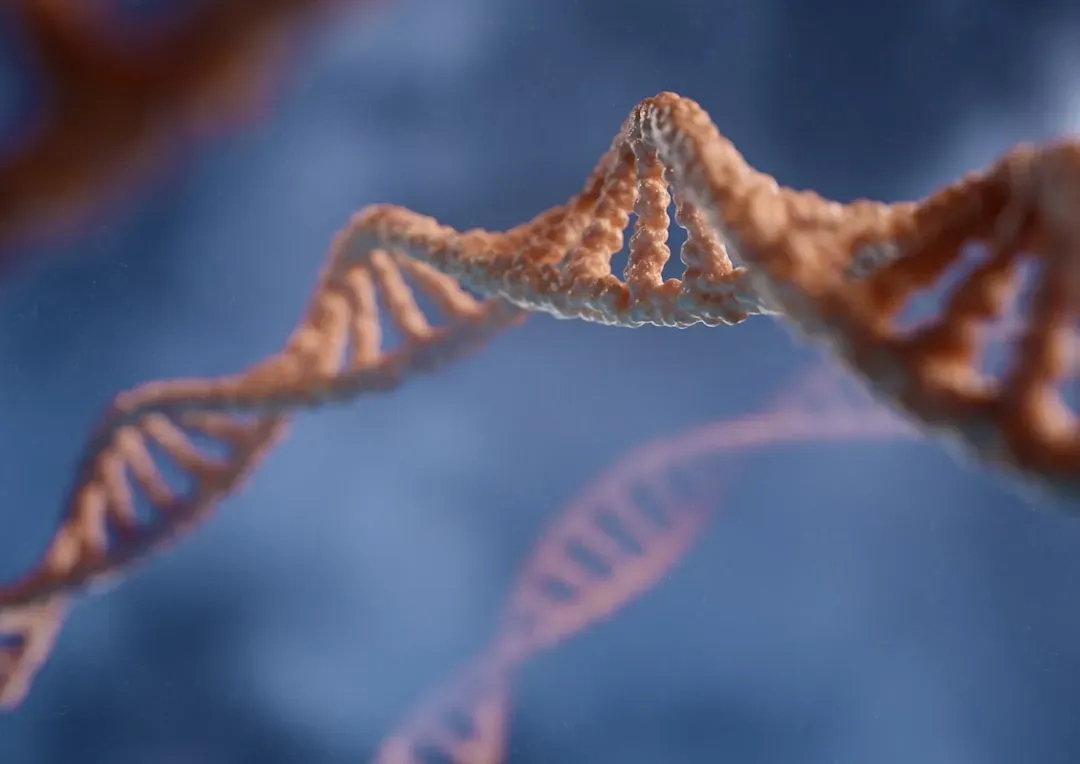
I think this is arguably the deepest scientific mystery on this entire list. How did non-living chemicals, sloshing around in ancient oceans or volcanic vents, somehow organize themselves into the first living cell? The earliest evidence of life on Earth dates back about 3.7 billion years, yet Earth is over 4.5 billion years old. So what sparked life after such a long gap? Scientists believe six chemical elements are essential for life. How they arrived on Earth and why they aren’t found in abundance on other planets remains a mystery. At some point, the right conditions allowed for the formation of RNA and DNA, sparking life, but exactly how and where this happened is still unknown.
We’re talking about life, not just human life. There’s no shortage of scientific speculation, and new findings turn up all the time about how life’s basic building blocks could have been generated in primordial conditions or delivered to Earth from outer space. It’s not like scientists can even agree on which area of science will provide the answer, or if science is even where we should look. Two major competing theories, abiogenesis (life arising from chemistry here on Earth) and panspermia (life delivered by asteroids or comets), both have compelling evidence and devastating gaps. While various theories have been proposed to explain how life first emerged, a definitive answer remains elusive. The complexity of even the simplest life forms makes unraveling the secrets of life’s beginnings a daunting task.
6. The Placebo Effect: Your Brain’s Mysterious Healing Power

Let’s be real, the placebo effect sounds like something from a self-help book. You take a sugar pill believing it’s medicine, and your body actually gets better. It sounds like magic, and yet it’s completely real and thoroughly documented. The sheer, measurable power of the placebo effect, where a patient’s belief in a fake treatment produces a genuine, physiological response, is a profound mystery that confounds pharmacology. Scientists have documented the brain releasing its own highly potent painkillers, or even adrenaline, based entirely on the patient’s expectation. The precise mechanism by which a non-active substance triggers a physical cure remains utterly baffling to modern medicine.
The placebo effect is one of the most intriguing and well-documented phenomena in medicine, yet it remains a profound mystery. It occurs when a patient experiences a real improvement in their symptoms after receiving a treatment that has no therapeutic value, such as a sugar pill or saline injection. This effect highlights the powerful connection between the mind and body, demonstrating that our beliefs and expectations can significantly influence our physical health. What makes this so philosophically wild is the implication: your mental state can physically alter your biochemistry. A 2025 review published in the prestigious New England Journal of Medicine reiterated that the placebo effect represents a powerful, untapped window into the mind-body connection that defies simple chemical explanation. If we could figure out exactly how this works, the medical possibilities would be staggering.
7. The Mystery of “Teleios”: A Perfect Ghost in the Milky Way
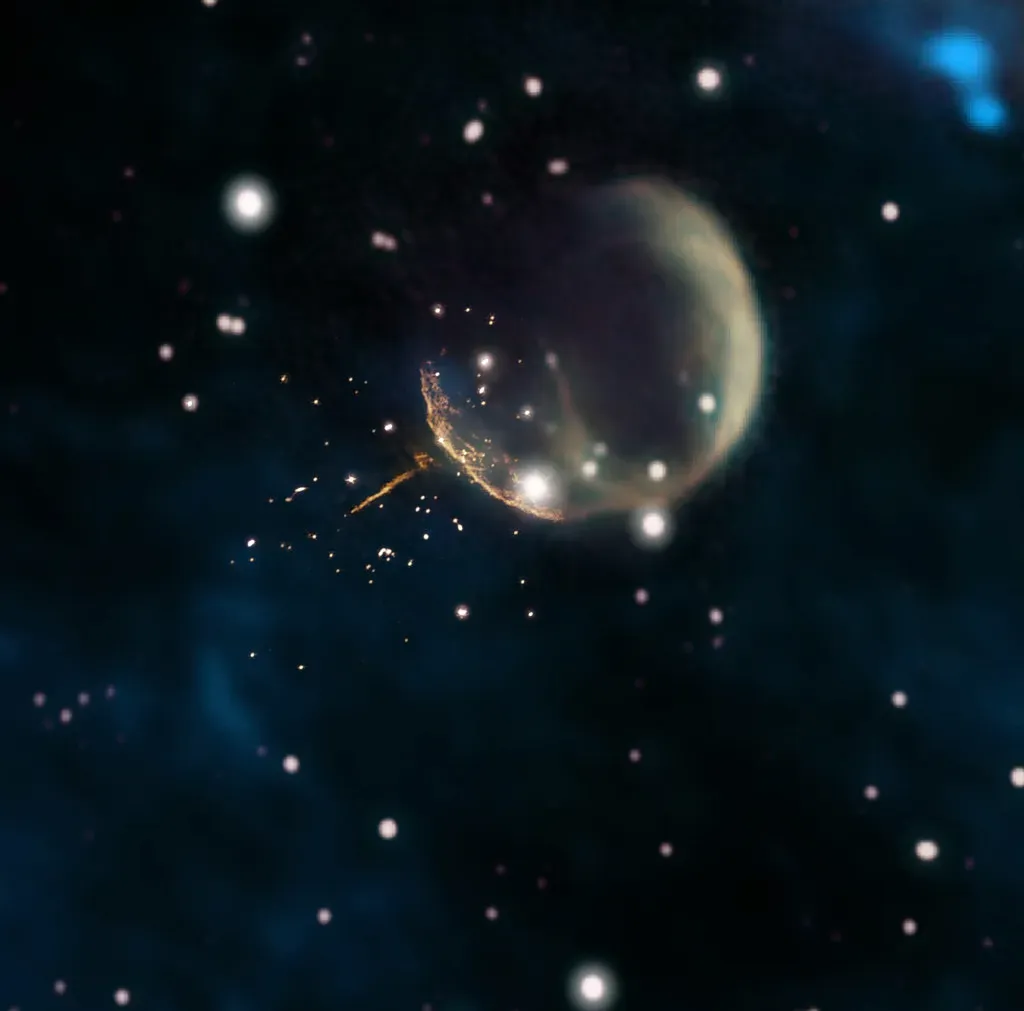
This one is brand new and, I think, wildly underrated in terms of how strange it actually is. Discovered in 2025 in radio telescope images, “Teleios” is a near-perfectly circular, ultra-faint bubble seen only at radio wavelengths with no obvious X-ray or optical counterpart. It might be a supernova remnant, but even for that class, its symmetry is bizarre. The distance is uncertain, so scientists can’t pin down its true size or age. It sits there in the Milky Way, a perfect ghost ring, defying every attempt to categorize it.
Depending on which estimate you pick, Teleios is either surprisingly young and nearby or big and old. Its low surface brightness and lack of clear polarization also complicate the picture. Models suggest it expanded into an unusually uniform, low-density environment. But why so immaculate, and why so radio-only? Follow-up searches for associated shock-heated gas or high-energy emission have come up empty so far. There’s something deeply humbling about a perfectly round cosmic bubble that appears on no wavelength except radio. Until we can measure its distance and environment precisely, Teleios remains that rarest thing in astronomy. Something we can see, but not even begin to fully understand.
The Bigger Picture: What These Mysteries Are Really Telling You

Here’s what I find genuinely exciting about all of this. None of these mysteries are failures of science. They’re the opposite. They represent the frontier, the raw edge where human curiosity meets the limits of what our current tools and theories can handle. Today, no physicist would dare assert that our physical knowledge of the universe is near completion. To the contrary, each new discovery seems to unlock a Pandora’s box of even bigger, even deeper physics questions. That’s not a crisis. That’s how science is supposed to work.
Centuries later, the brightest minds continue to investigate difficult, bewildering scientific questions every day. Yet even with artificial intelligence and brilliant minds connecting with more computing power than our species has ever known, we still don’t have all of the answers. In fact, some people might argue that we’re just now learning to ask the truly big questions. From invisible cosmic scaffolding to a perfectly round radio ghost drifting through the Milky Way, these seven mysteries aren’t just puzzles for scientists in lab coats. They’re windows into how strange, how layered, and how astonishing reality actually is. The fact that you’re reading this, aware and curious, is itself one of those mysteries.
So here’s a thought to leave you with: which of these mysteries unsettles you the most? And does the not-knowing feel like frustrating ignorance, or the most thrilling invitation in the universe? Tell us what you think in the comments below.