
You might think you understand the universe, but some discoveries have completely changed the game. Over the past century, scientists have pieced together findings that challenge everything we thought we knew about space, time, and matter itself. From ripples in spacetime to mysterious energy pushing galaxies apart, these breakthroughs have reshaped our cosmic perspective.
Honestly, it’s hard to imagine where we’d be without these revelations. Each one opened doors that scientists didn’t even know existed, transforming astronomy from educated guesswork into precise science. Let’s dive into the discoveries that fundamentally altered humanity’s view of the cosmos.
1. Detection of Gravitational Waves: Hearing the Universe for the First Time
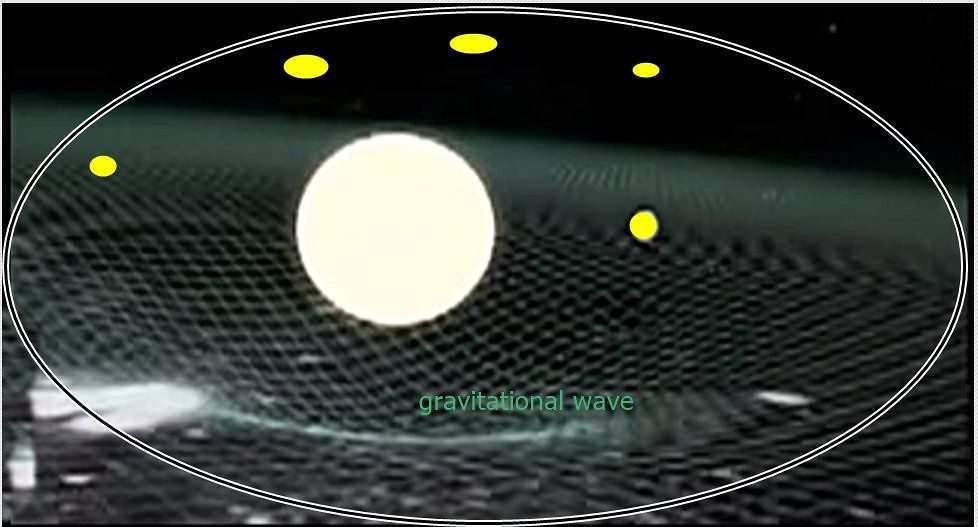
On September 14, 2015, the LIGO and Virgo collaborations made the first direct observation of gravitational waves, confirming a prediction Einstein made roughly a century earlier. The black holes for this event were about 29 and 36 times the mass of the sun, and about 3 times the mass of the sun was converted into gravitational waves in a fraction of a second with a peak power output about 50 times that of the whole visible universe. Think about that for a second. The sheer violence of this cosmic collision released more energy than every star you can see combined.
The technology required to detect these waves was mind-boggling. LIGO is so sensitive that it can detect a change smaller than one ten-thousandth the width of a proton. Engineers and physicists spent decades perfecting instruments that could measure distortions in spacetime smaller than an atomic nucleus. Today, LIGO routinely observes roughly one black hole merger every three days, and the gravitational-wave-hunting network has captured a total of about 300 black hole mergers.
This wasn’t just about confirming Einstein’s theory. A new field of science has been born: gravitational wave astronomy, giving scientists an entirely new way to observe the universe beyond light waves.
2. Discovery of Cosmic Microwave Background Radiation: The Afterglow of Creation
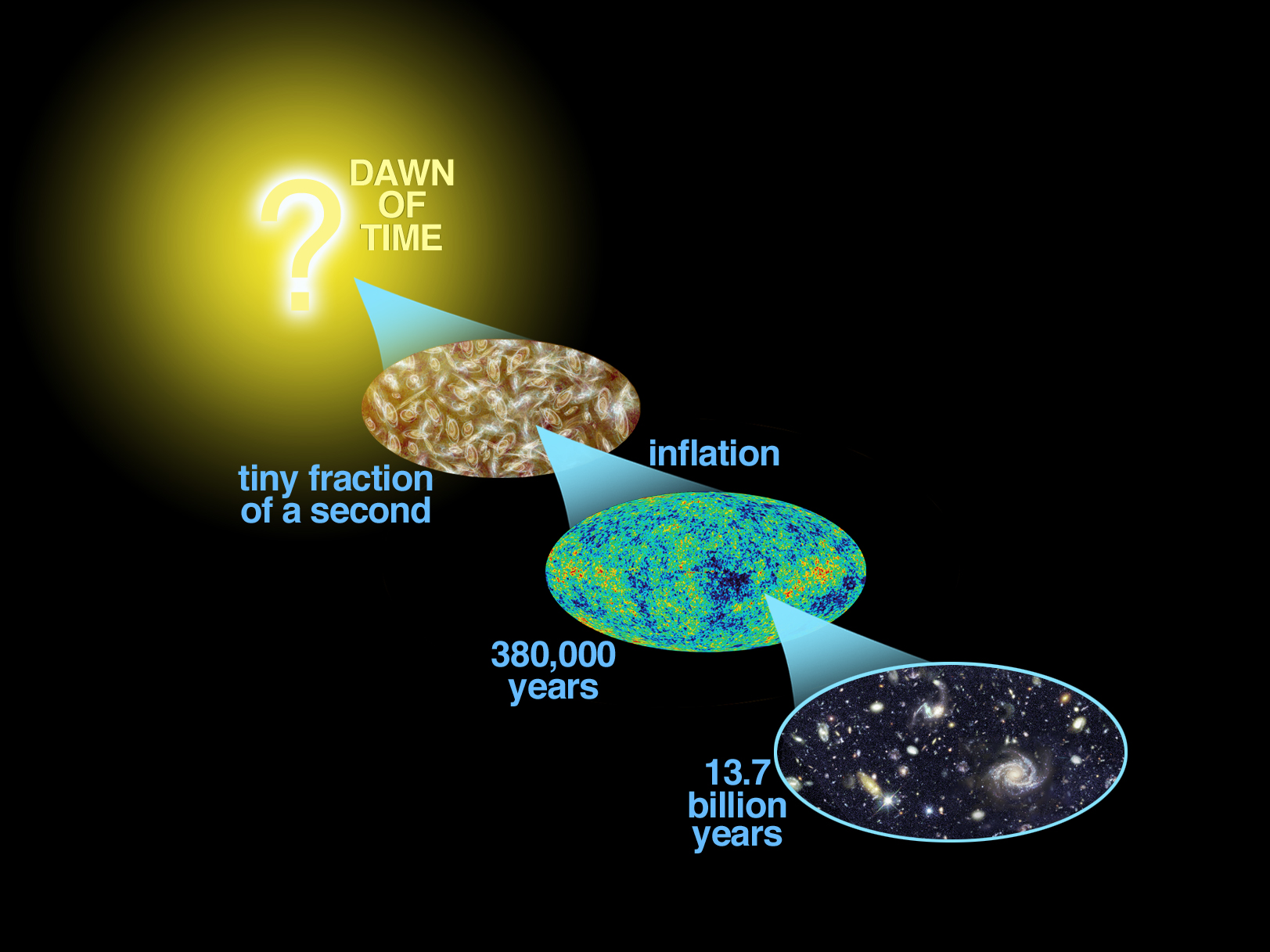
In 1964, Arno Allan Penzias and Robert Woodrow Wilson discovered the cosmic microwave background, estimating its temperature as 3.5 K, as they experimented with the Holmdel Horn Antenna. Here’s the thing: they stumbled upon it completely by accident. They found a low, steady, mysterious noise that persisted in their receiver, which was 100 times more intense than expected and was evenly spread over the sky. After thoroughly checking their equipment and even removing some pigeons nesting in the antenna and cleaning out the accumulated droppings, the noise remained.
Let’s be real, cleaning pigeon droppings only to discover evidence of the Big Bang is probably the most unexpected path to a Nobel Prize in history. Penzias and Wilson were awarded the Nobel Prize for Physics in 1978, and today the CMB radiation is very cold, only 2.725 degrees above absolute zero.
The CMB is landmark evidence of the Big Bang theory for the origin of the universe. The CMB radiation was emitted roughly 13.7 billion years ago, only a few hundred thousand years after the Big Bang, and by studying the detailed physical properties of the radiation, scientists can learn about conditions in the universe on very large scales at very early times.
This discovery transformed cosmology from philosophical speculation into empirical science practically overnight.
3. The Higgs Boson Discovery: Finding the Universe’s Missing Piece
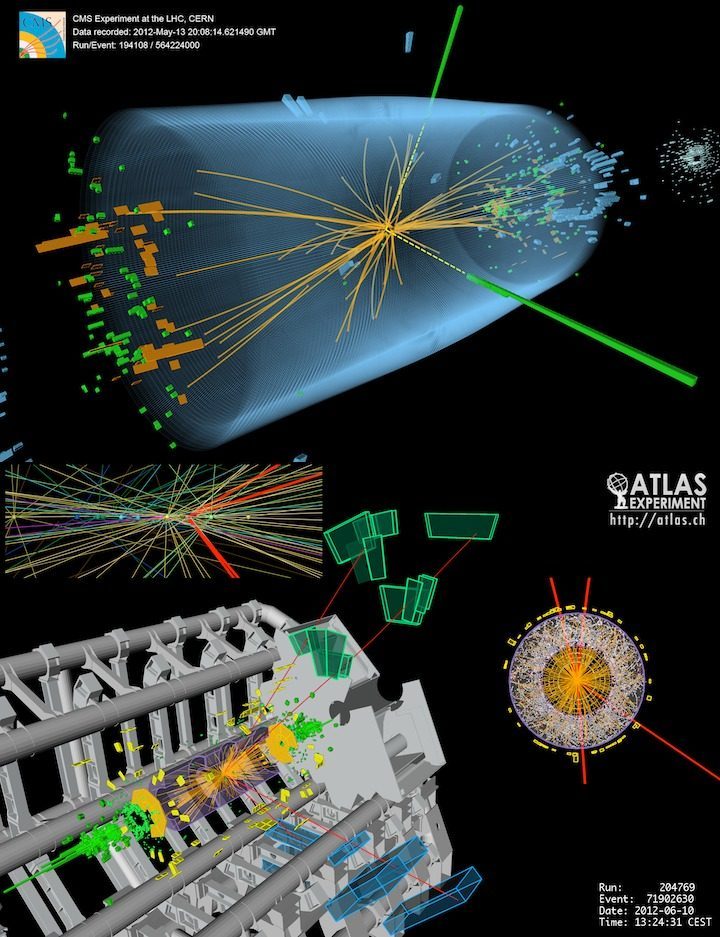
On July 4, 2012, the discovery of a new particle with a mass between 125 and 127 GeV was announced, and the ATLAS and CMS collaborations announced the discovery of a new particle to a packed auditorium at CERN. Scientists had hunted this elusive particle for nearly half a century. The importance of this fundamental question led to a 40-year search and the construction of one of the world’s most expensive and complex experimental facilities to date, CERN’s Large Hadron Collider.
The Higgs boson wasn’t just another particle to catalog. Stars, planets and life could only emerge because particles gained their mass from a fundamental field associated with the Higgs boson, and the existence of this mass-giving field was confirmed in 2012 when the Higgs boson particle was discovered at CERN. Without it, the universe would be an unrecognizable place.
The detection itself was extraordinarily difficult. The Higgs boson only appears in about one in a billion LHC collisions, but careful statistical analysis of enormous amounts of data uncovered the particle’s faint signal in 2012. Over 300 trillion LHC proton-proton collisions were analysed by the LHC Computing Grid, the world’s largest computing grid as of 2012.
The 2013 Nobel Prize in Physics was awarded jointly to theorists François Englert and Peter Higgs, recognizing their theoretical work that predicted this fundamental particle decades earlier.
4. First Confirmed Exoplanet Around a Sun-Like Star: We’re Not Alone in Having Planets
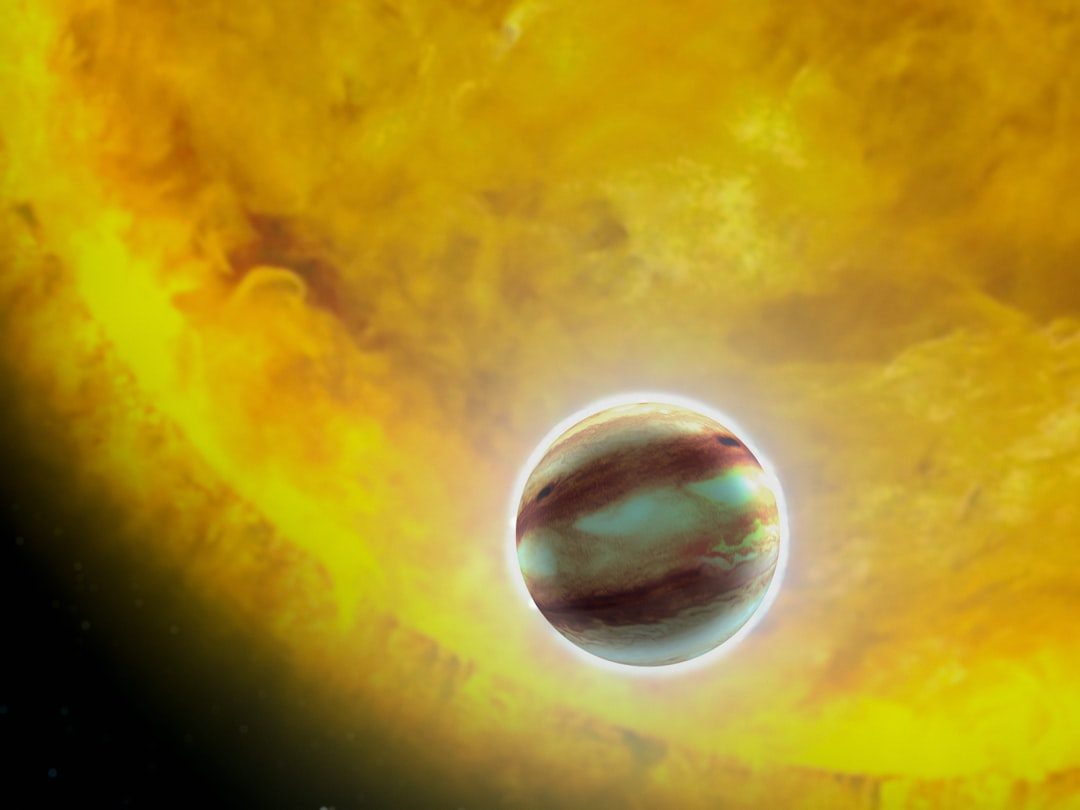
The first confirmation of an exoplanet orbiting a main-sequence star was made in 1995, when a giant planet was found in a four-day orbit around the nearby star 51 Pegasi. Before this moment, scientists could only theorize about planets beyond our solar system. Didier Queloz, a grad student at the University of Geneva working with his advisor Michel Mayor, chose an F-type star called 51 Pegasi, roughly 50 light-years distant.
The discovery shattered expectations. The first exoplanet discovery in 1995 around a Sun-like star challenged the then-prevailing model of planetary system formation based solely on our solar system, revealing the existence of massive planets with surprisingly close orbits.
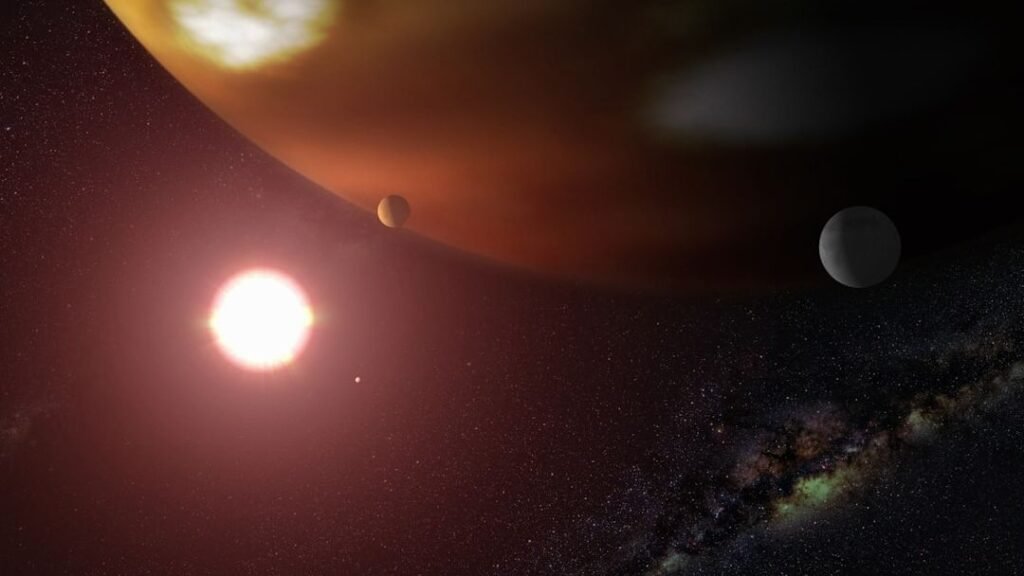
Today, the field has exploded. As of October 2025, there are over 6,000 confirmed exoplanets in more than 4,500 planetary systems. The most common type of exoplanet doesn’t exist in our solar system at all, with the title of most abundant belonging to the class of super-Earths or sub-Neptunes, with masses between Earth’s and Neptune’s. Who would have guessed that the galaxy’s most common planetary type is one we don’t have?
This discovery fundamentally changed our understanding of planetary formation and raised tantalizing questions about life beyond Earth.
5. Dark Energy and the Accelerating Universe: A Cosmic Mystery Unfolds
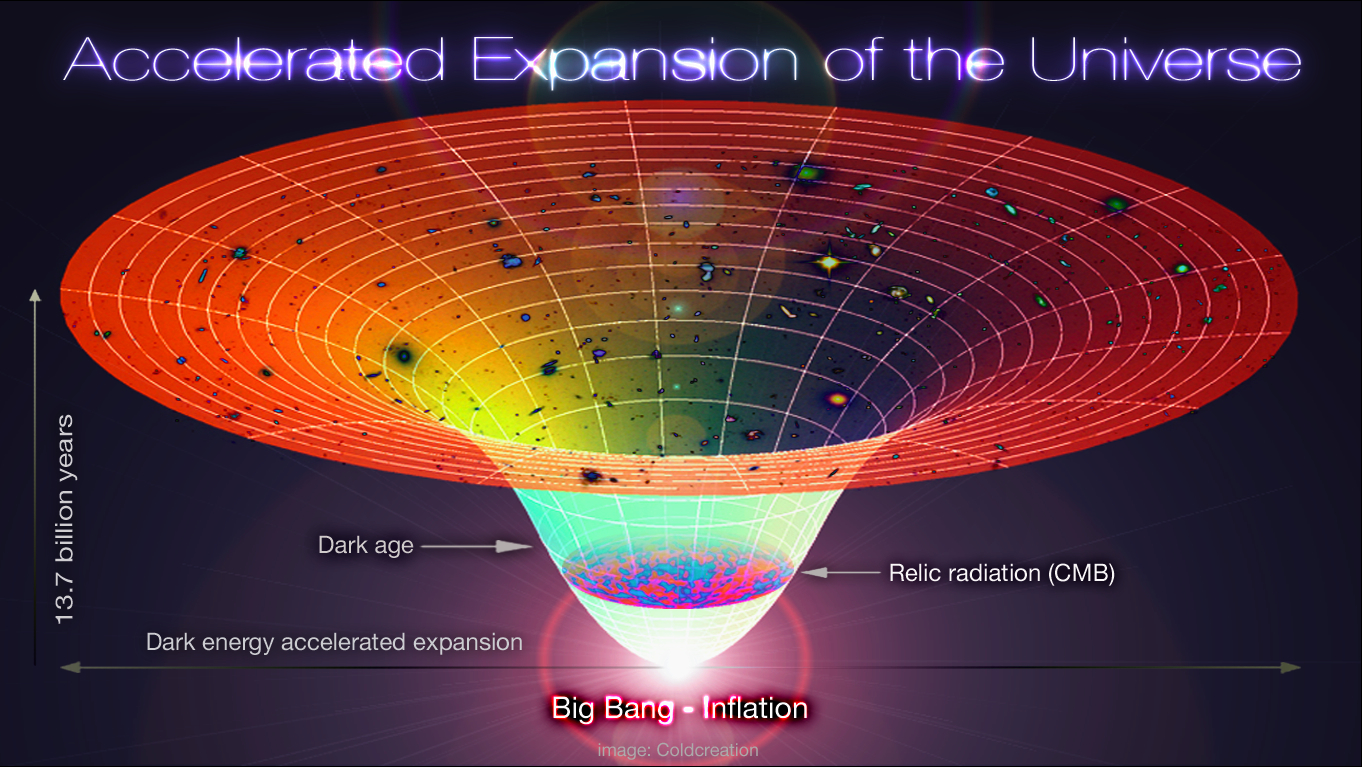
In 1998, the Supernova Cosmology Project and the High-Z Supernova Search Team discovered the accelerated expansion of the Universe and dark energy. This was shocking. Scientists expected gravity to be slowing the universe’s expansion down, not speeding it up. The accelerating expansion of the universe implies the existence of so-called dark energy, a mysterious force that acts to oppose gravity and increase the distance among galaxies.
Dark energy, the mysterious something that makes up three-quarters of the universe and causes it to expand at an accelerating rate, was discovered by National Lab cosmologists. Think about that: roughly three-quarters of everything that exists is made of something we barely understand. It’s humbling, honestly.
In 2014, The Baryon Oscillation Spectroscopic Survey measured the scale of the universe to an accuracy of one percent, the most precise such measurement ever made, and future measures at this precision are the key to determining the nature of dark energy.
We still don’t truly know what dark energy is. Is it a property of space itself? A new fundamental force? This discovery opened more questions than it answered, reminding us how much we have yet to learn.
6. The First Black Hole Image: Seeing the Unseeable
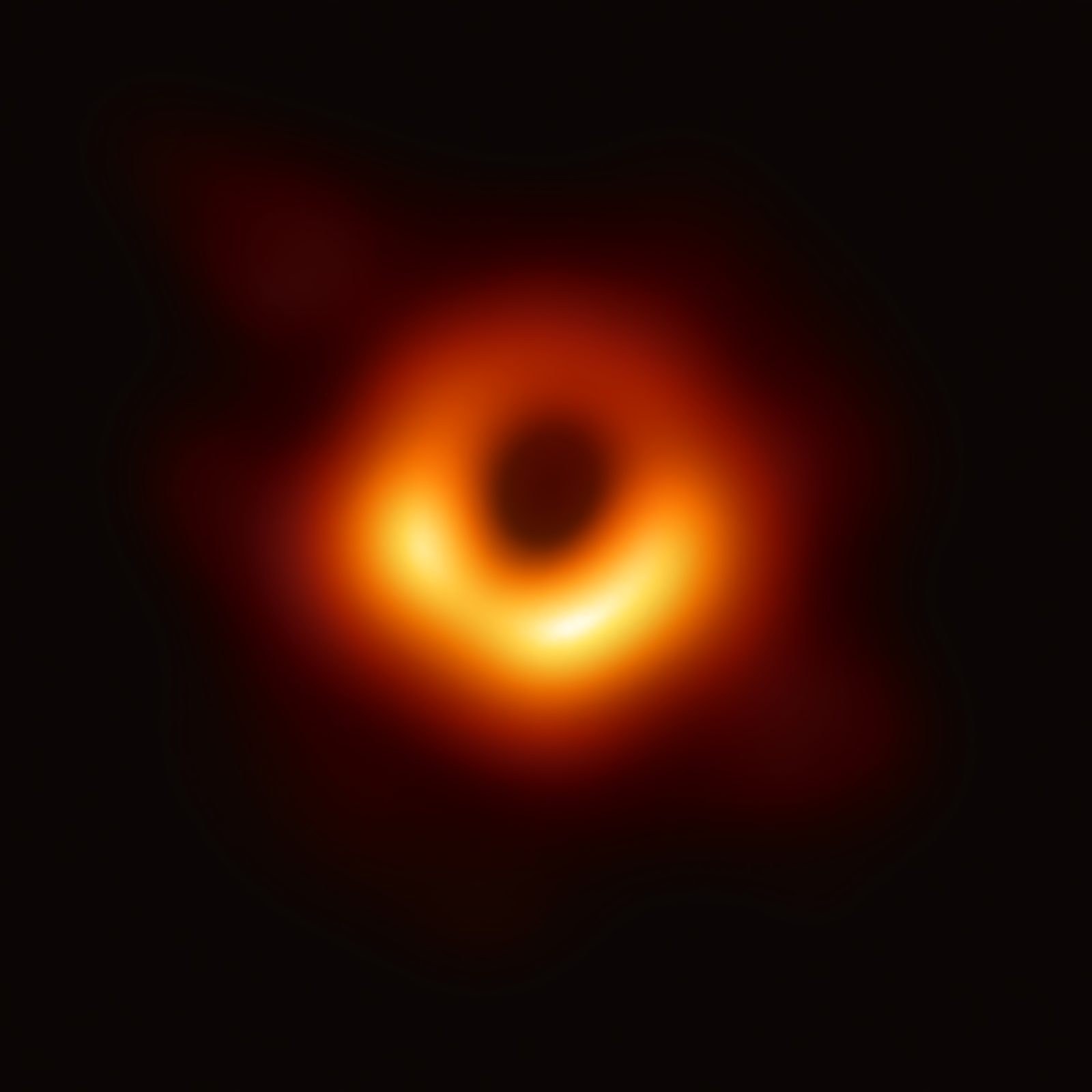
In 2019, the first image of a black hole was captured, using eight different telescopes taking simultaneous pictures, timed with extremely precise atomic clocks. For decades, black holes existed only in theoretical equations and indirect observations. Seeing one directly was considered nearly impossible because, well, they’re black holes. They don’t emit light.
What scientists photographed was the shadow of the supermassive black hole at the center of galaxy M87, surrounded by glowing material being devoured by its immense gravity. The international collaboration required to achieve this was staggering, coordinating observatories across the globe to function as a single Earth-sized telescope.
This wasn’t just a pretty picture. It provided direct visual confirmation of Einstein’s predictions about how gravity warps spacetime around massive objects. The image showed the event horizon, the point of no return where not even light can escape. Scientists could now test theories of gravity in the most extreme environments imaginable.
The achievement demonstrated that with enough ingenuity and cooperation, humanity can visualize phenomena that seem beyond comprehension.
7. Discovery of Quarks and Subatomic Structure: Inside the Building Blocks
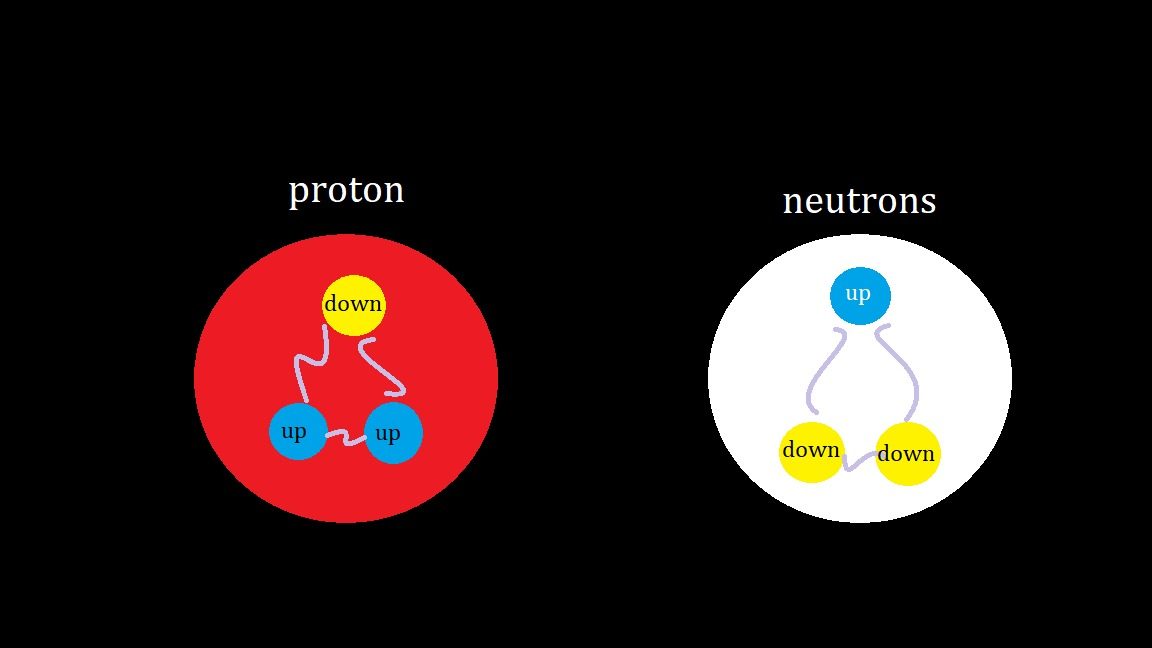
Protons and neutrons were once thought to be indivisible, but National Lab scientists discovered that protons and neutrons were made of even smaller parts, called quarks, and over time experimenters identified six kinds of quarks, three types of neutrinos and the Higgs particle. This revelation changed how we understand matter at its most fundamental level.
Before the discovery of quarks, physicists believed protons and neutrons were elementary particles. Experiments in particle accelerators revealed that these particles had internal structure. Quarks come with whimsical names: up, down, strange, charm, bottom, and top. They combine in specific ways to form the particles we observe in everyday matter.
The discovery required smashing particles together at tremendous energies and analyzing the debris. It was like trying to understand how a watch works by throwing two watches together and studying the pieces that fly out. Yet through careful analysis, physicists reconstructed the rules governing these fundamental constituents.
Understanding quarks led to the development of the Standard Model of particle physics, our best description of the subatomic world. It explains how fundamental forces and particles interact, providing the framework for modern physics.
Conclusion
These seven discoveries represent pivotal moments when humanity’s understanding of the cosmos took dramatic leaps forward. From detecting whispers of spacetime to imaging the unseeable, from finding the universe’s mass-giving particle to discovering that space itself is filled with mysterious energy, each breakthrough opened new frontiers.
What’s remarkable is that many of these discoveries were initially met with skepticism or happened entirely by accident. Scientists looking for one thing stumbled upon something far more profound. It shows that the universe still holds countless secrets, waiting for curious minds and sophisticated instruments to uncover them.
As technology advances and new observatories come online, we’re likely standing at the threshold of more revolutionary discoveries. The next generation of telescopes, particle accelerators, and gravitational wave detectors promises to reveal phenomena we can’t yet imagine. What do you think the next groundbreaking discovery will be? The universe has surprised us before, and it will certainly surprise us again.