If you grew up thinking of time as a simple, steady tick-tock marching forward, you are in for a shock. Modern physics has been quietly dismantling that comfortable picture, replacing it with something far stranger: time that bends, stretches, slows down, and might even emerge from something more basic. You do not just live in time; in a very real sense, you help define it.
As you look at what scientists have uncovered over the last few decades, you start to see time less like a universal clock and more like a flexible, context-dependent character in a story. These seven breakthroughs do not just tweak the details; they challenge the way you think about memory, causality, free will, and even what it means for something to “exist” at all. By the end, you may never look at a ticking clock the same way again.
1. Relativity: Time Really Does Run at Different Speeds
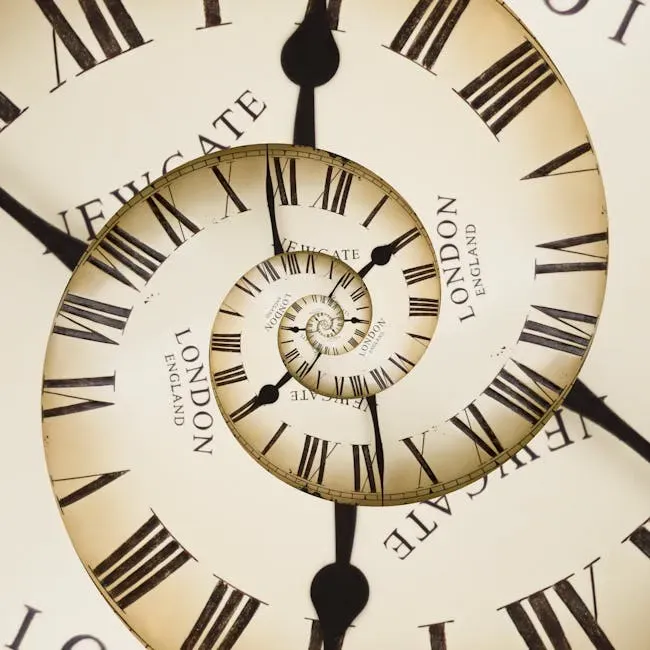
You might have heard the phrase “time is relative” so often that it sounds like a tired slogan, but in your everyday world, it is literally true. According to Einstein’s theory of relativity, the rate at which time passes depends on how fast you are moving and how strong gravity is where you are. If you lived your life on a fast-moving spaceship or near a massive object like a black hole, your clock would tick more slowly compared with someone far away in weaker gravity.
This is not just theoretical. You actually rely on this effect every time you use GPS on your phone, because the satellites orbiting above you experience time slightly differently from you on Earth’s surface. Engineers have to correct for those relativistic time shifts, or your navigation would drift and send you to the wrong place. Once you see that time can stretch and shrink depending on your motion and location, the old idea of a single universal “now” starts to fall apart.
2. Time Dilation You Can Measure With Airplanes and Atomic Clocks

If relativity sounds too abstract, you can look at experiments that quite literally fly it around the world. When scientists put ultra-precise atomic clocks on airplanes and send them flying, the clocks that travel come back slightly out of sync with identical clocks that stayed on the ground. You can measure that difference, and it always lines up with what relativity predicts. You can think of it as a tiny but real time travel into the future, measured in billionths of a second.
Today, the best atomic clocks are so precise that if you move one by just a meter higher in Earth’s gravitational field, it ticks at a detectably different rate from one left lower down. That means, strictly speaking, your head experiences time a little faster than your feet do. When you realize that simply going for a run or taking a flight slightly changes how much time you have lived through, time stops feeling like a rigid background and starts looking more like a physical quantity that bends under the weight of energy and motion.
3. Block Universe: The Mind-Bending Idea That Past, Present, and Future All “Coexist”
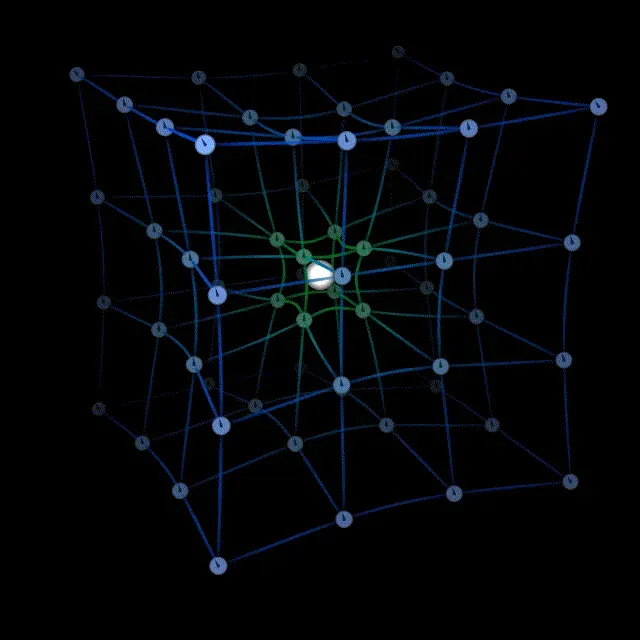
Relativity does more than stretch time; it reshapes how you picture reality itself. Many physicists interpret the equations to mean that the universe is like a four-dimensional “block” where all events – past, present, and future – are laid out together. In this view, your sense that the present moment is special is more about the way your brain experiences time than about how the universe is built. You move along your personal path in spacetime, but the whole path already exists.
If you take this block universe idea seriously, you get a very unsettling implication: your future might already be just as real as your memories of yesterday. Instead of time flowing like a river, you might be more like a traveler reading pages in a book that has already been written. You still feel choices and changes, but those may be part of the structure rather than something created on the fly. Whether you find that liberating or claustrophobic, it forces you to separate your inner sense of time from the physical picture offered by modern physics.
4. Quantum Entanglement: When “Before” and “After” Get Blurry
Once you step into quantum mechanics, time becomes even harder to pin down. In entanglement experiments, two particles can be linked so that when you measure one, you instantly know something about the other, even if they are far apart. The weird part is that the timing can look ambiguous: depending on how you set things up, it can be hard to say which measurement happened “first” in any absolute sense. Your gut wants a clear before and after, but the quantum world does not always cooperate.
More advanced quantum experiments even explore situations where the order of events itself seems fuzzy, as if A happening before B and B happening before A can both influence outcomes. That does not mean you can send messages to the past or break causality in the way science fiction imagines, but it does suggest that your everyday sense of a single, clean timeline is not fundamental. Instead, time in quantum theory can look more like a network of correlations than a simple sequence of steps.
5. Time Crystals: Matter That Repeats in Time Instead of Space
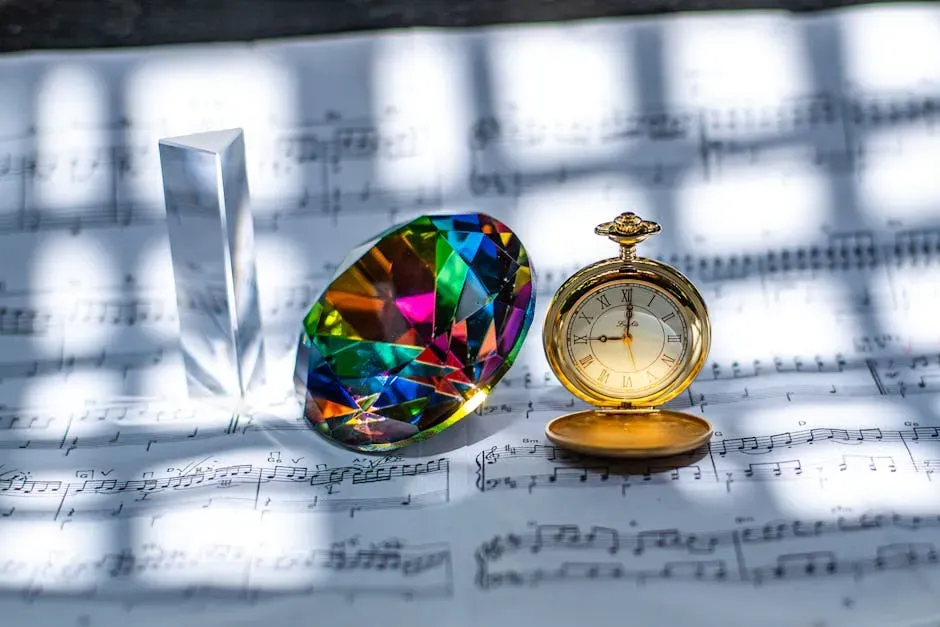
When you hear the word “crystal,” you probably picture a repeating pattern in space – like the regular lattice in a diamond or salt. Time crystals turn that idea on its head by creating a repeating pattern in time instead. In these systems, which scientists have built in labs using carefully controlled quantum materials, the atoms or spins fall into a rhythm that repeats periodically without any extra energy being added. You end up with a structure that is ordered not just in space but in the flow of time itself.
For you, time crystals show that time can be treated almost like a physical dimension you can shape and organize, just as you arrange atoms in a grid. They challenge the old assumption that systems naturally settle into a static, time-independent state. Instead, they demonstrate that you can have phases of matter whose defining feature is how they evolve in time. That nudges you toward thinking of time not just as something you pass through, but as something that can have its own kinds of order and symmetry.
6. Time as an Emergent Property: When “Before” and “After” May Come From Deeper Rules
Some of the most radical ideas in modern physics suggest that time might not be basic at all. Instead, time could emerge from more fundamental ingredients, like the way temperature emerges from countless jiggling atoms rather than being a property of any single one. In certain approaches to quantum gravity and cosmology, the equations at the deepest level do not include time in the way you expect. The familiar flow from past to future seems to appear only when you zoom out and look at large-scale behavior.
If time is emergent, then what you call “before” and “after” might be similar to how you talk about waves on the ocean: real and useful, but not fundamental. Your memories, your sense of aging, and even the direction of cause and effect could be rooted in statistical patterns and information, not in an underlying cosmic clock. This does not make your experiences less real, but it does undercut the idea that time is a simple, independent backdrop. It suggests that when you ask what time really is, you might be asking the wrong kind of question.
7. The Arrow of Time: Why You Remember the Past but Not the Future
Everyday life screams that time has a direction. You remember yesterday, not tomorrow; eggs break but never un-break themselves; you grow older and never younger. Yet the basic laws of physics, at their core, usually work just as well forward as backward. So why do you experience an arrow of time that points from past to future? A leading idea ties it to entropy, a measure of disorder: the universe seems to have started in an extremely low-entropy, ordered state and has been moving toward higher entropy ever since.
From your perspective, this means that the reason you can form stable memories of the past but not of the future is linked to that gradual increase in disorder. Processes that create records, scars, fossils, and brain states all involve entropy going up. In a sense, you ride on the wave of increasing entropy, and your psychological arrow of time is aligned with that physical trend. When you see steam spreading in a kitchen or coffee cooling on a table, you are watching the arrow of time in action – and realizing that your own life story is part of that one-way journey.
8. Time Perception and the Brain: Your Inner Clock Is Not What You Think

All these cosmic ideas about time would be incomplete if you did not look at how your brain handles it. Neuroscience has shown that you do not have a single “time center” in your head; instead, many different brain networks handle durations, sequences, and rhythms, often in ways you are not aware of. Your sense of how long something lasted can be distorted by attention, emotion, and expectation. That is why a boring meeting seems to drag on forever, while a thrilling evening disappears in what feels like a heartbeat.
Experiments where you have to judge intervals or react to timed cues reveal that your inner clock is elastic and context-dependent. Under stress or fear, moments can feel stretched, almost like slow motion, because your brain is packing in more detail. Under deep focus or flow, you can lose track of time entirely. When you realize that your most intimate sense of time is stitched together from neural processes with their own quirks and limits, you start to see that “time itself” is always intertwined with the way you experience it.
Conclusion: Living Inside a Stranger, Deeper Kind of Time
When you step back from these breakthroughs, you notice a common theme: time is not the simple, universal stream you were taught to imagine. It bends with motion and gravity, can be sliced up differently depending on your frame of reference, and may not even exist as a fundamental ingredient in the deepest laws of nature. Quantum experiments blur the order of events, new phases of matter organize motion in time, and the arrow you feel so strongly seems to be tied to the history of entropy in the cosmos.
At the same time, your personal sense of time – your memories, your plans, your intuitive feeling of “now” – is built by a brain that is improvising on top of those physical rules. You are not just a passenger moving through time; you are also a storyteller assembling it as you go. The more you learn, the more you realize that understanding time means understanding both the universe and yourself. Knowing all that, how will you look at your next minute, your next year, and your own small arrow of time?