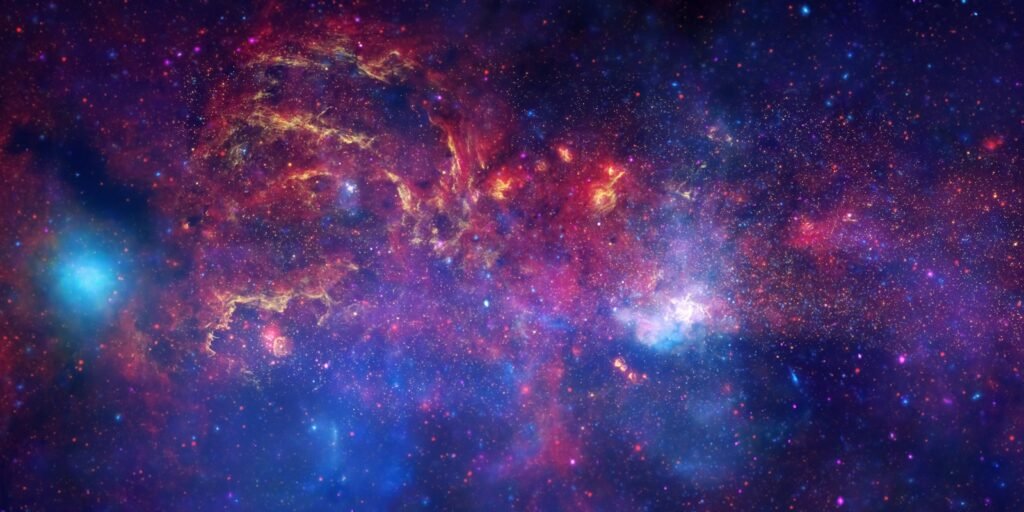

Before we built rockets or sent probes past the edge of the Solar System, a handful of deceptively simple human insights quietly turned the universe inside out. Each of these discoveries did more than add a new fact to the astronomy textbook; they rewired what it means to be a small, thinking animal on a pale planet in a vast, dark sea. In this article, we’ll walk through seven moments when someone, somewhere, said, “What if we’re wrong about everything?” – and then proved it. Together they trace a story of doubt, courage, error, and correction that still shapes how you and I think about the night sky. By the end, you may never look at the stars – or at human curiosity – the same way again.
When Earth Lost Its Privileged Seat: The Shock of the Copernican Revolution
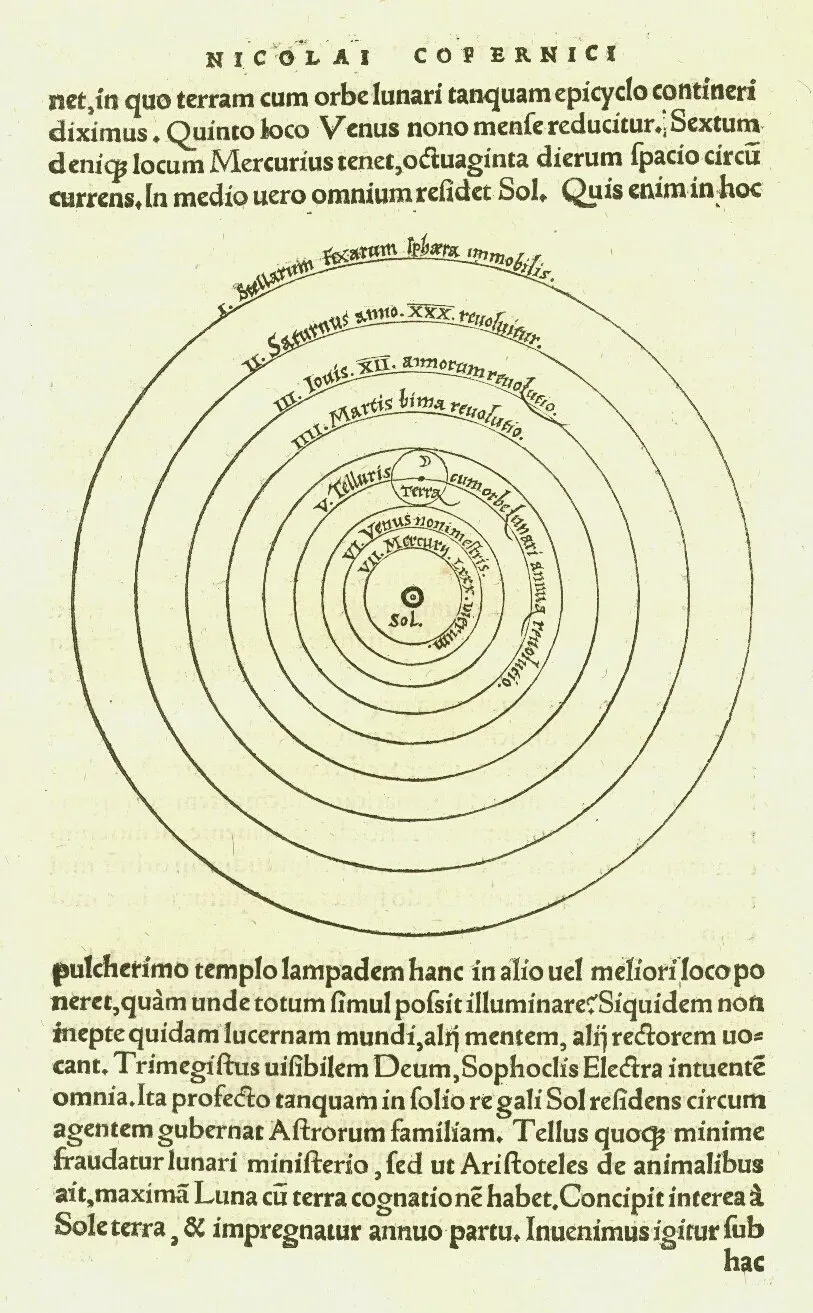
Imagine growing up being told the entire universe literally spins around you, and then someone calmly suggests, “Actually, we’re the ones doing the spinning.” That was the emotional impact of the heliocentric model proposed by Nicolaus Copernicus in the sixteenth century. He argued that the Sun, not Earth, sits at the center of the known planetary system, turning a comforting, Earth-centered cosmos into something disorienting and strangely bigger. It was not just a technical fix to tidy up messy planetary motions; it was a frontal attack on the deep-seated belief that humans occupy a cosmic spotlight. Little wonder his ideas spread quietly at first, read by specialists more than shouted from rooftops.
The real upheaval came when later observers, especially Galileo with his telescope, gathered evidence that planets are worlds, the Moon has mountains, and Venus shows phases that only make sense if it orbits the Sun. Each new observation chipped away at the old, nested-crystal-spheres picture and made the Copernican vision less of a daring hypothesis and more of a blunt reality. The result was a painful but important downgrade: we were not the fixed center around which everything turned, but one moving world among others. Strangely, that demotion opened the door to a grander story, one where humans gain significance not from location, but from the ability to figure any of this out at all.
Seeing the Invisible Machinery: Newton Turns the Heavens into Physics
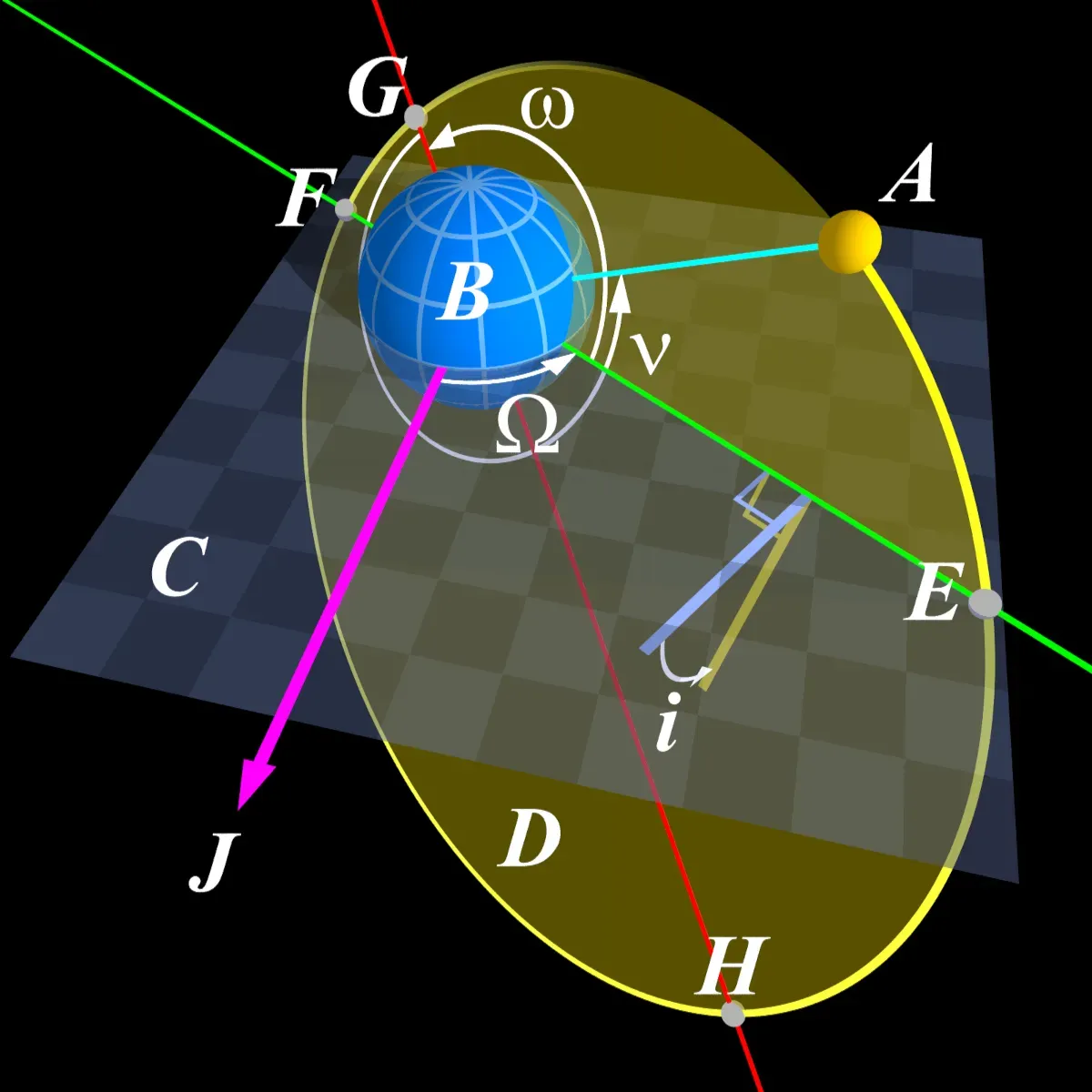
For earlier generations, the sky was almost magical – perfect, untouchable, and governed by mysterious rules different from the chaos on Earth. Isaac Newton’s great leap in the late seventeenth century was to say, in effect, “No, it’s all the same physics.” By showing that the same gravity that makes an apple fall can also keep the Moon in orbit, he fused the heavens and the Earth into one universe operating under one set of laws. His laws of motion and universal gravitation explained planetary orbits with astonishing precision and removed the idea that celestial bodies were somehow exempt from ordinary reality. The cosmos went from a two-tiered system to a single, mathematically describable whole.
This was both liberating and a little chilling. On one hand, it gave humans a recipe book: with enough math and measurement, you could predict, navigate, and engineer your way through space. On the other, it made the universe feel like a vast machine that did not particularly care about our feelings or myths. Yet that mechanistic view armed later generations of explorers, from orbital mechanics engineers to mission planners at NASA, who still lean on Newton’s equations daily. The fact that you can sling a spacecraft around Jupiter using a gravity assist maneuver is a direct, practical descendant of Newton’s attempt to explain why the Moon does not simply fly away.
Discovering Other Suns: The Milky Way Becomes a City of Stars
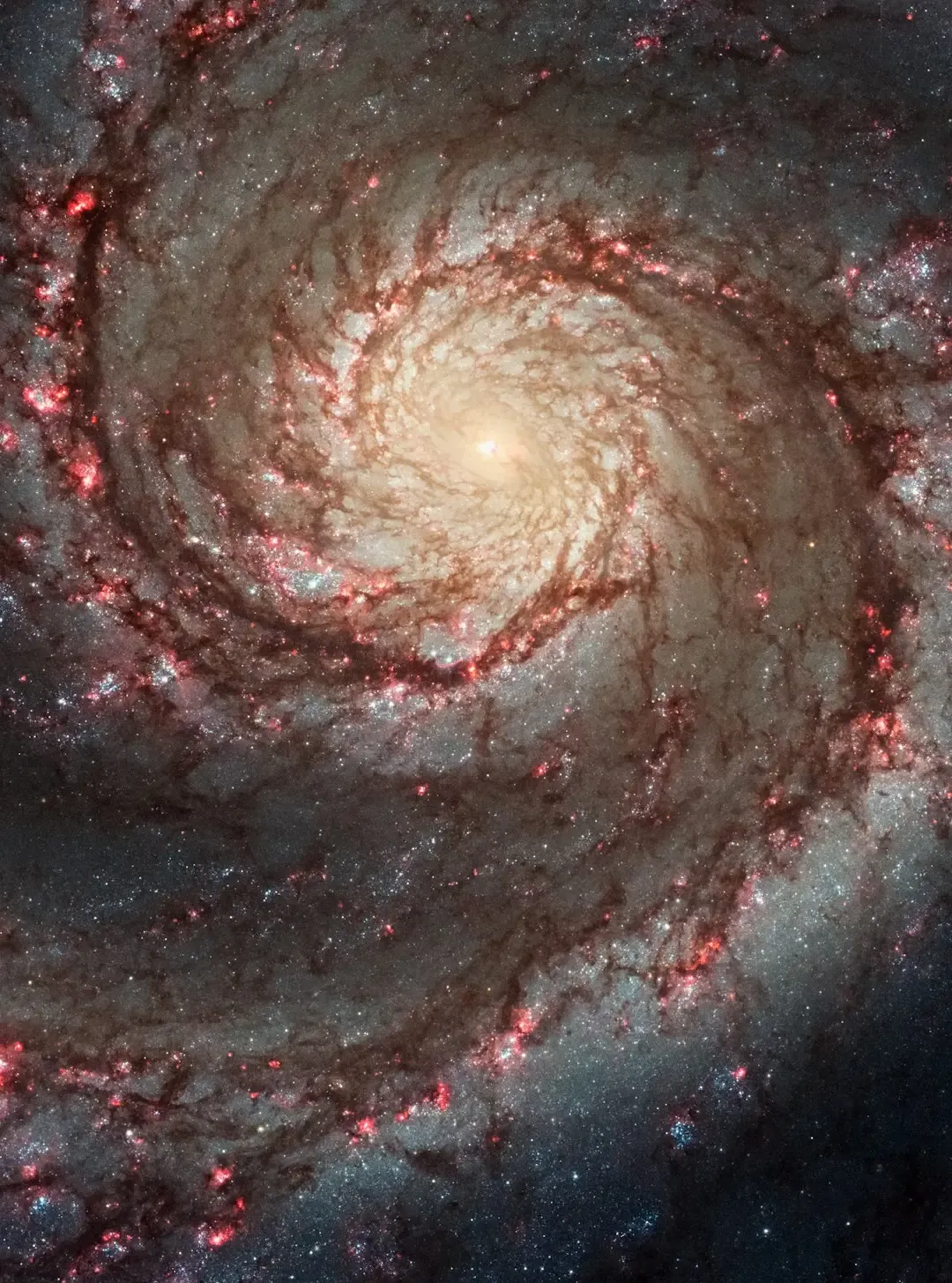
It’s hard to appreciate now, but for a long time the Milky Way was an unsolved smear of light, more poetic than scientific. Step by step, especially in the eighteenth and nineteenth centuries, astronomers began to realize that this hazy band is made up of countless individual stars, too distant and densely packed to resolve with the naked eye. William Herschel’s star counts were some of the first attempts to turn that realization into a rough 3D map, suggesting we live in a flattened system of stars rather than an infinite, featureless cosmos. Later, better instruments revealed that our galaxy is a disk with spiral structure, dust lanes, and a dense central bulge.
This was not just a cartographic upgrade; it changed the emotional scale of our home. The Sun stopped being “the star” and became one of hundreds of billions of stars in a sprawling, gravitationally bound city. When you look at the Milky Way on a dark night, you are literally seeing the cross-section of our galactic neighborhood, not some vague celestial cloud. Realizing that we inhabit a specific part of a structured galaxy laid the groundwork for an even bigger shock to come: the idea that our galaxy is not the whole universe, but just one island among many. It’s like discovering your hometown is not the entire world – but also not even a major city, just one dot on an enormous map.
Beyond the Milky Way: Hubble Proves the Universe Is Full of Galaxies
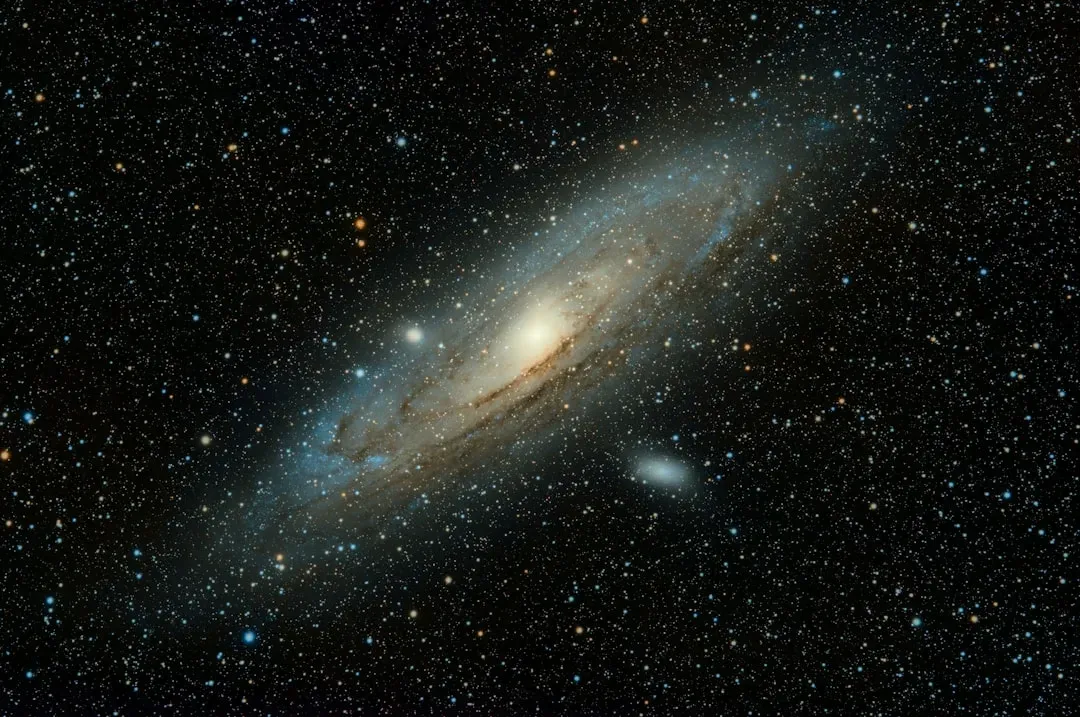
In the early twentieth century, there was a fierce debate: were the strange “spiral nebulae” fuzzy objects inside our own Milky Way, or entirely separate systems far beyond it? Edwin Hubble’s careful work with the Hooker Telescope in the 1920s settled the issue, and the answer was far more dramatic than most people expected. By identifying specific variable stars in the Andromeda “nebula” and similar objects, he could estimate their distances – and those distances were staggeringly larger than the size of the Milky Way. The logical conclusion was inescapable: Andromeda is itself a galaxy, and the universe contains many such galaxies spread across unimaginable expanses.
Overnight, the universe ballooned in human minds from one galaxy to a cosmos containing a multitude of immense stellar systems. Our home became not just one star among many, but one galaxy among countless galaxies, each with its own history, collisions, and possible planetary systems. That realization reframed cosmic questions: instead of asking whether there is “life in the universe,” we now had to consider whether there might be life in any of the millions or billions of other Milky Way–like galaxies. Hubble’s discovery did not just enlarge the playing field; it made it almost offensively huge, challenging humans to keep expanding our sense of what is plausible, and what might be out there thinking similar thoughts.
From Static to Exploding: The Expanding Universe and the Birth of Cosmology
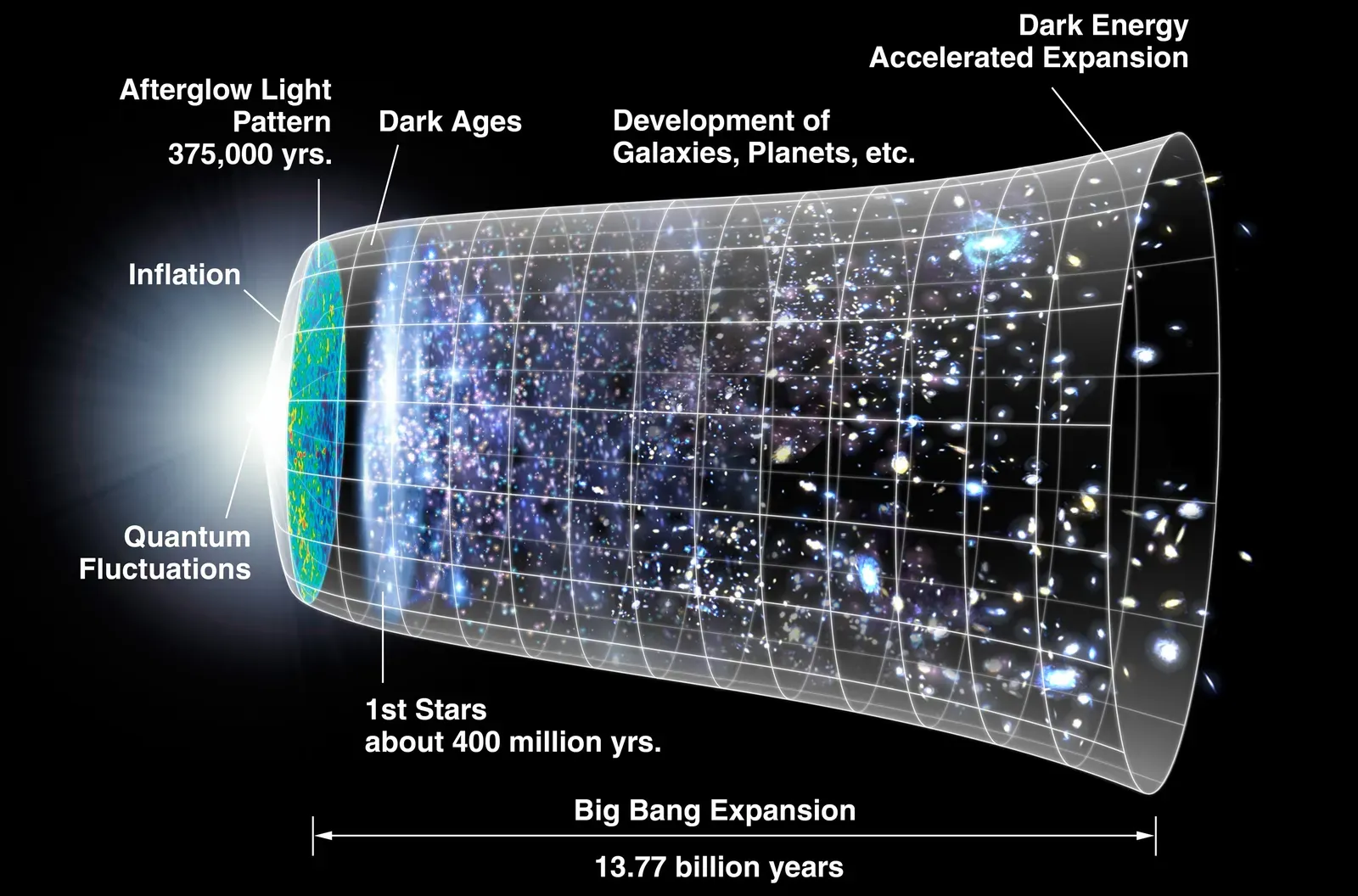
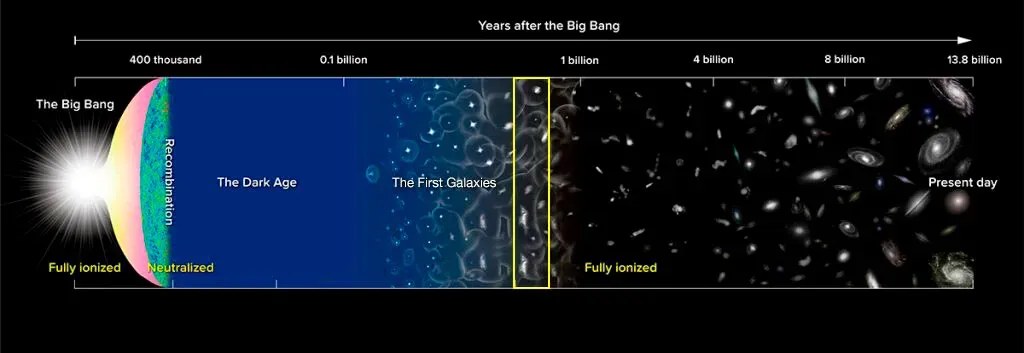
Once Hubble had shown that galaxies are real and far away, the next shock came when he measured how their light is shifted. In the late 1920s he found that, on average, distant galaxies show a redshift that increases with distance, a pattern best explained if space itself is stretching over time. Up to that point, many scientists had assumed the universe was static and eternal, changing locally but not globally. Suddenly they were confronted with evidence that the cosmos is expanding, implying it had a denser, hotter past – a concept that evolved into what we now call the Big Bang model. This meant the universe has a history, not just a present.
Later discoveries, like the cosmic microwave background radiation in the 1960s, turned the expanding-universe idea from an intriguing possibility into the backbone of modern cosmology. Instead of a timeless stage on which matter rearranges itself, the universe became a dynamic story with a beginning, an evolution, and probably an end. For humans, that is an unsettling but strangely intimate thought: the atoms in your body trace back to stars, which trace back to early fluctuations in a young, rapidly expanding cosmos. Understanding that we live in a universe with a birth certificate reshapes questions of meaning. It hints that even the largest structures we can imagine are part of a narrative, and that our brief lives unfold inside an ongoing cosmic experiment.
Signals from the First Light: Mapping the Cosmic Microwave Background
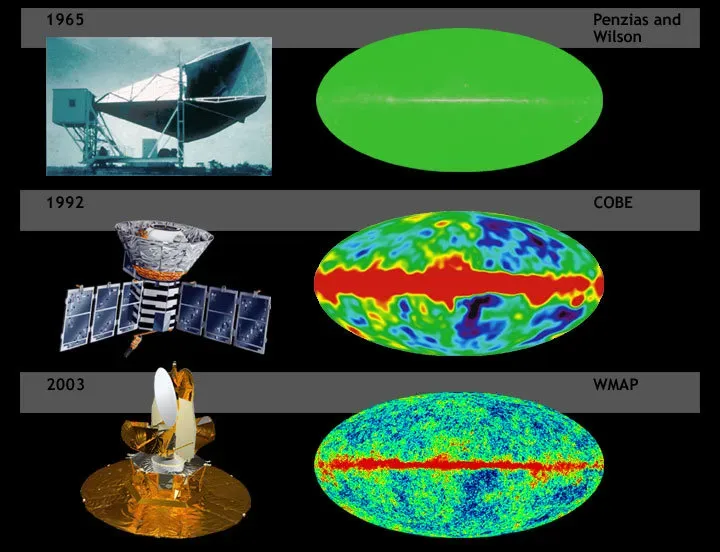
If the Big Bang model is true, then the young universe should have left behind a kind of afterglow, a faint bath of microwave radiation filling all of space. Accidentally detected in the mid-twentieth century and then mapped in exquisite detail by satellites like COBE, WMAP, and Planck, this cosmic microwave background (CMB) turned out to be one of the most information-rich discoveries in the history of science. Its near-uniform temperature shows that the universe was once almost unimaginably smooth and hot, while its tiny ripples encode seeds of all later galaxies and clusters. By studying those subtle variations, scientists can infer the universe’s age, composition, and geometry with striking precision.
The CMB maps are not just pretty heat pictures; they are essentially baby photos of the cosmos, taken when it was only a few hundred thousand years old. From them, we learned that ordinary matter is only a small fraction of the total cosmic inventory, with dark matter and dark energy making up the rest. That is a profound and somewhat humbling realization: most of the universe is made of stuff we cannot see directly and do not yet fully understand, but we can still deduce its fingerprints in the sky. For ordinary readers, the existence of such a relic light map is almost eerie. It means the universe carries its own archaeological record, and with the right instruments, human beings can read that record across billions of years and almost unfathomable distances.
We Are Not the Only Planetary System: The Exoplanet Explosion
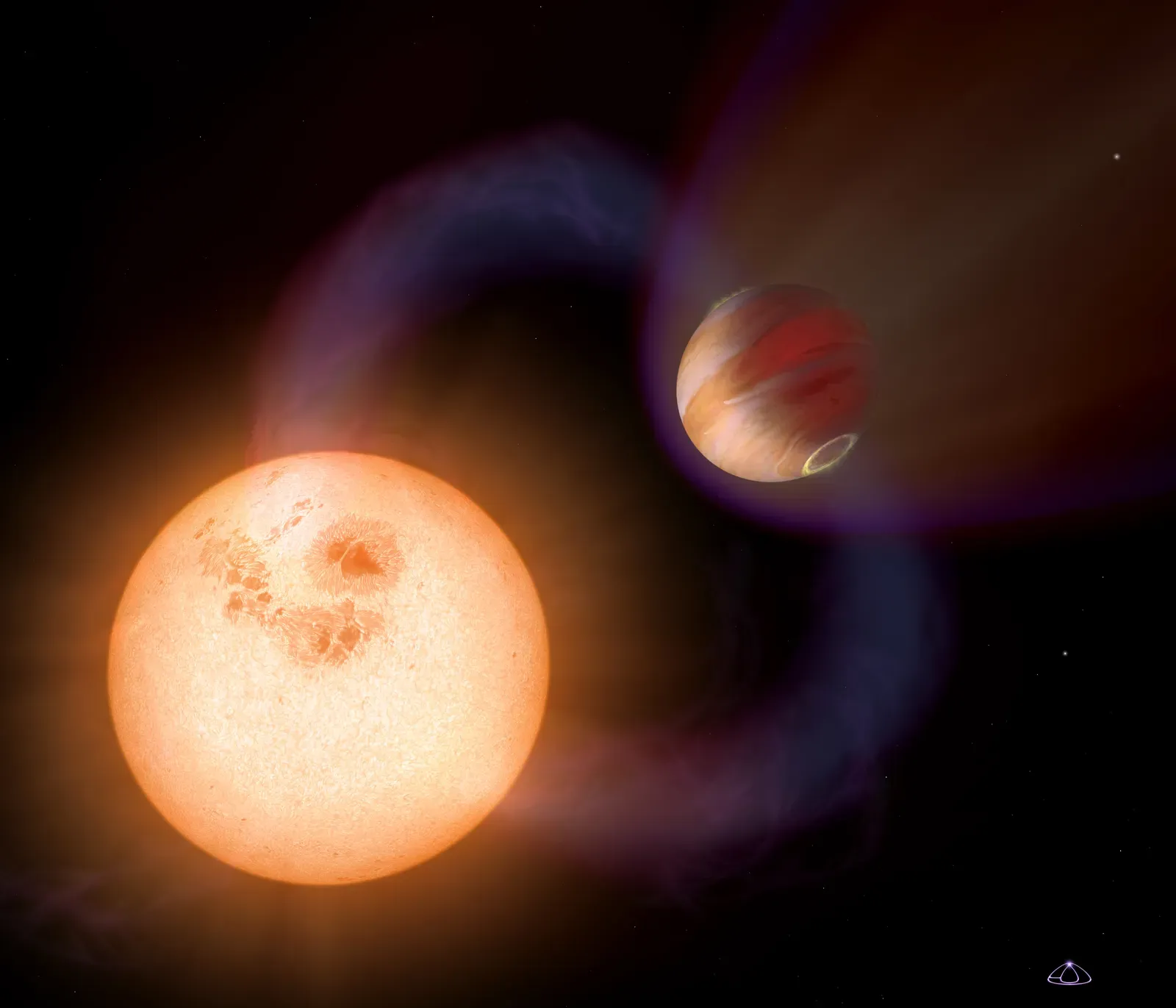
For centuries, people argued about whether other stars might have planets, but it was pure speculation. That changed dramatically in the 1990s, when the first confirmed exoplanets – planets orbiting other stars – were discovered around a pulsar and later sunlike stars. The real revolution came in the early twenty-first century with space missions like Kepler and TESS, which used tiny dips in starlight to reveal thousands of planets. Suddenly we went from philosophical debate to an overwhelming data set showing that planets are common, not rare exceptions. Many stars host multiple worlds, some in or near their habitable zones, where liquid water could potentially exist.
These discoveries expanded our notion of what a planetary system can look like. We have found “hot Jupiters” skimming close to their stars, super-Earths larger than our planet but smaller than Neptune, and tightly packed systems where several worlds orbit closer than Mercury does around the Sun. Realizing that our Solar System is just one quirky example among many changes the way we think about habitability and life. Instead of asking whether there might be another Earth somewhere, we now sift through catalogs of candidates and measure their atmospheres for hints of chemistry that might suggest biology. The exoplanet era is a reminder that the cosmos is not just vast and empty; it may also be crowded with unseen worlds waiting for a clever species to notice them.
Gravitational Waves and the New Cosmic Sense We Built for Ourselves
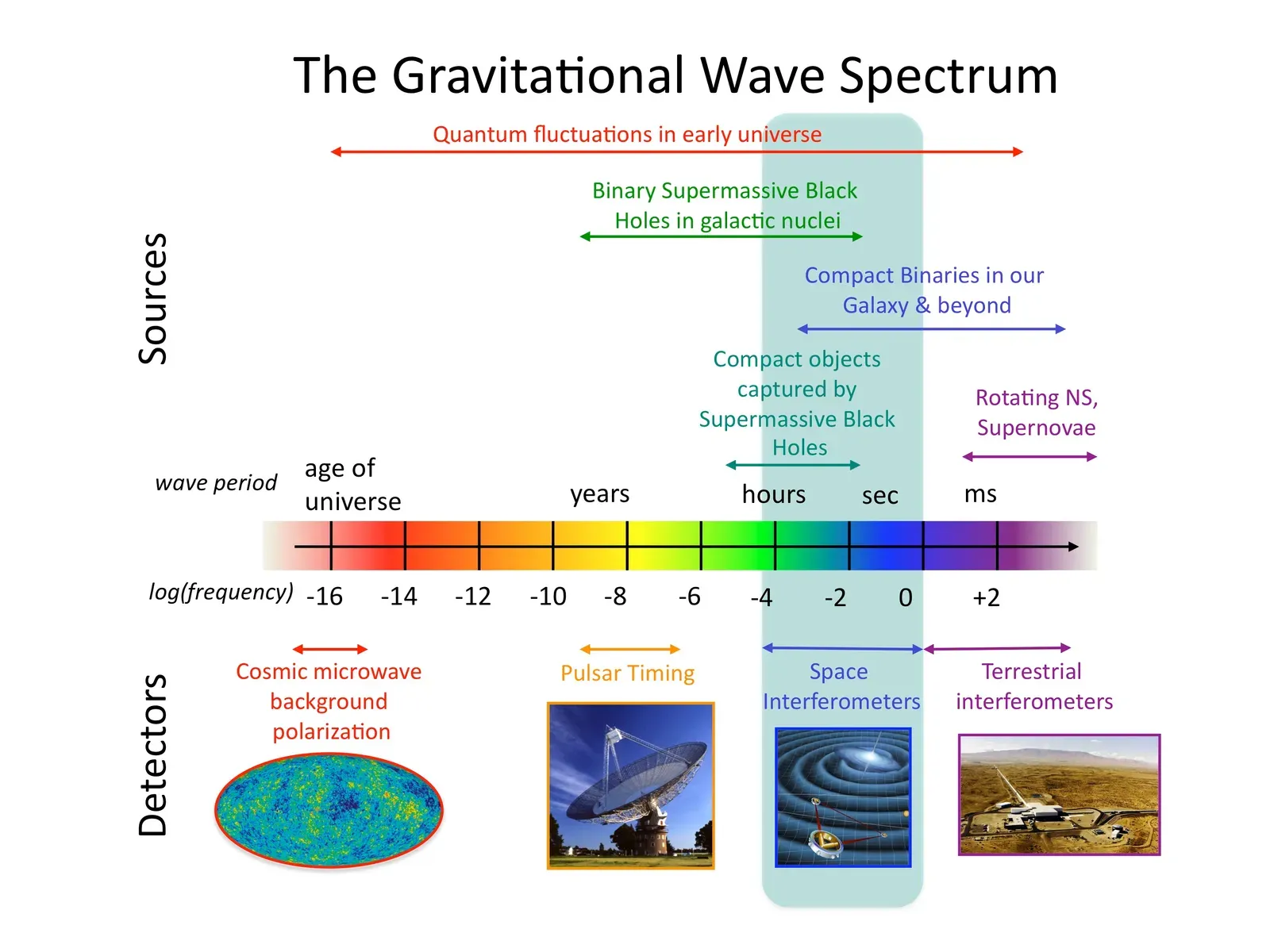
For most of human history, our universe came to us only through light, whether visible starlight or other parts of the electromagnetic spectrum. The prediction that massive accelerating objects like merging black holes should send out ripples in spacetime itself – the gravitational waves of Einstein’s general relativity – sat for decades as an elegant but untested idea. In the twenty-first century, with the construction of enormous laser interferometers like LIGO and Virgo, humans finally built instruments sensitive enough to feel those ripples. In 2015, the first direct detection of gravitational waves from colliding black holes opened a genuinely new way of sensing the cosmos. It was like discovering you had been half-deaf your whole life and suddenly putting on a perfectly tuned hearing aid.
Unlike light, gravitational waves can pass almost unhindered through regions that would completely block or distort electromagnetic signals. That means they can carry clean information about violent events in the deep cosmos, such as neutron star crashes and black hole mergers, and even, in principle, about very early moments of the universe itself. Each new detection is a kind of seismogram from distant cataclysms, allowing scientists to test theories of gravity and matter under extreme conditions. Crucially, this breakthrough was not an accident of nature but the result of an almost stubborn human insistence on measuring things that seemed practically impossible to measure. It shows that our understanding of the cosmos is not limited to what our bodies evolved to sense; with enough patience and ingenuity, we can extend our perception to phenomena that bend the fabric of spacetime itself.
How These Discoveries Reshaped Our Place in the Universe
Seen together, these seven discoveries form a kind of staircase leading away from comforting illusions and toward a starker, richer reality. First we lost our status as the physical center of creation, then we watched as our Sun shrank into one star among many in a single galaxy, which in turn became one galaxy among uncounted others. The universe changed from a static backdrop into a dynamic entity with a beginning, an evolution, and likely a complex future. Along the way, we learned that most of what exists is either dark matter or dark energy, that planets are abundant, and that space itself carries ripples from catastrophes we can now “hear.” Each step in this progression tells the same quiet, radical story: humans gain clarity by giving up specialness.
Compared with older worldviews, where the cosmos revolved around human dramas and divine narratives, modern cosmology can feel emotionally cold at first. Yet many people find the opposite: a deeper sense of connection precisely because we now grasp the real scale and history of the universe. Our technologies – from space telescopes to gravitational-wave detectors – act as extensions of our nervous system, letting a nervous primate species on one small world reconstruct events billions of years and light-years away. Culturally, this has pushed us toward more universal perspectives, whether in environmental thinking, global cooperation, or the search for life elsewhere. In a strange twist, the more the cosmos seems indifferent to us, the more our choices toward each other start to matter, because meaning is something we clearly bring to the universe, not something guaranteed by our location in it.
Where Curiosity Takes You Next: Becoming a More Cosmos-Literate Human
Reading about these discoveries is one thing; letting them sink into your daily sense of reality is another. A simple starting point is to reconnect with the sky in a deliberate way, whether that means finding a dark-sky site, joining a local astronomy club, or using free sky-mapping apps to learn constellations and track planets. If you can, visit a science museum or observatory and stand in front of an actual telescope or an image of the cosmic microwave background, just to feel the physicality of the tools and data behind the headlines. These experiences turn abstract facts into something you can almost feel in your bones.
On a smaller scale, you can build a kind of personal “cosmos literacy” habit. Follow missions from agencies and research groups that share open data, explore citizen-science projects that let you help classify galaxies or identify exoplanet signals, and read books that tell the messy, human backstories behind neat scientific diagrams. The goal is not to become an expert astrophysicist, but to carry a more accurate universe in your head and to let that perspective quietly inform how you see politics, history, and your own problems. After all, you already live in a universe where Earth is not central, time has a beginning, and space itself can ring like a distant bell – so the real question is simply: how much of that reality do you want to let into your life?
Suhail Ahmed is a passionate digital professional and nature enthusiast with over 8 years of experience in content strategy, SEO, web development, and digital operations. Alongside his freelance journey, Suhail actively contributes to nature and wildlife platforms like Discover Wildlife, where he channels his curiosity for the planet into engaging, educational storytelling.
With a strong background in managing digital ecosystems — from ecommerce stores and WordPress websites to social media and automation — Suhail merges technical precision with creative insight. His content reflects a rare balance: SEO-friendly yet deeply human, data-informed yet emotionally resonant.
Driven by a love for discovery and storytelling, Suhail believes in using digital platforms to amplify causes that matter — especially those protecting Earth’s biodiversity and inspiring sustainable living. Whether he’s managing online projects or crafting wildlife content, his goal remains the same: to inform, inspire, and leave a positive digital footprint.