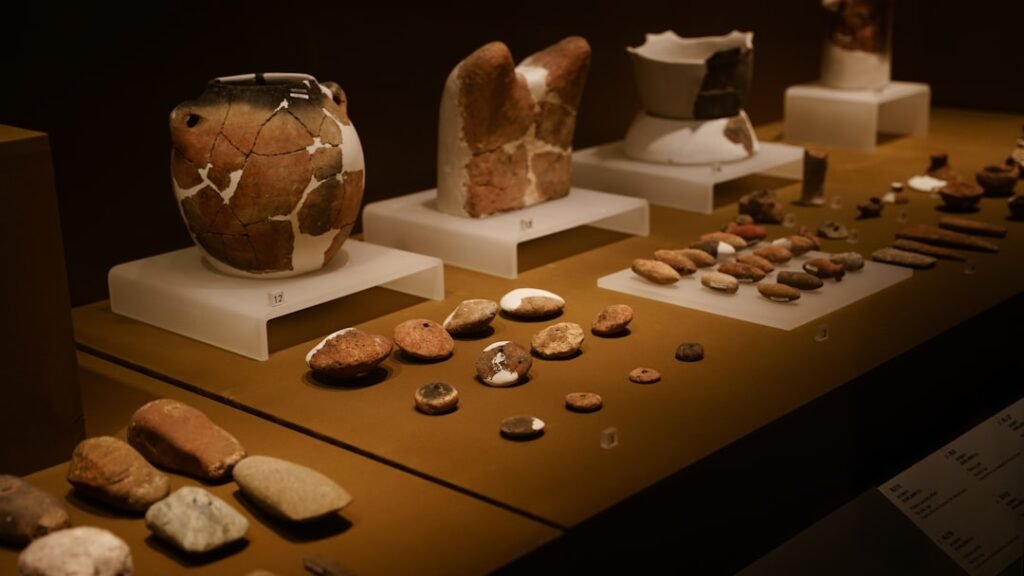

History has a way of leaving puzzles that no one fully solves. You dig into a tomb, dredge up a shipwreck, or clear a jungle, and suddenly you are staring at something that shouldn’t exist – not yet, not in that era, not by the hands of people who were supposedly just getting started. It’s the kind of feeling that stops experts cold and keeps amateur historians awake at night.
These seven artifacts are not myths or speculation. They are real, physical objects sitting in museums, buried in archives, or scattered across open landscapes. Each one forces you to ask the same uncomfortable question: what exactly did ancient people know that we still don’t fully understand? Let’s dive in.
The Antikythera Mechanism – The World’s First Computer Had No Business Existing
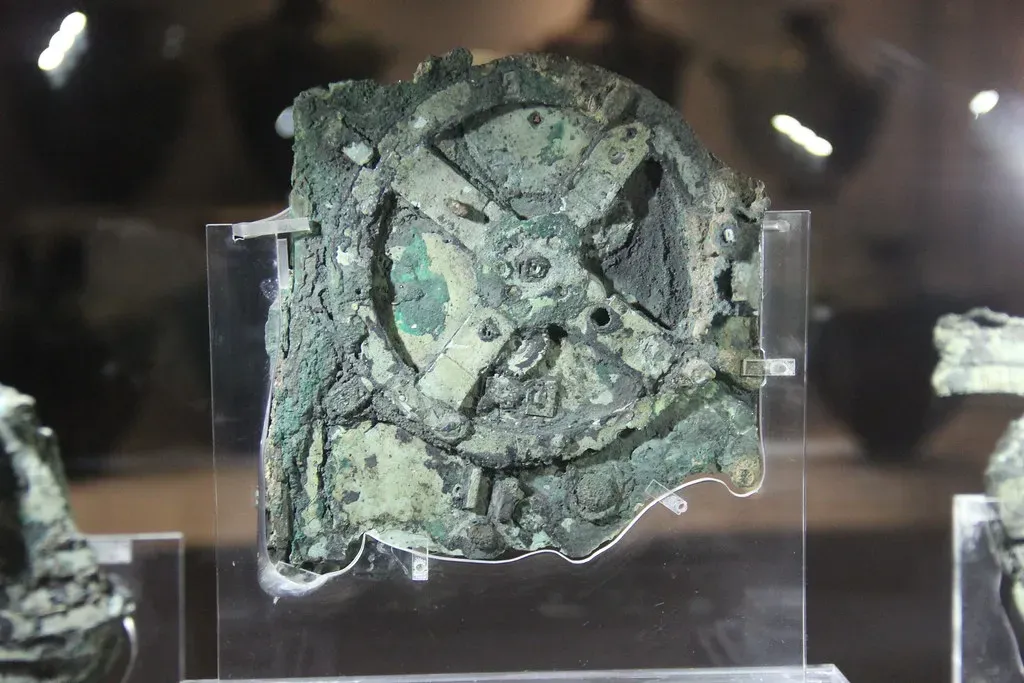
Imagine you are a sponge diver working off the coast of Greece in 1900. You pull up what looks like a lump of corroded rock from a sunken Roman cargo ship. It turns out to be the ruins of a vessel dating back some 2,000 years, hiding a wealth of archaeological treasures. Buried among the statues and glassware was something no one could make sense of for decades: a green, gear-filled object that would eventually rewrite the entire history of technology.
The Antikythera mechanism is an ancient Greek mechanical device used to calculate and display information about astronomical phenomena, recovered from a shipwreck near the island of Antikythera in the Mediterranean Sea. It had the first known set of scientific dials or scales, and no other geared mechanism of such complexity is known from the ancient world – or indeed until medieval cathedral clocks were built a millennium later. Let that sink in for a moment. A thousand years of technological silence, and then suddenly clocks.
You could use it to predict astronomical positions and eclipses decades in advance, and also to track the four-year cycle of athletic games similar to an olympiad, including the ancient Olympic Games. It used a special gear system, an innovation that did not appear again in Europe until the 14th century. Honestly, the more you learn about this device, the more unsettling it becomes – not because it’s paranormal, but because it reveals just how much brilliance the ancient world possessed and somehow lost.
The Voynich Manuscript – A Book Written in a Language Nobody Speaks
![The Voynich Manuscript - A Book Written in a Language Nobody Speaks (Beinecke Rare Book & Manuscript Library, Yale University ([1])., Public domain)](https://nvmwebsites-budwg5g9avh3epea.z03.azurefd.net/dws/3f63d2176bd5905b260aaa9b1cd80ebb.webp)
This medieval manuscript, named after its former owner Wilfred M. Voynich, contains writings in an unknown language or code that has remained undecipherable by linguistics experts and codebreakers for centuries. You are not just talking about an obscure dialect here. You are talking about a full, illustrated book that no living person on Earth can read, and no dead one has left a translation guide for.
Its bizarre illustrations of unidentifiable plants and cosmological sections have fueled theories it could be an alchemical, astronomical, or even alien document. Various theories have been proposed regarding its contents, ranging from a medieval medical text to an elaborate hoax – however, none have been definitively proven, leaving the Voynich Manuscript an enduring enigma in the world of historical texts. Here’s the thing: even the best cryptographers in the world, working with modern AI, haven’t cracked it. That either says something extraordinary about whoever wrote it, or something equally extraordinary about what it contains.
The Phaistos Disc – A Spiraling Message from the Bronze Age
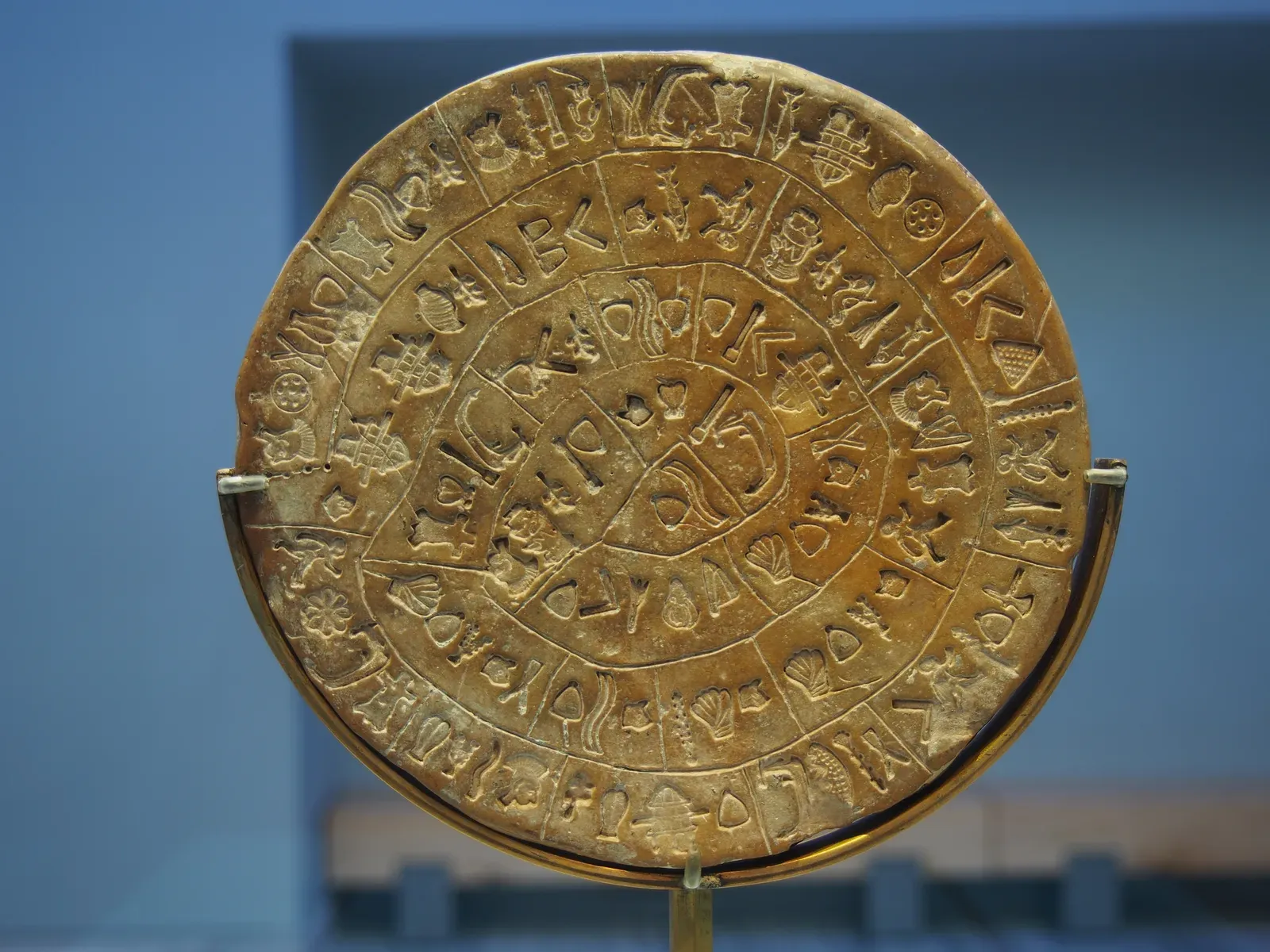
Unearthed in 1908 at the Minoan palace of Phaistos on the island of Crete, the Phaistos Disc is a circular clay tablet inscribed with mysterious symbols – and its purpose and meaning remain unknown despite extensive study. Picture a fired clay disc about the size of a small dinner plate, with symbols pressed into it in a tight, elegant spiral. It looks deliberate, important, almost urgent. Yet for well over a century, nobody has been able to say with certainty what it says.
The disc dates back to the Minoan civilization, yet no similar script has been found elsewhere. Its unique spiral arrangement suggests it could be a form of proto-writing or even an early printing method. Efforts to decode its symbols have yet to yield definitive results. Scholars have struggled for decades to decipher its meaning – some believe it’s a hymn or prayer, while others think it could be a type of game or record. I think what makes the Phaistos Disc especially haunting is not that it’s undecipherable – it’s that it appears to have been made by someone who fully expected it to be understood.
The Baghdad Battery – Did the Ancient World Know About Electricity?
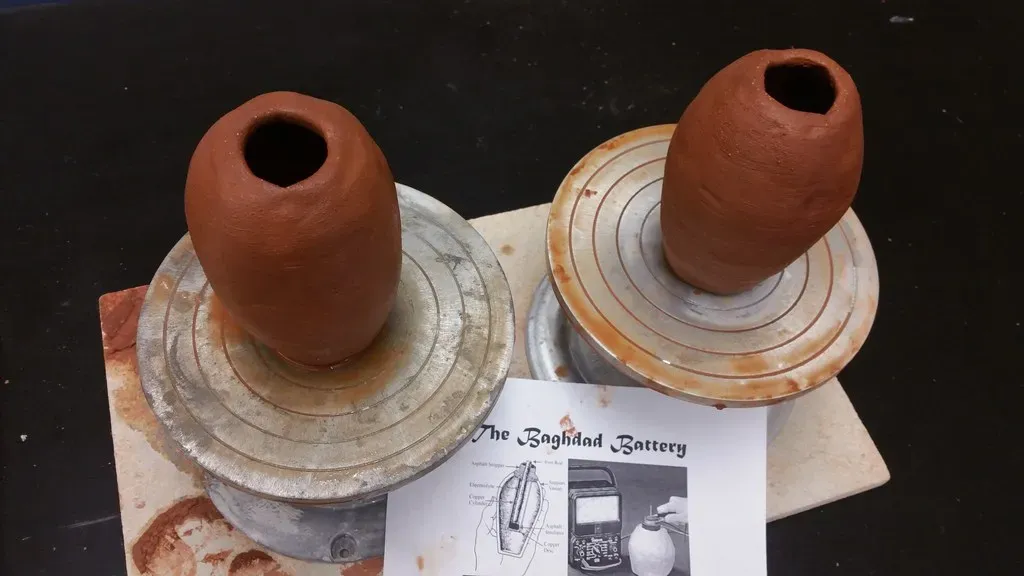
In the realm of ancient artifacts, few have sparked as much debate and intrigue as the Baghdad Battery, discovered in the ruins of Khujut Rabu, near Baghdad, Iraq, in the 1930s. This ancient artifact features a clay jar, copper cylinder, and iron rod – components that resemble a primitive battery. Some researchers suggest it could have produced a weak electric current, hinting at lost knowledge of electricity in antiquity. However, its actual use – whether for electroplating, medicine, or ritual – remains uncertain, fueling ongoing debate among historians and scientists.
Let’s be real – the idea that someone in ancient Mesopotamia was experimenting with electrical current sounds like science fiction. Some researchers believe it may have been used for electroplating or similar experiments with electricity, though others remain skeptical, arguing that its true purpose might have been more mundane. Regardless, the Baghdad Battery raises fascinating questions about whether ancient civilizations had electrical knowledge far ahead of their time. Think of it like finding a circuit board in a Viking burial mound – it doesn’t fit the narrative, and that’s precisely why it refuses to be ignored.
The Nazca Lines – Massive Geoglyphs Only Visible from the Sky
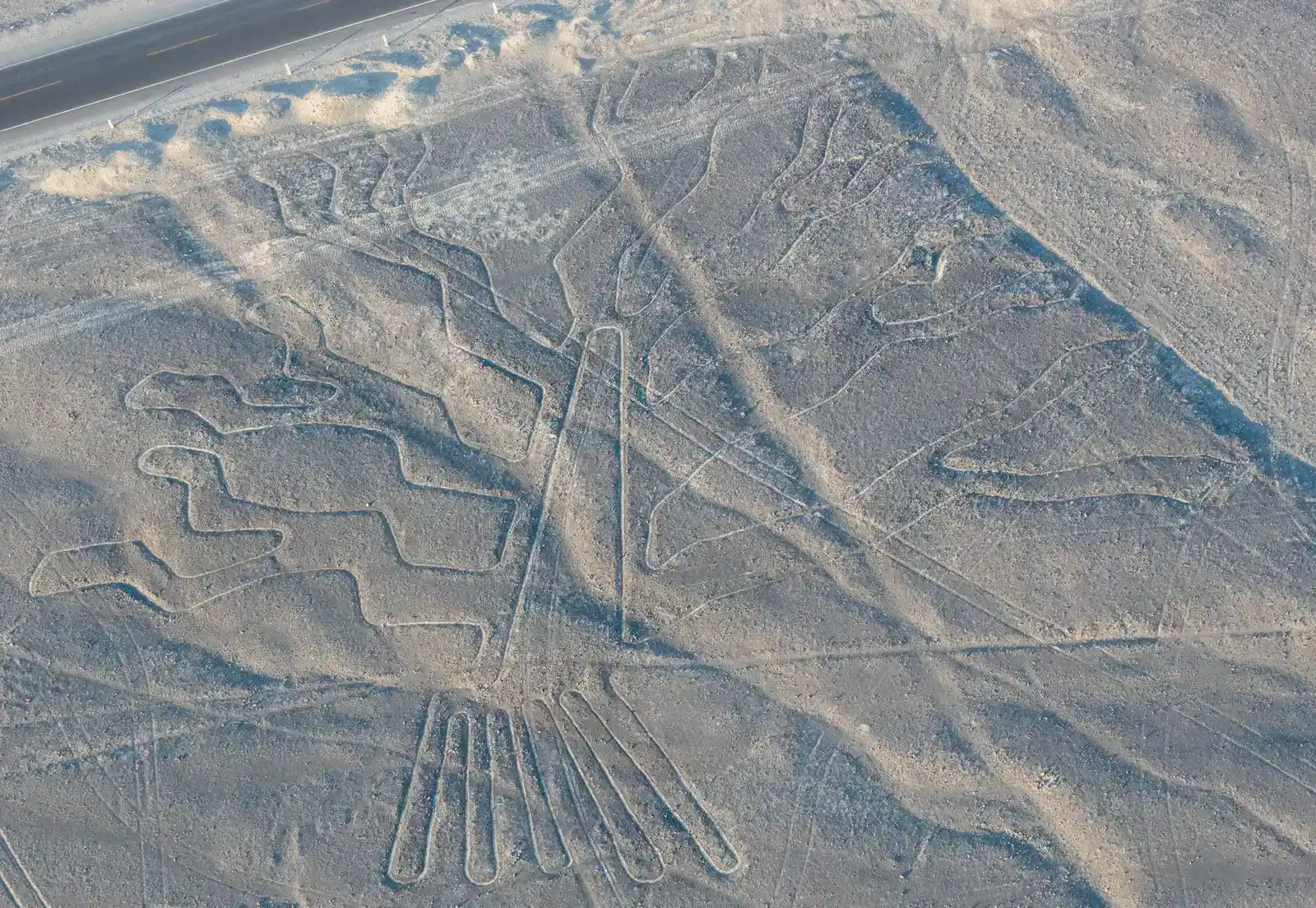
Etched into the desert plains of southern Peru, the Nazca Lines are a series of massive geoglyphs depicting various animals, plants, and geometric shapes, created by the Nazca culture between 500 BCE and 500 CE – and the lines are best viewed from the air, raising questions about their purpose and meaning. You read that right. These designs were created by people who had absolutely no means of flying. So who were they making these enormous drawings for, and why?
Only visible from the air, these immense geoglyphs etched into the Nazca Desert depict hundreds of figures like animals, plants and geometric shapes up to 1,200 feet across. Their massive scale and precision suggest they held significance beyond just drawings, but their intended meaning is still unknown. Theories about the lines’ function range from astronomical calendars to religious offerings, and despite extensive study, the full significance of the Nazca Lines remains a mystery. It’s hard to say for sure, but something about a civilization investing that much labor into art that only makes sense from hundreds of feet above the ground feels like a message – one we still don’t know how to read.
The Saqqara Bird – Ancient Egypt’s Possible Flying Machine
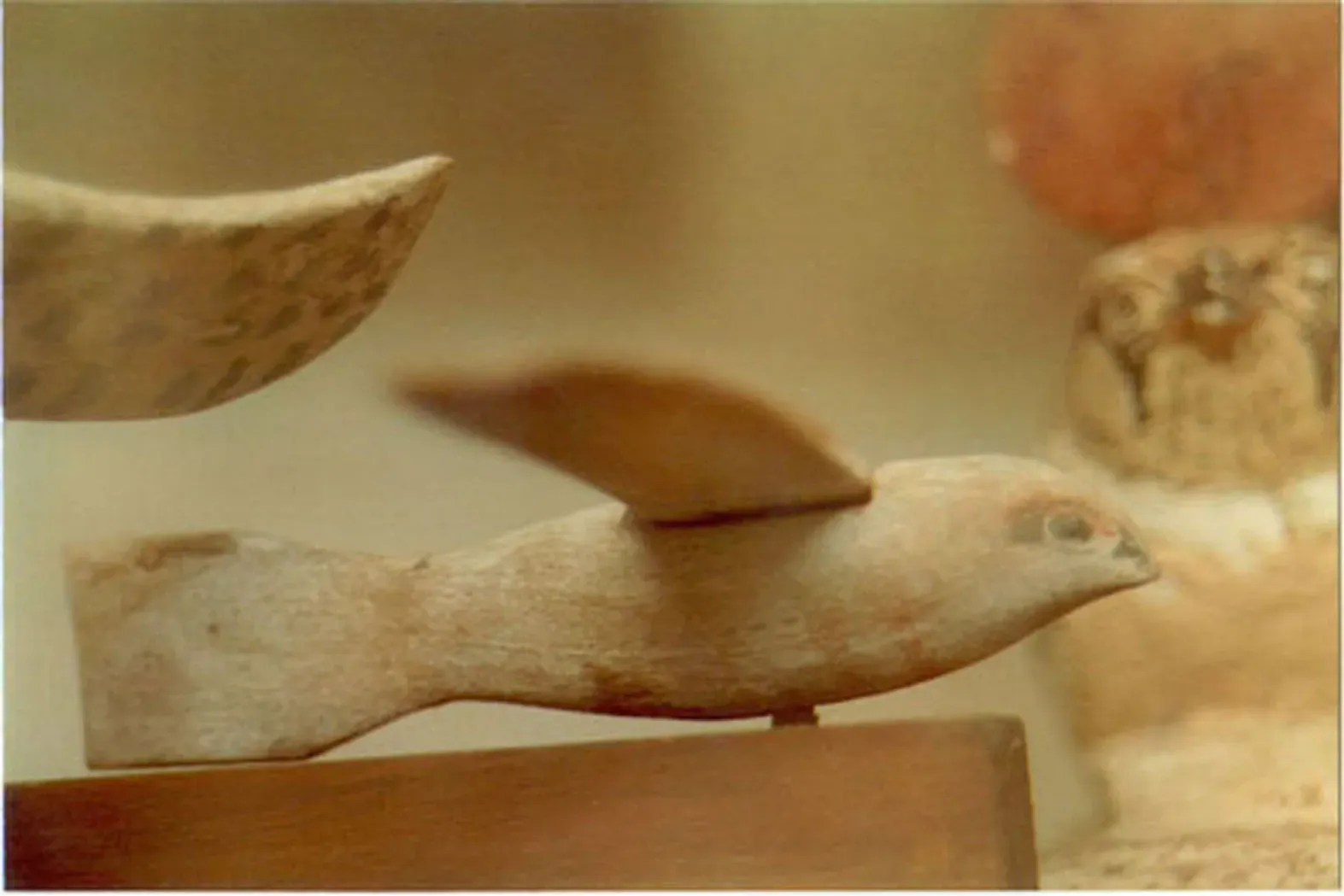
The Saqqara Bird is a model bird made of sycamore wood and mounted on a stick, discovered during the 1898 excavation of the tomb of Pa-di-Imen in Saqqara, Egypt, and has been dated to approximately 200 BCE. Carved from sycamore wood, it is about 14 centimeters in length with a wingspan of approximately 18 centimeters. Its body, complete with a tail, is remarkably similar to the fuselage of an airplane. The wings are straight and aerodynamically shaped, differing from the typical depiction of bird wings in Egyptian art. The bird also has what appears to be a vertical stabilizer, akin to that on modern aircraft, rather than the horizontal tail that most birds possess.
Some have suggested that the Saqqara Bird may represent evidence that knowledge of aerodynamics existed many centuries before its principles are known to have been discovered, with Egyptian physician Khalil Messiha speculating that the ancient Egyptians developed the first aircraft. Its purpose is officially unknown, although it is not capable of flight. The Saqqara Bird may be a ceremonial object because the falcon is the form most commonly used to represent several of the most important gods of Egyptian mythology – most notably Horus and Ra Horakhty. Other possibilities are that it may have been a toy for an elite child, or could have functioned as a weather vane. The truth is, nobody knows – and that ambiguity is exactly what makes it so fascinating.
The Stone Spheres of Costa Rica – Perfect Geometry from a Vanished Culture
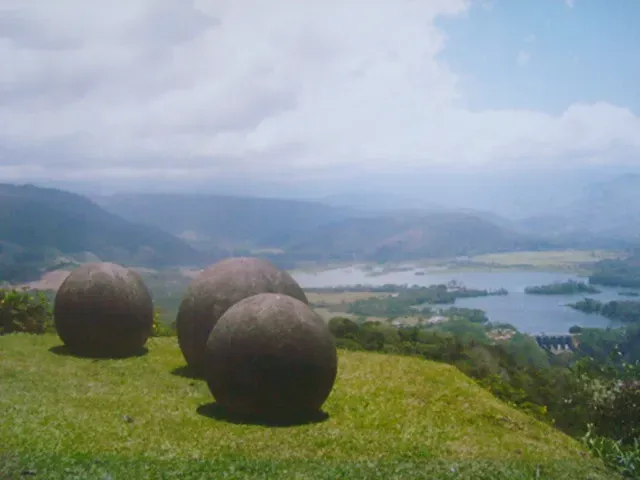
Discovered in 1940 while clearing jungle for banana plantations, around 300 spheres were found weighing as much as 16 tons, measuring 8 feet in diameter and located over 50 miles from the quarry. Scattered across the Diquis Delta in Costa Rica, the stone spheres are a collection of over 300 petrospheres, varying in size from a few centimeters to over two meters in diameter – created by the Diquis culture, whose purpose and method of creation remain unknown. The precision with which these spheres were carved and their alignment in groups has led to speculation about their use in astronomical observations or as status symbols.
Discovered in the Diquís Delta of Costa Rica, these nearly perfect stone spheres vary in size from a few centimeters to over two meters in diameter. Created by the pre-Columbian Diquís culture, their purpose is still debated. Some theories propose they were used for astronomical purposes, while others suggest they were markers of status or navigational aids. Their precise manufacturing method is also unknown, adding to their enigma. Think about what it would take today to carve a perfectly round ball out of solid granite to within a fraction of an inch, without power tools. Now imagine doing that over and over, at massive scale, in a jungle. Whatever these people were trying to accomplish, they were serious about it.
Conclusion
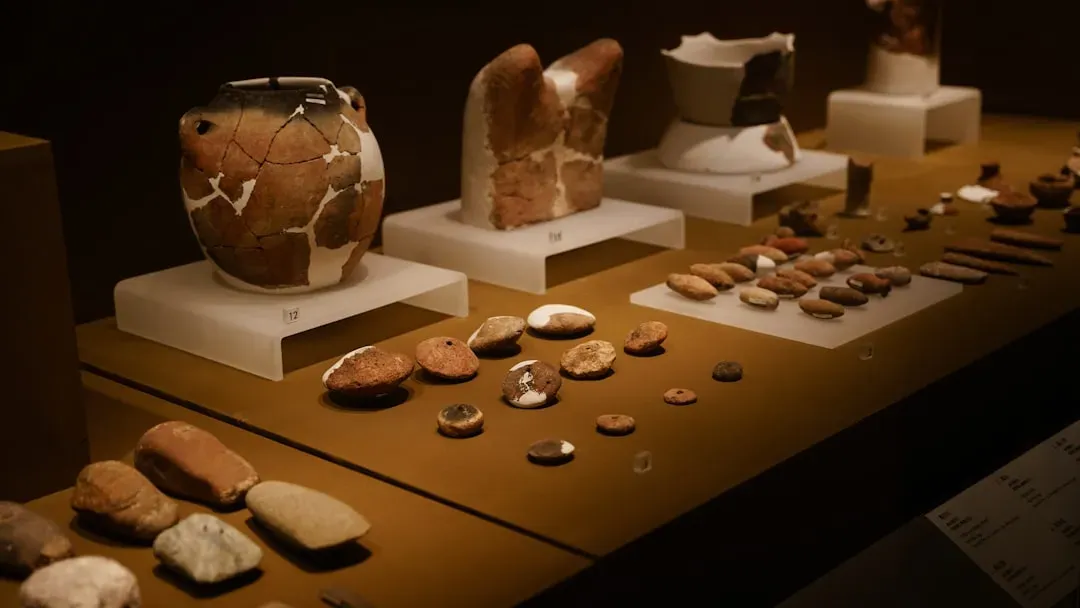
What you have just encountered are not fringe curiosities or tabloid fodder. These are verifiable, studied, physically real artifacts that sit in world-class museums or under open skies, and they still don’t have complete answers attached to them. Each one is a reminder that ancient people were not simple, not primitive, not easily defined by the tools we think they had access to.
The ancient world was full of genius, experimentation, and knowledge that didn’t always survive the centuries. Some of it got burned, buried, or broken. Some of it is still waiting to be found on a seafloor somewhere, or beneath a layer of desert sand. What’s striking is not how much we have uncovered – it’s how much we clearly haven’t.
The deeper you look at history, the more you realize that the past is not a simpler place than the present. It’s just a less documented one. Which of these seven artifacts surprised you the most? Share your thoughts in the comments below.