
You use the word dozens of times every day without missing a beat. You check your watch. You set your alarm. You say “see you later.” Simple, right? Well, here’s where things get interesting – some of the most brilliant minds in physics and philosophy have spent entire careers trying to figure out what time actually is, and the answers they’ve come up with are far stranger than anything you’d expect.
Time shapes every moment you experience, yet its essence is elusive and often paradoxical. Physicists have long struggled to unravel its secrets, discovering ideas that stretch far beyond common sense. From the idea that your past and future literally exist right now, to the possibility that time itself might not be real at all, these seven theories are guaranteed to shift something in how you see reality. Let’s dive in.
The Block Universe: Your Past and Future Are Happening Right Now
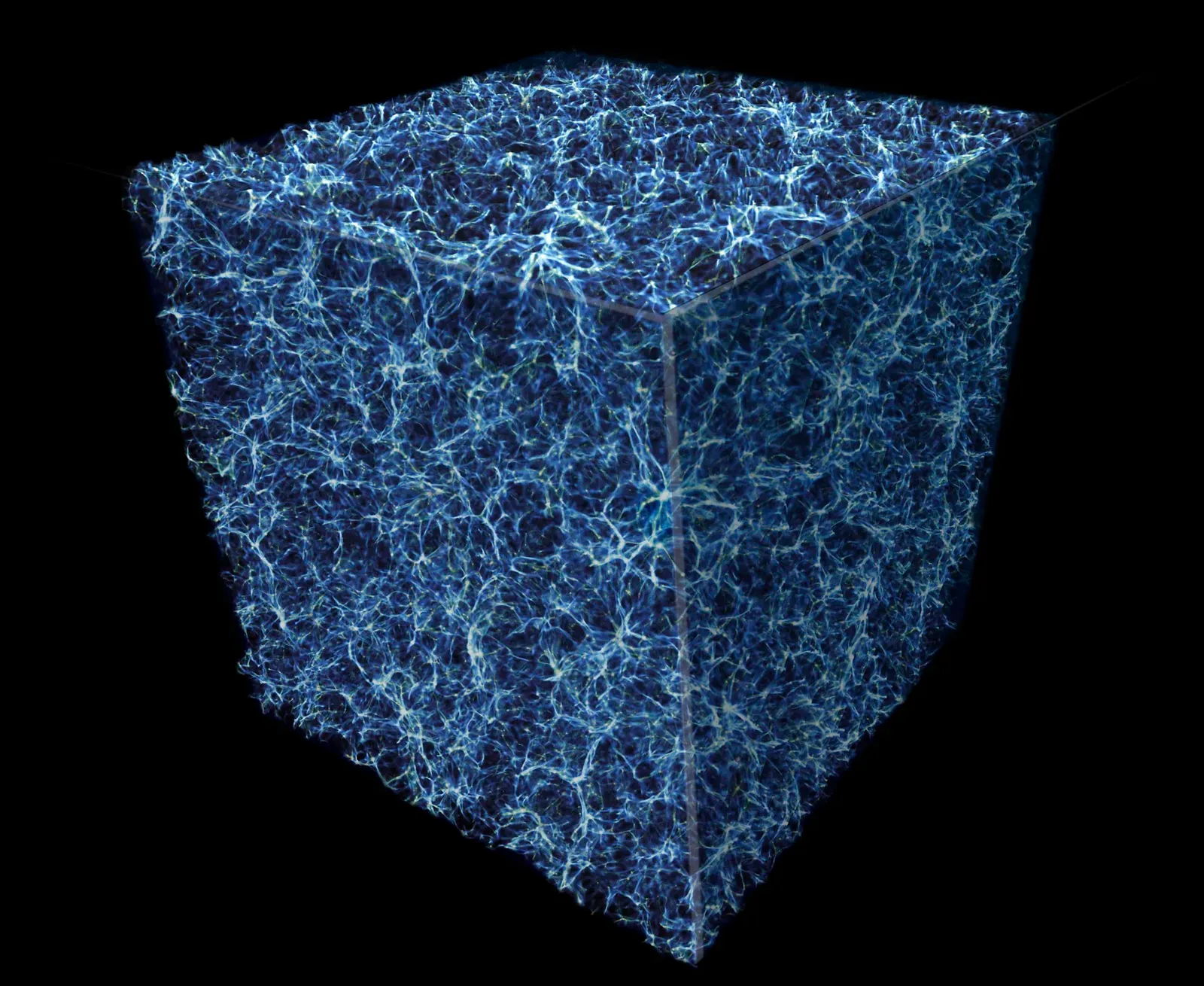
Let’s be real – this one hits differently when it truly sinks in. The block universe theory, or eternalism, suggests that time is a four-dimensional block where past, present, and future events coexist simultaneously. Think of it like a loaf of bread. Imagine each slice representing a moment in time. All slices exist together, regardless of where you are cutting the loaf. You are not moving through time. You are just one slice, unaware of all the others.
The block universe theory describes “now” as an arbitrary place in time, and states that the past, future, and present all exist simultaneously. Much in the same way that your current location doesn’t exclude the existence of other locations, being in the present doesn’t mean the past and future aren’t currently taking place. This theory leans heavily on Einstein’s relativity, and it raises a genuinely unsettling question: if your entire life already exists as a fixed structure in spacetime, what becomes of free will? In the philosophy of space and time, eternalism holds that all existence in time is equally real, as opposed to presentism or the growing block universe theory of time.
Time Dilation: Moving Faster Literally Slows Your Clock Down
Here’s the thing – time dilation is not science fiction. It is happening to you right now, just not on a scale you can feel. According to Einstein’s theory of relativity, time doesn’t tick at the same rate for everyone. When an object moves quickly – especially near the speed of light – time actually slows down for it compared to a stationary observer. It sounds insane, but the evidence for it is rock solid and even built into everyday technology.
GPS satellites orbit Earth and rely on extremely precise timing. They experience both time dilation due to their speed and gravitational time dilation due to their position in Earth’s gravitational field. Without accounting for these effects, GPS systems would be wildly inaccurate. Think about that for a second. Every time you use your navigation app to find a coffee shop, you are relying on corrections made possible by Einstein’s theory of time. An observer traveling near the speed of light will experience time much more slowly than an observer at rest. That’s why astronaut Scott Kelly aged ever so slightly less over the course of a year in orbit than his twin brother who stayed here on Earth.
The Arrow of Time: Why Time Only Flows One Way
You have never seen a broken egg reassemble itself. You have never watched smoke rush back into a cigarette. There is a clear direction to events, and we take it completely for granted. Most of us sense time as a one-way journey from past to future. This experience, often called the arrow of time, is rooted in the laws of thermodynamics – specifically, the tendency for entropy, or disorder, to increase. This scientific principle shapes your memories, expectations, and sense of history, marking a clear divide between what has happened and what’s yet to come.
Here is where it gets philosophically tricky. The fundamental laws of physics don’t prefer a direction. They work the same whether time runs forward or backward. This asymmetry raises deep questions: Is the arrow of time an illusion? The arrow of time, or the perceived difference between the past and the future, arises due to the influence of the Big Bang and the fact that the universe began in a state of low entropy. In other words, the reason your coffee gets cold and never spontaneously heats back up traces all the way to the first moment of the universe. That is a wild chain of causation to sit with.
Time as an Emergent Illusion: The Wheeler-DeWitt Equation
Now things get seriously strange. What if time does not actually exist at the most fundamental level of physics? Not slowed down, not bent – simply absent. In the 1960s, physicists John Wheeler and Bryce DeWitt derived an equation for a quantum universe – the Wheeler-DeWitt equation. Its most striking feature: time vanishes completely. This equation suggests that the universe exists in a static, timeless state. Honestly, I think this might be the most disorienting idea in all of modern physics.
In theoretical physics, the problem of time is a conceptual conflict between quantum mechanics and general relativity. Quantum mechanics regards the flow of time as universal and absolute, whereas general relativity regards the flow of time as malleable and relative. This problem raises the question of what time really is in a physical sense and whether it is truly a real, distinct phenomenon. Remarkably, in 2013, at the Istituto Nazionale di Ricerca Metrologica in Turin, Italy, researchers performed the first experimental test of these ideas and confirmed for photons that time is an emergent phenomenon for internal observers of a quantum system but is absent for external observers. Time, it seems, may only exist because you are inside the system looking out.
Quantum Entanglement and the Birth of Time
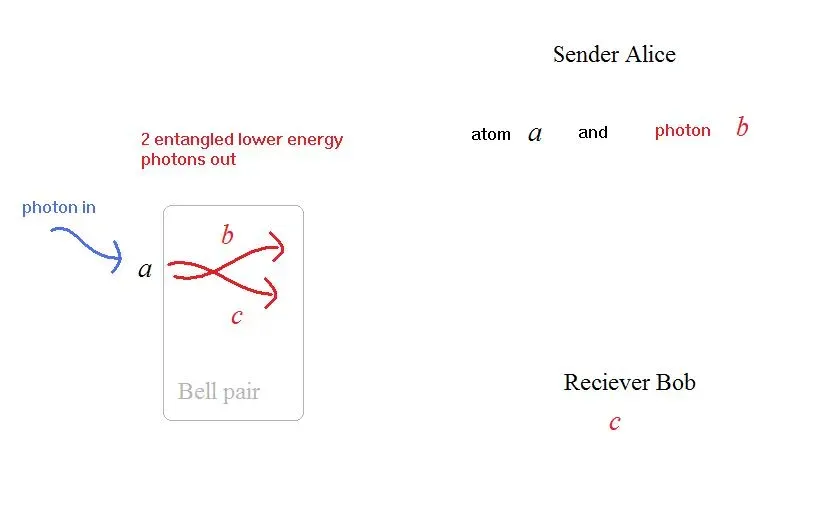
Quantum entanglement is already strange enough on its own. Quantum entanglement is a phenomenon where two particles become mysteriously linked, so that a change to one instantly affects the other – no matter how far apart they are. Some interpretations suggest these connections might even reach across time, not just space. This “spooky action” challenges your understanding of causality and information transfer, hinting that time itself may be more interconnected than you realize.
Some researchers go even further, proposing that entanglement may actually be the engine that generates time’s direction. The arrow of time points in the direction of increasing entanglement. What you call “the future” is simply the state of greater entanglement. In the early universe, quantum degrees of freedom were minimally entangled – a low-entropy state. As the universe evolved, interactions between particles created more and more entanglement, increasing entropy in accordance with the Second Law. If this holds true, your memory of yesterday exists precisely because particles are more tangled together now than they were then. It’s an extraordinary thought.
Retrocausality: Can the Future Reach Back and Change the Past?
Most people assume causes come before effects. That’s just… how reality works, right? Well, maybe not always. In some groundbreaking quantum physics experiments, outcomes appear to influence events that happened earlier in time. This phenomenon, known as retrocausality, shakes the foundations of classical causality, where causes always come before effects. If true, retrocausality could mean the future can affect the past, blurring your basic understanding of how time flows. These ideas are controversial, but they open up fascinating possibilities about the true nature of temporal reality.
Think of it like this: imagine throwing a stone into a pond, but the ripples spread outward and then backward, returning to the point of impact before the stone even hits. That is the kind of causal weirdness retrocausality implies. Researchers have extended the informational perspective to time itself. Rather than treating time as a fundamental background parameter, some have shown that temporal order emerges from irreversible information imprinting. In this view, time is not something added to physics by hand. Whether retrocausality is eventually confirmed or dismissed, it already forces you to reconsider what you think you know about cause, effect, and the flow of events.
The Relativity of Simultaneity: There Is No Universal “Now”
You might assume that when you say something is happening “right now,” everyone in the universe would agree with you. Einstein shattered that assumption completely. Einstein showed that simultaneity isn’t absolute. Two events that seem to happen at the same time for one observer might not be simultaneous to someone moving at a different speed. This relativity of simultaneity means there’s no universal “now” – your motion shapes what you perceive as happening together in time. It’s a profound shift in how you think about temporal order.
One of the most unsettling implications of Einstein’s theories is that time is not universal. There is no absolute “now” shared across the universe. Two observers moving at different speeds or located in different gravitational fields will experience time differently. It’s hard to say for sure just how far this rabbit hole goes, but consider this: an alien civilization across the galaxy, moving at a different velocity through space, could point to a moment on Earth that you would call “the future” and call it their “now.” A central debate in the philosophy of time is whether only the present is real, or if the past and future exist just as vividly. Physics, especially relativity, often points toward eternalism, yet your everyday experience feels strictly presentist. This ontological puzzle delves into what it truly means for time to “exist” and shapes your understanding of reality.
Conclusion: Time Is Stranger Than You Ever Imagined
What these seven theories collectively reveal is both thrilling and humbling. Time – the thing you wake up to every single morning and race against all day – may not be what you think it is at all. It may be emergent rather than fundamental. It may flow in a direction only because the Big Bang started things off in perfect order. We cannot even be sure whether time is a fundamental feature of reality or only an emergent one. That is not a small admission from the world of science.
From the block universe that says your childhood still exists right now, to quantum entanglement threading the arrow of time, to the Wheeler-DeWitt equation suggesting the universe is fundamentally timeless – each of these ideas peels back a layer of reality that most people never question. It is remarkable how much we do know about time that we once did not, and it is remarkable that we can be so clear about what it is that we do not know. The universe, it turns out, keeps its deepest secrets hidden in the ticking of a clock. So the next time you glance at your watch, ask yourself: is that really time you’re seeing, or just the shadow it casts?