
The deep ocean is the closest thing we have on Earth to an alien world. Down there, sunlight never arrives, pressures would crush a submarine, and yet life doesn’t just survive – it gets weird, luminous, stretchy, translucent, and sometimes downright terrifying. Scientists keep dropping cameras and robotic subs into the abyss and still come back saying the same thing: we barely understand what is going on down there.
What makes it so addictive is that every new expedition feels like opening a mystery box. Strange jelly-like blobs, glowing predators, living balloons and animals that look like they were doodled by a bored child in science class keep appearing on camera. Many are rarely seen alive, some have only been filmed a handful of times, and a few are still so poorly understood that even experts argue about what they’re really doing down there in the dark. Let’s dive into seven of the most incredible deep ocean creatures that still feel, in 2026, like they’re breaking the rules of biology.
1. The Goblin Shark: Living Fossil With a Spring‑Loaded Jaw
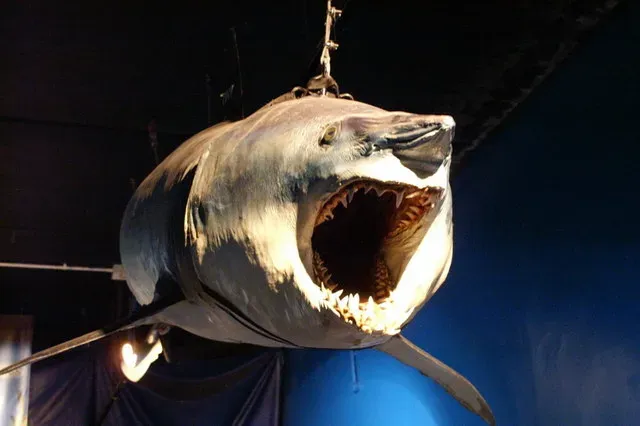
Imagine a shark that looks like it swam straight out of a nightmare and forgot to evolve for millions of years. That’s the goblin shark, a bizarre deep‑sea predator sometimes called a living fossil because of its ancient lineage and primitive features. With its long, flattened snout and pale, almost ghostly skin, it looks more like a horror movie sketch than an animal that actually exists in our oceans today.
What truly defies expectations is its spring‑loaded jaw. High‑speed videos show the goblin shark’s jaws rocketing forward like a set of mechanical tongs when it strikes, extending far outside its mouth to snatch prey in the dark. This slingshot feeding mechanism is still being studied, and it raises questions about how such a specialized structure evolved so far down in the water column. In a world where energy is scarce and movement is costly, this bizarre, lightning‑fast attack system feels almost over‑engineered, like nature got carried away.
2. Vampire Squid: Neither Vampire Nor True Squid
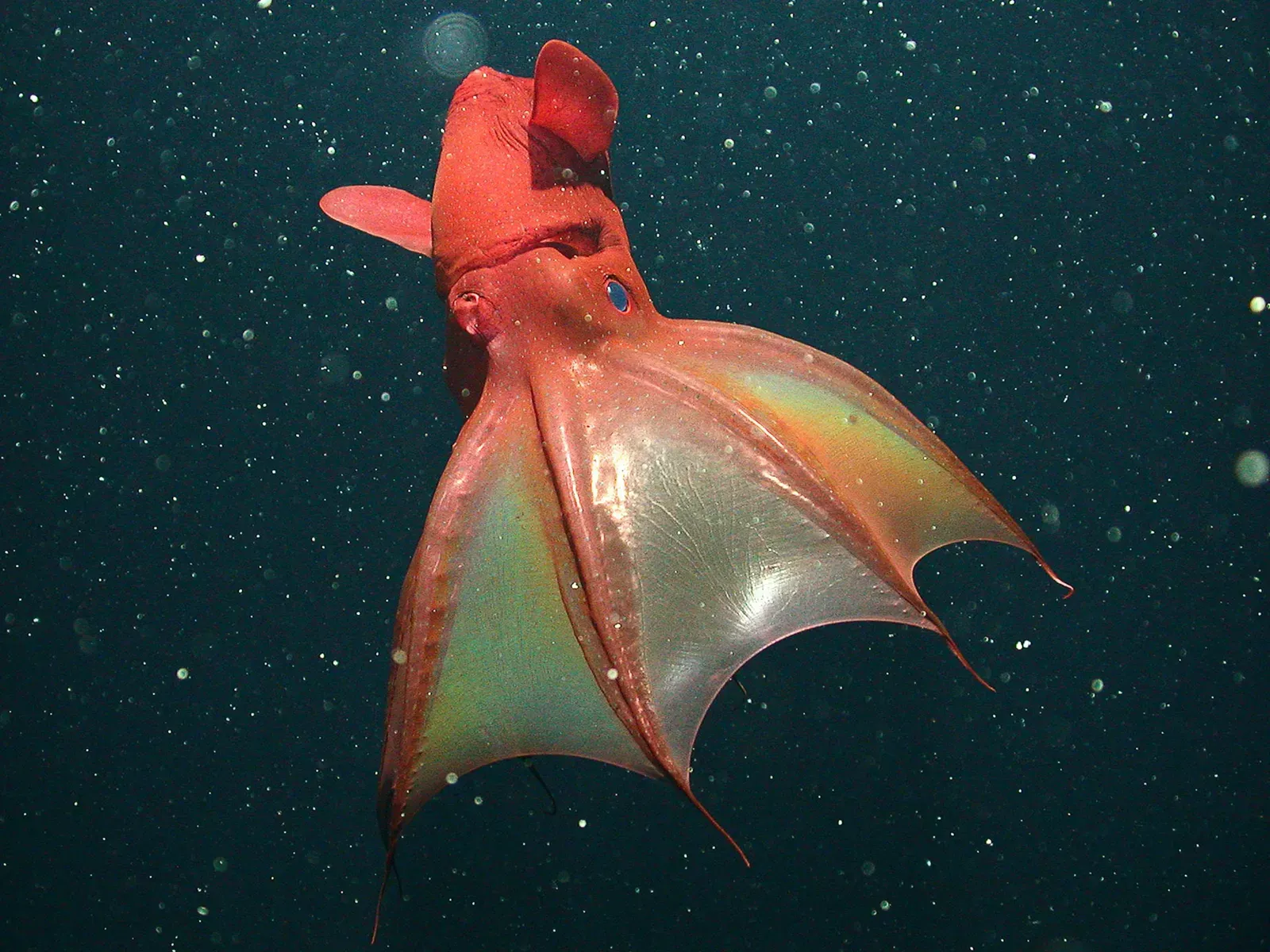
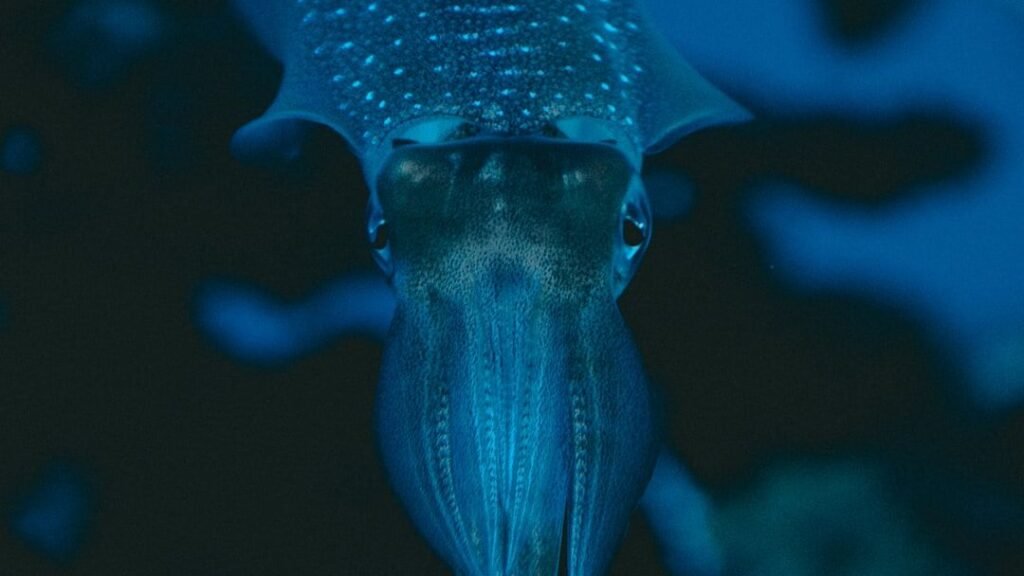
The vampire squid sounds like a creature invented for a gothic fantasy story, but the reality is even stranger. It lives in deep, low‑oxygen waters where most animals can’t survive, drifting slowly with webbed arms that form a dark, cloak‑like shape when it curls up. Despite the fearsome name, it doesn’t suck blood, and it isn’t a classic squid or octopus, but something in between, sitting in its own unique group on the evolutionary tree.
Instead of powerful tentacles and speed, the vampire squid relies on a weird blend of patience and bioluminescence. It gathers falling “marine snow” – tiny bits of dead plankton and organic debris – and feeds in a way that hardly resembles traditional hunting at all, more like quiet scavenging in the rain. When threatened, it can turn itself inside out into a spooky, spiny ball and release glowing mucus filled with blue lights. Why such a slow, fragile‑looking animal survived in one of the harshest zones of the ocean, while many faster, stronger predators did not, is still a puzzle that challenges our basic ideas about what it takes to thrive.
3. Giant Squid: The Once‑Mythical Monster We Barely Know
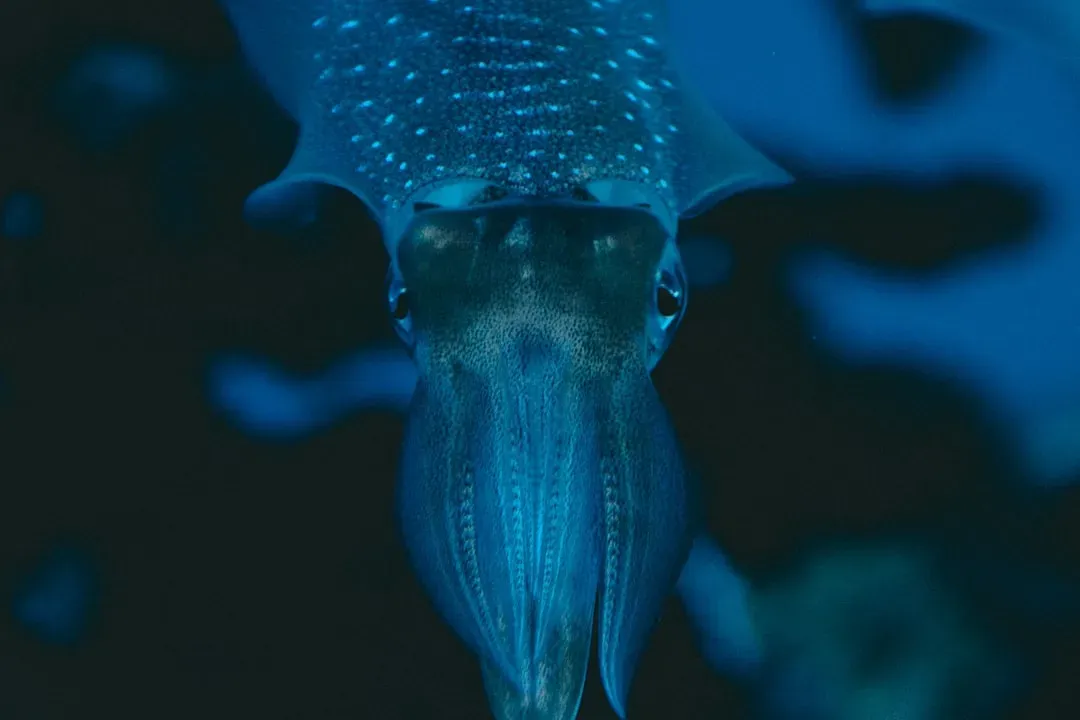
For centuries, sailors told stories of sea monsters with tentacles long enough to drag ships under, and everyone assumed it was legend. Then we started finding giant squid carcasses washed up on beaches and hauled up in fishing nets, proving that something enormous and tentacled was really out there. Even now, though, live footage of healthy giant squids in their natural environment is incredibly rare, which feels absurd when you remember their eyes are roughly the size of dinner plates.
What defies explanation is how such an enormous, soft‑bodied animal has evolved to live in almost permanent darkness and crushing pressure. Its gigantic eyes may be tuned to detect faint light from bioluminescent creatures or even far‑off shapes like hunting sperm whales, but scientists are still arguing about exactly how this sense works in practice. We know they can grow longer than a school bus and that they live deep below the reach of normal diving, but many basic details of their life – how often they breed, how they hunt, and how long they live – remain blurry. For a creature that big, it’s strange how invisible it still is to us.
4. Barreleye Fish: Transparent Head With Floating Eyes
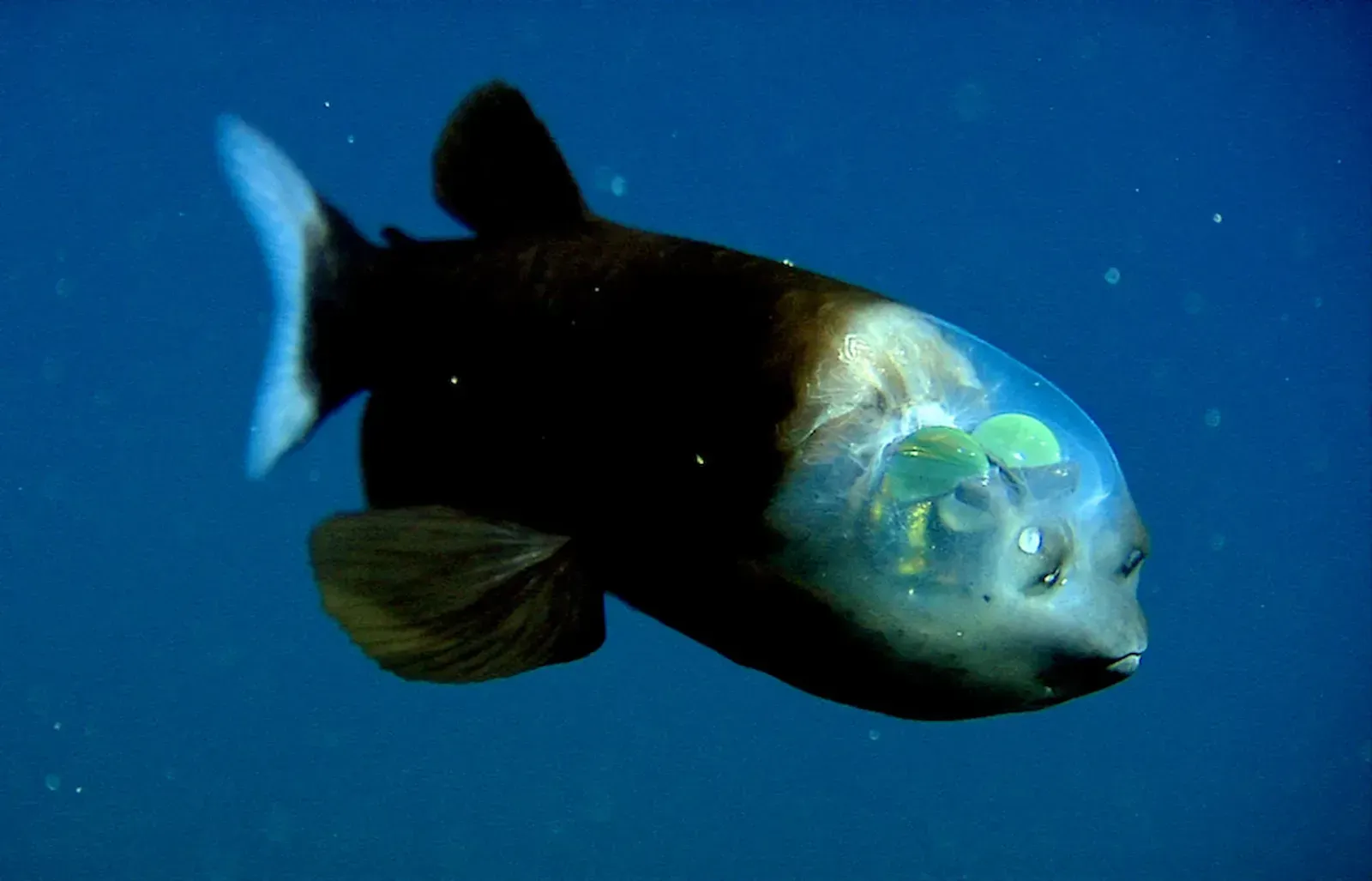
The barreleye fish looks like a special effect from a science fiction movie that escaped into real life. Its most shocking feature is a completely transparent, fluid‑filled head, through which you can actually see its internal structures and strange tube‑shaped eyes. Those eyes are not pointing forward like ours, but upward, scanning for faint silhouettes of prey above in the dark water column.
When video of a live barreleye first made the rounds, it seemed almost impossible that this creature was not a digital hoax. Researchers have since shown that its eyes can actually rotate, so it can look both upward and forward, while staying almost motionless in the water to conserve energy. The clear dome of its head may protect those sensitive eyes from the stinging tentacles of siphonophores and other gelatinous animals it steals food from, but we still do not fully understand how such a fragile, glass‑headed fish evolved to cope with high pressure. It’s like nature decided to skip the usual rules about skulls and just went with a living submarine cockpit instead.
5. The Frilled Shark: A Primitive Predator From Another Era
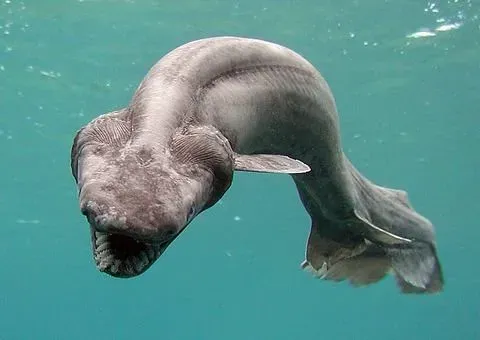
The frilled shark looks less like a modern shark and more like something that should be swimming across a fossil slab. With an eel‑like body, frilly gill slits that form a rough collar around its throat, and rows of needle‑fine teeth, it has an unsettling, almost mythical appearance. It usually lives in deep waters, near continental slopes and underwater ridges, which helps explain why people almost never see it alive.
What fascinates biologists is how many of its features seem stuck in the past, as if evolution pressed pause while the rest of the shark world moved on. Its teeth are tiny and curved, forming a kind of living Velcro strip that traps slippery prey like squid, but how it actually hunts in the dark and under high pressure is still being pieced together. There are indications it may give birth to relatively well‑developed young after extremely long gestation periods, possibly among the longest of any shark, but even those estimates are debated. For an animal that looks so dramatic, the fact that we still argue about basic details of its life history is almost as eerie as its smile.
6. The Bloody‑Belly Comb Jelly: A Glowing Phantom That Hides Its Own Light
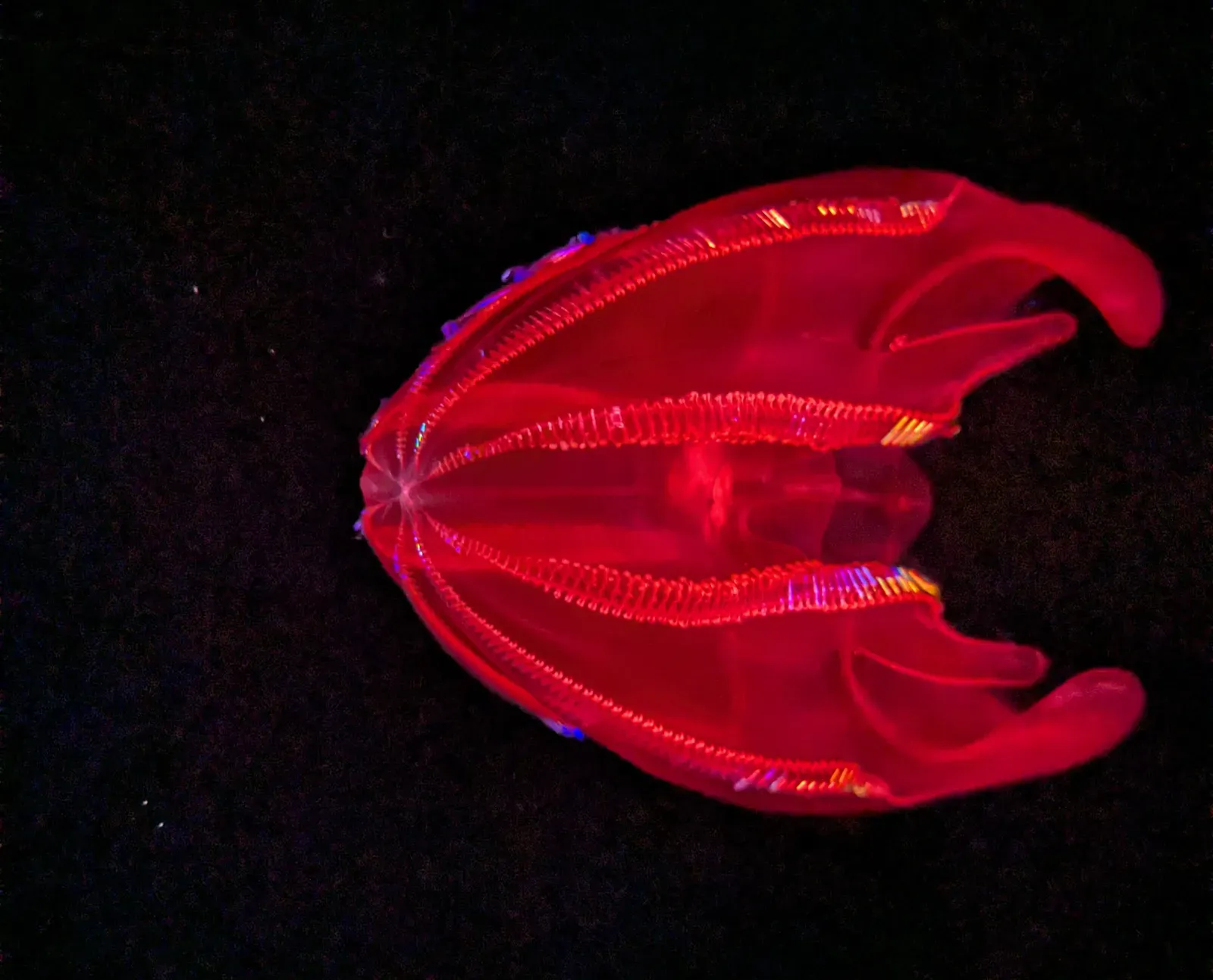
At first glance, the bloody‑belly comb jelly is just a small, delicate blob drifting through the abyss, its body lined with tiny rows of beating cilia that shimmer with rainbow light. Those shimmering “combs” create a moving, iridescent pattern that looks like a slow, underwater light show, even though the colors are mostly a trick of how light scatters off the cilia. What really stands out, though, is the deep red color of its inner body, which is rare in the deep sea where red light never naturally reaches.
That rich red acts like a cloak, hiding the blue bioluminescent glow of the prey it has eaten so predators can’t detect the faint flashes coming from its gut. It is an oddly clever strategy: being bright red actually makes it effectively invisible in the blue‑black depths, the way a bright red shirt disappears in a darkroom. The bloody‑belly comb jelly turns the usual idea of camouflage on its head, using wild color to become a ghost. Even now, as more of these jellies are filmed by deep‑sea robots, the elegance of this adaptation feels almost too strategic, as if the animal were deliberately gaming the physics of light.
7. The Dumbo Octopus: Cute, Soft, and Perfectly Built for the Abyss
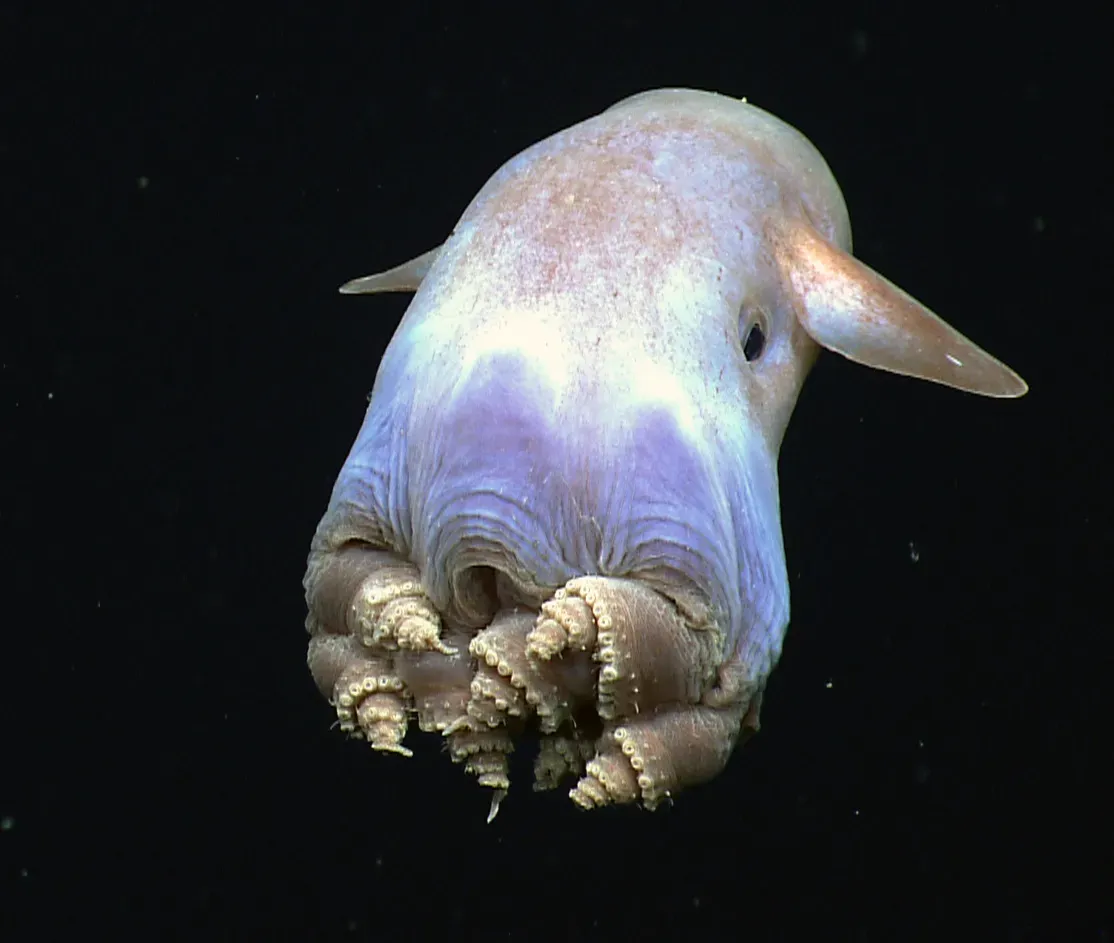
The dumbo octopus is probably the only creature on this list that people routinely describe as adorable, and it’s hard to disagree once you’ve seen one swim. It has big, ear‑like fins on the sides of its head that flap slowly, giving it a gentle, flying appearance that earned it its nickname. These octopuses live deeper than nearly any other known octopus, sometimes far below where most research subs usually travel, which makes every sighting feel special and slightly unreal.
What quietly breaks our expectations is how something so soft, small, and seemingly delicate can be so well adapted to crushing depths. Dumbo octopuses do not have air‑filled cavities that would collapse, and their bodies are mostly soft tissue, so they simply shrug off pressure that would destroy many other animals. They appear to lay a few well‑developed eggs at a time, tucked into safe spots on the seafloor, hinting at a slow, careful reproductive strategy rather than mass spawning. There’s something humbling about watching these gentle creatures hover calmly in the dark, as if the deep ocean, which we think of as hostile and extreme, was just another quiet neighborhood to them.
A World That Still Refuses to Be Fully Known
All of these creatures – from the transparent‑headed barreleye to the living‑fossil sharks and softly flapping dumbo octopuses – remind us that we are not even close to having the deep ocean figured out. Each new high‑definition video from a research submersible seems to add another strange detail, another adaptation that doesn’t quite fit our neat textbook diagrams of how life is supposed to work. The deeper we look, the more it feels like the rules bend, twist, or flip entirely in the dark.
What makes this both unsettling and exciting is that the majority of our planet’s seafloor is still barely explored, especially at extreme depths where these animals thrive. With better cameras, tougher robots, and more frequent expeditions, we’ll almost certainly discover even stranger species that make today’s weirdest creatures look ordinary. The deep ocean is not just a frontier; it is an active reminder that life is far more inventive than we usually give it credit for. When you think about all the things still moving silently through that black water, how many more unbelievable creatures do you think are waiting to be seen for the first time?