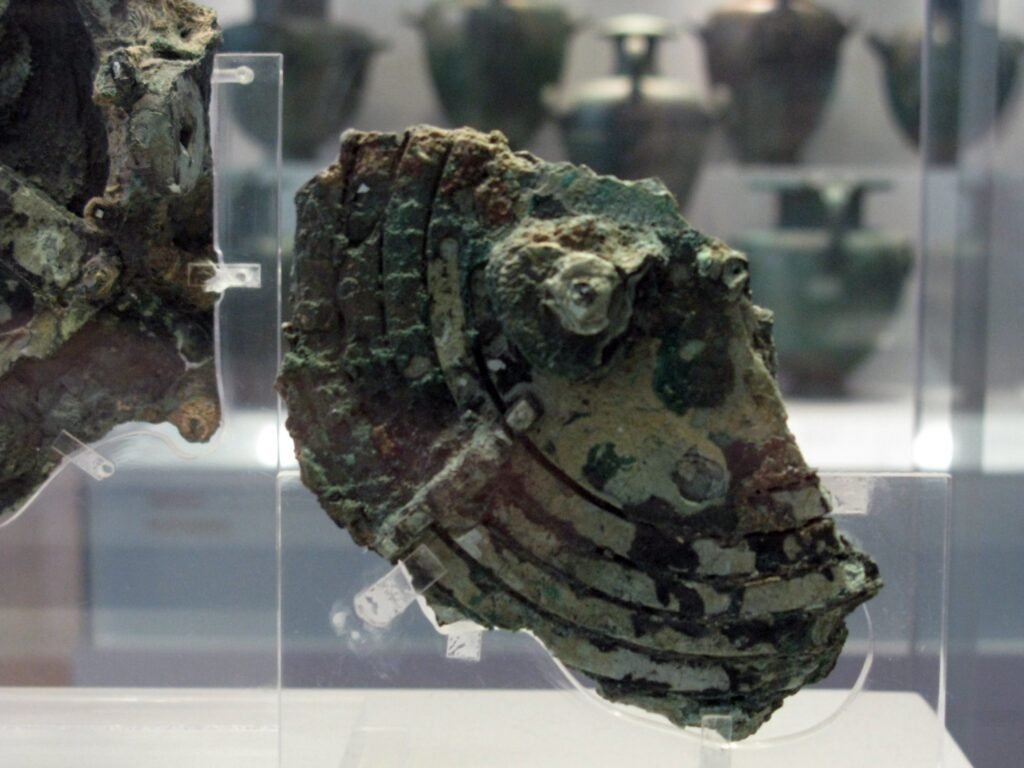

Have you ever held your smartphone and wondered what people thousands of years ago would think of it? We’re pretty proud of our modern technology, aren’t we? Yet when you look at what ancient civilizations accomplished with nothing but basic tools and raw materials, it makes you realize that human ingenuity is timeless. Some of their creations are so advanced that even today’s scientists scratch their heads trying to figure out exactly how they did it.
The truth is, our ancestors weren’t primitive at all. They were solving complex problems in ways that baffle modern engineers. From weapons that still can’t be recreated to machines that predicted celestial movements, these inventions weren’t just ahead of their time. They were centuries beyond what anyone thought possible.
The Antikythera Mechanism: An Ancient Computer That Predicted the Cosmos
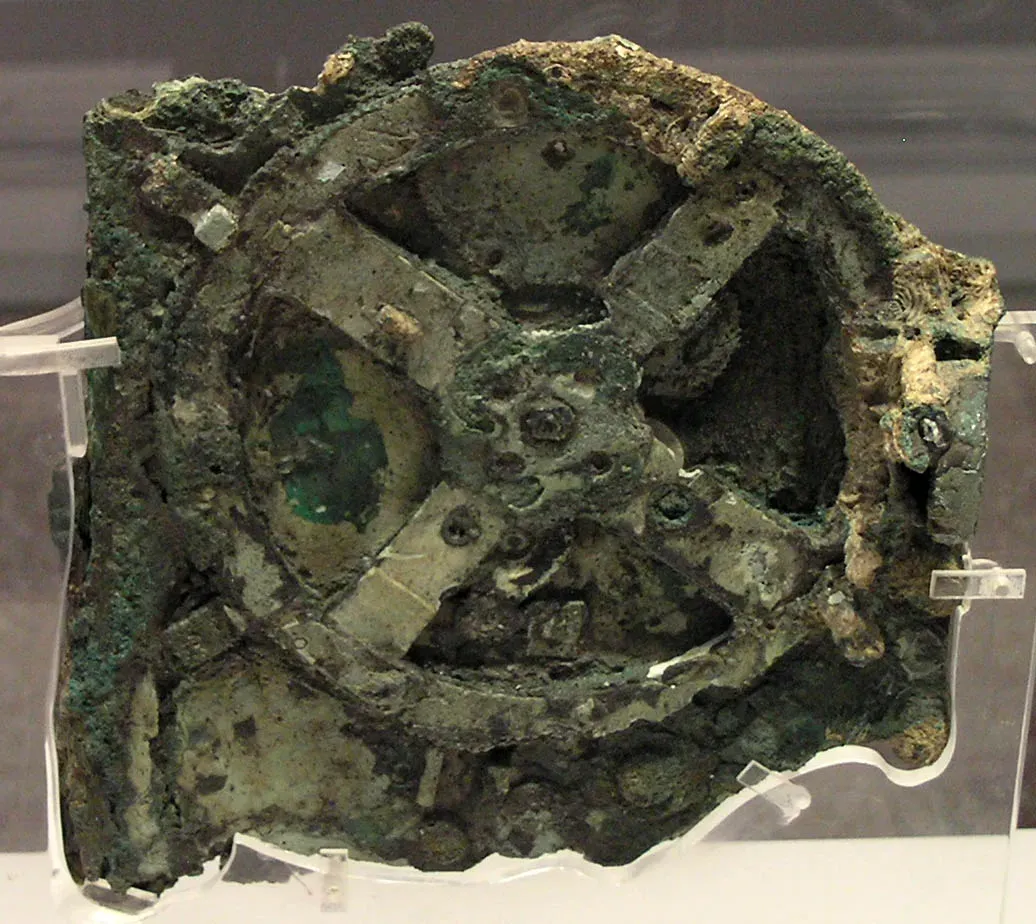
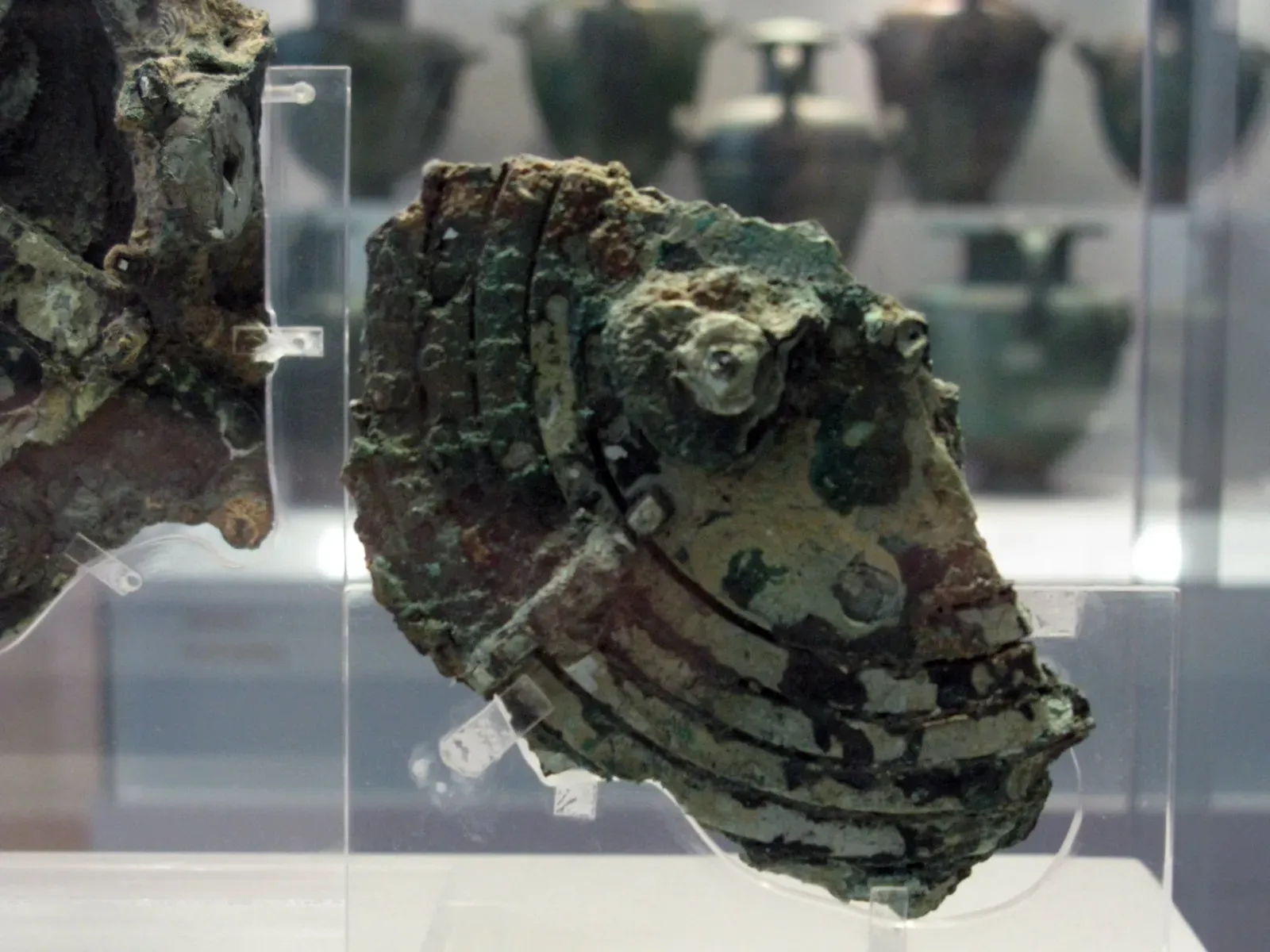
Picture this: you’re a sponge diver off the Greek island of Antikythera in 1901, and you stumble upon what looks like a corroded lump of metal in an ancient shipwreck. Nobody paid much attention to it at first. It looked like nothing more than a barnacle-covered rock.
Then someone noticed gears inside, and everything changed. This device turned out to be the oldest known analog computer, capable of predicting astronomical positions and eclipses decades into the future. No other geared mechanism of such complexity is known from the ancient world or indeed until medieval cathedral clocks were built a millennium later.
Dating back to roughly 205 to 60 BCE, this shoebox-sized machine could accurately calculate the position of the sun, moon, and planets. What really gets me is the sophistication. The mechanism even modeled how the moon travels at different speeds as it orbits Earth, something we didn’t officially understand until Kepler’s laws of planetary motion came along much later. Think about that for a second. Ancient Greeks figured out something about celestial mechanics that wouldn’t be formally described for over a thousand years.
Greek Fire: The Byzantine Superweapon Lost to History

Imagine facing an enemy fleet that could shoot liquid fire across water. Now imagine that fire couldn’t be put out with water, and actually burned even more intensely when it touched the sea. Historical records say this mysterious Byzantine weapon produced a loud roar and lots of smoke, and it was so effective that enemies were terrorized and often fled at the sight of it.
Developed around 672 CE by a man named Kallinikos, a Jewish architect fleeing to the Byzantine Empire, Greek fire could ignite Arab ships and burn them with all hands. Amazingly, it could only be extinguished with a mixture of vinegar, sand, and old urine, and it was effective in repelling enemy fleets during both the First and Second Arab Sieges of Constantinople.
The Byzantines kept its composition such a well-guarded secret that only the Kallinikos family and Byzantine emperors knew the formula, passed down from generation to generation. Even when enemies literally got their hands on Greek fire, they couldn’t reproduce it. The art of compounding the mixture was a secret so closely guarded that its precise composition remains unknown to this day. Let’s be real, that’s the ultimate trade secret.
Damascus Steel: The Blade That Science Can’t Fully Replicate

Around 500 AD, Middle Eastern swordsmiths began producing knives and swords with strength and cutting abilities unequalled by any other civilization of the time, using steel that was harder and could hold an edge longer. It’s claimed that one of these blades could cleanly slice through a falling silk scarf. Europeans witnessing this were absolutely astounded because their weapons couldn’t do anything close.
Here’s where it gets interesting. The blades were made from wootz steel ingots imported from Southern India, where high-carbon steel with about 1 to 2 percent carbon was first produced, then shipped to Damascus, Syria, where they were made into swords. These Damascus steel blades were reputed to be tough, resistant to shattering, and capable of being honed to a sharp, resilient edge.
The real mystery? The technique of producing wootz Damascus steel blades is a lost art, with the last blades displaying the highest-quality patterns probably produced around 1750. The technique wasn’t actually lost – it just stopped working. In the 19th century, the mining region where the Indian ingots came from changed, and the new ingots had slightly different impurities. Because the swordsmiths didn’t understand the nature of their material, when that material changed, Damascus steel was lost.
Roman Concrete: Still Stronger After Two Thousand Years

Rome’s famous Pantheon, the world’s largest unreinforced concrete dome, was dedicated in 128 CE and is still intact. Some ancient Roman aqueducts even still deliver water to Rome today. Meanwhile, modern concrete structures sometimes crumble after just a few decades. What did the Romans know that we forgot?
Researchers studying samples of ancient concrete determined that white inclusions in the mix were made of various forms of calcium carbonate formed at extreme temperatures, suggesting Romans used quicklime directly in their mix – a process now called hot mixing that was key to the super-durable nature.
But here’s the really wild part. When researchers produced samples of hot-mixed concrete with both ancient and modern formulations, deliberately cracked them, and ran water through the cracks, within two weeks the cracks had completely healed and water could no longer flow. An identical chunk made without quicklime never healed. The concrete literally repairs itself. Scientists have called it a candidate for the most durable building material in human history.
Zhang Heng’s Seismoscope: Earthquake Detection from 2,000 Years Ago

Dating back roughly 2,000 years ago in ancient China, the Houfeng Didong Yi seismoscope was the first earthquake detection device recorded in history, created by Zhang Heng, dubbed the Leonardo da Vinci of China, who was an inventor, astronomer, engineer, scientist, scholar, and artist.
This ancient seismoscope consisted of a large bronze vessel, six feet in diameter, with eight dragons featured around the outside marking the main directions of the compass. In each dragon’s mouth was a small ball held in place by clamped jaws, with eight toads beneath with mouths open toward the dragons. When an earthquake happened, one dragon would drop the ball into a toad’s mouth to indicate the direction of the earthquake.
The device could detect earthquakes hundreds of kilometers away remotely. The device was able to detect earthquakes even if there was no shaking in the area where it was located, and the distances that earthquakes could be detected continues to amaze scientists to this day. We’re talking about sophisticated seismic detection technology from a time when most of the world still thought earthquakes were caused by angry gods.
The Baghdad Battery: Ancient Electricity or Clever Container?
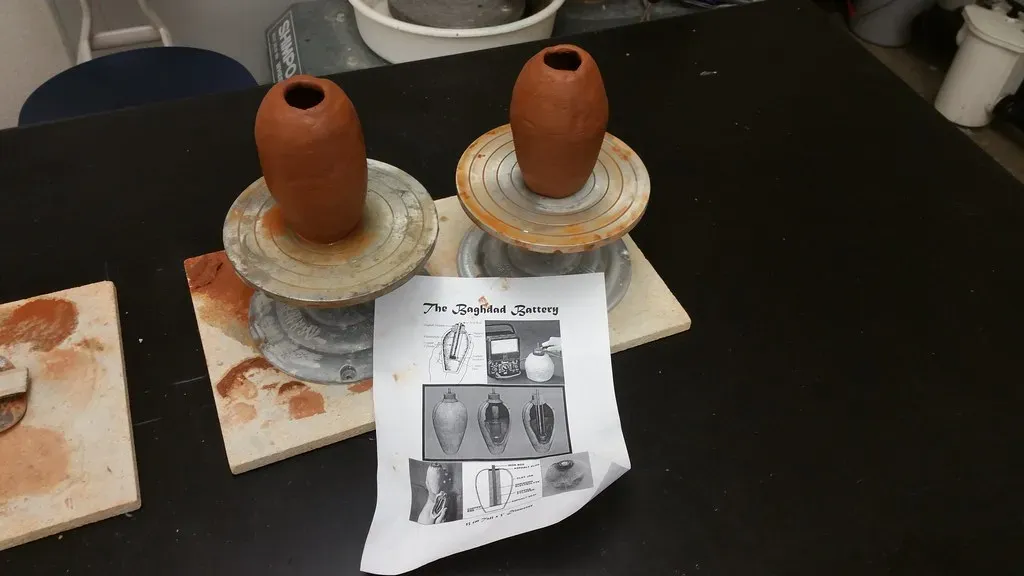
The Baghdad Battery, also known as the Parthian Battery, is a 2,000-year-old ancient artifact that could be an ancient version of a battery, and the device was stolen in 2003 and has yet to be found. It’s a clay pot that encapsulates a copper cylinder with an iron rod suspended in the center but not touching it.
The artifact consisted of a clay jar with an asphalt stopper, with an iron rod through the center surrounded by a copper cylinder inside the pot. The pot could be filled with an electrolytic solution such as vinegar, lemon juice, or grape juice, and once filled, the battery produced 1.1 volts of electricity.
The Baghdad battery seems like something that shouldn’t have existed 2,000 years ago because human understanding of electricity didn’t come until centuries later. While its purpose isn’t known, the object does have the ability to function as a battery, though archaeologists and scientists vehemently disagree over whether these artifacts were actually ancient batteries. Honestly, whether it was intentional or accidental, the fact that ancient Mesopotamians had something capable of generating electricity is mind-blowing.
Ancient Automatic Doors: Theatrical Magic from 2,000 Years Ago
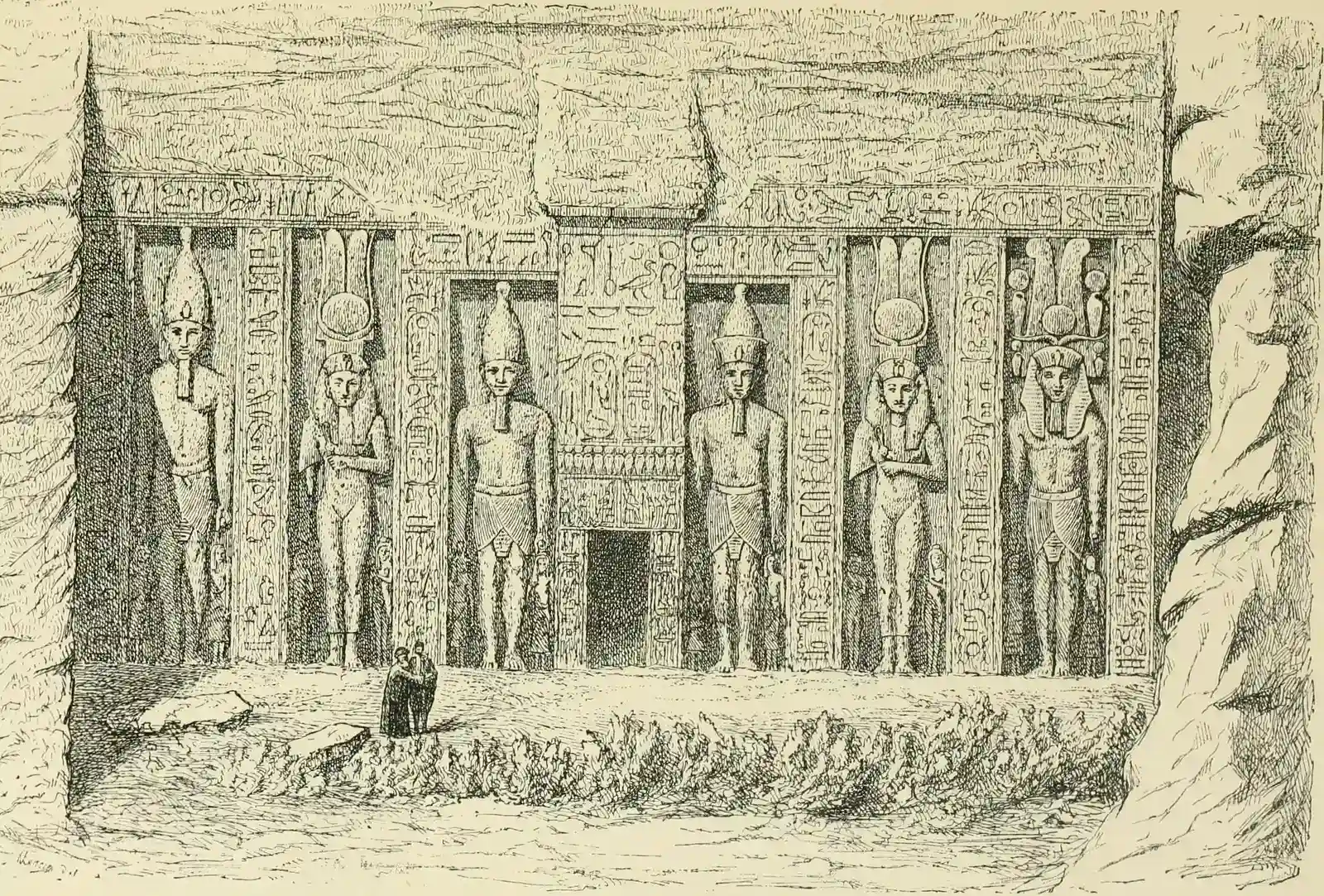
The most striking aspect of ancient Greek automatic doors is that it wasn’t until 1931 that the automatic doors we’re familiar with today were first created. The doors that existed in ancient Greece were clearly hundreds of years before their time.
The Greek inventor Heron of Alexandria created these remarkable devices for temples. When priests lit a fire on an altar, heated air would expand and displace water into a bucket. The bucket’s weight would then pull ropes that opened the temple doors automatically. To ancient worshippers, it must have seemed like divine intervention. The gods themselves were opening the doors.
What really strikes me is the understanding of physics required. Heron grasped principles of pneumatics, hydraulics, and mechanics that wouldn’t be systematically studied for centuries. He essentially created an early programmable system using nothing but air, water, weights, and cleverly arranged mechanisms. That’s engineering genius by any standard.
Conclusion
Looking at these seven inventions, you start to realize something humbling. We often think of progress as linear, as if humanity has been steadily climbing upward from primitive beginnings. Yet these ancient innovations prove that brilliance isn’t bound by time or technology. Our ancestors achieved things that still leave us searching for answers.
When the purpose and technological sophistication of devices like the Antikythera mechanism were understood, they amazed researchers who had believed this level of technology wasn’t developed until the 14th century. Some of these inventions leveraged knowledge that was later lost, only to be rediscovered centuries afterward. Others still guard their secrets today.
What these ancient marvels really teach us is that human ingenuity has always been extraordinary. The tools change, the materials evolve, but that spark of creativity and problem-solving? That’s been with us from the very beginning. Makes you wonder what other secrets from the ancient world are still waiting to be uncovered, doesn’t it?