
History loves a good mystery. You’ve probably heard about ancient Egypt, the Greeks, the Romans. Their stories are told and retold, carved into every textbook ever printed. But what about the civilizations that slipped through the cracks of time, the ones that rose and fell before anyone thought to write them down? The ones buried under jungle canopies, drowned beneath rising seas, or simply erased by catastrophe?
Honestly, the deeper you dig into this topic, the more unsettling it becomes. You start to realize that what we think we know about human history is really just a fraction of the full picture. There are ancient blueprints scattered across the Earth, stone structures that shouldn’t exist, cities swallowed by oceans, and entire cultures that vanished so completely they left behind almost nothing. So buckle up, because what you’re about to read might seriously challenge everything you thought you knew about our past.
1. Göbekli Tepe: The Temple Builders Who Rewrote Everything
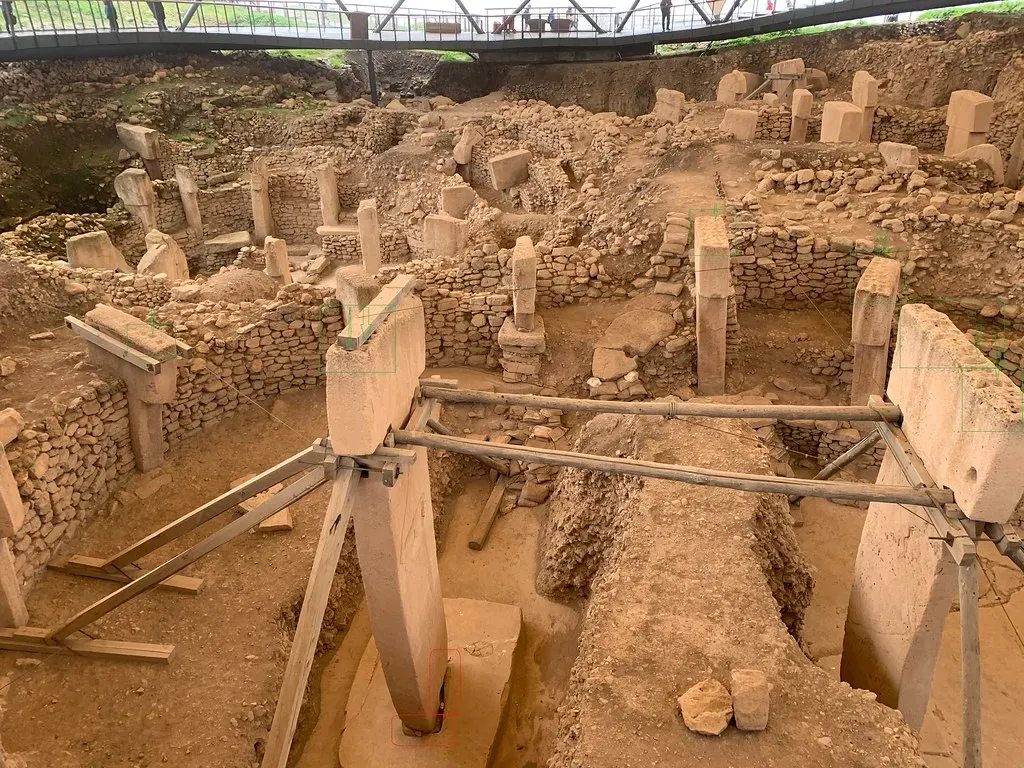
You may have vaguely heard the name, but let’s be real, most people have no idea just how deeply shocking this discovery truly is. In the rolling hills of southeastern Turkey lies Göbekli Tepe, a site so revolutionary it’s been dubbed the “zero point of civilization,” with T-shaped limestone pillars dating to 9600 BCE, a staggering 7,000 years before Stonehenge and the pyramids of Giza. Think about that. While mainstream history taught you that civilization began with writing and agriculture in Mesopotamia, someone was already hauling 16-ton carved stones across miles of landscape and assembling a monument of breathtaking complexity.
These megaliths were carved with eerie precision and boast reliefs of lions, foxes, and scorpions alongside abstract symbols that hint at a cosmology we still cannot decode. This isn’t the work of nomads with sticks. It screams of organization, with hundreds, perhaps thousands, of laborers guided by a blueprint that has since been lost to us. The civilization behind Göbekli Tepe had knowledge, coordination, and spiritual intent. They simply did not survive long enough for us to ever fully understand them.
2. The Vinca Civilization: Europe’s Forgotten First Culture
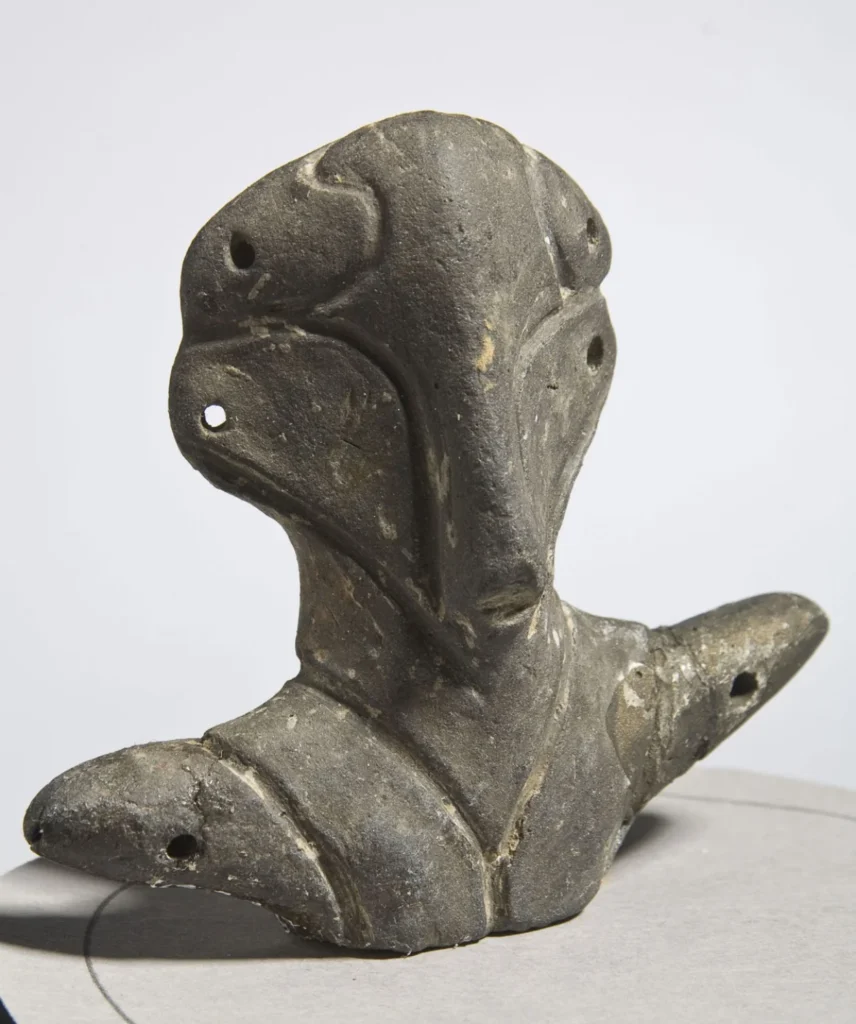
Here’s a name you almost certainly haven’t come across in school. Evidence of the Vinca Civilization has been found along the banks of the Danube River, and it is thought to have existed long before the great civilizations of Mesopotamia and Egypt. That alone should stop you in your tracks. Europe harbored a sophisticated culture before anyone else was supposedly “advanced,” and barely anyone talks about it.
The Vinca Civilization boasts what some believe to be one of the earliest writing systems in the world, with around 700 characters, most of which have been found carved in pottery. Evidence has also been found of copper utensils around 1,000 years before their general use in Europe, and at a necropolis near Varna, the “Varna Gold Treasure” was discovered, dating to around 6,500 years old and possibly the oldest gold smithy in the world. The Vinca people weren’t fumbling through prehistory. They were innovating. It is not known why the Vinca Civilization vanished, but when they did, they seem to have taken their knowledge and their innovations with them.
3. The Norte Chico (Caral): The Silent Pyramid Builders of Peru
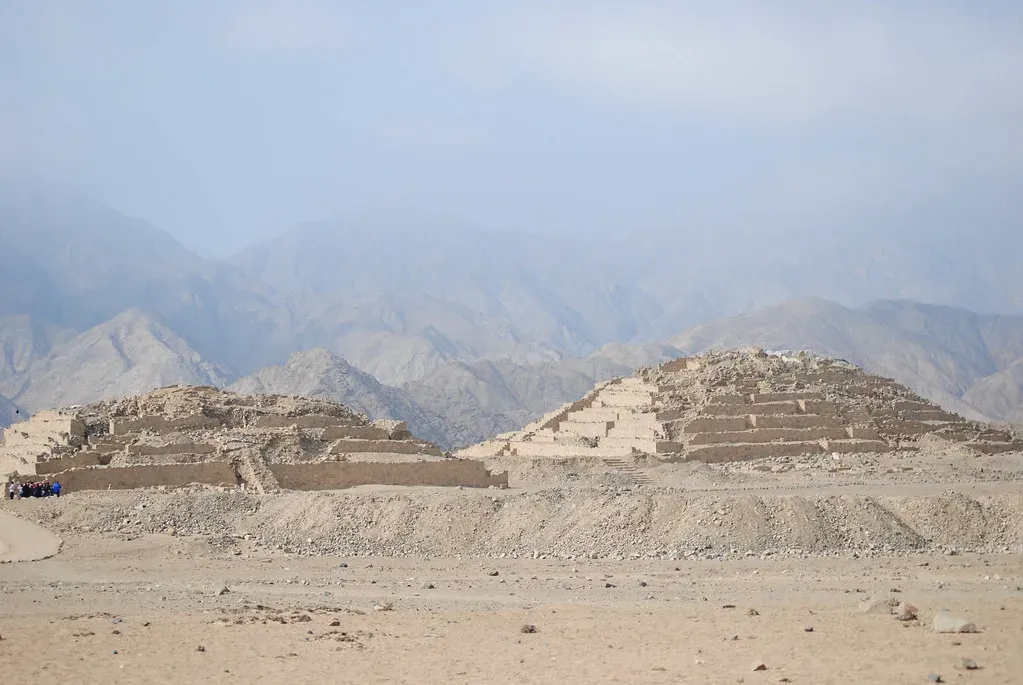
Imagine a full-blown civilization with pyramids, amphitheaters, and sophisticated urban design, thriving at the exact same time as ancient Egypt, yet located on the other side of the world and completely unknown to most people. Caral was a thriving metropolis at roughly the same time as the great pyramids were being built in Egypt, which is considered one of the earliest civilizations in the world. Flourishing between approximately 3000 BCE and 1800 BCE along the arid coast of modern-day Peru, Norte Chico represents an early cradle of civilization, predating more widely known Mesoamerican and Andean civilizations like the Maya and Inca.
What makes this particularly striking is what they chose NOT to do. Unlike many other ancient civilizations, Norte Chico appears to have developed without a written language or pottery, relying instead on textiles and quipu-like recording systems for communication and record-keeping. No indications of warfare, such as battlements, weapons, or mutilated bodies, have been found at Caral. A peaceful, prosperous, pyramid-building culture without war or writing. It’s the kind of thing that sounds impossible, yet the stones are right there in the Supe Valley, quietly defying expectations.
4. Thonis-Heracleion: The Drowned Egyptian Gateway City
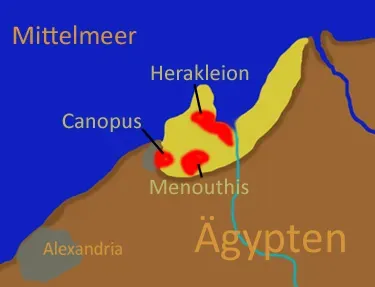
There’s something almost poetic and deeply eerie about a city sinking into the sea and being forgotten for a thousand years. Experts believe that Thonis, also called Thonis-Heracleion, was established around 2,700 years ago in modern-day Abu Qir Bay, and based on the artifacts found in the region, it is believed that they were a major trading port for surrounding regions. This wasn’t a small settlement. You’re talking about a city that controlled the flow of commerce between Europe and Egypt.
Thonis-Heracleion likely fell victim to truly apocalyptic flooding caused by devastating earthquakes, with historical records recounting the ground shaking heavily and eventually turning into mud. By the end of this horrific event, most of the city had been claimed by the sea. For centuries, many historians thought these accounts were nothing more than local legends. It wasn’t until 2000 that a team of divers decided to investigate and finally located the lost city. The fact that an entire ancient metropolis was written off as myth for two millennia should make you wonder how many other “legends” are actually just forgotten truths.
5. The Caral Culture’s Resilience: A Civilization That Adapted and Survived
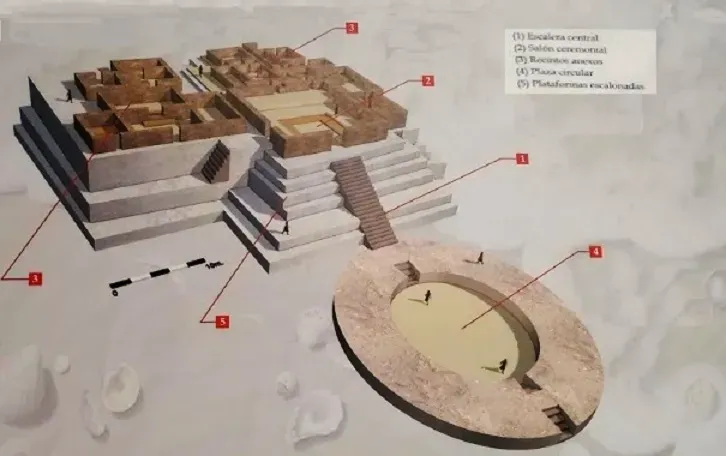
Most lost civilizations vanish in a blaze of war or collapse under invasion. The story of Caral’s response to catastrophe is something far more extraordinary. Recent archaeological work indicates that around 4,200 years ago a severe drought forced the inhabitants of Caral to abandon the city and resettle at nearby sites, with excavations showing continuity in architectural planning and ceremonial spaces but no clear evidence of warfare or fortifications, suggesting the society adapted through migration and reorganization rather than violent conflict. They didn’t fight. They moved. They rebuilt. And they kept their culture intact.
Archaeologists have found evidence of long-distance exchange including the remains of monkeys and macaws most likely carried over the Andes from the Amazon, ceramics depicting jungle animals, and seashells brought from Ecuador’s tropical coast. This was a civilization connected to its wider world through trade rather than conquest. Excavations suggest a well-organized society dependent on fishing, farming, and trade networks rather than warfare. It’s hard not to find something quietly inspiring about a culture this advanced, this peaceful, and this badly overlooked by history.
6. The Khmer Empire: A Jungle Metropolis Larger Than New York
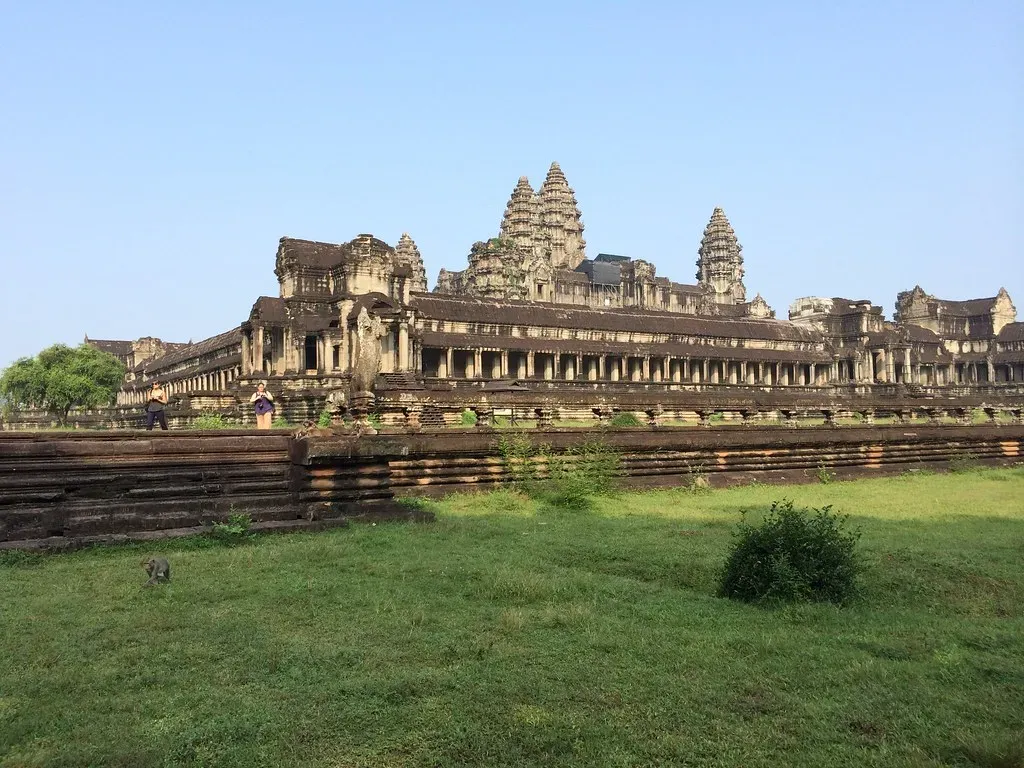
You probably know Angkor Wat as a stunning temple photo that floods your travel feeds. But you likely don’t know what surrounded it. Angkor Wat was once simply part of a larger city called Angkor. The enormous temple complex, the largest religious monument on Earth occupying some 402 acres, was once part of a metropolis larger than modern-day New York City, serving as the capital of the Khmer Empire. Wrap your head around that. A pre-industrial city that dwarfed modern Manhattan, buried deep in the Cambodian jungle.
Angkor was one of the civilization’s largest cities, with an extensive system of roads and canals and an estimated population of as many as one million people. The Khmer empire was at its height between 1000 and 1200 CE, and experts are unsure what caused the civilization to disappear, leaving its cities at the mercy of the relentless jungle. In 2016, scholar Damian Evans argued that one of the civilization’s major problems was that stone masonry was only used in the construction of monuments and the hydrologic system, meaning that dwellings were made of non-durable natural materials such as wood and thatch. A million people. A city of stone temples and wooden homes. Gone. It’s a strange and humbling reminder of how quickly the natural world reclaims what humanity builds.
7. The Silurian Hypothesis: Could a Pre-Human Civilization Have Existed Millions of Years Ago?
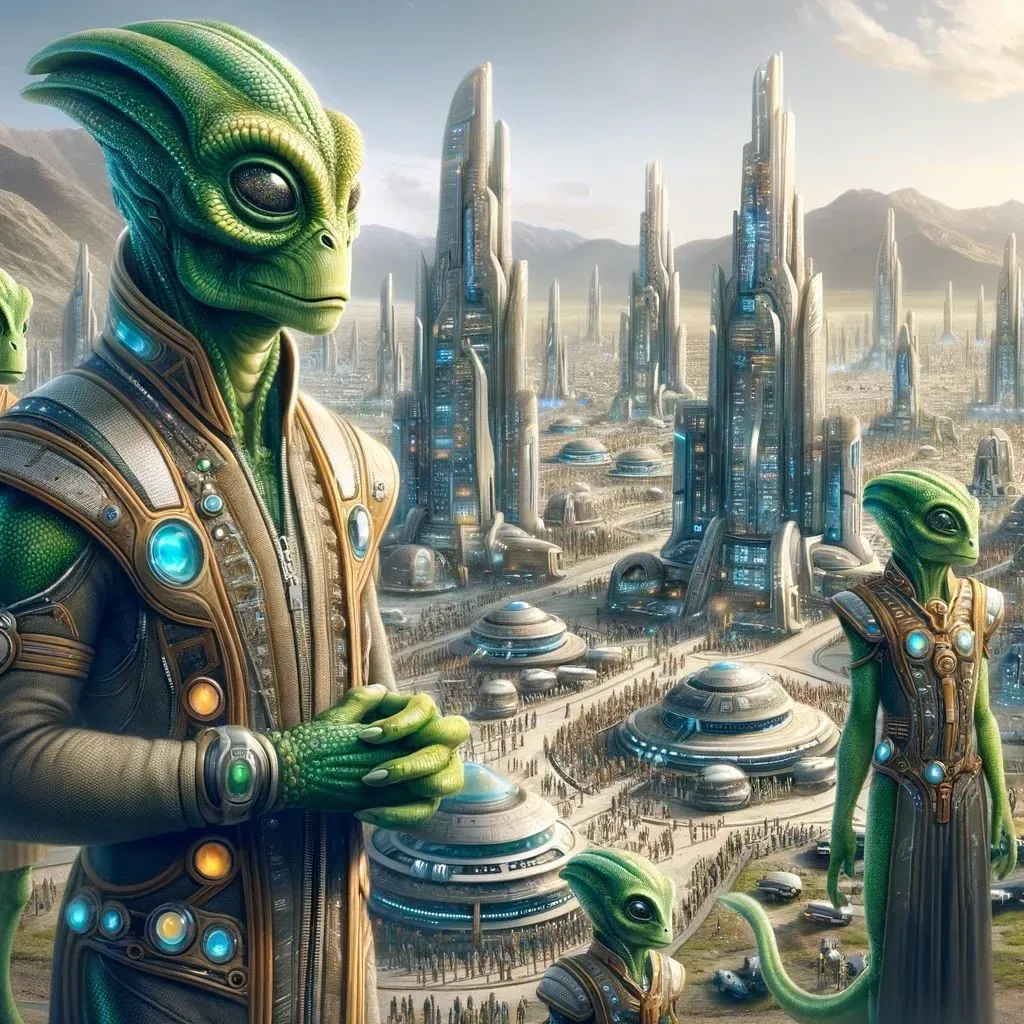
This is where things get genuinely mind-bending. I know it sounds crazy, but bear with it for just a moment. Astrophysicist Adam Frank and climate scientist Gavin Schmidt proposed the “Silurian Hypothesis” in a 2018 paper exploring the possibility of detecting an advanced civilization before humans in the geological record. Not a human civilization, but something entirely other. A species that may have risen, built, and burned out millions of years before our earliest ancestors ever walked the planet.
They argued that there has been sufficient fossil carbon to fuel an industrial civilization since the Carboniferous Period, roughly 350 million years ago, though finding direct evidence such as technological artifacts is unlikely due to the rarity of fossilization. Instead, researchers might find indirect evidence such as climate changes, anomalies in sediment, or traces of nuclear waste. Despite our knowledge of ancient species, it would be easy for signs of an ancient non-human civilization to have flown under the radar. You would have to look attentively in the geological record. While we don’t know of any industrial civilizations that predate the emergence of early humans, we can’t completely rule it out. That last line alone should be enough to keep you up at night.
Conclusion: The Story of Humanity Is Still Being Written
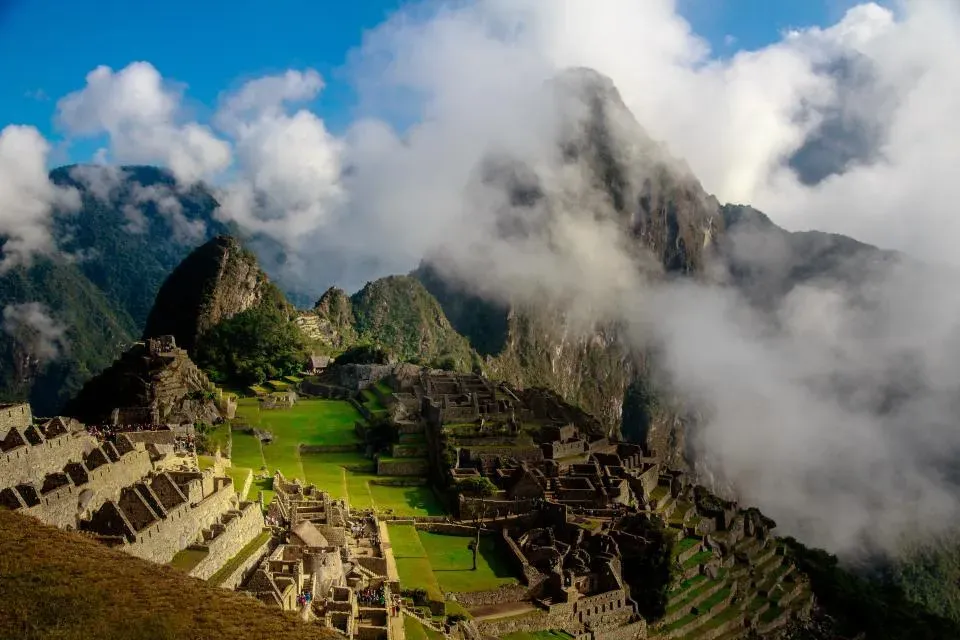
What strikes me most about all of these civilizations is not just how impressive they were, but how easily they were forgotten. Entire cultures, millions of people, extraordinary engineering feats, all swallowed by jungle, sea, sand, and time. The Vinca vanished without a clear reason. Thonis sat beneath the Mediterranean for a thousand years before anyone thought to look. Göbekli Tepe was buried on purpose, as if its builders didn’t want it found.
Here’s the thing: if you’re honest with yourself, you have to accept that the history we know is not the whole history. New discoveries keep reshaping what we thought was settled. A site in Jordan revealed a lost culture as recently as November 2025. Divers are still mapping the seafloor beneath ancient Egyptian coasts. The jungle hasn’t given up all its secrets yet. Every year, archaeology chips away at the confident story we tell ourselves about human origins, and every year it gets a little more complicated, a little more fascinating, and a little less certain.
The real question isn’t just what civilizations existed before ours. It’s what we might be missing right now, hidden a few feet below where you’re standing. What do you think is still out there waiting to be found? Tell us in the comments.