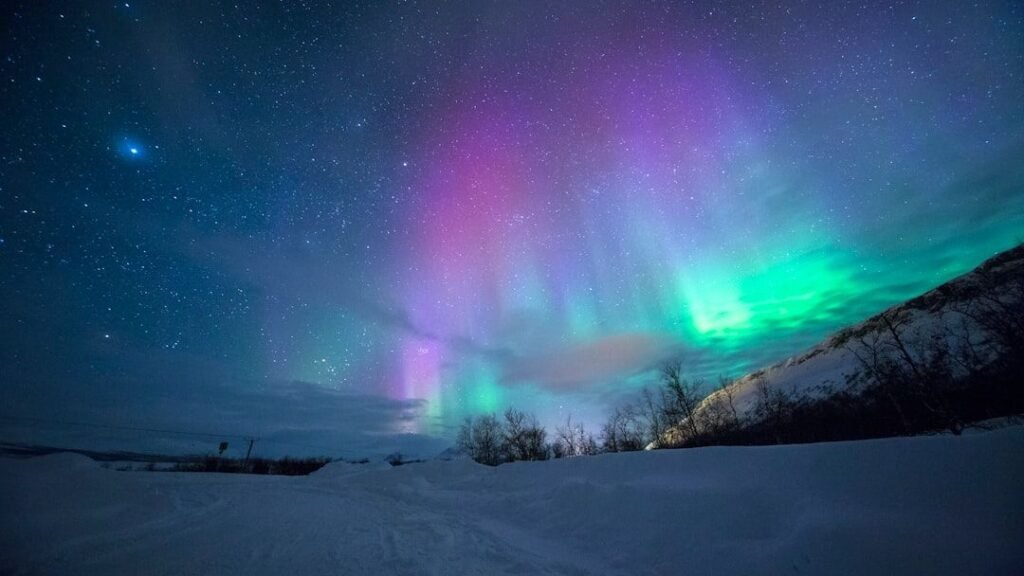

There’s something almost unfair about how magical the northern lights are. You can look at a thousand photos and still feel completely unprepared the first time those ghostly green curtains start to ripple across the sky right above your head. It doesn’t feel like space weather or plasma physics in that moment; it feels like the sky has decided to dance just for you.
The northern lights, or aurora borealis, are one of those rare natural wonders that hit you on every level at once: scientific, emotional, even spiritual. They’re real, measurable, predictable to a point – and yet they still feel like a secret. Let’s pull back the curtain on seven of the most surprising truths behind the aurora, the kind of details that make you look up at the night sky a little differently the next time you find yourself in the far north.
They’re Caused by a Violent Storm… Ninety-Three Million Miles Away
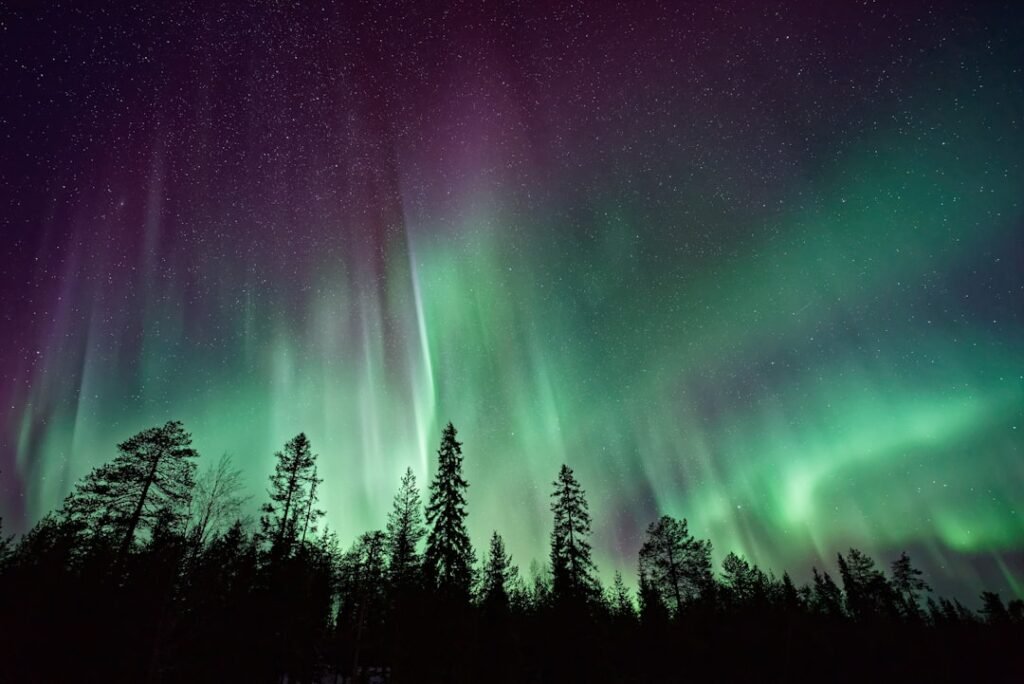
It’s wild to realize that the soft glow you see over a snowy forest is actually the aftermath of an enormous storm on the Sun. The northern lights begin when the Sun blasts charged particles into space during events like solar flares and coronal mass ejections. Those particles race through space and, a couple of days later, slam into Earth’s magnetic field at incredible speeds.
Earth’s magnetic field acts like an invisible shield, guiding these charged particles toward the polar regions rather than letting them fry the planet. As those particles collide with gases high in the atmosphere, they transfer energy and make the atoms glow, the same way a neon sign lights up. So when you’re standing under a shimmering green arc, you’re basically watching the echo of solar chaos being turned into beauty by Earth’s protective bubble.
The Colors Reveal a Hidden Code in the Sky
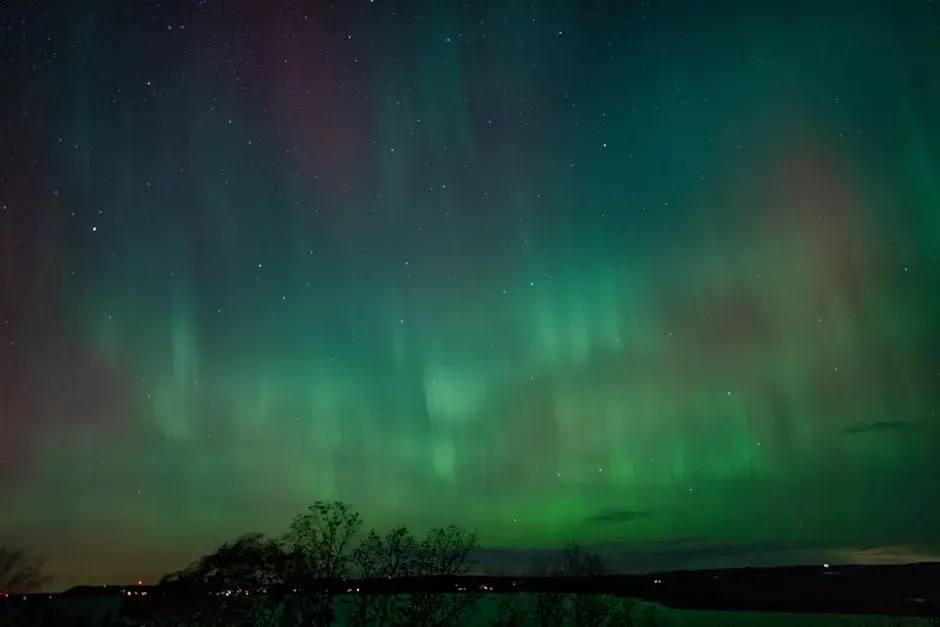
Those colors in the northern lights aren’t random; they’re like a secret code telling you what’s happening more than a hundred kilometers above your head. The most common color, that dreamy green, usually comes from oxygen atoms being hit by energetic electrons around one hundred to two hundred kilometers high. When the oxygen calms back down, it releases energy as green light, like a little cosmic sigh.
Rarer reds tend to show up higher in the atmosphere, often linked to more intense solar activity, while purples, blues, and pinks can appear when nitrogen is excited. Sometimes you’ll even see multiple colors stacked like layers in a cake: green below, red above, maybe a faint violet fringe. Once you know this, every aurora becomes a kind of glowing spectrum analysis happening in real time across the sky.
You Don’t Need to Be in the Arctic Circle to See Them
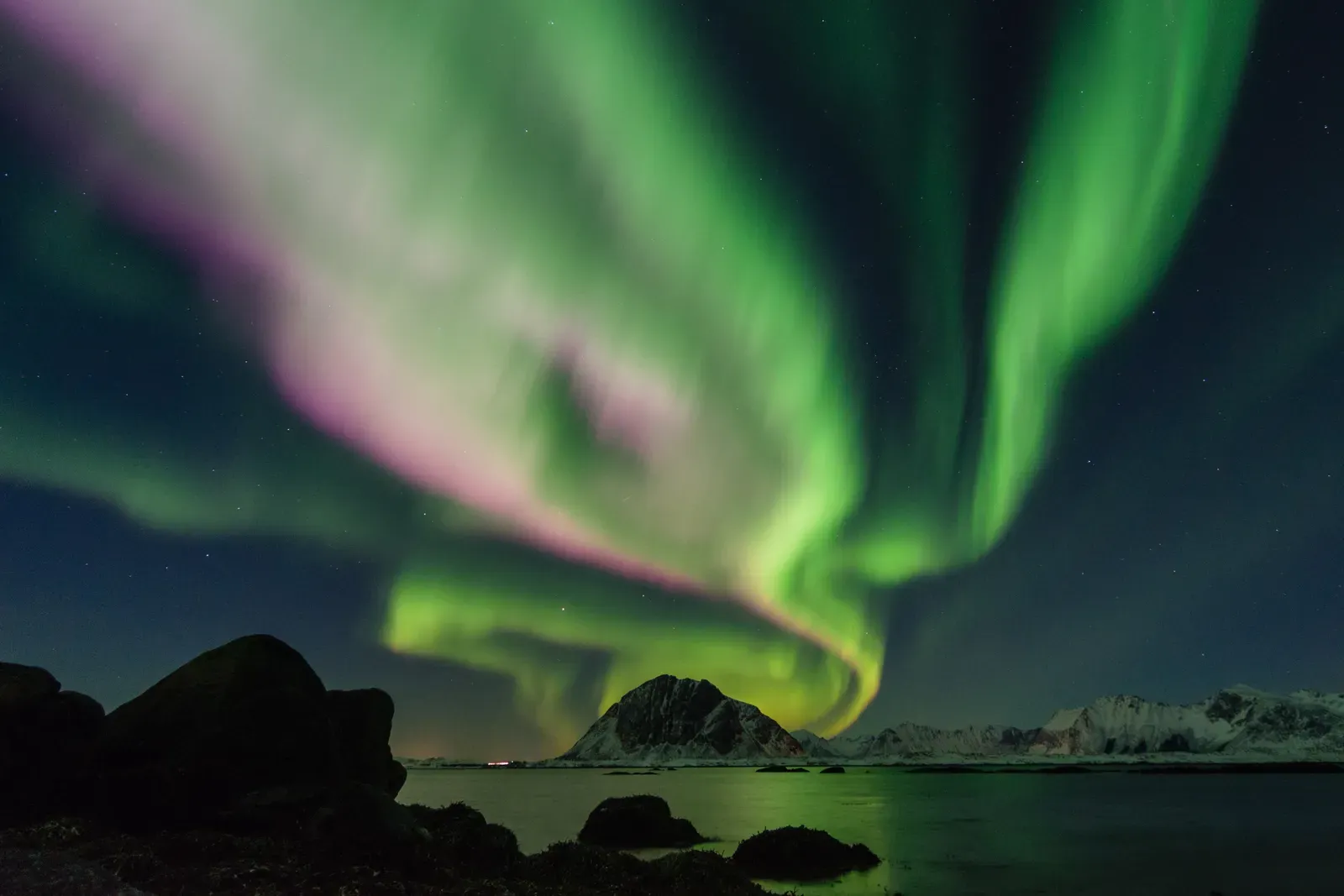
A lot of people think you have to be in some remote Arctic outpost to see the northern lights, but that’s only half true. It’s definitely easier the closer you are to the magnetic pole – places like northern Norway, Iceland, northern Canada, and Alaska. But during strong solar storms, the auroral oval can push farther south than you’d expect, sometimes reaching regions where people never imagine they’ll see it.
In some powerful events, observers have reported auroras much farther from the poles, lighting up skies that usually only see stars and city glow. It’s one reason space weather forecasts have become so popular; people follow them like surfers looking for waves. If the Sun is active and the geomagnetic conditions are right, you might just walk outside in a place you know well and see your everyday skyline transformed by a pale, flickering green veil.
The Lights Don’t Just Dance – They Can Crackle and Hiss
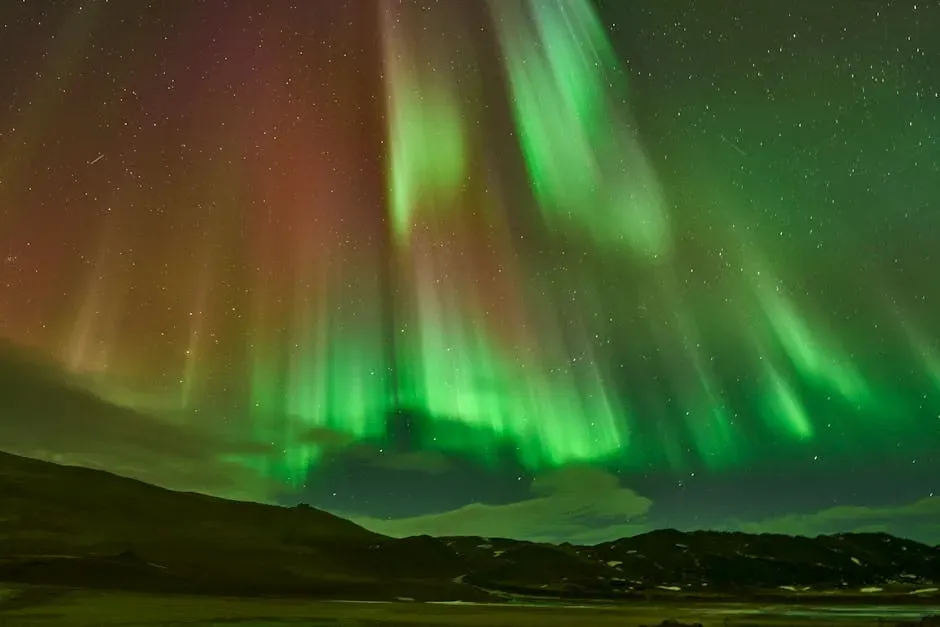
Ask anyone who’s spent years chasing auroras and you’ll eventually hear the same strange claim: sometimes, the northern lights make sounds. For a long time, this sounded like folklore, because the collisions that create the light happen very high up, where sound shouldn’t be able to reach the ground quickly enough. Yet multiple observers have reported faint crackles, soft hisses, or whispery rustles when the lights are particularly active overhead.
Researchers have proposed that under certain conditions, electrical charges can build up near the ground and discharge in sync with patterns in the upper atmosphere, creating audible sounds. It’s not like a movie soundtrack blasting over your head; it’s more subtle, the kind of noise you’d only notice in deep, still silence. Whether you hear anything or not, though, the idea that the sky might have a voice adds another layer of goosebumps to an already surreal experience.
There’s a Southern Twin You Rarely Hear About
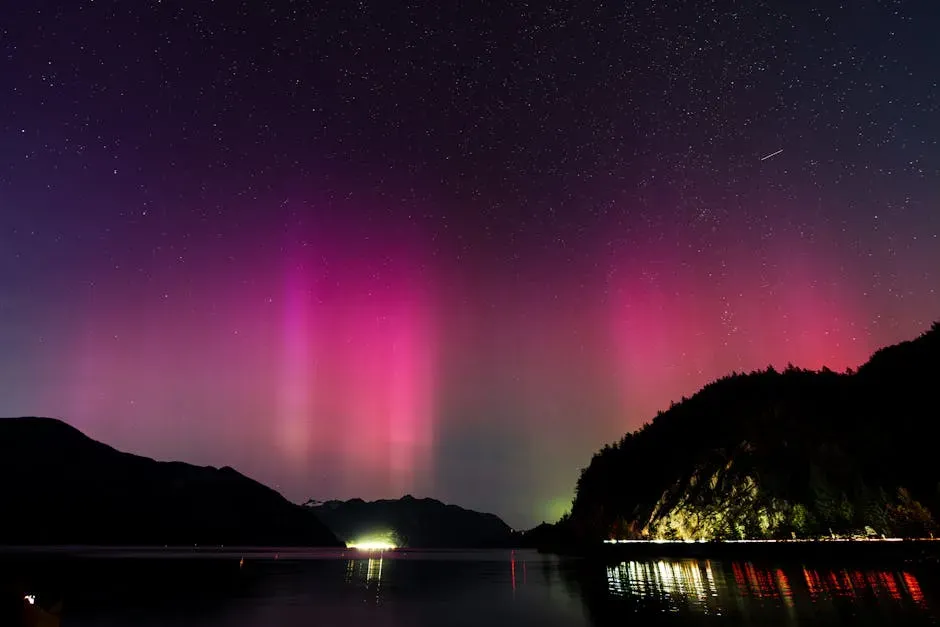
The northern lights get all the fame, but they’re only half the story. Earth’s southern hemisphere has its own version, the aurora australis, and it’s every bit as dramatic. The same solar particles that create aurora borealis are guided along magnetic field lines into both polar regions at roughly the same time, which means there can be matching displays in the north and south.
The reason you don’t hear as much about the southern lights is practical, not scientific: there are fewer easily accessible land areas at high southern latitudes. Places like Tasmania, southern New Zealand, and parts of Antarctica are prime territories, but fewer people live or travel there compared to the north. In a way, that makes the southern aurora feel even more elusive, like a mirror-world phenomenon playing out at the bottom edge of the planet while most of us look up north.
Technology on Earth Can Feel Their Power
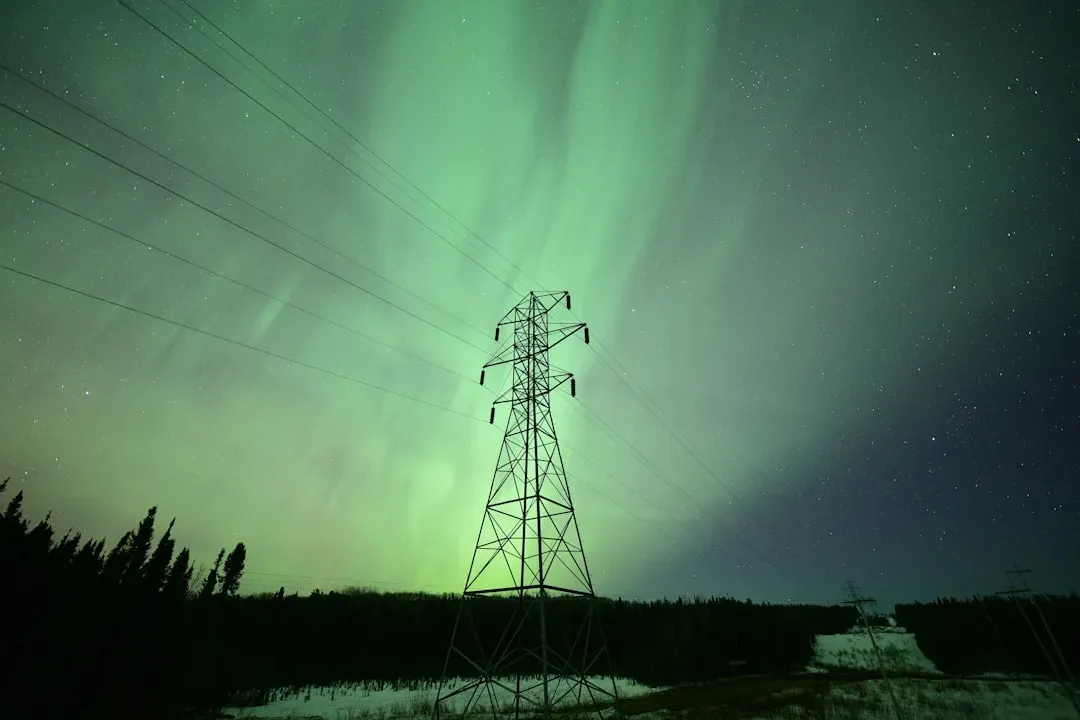
As beautiful as the aurora is, it’s also the visible side of something that can be pretty disruptive. When the solar wind disturbs Earth’s magnetic field, it can induce electric currents in power lines, pipelines, and long communication cables. In extreme cases, these geomagnetic storms have contributed to power grid failures and caused equipment to malfunction, turning a sky show into a real-world headache.
Satellites and radio communications are especially vulnerable, because they operate right in the middle of this disturbed space environment. Engineers now build in protections and monitor space weather carefully, adjusting satellite operations or flight routes when necessary. So while you’re standing there, wide-eyed under shimmering arcs, somewhere a control room full of people is watching the same storm as a stream of data and alarms, managing the invisible side of the spectacle.
We’re Entering a More Active Era for Auroras
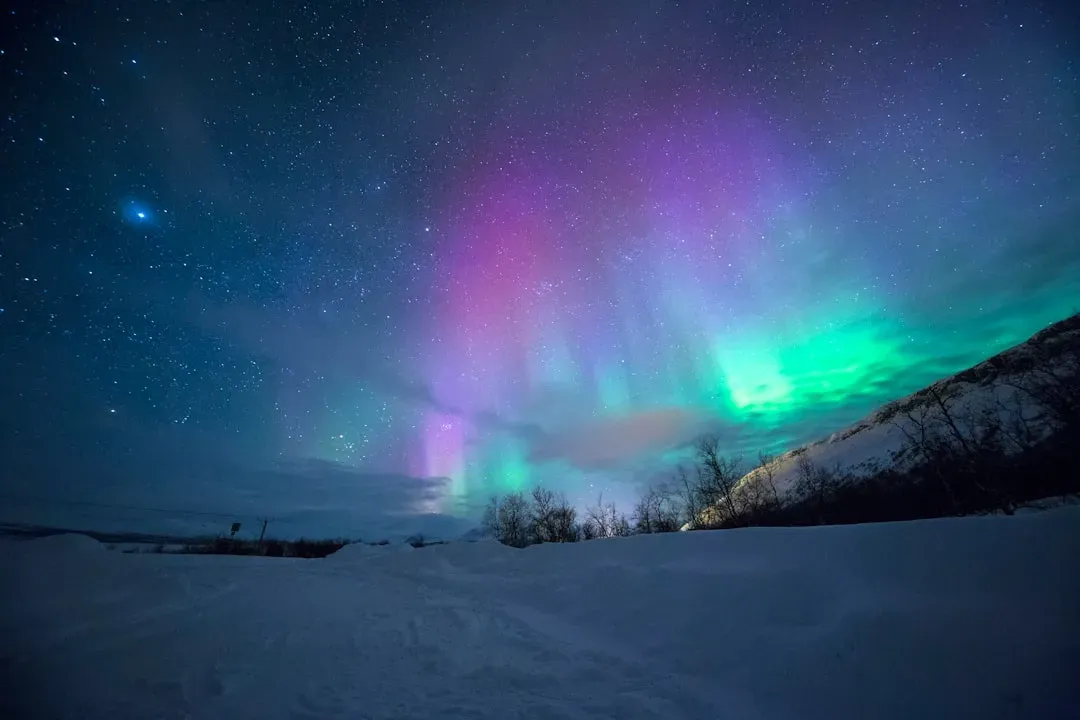
The Sun doesn’t stay equally active all the time; it follows a cycle of roughly about eleven years, swinging from quiet to stormy and back again. Around the peaks of this cycle, known as solar maximum, there tend to be more sunspots, more flares, and more chances for strong auroras. Right now, we’re living through a particularly lively phase, which has already produced some striking displays at lower latitudes than usual.
For aurora chasers, this is like a golden season. Trips to high-latitude destinations are more likely to pay off, and even people living far from the poles have a better shot at an unplanned, late-night surprise. Of course, stronger solar activity also raises concerns about satellites and power infrastructure, so it’s a bit of a double-edged sword. But if you’ve ever dreamed of seeing the sky tear open in waves of living color, the timing in the coming years couldn’t be much better.
Conclusion: A Cosmic Light Show With One Simple Rule
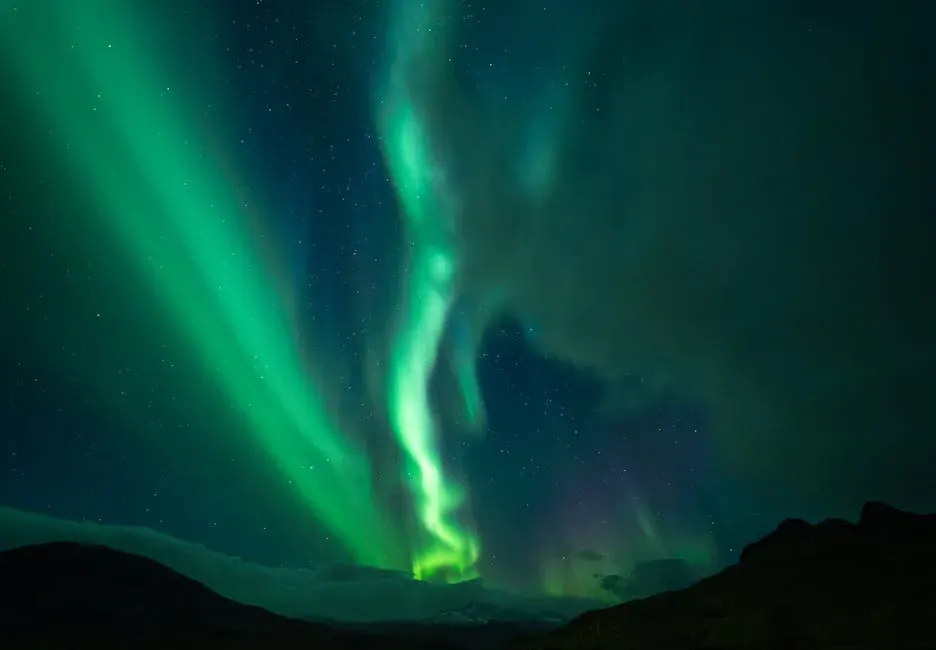
The northern lights sit at this perfect crossroads between hard science and raw emotion. They’re born from magnetic fields and charged particles, yet they hit you in the gut like a piece of art, a reminder that the universe is both dangerous and breathtaking at the same time. Knowing the physics behind them doesn’t ruin the mystery; if anything, it makes the whole thing even more unbelievable.
If there’s one rule with auroras, it’s this: you have to be willing to wait in the dark. You stand there, numb fingers, cold nose, staring at an empty sky for what feels like forever – until suddenly, it’s not empty at all. For a few minutes or a few hours, you’re watching Earth and the Sun talk to each other in color. When that happens, the only real question left is simple: how long will that memory glow in your mind after the sky goes dark again?