

We live in a world where your phone can translate a foreign language in real time, cars can practically drive themselves, and artificial intelligence can write whole articles in seconds. It feels like science has everything figured out. But then something tiny and ordinary happens – you get déjà vu in the middle of brushing your teeth, or you shiver from “chills” during a song – and suddenly the universe feels as mysterious as ever.
What’s wild is that many of the most puzzling mysteries aren’t happening in distant galaxies or deep inside particle accelerators. They’re happening right in your living room, inside your own head, or at the edge of your vision. Scientists have theories for most of them, and some really good guesses, but not the kind of neat, one-sentence answers we like to imagine. Let’s walk through seven everyday phenomena that keep researchers scratching their heads – and might make you see your daily life a little differently.
1. Déjà Vu: The Eerie Feeling You’ve Been Here Before

You’re walking into a friend’s new apartment for the first time, and suddenly your brain whispers, “You’ve done this before.” The furniture, the light, the way someone laughs in the next room – it all feels disturbingly familiar, even though you know it’s impossible. That unsettling, almost spooky flicker of recognition is déjà vu, and it happens to a large share of people at least a few times in their lives. Despite how common it is, science still can’t give a single solid answer for why it happens.
One of the leading ideas is that déjà vu is a glitch in how the brain processes memory, almost like your “present experience” and “past memories” circuits fire at the same time by mistake. Another suggestion is that the brain might be doing a kind of pattern-matching shortcut, comparing the current scene to fragments of many past experiences and mislabeling it as an actual memory. The challenge is that déjà vu is unpredictable and short-lived, which makes it notoriously hard to study in a lab. Researchers can provoke déjà vu–like feelings in some experiments, especially by using virtual reality or memory tasks, but nothing captures the full, bizarre intensity of the real thing. For now, that shiver of “I’ve been here before” is an everyday reminder that your brain still holds secrets from you.
2. Why We Dream the Way We Do

Every night, your brain basically runs its own indie film festival while you sleep – some horror, some drama, a lot of strange experimental stuff that makes no sense when you wake up. We know that dreaming is tied closely to certain stages of sleep, especially rapid eye movement (REM) sleep, and we know that almost everyone dreams, even if they rarely remember it. But the deeper questions remain wide open: Why do we dream in such vivid, emotional, bizarre ways? And what exactly are dreams doing for us?
Some scientists argue that dreams help us process emotions, rehearse social situations, or consolidate memories, like the brain’s version of cleaning up its hard drive. Others think dreams might just be the side effect of random brain activity that our mind then weaves into a narrative – because our brains really hate loose ends. There’s intriguing evidence linking dreaming with learning and emotional health, but no single theory fits all the weirdness we experience at night, from flying dreams to teeth-falling-out nightmares. The truth might be that dreams serve multiple overlapping purposes, or that we’re still asking the wrong questions. Either way, tonight when your brain drops you into another surreal storyline, remember: nobody fully understands why that happens.
3. The Mystery of Left-Handedness

Take a look around a classroom, an office, or a sports team, and you’ll almost always see the same pattern: most people are right-handed, and a much smaller number are left-handed. The ratio stays surprisingly stable across cultures and history, with only a small slice of people using their left hand as their dominant one. On the surface, it seems like a trivial detail – just a preference, like favoring one foot when you kick a ball. But behind that small detail lies a puzzle that biology still hasn’t fully cracked.
There’s solid evidence that handedness is influenced by genetics, but not in a simple, one-gene-on-one-gene-off sort of way. Environment, brain development, and even random variation before birth seem to play a role. We also know that the brain is asymmetrical: language, movement, and other functions tend to be more dominant on one side than the other. What scientists still can’t fully explain is why the vast majority of humans ended up right-dominant instead of a half-and-half split, or a completely random distribution. Some theories say there might be evolutionary advantages in coordination, communication, or tool use when most people share the same “dominant side,” but nothing has been definitively proven. That quiet left-hander at the next desk is part of an old biological riddle that still hasn’t been solved.
4. The “Chills” You Get from Music

You’re listening to a song and, out of nowhere, a certain note or lyric hits and your whole body lights up. Goosebumps, shivers down your spine, maybe even a lump in your throat. It can feel almost embarrassing how intense it is, considering it’s just sound vibrations in the air. Scientists know that music can trigger activity in the brain’s reward and emotion centers, similar to what happens with food, affection, or even certain drugs, but that doesn’t fully explain why some songs hit like a lightning bolt.
One idea is that these “musical chills” happen when a song breaks your expectations in a just-right way – building tension, then releasing it in an emotionally satisfying moment, like a chorus exploding after a long buildup. Your brain loves patterns, and it also loves being slightly surprised, so that perfect blend might trigger a rush of pleasure-related chemicals. But that doesn’t explain why the same song can leave one person sobbing and another completely unmoved, or why a single note in a live performance can feel more powerful than the entire recorded track. Personal history, culture, mood, and individual brain wiring all seem to layer together in ways that are incredibly hard to untangle. For now, those shivers are a kind of emotional secret handshake between your brain and your favorite music.
5. Placebo Effects: When Sugar Pills Actually Help

Imagine taking a pill that contains no active medicine, and then genuinely feeling better – sometimes even showing measurable changes in things like pain levels, heart rate, or brain activity. That’s the placebo effect, and it’s not just a nuisance scientists have to control for in clinical trials. It’s a powerful, repeatable phenomenon that reveals how deeply expectation, belief, and the context of treatment can affect the body. The mind isn’t simply “imagining” feeling better; studies show real biological changes can occur.
The strangest part is that placebo effects can work even when people are openly told that they are taking a placebo in certain structured settings. Theories point to complex interactions between the brain and the rest of the body, involving pain-regulating chemicals, stress hormones, and learning from past experiences with treatment. Still, there’s no single, complete explanation for why some people respond strongly to placebos and others hardly at all, or why the same fake treatment can help with one symptom but not another. It raises uncomfortable questions about how much of medicine relies not just on chemistry, but on trust, ritual, and the stories we tell ourselves about healing. For something supposedly “inert,” placebos are strangely alive in how they affect us.
6. The Puzzle of Yawning and Its “Contagion”

You see someone yawn across the room, and suddenly you’re yawning too. You just read the word “yawn,” and there’s a decent chance your jaw is already starting to loosen. Yawning is astonishingly common across humans and many animals, but pinning down its purpose has turned out to be trickier than it looks. It’s not just about being tired or bored; people yawn when they’re stressed, anxious, or even before performances or events that require focus.
Some researchers suggest yawning may help regulate brain temperature or shift the brain from one state of alertness to another, like a built-in reset button. The contagious part adds an extra layer of mystery: why does seeing, hearing, or even reading about a yawn prompt another one? One idea is that contagious yawning is related to social bonding and empathy, a kind of neural mirroring mechanism that keeps groups in sync. But then there are exceptions, individual differences, and conflicting findings that muddy the picture. Yawning is so ordinary we barely notice it – yet underneath that simple act is a long list of unanswered questions science still hasn’t yawned its way past.
7. The Enigma of Consciousness Itself
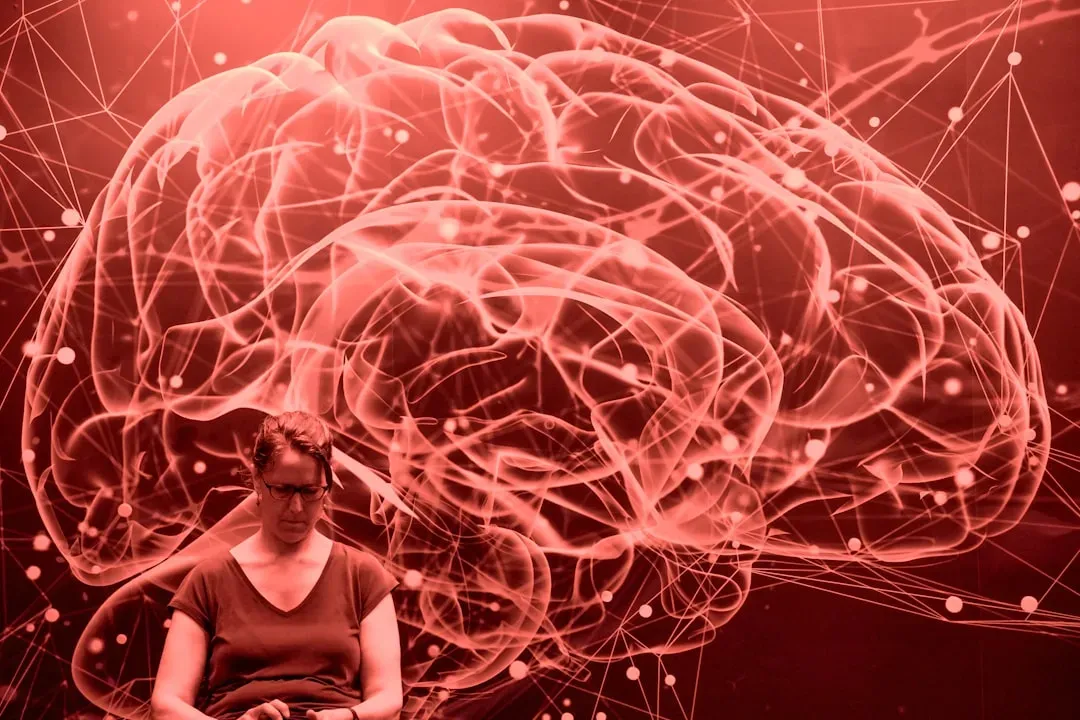
Every second you’re awake, there’s a quiet miracle happening: you’re not just functioning, you’re aware. You don’t just react to the world like a robot; you experience it. You feel pain, joy, curiosity, boredom, that nagging sense of “me” watching everything from inside your own head. We know that consciousness is linked to brain activity, and advances in neuroscience have mapped many functions, from decision-making to vision, with stunning detail. But the core question – how does electrical activity in a lump of tissue produce a rich inner life – remains stubbornly unanswered.
Some scientists argue that consciousness might emerge from particular patterns of information processing, while others approach it as a fundamental part of reality that we do not yet know how to describe properly. There are competing frameworks that try to quantify or locate consciousness in the brain, but none have achieved broad agreement, and many struggle when tested against real-world data. This isn’t just a philosophical puzzle; it touches everything from medicine and mental health to debates about artificial intelligence and animal rights. When you pause for a moment and notice yourself noticing, you are staring directly at something science can measure around the edges but still cannot fully explain. How can something so constant and intimate be one of the biggest open questions we have?
Every time you feel déjà vu, wake from a strange dream, get chills from a song, or catch someone’s yawn from across the room, you’re brushing up against the limits of what we currently know. These everyday glitches, shivers, and quirks are like little cracks in the glass, hints that reality is more complex than our neat explanations suggest. Maybe the most honest thing we can say is that we’re still learning – and that the mystery lives closer to home than we tend to admit. Which of these everyday mysteries quietly fascinates you the most?
Hi, I’m Andrew, and I come from India. Experienced content specialist with a passion for writing. My forte includes health and wellness, Travel, Animals, and Nature. A nature nomad, I am obsessed with mountains and love high-altitude trekking. I have been on several Himalayan treks in India including the Everest Base Camp in Nepal, a profound experience.