

You pick them up without thinking. You peel one off a notepad, press a button on the microwave, or reach for that yellow can under the sink. These objects blend so completely into your daily life that they feel like they’ve always just… existed. No drama. No origin story. Just furniture of the modern world.
But here’s the thing – some of the most unremarkable objects you use every single day have backstories so strange, so accidental, or so rooted in unexpected science that they almost defy belief. From a melting candy bar that changed kitchens forever, to a failed spacecraft adhesive that ended up stuck to your fridge. The world around you is quietly extraordinary. Let’s dive in.
1. The Post-it Note: A Lab Failure That Conquered the Office World

Honestly, few stories in the history of invention are as beautifully chaotic as this one. Spencer Silver’s contribution to the Post-it Note is foundational yet often underappreciated. A chemist by profession, Silver was working on developing super-strong adhesives for 3M when he stumbled upon a formula that behaved quite oppositely. In 1968, he created a unique, pressure-sensitive adhesive that was initially seen as a failure because it was not strong enough to permanently bond surfaces together. The company wasn’t thrilled.
While the adhesive was not a strong one and was actually not even as strong as the glue used by school children, it was quite unusual in its characteristics. It used crystalline microspheres, sort of glass balls, which were sticky enough to stick to an object, yet could be peeled off over and over, and it was also not sticky enough to damage the surface. Enter Art Fry, a fellow 3M scientist with a very relatable problem.
Every Wednesday night while practicing with his church choir, Fry would use little scraps of paper to mark the hymns they were going to sing in the upcoming service. By Sunday, he’d find that they’d all fallen out of the hymnal. He needed a bookmark that would stick to the paper without damaging the pages. That simple frustration became the spark.
The original prototypes were made using yellow scrap paper because it was the only color available at the time. That distinctive yellow went on to become the product’s signature. Today, 3M produces and sells more than 50 billion individual notes per year. Not bad for a glue that was considered useless.
2. The Microwave Oven: A Radar Machine and a Melting Candy Bar
I think this might be the most jaw-dropping accidental invention in the history of kitchen appliances. In 1945, the heating effect of a high-power microwave beam was independently and accidentally discovered by Percy Spencer, an American self-taught engineer from Howland, Maine. While employed at Raytheon, he noticed that microwaves from an active radar set he was working on started to melt a candy bar he had in his pocket. Most people would have just sighed and thrown the chocolate away.
Spencer noticed that a candy bar in his pocket had mysteriously melted while testing an active magnetron. Where others might have dismissed the incident as a trivial quirk of the equipment, Spencer saw possibility. He decided to experiment using food, including popcorn kernels, which became the world’s first microwaved popcorn. In another experiment, an egg was placed in a tea kettle and the magnetron was placed directly above it. The result was the egg exploding in the face of one of his co-workers who was looking in the kettle to observe. Science can be messy, it turns out.
The first commercial microwave oven was called the “Radarange,” marketed in 1947. It was a different sight from today’s microwaves, costing $3,000, weighing about 750 pounds, and standing 6 feet tall. It took about 20 years before a more convenient-looking microwave was ready for home use.
Residential microwaves climbed in popularity throughout the 1970s and, by 1986, roughly one in four American homes owned a microwave oven. By 1997, the U.S. Bureau of Labor Statistics reported that nine of every ten American homes had a microwave. From a melting candy bar to nearly universal kitchen ownership. That’s a wild trajectory.
3. WD-40: A Rocket Scientist’s Formula That Found Its Way Under Your Kitchen Sink
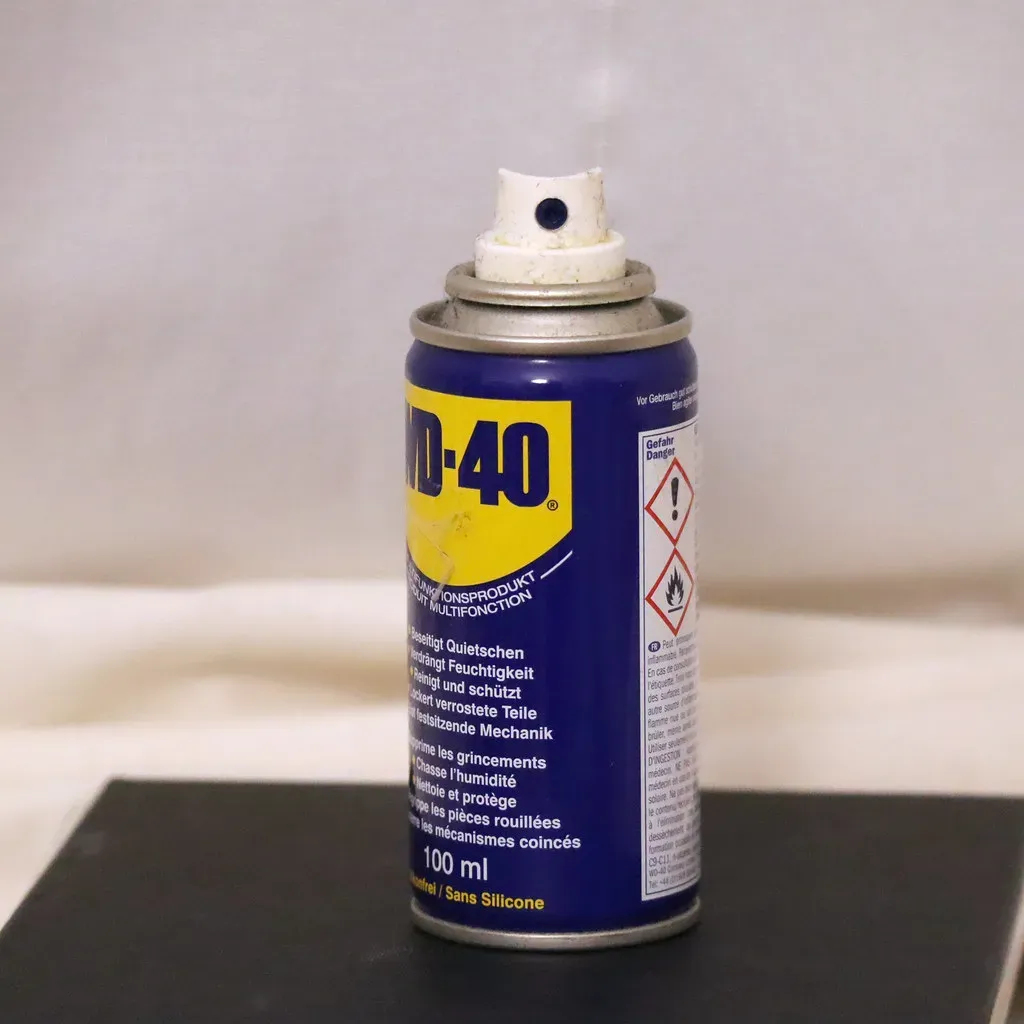
You probably have a can of WD-40 somewhere in your garage or cupboard. It feels domestic. Ordinary. Let’s be real, you almost certainly use it to fix squeaky hinges. But its origin has nothing to do with your home. WD-40, which stands for “Water Displacement, 40th formula,” is an American manufacturer and the trademark of a penetrating oil manufactured by the WD-40 Company based in San Diego, California. Its formula was invented for the Rocket Chemical Company in 1953.
The spray, composed of various hydrocarbons, was originally designed to be used by Convair to protect the outer skin of the Atlas missile from rust and corrosion. This outer skin also functioned as the outer wall of the missile’s delicate balloon tanks. WD-40 was later found to have many household uses and was made available to consumers in San Diego in 1958. Think about that. A formula engineered for missile protection is now routinely sprayed on bicycles and rusty bolts.
The name “WD-40” is abbreviated from the term “Water Displacement, 40th formula,” suggesting it was the result of the 40th attempt to create the product. WD-40 was developed in 1953, released in 1958, and has never been patented. It was never patented because they wanted to avoid sharing the secret formula. Remarkably secretive for a product sitting openly on hardware store shelves.
The product was always intended to be a lubricant, but wasn’t initially considered or developed for household use. As with many lubricants, other uses were soon discovered and in abundance in the early 1970s, the company started hearing from employees and customers regarding the product’s many surprising alternative uses. Turns out, what’s good for a missile is also pretty great on a stubborn jar lid.
4. Play-Doh: The Children’s Toy That Was Born as a Wallpaper Cleaner
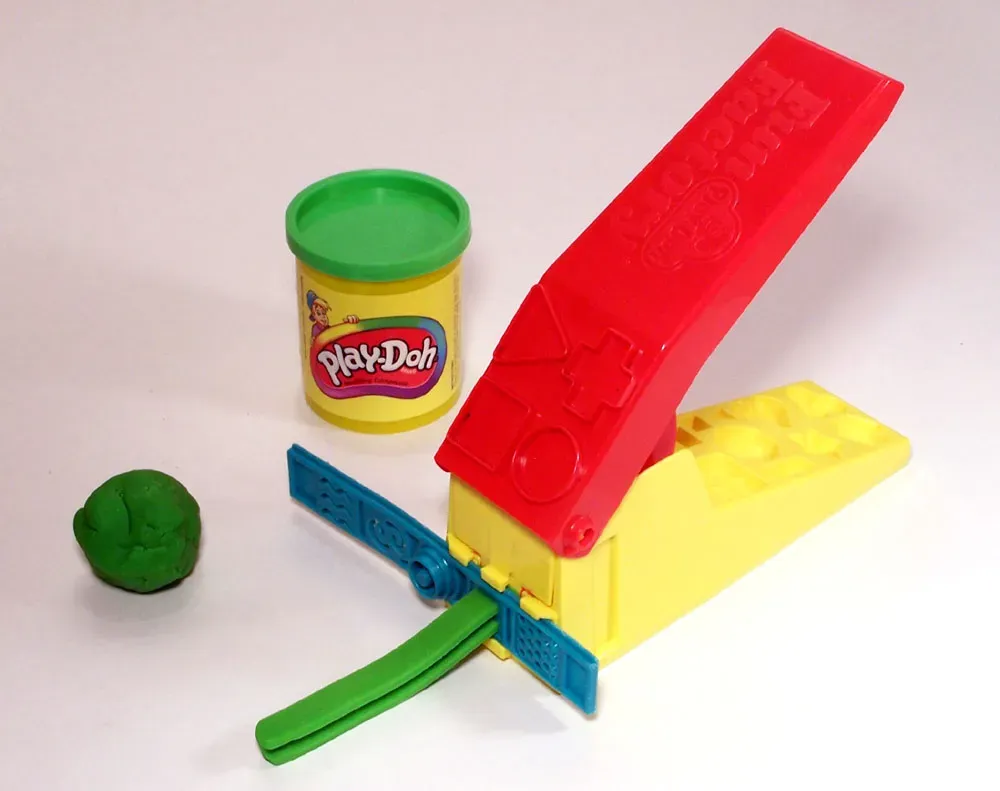
If you’ve ever handed a toddler a can of Play-Doh, you’ve participated in one of the strangest pivot stories in product history. Play-Doh is a modeling compound for young children to make arts and crafts projects. The product was first manufactured in Cincinnati, Ohio, as a wallpaper cleaner in the 1930s. It was then reworked and marketed to Cincinnati schools in the mid-1950s. Yes, a wallpaper cleaner. Not exactly the art supply aisle.
The 1950s saw an increase in the use of gas heating. Without coal stoves, there was no need to clean the wallpaper. Without the sale of this product, the company was slowly going bankrupt. It wasn’t until the inventor’s sister told him that she gave the cleaning putty to the children in her nursery school to play with that the idea of Play-Doh emerged. After replacing the toxic substances with coloring and almond scent, this wall cleaner was re-branded and became the product kids have played with for decades.
Joe McVicker learned from a teacher that kids usually found modeling clay too hard to manipulate. Discovering that the squishy cleaning product he manufactured could substitute, McVicker shipped some to the school. The kids loved it immediately, which is exactly the kind of accidental market research you can’t plan for.
More than two billion cans of Play-Doh were sold between 1955 and 2005, and in 2005, Play-Doh was being sold in 75 countries at 95 million cans a year. In the United States, more than 6,000 stores carry Play-Doh. From a coal-stove wallpaper problem to a global childhood staple. You genuinely could not write that story.
5. Air Conditioning: The Invention That Saved a Printing Press

When you crank up the AC on a blazing summer day, you probably don’t spare a thought for where the technology came from. Here’s the surprising part – it wasn’t invented because anyone was hot. Air conditioning actually originated as a way to fix a faltering printing press. In 1902, an engineer named Willis Carrier was working at Buffalo, New York’s Sackett-Wilhelms Lithographing and Publishing Company. He was tasked with finding a solution to control the humidity levels in the plant, which were wreaking havoc on paper and ink quality.
His solution, known as the Apparatus for Treating Air, marked the birth of modern air conditioning. Carrier’s system consisted of steam coils and an industrial fan. The cold water in the coils produced excess condensation, which would be blown out of the room to lower humidity and cool the air. The goal was never comfort. It was crisp, consistent printing. Human comfort was basically a side effect.
Think of it this way: air conditioning is like discovering that your raincoat works great as a blanket. The mechanism behind the AC unit, pulling moisture from the air through refrigeration cycles, is essentially an atmospheric chemistry trick applied to architecture. Carrier wasn’t trying to comfort people. He was trying to save ink.
Today, the global air conditioning market is worth hundreds of billions of dollars and the technology has fundamentally reshaped where humans can live and work on this planet. Cities like Dubai, Phoenix, and Singapore would be functionally uninhabitable without it. All because some paper kept curling in a printing factory in upstate New York more than a century ago.
6. The Rubber Eraser: Discovered by Accident from a Pile of Breadcrumbs
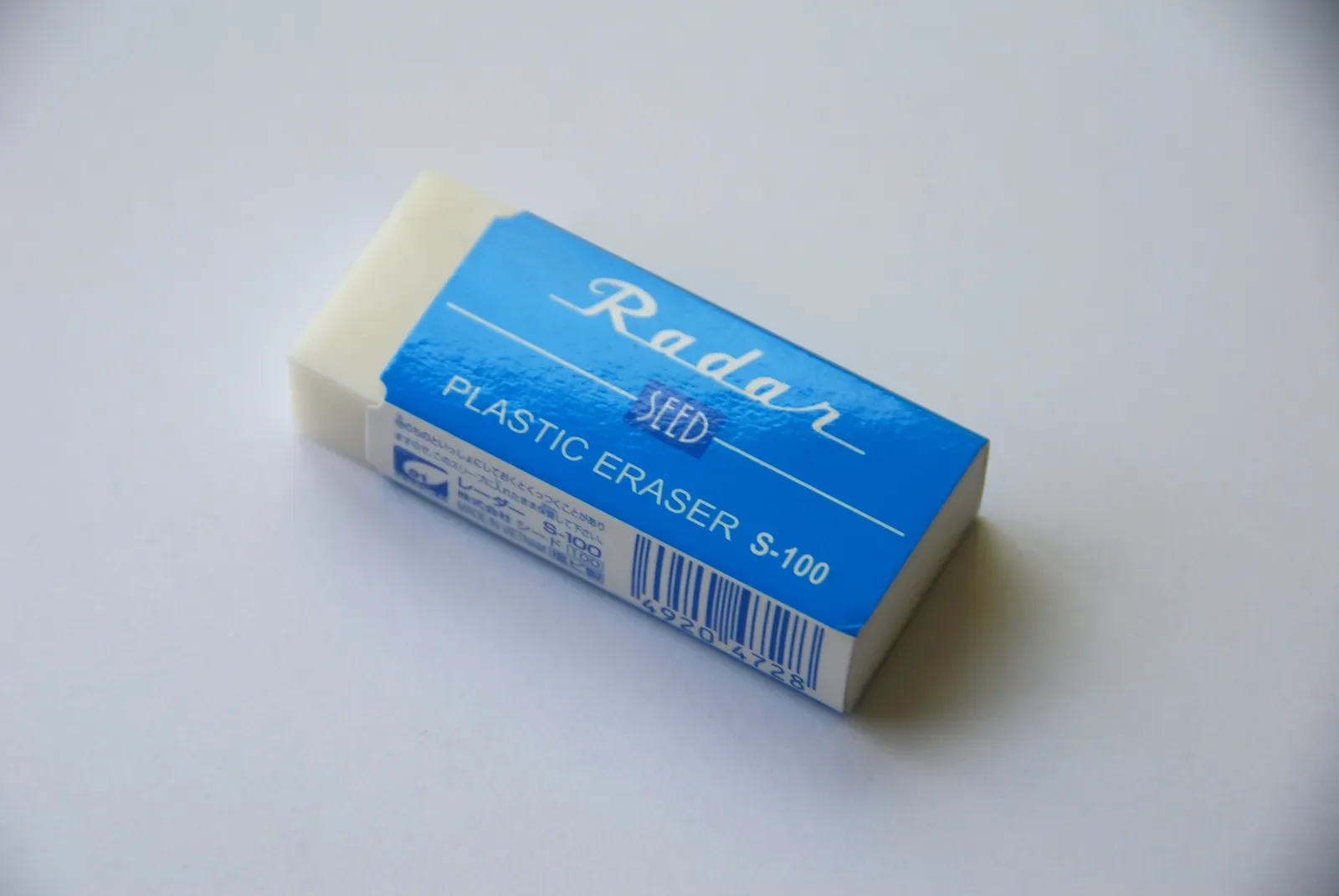
Before you dismiss this one, think about how often you use an eraser. It seems like such an obvious tool that it’s hard to imagine a world without it. Yet for a surprisingly long time, people used a completely different approach. Before rubberized erasers were invented by the English engineer Edward Nairne in 1770, the most common instrument used to erase pencil markings was actually crustless bread. In fact, Nairne only figured out that rubber worked because he accidentally picked some up instead of breadcrumbs when he attempted to erase some of his writing.
Let that sink in. The eraser, one of the most fundamental tools in education, was born from a man reaching for the wrong thing on his desk. That accidental substitution changed classrooms forever. Nairne was sharp enough to notice that the rubber worked better than the bread, and curious enough to actually investigate it further rather than shrug and move on.
The science behind why rubber erases pencil marks is genuinely interesting. Graphite from a pencil adheres to paper fibers through a combination of weak intermolecular forces. Rubber, being polymer-based and slightly tacky, picks up those graphite particles more effectively than the paper surface does – essentially lifting the material away rather than absorbing it like bread does. It’s adhesion chemistry in the palm of your hand.
The eraser is only about one fifth as long-lasting as the graphite in the pencil itself. So as a rule, you shouldn’t make too many mistakes! That little asymmetry between writing and correcting has some surprisingly practical physics behind it – graphite deposits are thin and easy to remove, while polymer erasers wear down with every stroke.
7. The Salt Shaker on Your Table: A Soldiers’ Payment and the Origin of Your Paycheck
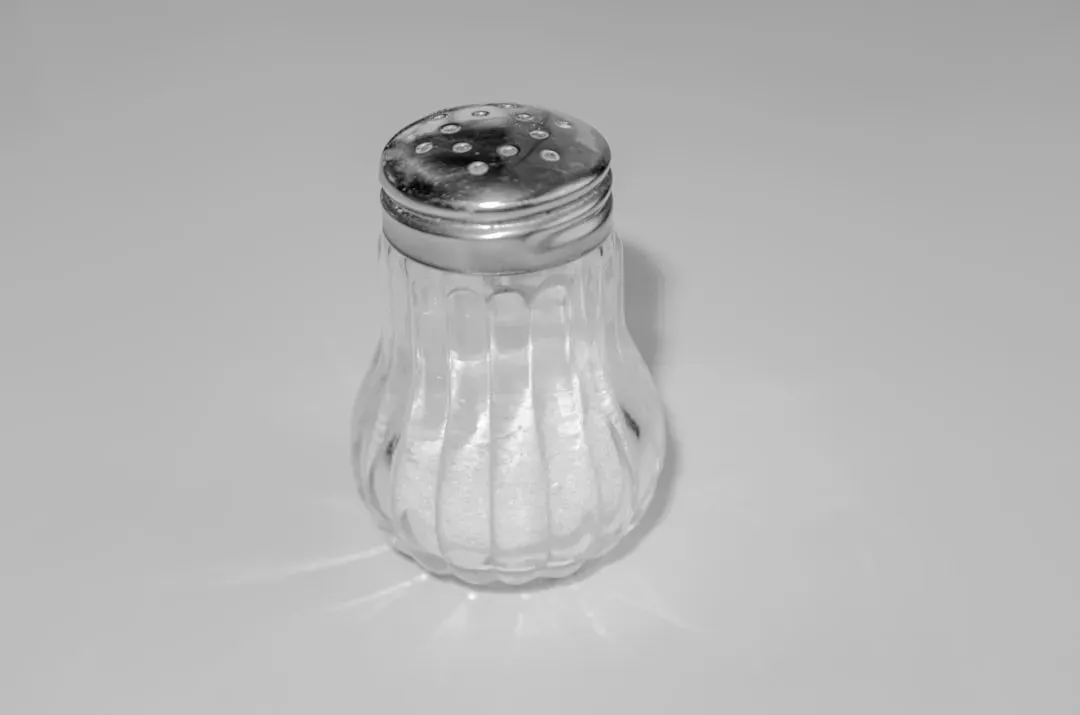
Every time you reach for the salt shaker at dinner, you’re touching a substance with one of the most astonishing economic histories of any material on Earth. It sounds absurd in 2026, when you can buy a kilogram of salt for almost nothing, but this humble mineral once held roughly the same value as gold in certain civilizations. Salt has been vital to human history and exploration, since among other things it allows people to preserve food and take it with them on long journeys. Salt was so important that the ancient Romans used it as money, paying their soldiers in rations of salt. In fact, that’s where we get the English word “salary.”
Salt was so critical for preserving food, disinfecting wounds, and tanning hides that it was a key part of trade and economy. Owning salt meant having power. Wars were fought over salt mines, and entire trade routes were built around moving it. The science of salt preservation, in which salt draws moisture out of food through osmosis and creates an inhospitable environment for bacteria, is what made long sea voyages, exploration, and military campaigns possible for thousands of years of human civilization.
It’s hard to say for sure exactly when humans began fully understanding the chemistry behind preservation, but the practical knowledge of salting food predates written history by millennia. What’s remarkable is that the same ionic compound, sodium chloride, that ancient civilizations literally went to war over, now sits casually on your dining table next to the pepper.
The cultural weight of salt is still embedded in language you use every day. When you call someone “worth their salt,” you’re echoing a Roman military economy. When you eat a salad, you’re linguistically referencing those same Romans who used to sprinkle salt on greens. It’s kind of wild that today we just casually toss it in pasta water.
Conclusion: The Ordinary World Is Quietly Extraordinary
It turns out that the objects you interact with every single day are carrying around secret lives. A failed aerospace adhesive found its purpose in a church hymnal. A wartime radar machine revealed itself to be a kitchen appliance. A wallpaper cleaning putty became a child’s most beloved art toy. Each of these stories follows the same basic pattern: a moment of curiosity, an accident, or a desperate pivot that changed everything.
The deeper takeaway here is genuinely inspiring. Scientific progress and great inventions don’t always arrive through careful planning and perfectly executed lab work. Sometimes they come from a melting candy bar in your pocket. Sometimes they come from reaching for the wrong thing on your desk. The world rewards curiosity more than it rewards certainty.
So the next time you peel a Post-it off a notepad or spray WD-40 on a squeaky hinge, take a second. There’s a whole story hiding behind that ordinary gesture. What other everyday objects do you think might be hiding a surprising past? Drop your thoughts in the comments below.