
Nature has been engineering solutions for billions of years. Long before humans ever picked up a tool, plants were repelling water, birds were slicing through air resistance, and tiny creatures were sticking to surfaces without a single drop of glue. Honestly, it’s humbling when you think about it. The natural world is basically the world’s oldest and most relentless research and development lab.
Biomimicry is the practice of studying nature’s designs, processes, and strategies to solve human problems. It’s a field that has quietly shaped the products you use, the clothes you wear, and even the trains you might ride. You’d be amazed how many of your daily conveniences trace their origins back to a bird, a plant, or even a tiny insect. Let’s dive in.
1. Velcro: The Annoyance That Changed the World
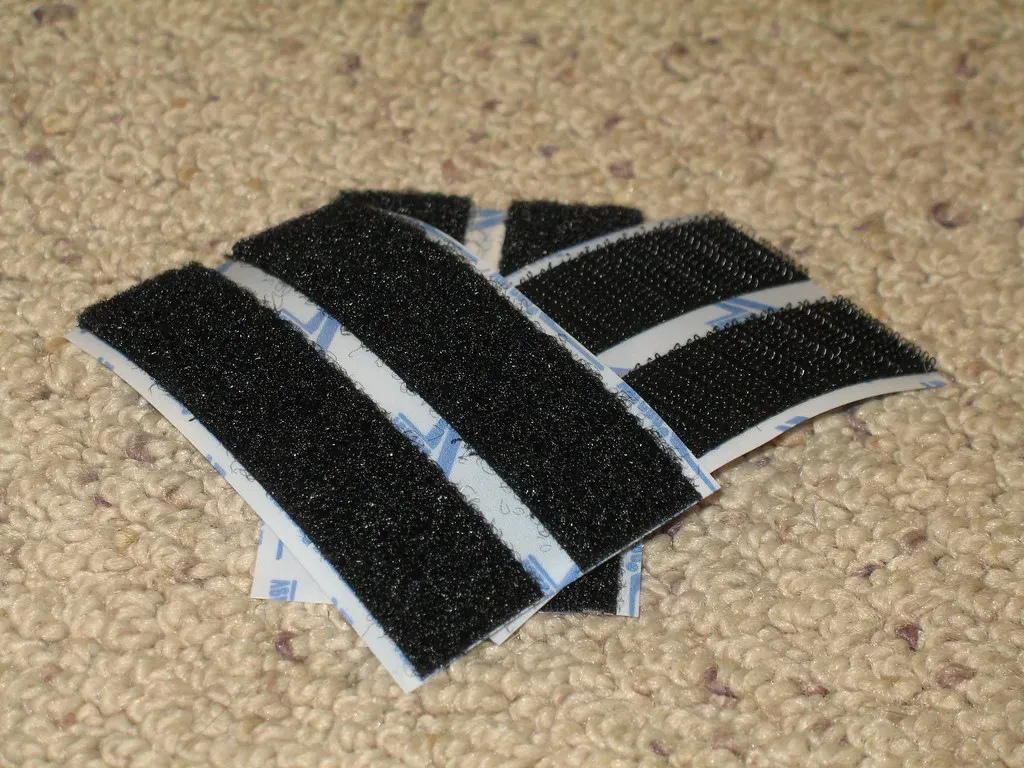
Here’s the thing – one of the most iconic inventions of the modern era started with a dog walk gone slightly irritating. On a beautiful day in 1941, Swiss engineer George de Mestral went on a stroll with his dog. On returning, he found burrs from the burdock plant stuck to his dog’s hair and his pants, and when he curiously inspected the burrs under a microscope, he saw that they had tiny hooks that attached quickly to fabrics. Where most people would have just brushed them off and moved on, de Mestral asked one simple question: why does this work so well?
In 1955, de Mestral filed a patent for a “hook and loop” fastener and called it VELCRO, a portmanteau of the French words for velvet (velours) and hook (crochet). The product wasn’t an instant hit. Even after it reached the market in the early 1960s, hook and loop fasteners were slow to catch on, and manufacturers struggled to understand the purpose of such an unfamiliar system, accustomed as they were to buttons, zippers, or permanent stitching. Then NASA came along.
The hook-and-loop design caught NASA’s eye in the early 1960s, particularly for securing items in zero gravity, and it soon became a crucial part of the Apollo missions, used to fasten equipment and clothing aboard spacecraft. Suddenly, a botanical annoyance had become space-age technology. Today you find it on everything from children’s shoes to military gear to medical devices. All because a Swiss engineer refused to simply shake his pants off and forget about it.
2. The Bullet Train’s Beak: How a Bird Silenced a Sonic Boom
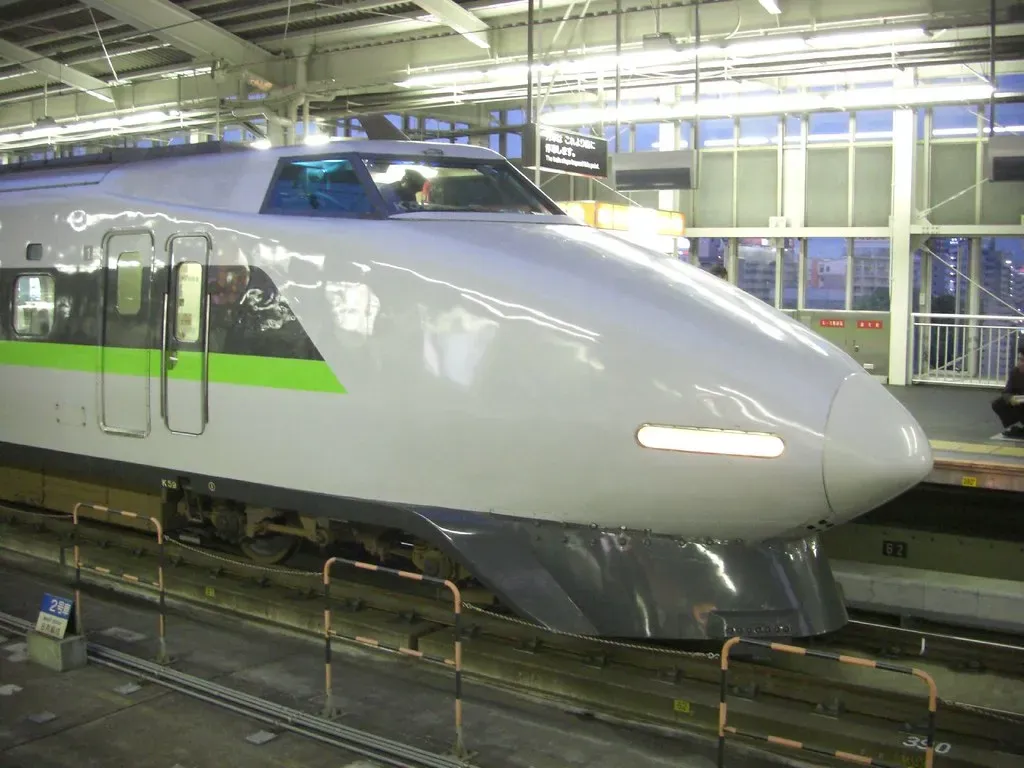
You wouldn’t immediately think a small, colorful bird that hunts fish in rivers would have anything in common with one of the world’s fastest trains. Yet that is exactly the connection that saved Japan’s Shinkansen from a crippling noise problem. The Shinkansen, also known as the bullet train, is an engineering marvel known for its speed and efficiency. In the early 1990s, a booming issue echoed across densely populated regions of Japan: the bullet trains were creating loud sonic booms as they exited tunnels, disturbing thousands of residents. It was a real headache, both literally and figuratively.
Engineers noticed that the kingfisher, when diving into water to catch prey, produced very little splash. The bird’s ability to move from one medium (air) to another (water) so smoothly was due to the shape of its beak, which is long, narrow, and highly streamlined. Observing this, Eiji Nakatsu, the engineer and birdwatcher, saw an opportunity to apply this natural solution to the Shinkansen’s problem, and the front car of the trains was redesigned to mimic the kingfisher’s beak. The results were remarkable.
This shape enabled the new 500-series to reduce air pressure by roughly a third and electricity use by fifteen percent, even though speeds increased by ten percent over the former series. Quieter, faster, and more energy efficient. All because one engineer happened to be a birdwatcher. It’s hard not to love that story.
3. The Lotus Effect: When Leaves Teach Walls to Clean Themselves

You’ve probably seen a lotus flower floating in a muddy pond and wondered how it stays so pristine. It’s not luck. The “Lotus Effect” refers to the plant’s micro- and nanoscale structures that cause water to bead and roll off, carrying dirt away. This principle is now used to develop self-cleaning, hydrophobic coatings for various industries. Think of it like an invisible force field made entirely from structure, no chemicals needed.
Superhydrophobic fabrics are one example, water-repellent textiles that mimic the properties of the lotus leaf, where water droplets don’t saturate the leaf’s surface but instead bead up and roll off. The lotus leaf is constructed with a series of micro bumps covered in wax that makes that water-resisting behavior possible, and the tiny bumps are configured in such a way as to hold water and dirt particles away from the surface of the leaf. As rain water rolls off, it pulls the dirt particles free and washes the leaf clean, and textile researchers have used the same principle to create water-repellent and self-cleaning materials. Remarkable, right?
In 1982, Wilhelm Barthlott applied this biomimetic insight to the creation of a self-cleaning paint, which is sold under the brand name Lotusan and is now used on hundreds of thousands of buildings. That’s right. The same principle keeping a flower clean in a muddy pond is now keeping your building’s exterior walls sparkling. Nature didn’t just inspire a product here. It handed engineers an entire design philosophy.
4. Sharkskin Swimwear: The Suit That Got Banned for Being Too Good

Shark skin is not smooth. If you ran your hand along one, you’d feel tiny, tooth-like structures called dermal denticles. Micron-sized grooved scales growing on shark skin, which are called dermal denticles, are interlocked to form a natural non-smooth surface, and the grooves between adjacent riblets on the scales are directed almost parallel to the longitudinal body axis of the shark, reducing vortex formation and allowing water to move more easily over the skin surface. Sharks are essentially wearing an aerodynamic suit that evolution spent millions of years perfecting.
The LZR Racer was Speedo’s highly successful attempt to mimic the skin of a shark, which is comprised of tiny scales, while longitudinal grooves serve to channel water efficiently over the surface. The rough surface of a shark’s skin drew the attention of Speedo designer Fiona Fairhurst, and was one of the key insights that led to the development of the Speedo Fastskin swimsuit. The result was so effective it caused quite the controversy in competitive swimming.
Speedo launched a line of performance-enhancing swimwear, worn by swimmers from more than 130 countries during the 2000 Sydney Olympics, that resulted in 13 world records being set. Most notably worn by Michael Phelps, Speedo’s LZR Racer suit was officially banned by the International Swimming Federation in 2009 with accusations of “technological doping.” Honestly, when your nature-inspired invention gets banned for giving humans an unfair advantage over other humans, you know you’ve done something right.
5. Gecko-Inspired Adhesives: Climbing Walls Without the Spider Bite
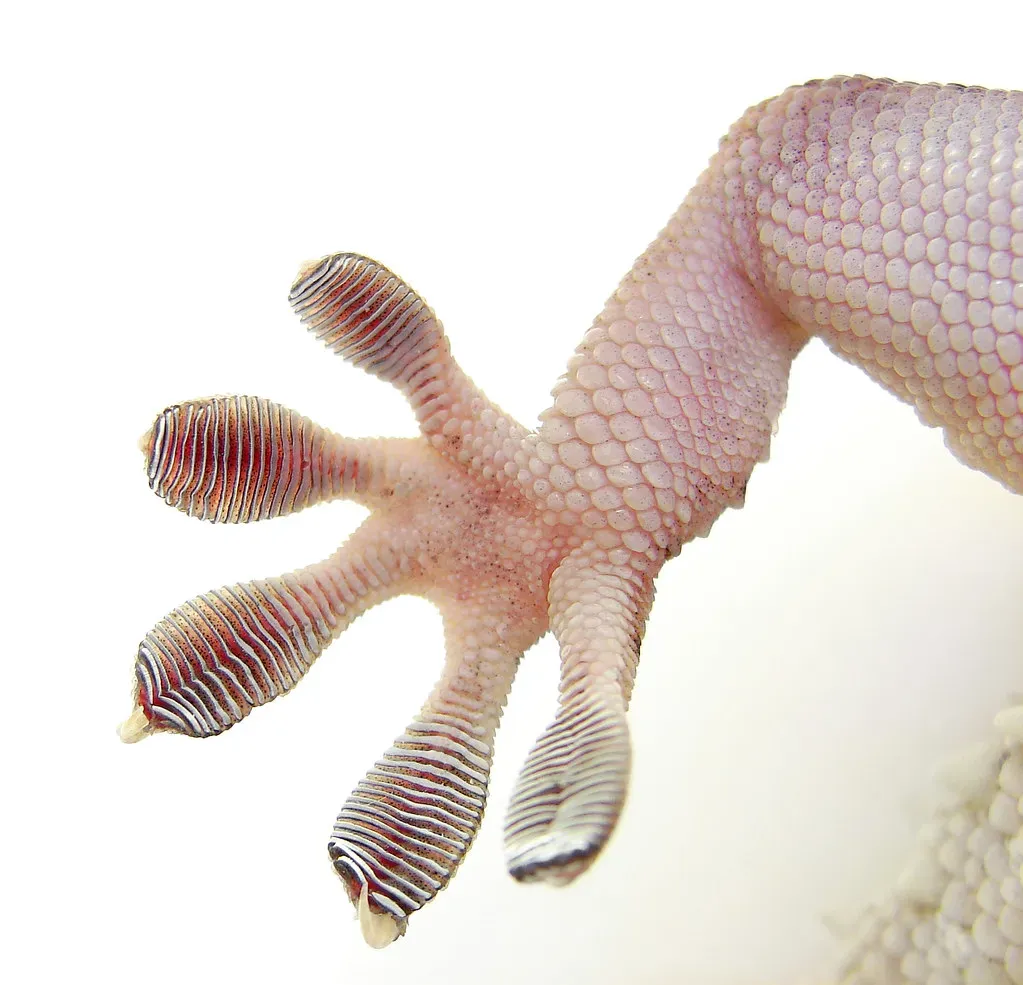
If you ever wanted a superpower, wall-climbing would be a solid choice. And it turns out, nature already figured that one out millions of years ago. Many species of gecko can walk up smooth surfaces like stone walls and even glass. Scientists studied the pads on the toes of one species, the Tokay gecko, and discovered that tiny, microscopic hairs help them “stick” to surfaces. These hairs are almost unbelievably small, working through a physical attraction between molecules rather than any sticky substance at all.
In 2014, a team at Stanford University scaled up the sticky structures found in tokay gecko toes to create a gecko-inspired climbing device. A human test subject was able to “walk” up a glass wall by wearing adhesive pads on his hands and feet. That sounds like a superhero origin story, and honestly it kind of is. The implications stretch far beyond party tricks.
By mimicking gecko toes, we have developed adhesives, a way to close wounds without stitches, and more. Medical applications alone make this one of the most exciting areas in biomimicry research today. Imagine surgical procedures that skip the stitches entirely, using nothing more than a surface structure inspired by a small lizard’s toe. It’s hard to say for sure how far this will go, but the potential is genuinely stunning.
6. Termite Mound Architecture: The Building That Never Needs Air Conditioning

Termites are not exactly celebrated creatures. Most people spend money trying to keep them out of their homes. Yet, ironically, termites may have quietly taught us how to build smarter buildings. With rising temperatures and expensive air conditioning prices, Zimbabwean architect Mick Pearce was tasked to design the largest commercial building in Zimbabwe with a natural cooling system. After noticing termite mounds, Pearce realized he could mimic the insect’s structure because termite mounds drive natural ventilation through a system of air pockets, with “chimneys” at the top of the termite mounds circulating hot air while cool air stays at the bottom. Nature’s version of HVAC. And it works brilliantly.
The Eastgate Centre in Harare, Zimbabwe, exemplifies biomimicry at an incredible scale. The green architecture is the country’s largest office and shopping complex and uses no conventional air-conditioning or heating, yet it stays a regulated temperature all year. The architect Mick Pearce was inspired by termite mounds to create the building, as they demonstrate an ingenious structure that self-cools due to their ventilation system, involving a process of opening and closing vents throughout the mound that regulate the convection currents of air.
Today, the Eastgate Centre in Harare, Zimbabwe only uses roughly a tenth as much energy as conventional air-conditioning. Think about that for a moment. One of the most energy-efficient large buildings on the planet took its cues from an insect that most people would rather stomp on. Let’s be real, nature has a sense of humor about these things.
7. Butterfly Wings and the Solar Cell Revolution

Solar panels have always had a fundamental challenge: they can only efficiently capture light from a specific angle. Step outside of that angle, and you lose a lot of potential energy. It’s like a flashlight that only works when you hold it perfectly straight. Nature, as usual, solved this problem long before we did. The rose butterfly has tiny cells on its intricate and delicate wings that can collect light at any angle, and the black wings of the rose butterfly have inspired a new type of solar cell that is twice as efficient at harvesting light. Twice as efficient. That is not a small improvement.
A team at Princeton University took biomimicry in solar panels a step further by adding folds to solar cells. The folds mimic the natural creases found in leaves, channeling more light into the cell. The researchers claimed in 2015 that the leaf-like cells generated nearly half again as much electricity as those without folds. A crinkled leaf and a butterfly wing, two of nature’s most delicate creations, are now reshaping the future of clean energy. If that doesn’t make you look at your garden a little differently, I’m not sure what will.
The broader lesson here is enormous. Butterfly wings are elegant feats of nature but can also have some impressive solar properties. The structures that make a butterfly beautiful, those microscopic cells that scatter and absorb light, are essentially microscopic solar technology that evolution refined over millions of years. We are only just beginning to understand how to translate these designs into practical hardware for everyday use.
Conclusion: Nature Has Been Ahead of Us All Along
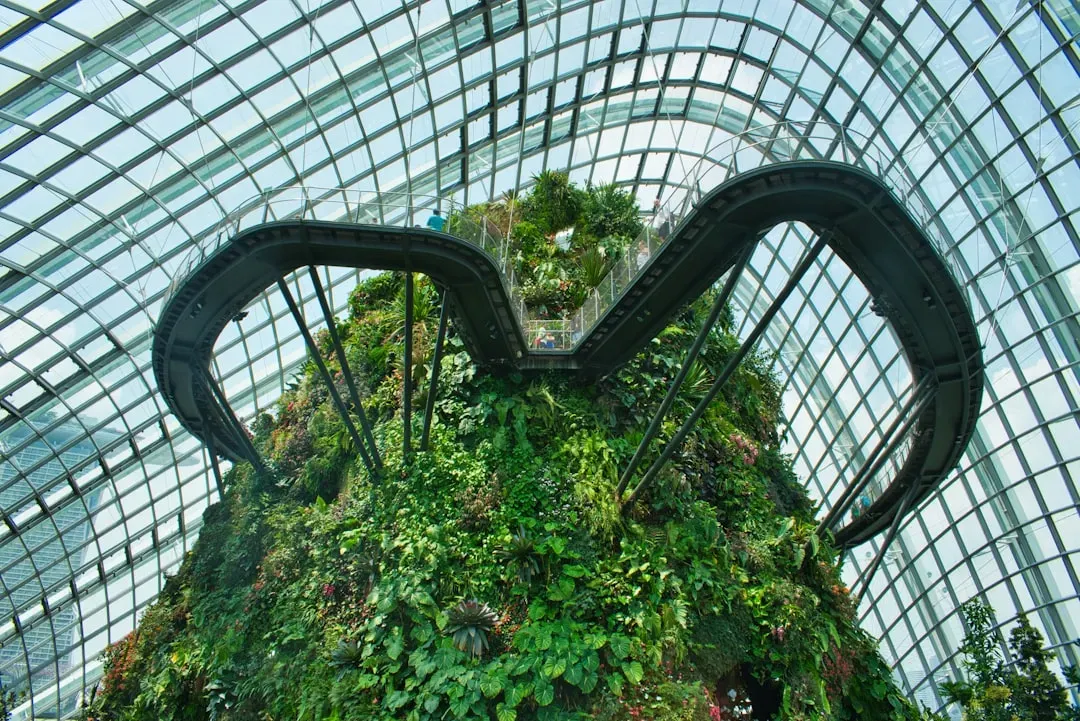
What ties all seven of these inventions together is a simple, slightly humbling truth. As a result of millions of years of successive improvement through natural selection, nature seems to have a solution for everything. We haven’t been inventing these solutions so much as discovering ones that already exist, then finding ways to borrow them. A walk in the woods gave you Velcro. A birdwatcher gave you a quieter, more efficient train. A pond flower gave you self-cleaning buildings and fabrics.
Every time you fasten your shoes with a hook-and-loop strap, glance at a glass-covered building gleaming in the rain, or sit aboard a high-speed train slicing quietly through a tunnel, you’re experiencing billions of years of natural engineering at work. Biomimicry reveals that nature is not just a resource, it’s a mentor. The real question isn’t whether nature has more answers for us. It’s whether we’re paying close enough attention to find them. What would you have guessed was inspired by nature?