The universe, as far as we know, is roughly 13.8 billion years old and filled with hundreds of billions of galaxies. That’s a number so staggering it almost loses meaning. Yet for all the progress science has made in mapping the cosmos, there are phenomena out there that still make even the most seasoned astrophysicists scratch their heads and quietly admit: we have no idea what’s going on.
Some of these wonders are invisible to the naked eye. Others were only discovered in the last few years. All of them push against the edges of what our best theories can explain. If you think you’ve got the universe figured out, this list is here to politely destroy that confidence. Let’s dive in.
1. The Hubble Tension: A Universe Expanding Too Fast for Its Own Rules
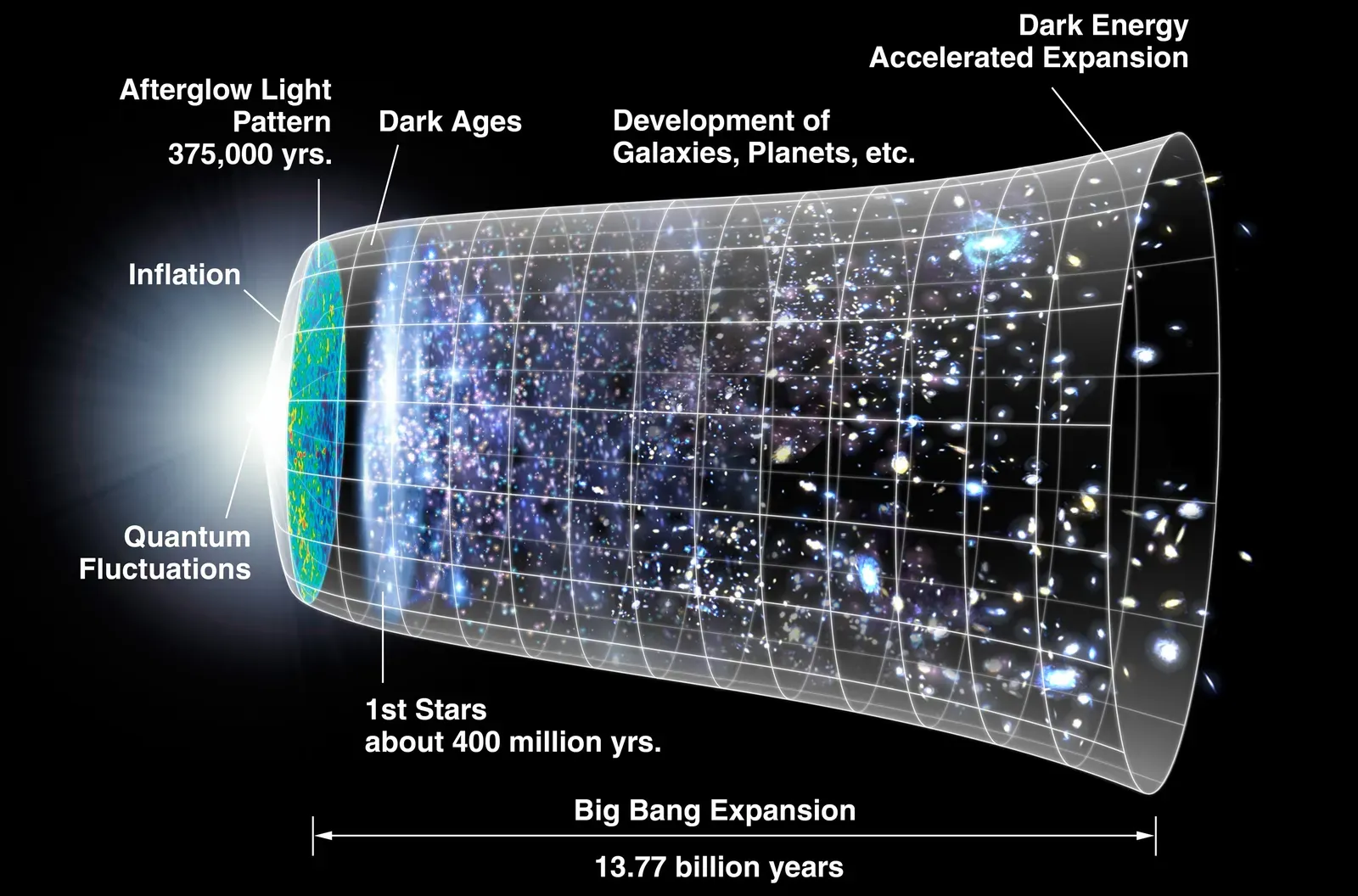
Here’s the thing – scientists have two very reliable ways of measuring how fast the universe is expanding, and they both give completely different answers. When scientists analyze the cosmic microwave background to estimate the Hubble constant, they obtain a value of 67 km/s/Mpc. Meanwhile, direct local measurements of the nearby universe favor a value of 73 km/s/Mpc. This mismatch is called the Hubble tension.
A recent measurement confirms what previous, highly debated results had shown: the universe is expanding faster than predicted by theoretical models, and faster than can be explained by our current understanding of physics. Honestly, that one sentence should probably keep cosmologists up at night. It’s like having two perfectly calibrated thermometers that read different temperatures in the same room.
Confirming this tension would force scientists to rethink the very makeup of the cosmos, perhaps revealing new particles or evidence for an “early dark energy” phase that briefly accelerated expansion after the Big Bang. This mismatch could point to new physics rather than observational error. Some researchers are now calling it less of a tension and more of a full-blown crisis in cosmology.
Researchers are exploring whether an idea originally proposed to solve another cosmic mystery, the origin of cosmic magnetic fields, could help unlock the mystery of the Hubble tension. Recently published research explores whether extremely weak magnetic fields left over from the earliest moments after the Big Bang might help unpack this discrepancy, while offering a glimpse into physics at energies far beyond anything achievable on Earth.
2. Dark Matter and Dark Energy: The Invisible Architects of Everything
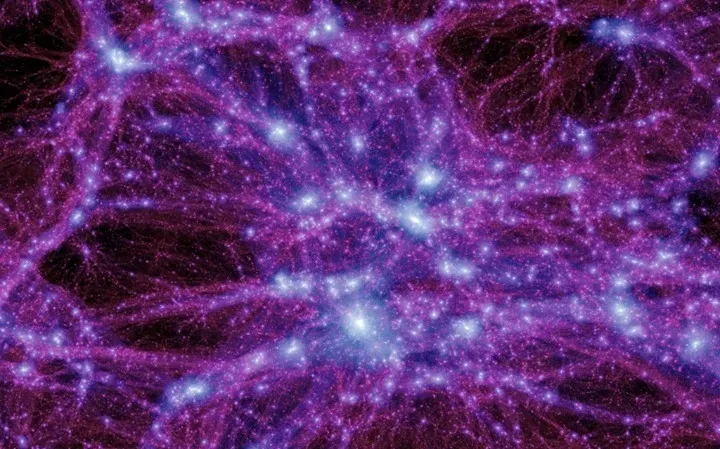
Let’s be real, the fact that scientists openly admit that roughly ninety five percent of the universe is made of stuff we cannot see, touch, or directly detect is one of the most humbling realities in all of science. Dark matter and dark energy are named for what scientists do not yet know about them. Dark matter makes up most of the mass found in galaxies and galaxy clusters, playing a major role in shaping their structure across vast cosmic distances. Dark energy refers to the force behind the universe’s accelerating expansion.
Put simply, dark matter acts like cosmic glue, while dark energy drives space itself to expand faster and faster. Although both are abundant, neither gives off, absorbs, or reflects light, which makes direct observation extremely difficult. Scientists instead study their influence through gravity, which affects how galaxies move and how large-scale structures form. Think of it like trying to understand a hurricane by only watching its effect on leaves, never being able to see the wind itself.
Dark matter makes up roughly a quarter of the universe’s total mass-energy, yet it refuses to interact with light in any detectable way. Galaxies would literally fall apart without dark matter’s gravitational scaffolding holding them together, as stars in outer regions would spin off into space. Despite building increasingly sensitive detectors and running countless experiments, scientists haven’t directly caught a single dark matter particle.
The accelerating expansion of the universe has led to a reevaluation of the forces at play, particularly the enigmatic role of dark energy. Researchers have begun to explore various models to explain this acceleration, including modifications to Einstein’s theory of general relativity and alternative theories that incorporate additional dimensions or fields. In short, the universe seems to be running on a fuel source we cannot identify, in a structure we cannot see.
3. Odd Radio Circles: Gigantic Cosmic Rings That Defy Explanation
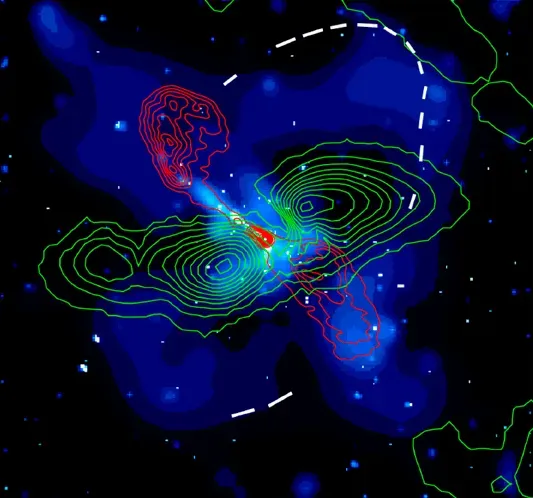
If you want a truly mind-bending cosmic object, consider this. An odd radio circle, or ORC, is a very large unexplained astronomical object, over 50 times the diameter of our Milky Way, that at radio wavelengths is highly circular and brighter along its edges. As of late 2025, there have been eight such objects, and possibly six more, observed. The detected ORCs are bright at radio wavelengths but are not visible at visible, infrared, or X-ray wavelengths. That last point is what really makes you pause. They only show up if you’re listening in radio waves.
In 2019, the newly completed ASKAP telescope picked up something no one had ever seen before: radio wave circles so large they contained entire galaxies in their centers. Imagine a cosmic ring so enormous that an entire galaxy sits inside it like a marble in a hula hoop. A team of astronomers led by University of California San Diego Professor Alison Coil pointed toward powerful winds erupting from bursts of exploding stars, or supernovae, as the cause of vast shells of gas that are seen in radio waves as ORCs.
The massive stars formed in a merger-triggered bout of rapid star formation burn through their fuel for nuclear fusion at rapid rates, erupting in supernova explosions and expelling gas as outflowing winds at similar times. As these winds rip outwards from starburst galaxies, they hit slower-moving gas around the galaxy. This interaction creates a shockwave that generates ORCs, which can spread out for hundreds of thousands of light-years.
ORCs are essentially gigantic, faint rings of plasma that appear to surround certain galaxies and emit radio waves. To date, only around a dozen of these enormous objects, most of which are 10 to 20 times the size of the Milky Way, have been found. Despite some progress in theory, these structures remain one of the most exotic and poorly understood phenomena in the known universe.
4. Fast Radio Bursts: Millisecond Flashes With the Power of a Hundred Suns Worth of Centuries
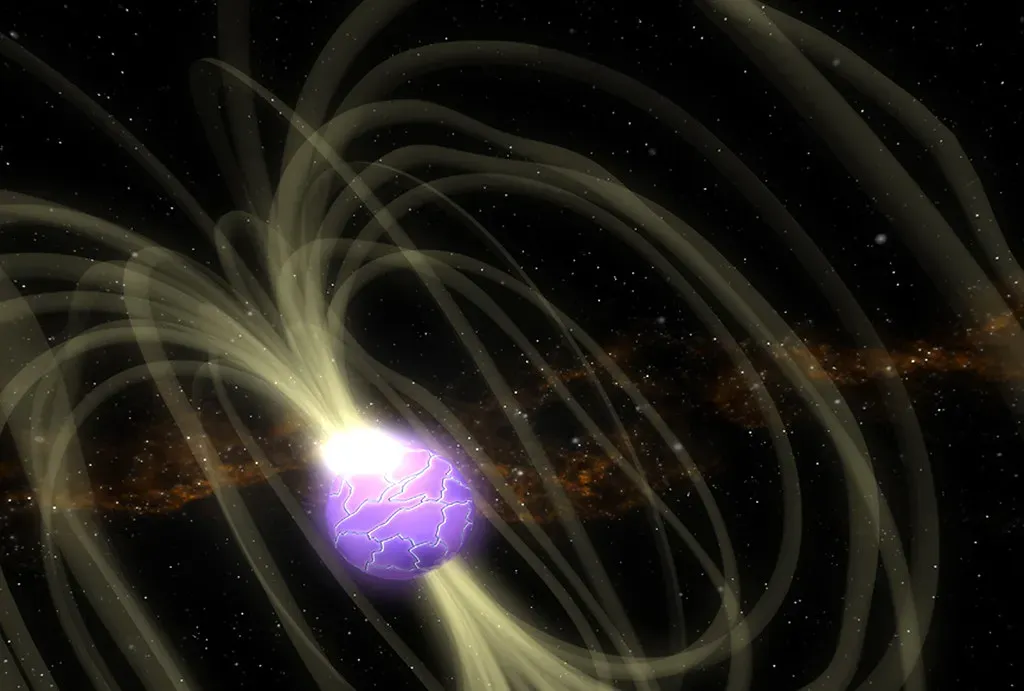
Imagine a flash of energy so brief it lasts less time than it takes to blink, yet so powerful it outshines entire galaxies for that fraction of a second. Since 2007, researchers have been receiving ultrastrong, ultrabright radio signals lasting only a few milliseconds. These enigmatic flashes have been called fast radio bursts, or FRBs, and they appear to be coming from billions of light-years away. The scale of energy involved is almost impossible to grasp.
FRBs only last a few milliseconds, but they generate more energy than our Sun does in a century. Although extremely energetic at their source, once they reach our planet, they are weaker than a mobile phone signal. Most FRBs come from distant galaxies, but in April 2020, the first burst coming from our own Milky Way was detected. It was emitted by a known neutron star about 30,000 light-years away.
These distortions in spacetime carry information about the universe’s most violent events, traveling unimpeded through matter that would block any form of light. Since their first detection, ripples from merging black holes and neutron stars have opened an entirely new window for studying the cosmos. The Milky Way detection was a game-changer, linking FRBs to magnetars and giving scientists their best clue yet about the source of these cosmic screams.
A 23-million-light-year-long gaseous filament and 39 bursts of radio waves are helping astronomers chart the universe’s largest-scale structures. The more FRBs we detect, the more useful they become as cosmic tools, allowing scientists to map the distribution of matter across the universe in ways that were simply impossible before. It’s hard to say for sure, but FRBs may turn out to be one of the most powerful diagnostic tools in all of modern astronomy.
5. Tabby’s Star: The Most Mysterious Star in the Galaxy
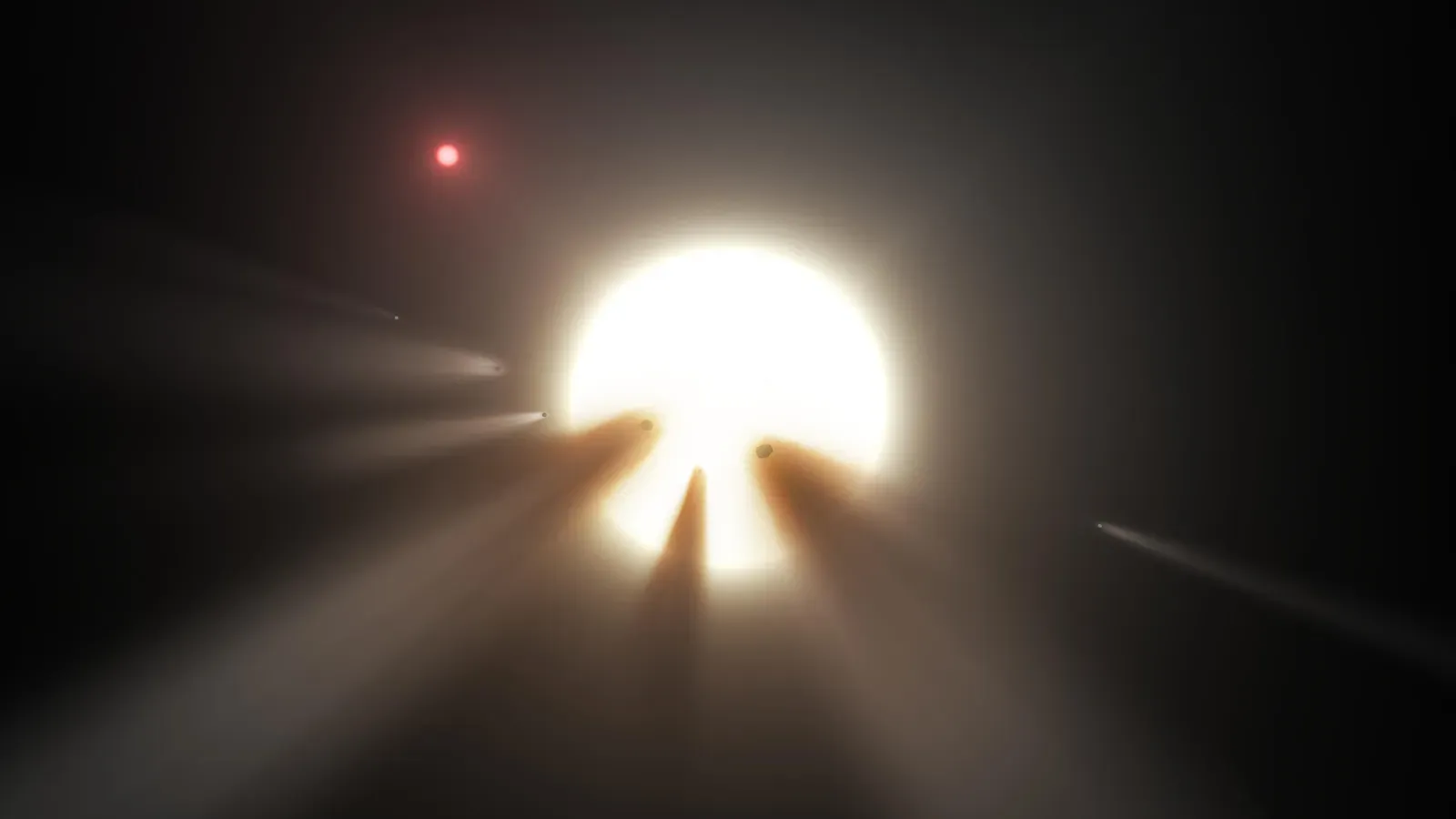
You could fill a library with things we don’t know about this one star. Located 1,470 light-years away in the constellation Cygnus, this star exhibits the most bizarre behavior astronomers have ever recorded. Unlike typical planetary transits that block less than one percent of starlight, Tabby’s Star dims by up to 22 percent in completely unpredictable patterns. The erratic brightness drops lack any consistent timing, and some evidence suggests the star has been gradually dimming over the past century. While scientists favor explanations involving circumstellar dust from colliding asteroids or disrupted moons, no single theory fully accounts for these dramatic, irregular light variations.
Located nearly 1,500 light-years from Earth in the constellation Cygnus, it is named after the astronomer Tabetha Boyajian. She was the lead author of a 2015 study which showed that the star occasionally rapidly drops in brightness by a remarkable 22 percent. The star’s overall brightness has also been seen to fade more slowly over several decades. The short-term variation was picked up by the Kepler space telescope, whose job it was to find alien planets by analyzing the light of distant stars, looking for dips in their starlight as a planet passed in front of them.
Here’s what makes this even stranger: the dimming doesn’t follow any repeating pattern. Planets transit in regular intervals. Comets pass once and move on. Nothing we know of should behave like this, which is precisely why some fringe voices whispered something deeply uncomfortable about the possibility of a megastructure. Scientists have largely dismissed that idea, but the fact that it even entered the conversation tells you something about how unusual this star truly is.
6. The Black Hole Information Paradox: When Physics Eats Itself
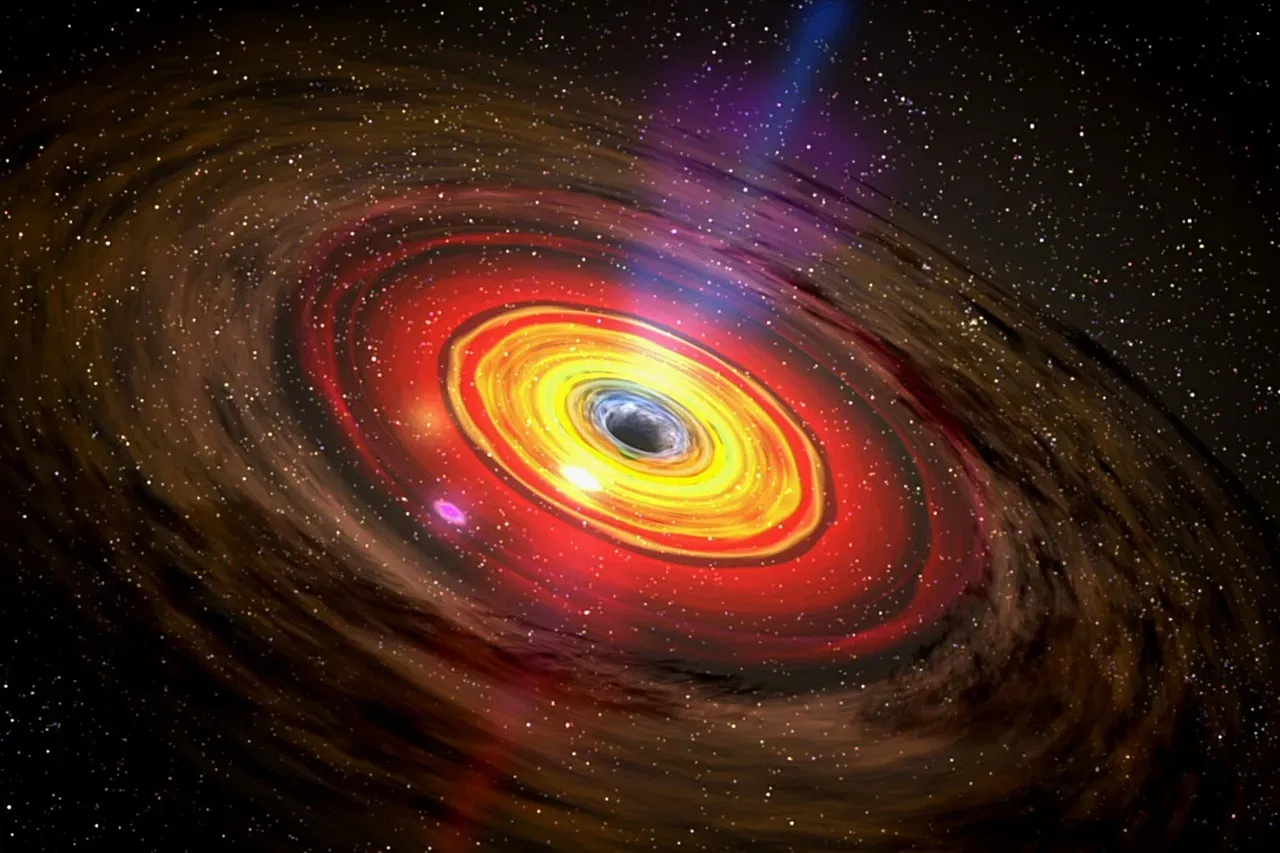
Black holes are already among the most extreme objects in the cosmos. But it’s not their gravity or their darkness that presents the deepest scientific problem. It’s what they do to information. The black hole information paradox asks whether black holes produce thermal radiation, as expected on theoretical grounds. If so, meaning black holes can eventually evaporate away, what happens to the information stored in them? This appears to be an issue because the unitarity of quantum mechanics does not allow for the destruction of information.
The study of black holes extends beyond mere observation and delves into questions about their role in galaxy formation and their relationship with dark matter. Researchers are investigating how supermassive black holes at galactic centers influence star formation rates and galactic dynamics. Theoretical physicists are also exploring concepts such as Hawking radiation and information paradoxes, which challenge our understanding of quantum mechanics and gravity. In a sense, the black hole information paradox is where our two greatest theories of physics, general relativity and quantum mechanics, walk into a room and cannot agree on anything.
Why is the gravitational-wave background, the hum made by supermassive black holes colliding across the universe, stronger than expected? That question, posed by researchers in late 2025, hints that black hole collisions may be far more frequent and energetic than our models predict. The first image of a black hole, taken by the Event Horizon Telescope, shows a bright ring around a supermassive black hole 6.5 billion times more massive than our Sun in the center of the galaxy M87.
Think of it this way: if you throw an encyclopedia into a black hole, does the information in that book cease to exist forever? Physics says information cannot be destroyed. General relativity says once it’s past the event horizon, it’s gone. Both cannot be right. Resolving this paradox may require a theory of quantum gravity that nobody has fully cracked yet, and that is perhaps the most exciting unsolved problem in all of theoretical physics.
7. The Cosmic Dipole Anomaly: A Lopsided Universe That Shouldn’t Exist
Here’s a foundational assumption of modern cosmology: the universe, on the largest scales, looks the same in every direction. Scientists call this the cosmological principle, and it underpins virtually every major model of how the universe works. The cosmic dipole anomaly has established itself as a major challenge to the standard cosmological model, even though the astronomical community has chosen to largely ignore it, according to Professor Subir Sarkar of the University of Oxford. That observation deserves far more attention than it gets.
Astronomers have discovered one of the largest structures in the universe, and the galaxies within it, spinning like a fairground teacup ride. In a paper posted in February 2025, theoretical astrophysicist Till Sawala of the University of Helsinki and colleagues reported computer simulations of universes that include both the cosmological principle and structures like the giant arc. The fact that we keep finding colossal structures that seem to violate the uniformity assumption is deeply unsettling.
Recent observations from advanced space telescopes have provided clearer data on distant galaxies, revealing that the universe is not only expanding but doing so at an accelerating rate. This acceleration has led to a reevaluation of the forces at play, particularly the enigmatic role of dark energy. If the universe is genuinely asymmetric on grand scales, that changes everything: our models of expansion, our calculations of dark energy, our understanding of the Big Bang itself.
Are the observations showing the accelerating expansion of the universe correctly interpreted, or are they evidence that the cosmological principle is false? That is a genuinely open question in 2026, and the fact that it is even being asked by serious scientists signals just how uncertain our grasp on cosmic reality truly is. The universe may be far stranger and far less symmetrical than we ever dared to imagine.
Conclusion: The Universe Is Stranger Than We Think, and That’s Exactly the Point
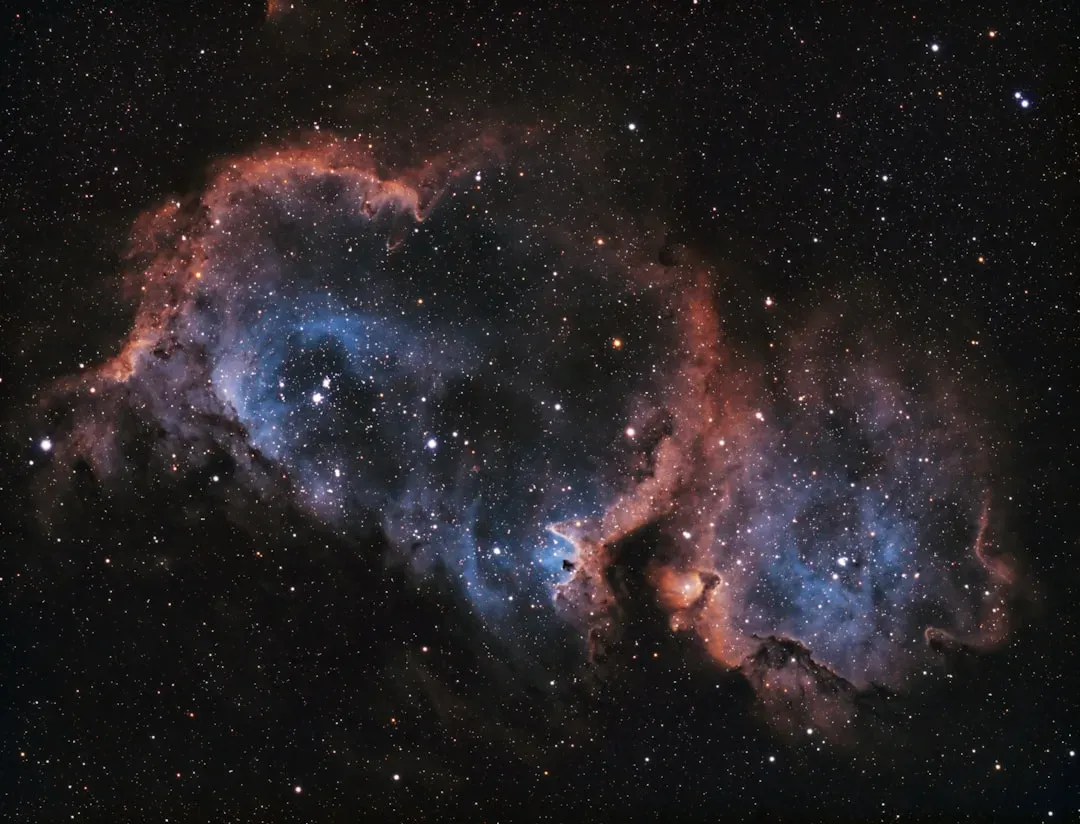
What unites all seven of these wonders is a single uncomfortable truth: the more powerful our telescopes become, and the deeper we peer into the cosmos, the more questions emerge to replace the ones we thought we had answered. The universe continues to surprise us with phenomena that challenge our understanding of physics and astronomy. Despite years of advanced technology and scientific research, some cosmic mysteries remain stubbornly unsolved.
That is not a failure of science. It is science working exactly as it should. Every anomaly, every paradox, every structure that should not exist is an invitation to think bigger and deeper. As cosmology enters an exciting phase marked by rapid advancements in technology and theoretical understanding, researchers anticipate groundbreaking discoveries on the horizon. The next decade promises to unveil new insights into fundamental questions about the universe’s origins, structure, and fate.
Honestly, I think the most exciting thing about living in 2026 is that we’re alive during the era when these questions are being seriously asked. The answers may rewrite physics entirely, or confirm that our current understanding is more solid than it seems. Either way, the cosmos is not done surprising you. What would you have guessed was hiding in the spaces between galaxies? Drop your thoughts in the comments below.