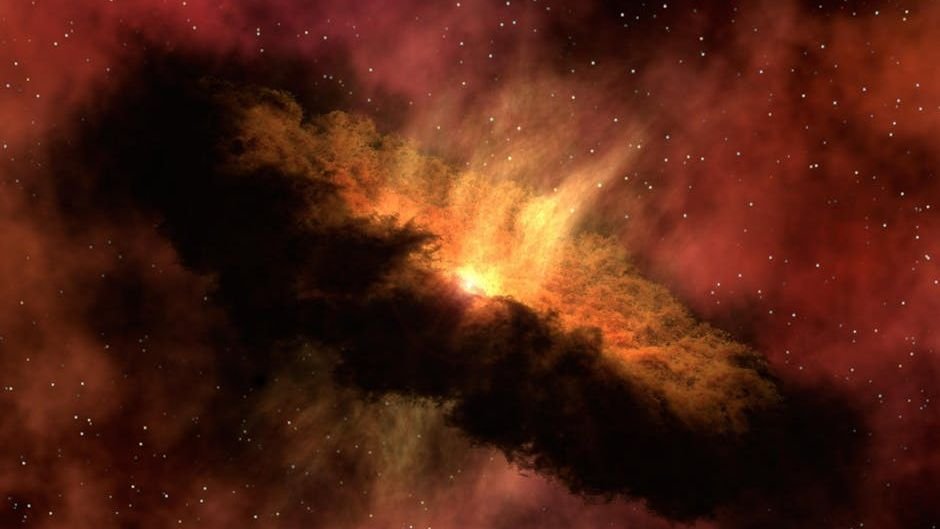

The universe is a place of extraordinary beauty. It is also, let’s be honest, a place of staggering, almost infuriating mystery. You look up at the night sky expecting patterns and predictability, and instead you find things that should not exist, signals that shouldn’t be possible, and stars that behave in ways that make even the world’s sharpest minds pause and quietly mutter, “We have absolutely no idea.”
What’s so thrilling – and slightly unsettling – is that many of these mysteries have been staring us in the face for centuries. Ancient civilizations saw them, early astronomers scratched their heads over them, and even now, with all of our satellites and space telescopes and supercomputers, some of these phenomena remain completely, stubbornly unexplained. From stars that flicker like broken lightbulbs to cosmic radio pulses arriving from the edge of the observable universe, the sky above you is far stranger than you’d ever imagine. Let’s dive in.
Tabby’s Star: The Cosmic Flickering That Defies Every Theory
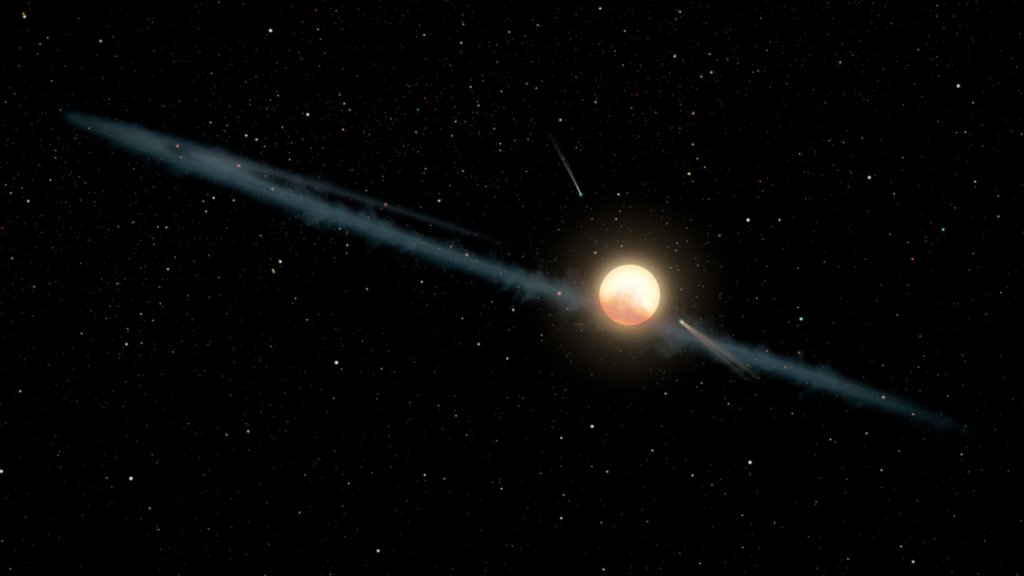
Imagine a lightbulb in your home that randomly dims by a fifth of its brightness, then recovers, then dims again at completely unpredictable intervals, and no electrician in the world can figure out why. That, more or less, is the situation with one of the most talked-about stars in modern astronomy. Tabby’s Star, formally designated KIC 8462852 in the Kepler Input Catalog, is a binary star located in the constellation Cygnus approximately 1,470 light-years from Earth. Its unusual light fluctuations, including brightness dips of up to 22 percent, were discovered by citizen scientists as part of the Planet Hunters project, using data collected by the Kepler space telescope.
Here’s the thing – normal stars don’t do this. Several hypotheses have been proposed to explain the star’s large and irregular changes in brightness, but as of 2024, none of them fully explain all aspects of the resulting light curve, and while an extraterrestrial megastructure was once suggested, evidence tends to discount this idea. What makes it even stranger is that the weirdness doesn’t stop at short-term dips. Tabby’s Star occasionally dips in brightness from just one percent to as much as 22 percent over days or weeks, and a year after the initial discovery, it was found that the star’s overall brightness has also been becoming fainter with time, dimming by roughly 14 percent between 1890 and 1989. Nature, it turns out, is genuinely more creative than any of us expected.
Fast Radio Bursts: Milliseconds of Madness From the Deep Universe
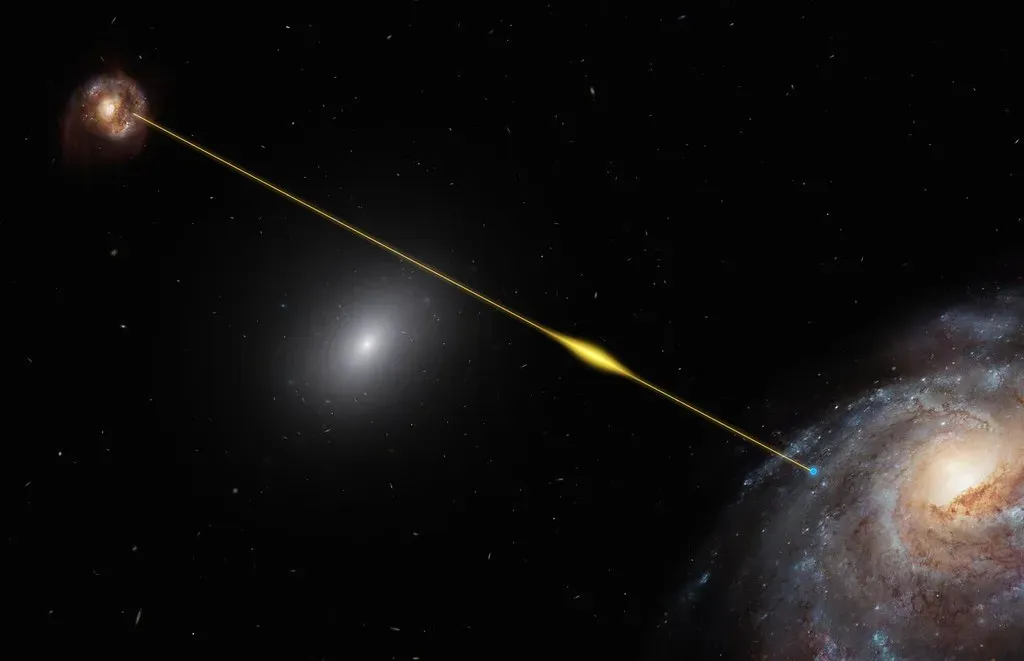
Picture the most powerful event your imagination can conjure – a supernova, a black hole collision, the death of an entire star system. Now compress all of that energy into something that lasts less than the blink of an eye. That’s essentially what a Fast Radio Burst is. Mysterious fast radio bursts, or millisecond-long bright flashes of radio waves from space, have intrigued astronomers since the first detection of the phenomenon in 2007, and these enigmatic signals release as much energy in less than the blink of an eye as the sun emits in one day. That is an almost incomprehensible amount of power firing off in an instant.
For years, scientists assumed you could only expect FRBs from young, active galaxies filled with star-forming regions. Then the universe pulled a surprise. Researchers traced one repeating fast radio burst to the edge of an 11.3 billion-year-old galaxy two billion light-years from Earth, and then used telescopes at the Keck and Gemini observatories in Hawaii to uncover more details about the ancient, dead galaxy where no new stars are being formed. It is now clear that the astrophysical processes that create FRBs are more diverse than scientists previously thought. Every time a model is built to explain them, the universe finds a way to blow a hole right through it.
The Wow! Signal: 72 Seconds That Changed Everything
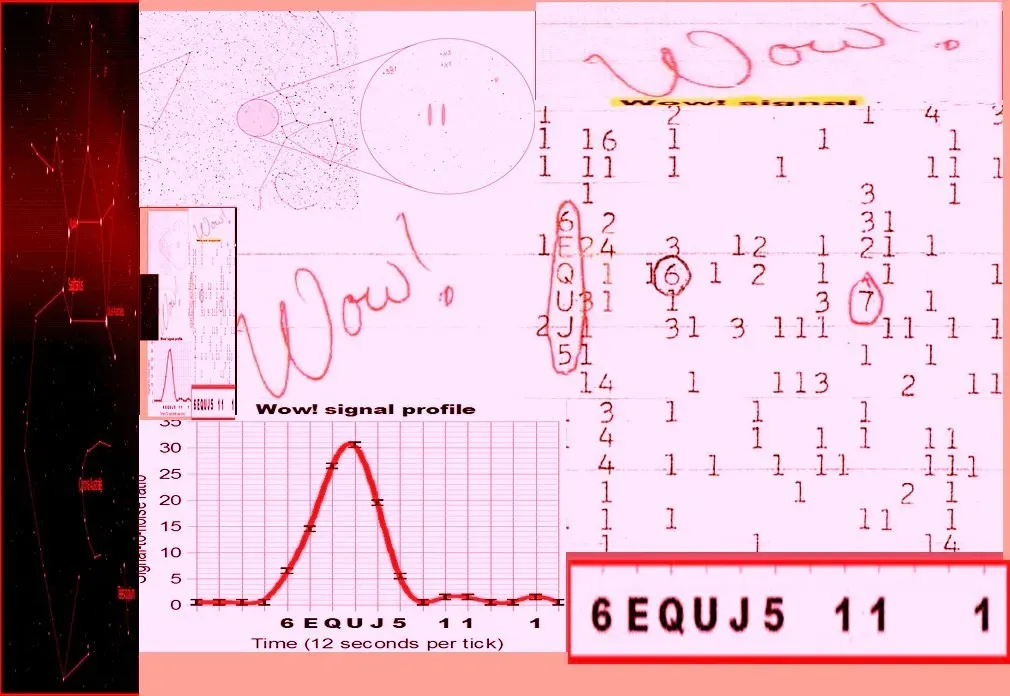
On a quiet August night in 1977, an astronomer sitting at Ohio State University’s Big Ear radio telescope noticed something that stopped him cold. On August 15, 1977, astronomer Jerry Ehman detected an unusual radio signal while working at Ohio State University’s Big Ear radio telescope, and its intensity and characteristics were so remarkable that Ehman circled the data printout and wrote “Wow!” next to it, giving the phenomenon its iconic name. It remains, to this day, one of the most tantalizing and controversial moments in the history of astronomy.
The specifics of the signal only deepen the mystery. The Wow! Signal lasted for 72 seconds and had a frequency close to 1420 MHz, which is significant because it is associated with hydrogen – a frequency often considered a likely channel for extraterrestrial communication. Despite numerous attempts, scientists have been unable to detect the signal again, and this lack of repetition has fueled ongoing debate about its origin and significance. Honestly, I find it both exciting and maddening that almost five decades later, no one has a definitive answer. Was it a comet? A natural fluke? Something we’re simply not equipped to understand yet? The sky isn’t telling.
Saturn’s Hexagonal Storm: Geometry That Shouldn’t Exist on a Planet
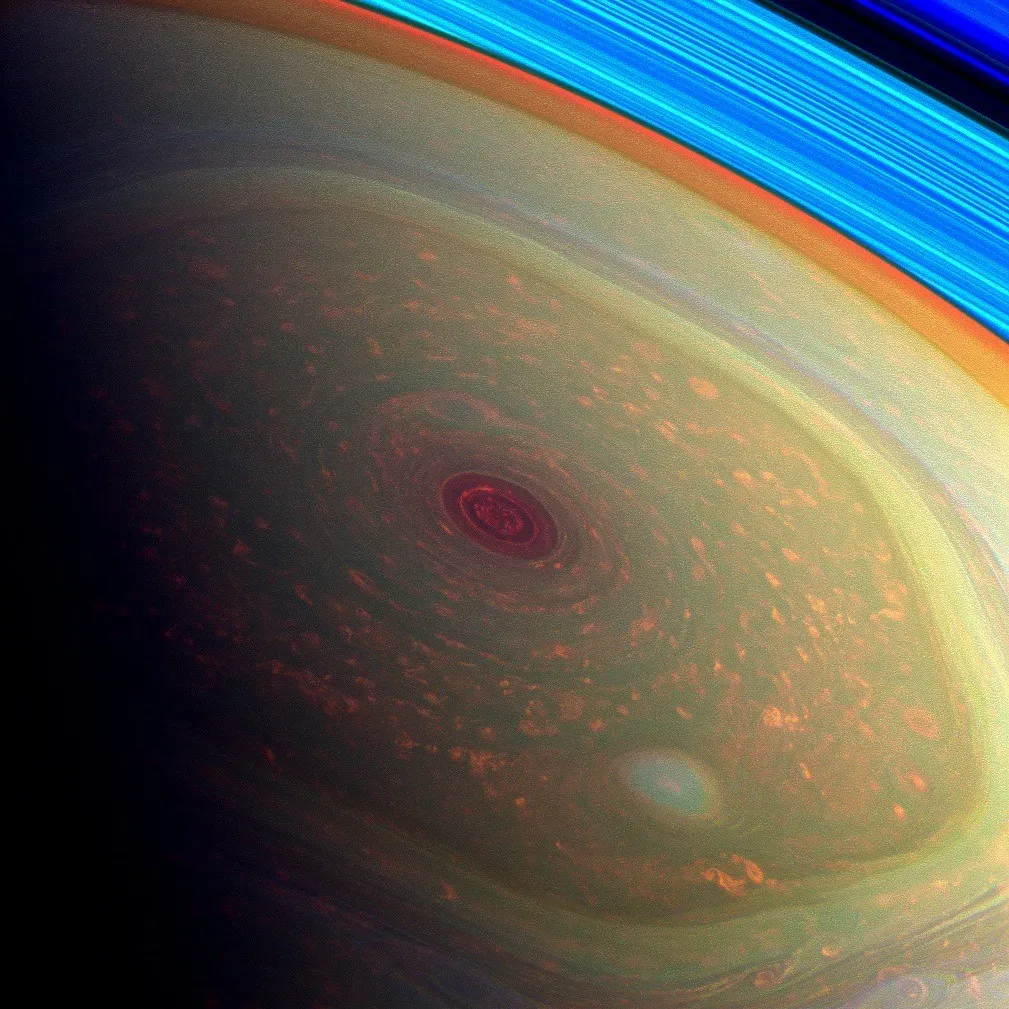
You can be forgiven for thinking someone Photoshopped this one. At Saturn’s north pole sits a storm so bizarrely shaped that it looks almost too deliberate to be natural. At Saturn’s north pole, a bizarre six-sided storm has been spinning for decades, and this perfectly geometric weather pattern defies known atmospheric dynamics and appears eerily artificial. Think of it like this: imagine a hurricane on Earth suddenly arranging itself into a perfect pentagon and staying that way for years. Weather simply doesn’t do that. Atmospheric science has no clean answer for why Saturn does.
The scale of this hexagon makes it all the more mind-bending. The storm is enormous, capable of swallowing Earth whole, and has baffled scientists since it was first spotted by the Voyager mission. Laboratory experiments on Earth have managed to reproduce hexagonal fluid patterns under very specific conditions using spinning tanks of water, and these serve as the best available explanation so far. Still, no model fully accounts for why the structure has persisted so long, with such geometric precision, on a gas giant billions of miles away. It’s one of those things that makes you stare at your textbook and wonder if physics is hiding something from us.
The Disappearing Star: A Stellar Giant That Simply Vanished
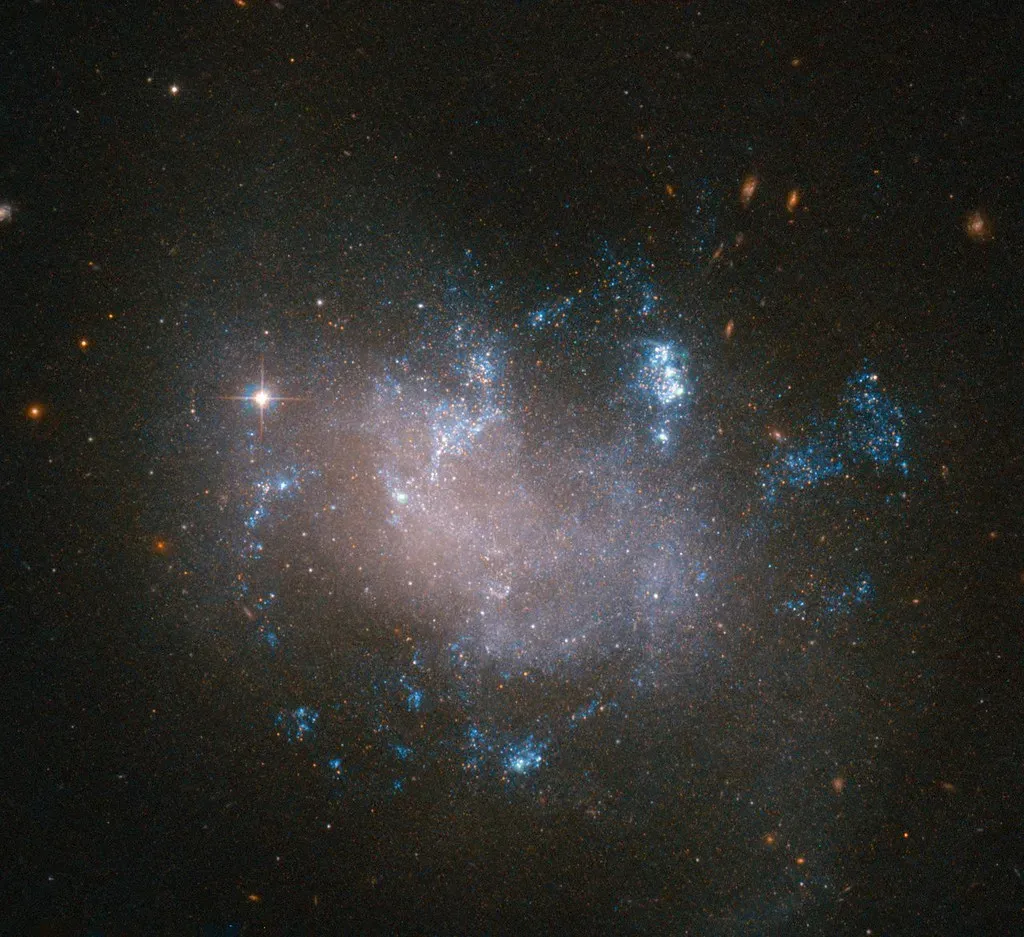
Stars are not supposed to simply cease to exist without announcing it. The standard script goes like this: a massive star burns out, it collapses, it explodes in a supernova so bright you can sometimes see it with the naked eye from across a galaxy. But in 2020, astronomers noticed something that violated that entire script completely. In 2020, a giant star in a distant galaxy appeared to vanish completely, and unlike the expected script, it did not explode in a brilliant supernova – it simply disappeared from view with no flash or debris, leaving scientists proposing theories from failed supernovas to direct collapses into black holes.
The silence, in this case, is what’s so disturbing. Scientists have proposed theories ranging from failed supernovas to direct collapses into black holes, but without supporting evidence, the star’s disappearance remains a silent cosmic mystery. There is actually a concept in astrophysics called a “failed supernova,” where a star collapses so completely and so quickly that instead of exploding outward, everything gets swallowed inward. It is theoretically possible. It is also incredibly rare and has never been confirmed with certainty. Whether that is what happened here, or whether something even stranger occurred, is a question that currently has no satisfying answer.
The Meteor Procession of 1913: A Sky Event No One Can Fully Explain
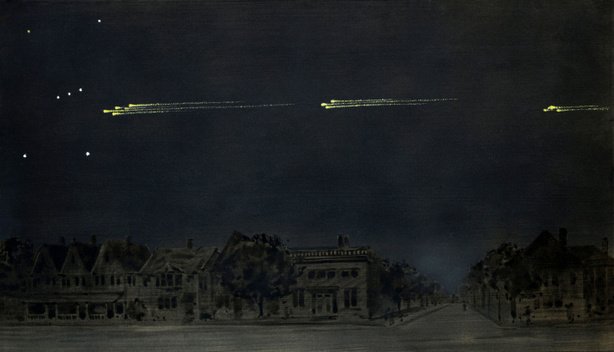
Most of us have seen a meteor – a quick streak of light across the night sky, gone in a second. They fall from above and burn up in the atmosphere. Simple. But on February 9, 1913, what thousands of people across North America witnessed was something entirely different, something that broke all the rules for how meteors are supposed to behave. Scientists still can’t fully explain this event, in which meteors traveled in successive groups parallel to the horizon, seemingly streaking across the night sky rather than falling toward Earth’s surface like regular meteors.
The scale of what occurred that night was staggering. According to historical records, the meteor procession lasted several minutes and may have traveled more than a quarter of the way around the entire world, with evidence from ships’ meteorological log books and firsthand accounts suggesting the track extended more than 7,000 miles. The leading theory involves a temporary natural satellite that skimmed Earth’s atmosphere, but that idea is controversial and unproven. It is unclear when, if ever, a meteor procession will occur again. For now, 1913 remains a one-of-a-kind event that sits awkwardly in the corner of astronomy textbooks, defying tidy explanation.
Dark Energy: The Force Expanding the Universe That No One Understands
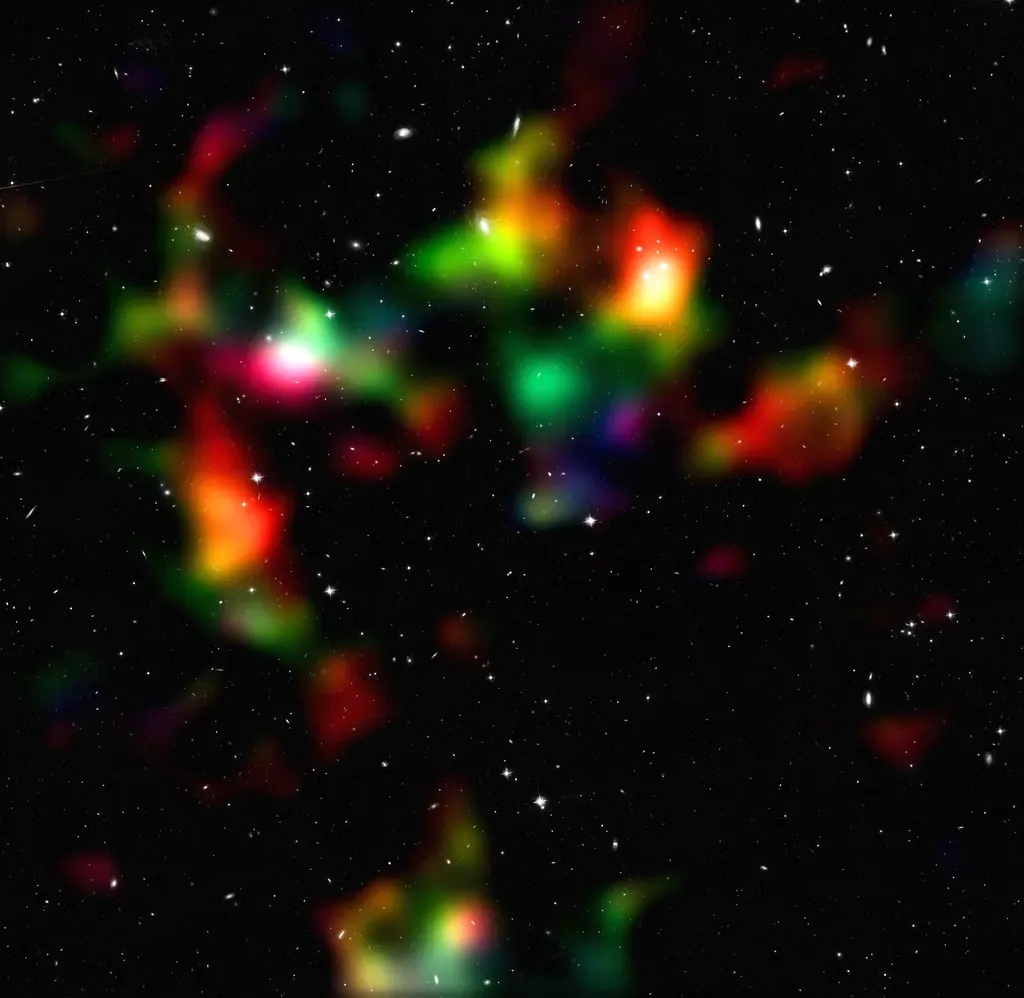
Here is something to sit with for a moment. The vast majority of the universe – roughly about two-thirds of everything that exists – is made up of a force that no one can see, touch, measure directly, or fully explain. It is called dark energy, and scientists know about it primarily because the universe is not just expanding, it is expanding faster and faster, and something has to be responsible for that acceleration. Scientists call this invisible mass “dark matter,” but no one truly knows what it is, and without it, galaxies shouldn’t hold together and physics itself might be incomplete. Dark energy is an even deeper layer of the same mystery.
What’s particularly unsettling is that even our understanding of dark energy appears to be shifting. Dark energy, the mysterious force that drives the expansion of the universe to go faster and faster, was long thought to be a constant force exerting the same outward influence over cosmic history – but in 2024, data from the Dark Energy Spectroscopic Instrument suggested that, instead, dark energy could change over time. If that’s true, it doesn’t just update one theory. It potentially reshapes the entire foundation of how we understand the fate of the cosmos. It’s hard to say for sure what this means for the long-term future of the universe, but it’s the kind of discovery that keeps cosmologists awake at strange hours, staring at ceiling tiles and reconsidering everything.
Conclusion: The Sky Above You Is Still Full of Secrets
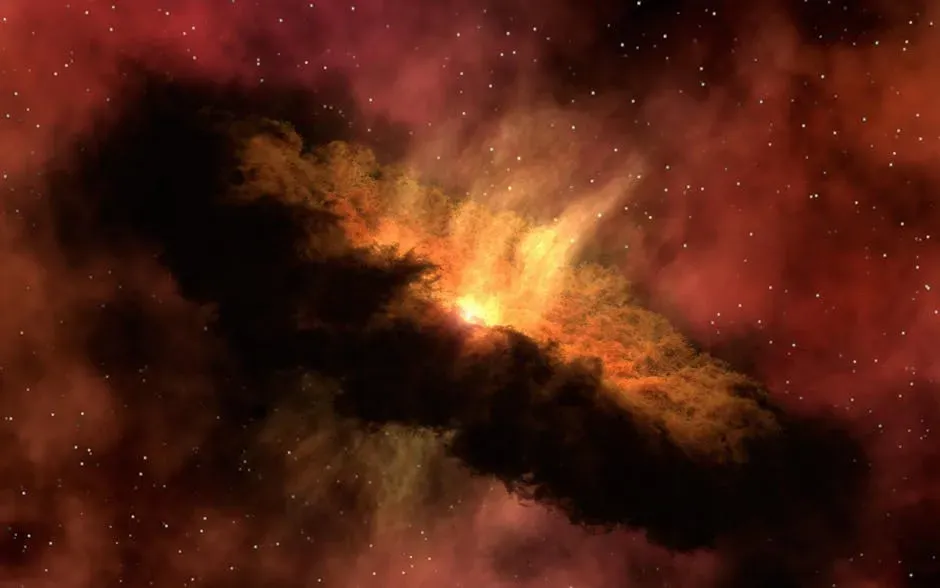
What unites all seven of these phenomena is something quietly profound: they remind you that the universe operates on its own terms, completely indifferent to the neatness of human theories. You can build the most sophisticated telescope ever launched into orbit, and the cosmos will still find a way to produce a star that blinks in patterns that make no sense, or fire off a burst of radio energy from a dead galaxy where it has no business existing.
There’s something genuinely thrilling about that, even if it’s a little humbling. Science doesn’t progress through comfortable certainties. It advances through stubborn mysteries that refuse to be ignored. Each one of these phenomena has already pushed astronomers to think differently, update their models, and question assumptions that seemed rock-solid just a generation ago. The greatest discoveries may still be hidden inside these unsolved puzzles.
So the next time you look up at a clear night sky, remember: you’re not just gazing at something beautiful. You’re looking at an ocean of questions that humanity is still, slowly, learning to ask. Which one of these cosmic mysteries surprised you the most?