
If you’ve ever stepped outside at night, looked up, and suddenly felt very small in the best possible way, this year is about to amplify that feeling. The sky in 2026 is loaded with rare alignments, dramatic eclipses, and quietly beautiful displays that most people will miss simply because they never thought to look up.
You don’t need a telescope, a fancy camera, or a physics degree to enjoy any of this. You just need a little timing, a bit of patience, and maybe a warm jacket. Think of this year as a kind of cosmic playlist: some events are loud and spectacular, others are more like a slow, haunting song you only appreciate if you really listen. Let’s walk through the seven moments you absolutely don’t want to sleep through.
A Total Lunar Eclipse That Turns the Moon Blood-Red
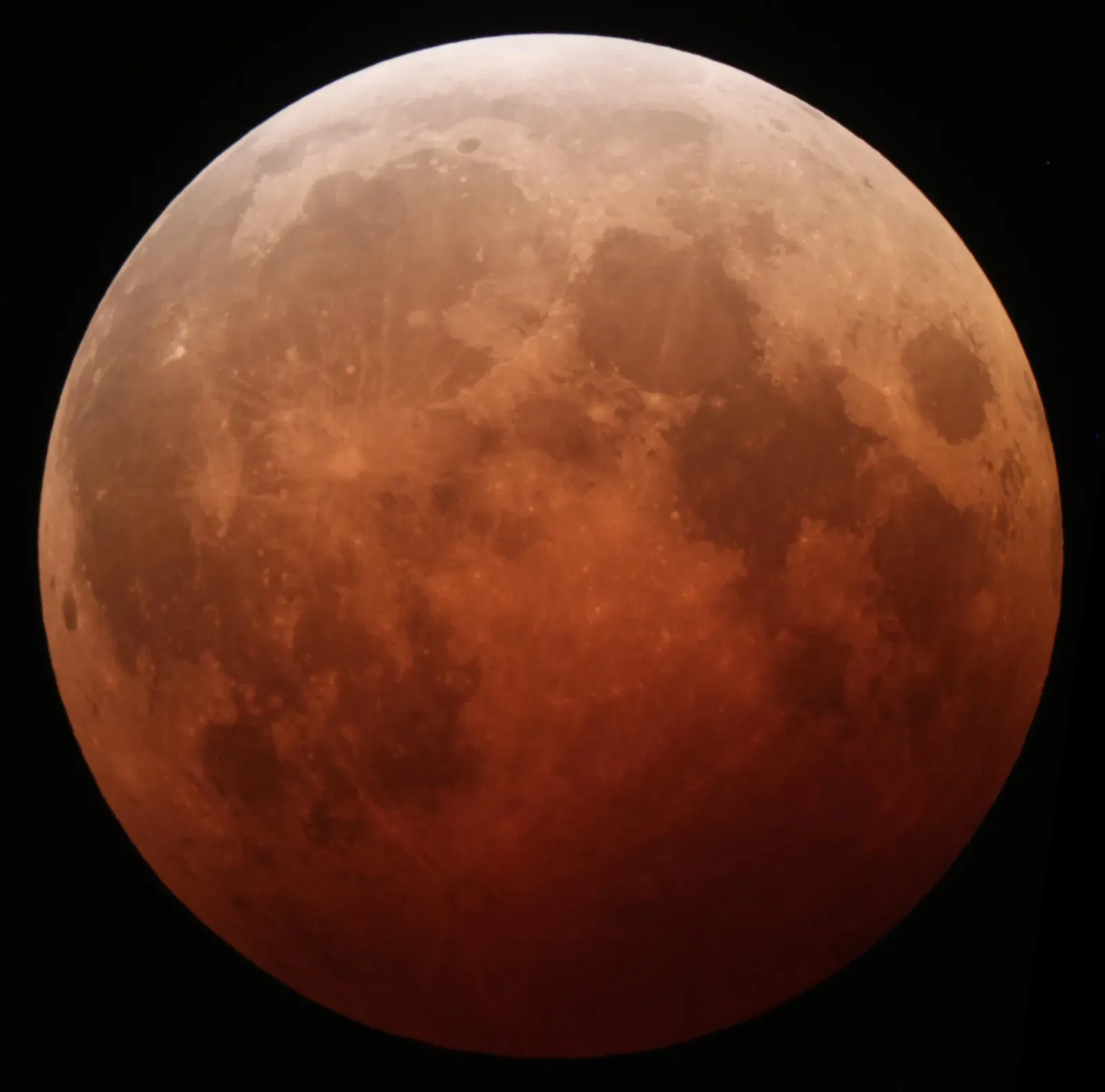
Imagine walking outside late at night and seeing the full Moon slowly vanish, only to reappear glowing a deep, eerie red. That’s exactly what a total lunar eclipse delivers: sunlight bent through Earth’s atmosphere paints the Moon in copper and crimson shades, like a slow-motion special effect playing out across the sky. In 2026, we get one of these show-stoppers, and the best part is that it’s safe to watch with your naked eyes for the entire event.
You don’t need anything more than a clear horizon and a bit of patience, although a pair of binoculars will make the details on the Moon’s surface pop against that surreal red glow. The color can shift from rusty orange to almost brick red depending on how dusty or cloudy Earth’s atmosphere is at the time, which makes each eclipse feel personal and unique. Standing under a dark red Moon can be surprisingly emotional; it’s one of those moments when the universe feels both strange and oddly intimate.
Prime Viewing of the Perseid Meteor Shower
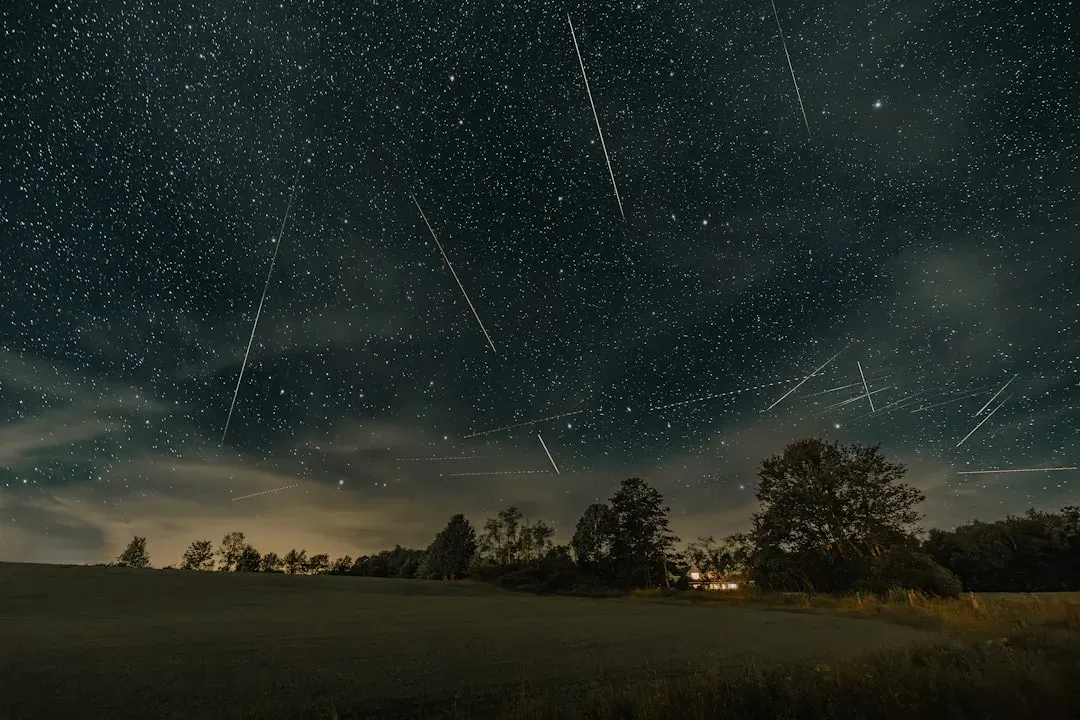
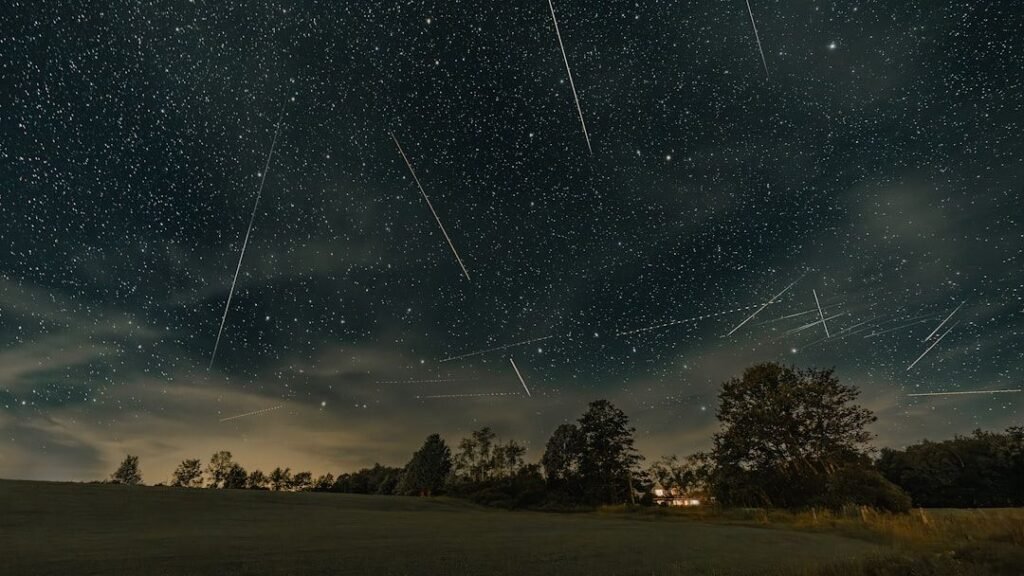
If you’ve never seen a meteor shower under a truly dark sky, the Perseids are the perfect first love. Every year, roughly about mid-August, Earth plows through a cloud of debris left behind by Comet Swift–Tuttle, and the result is a flurry of “shooting stars” streaking across the sky. In 2026, the Moon’s phase lines up more favorably than in some recent years, meaning darker skies and a better chance to catch the fainter meteors that usually get washed out.
The Perseids can throw dozens of meteors per hour across the sky under ideal dark-sky conditions, and their streaks are often bright and fast, like cosmic fireflies doing a synchronized light show. The trick is to get away from city lights, lie back, and give your eyes at least twenty minutes to adjust to the dark. There’s something oddly grounding about lying on a blanket at 2 a.m., counting meteors with friends or family and realizing those tiny flashes are traces of ancient comet dust burning up above your head.
A Partial Solar Eclipse That Bites a Chunk Out of the Sun
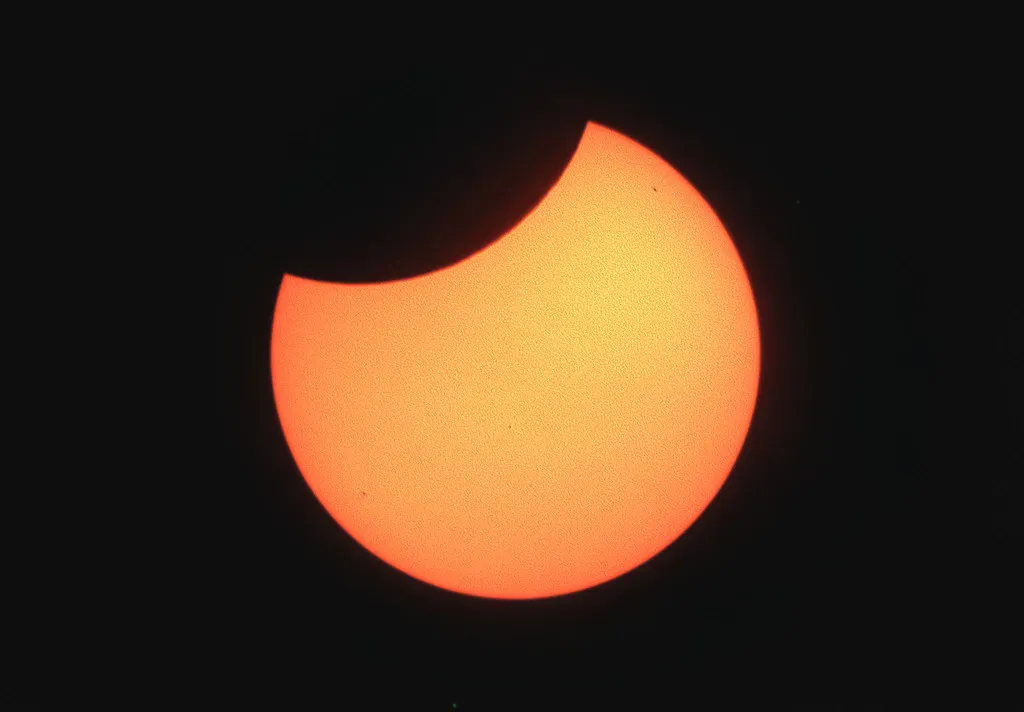
<pThere’s a different kind of thrill in watching the Sun itself change shape in the middle of the day. In 2026, several regions of the world will experience a partial solar eclipse, where the Moon slides in front of the Sun and takes what looks like a giant bite out of it. Daylight grows strangely dim, shadows sharpen, and the world briefly feels like it’s being lit by a different kind of bulb.
Unlike a lunar eclipse, though, this one demands strict safety: you must use proper eclipse glasses or certified solar filters if you want to look at it directly. With safe viewing gear, you can watch the Sun’s disk slowly morph into a crescent, a sight that feels almost unsettling because the Sun is one of the few constants we rarely see altered. Even if clouds get in the way, the eerie change in light can still be felt, like standing under a passing storm that never quite arrives. It’s a reminder that the clockwork of the solar system is always in motion, whether we notice or not.
Jupiter and Saturn at Opposition, Shining Like Celestial Beacons
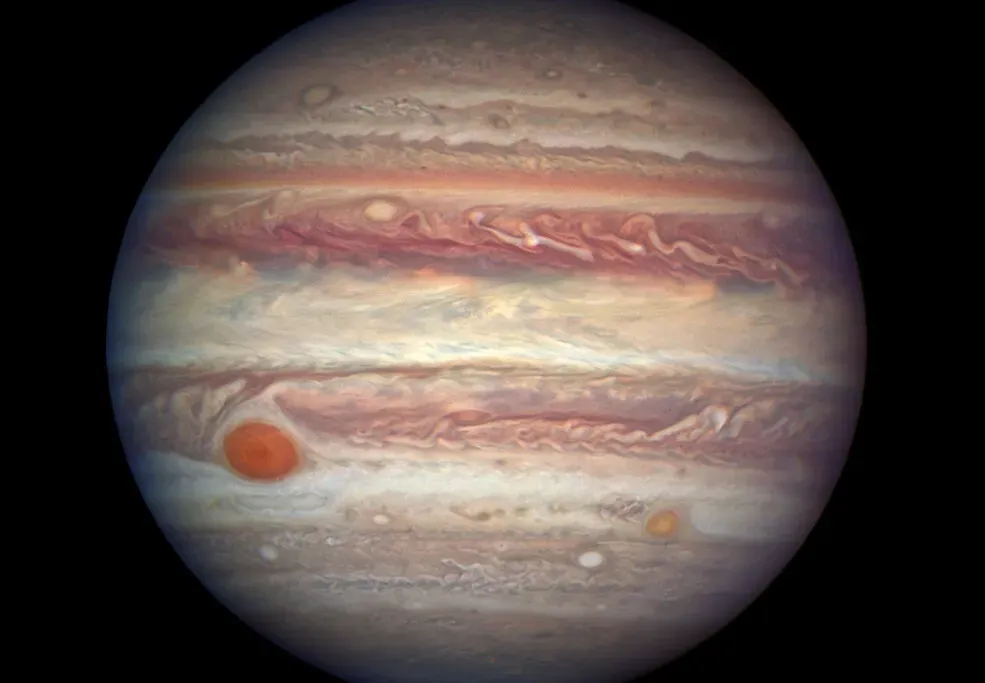
Every so often, the outer planets line up just right with Earth, and they suddenly become the headliners of the night sky. In 2026, both Jupiter and Saturn reach opposition during the year, which means Earth is directly between them and the Sun. At these times, they rise around sunset, stay up all night, and shine at their brightest and biggest for the year.
Even with the naked eye, Jupiter will glow like an unusually intense “star,” and Saturn will appear close behind with a steadier, golden hue. With a small telescope or even good binoculars on a steady mount, you can glimpse Jupiter’s main cloud belts and its four largest moons lined up like tiny pearls, and you might catch Saturn’s rings as a delicate extension from the planet’s disk. Standing in your backyard and casually looking at the same gas giants that have fascinated astronomers for centuries feels like cheating in the best possible way: you realize the solar system is not just a diagram in a textbook, it’s hanging right above your roof.
A Dazzling Venus–Moon Conjunction at Twilight
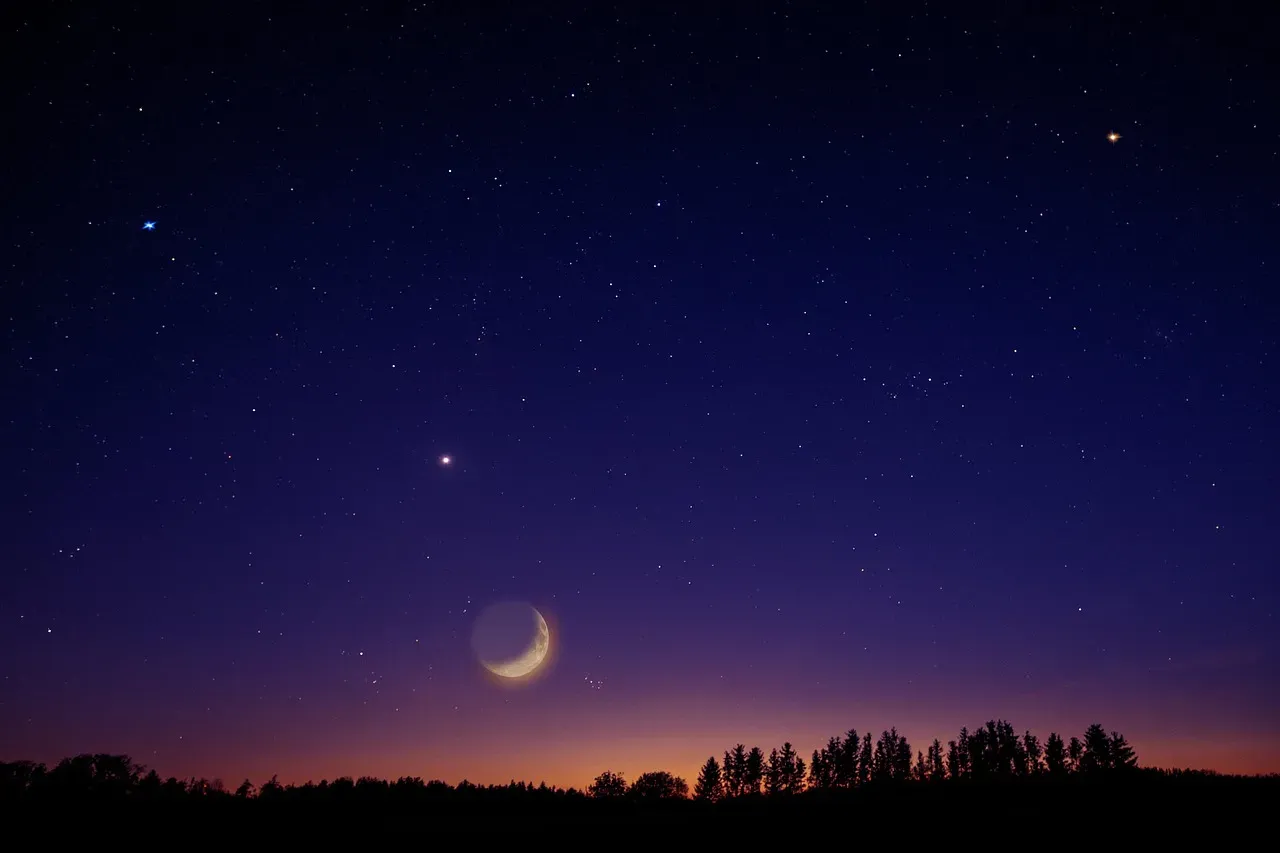
Some sky moments are loud and dramatic; others are quiet and almost poetic. One of the most beautiful this year is a close conjunction between Venus and the crescent Moon, visible during the evening or morning twilight depending on the date and your location. Venus will blaze as an eye-catching “evening star” or “morning star,” while the thin Moon hangs nearby like a delicate curve of light, turning the whole scene into something that looks almost staged.
You don’t need dark skies for this one; in fact, the soft colors of twilight make it even better. It’s the kind of event that stops you unexpectedly while you’re walking the dog or taking out the trash, and suddenly you’re just standing there, forgetting whatever you were rushing to do. If you have a smartphone, you can easily grab a photo, but the real joy is simply soaking it in for a few minutes. It’s a reminder that astronomy is not always about staying up all night; sometimes it’s just about catching the sky at the right 15-minute window.
Orion Returning: A Winter Constellation at Its Finest
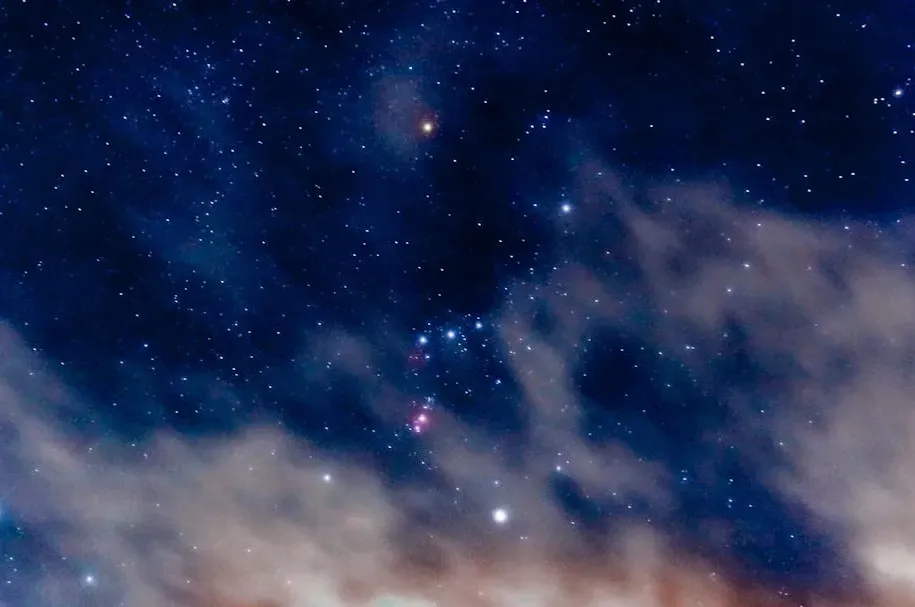
Not every breathtaking event is a rare, one-night-only occurrence. Some are seasonal rituals, and Orion’s dominance of the winter sky is one of the best. In the colder months of 2026, the constellation Orion climbs high in the evening sky for much of the world, its three belt stars neatly lined up and the bright stars Rigel and Betelgeuse anchoring the figure like jeweled shoulders and feet.
With just your eyes, Orion is already stunning, but a simple pair of binoculars transforms it into something else entirely. Point them just below the belt and you’ll find the Orion Nebula, a glowing cloud of gas and dust where new stars are being born, from our perspective a hazy patch within the “sword.” It’s wild to think that with minimal equipment and a bit of guidance, you can see a stellar nursery from your backyard. Every time I show someone the Orion Nebula for the first time, there’s this moment of stunned silence that says more than any scientific explanation ever could.
A Subtle but Beautiful Penumbral Lunar Eclipse
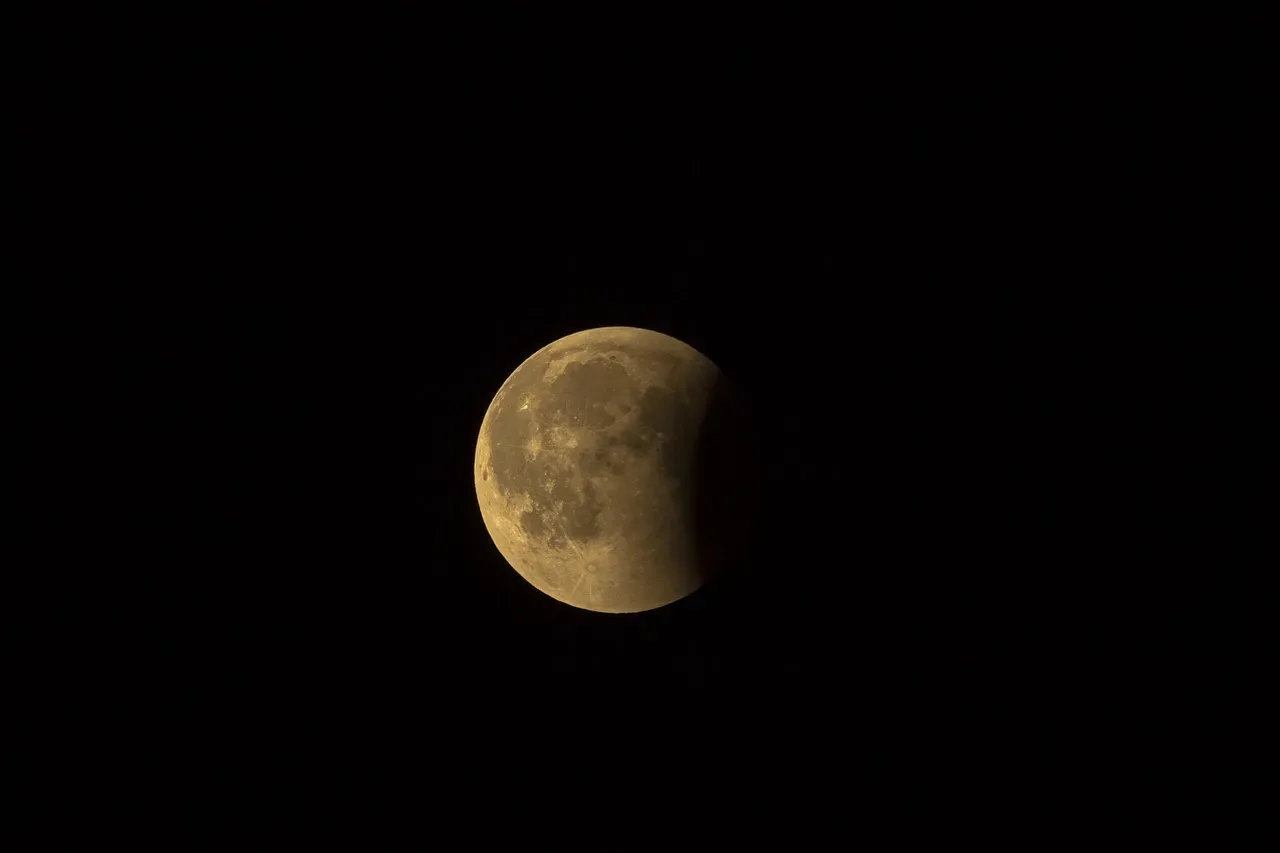
Compared to the dramatic red glow of a total lunar eclipse, a penumbral lunar eclipse can feel like the introvert of the eclipse family. During this event, the Moon passes through the outer part of Earth’s shadow, the penumbra, which causes a gentle shading across its surface rather than a big, obvious bite. Many casual observers miss it entirely, but if you know what to look for, the effect is quietly fascinating.
The Moon will look slightly dimmer on one side, as if someone turned down a cosmic dimmer switch in just one corner. Photographers can especially appreciate it, since the subtle gradient often shows up more clearly in photos than to the naked eye. It’s the kind of event that rewards people who are willing to slow down and really look, not just glance. In a year packed with flashy celestial shows, this one is more like a whispered secret from the sky for those paying close attention.
A Year to Reconnect With the Night Sky
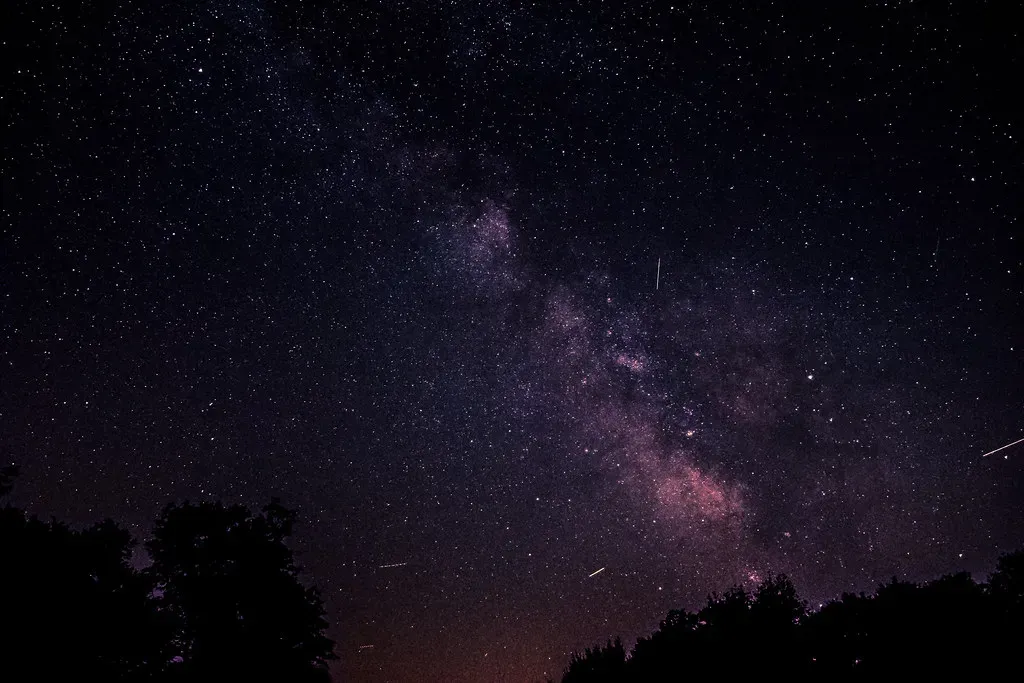
This year’s sky is offering a full menu: bold eclipses, stormy meteor showers, brilliant planets, and quiet, delicate alignments that might catch you off guard on an ordinary weeknight. You don’t have to see every single event to feel like you’ve reconnected with the cosmos; even catching one or two can shift how you think about your place in the universe. What matters most is carving out a little time, stepping outside, and actually looking up.
We spend so much of our lives staring into screens that we forget there’s a far bigger show playing just a few steps beyond the front door. Whether it’s a blood-red Moon, a flurry of Perseid meteors, or that glowing pairing of Venus and the crescent Moon at dusk, let this year be the one where you decide not to miss it. After all, when was the last time the night sky actually took your breath away?