
Every time we think we have human history figured out, the ground shifts beneath our feet – sometimes literally. A single artifact pulled from the mud, a skeleton lying in ancient ice, or a strange signal buried in DNA can flip the story we’ve been telling ourselves for generations. It’s both unsettling and thrilling: the feeling that what you learned in school might already be out of date.
What follows isn’t just a list of cool finds; it’s a tour through the moments when the past refused to stay quiet. These seven discoveries didn’t just tweak a few dates in a textbook – they forced scientists, historians, and frankly the rest of us to rethink who we are, where we came from, and how complex and surprising humans have always been.
1. The Rosetta Stone and the Voice of Ancient Egypt
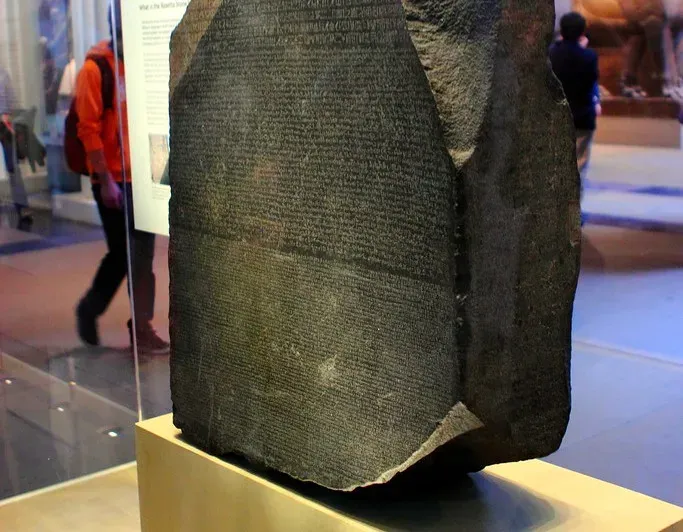
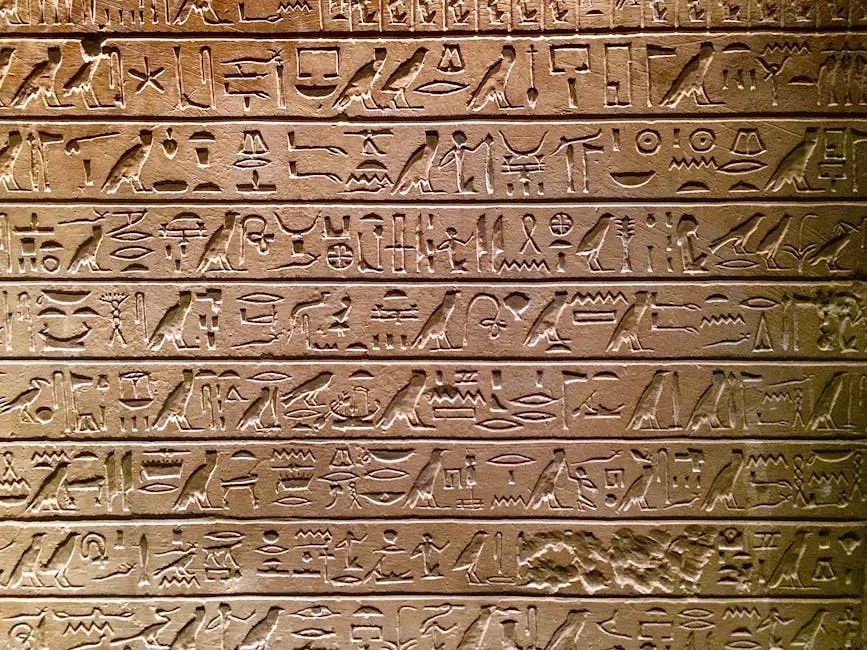
Imagine staring at walls covered in symbols for centuries and having no idea what they say, like walking through a library where every book is locked shut. That was ancient Egypt before the Rosetta Stone was deciphered. When French soldiers found this carved slab in 1799, it didn’t look like much more than a broken monument, but it held the same text in three scripts: hieroglyphic, demotic, and ancient Greek. That combination turned out to be the linguistic equivalent of a master key.
Once scholars cracked Egyptian hieroglyphs in the early nineteenth century, an entire civilization suddenly started speaking again. Royal decrees, love poetry, religious hymns, medical recipes, even snarky personal notes written on shards of pottery all came to life. This shifted Egypt from a land of mysterious pyramids and silent statues into a complex, relatable culture with bureaucracy, family drama, humor, and politics. Our picture of the ancient world stretched overnight from a handful of famous pharaohs to many centuries of everyday people whose lives we could finally read.
2. The Dead Sea Scrolls and Lost Worlds of Faith
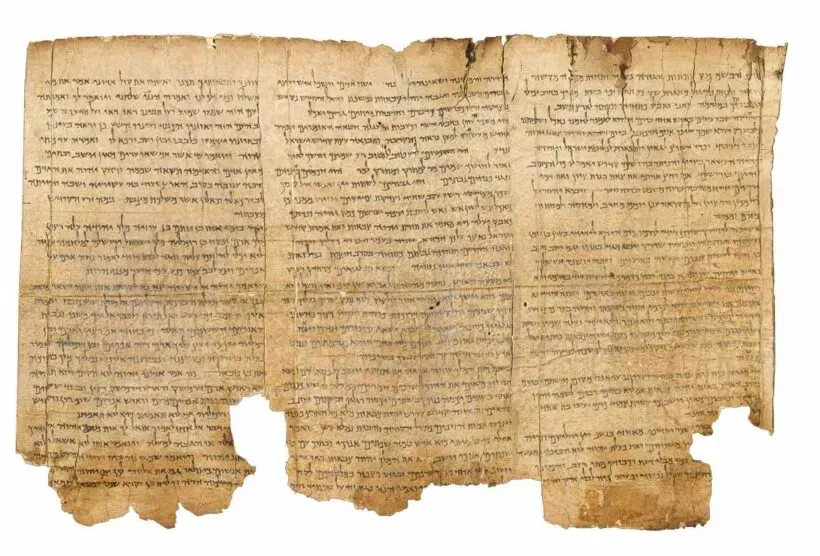
When a Bedouin shepherd tossed a stone into a cave near the Dead Sea in the late 1940s and heard pottery shatter, he had no idea he’d just kicked open a door into ancient religious history. What he stumbled onto were scrolls and fragments over a thousand years older than the medieval manuscripts scholars had relied on. Hidden away in desert caves, these texts included some of the earliest known versions of books that ended up in the Hebrew Bible, along with other writings that never made it into any official canon.
The discovery didn’t just nudge a few dates; it revealed how diverse and unsettled religious ideas were two thousand years ago. Instead of a neat, linear story of belief, the scrolls showed competing visions of law, purity, messiahs, and the end of days. They also helped confirm how remarkably stable many biblical texts had remained across long stretches of time, even as they revealed alternative voices and interpretations we’d nearly lost. The Dead Sea Scrolls turned the study of Judaism and early Christianity from something tidy and fixed into something much more alive, messy, and human.
3. Lucy and the New Story of Our Earliest Ancestors
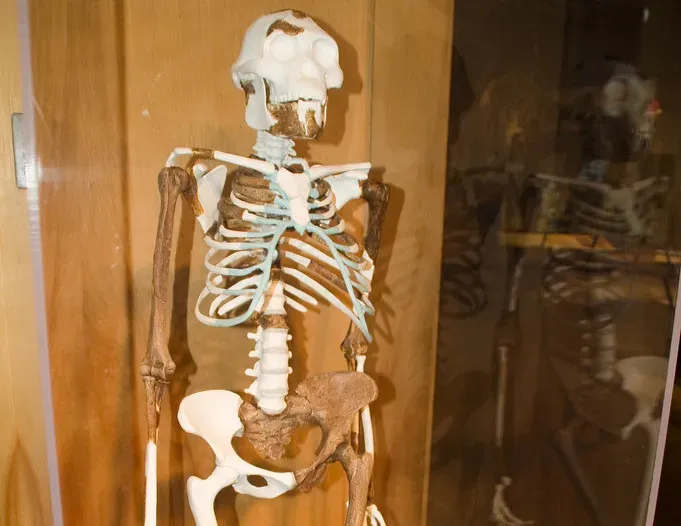
In 1974, in the dusty landscape of Ethiopia’s Afar region, paleoanthropologists uncovered a partial skeleton that would become one of the most famous in history. Nicknamed Lucy, she was roughly over three million years old and belonged to a species now known as Australopithecus afarensis. Before Lucy, many people pictured human evolution as a straightforward march from ape to modern human, each step clearly separate and more advanced than the last. Lucy shattered that simple ladder image.
Her skeleton revealed a creature who still had a small brain and long arms but clearly walked upright on two legs. That combination forced scientists to rethink the order of events: bipedal walking came long before big brains, and evolution was more like a bush with many branches than a straight line of progress. For me, the first time I saw a reconstruction of Lucy, it was surprisingly emotional – this small, fragile-looking being somehow felt like family. She made our story older, stranger, and more grounded in the idea that we’re just one outcome among many experiments nature ran over millions of years.
4. Göbekli Tepe and Civilization Before Cities
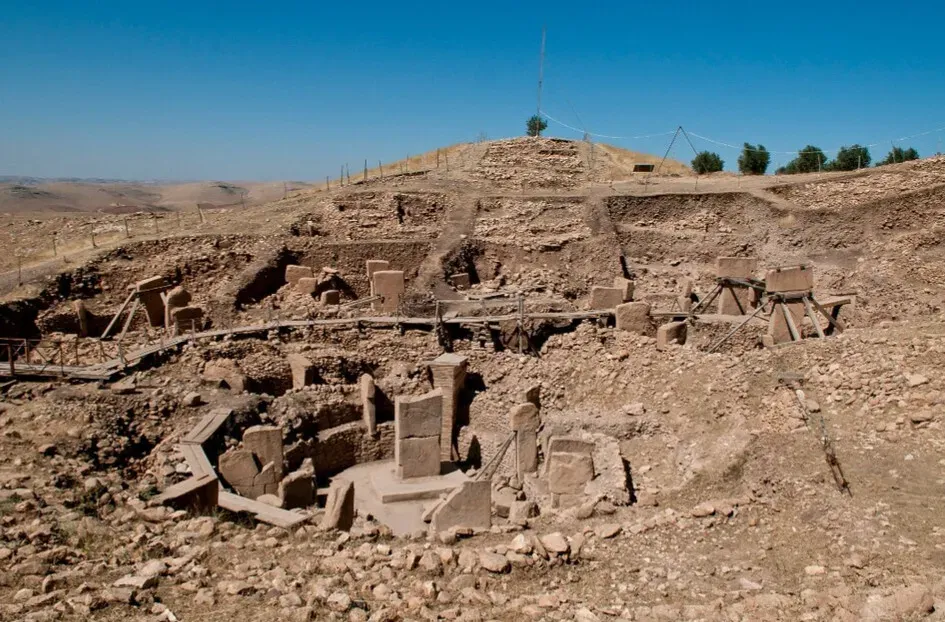
For a long time, the story seemed clear: first agriculture, then permanent villages, and only much later large temples and complex religion. Then archaeologists in southeastern Turkey started digging at a hill called Göbekli Tepe and hit something that didn’t fit the script at all. Beneath the soil were massive stone circles and towering T-shaped pillars carved with animals, some of the most sophisticated ritual structures ever found from the deep past – built roughly eleven to twelve thousand years ago, long before the first cities and organized states.
This flipped a core assumption on its head. It now looks like large-scale shared rituals may have come before farming in at least some places, not after. People may have gathered first to worship, feast, or bond as communities, and only later figured out that they needed more reliable food sources to support that lifestyle. Göbekli Tepe suggests that culture, symbolism, and belief might be as powerful a driver of human change as basic survival needs. It’s as if we discovered an ancient cathedral in a world where we thought only small hunting camps existed.
5. DNA and the Ghosts of Neanderthals
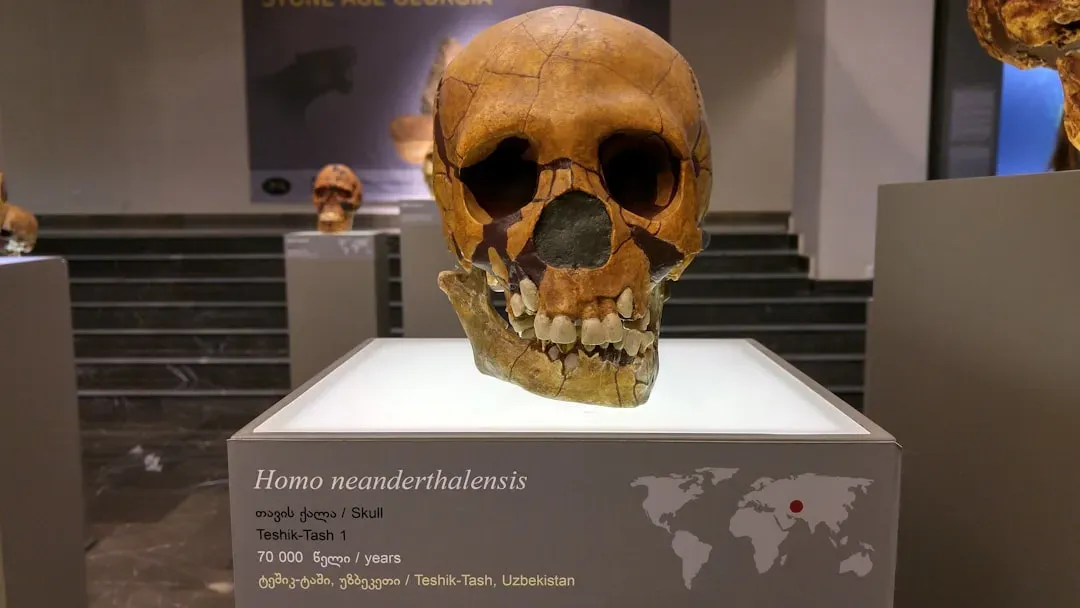
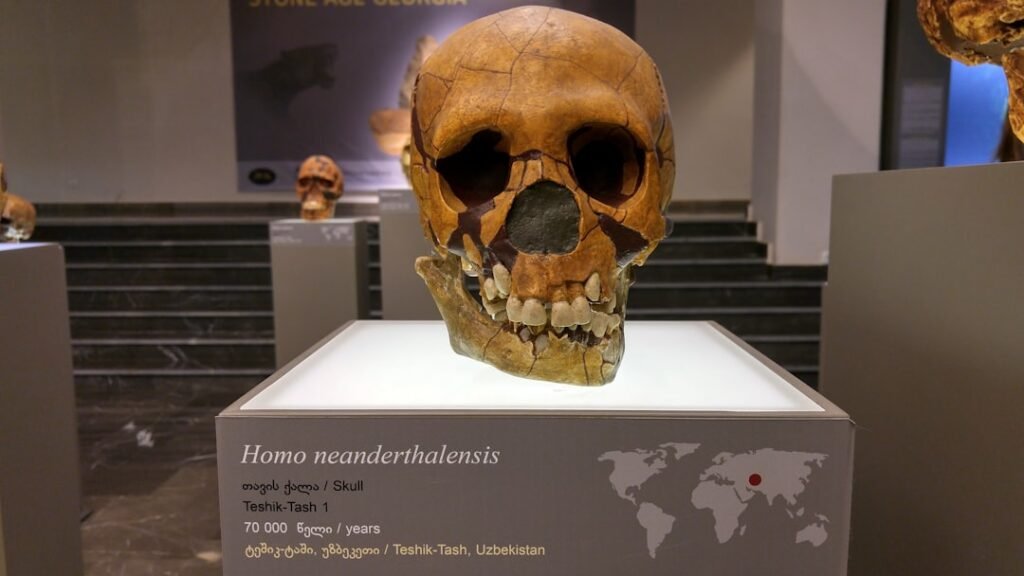
For most of the twentieth century, Neanderthals were cast as the clumsy cousins who failed, a gloomy side branch that went extinct while we clever modern humans marched proudly on. Then geneticists managed to extract and sequence Neanderthal DNA from ancient bones, and the story took a sudden twist. When they compared that DNA with living humans, they found something astonishing: people with ancestry outside of Africa carry small but real chunks of Neanderthal genes in their genomes.
That means our ancestors didn’t just replace Neanderthals; in some places, they met and had children with them. Later research added even more complexity, revealing traces of other archaic humans like the mysterious Denisovans in modern populations, especially in parts of Asia and Oceania. Our species turned out not to be a lone, pure line but more like a blended family, carrying echoes of other humans within us. The discovery changed how we see identity itself – less about neat categories, more about overlapping threads in a very old, shared tapestry.
6. Ötzi the Iceman and a Frozen Time Capsule of Daily Life
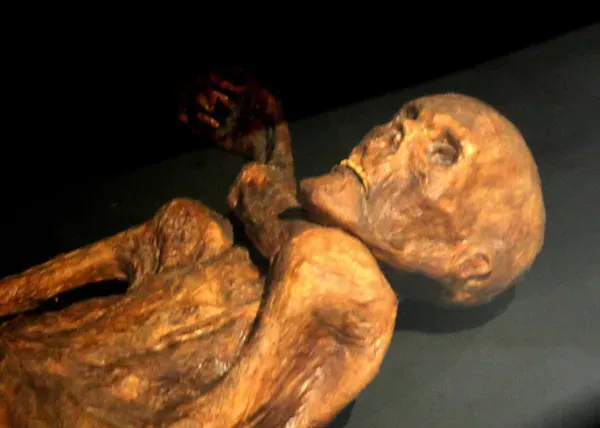
In 1991, hikers in the Alps near the Italian–Austrian border stumbled on what looked like a body emerging from the ice. At first, people assumed it was a recent mountaineering accident. Instead, they had found Ötzi, a man who had died over five thousand years earlier and been locked in glacial ice ever since. His body, clothes, tools, and even the contents of his stomach were astonishingly preserved, offering a snapshot of late Stone Age life that written records could never match.
Scientists discovered that he carried a copper axe, wore carefully stitched clothing of leather and grass, and had tattoos that may have been related to pain relief or ritual. Isotope analysis showed where he had grown up and traveled, while examinations of his teeth, bones, and stomach contents revealed stress, illness, last meals, and even the pollen from the season he died. CT scans and later research suggested he was likely killed by an arrow. Ötzi transformed prehistory from abstract ideas about “early farmers” into something personal and specific – one individual with aches, fears, tools, and probably complicated relationships, much like any of us.
7. The Antikythera Mechanism and the Lost Genius of Ancient Technology
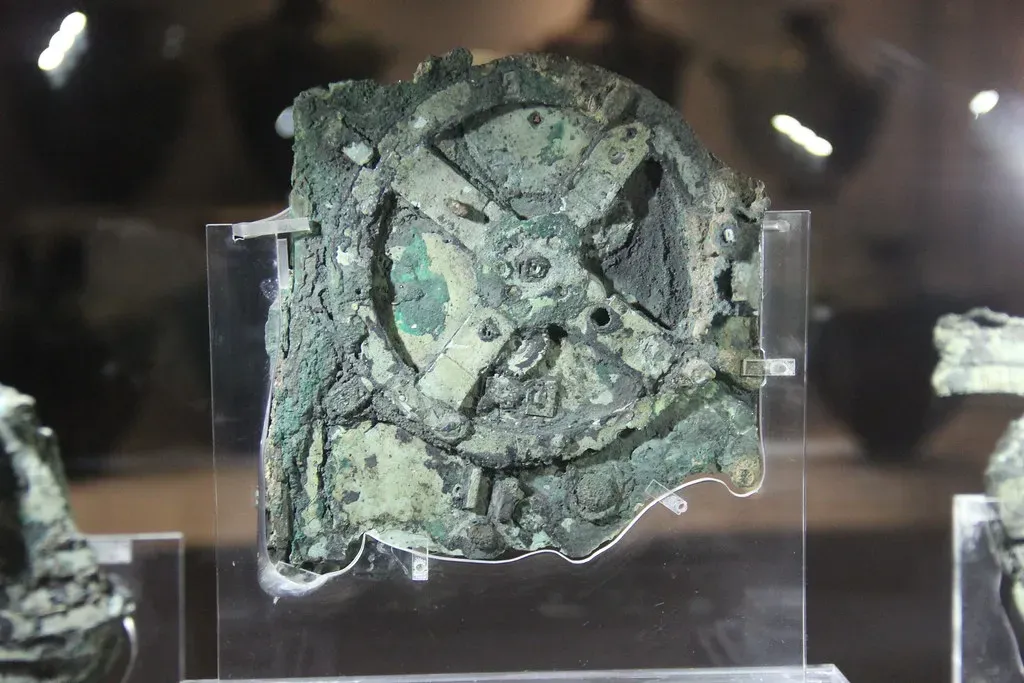
When sponge divers off the Greek island of Antikythera pulled up a corroded mass of bronze from a Roman-era shipwreck in the early twentieth century, it did not look like a world-changing artifact. Only with decades of cleaning, study, and high-tech scanning did researchers realize what they had: a highly complex mechanical device from over two thousand years ago, now known as the Antikythera mechanism. Inside the greenish lump were carefully intertwined gears capable of predicting eclipses, tracking the movements of the sun, moon, and planets, and modeling astronomical cycles with stunning precision.
This was not just an impressive gadget; it shattered assumptions about the technological limits of the ancient world. Many historians had believed intricate gear-based machines only emerged in medieval or early modern Europe, but this device showed that Hellenistic engineers had already reached a level of mechanical sophistication we often associate with clockmakers much later. It raised unsettling questions too: if this one machine survived as a wrecked, partial fragment, what else was built and lost? The Antikythera mechanism doesn’t just change our view of Greek science – it reminds us how fragile the historical record is, and how much genius may have disappeared without a trace.
Conclusion: A Past That Refuses to Stay Finished
Looking across these discoveries, a pattern emerges: every time we think we’ve nailed down the story of human history, something unexpected surfaces. A stone that unlocks a forgotten language, a scroll that reveals competing voices of faith, a skeleton or genome that blurs the line between us and “them,” a frozen body that makes prehistory feel intimate, a temple older and stranger than our models allow, a machine that hints at lost brilliance. Each find pulls another thread, and the tapestry of our past rearranges itself yet again.
What strikes me most is how many of these revelations started as accidents or outliers – things that, at first glance, didn’t seem to fit or even matter. It makes our old timelines feel less like definitive maps and more like rough sketches waiting to be redrawn. If this is what we can see from a few lucky breaks and stubborn investigations, imagine what’s still buried in deserts, caves, oceans, and icy mountains. The next discovery that rewrites everything might already be sitting, unnoticed, under someone’s feet – what would you guess it will be?