
You’ve probably heard whispers of ancient seers who claimed to see beyond their time. Maybe you’ve wondered whether any of those cryptic pronouncements actually meant something, or if they were just lucky guesses dressed up in mystical language. The thing is, throughout history, certain predictions have aligned so closely with actual events that they’ve left historians, scholars, and skeptics alike scratching their heads.
Were these forecasts evidence of genuine foresight, divine inspiration, or simply the result of clever observation and pattern recognition? The truth is, it’s hard to say for sure. What we can examine, though, is the fascinating intersection between what was foretold in ancient times and what eventually unfolded. Some predictions were so specific that dismissing them as mere coincidence feels almost impossible. Others remain beautifully ambiguous, allowing each generation to find its own meaning in the words. Let’s dive into seven ancient prophecies that have sparked debate, wonder, and more than a little curiosity.
Thales and the Eclipse That Ended a War

According to ancient sources, Thales of Miletus – one of Greece’s earliest philosophers – predicted a solar eclipse that occurred during a battle between the Medes and Lydians around 585 BCE. When the sky suddenly darkened mid-fight, both armies interpreted it as a sign from the gods and agreed to a ceasefire. Imagine two massive forces clashing on a battlefield, swords raised, only to have the sun disappear above them. The psychological impact must have been immense.
Modern astronomical models confirm an eclipse happened in that region on May 28, 585 BCE. Whether Thales truly possessed astronomical knowledge advanced enough to calculate such an event, or whether he simply made an educated guess based on Babylonian records, remains uncertain. Still, the fact that this celestial phenomenon halted a war and changed the course of political history is remarkable. It remains a striking case of ancient prophecies that came true – with geopolitical consequences.
The Fall of Babylon Foretold by Isaiah
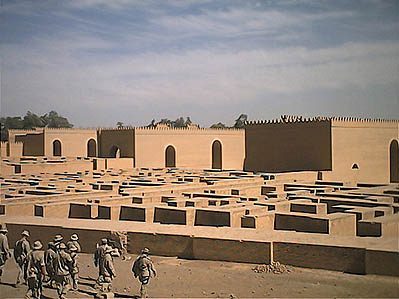
About 200 years in advance, the Hebrew prophet Isaiah foretold that Cyrus would conquer Babylon. Think about that for a second. Isaiah mentioned a ruler by name who wouldn’t be born for two centuries, describing how this king would take down one of the ancient world’s most powerful empires. The prophecy even included specific details about how the conquest would unfold.
According to the Greek historian Herodotus, the army of Cyrus diverted the waters of the Euphrates River, which flowed through the city of Babylon. The soldiers entered through the riverbed, catching the supposedly impregnable city by surprise. The prophecy came true. Today all that is left of ancient Babylon is a heap of ruins in Iraq. The specificity of naming Cyrus generations before his birth has made this prophecy particularly compelling to historians and believers alike.
The Oracle of Delphi and Croesus’s Downfall
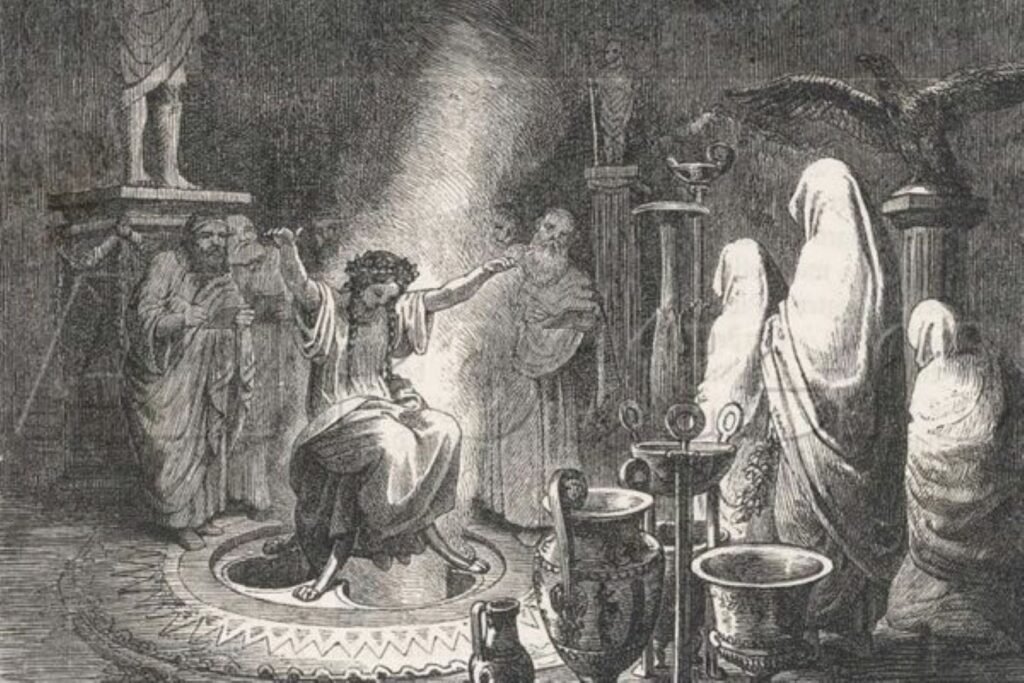
Arguably the greatest and most infamous fortuneteller of ancient times was the Oracle of Delphi – a key figure in classical Greek legend and history. It’s said that she was able to in some way channel spiritual forces between the material and immaterial realms, often to inform Greek leaders, warriors, politicians, anyone who came to seek her consul. Her words shaped military campaigns, personal decisions, and the fate of entire city-states.
Among the more consequential predictions involved Croesus, the king of Lydia in the 6th century bce. When he sought the oracle’s guidance about a possible war with Persia, she said that he would cause the fall of a great empire. He thus initiated a confrontation with the Persians, but it was Croesus and the Lydian empire that were defeated. The irony is almost poetic. Croesus interpreted the prophecy as guaranteeing his victory, never imagining that the “great empire” destined to fall would be his own. Between 535 and 615 of the Oracles (statements) of Delphi are known to have survived since classical times, of which over half are said to be accurate historically.
Nostradamus and the Death of King Henry II

You can’t talk about ancient predictions without mentioning Michel de Nostredame, better known as Nostradamus. He began making prophecies about 1547, and he published his prophecies in a book entitled Centuries (1555). His cryptic quatrains have been interpreted and reinterpreted for centuries, with believers claiming he foresaw everything from world wars to modern assassinations.
Just four years after the publication of La Propheties, in the summer of 1559, King Henry II of France met a gruesome death – in a fashion eerily similar to one of Nostradamus’ predictions. In 1555, he predicted that a “young lion” – thought to be code for the coat of arms of King Henry II of France – would fall in combat. When Henry II did indeed die on July 10, 1559 of an injury sustained during a jousting tournament, it sparked what historian Denis Crouzet called “a sense of imminent catastrophe.” The king’s eye was pierced by a lance during what should have been a friendly match, and he died in agony days later. This early success cemented Nostradamus’s reputation across Europe.
The Destruction of Nineveh by Fire

In Nahum 3:15 (written around 614 BC) the prophet makes a prediction which ultimately did come true. “There the fire will devour you; the sword will cut you down and, like grasshoppers, consume you…” The prophet said that Nineveh would be damaged by fire. Nineveh was the capital of the Assyrian Empire, a city considered nearly invincible in its time, protected by massive walls and strategic defenses.
Archaeologists unearthed the site during the 1800s and found a layer of ash covering the ruins. The physical evidence validates what was written nearly two millennia before modern excavation techniques existed. There is evidence that this prophecy was actually fulfilled. Siculus compiled his historical works about 600 years after the fall of Nineveh, and in doing so, confirmed the Biblical account. The level of detail in Nahum’s writings, combined with archaeological confirmation, makes this one of the more verifiable ancient prophecies.
The Great Fire of London in 1666
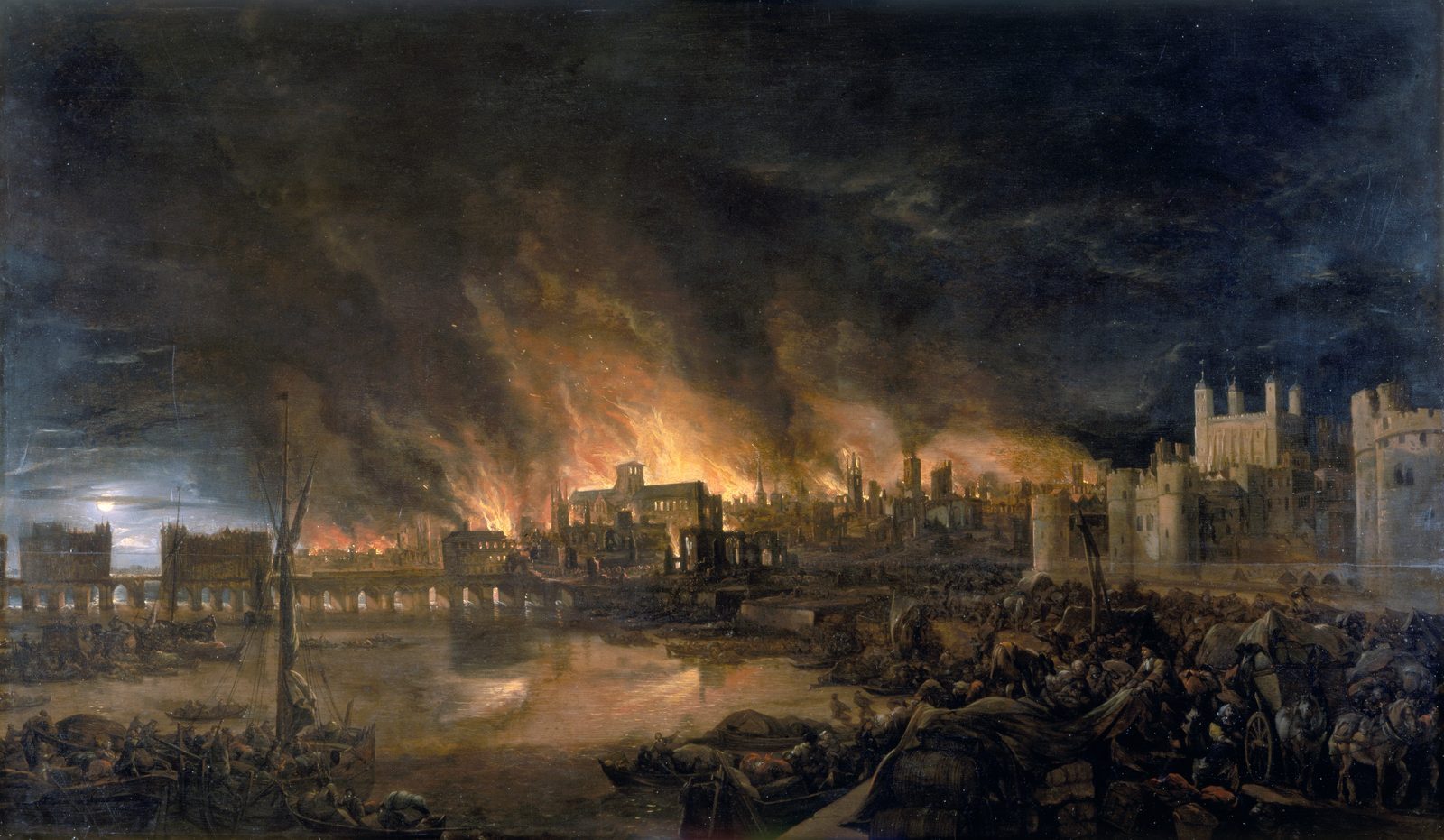
Here’s where things get really interesting. References to “twenty threes the six” interpreted as 66 (20 x 3 + 6) combined with the mention of London and references to deaths has been believed to be a prophecy of the Great Fire of London in 1666. Nostradamus wrote this more than a century before London burned, and the numerical interpretation, while admittedly creative, is uncannily specific.
In 1666, a fire did occur in London, destroying huge swaths of the city. People of the era hadn’t forgotten Nostradamus’s prophecies – and they didn’t stop looking for events that potentially fulfilled them in the years that followed. The fire raged for four days, destroying roughly 13,000 houses and dozens of churches, including the old St. Paul’s Cathedral. Whether Nostradamus genuinely foresaw this catastrophe or whether people retrofitted his vague poetry to match events remains hotly debated. The ambiguity is part of what makes his predictions so enduring.
Daniel’s Vision of Successive Empires
Daniel talked about four great empires rising and falling: the Babylonians, Persians, Greeks, and Romans. Written during the Babylonian captivity, Daniel’s visions outlined a progression of world powers that would dominate the ancient Near East and Mediterranean world. The prophecy didn’t just predict change – it described the specific sequence of empires that would rise and fall.
The Babylonian Empire would be followed by the Medo-Persian Empire, the Greek Empire of Alexander the Great, and the Roman Empire. Historians have verified this succession through archaeological evidence, ancient texts, and cross-cultural records. The Babylonians fell to the Persians in 539 BCE, the Persians were conquered by Alexander’s Greeks around 330 BCE, and eventually Rome absorbed the remnants of Alexander’s divided empire. The accuracy of this historical progression, written centuries before some of these empires even existed, continues to fascinate scholars of both history and theology.
Conclusion
So what does it all mean? Were these ancient prophets tapping into something beyond ordinary human perception, or were they simply astute observers of political patterns, astronomy, and human nature? The honest answer is that we’ll probably never know for certain. What we do know is that these prophecies, whether divinely inspired or remarkably intuitive, have shaped cultures, influenced decisions, and sparked conversations across millennia.
Their persistence in popular culture seems to be partly because their vagueness and lack of dating make it easy to quote them selectively after every major dramatic event and retrospectively claim them as “hits”. Skeptics will always have this argument, and it’s a fair one. Yet the specificity of some predictions – like naming Cyrus centuries in advance or accurately describing the succession of empires – defies simple dismissal.
Whether you approach these ancient prophecies with reverence, skepticism, or simple curiosity, they offer a fascinating window into how our ancestors understood time, fate, and the future. They remind us that humans have always yearned to peek beyond the veil of tomorrow, to find meaning in the patterns of history. What do you make of it all? Were these prophets genuine seers, or are we simply pattern-seeking creatures finding meaning where we want to find it?