
Imagine standing at the base of a structure so massive, so mathematically perfect, that your own smartphone’s GPS would struggle to match its precision. Or picture a rusted lump of ancient bronze pulled from the sea floor that turned out to be a working computer – centuries before anyone supposedly knew how to make one. These aren’t scenes from a science fiction novel. They are real, documented discoveries that have left the world’s most brilliant engineers and archaeologists genuinely scratching their heads.
The ancient world was not a place of primitive guesswork and lucky stumbles. It was apparently a place of extraordinary ingenuity, bold ambition, and technical knowledge that we still cannot fully explain. What you’re about to read will make you seriously question what we think we know about human history. Let’s dive in.
1. The Great Pyramid of Giza: A Monument That Shouldn’t Exist

Here’s something to stop you in your tracks. The Great Pyramid of Giza aligns with true north with an accuracy of 0.15 degrees, a feat that would challenge modern builders even with advanced technology. Think about that for a moment. A structure built thousands of years ago, without laser instruments or satellite positioning, essentially nailed it. Built around 2560 BCE, this precision required astronomical observations and mathematical calculations that shouldn’t have been possible with ancient tools, and the pyramid’s massive base covers roughly 13.1 acres, making even slight directional errors potentially disastrous.
The Great Pyramid was built by quarrying an estimated 2.3 million large blocks, weighing 6 million tonnes in total. Honestly, just wrapping your head around that number is difficult enough. It is made up of about 2.3 million stone blocks, each weighing between 2.5 and 15 tonnes, and would have had to be transported to the building site and lifted into place with techniques available at the time. To put this into context, it’s akin to lifting a double-decker London bus to the top of St Paul’s Cathedral a few million times. Scientists have recently found new clues about how materials were transported. A groundbreaking discovery by researchers from the University of North Carolina Wilmington reveals that these ancient marvels were likely built along a now-buried branch of the River Nile, concealed beneath desert sands and farmlands. Even so, the “how” remains stubbornly incomplete.
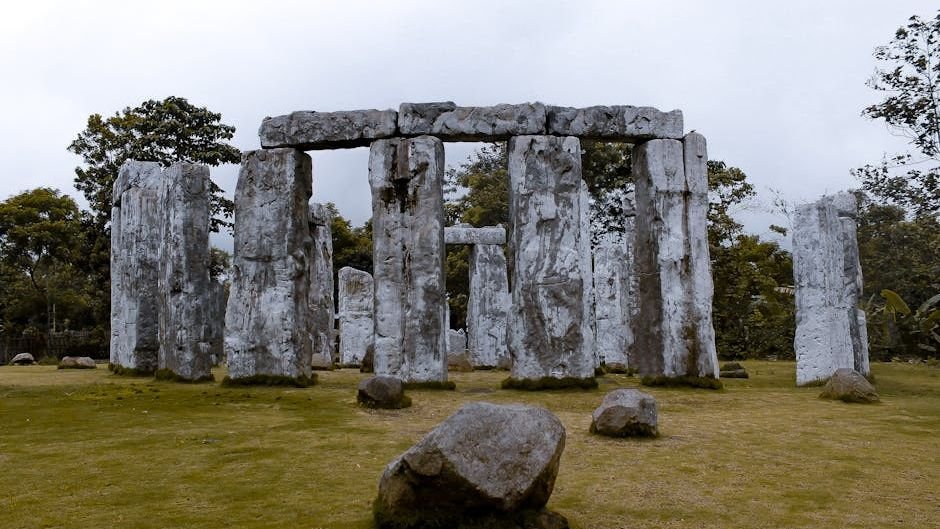
2. Stonehenge: The Stone Circle That Rewrote the Rules

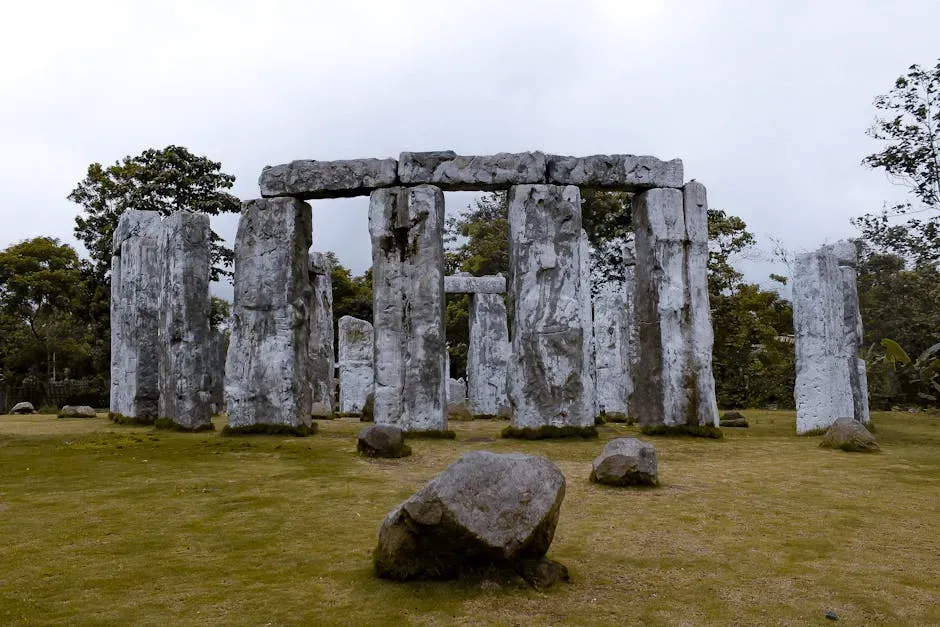
Researchers believe Stonehenge was built in three phases over 1,500 years, from 3,100 BCE to 1,600 BCE, requiring between 20 and 30 million hours of labor. That’s not a construction project. That’s a multi-generational obsession. This massive project was carried out by Neolithic wanderers who had yet to invent the wheel but managed to transport heavy stones from as far as 200 miles away, erect 40-ton pillars, and lift enormous cross beams to connect the circle, all for a purpose that was not realized during most of the builders’ lifetimes.
The prehistoric monument of Stonehenge in England is a marvel of megalithic engineering. Its stones are precisely aligned with the solstices, indicating a deep understanding of astronomy and a sophisticated approach to surveying and construction, all achieved without written records or advanced tools. The social side of this is what truly floors me. The engineering challenge is only half the story; the social side is just as baffling. Organizing large seasonal gatherings, feeding workers, and enforcing a shared design without written plans demands a level of coordination that many small-scale societies simply cannot sustain. Stonehenge, in short, should not have been achievable. Yet there it stands.
3. The Antikythera Mechanism: An Ancient Computer from 100 BCE
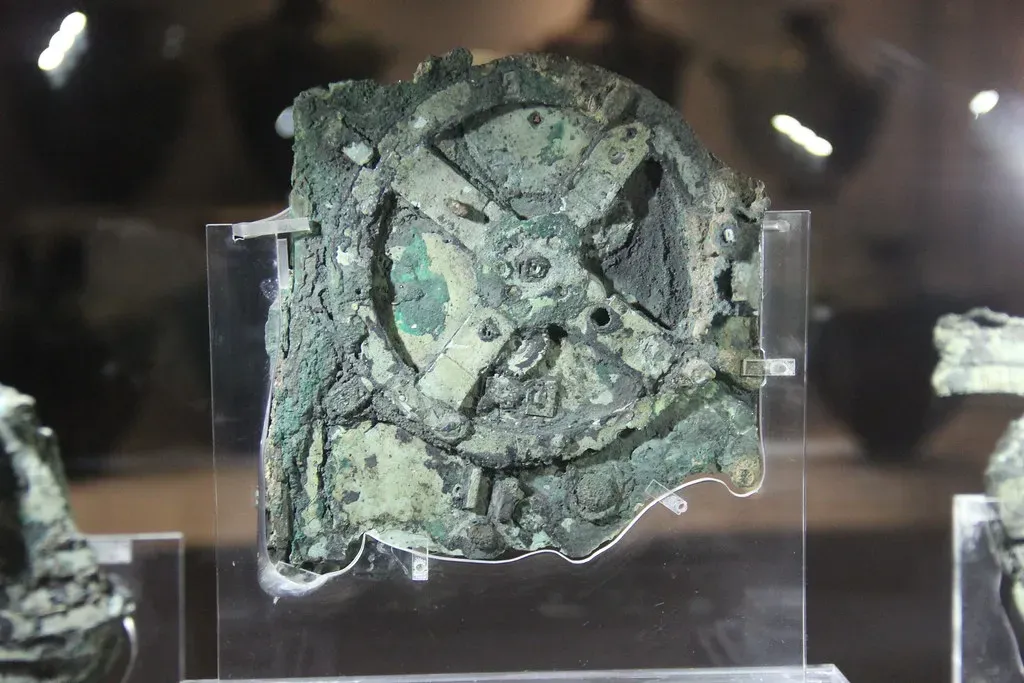
If someone told you that a fully functional mechanical computer was sitting on the ocean floor since before the birth of Christ, you would probably laugh. Yet that is exactly what happened. The Antikythera mechanism is an ancient Greek hand-powered model of the solar system. It is the oldest known example of an analogue computer. It could be used to predict astronomical positions and eclipses decades in advance. It could also be used to track the four-year cycle of athletic games similar to an Olympiad, the cycle of the ancient Olympic Games.
The Antikythera Mechanism challenges modern perceptions of ancient technological capabilities. The device employs differential gearing, a concept thought to have been developed only in the Middle Ages. Its Greek scientific knowledge suggests a high level of understanding in astronomy, mathematics, and mechanical engineering during the Hellenistic period. It gets stranger. The quality and complexity of the mechanism’s manufacture suggests it must have had undiscovered predecessors during the Hellenistic period. In other words, this wasn’t a one-off accident. There may have been an entire tradition of mechanical computing that simply vanished from history. Either way, the Antikythera mechanism forces scientists to confront gaps in the story of technological evolution. It suggests that some lines of innovation may surge forward, flourish briefly, and then disappear, waiting to be rediscovered by divers and imaging labs centuries later.
4. Göbekli Tepe: A Temple Built Before Civilization Was Supposed to Exist
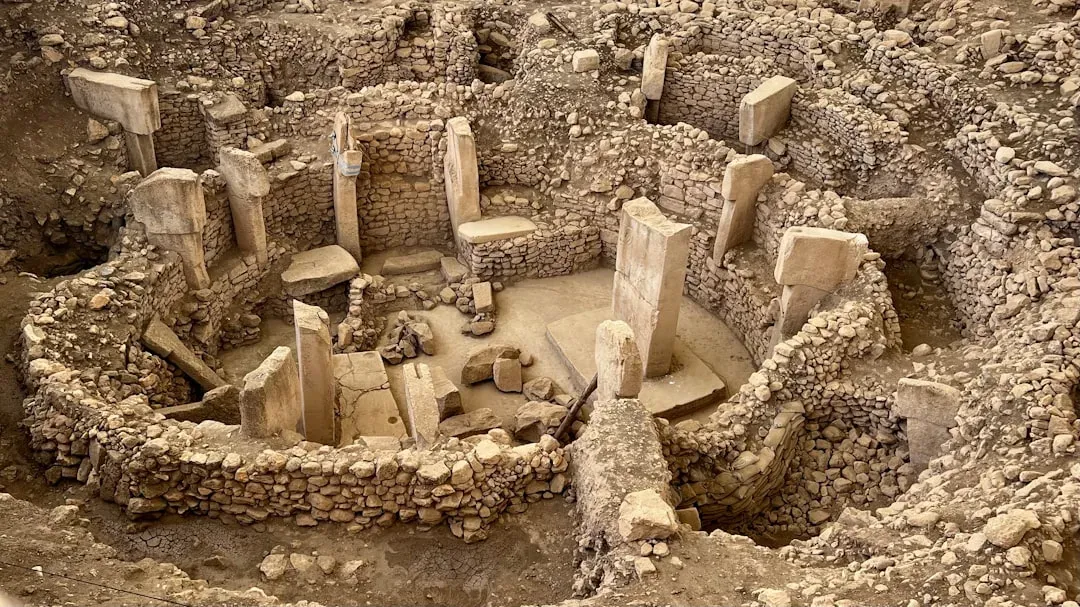
In 1994, an ancient hilltop site in southeastern Turkey quietly shook the foundations of archaeology. Known as Göbekli Tepe, this sprawling complex of megalithic stone circles dates back to at least 9600 BCE, thousands of years before Stonehenge or the Egyptian pyramids. Here’s the thing: everything we thought we knew about early human development said this was impossible. Mainstream archaeology had long believed that humans in that era were still primitive, tribal hunter-gatherers. They were not supposed to build temples, align stone monoliths with celestial patterns, or organize labor forces capable of lifting 20-ton stones. Yet that is exactly what Göbekli Tepe reveals: a symbolic, astronomically aligned monument constructed by people whose sophistication defies the timeline of history.
The Neolithic site, which translates to “belly hill” in Turkish, is two times older than Stonehenge and contains a series of elaborate circular enclosures constructed of massive T-shaped limestone columns. Many of the pillars feature intricate carvings of abstract symbols and wild animals, including lions, foxes, gazelles, and birds. The slabs were transported from bedrock pits about 100 meters from the hilltop, with workers using flint points to cut through the limestone bedrock. The pillars are the oldest known megaliths in the world. Geophysical surveys have also revealed that what has been excavated so far is only a fraction of what lies beneath the surface, which makes the whole discovery feel even more staggering.
5. The Nazca Lines: Giant Art Visible Only from the Sky
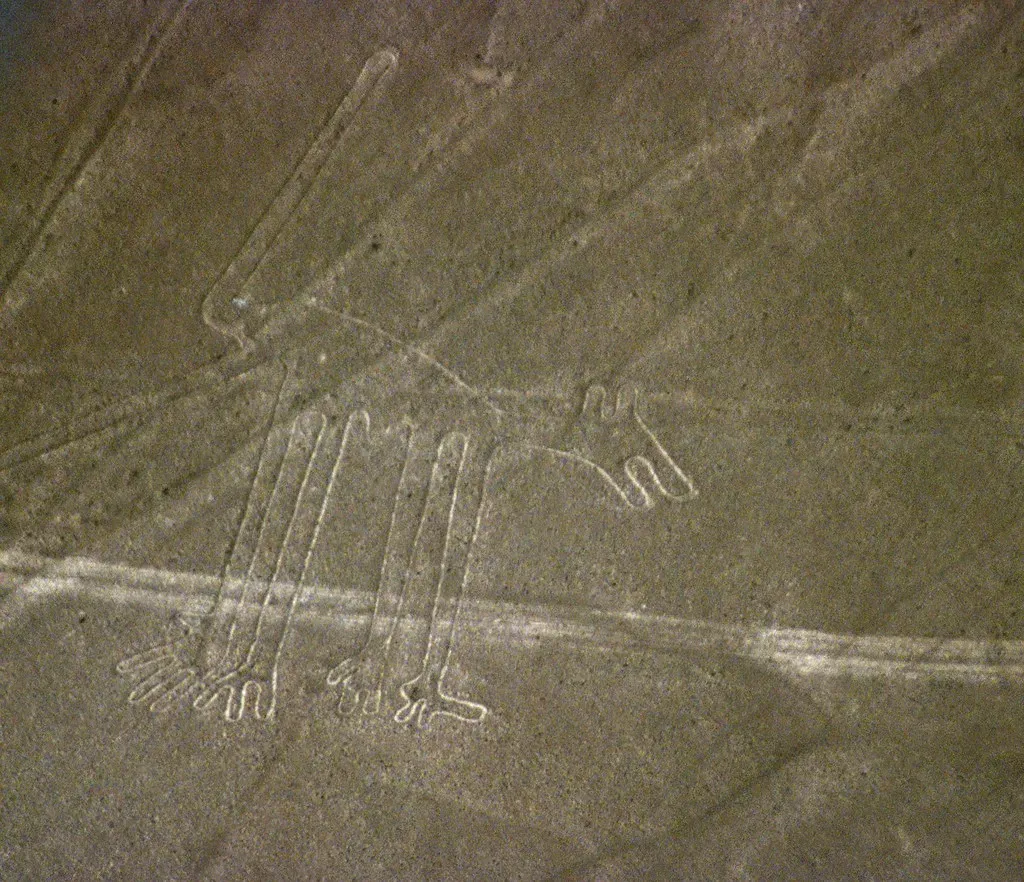
In the arid deserts of southern Peru, enormous figures are etched into the ground, giant geoglyphs stretching for miles, depicting animals, plants, and geometric shapes. Known as the Nazca Lines, these ancient artworks were created by removing the dark surface stones to reveal the lighter soil beneath. Despite their apparent simplicity, they remain one of archaeology’s greatest mysteries. The Nazca Lines are so vast that they can only be truly seen from the air, yet they were made between 500 BCE and 500 CE, long before flight was possible.
The scale of this mystery keeps growing, not shrinking. In 2024, a team of archaeologists from Yamagata University’s Nazca Institute, in collaboration with IBM Research, used artificial intelligence to discover 303 previously unknown geoglyphs depicting parrots, cats, monkeys, killer whales, and even severed heads near the Nazca Lines in Peru. That nearly doubled the previously known total. Research suggests that the Nazca used ancient units of measurement to achieve “perfect” proportions. Maria Reiche, a German mathematician and astronomer who spent decades studying the lines, described their proportions as “perfect,” suggesting the Nazca people carefully planned and measured out their designs using ancient tools and units of measurement. A civilization that had never seen its own art from the air somehow made it perfect from that exact vantage point. Let that sink in.
6. Machu Picchu: An Earthquake-Proof City in the Clouds

High in the Peruvian Andes, nestled between jagged peaks and hidden by mist, lies Machu Picchu, the fabled “Lost City of the Inca.” Built in the 15th century, this mountain citadel is one of the most breathtaking achievements of ancient engineering, yet its exact purpose remains debated. The site contains temples, terraces, plazas, and finely crafted stone buildings, constructed without mortar but fitted so perfectly that even modern blades cannot slip between the stones. The precision of the stonework is staggering, especially considering that the Inca lacked iron tools or wheeled transport.
Machu Picchu’s location adds to the mystery. It sits on a ridge nearly 8,000 feet above sea level, surrounded by sheer cliffs and accessible only by narrow paths. The site showcases ashlar masonry, where stones are cut to fit together without mortar. This technique helped the structures withstand earthquakes. Think about that as an engineering decision. No mortar means the stones can flex and shift during seismic activity, then settle back into place. It is an anti-earthquake system that modern engineers still regard with admiration. The terraces at Machu Picchu reveal a sophisticated understanding of agriculture, designed to prevent erosion and create microclimates for different crops. The city’s alignment with astronomical events suggests that it may have functioned as a ceremonial center as well.
7. The Iron Pillar of Delhi: A Metal That Refuses to Rust
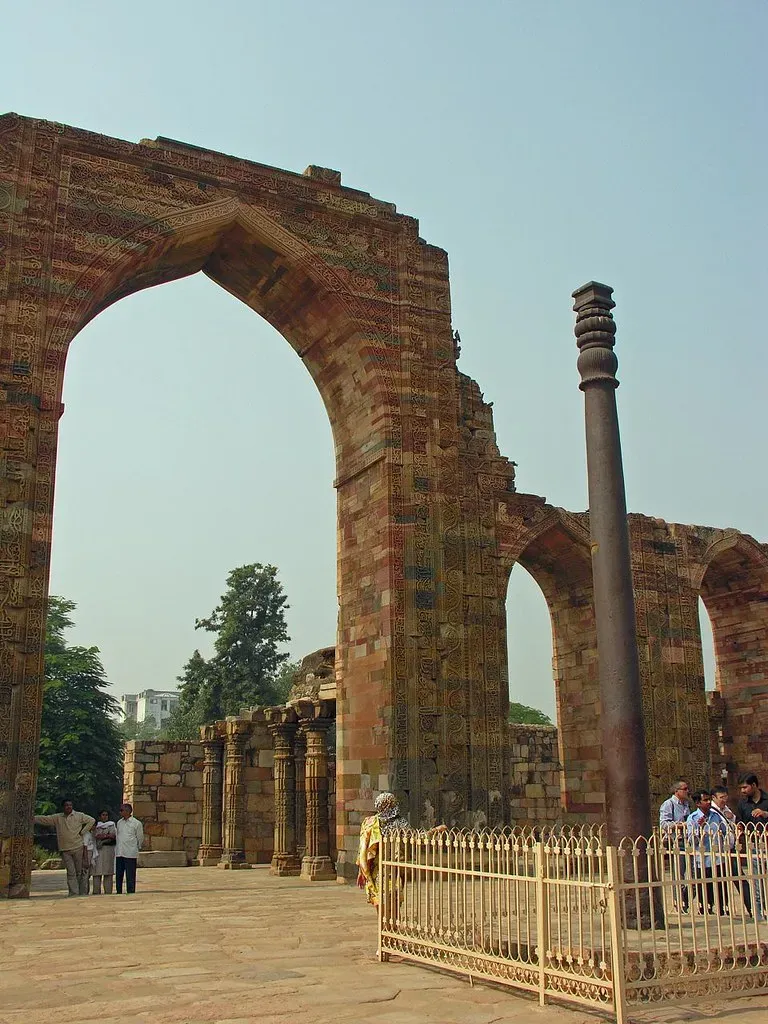
You might think a 1,600-year-old iron pillar standing outdoors in a tropical climate would be nothing but a crumbling pile of rust. Iron rusts easily, and that is a well-known fact. But the Iron Pillar of Delhi, standing over 7 meters tall and weighing more than 6 tons, is completely rust free, even though it was constructed around 400 AD. Made during the height of the Gupta Empire of India, the pillar continues to puzzle scientists, since it never rusts even though it is exposed to the elements for more than 1,600 years.
The composition of the pillar includes a low carbon and high phosphorus content. It is this that likely contributes to its resistance to rust. But even so, it is a complete enigma how such a large iron monument was forged with such a unique composition. Modern science has theories, but no one has replicated it. The technology to produce iron with such corrosion resistance was not fully understood until the 20th century, making the Iron Pillar of Delhi a testament to the advanced metallurgical knowledge of ancient Indian craftsmen. To put it bluntly: ancient Indian metalworkers achieved something that modern industry took thousands of years to even understand, let alone recreate. It stands there today in the Qutub complex in New Delhi, completely unfazed by time, quietly laughing at our assumptions about the ancient world.
The Bigger Picture: Ancient Genius Demands Our Respect
Long before computer models and laser-guided instruments, ancient builders were moving stones the size of houses, carving rock with surgical precision, and aligning structures with the sky so accurately that modern engineers still double-check the math. Archaeologists can explain many of the tools and materials, yet nagging questions remain about scale, speed, and coordination that seem out of step with what we assume about “primitive” societies. The word “primitive” deserves to be retired entirely when we talk about these cultures.
These ancient technologies demonstrate that human ingenuity has deep historical roots and that ancient peoples possessed remarkable knowledge and skills, some of which remain incompletely understood despite our modern scientific advances. Whether through lost documentation, disrupted cultural transmission, or techniques so specialized they failed to spread widely, these technological achievements remind us that progress is not always linear. Each time we point a new scanner, drone, or AI system at one of these sites, we peel back one layer of mystery and find another waiting beneath. The ancient world was not a stepping stone to our brilliance. It had its own brilliance entirely.
So here’s a question worth sitting with: if ancient engineers could achieve things we still cannot fully replicate or explain, what else did they know that we have simply lost? What do you think? Drop your thoughts in the comments below.