
There is something deeply unsettling about staring at a massive earthen pyramid, a colossal snake carved into the earth, or a network of perfectly straight ancient roads that lead to nowhere obvious, and realizing that the people who built them left almost no explanation behind. Ancient America is not just the story of the Aztecs or the Incas. It is also a much older, stranger, and in many ways more baffling story that stretches back thousands of years across plains, deserts, and river valleys.
You might think that with all our modern tools, our satellite imaging, our radiocarbon dating, and our AI-assisted archaeology, we would have cracked most of these riddles by now. Honestly, the opposite seems to be true. The more we dig, the more questions surface. So if you’re ready to have your picture of ancient American history completely reframed, let’s dive in.
The Rise and Mysterious Collapse of Cahokia, America’s Forgotten Megacity
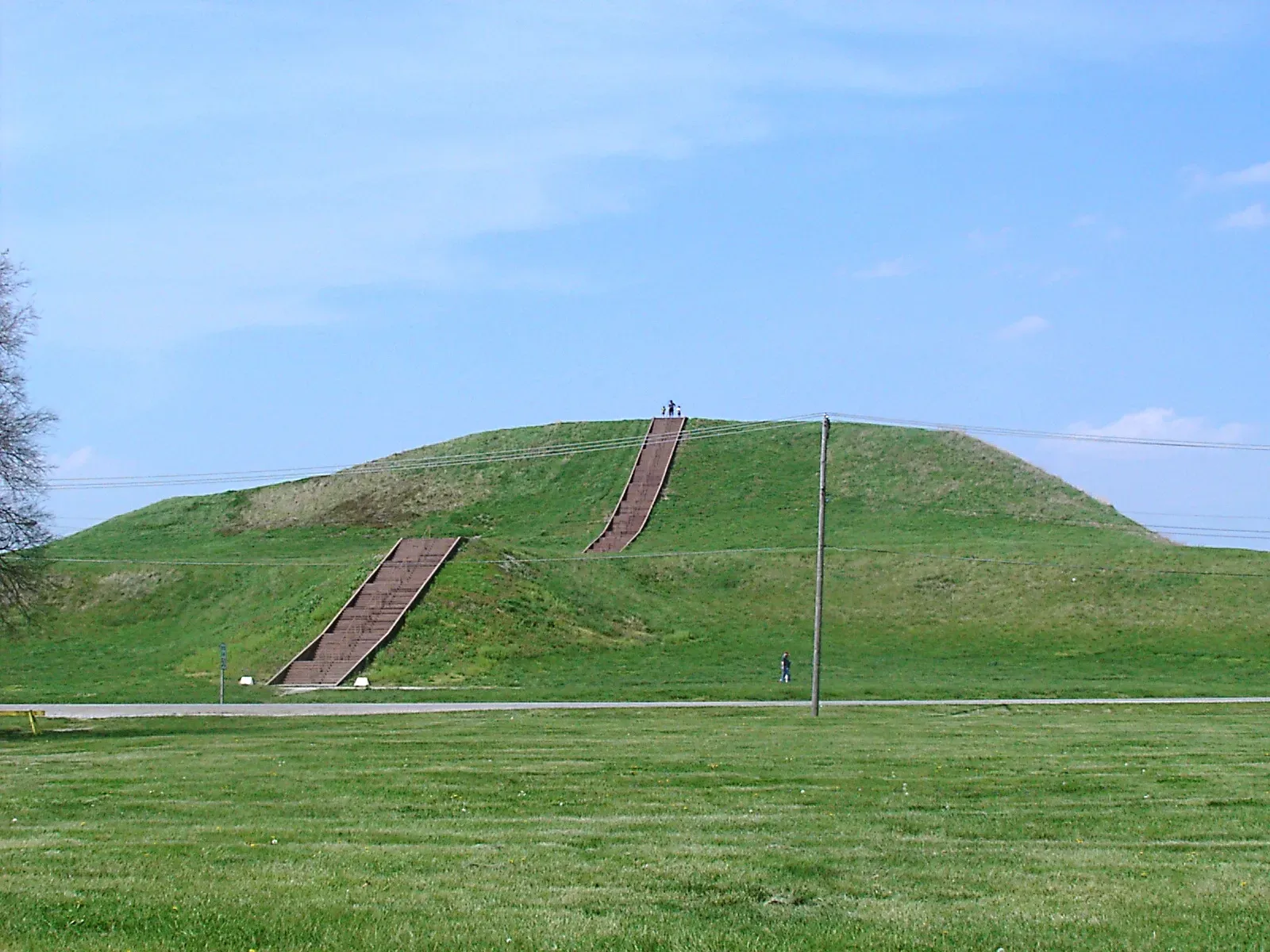
Here’s a fact that genuinely stops people in their tracks: right across the Mississippi River from what is now St. Louis, there once stood a city larger than London was at the same time in history. At its apex around 1100 CE, the city of Cahokia covered about six square miles, included around 120 earthworks in a wide range of sizes, shapes, and functions, and had a population of between 15,000 and 20,000 people. That is not a village. That is a full-blown urban civilization.
The city’s landscape was dominated by massive earthen pyramids, broad ceremonial plazas, and woodhenges, vast circular arrays of timber posts believed to have been used to track the sun’s movements and mark seasonal rituals. At its core rose Monks Mound, a towering 100-foot-high platform that remains the largest prehistoric earthen structure in North America. Think of it like the ancient American equivalent of a cathedral or a palace, constructed without metal tools, without wheels, and without horses.
Cahokia suddenly declined 600 years ago, and no one knows why. Was it drought? Warfare? Political collapse? It might have been a matter of political factionalization, or warfare, or drought, or disease – researchers just don’t know. One study even ruled out the long-popular environmental degradation theory, finding no evidence of the catastrophic flooding that was supposed to have driven people away.
Researchers still do not know why Cahokia incorporated so rapidly around 1050 CE, how its leaders coordinated massive construction and trade networks spanning hundreds of miles, and why, by the early 1200s, this remarkable urban settlement was abruptly abandoned. For a city of that size and sophistication, vanishing without clear cause is, to put it mildly, extraordinary.
The Nazca Lines: Giant Messages With No Known Recipient
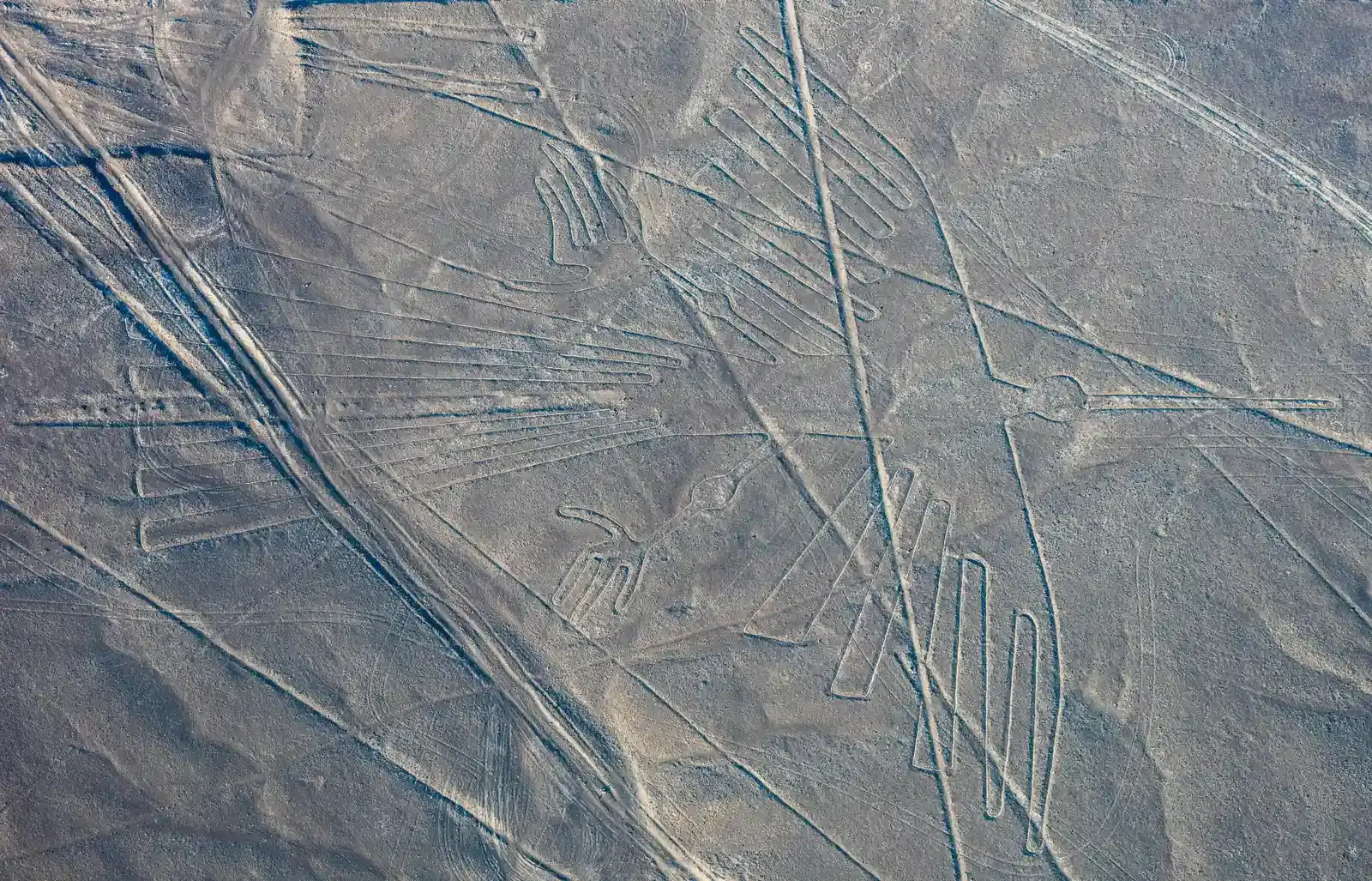
Imagine drawing incredibly detailed pictures of hummingbirds, spiders, and monkeys, each hundreds of feet across, knowing you will never be able to step back far enough to actually see them. That is precisely what the Nazca people did. The Nazca Lines are a series of large designs created by the ancient Nazca culture between 500 BCE and 500 CE in the Pampas de Jumana region of Peru. These designs range from simple lines and shapes to intricate animal and plant figures, including monkeys, birds, fish, and trees.
In total, there are over 800 straight lines, 300 geometric figures, and 70 animal and plant designs, also called biomorphs. The real punch to the stomach, though, is their scale. These geoglyphs are a mystery because they can only be fully seen from high above in the air. So who were they made for? Gods looking down from above? Celestial bodies? Or something else entirely?
Archaeologists, historians, and mathematicians have all tried to determine the purpose of the lines. Determining how they were made has been easier than determining why they were made. The leading theories swing between astronomy, religious ritual, and water worship. Due to the incredible aridity of the Nazca Desert, which receives only about 20 minutes of rain for the entire year, the most likely explanation for the designs is that they were incorporated in ancient rituals imploring the gods for rain.
Yet even that explanation feels incomplete. In 1967, the American astrophysicist Gerald Hawkins found no correlation between changes in the celestial bodies and the design of the Nazca Lines, effectively poking a huge hole in the popular astronomy theory. Today, no theory is accepted as fact in itself. If it is concluded that the Nazca lines perhaps were multifunctional, some areas could be related to agriculture, others to water, others to sky observation, and so on. In other words, centuries of study have given us better guesses, but no certain answers.
Poverty Point: A 3,500-Year-Old City Built by People Who Shouldn’t Have Been Able to Build It
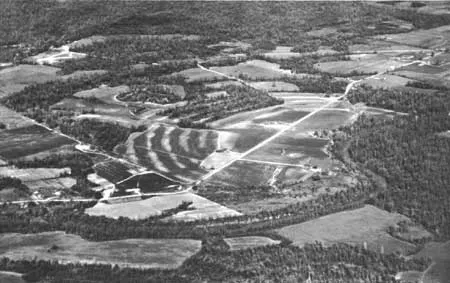
Most people have never heard of Poverty Point, Louisiana, and that is a crying shame. The Poverty Point site contains earthen ridges and mounds, built by indigenous people between 1700 and 1100 BCE during the Late Archaic period in North America. Archaeologists have proposed a variety of possible functions for the site, including as a settlement, a trading center, and a ceremonial religious complex. The property contains “the largest and most complex Late Archaic earthwork occupation and ceremonial site yet found in North America.”
Scientists estimate that 53 million cubic feet of soil were moved during construction of the site, which was inhabited for 600 years. Now here is where it gets truly wild. A study published in the journal Southeastern Archaeology finds that people of the region raised the enormous earthworks in a matter of months or even just weeks. “One of the most remarkable things is that these earthworks have held together for more than 3,000 years with no failure or major erosion.” Modern engineers still cannot fully explain how they did it.
Hunter-gatherers at Poverty Point may have built its massive earthworks not under the command of chiefs, but as part of a vast, temporary gathering of egalitarian communities seeking spiritual harmony in a volatile world. New radiocarbon data and reexamined artifacts suggest far-flung travelers met to trade, worship, and participate in rituals designed to appease the forces of nature. That rewrites almost everything we thought we knew about how complex ancient societies had to be organized.
Trade was at the heart of Poverty Point life, with the site once at the center of a vast exchange network. More than 78 tons of rocks and minerals, materials essential for crafting tools, weapons, and ceremonial objects but none native to the area, were brought from as far as 800 miles away. The reasons Poverty Point was eventually abandoned remain a mystery. A site this impressive, this organized, this sophisticated, and we still cannot explain why it was suddenly left behind.
The Great Serpent Mound of Ohio: Built on a Meteor Crater, For Unknown Reasons
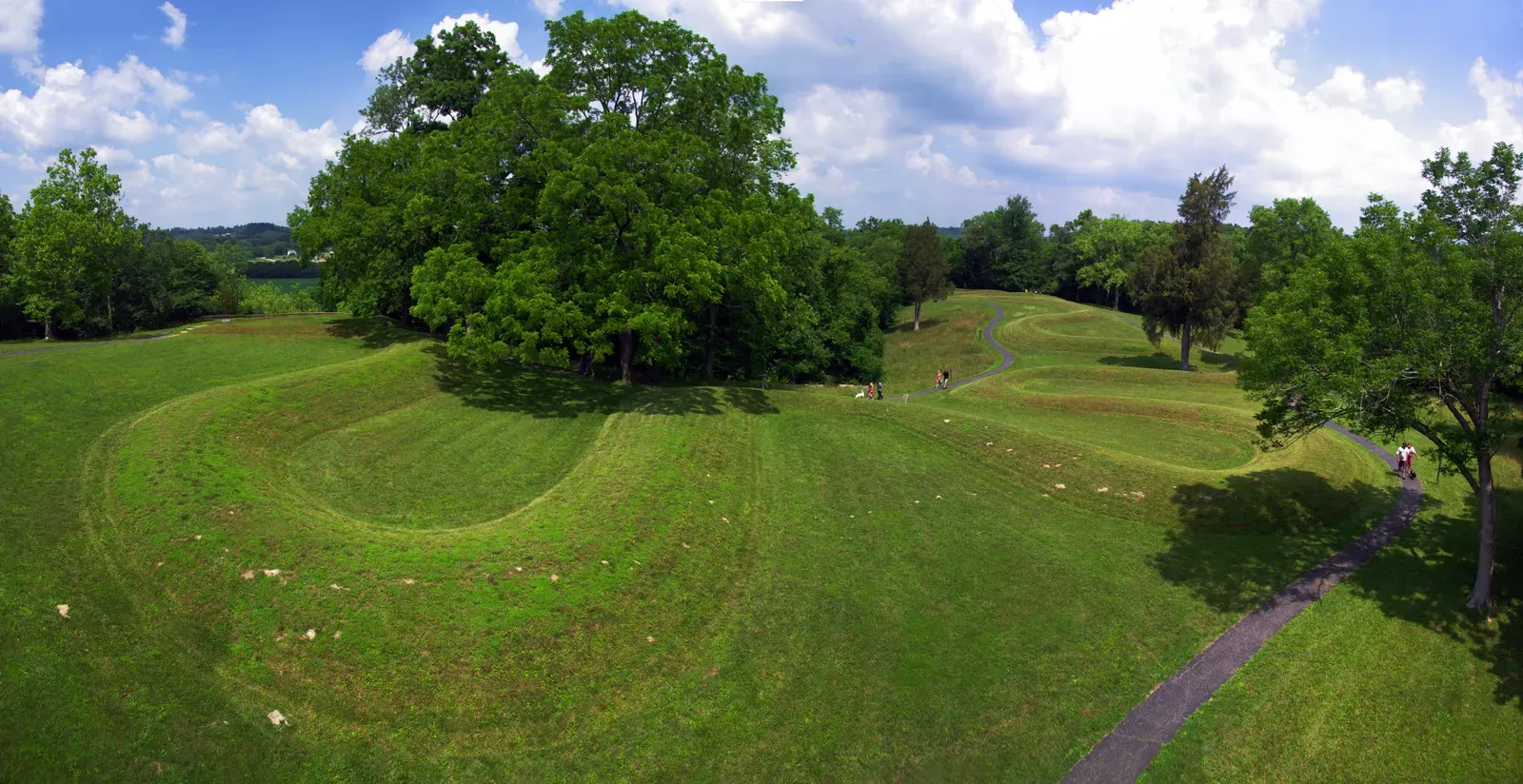
I think this one might be the strangest entry on this entire list, and that is saying something. The Great Serpent Mound is a 1,300-foot-long and 3-foot-high prehistoric effigy mound located on a plateau of a crater along Ohio Brush Creek in Adams County, Ohio, and is the largest surviving prehistoric effigy mound in the world. Resembling an uncoiling serpent, the mound is steeped in mystery and controversy.
The mound is located on the site of a classic astrobleme, an ancient meteorite impact structure. When attempting to understand the impact origin of this structure, the pattern of disruption of sedimentary strata has provided archaeologists with a lot of information. Was its placement on a meteor crater deliberate? Did the ancient builders somehow recognize this spot as cosmically significant? The fact that it was constructed on an ancient meteor crater adds another layer of intrigue. Was this placement intentional? Did ancient peoples recognize the geological uniqueness of this spot?
Then there is the question of who built it at all. A 1991 site excavation used radiocarbon dating to determine that the mound was approximately 900 years old, suggesting builders belonged to the Fort Ancient culture, though in 2014, another team presented new radiocarbon dates suggesting it was built by the Adena culture at around 300 BC. Those two dates are over a thousand years apart. That is not a small discrepancy.
Despite over a century of research, there is no conclusive evidence about what it represents, when it was built, and what its true purpose was, though various astronomical alignments suggest it may have functioned as a type of calendar. Some scholars suggest it was a ceremonial site, while others believe it was used for astronomical purposes, as the head of the serpent aligns with the summer solstice sunset. You have to admire the ambition, even if the mystery refuses to budge.
Chaco Canyon: Roads That Go Nowhere and Buildings That Defy Explanation
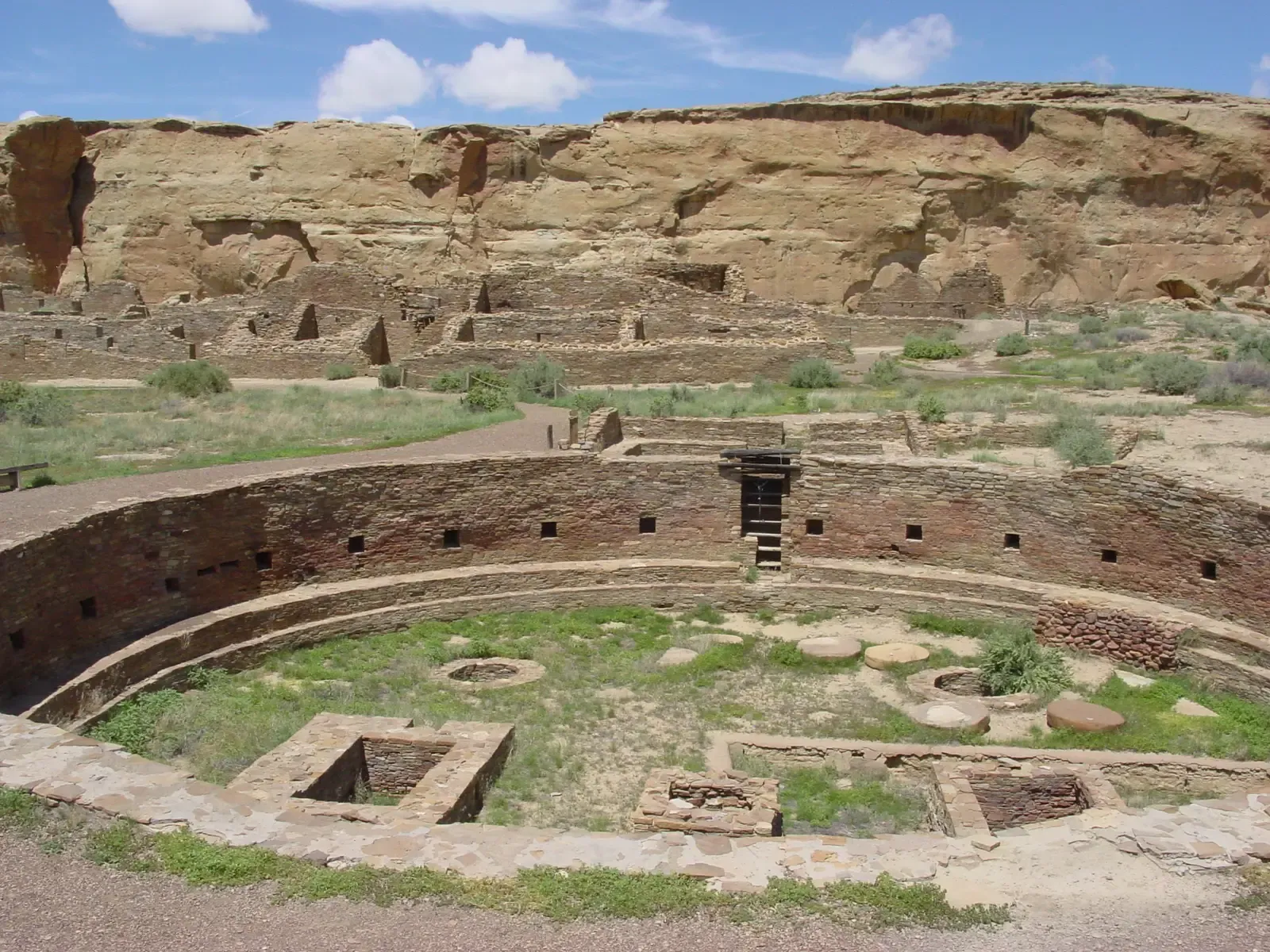
Located in the high desert of New Mexico, Chaco Canyon is one of those places that makes you feel genuinely small. Research by the Solstice Project has shown that twelve of the Chacoans’ major buildings, eight in Chaco Canyon and the four largest outlying buildings, are oriented to the solar and lunar cycles. Chaco Canyon was a complex ceremonial center with extraordinary astronomical alignments of buildings and roads, where landscape, directions, sun and moon, and movement of shadow and light were used by the Chacoan builders to unite with a cosmic order.
In New Mexico’s San Juan Basin, Chacoan great houses rise with core-and-veneer masonry, elaborate kivas, and precise orientations. Hundreds of kilometers of engineered roads radiate from the canyon, some cutting straight across terrain without obvious practical purpose. Whether these corridors served pilgrimage, political integration, or ceremonial processions is still debated. Let’s be real, you don’t build perfectly straight roads over cliff faces and through mountains unless those roads mean something more than simple transportation.
Despite extensive research, much about Chaco Canyon remains shrouded in mystery. The reasons for its sudden abandonment around 1150 CE are still debated, with theories ranging from climate change to social upheaval. The sheer sophistication of the astronomical knowledge encoded in the architecture is staggering. This multi-story structure, which housed hundreds of rooms, served as a political, ceremonial, and social center around the 11th century. Its precise alignment with astronomical phenomena suggests that its builders had a deep understanding of the stars and the cycles of the sun and moon.
It’s hard to say for sure how a society without telescopes or written star charts achieved this level of precision. The circular rooms, or kivas, built by the Pueblo more than a thousand years ago at Chaco Canyon in New Mexico align with the movements of the sun, moon and stars, including solstice events. The knowledge it would take to engineer an entire canyon complex around celestial events is staggering, and the full story of how and why it was done remains tantalizingly out of reach.
The Mitchell Log of Cahokia: How Did They Move a Five-Ton Tree Hundreds of Miles?
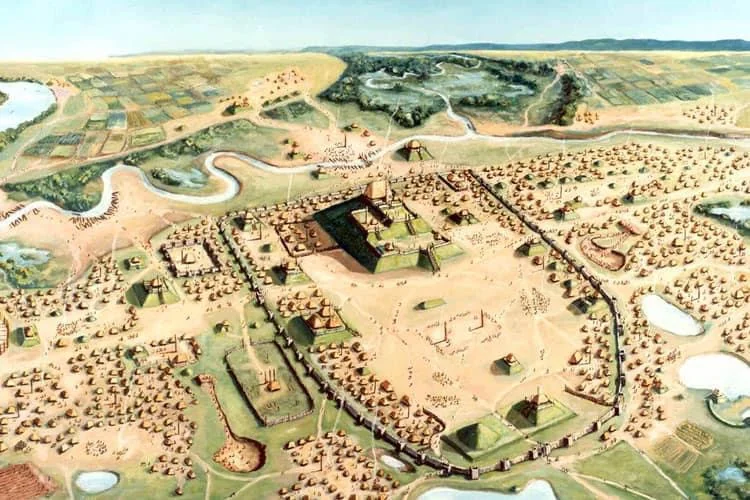
You might think you already know everything Cahokia has to offer, but this particular puzzle deserves its own spotlight. Researchers recently uncovered a finding that raises even more questions about this ancient civilization’s capabilities. Scientists from the University of Arizona and the University of Illinois used advanced tree-ring dating and isotope analysis to determine that a monumental wooden post known as the “Mitchell Log” was cut around 1124 CE, at the height of Cahokia’s power.
The log’s massive remains, measuring over 11 feet long and weighing more than a ton, suggest the original post may have stood nearly 60 feet tall when erected around 1124 CE. Using a combination of tree-ring radiocarbon dating and strontium isotope analysis, the research team determined that the wood came from a bald cypress tree that grew hundreds of miles south of the site. The tree’s unique chemical signature ruled out any local origin, indicating it was transported from as far away as southern Illinois, western Tennessee, or even northern Louisiana.
This discovery raises the intriguing question of how ancient builders moved such a massive four to five-ton log great distances without modern tools or transport. Think about what that actually means in practical terms. No wheels. No cranes. No diesel engines. Just human ingenuity and organization, moving something the weight of an elephant across hundreds of miles of river valleys and forest.
Materials excavated at the site indicate that the city traded with peoples from as far away as the Gulf of Mexico, the Appalachians, the Great Lakes, and the Rocky Mountains. The sheer reach of Cahokia’s network is breathtaking. Yet none of that logistical genius left behind a single written word explaining exactly how it all worked, or why the whole enterprise was eventually abandoned.
Poverty Point’s Impossible Engineering: A Structure That Baffles Modern Builders
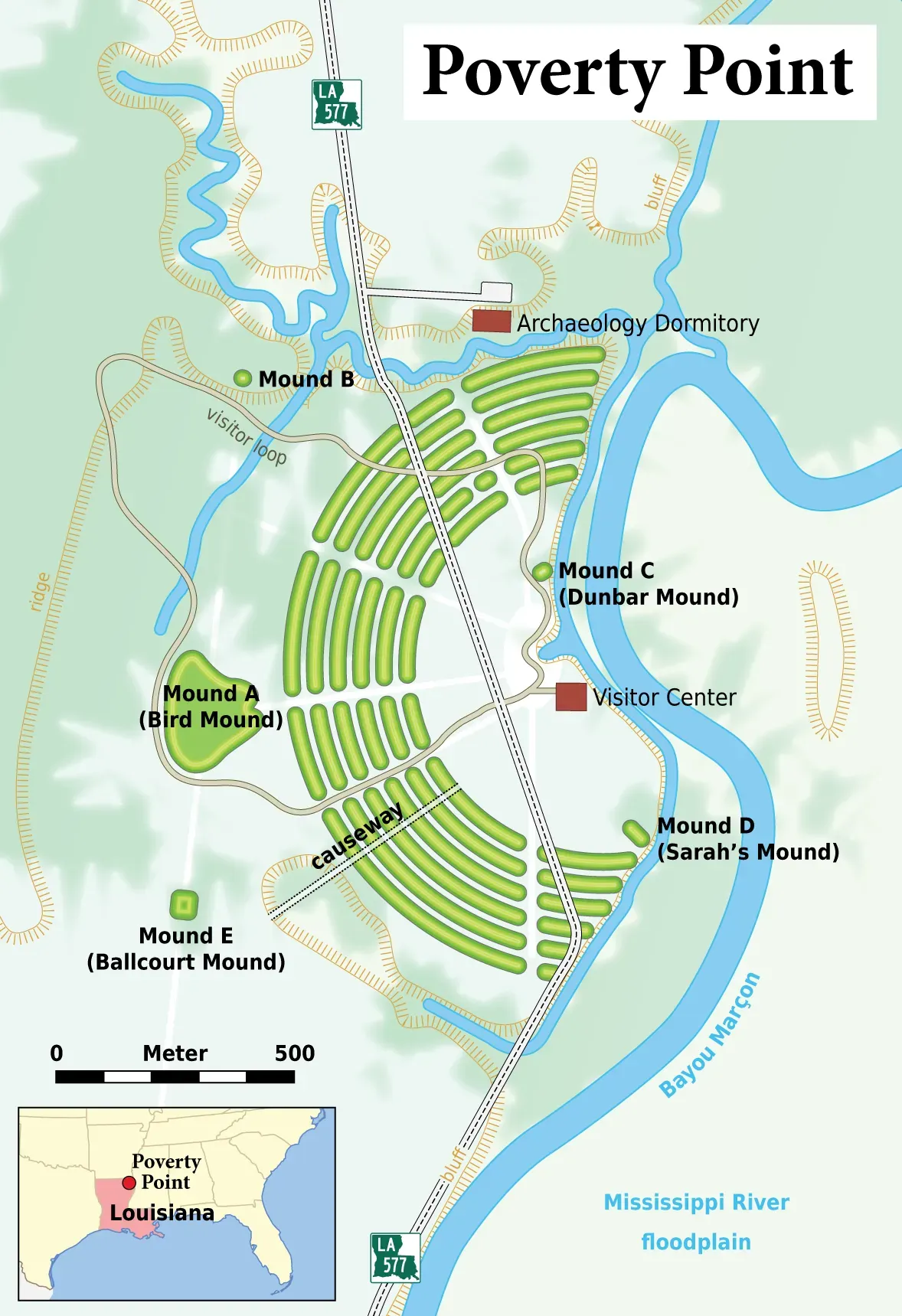
We touched on Poverty Point earlier, but its engineering mystery is so extraordinary it deserves a deeper look all on its own. Microscopic analysis of the soils that make up the mounds shows that builders mixed different types of clays, silts and sand to make the construction more durable. “Similar to the Roman concrete or rammed earth in China, Native Americans discovered sophisticated ways of mixing different types of materials to make them virtually indestructible, despite not being compacted.”
Around 1300 BCE, 350 years after they began building at the site, the people of Poverty Point built their last and largest monument, now known as Mound A. Carefully placed in the center behind the arched ridges, Mound A is seventy-two feet high, 710 feet long, and 660 feet wide. At its widest it appears like a set of outstretched wings, narrowing to a point, like the beak of a bird flying west over the manmade arched ridges. Someone planned that. Someone visualized that from above and executed it with precision.
Since there was no evidence of weathering between the stages, they must have built this structure rapidly, perhaps in as little as three months, moving over fifteen million baskets of dirt to the site. There is also no evidence that they built any structure on top of Mound A or buried any individual inside. So it wasn’t a tomb. It wasn’t a house. It was something else entirely, and we still don’t know what.
Archaeologists have never found burials or evidence of long-term houses at Poverty Point. “We would expect to see those things if this were a permanent village. The old paradigm that people lived at Poverty Point continuously for centuries has been crumbling, and we needed a new framework.” Some archaeoastronomers have discovered solar alignments at Poverty Point and suggested this place is the world’s most significant ancient solstice marker. If they are right, that would make this pre-agricultural earthwork one of the most intentionally designed ritual landscapes on the entire planet.
Conclusion: The Mystery Is the Message
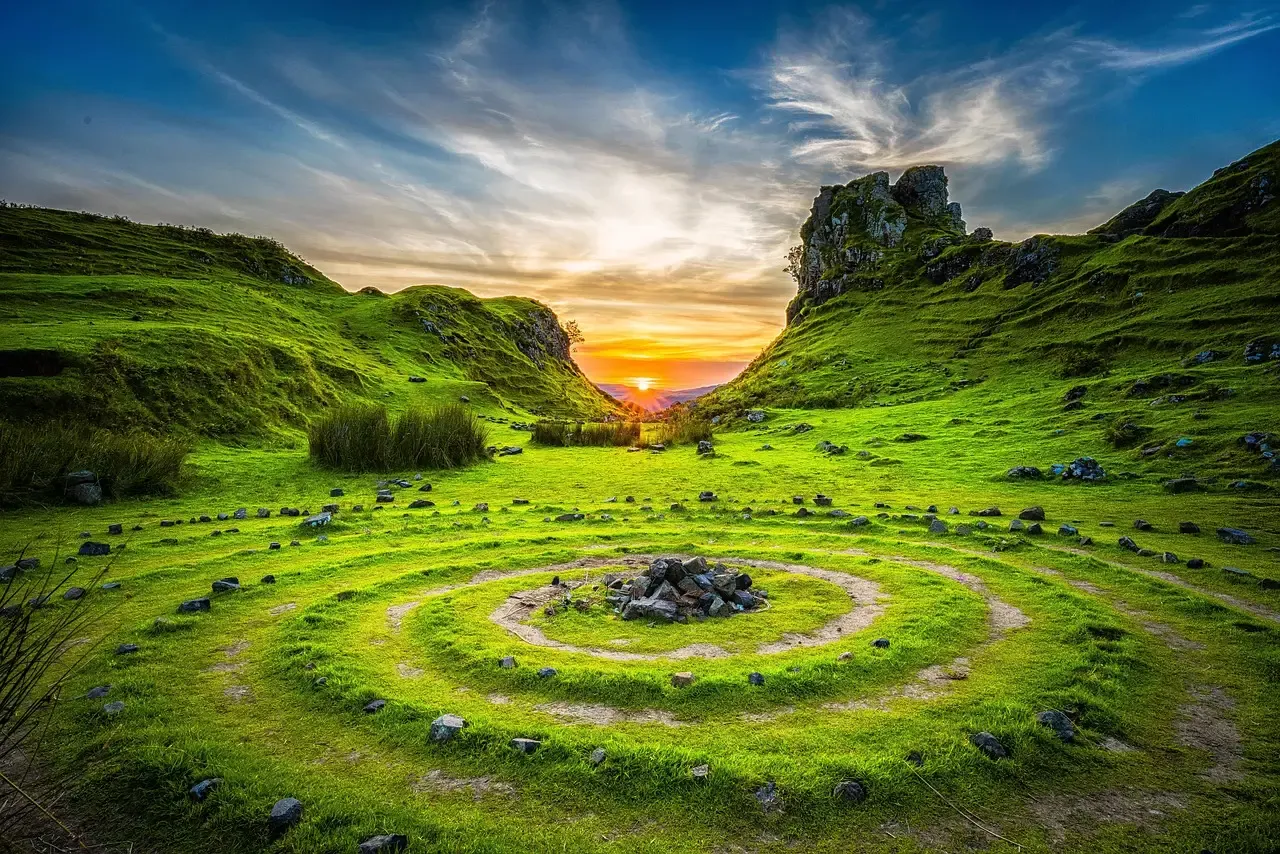
What ties all of these ancient American mysteries together is not their age, their scale, or even their ingenuity. It is the silence. Each one was built by people who clearly understood their world in profound ways, who organized labor, encoded celestial knowledge into stone and earth, and maintained vast trading networks across the continent. Yet they left no written records, no owner’s manual, no “here’s why we built this” inscription carved above the door.
Science keeps getting closer. LiDAR mapping, isotope analysis, AI-assisted archaeology, and advanced radiocarbon dating are all pulling back layers of mystery one slow revelation at a time. Hopefully, as technology improves and more information is deciphered, humans will begin to learn more about our ancient past. Plenty of other examples throughout history were considered unsolvable mysteries, only for them to be cracked wide open decades later aided by technological breakthroughs or new archaeological discoveries.
Still, there is something valuable in sitting with the uncertainty. These mysteries are a reminder that human beings have always been capable of breathtaking sophistication, long before the civilizations we learned about in school. The ancient Americans who built Cahokia, etched the Nazca Lines, and engineered the mounds of Poverty Point were not primitive. They were brilliant. We just haven’t been smart enough yet to fully understand them.
Which of these seven mysteries surprised you the most? Tell us in the comments, because honestly, the debate is just getting started.