
Picture yourself floating in the vast emptiness of space, gazing at our cosmic neighborhood with fresh eyes. You think you know the solar system, but honestly, you’ve barely scratched the surface. Beyond the textbook planets and familiar moons lies a treasure trove of mind-bending phenomena that would make even the most seasoned scientists do a double-take. From invisible magnetic bubbles larger than our Sun to underground oceans that dwarf Earth’s, these cosmic secrets are waiting to completely transform how you see our local corner of the universe.
These aren’t just abstract curiosities collecting dust in astronomy journals. These are real, tangible wonders that exist right now in our solar system, reshaping everything scientists thought they knew about planetary science. Each discovery peels back another layer of cosmic mystery, revealing just how extraordinary and unexpected our neighborhood truly is.
Jupiter’s Magnetosphere Could Swallow Our Sun Whole
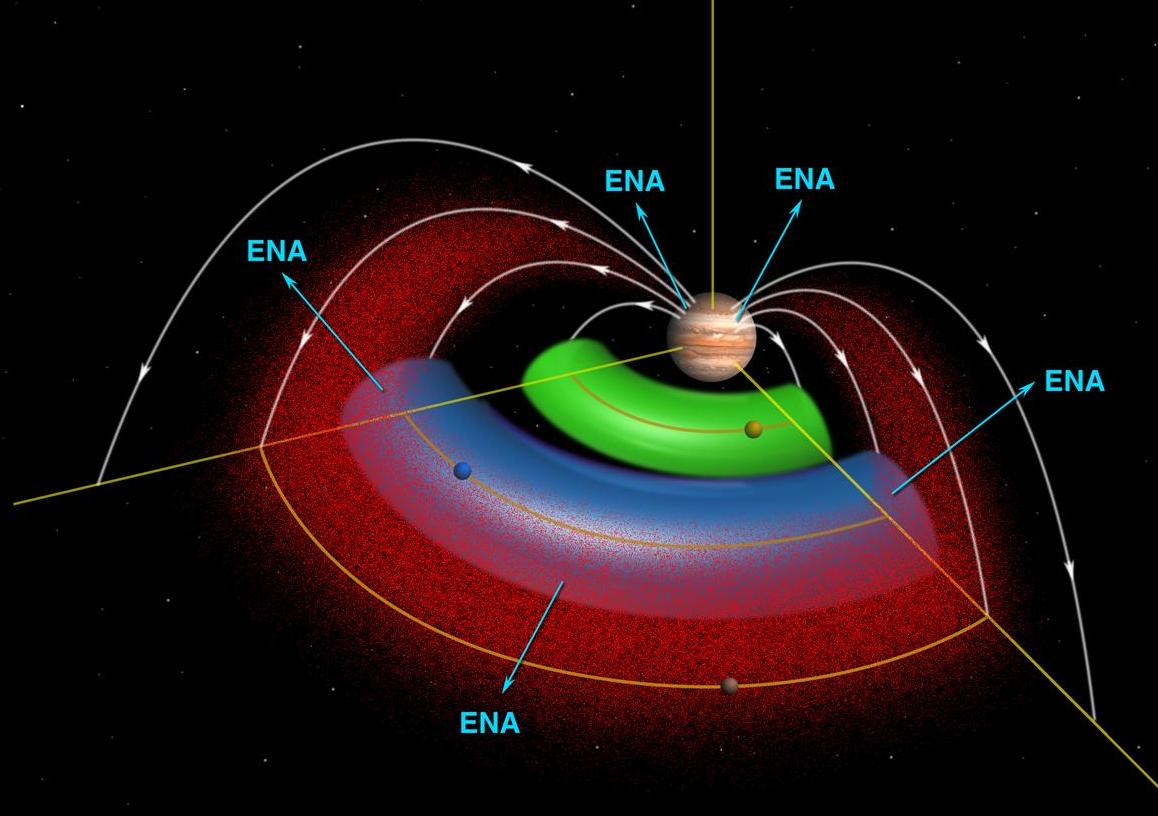
You probably know Jupiter is big, but what you don’t realize is that its invisible magnetic field creates a structure so massive it defies comprehension. The Jovian magnetosphere is so large that the Sun and its visible corona would fit inside it with room to spare. If one could see it from Earth, it would appear five times larger than the full moon in the sky despite being nearly 1700 times farther away. This invisible giant extends its influence far beyond what your eyes could ever detect.
About 5.3 million kilometers (3.3 million miles) wide on average, the magnetosphere is 150 times wider than Jupiter itself and almost 15 times wider than the Sun. Think about that for a moment: Jupiter creates an invisible protective bubble around itself that’s fifteen times wider than our entire star. Some 20,000 times stronger than Earth’s magnetic field, Jupiter’s magnetic field creates a magnetosphere so large it begins to avert the solar wind almost 3 million kilometers before it reaches Jupiter.
This colossal magnetic structure isn’t just impressive in size. Extending up to seven million kilometers in the Sun’s direction and almost to the orbit of Saturn in the opposite direction, Jupiter’s magnetosphere is the largest and most powerful of any planetary magnetosphere in the Solar System, and by volume the largest known continuous structure in the Solar System after the heliosphere. Imagine Jupiter as a cosmic vacuum cleaner, sweeping up charged particles across distances that stretch nearly to Saturn’s orbit.
Hidden Oceans Across the Solar System Hold More Water Than Earth
While you’re worrying about water scarcity on Earth, the solar system is practically swimming in the stuff. This leads to a volume of Europa’s oceans of 3 × 10^18 m^3 (3 billion km^3), slightly more than twice the volume of Earth’s oceans. Europa, just one of Jupiter’s moons, contains more than double the water found in all of Earth’s oceans combined, hidden beneath its icy shell.
Europa isn’t alone in this aquatic abundance. The best-established candidates for subsurface water oceans in the Solar System are Jupiter’s moons Europa, Ganymede, and Callisto, and Saturn’s moons Enceladus and Titan. Although Earth contains the most liquid water on its surface of any of the 8 planets, the most water in any form is found on Jupiter’s moon Ganymede. Next in order is Saturn’s Titan, Jupiter’s Callisto, and Jupiter’s Europa.
These aren’t just theoretical puddles hiding under ice. Enceladus ejects plumes of salted water laced with grains of silica-rich sand, nitrogen (in ammonia), and organic molecules, including trace amounts of simple hydrocarbons such as methane (CH 4), propane (C 3H 8), acetylene (C 2H 2) and formaldehyde (CH 2O), which are carbon-bearing molecules. This indicates that hydrothermal activity – an energy source – may be at work in Enceladus’s subsurface ocean. Some of these hidden seas might actually be more hospitable to life than anything on Earth’s surface.
Mercury Is Still Shrinking After Billions of Years
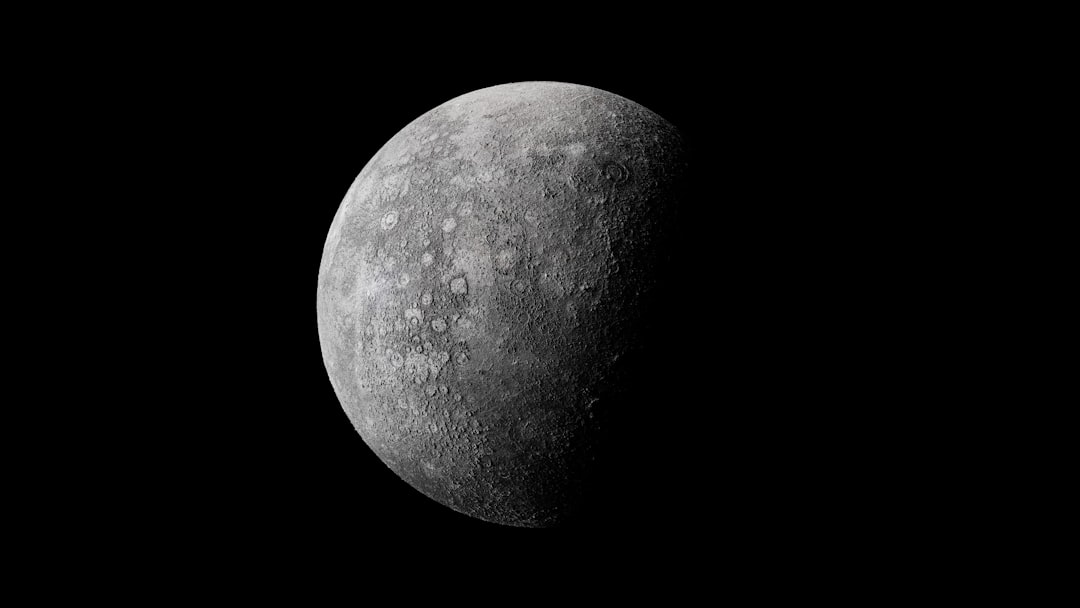
You might think planets are static, unchanging worlds, but Mercury is actively getting smaller right now. Because the fault scarps are relatively small, scientists are sure that they weren’t created that long ago and that the planet is still contracting 4.5 billion years after the solar system was formed. This isn’t some ancient geological process that ended eons ago – Mercury is literally shrinking as you read this.
Experts have long known that Mercury has shrunk significantly since it first formed. Giant cracks, known as scarps, on the planet’s surface were created as the planet contracted over long periods of cooling. Picture Mercury as a cosmic raisin, slowly wrinkling and contracting as its interior continues to cool and solidify.
In 2016, data from MESSENGER revealed cliff-like landforms known as fault scarps. These relatively fresh geological features prove that Mercury’s transformation is ongoing. While Earth’s geology is driven by plate tectonics and volcanic activity, Mercury’s changes come from something much more fundamental: the planet itself is getting physically smaller as it ages, creating new surface features in the process.
Saturn Would Actually Float in Water
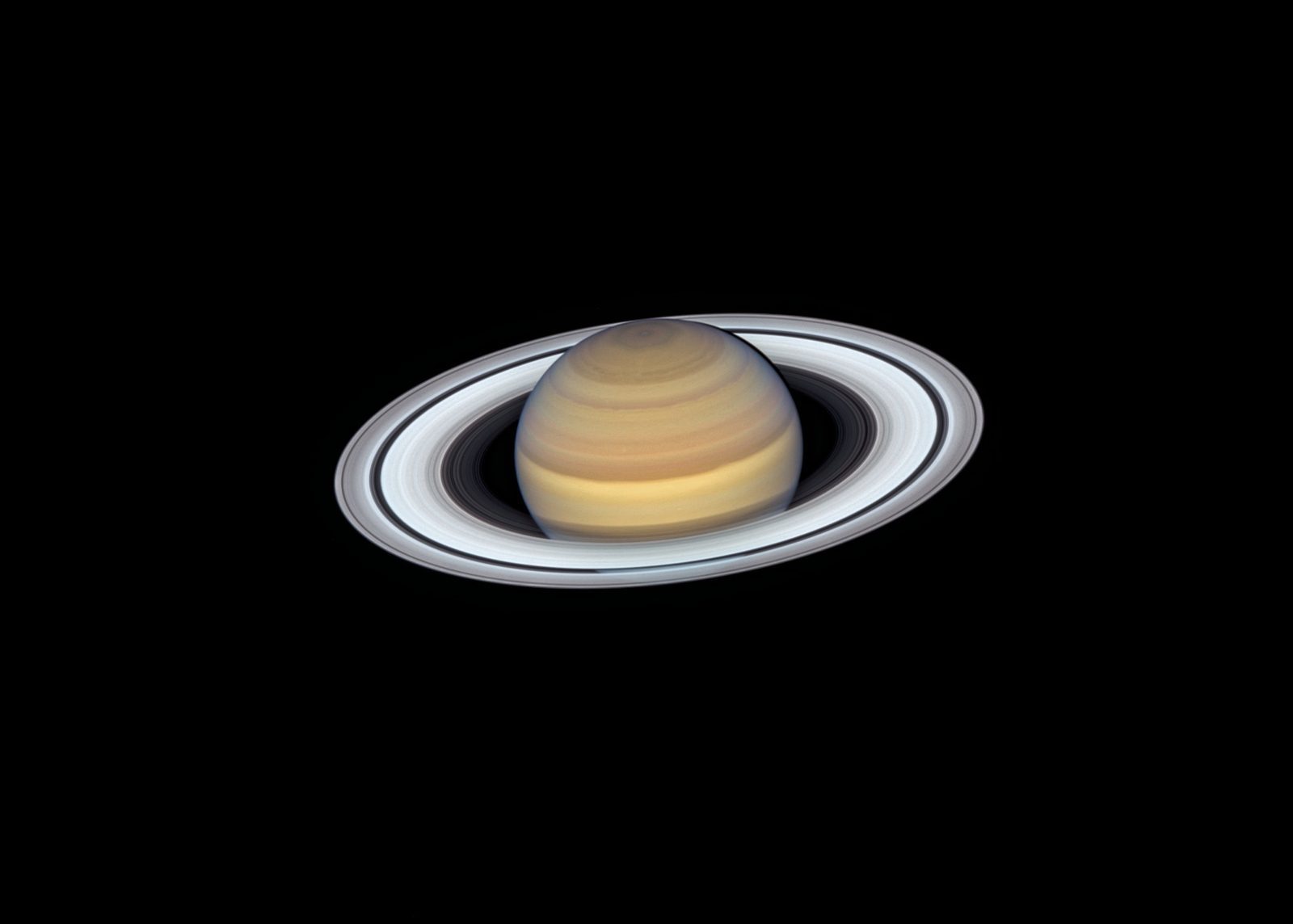
Here’s something that would blow your mind at any dinner party: Saturn, despite being the second-largest planet in our solar system, would literally float if you could find a bathtub big enough. Despite its size, Saturn is made mostly of hydrogen and helium, making it the least dense planet in the Solar System. Saturn’s average density is about 0.7 grams per cubic centimetre, while water’s density is 1 gram per cubic centimetre. So if you could find a bathtub big enough, Saturn would float in it!
This mind-boggling fact challenges everything you think you know about massive celestial bodies. Of the eight planets in our Solar System, the four gas giant worlds are the least dense, with less than half the density of the least dense rocky planet (Mars), and with Saturn being even less dense than water. While Earth and the other rocky planets are packed with heavy materials like iron and rock, Saturn is essentially a cosmic balloon filled with the lightest elements in the universe.
Saturn’s ethereal composition makes it unique among all known planetary bodies. Despite having a mass roughly ninety-five times that of Earth, its incredible size means those materials are spread so thin that the entire planet becomes less dense than the water in your swimming pool. It’s like nature’s ultimate magic trick: a planet so large it dominates its region of space, yet so light it would bob on the surface of an ocean.
Pluto Has Towering Mountains Made of Pure Ice
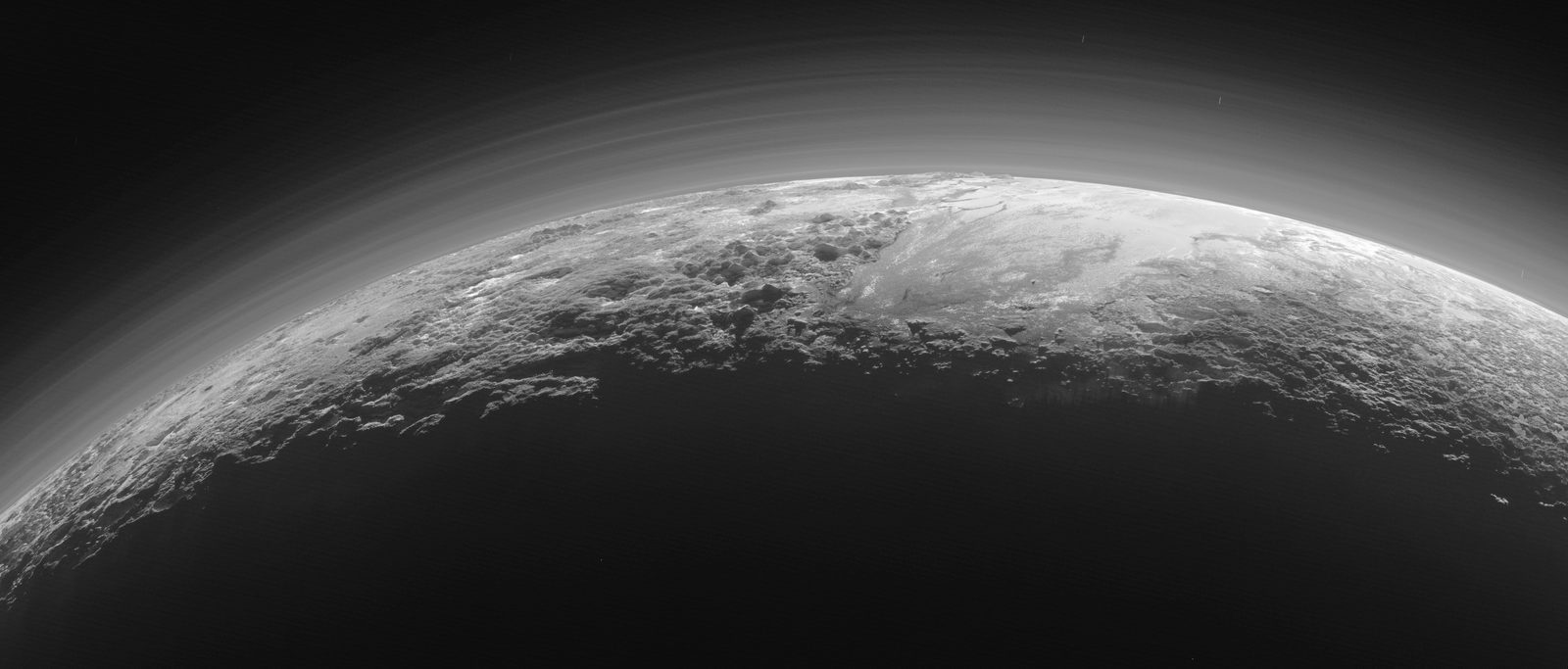
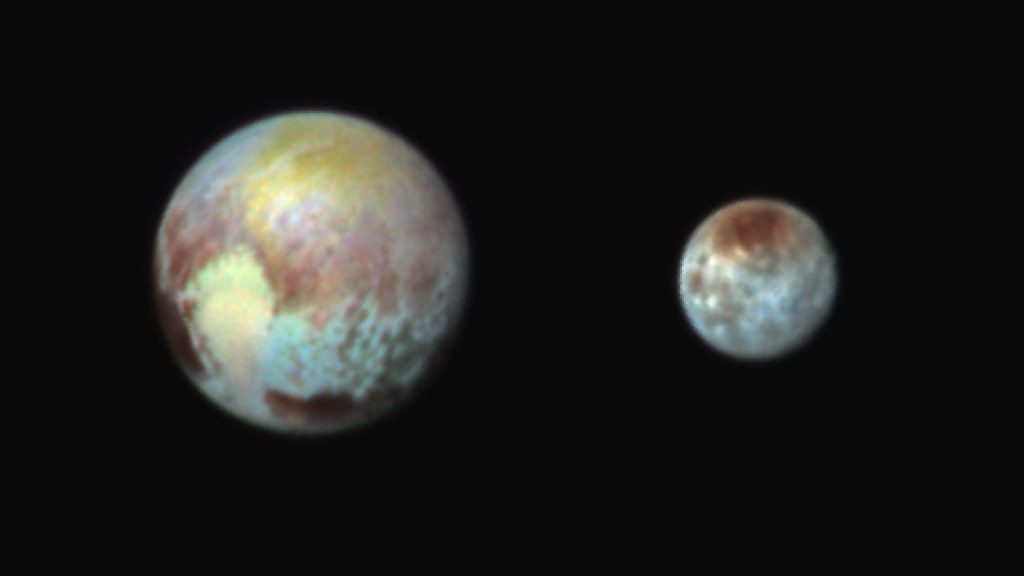
Before you dismiss Pluto as just another frozen rock at the solar system’s edge, consider this startling reality: That changed when NASA’s New Horizons spacecraft flew by in 2015, sending back pictures that altered our view of Pluto forever. Among the astounding discoveries were icy mountains that are 11,000 feet (3,300 meters) high, indicating that Pluto must have been geologically active far more recently than anyone imagined.
Pluto is a tiny world at the edge of the solar system, so scientists assumed the dwarf planet would have a fairly uniform, crater-pocked environment. That changed when NASA’s New Horizons spacecraft flew by in 2015, sending back pictures that altered our view of Pluto forever. Instead of the dead, crater-covered wasteland scientists expected, New Horizons revealed a dynamic world with towering peaks that rival the tallest mountains on Earth.
These aren’t just any mountains – they’re composed entirely of water ice, harder than steel at Pluto’s frigid temperatures. The existence of such massive geological features suggests that Pluto was geologically active much more recently than its age should allow. Researchers discovered that Pluto has a massive cryovolcano that is comparable in size to Yellowstone’s supervolcano. But after taking a second look at the data, scientists detected traces of cryomagama around the depression, which is evidence that it has erupted multiple times. Pluto isn’t just a cold, dead world – it’s a place where ice volcanoes might still be reshaping the landscape.
Asteroids Can Have Their Own Moons and Ring Systems
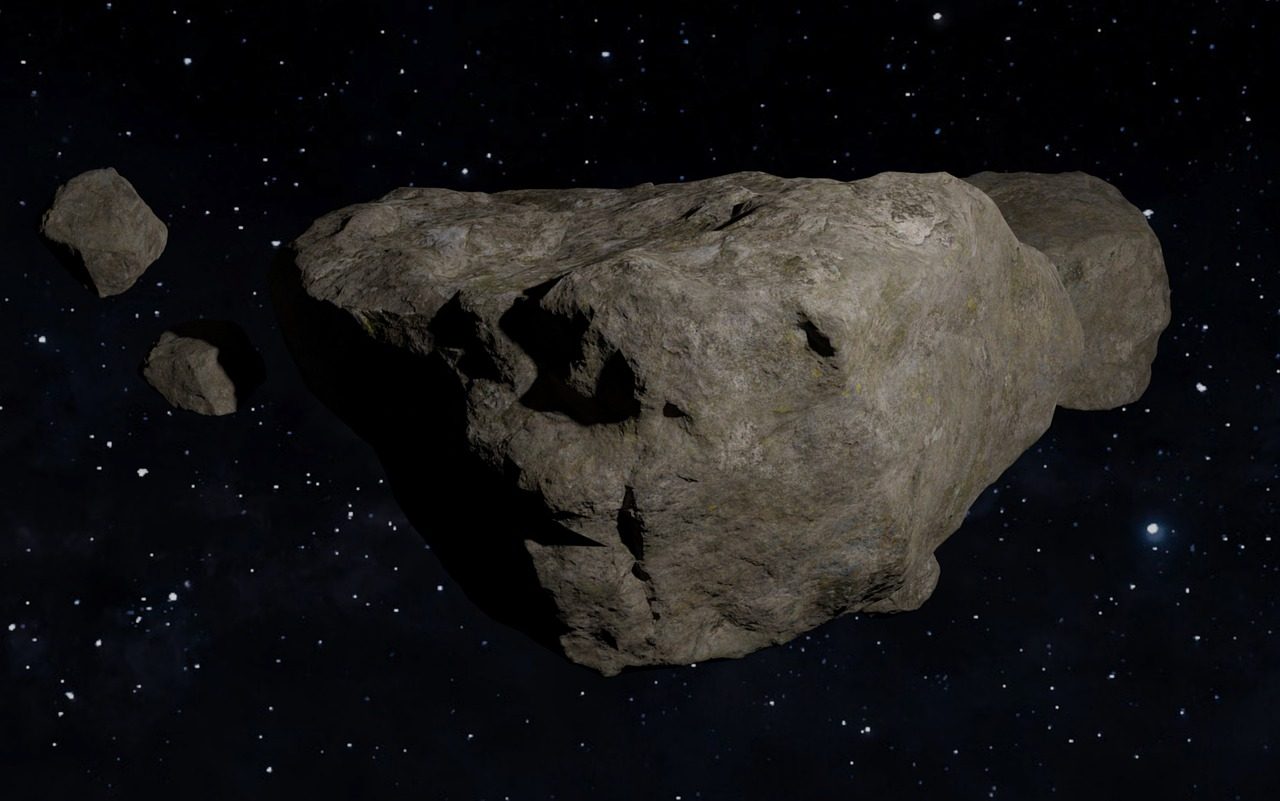
You think rings are exclusive to giant planets like Saturn? Think again. What makes this 250 km-wide asteroid so special is that it has a pair of rings around it, making it the smallest known object in the Solar System with a ring system. Chariklo, a small asteroid orbiting between Saturn and Uranus, sports its own elegant ring system, proving that cosmic jewelry isn’t just for the solar system’s giants.
Asteroids can also have their own moons. Ida and Dactyl are a pair of space rocks that captured the world’s attention thanks to a striking discovery by NASA’s Galileo spacecraft. During a flyby of asteroid Ida in 1993, Galileo’s cameras spotted Dactyl, a much smaller ‘moon’ that orbits Ida. This pair provided the first observational evidence that asteroids can have their own natural satellites.
These discoveries completely shatter the traditional view of asteroids as lonely chunks of rock drifting through space. Some asteroids exist in complex gravitational relationships, with smaller bodies orbiting larger ones in miniature solar systems. Others sport ring systems that would make Saturn jealous, created by debris from ancient collisions or gravitational interactions. In 2014, for example, astronomers discovered rings were around the asteroid Chariklo. The asteroid belt isn’t just a cosmic junkyard – it’s a dynamic region where celestial bodies form their own intricate gravitational partnerships and spectacular ring systems.
Conclusion
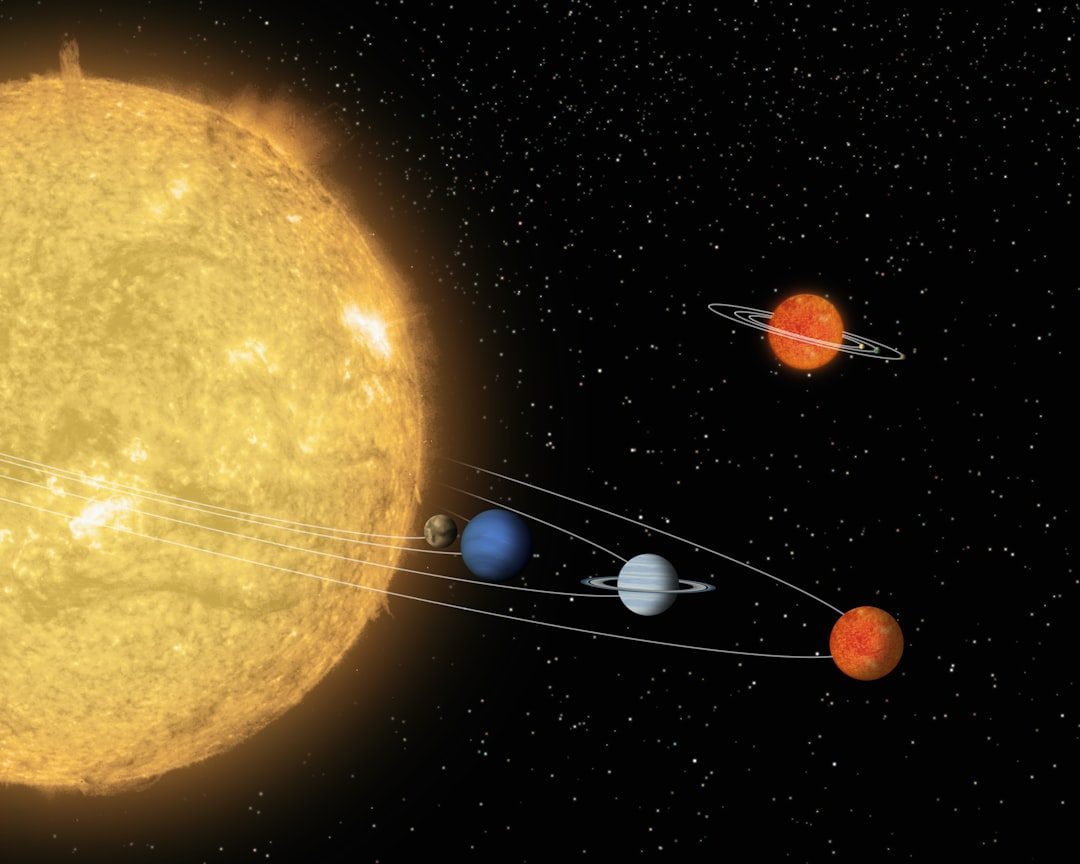
These six cosmic wonders prove that our solar system is far stranger and more magnificent than any science textbook could capture. From Jupiter’s invisible giant magnetosphere to the surprising abundance of hidden oceans, from Saturn’s impossible buoyancy to Pluto’s towering ice mountains, each discovery rewrites our understanding of what’s possible in our cosmic neighborhood. Even the humble asteroid belt harbors its own miniature worlds complete with moons and rings.
These aren’t just academic curiosities – they’re invitations to see our solar system with completely fresh eyes. Every time you look up at the night sky, remember that you’re gazing at a dynamic, ever-changing collection of worlds that continues to surprise and astound even the most experienced scientists. What other secrets are waiting to be discovered in our own backyard? What do you think we’ll find next?