

Your brain is quietly doing things no machine on Earth can fully match. While headlines scream about artificial intelligence beating humans at games or writing essays, there’s a hidden story we often forget: you are carrying around a three‑pound, jelly-like supercomputer that runs on the energy of a dim lightbulb and still outperforms cutting-edge hardware in some of the most important ways.
I still remember staring at a massive server rack for the first time, all fans and blinking lights, and thinking, “This is it? This giant metal beast still can’t feel nervous before a first date or remember the smell of summer at my grandmother’s house.” The more you really look at what the brain does in everyday life, the more it becomes obvious: the future of intelligence isn’t just in machines trying to be like us, but in us understanding what we already do astonishingly well.
Your Brain Learns From Tiny Amounts of Data
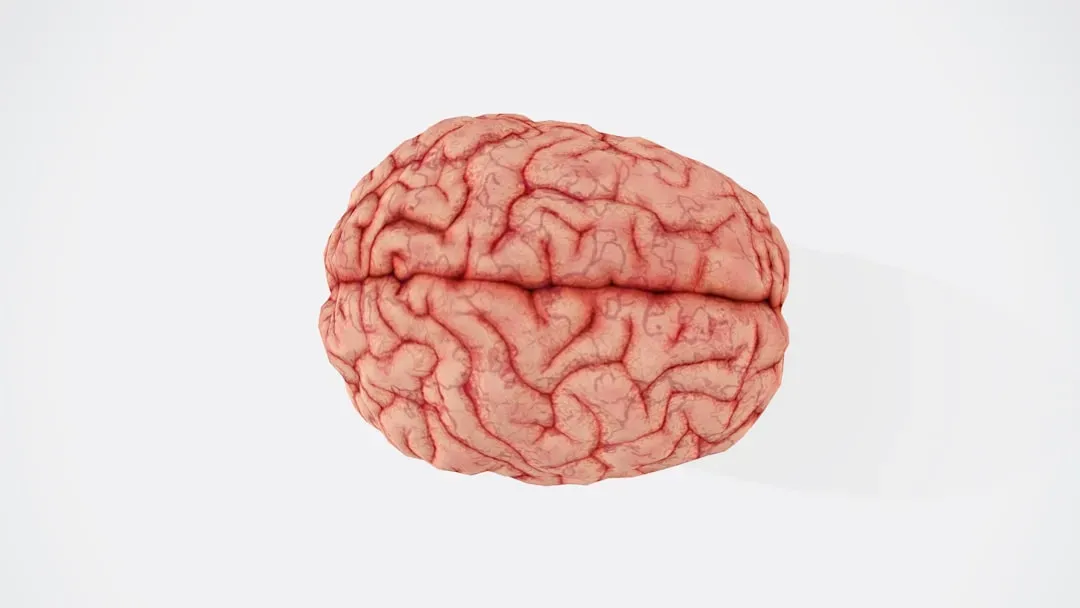
Think about how a toddler learns what a “dog” is. They see a handful of very different animals – big, small, fluffy, short-haired – and somehow their brain figures out the pattern with almost ridiculous speed. By contrast, modern AI systems usually need mountains of labeled images, weeks of training, and huge amounts of power just to recognize objects with similar reliability. Your brain can generalize from a few messy, noisy experiences, and still make sense of the world.
That kind of learning from very few examples, often called “one-shot” or “few-shot” learning in AI research, is something your brain does automatically: new word, new face, new route home, new recipe. You don’t need a million repetitions, you just need a couple of tries and a bit of context. This makes human learning incredibly flexible; you can pivot careers, pick up a new hobby, or learn to navigate a foreign city without memorizing endless data. Computers are starting to imitate this ability, but they’re still chasing a moving target: the way your brain learns almost effortlessly from life itself.
Your Brain Thrives on Uncertainty and Chaos

Computers are happiest when the rules are clear and the data is clean. Your brain is the opposite: it grew up – evolutionarily speaking – in a messy, unpredictable world full of half-truths, missing information, and constant change. You walk into a noisy café, pick out a friend’s voice, read their facial expression, notice the vibe of the room, and adjust what you say, often in seconds. No one gives you a perfect data set or a clear rulebook, yet you handle it.
Under the hood, your brain constantly makes probabilistic guesses: “That sound is probably a car,” “This person seems annoyed,” “That shadow might be a cyclist.” You’re not consciously doing the math, but something in your head weighs possibilities and updates them on the fly as new information comes in. Most computers still struggle when the data is incomplete, contradictory, or ambiguous. Your mind, on the other hand, is built to swim in that ambiguity and still move forward, even if it sometimes gets things wrong. In the real world, being able to act under uncertainty is often more powerful than being perfectly right in a lab.
Your Brain Runs on Remarkable Energy Efficiency
Your brain uses about the same amount of power as a small lightbulb, yet it manages perception, movement, memory, language, planning, emotions, and your sense of self – all at once. Big AI systems, especially the huge models that make headlines, rely on sprawling data centers that pull as much electricity as small towns. When you compare the scale, it’s astonishing: a handful of living tissue inside your skull is doing high-level computation with a fraction of the energy.
Part of this efficiency comes from the way neurons fire only when needed and adapt their connections over time. Instead of constantly churning through every possible calculation, your brain uses shortcuts, approximations, and compressed representations. It throws away what it doesn’t need and focuses energy where it matters most. Computers are beginning to copy this with things like neuromorphic chips and more efficient algorithms, but they’re still nowhere near the energy-per-thought performance that biology delivers every second you’re awake (and even while you sleep).
Your Brain Blends Logic With Emotion and Values

When you make decisions, you don’t run a cold calculation engine – you weigh feelings, memories, values, and social consequences along with facts. You might turn down a highly paid job because the culture feels toxic, or stay up too late talking with a friend even though you know you’ll be tired. On paper, some of this looks irrational, but in the long run, this mix of logic and emotion often leads to richer, more meaningful decisions than pure optimization would.
Computers can optimize goals very efficiently, but they don’t really have goals of their own. They don’t care if a solution feels cruel, boring, joyful, or life-changing; those are human judgments, grounded in our emotional lives and social bonds. Your brain constantly balances trade-offs like short-term comfort versus long-term growth, personal benefit versus fairness, or certainty versus curiosity. That blend of rational thinking with gut feelings and moral instincts is something we’re still struggling to model, and it’s a big reason why people – not machines – carry the ultimate responsibility for choices that truly matter.
Your Brain Rewires Itself Throughout Your Life

If you learn to play an instrument, practice a new language, or go through physical rehab after an injury, your brain literally changes its wiring. New connections strengthen, old ones weaken, and sometimes entire regions get repurposed for new tasks. This built-in ability to reorganize itself – often called plasticity – means your brain isn’t a fixed device you’re stuck with; it’s more like an evolving ecosystem that responds to what you do, feel, and experience.
Computers can be upgraded and reprogrammed, but they don’t rewrite themselves from the inside out in response to daily life the way a human brain does. You’ve probably felt this personally: after a while in a new city, you suddenly “just know” your way around; after repeating a difficult skill, it stops feeling effortful and starts feeling natural. That shift isn’t just psychological – it has a physical basis in the changing structure and dynamics of your neural circuits. This self-remodeling capacity is what makes people capable of deep recovery, surprising reinvention, and late-in-life growth that would be nearly unthinkable for static hardware.
Your Brain Creates Conscious Experience

Computers process data; your brain creates a world. You don’t simply receive information – you feel it. The warmth of a mug in your hands, the ache of missing someone, the strange nostalgia that hits you when you hear a song from your teenage years: all of that lives in a private, first-person space that no one else can open and inspect. So far, no machine, no matter how advanced, has anything like that inner movie of consciousness we walk around inside every day.
Scientists can map brain activity, track patterns, and correlate regions with experiences, but there’s still a deep mystery about how electrical and chemical processes turn into subjective feeling. Even powerful AI that can mimic conversation or write convincing text isn’t known to “feel” anything at all – it’s more like a brilliant mirror than a mind. Your brain doesn’t just compute; it gives rise to a sense of being you, over time, with memories, hopes, fears, and a story you tell yourself about your life. That might be the single most powerful thing any system, biological or artificial, has ever done.
Conclusion: The Supercomputer You Carry Everywhere

When people talk about AI “surpassing” humans, it’s tempting to quietly downgrade what you are, as if a chatty piece of software somehow makes your own mind obsolete. But side by side, the picture looks very different: your brain learns from scraps of experience, thrives amid chaos, sips energy while doing a thousand things at once, blends logic with emotion, reshapes itself over time, and generates a conscious inner world. No current computer comes close to matching that whole package.
Maybe the most empowering shift is to stop seeing yourself as competing with machines and start seeing your brain as the unparalleled partner they’re still trying to imitate. Tools will keep getting smarter, but you’re already walking around with the original model of adaptable, feeling, meaning-making intelligence. Knowing that, the real question isn’t whether computers will replace you – it’s what you’ll choose to do with the extraordinary hardware and software you already have.