
There’s something oddly comforting about knowing that even the smartest people on the planet are still deeply confused by how the universe really works. For all our particle colliders, space telescopes, quantum computers, and endless equations, there are questions in physics that simply stare back at us with a kind of quiet defiance. These mysteries are not small details; they cut right into the heart of reality itself.
When I first learned that we don’t actually know what makes up most of the universe, it felt a bit like discovering that a house you’ve lived in for years is mostly made of rooms you’ve never visited. The deeper physicists look, the stranger everything becomes: invisible matter, repulsive gravity, particles that refuse to make up their minds. Let’s walk through six of the biggest unsolved puzzles that keep scientists humbled, awake at night, and weirdly excited.
1. Dark Matter: The Invisible Mass Holding Galaxies Together
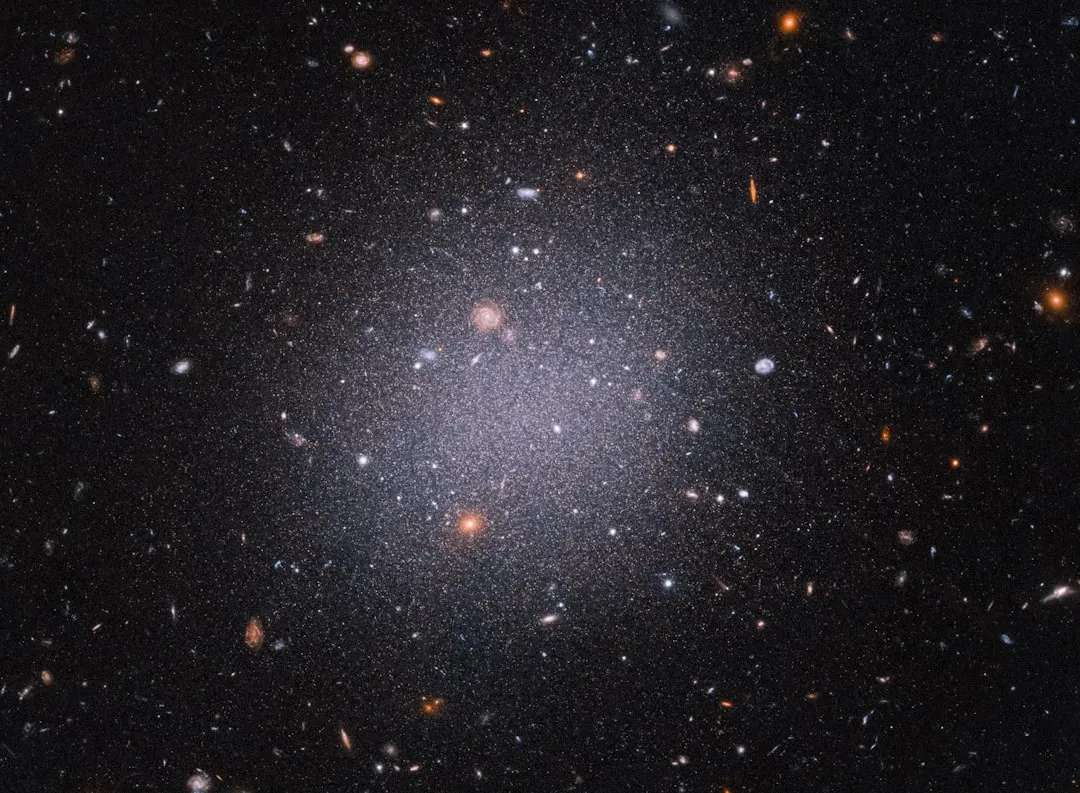
Imagine watching a merry-go-round spin so fast that the horses should all fly off, yet somehow they stay perfectly in place. That’s basically what astronomers see when they look at galaxies. The visible stars and gas simply don’t have enough mass to produce the gravity needed to hold everything together at the speeds they rotate. Something unseen is adding extra gravitational glue, and that something has been called dark matter.
Observations of galaxy rotation curves, gravitational lensing, and the large-scale structure of the universe all scream the same message: there is far more mass out there than we can see with any kind of telescope. Roughly about five times more mass seems to be dark than ordinary. Yet despite decades of intense searches in underground detectors, particle accelerators, and space missions, no one has conclusively detected a dark matter particle. Some theories suggest exotic particles like WIMPs or axions; others argue we might be misunderstanding gravity itself. For now, it’s like knowing there’s an elephant in the room because of the damage it causes, but never actually catching a glimpse of it.
2. Dark Energy: The Mysterious Force Accelerating the Universe
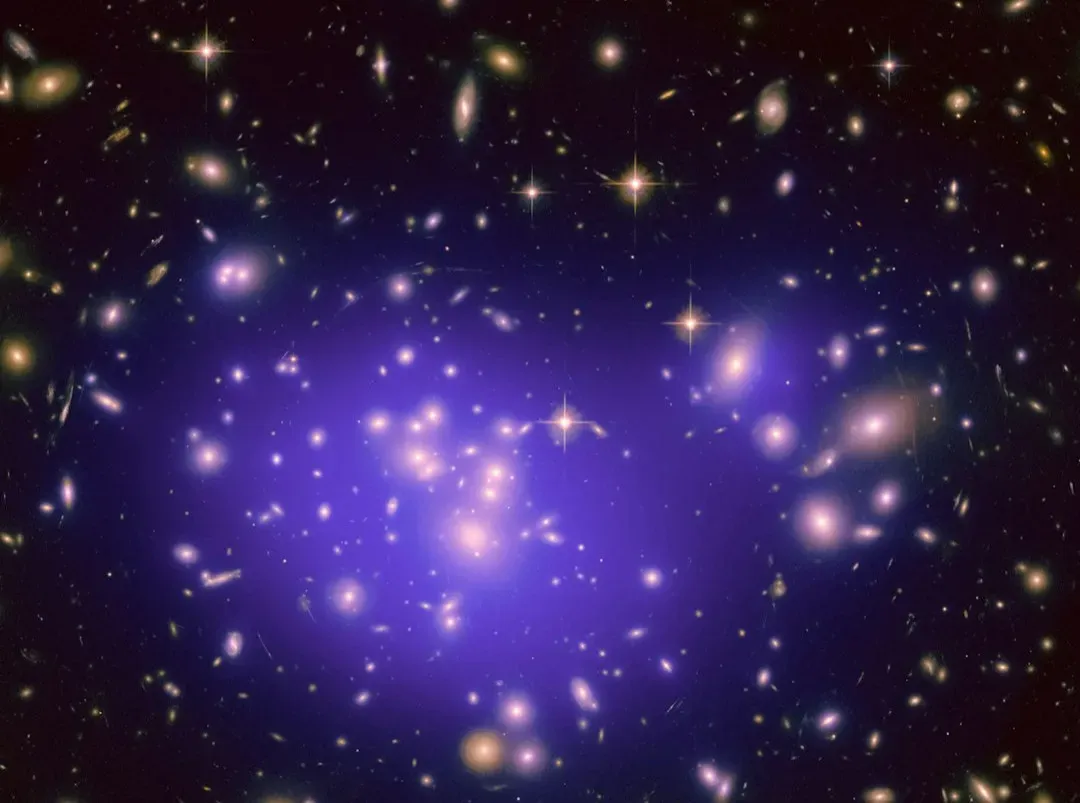
As if dark matter weren’t unsettling enough, the universe hit us with another surprise: not only is space expanding, that expansion is speeding up. This discovery in the late twentieth century turned expectations upside down. Instead of gravity gradually slowing everything down, something is pushing galaxies apart faster and faster, as if the universe slammed its foot on a cosmic accelerator.
To explain this, physicists proposed dark energy, a form of energy woven into the fabric of space itself that produces a repulsive effect. Observations of distant supernovae, the cosmic microwave background, and galaxy clustering all point toward this accelerating expansion being very real. The bizarre part is that dark energy appears to make up the vast majority of the universe’s energy content, and yet we have almost no idea what it actually is. Some ideas involve a constant energy of empty space, others invoke slowly changing fields, and more radical proposals suggest our understanding of gravity on cosmic scales is incomplete. It’s hard to shake the feeling that we’re missing a huge piece of the story about why the universe looks the way it does.
3. The Measurement Problem in Quantum Mechanics
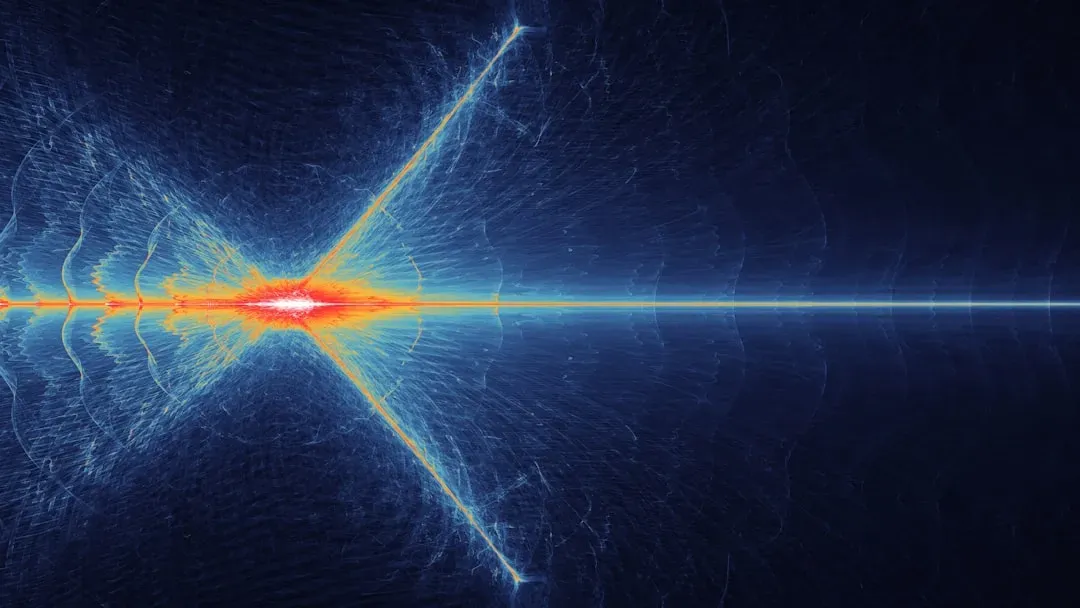
Quantum mechanics is famously weird, but there’s a specific knot at the center of that weirdness that continues to trouble physicists: the measurement problem. At the microscopic level, particles don’t seem to have definite properties until we measure them. Instead, they’re described by a wave of possibilities, a kind of mathematical cloud saying a particle might be here, or there, or in several states at once. But when we actually look, we always find one definite outcome, never a blur of options.
This raises a profound question: what exactly counts as a “measurement,” and how does that act abruptly turn a spread-out wave of possibilities into one concrete reality? Different interpretations try to make sense of this, from the idea that the wave function simply reflects our knowledge, to many-worlds scenarios where every possible outcome happens in separate branches of reality. Experiments keep confirming quantum predictions with incredible precision, yet they don’t tell us which story about reality is correct. It’s like having perfect instructions for using a device without any idea of how the device is built on the inside.
4. The Matter–Antimatter Imbalance: Why Anything Exists at All
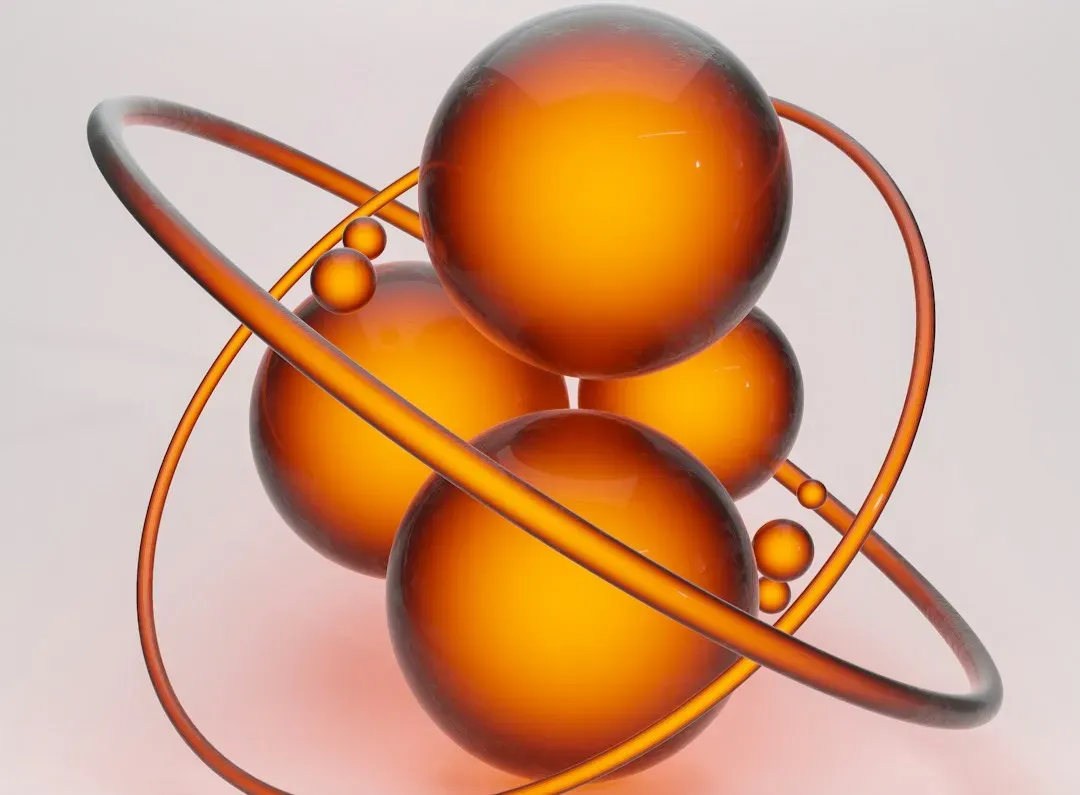
According to our best theories, the Big Bang should have produced matter and antimatter in almost perfect balance. For every electron, there should have been a partner positron; for every proton, an antiproton. When matter and antimatter meet, they annihilate in a flash of energy. If nature truly started off symmetric, nearly everything should have destroyed itself, leaving behind a sea of light and almost no matter to form stars, planets, or people.
Yet the universe we see is overwhelmingly made of matter, with only tiny traces of antimatter appearing in high-energy processes. That means something tilted the scales early on, favoring matter just enough for galaxies and life to exist. Experiments with particle decays have revealed small asymmetries in how matter and antimatter behave, but they seem too weak to fully explain the imbalance. New measurements at particle colliders and neutrino experiments are trying to hunt for stronger sources of this cosmic bias. The strangest part is that our very existence is evidence that some hidden rule or event in the early universe broke the symmetry, and we still don’t know how or why.
5. Quantum Gravity: Reconciling the Very Big with the Very Small
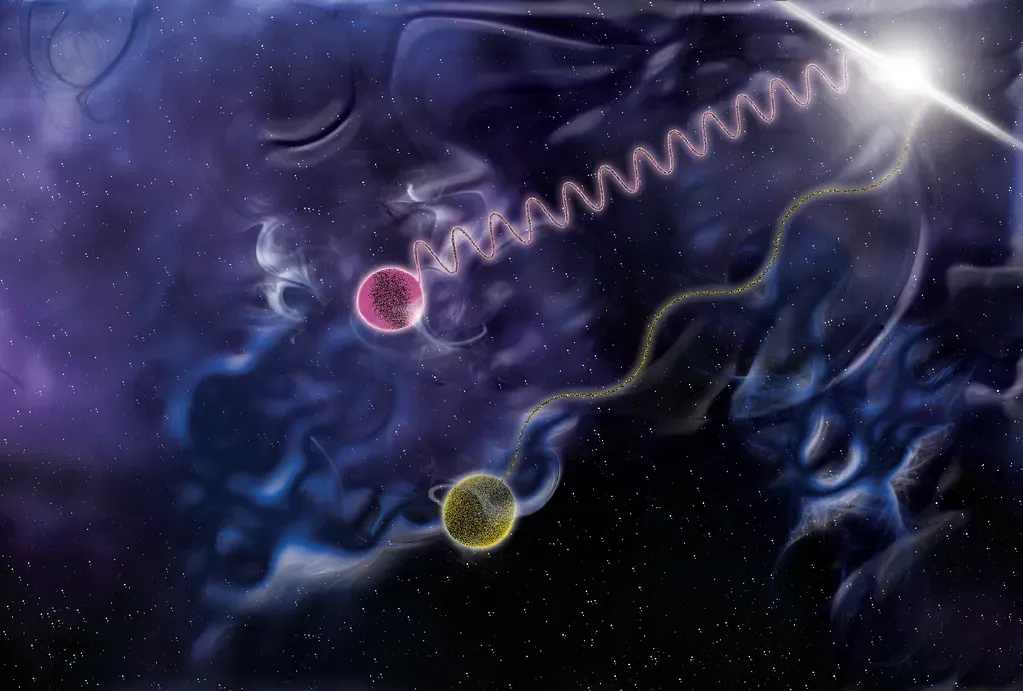
Physics today runs on two spectacularly successful but fundamentally mismatched theories. On one side, general relativity describes gravity and the large-scale universe with stunning accuracy, from planets to black holes to the expansion of space itself. On the other side, quantum field theory rules the subatomic world, explaining particles, forces, and interactions in tiny realms. Each works beautifully in its own domain, but when you try to combine them in extreme situations, like the center of a black hole or the earliest instant after the Big Bang, the math breaks down into nonsense.
The search for a theory of quantum gravity is an attempt to merge these two pillars into a single, coherent picture. Ideas like string theory, loop quantum gravity, and emergent spacetime suggest radically different visions of what space and time might be at the deepest level. Some physicists suspect that spacetime itself could be made of discrete building blocks, a bit like pixels on a screen, while others think gravity might emerge from more fundamental quantum information. Despite years of clever proposals and intense mathematical work, there’s still no experimentally confirmed theory. It’s as if we’re trying to stitch together two beautiful but incompatible maps into one atlas of reality, and the seam between them just won’t line up.
6. The Arrow of Time: Why Time Only Flows One Way

Everyday life has a clear direction: eggs break but never unbreak, smoke spreads out but never leaps back into a neat column, and you steadily move from childhood toward old age, never the reverse. This sense that time flows from past to future, with cause leading to effect, feels so obvious that it barely seems like a puzzle. Yet many of the fundamental equations of physics are almost perfectly time-symmetric; they work just as well if you reverse time in the math.
The one big exception is the second law of thermodynamics, which says that the overall disorder, or entropy, of a closed system tends to increase. This statistical law is deeply linked to the arrow of time, hinting that the universe started in an incredibly special, low-entropy state. But why did the cosmos begin in such an unlikely condition, and what truly anchors the direction of time we experience? Some research connects this to the expansion of the universe, the growth of cosmic structure, or even how we store memories and information. Still, no consensus has emerged. Time’s one-way flow remains one of those quiet, haunting mysteries that sits at the edge of both physics and our own lived experience.
Living with the Unknown

These six mysteries – dark matter, dark energy, the quantum measurement problem, the matter–antimatter imbalance, quantum gravity, and the arrow of time – are not minor loose ends waiting for a quick patch. They cut into how we understand existence, from the structure of galaxies to the nature of reality and our own experience of time. In a way, they act like signposts, reminding us that today’s “settled” physics may one day look like a rough draft.
What makes them so compelling is not just that we lack answers, but that we have powerful clues pointing in different directions, hinting at a deeper layer of reality still out of reach. Each unsolved problem pulls in teams of scientists, new experiments, and bold ideas, with the hope that one key insight will crack something open. Until that happens, we live in a world that works well enough for us to build phones and rockets, yet hides its most fundamental rules behind a curtain of mystery. Which of these puzzles do you think will finally give way first?