
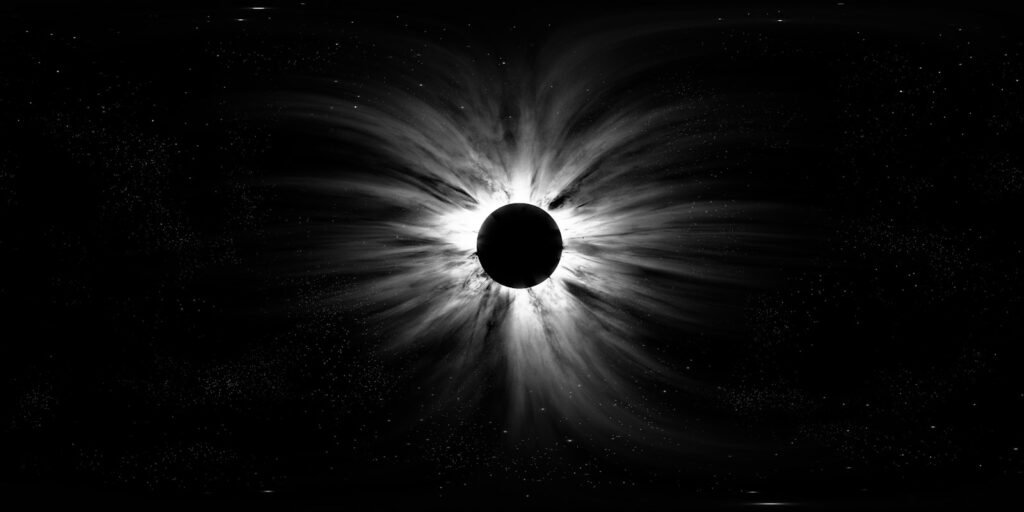

Every time we think we’ve got our solar system neatly mapped and understood, it throws us something deeply weird. From objects that should not exist to signals that defy easy explanation, these mysteries are not just quirky space trivia; they are cracks in our current theories of how the universe works. In a way, they are like little cosmic protest signs saying that gravity, magnetism, and planetary science still have surprises left. In this article, we dive into six baffling phenomena close to home that continue to keep planetary scientists up at night. Along the way, we’ll connect these puzzles to big-picture universe theories and what they might be trying to tell us about the deeper rules shaping space and time.
The Sun’s Million-Degree Corona: A Star That Gets Hotter As You Leave It
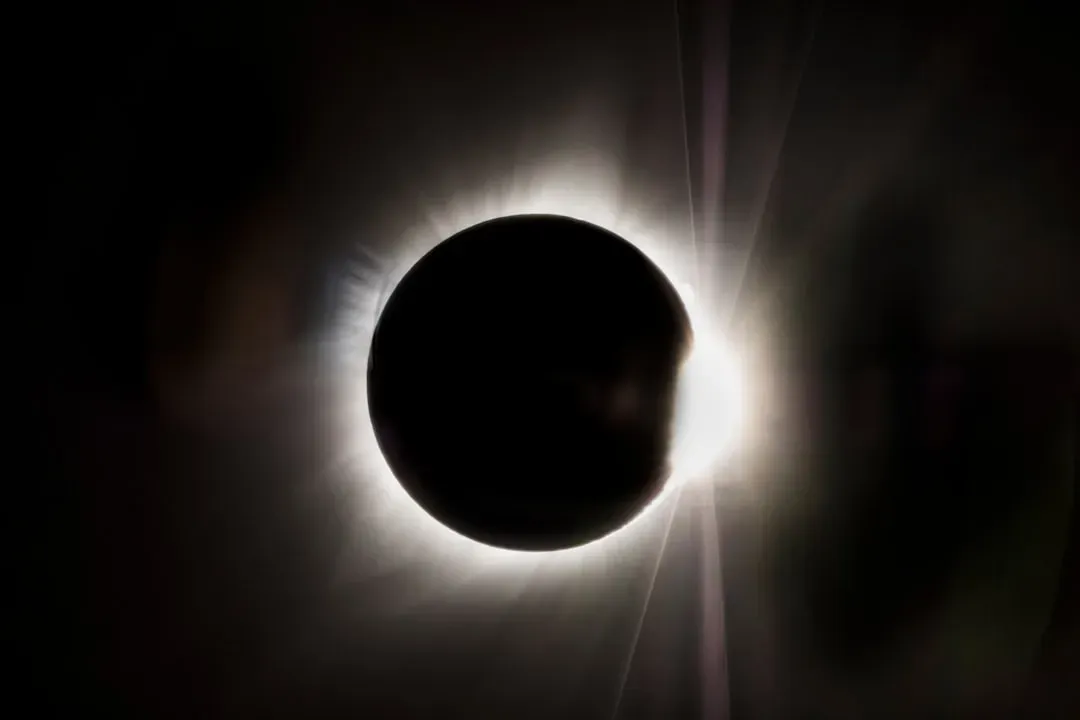
It still sounds backwards, even to people who write about space for a living: the Sun’s visible surface simmers at about ten thousand degrees Fahrenheit, but its outer atmosphere, the corona, soars to millions of degrees. If you heated a campfire that way, the nearby air would be cooler than the smoke billowing off the top, which just makes no intuitive sense. For decades, solar physicists have tried to pin down why the corona is so blisteringly hot, when simple models say it should cool with distance. The leading suspects are tangled magnetic fields that snap and reconnect, dumping energy into the outer atmosphere, and waves flowing up from the surface that somehow dump their energy high above.
Despite enormous progress with orbiting observatories and new solar missions, no single mechanism fully explains the observed temperatures and variability. NASA’s Parker Solar Probe, which has been diving closer to the Sun than any spacecraft in history, is finally entering the region where these heating processes are thought to act most strongly, sampling solar wind and magnetic fields in real time. That data is already pushing theorists to revise how they think about magnetic turbulence and wave-driven heating in plasmas. However the final story shakes out, this upside-down temperature profile matters far beyond the Sun, because stellar coronae and outflows shape how planets form, how atmospheres erode, and even how habitable zones around stars evolve over billions of years.
The Pioneer and Flyby Anomalies: Tiny Deviations, Big Questions
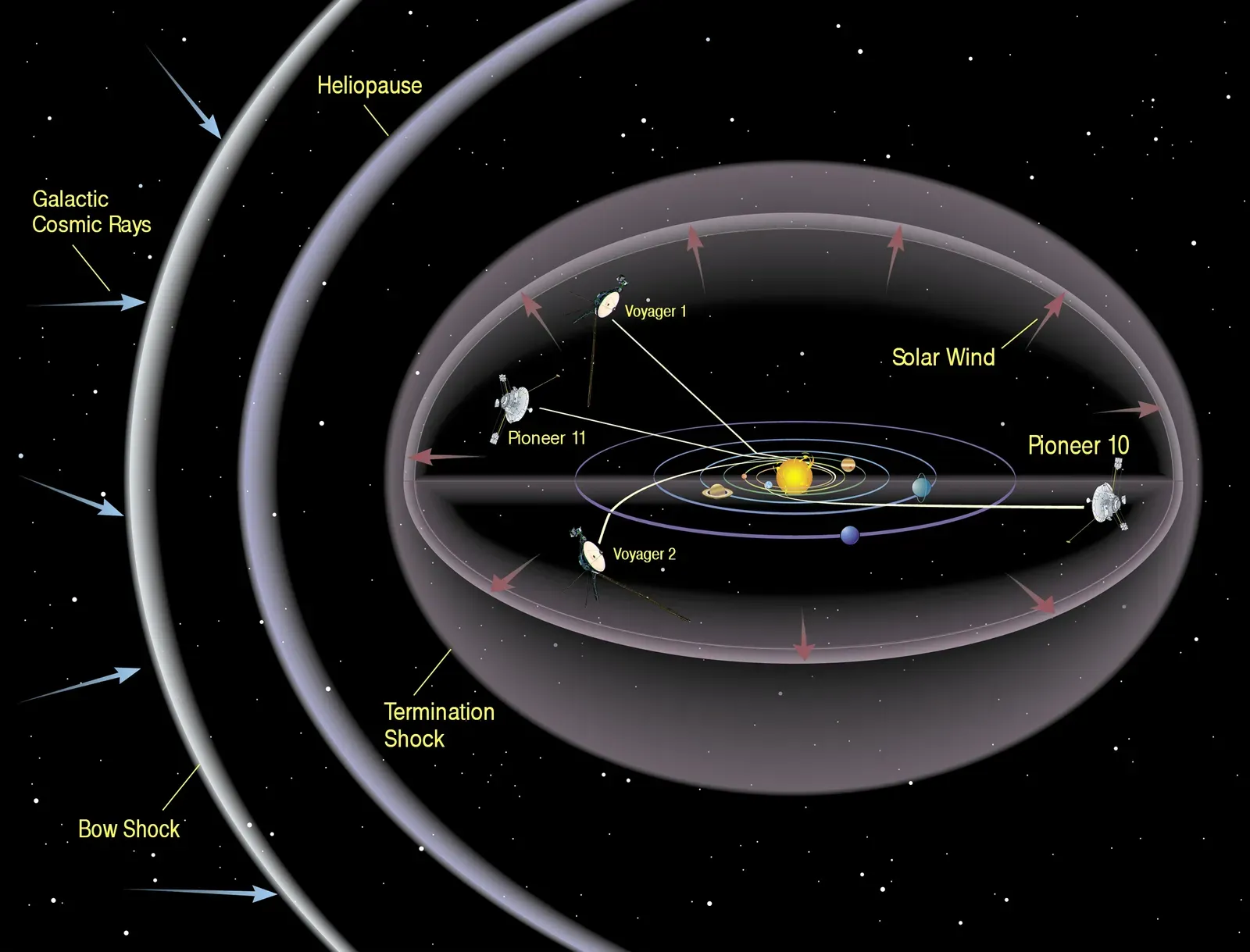
When engineers tracked the Pioneer 10 and 11 spacecraft as they cruised out of the solar system, they found something maddening: a tiny, persistent deviation in their motion that did not quite line up with predictions. The craft seemed to experience a small extra acceleration toward the Sun, far too small to feel but large enough to measure over many years of radio tracking. At first glance this sounds like mere bookkeeping, but to people who test gravity for a living, even a slight mismatch between theory and trajectory sets off alarms. The same spirit of confusion resurfaced in so‑called Earth flyby anomalies, where some spacecraft picked up or lost a bit more speed than orbital mechanics seemed to allow during close swings past our planet.
Most researchers now think the Pioneer anomaly can be explained largely by anisotropic heat radiation from the spacecraft themselves, an almost comically subtle effect of onboard power systems warming one side more than another. But the case underscored how hard it is to build a perfect model of motion when you are chasing millimeters per second over billions of miles. The flyby anomalies, meanwhile, are still not fully nailed down, with suggestions ranging from measurement quirks to incomplete modeling of Earth’s gravity field and atmosphere. The reason these puzzles matter is not because anyone seriously believes they prove exotic new physics on their own, but because they test the limits of general relativity and celestial mechanics in the real, messy universe, where every discrepancy could be either a calibration bug or the first hint of a deeper law.
Saturn’s Hexagon: A Planetary Storm That Draws Straight Lines
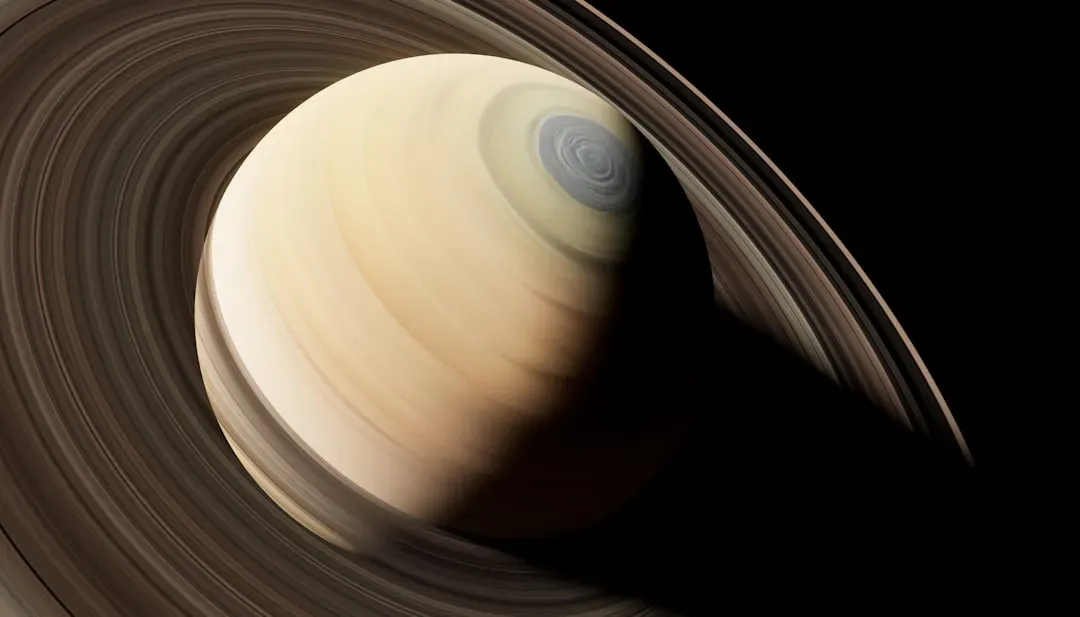
The first time you see an image of Saturn’s north pole, the shape almost looks fake: a crisp, six‑sided jet stream wrapped around a swirling polar vortex, like a geometric logo carved into clouds. This hexagon spans more than the width of Earth, yet its sides are surprisingly straight, and the pattern has persisted for decades of observation. Laboratory experiments and fluid simulations have shown that polygonal jets can emerge naturally in rotating fluids under certain conditions, so in one sense the hexagon is not magical at all. Still, no other planet in the solar system shows anything quite like this, and that uniqueness keeps theorists gnawing at what makes Saturn’s polar region so special.
The hexagon appears to be a standing wave pattern riding on a high‑speed jet stream, with small variations in wind speed and latitude reinforcing the six‑fold shape rather than smoothing it out. Seasonal changes on Saturn, whose year is nearly three decades long, slowly reshape the lighting and energy balance at the poles, yet the hexagon has remained surprisingly robust through those shifts. That durability hints that the underlying dynamics are deeply rooted in how Saturn’s atmosphere rotates and stratifies, not just in superficial weather variations. For scientists building general models of gas giant atmospheres, from exoplanets to brown dwarfs, Saturn’s hexagon is both a template and a warning: even simple rotation plus fluid physics can generate structures our intuition struggles to predict.
The Tilted Spin of Uranus: A Planet Knocked Sideways – or Something Stranger?
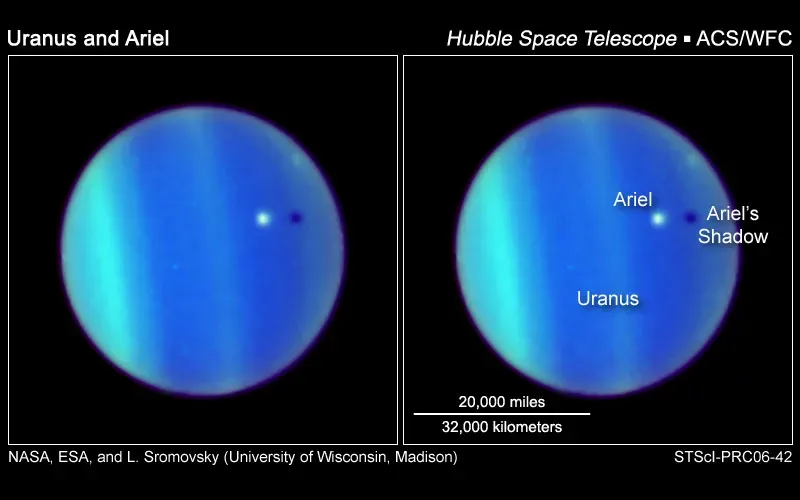
Among all the major planets, Uranus is the oddball that seems to have just given up on spinning like everyone else. Its rotation axis is tipped by more than eighty degrees, so it essentially rolls around the Sun on its side, leading to seasons so extreme that one pole can sit in continuous daylight for years while the other freezes in darkness. The textbook explanation has long been that Uranus suffered one or more colossal impacts early in its history, with a Mars‑sized body knocking it over and perhaps creating its retinue of moons. That story fits nicely with violent planet‑formation theories, where young worlds constantly collide and merge as they jockey for stable orbits.
But as scientists modeled Uranus more carefully, its unusual tilt and its relatively orderly satellite system began to raise new questions. Some studies suggest that a series of smaller impacts, or even interactions with a former large moon, could better match the current configuration of the planet’s interior and magnetic field. Others explore whether subtle gravitational interactions during the migration of the giant planets could have gradually shifted Uranus into its sideways stance without a single catastrophic blow. Whichever explanation ultimately wins, Uranus is a reminder that even “standard” planets can end up in wildly non‑standard orientations, reshaping theories of how common tilted, chaotic worlds might be around other stars and what that means for the climate and potential habitability of exoplanetary systems.
Fast Radio Bursts From Nearby Galaxies: Cosmic Flashes on Our Galactic Doorstep
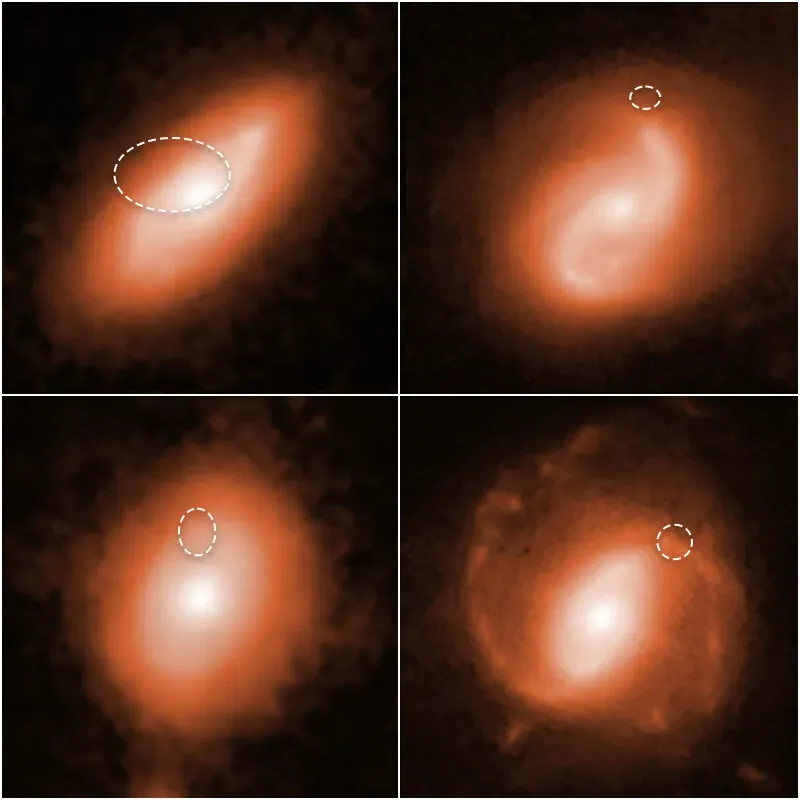
Fast radio bursts, or FRBs, were first noticed as lightning‑quick flashes of radio energy from well beyond our galaxy, each one lasting only milliseconds but releasing as much energy as a star emits in days. For years, all known examples came from deep cosmic distances, making them the playground of cosmologists and theorists of extreme astrophysics. Then came detections of FRBs associated with nearby galaxies and at least one tied to a magnetar in the Milky Way, dragging the phenomenon much closer to home. This shift did not solve the mystery so much as complicate it, suggesting multiple types of sources and mechanisms might be at work.
The leading view today is that highly magnetized neutron stars, especially young and volatile magnetars, can generate at least some fast radio bursts through sudden magnetic reconnection events or crustal shifts. Still, the diversity in FRB brightness, repetition, and host environments hints that this might not be the whole story, especially for the brightest and most distant bursts. The fact that similar processes may be happening within our galactic neighborhood makes them especially valuable as test cases, allowing astronomers to connect detailed follow‑up observations with theoretical models. FRBs also act as probes of the space between galaxies, since their signals carry imprints of the plasma they pass through, turning an unexplained phenomenon into a tool for measuring the otherwise invisible skeleton of the universe.
The Kuiper Belt’s “Missing” Mass and the Search for Hidden Worlds
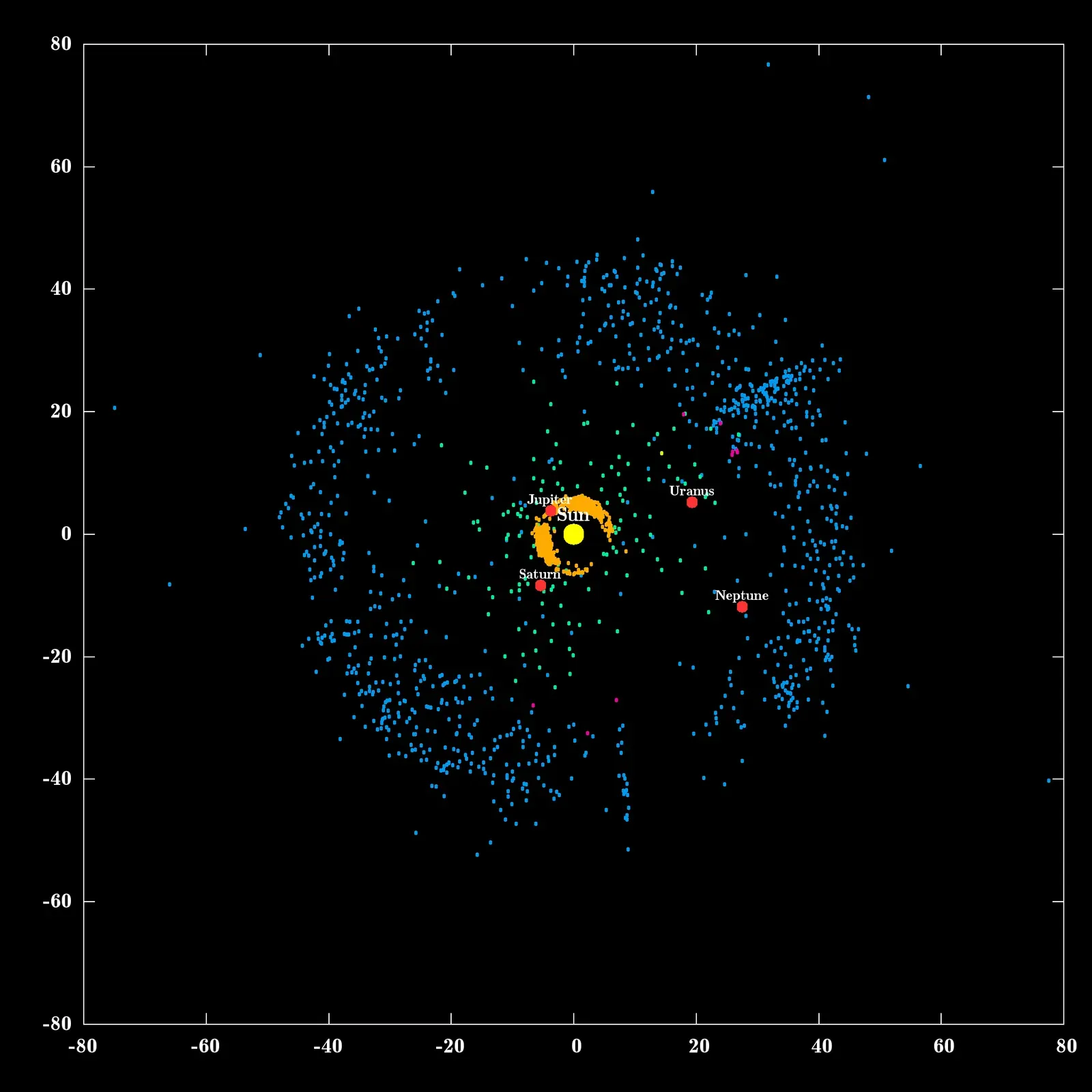
Beyond Neptune lies the Kuiper Belt, a vast ring of icy bodies that includes Pluto and countless smaller objects, relics of the solar system’s early days. The strange thing is not that this region exists, but that it seems to contain far less mass than early planet‑formation models predicted. If the Kuiper Belt started out as a dense disk of rock and ice, it should have spawned larger worlds more efficiently and retained more material than we see today. Yet observations suggest only a small fraction of the expected mass remains, as if someone scooped out most of the building blocks long ago.
This shortfall has fueled ideas ranging from slow, grinding collisional erosion over billions of years to dramatic reshaping of the outer solar system as the giant planets migrated and scattered material. On top of that, the orbits of some distant trans‑Neptunian objects appear clustered in ways that hint at the gravitational pull of an unseen massive planet, sometimes labeled Planet Nine, lurking far beyond Pluto. Not all researchers agree with that interpretation, and ongoing sky surveys continue to test whether observational bias or statistics can fully account for the patterns. Whatever the final outcome, the Kuiper Belt’s missing mass and peculiar dynamics tie directly into theories of how common long‑period giant planets might be in other systems and how often planetary architectures get violently rearranged after their birth.
Enceladus and Europa: Ocean Worlds That Refuse to Give Up Their Secrets
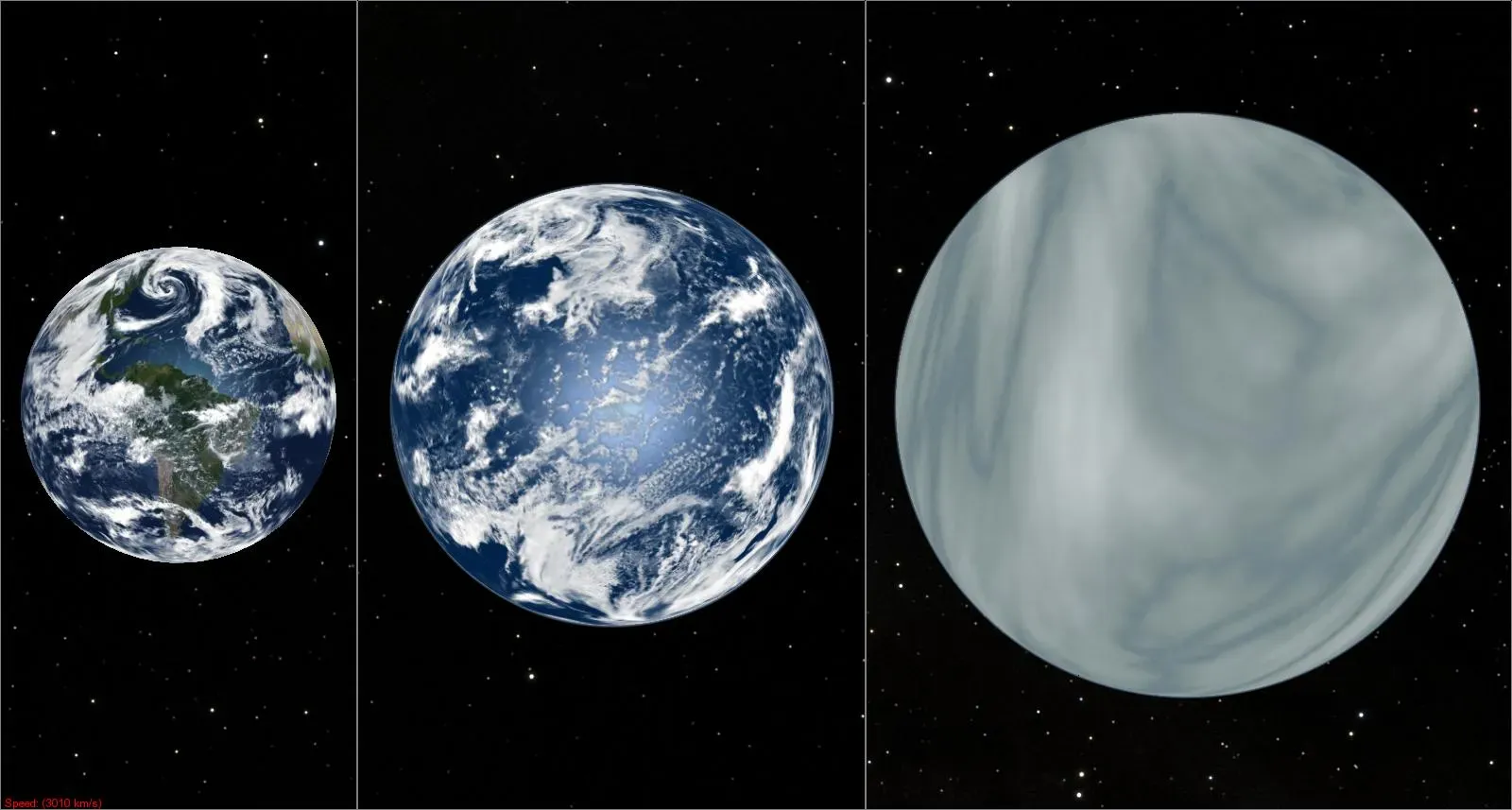
It is hard to overstate how shocking it was to confirm that tiny moons like Saturn’s Enceladus and Jupiter’s Europa likely harbor global oceans beneath their icy crusts. Even more surprising, Enceladus vents towering plumes of water vapor and icy grains from fractures near its south pole, effectively spraying samples of its subsurface ocean into space. Cassini’s flythroughs of those plumes revealed organic molecules, salts, and hints of hydrothermal activity on the seafloor, all ingredients that on Earth are associated with rich microbial ecosystems. Yet despite this tantalizing chemistry, we still do not know whether life has ever taken hold in those hidden oceans or how long such worlds can stay geologically active.
Europa presents a similar but not identical puzzle: its cracked, reddish ice shell, variable surface features, and induced magnetic field all point to a salty global ocean in contact with a rocky mantle. The energy budget driving its long‑lived activity likely comes from tidal flexing as it orbits Jupiter, but the details of how that energy is distributed between heating the interior, deforming the ice, and sustaining possible hydrothermal vents remain under debate. Upcoming missions from NASA and ESA are designed to probe these questions with ice‑penetrating radar, detailed gravity measurements, and close‑range imaging. These ocean worlds sit at the center of a major shift in universe theories about habitability, suggesting that life‑friendly environments may be more common on icy moons and small planets than on Earth‑like worlds alone.
Cracks in Our Cosmic Playbook: Why These Mysteries Matter
Looked at one by one, each of these puzzles can seem like a fussy technical issue, the kind of thing only specialists argue about at conferences. But taken together, they sketch a bigger story about where our current theories succeed and where they stall. The Sun’s corona tests our understanding of magnetized plasmas, while fast radio bursts press on theories of how matter behaves at nuclear densities. Uranus’s tilt and the Kuiper Belt’s missing mass challenge neat narratives of planet formation, reminding us that our solar system is not a perfectly tuned clockwork but a survivor of chaos and chance. Enceladus and Europa, meanwhile, stretch our definition of habitable real estate, suggesting that liquid water and chemical energy may be tucked away in places we once ignored.
As a science journalist, I find these tensions between theory and observation more exciting than clean, finished stories, because they show the scientific method working in real time. Every unexplained anomaly forces physicists and astronomers to decide whether they are looking at a measurement glitch, a missing detail in a well‑tested theory, or the first glimpse of something fundamentally new. Sometimes the resolution is delightfully mundane, like heat leaking unevenly from a spacecraft; other times it seeds an entire new field, as with the exploding research around FRBs and ocean worlds. Either way, the solar system becomes less of a completed diagram in a textbook and more of an active laboratory, where unresolved data points are not embarrassments to be hidden but invitations to rethink how the universe builds structures, from magnetic fields to planets and possibly to life itself.
Where These Mysteries Might Lead Next
The coming decade is set up like a carefully staged experiment aimed directly at many of these questions. New solar missions are closing in on the physics of coronal heating, outer planet proposals are sharpening plans for dedicated Uranus and Neptune orbiters, and ocean‑world explorers are preparing to taste the icy breath of Europa and Enceladus in exquisite detail. Deep surveys of the outer solar system continue to hunt both for faint Kuiper Belt objects and for any gravitational fingerprints of hidden planets, while radio observatories on Earth and in space log thousands of fast radio bursts to map patterns that might finally sort their origins. Each new mission is not just about gathering more data; it is about deliberately stress‑testing the frameworks we use to explain these phenomena.
We may find that some of today’s headline mysteries quietly dissolve with better measurements, leaving the underlying physics comfortably within existing theories. Or we may uncover persistent discrepancies that force revisions in how we think about gravity, magnetism, and planet formation at a fundamental level. Either way, paying attention to these unresolved corners of our own solar system shapes how we interpret discoveries around other stars, where the data will always be sparser and the stakes for getting the big picture right are high. In that sense, every step we take toward understanding a tilted planet, a missing mass, or a million‑degree atmosphere ripples outward into broader space phenomena and universe theories that try to explain why anything in the cosmos looks the way it does.
How Curious Earthlings Can Stay Close to the Mystery
You do not need a telescope in your backyard or a degree in astrophysics to be part of this unfolding story. Public data from major observatories and planetary missions are increasingly accessible, and many citizen‑science platforms invite volunteers to help classify distant worlds, flag unusual signals, or trace features on icy moons. Following upcoming mission timelines and digging into their released images or datasets can turn these abstract mysteries into something you have a personal stake in, rather than distant trivia. Even simply staying skeptical of easy answers and embracing the idea that “we don’t know yet” is a powerful way to align your mindset with how space science actually progresses.
On a more personal level, I think there is real value in letting these unexplained phenomena recalibrate our sense of certainty. The fact that we still do not fully understand the behavior of our own star, or the true architecture of our backyard beyond Neptune, is a humbling reminder that our cosmic map is still very much a work in progress. Sharing that humility with kids, friends, or students – admitting that the solar system still has secrets – is one of the simplest ways to nurture genuine scientific literacy. The next big insight into one of these puzzles could come from a mission now on the drawing board, a reanalysis of old data, or an entirely new way of framing the problem, and that open‑endedness is part of the thrill.
Suhail Ahmed is a passionate digital professional and nature enthusiast with over 8 years of experience in content strategy, SEO, web development, and digital operations. Alongside his freelance journey, Suhail actively contributes to nature and wildlife platforms like Discover Wildlife, where he channels his curiosity for the planet into engaging, educational storytelling.
With a strong background in managing digital ecosystems — from ecommerce stores and WordPress websites to social media and automation — Suhail merges technical precision with creative insight. His content reflects a rare balance: SEO-friendly yet deeply human, data-informed yet emotionally resonant.
Driven by a love for discovery and storytelling, Suhail believes in using digital platforms to amplify causes that matter — especially those protecting Earth’s biodiversity and inspiring sustainable living. Whether he’s managing online projects or crafting wildlife content, his goal remains the same: to inform, inspire, and leave a positive digital footprint.


